As 2026 gets closer, rules for utility work on California's Central Coast are getting more complicated. For projects in Monterey, Santa Cruz, and San Benito counties, new regulations are changing the game. These include SB865's mapping rules, stricter stormwater requirements, and PG&E's demand for certified installers on gas and electric tie-ins. For developers, city project managers, and general contractors, keeping up is key. One failed inspection or permit delay can stop a whole project, leading to high costs and a damaged reputation.
Success now depends on planning ahead. Staying on top of these changes isn’t just a good idea—it's necessary to stay in business. This guide offers real, practical steps to get your utility permits ready. We will cover 3 ways to stay permit-ready for 2026 utility work, focusing on how to make your projects run smoothly. You will learn how to get your paperwork in order, work well with local agencies, and keep your team ready to go. These tips will help you keep projects on time, on budget, and in line with the tough rules of 2026.
1. Master Documentation and Pre-Planning
The days of messy file cabinets and confusing spreadsheets for tracking permits are gone. For projects on California’s Central Coast, where rules like SB865 are getting stricter, good paperwork is the first step to being permit-ready for 2026. Smart documentation and planning ahead can prevent costly delays before the first shovel ever hits the ground.
Many project problems happen before any digging starts. That’s why working with local agencies early is so important. By submitting plans that are already compliant, knowing what inspectors will look for, and talking to utility companies in advance, you can make the permit process much smoother. This planning turns a confusing process into an organized one.
This strategy also means having all your documents in order. Instead of searching for papers, your team can put together a full, compliant package in hours. This is a huge advantage when you're trying to win a job. It also creates a clear record that helps when working with inspectors or proving you’ve followed the rules.
How Good Pre-Planning Prevents Delays
For city and public works departments, this level of planning makes their job easier. They can trust that a contractor has done their homework, which speeds up approvals. This is especially true for emergency jobs, like a sewer main break, where being able to show you’re prepared is a deciding factor.
For general contractors and developers, good planning saves money and time. Think about these situations:
- Passing Inspections: California rules are getting tougher. One failed inspection can shut down a job. When you can quickly show an inspector your certified backflow test reports or proof of certified installers for PG&E tie-ins, the project keeps moving.
- Avoiding Rework: Finding a problem early saves a lot of trouble. For example, if a plan shows a new sewer line clashing with an old storm drain, it’s much easier to fix it on paper than to dig it up later.
- Winning Bids: When you show up with a plan that is already well-thought-out and includes compliant designs, you prove that you are a reliable partner. This helps you win more contracts.
Key Insight: Permit success starts with pre-planning. Working closely with local agencies and having compliant designs ready from the start helps you avoid the common problems that cause project delays and cost overruns.
Actionable Steps for Implementation
To get your pre-planning and documentation right, follow these steps:
- Understand Local Rules: Before you design anything, learn the specific requirements for Monterey, Santa Cruz, and San Benito counties. This includes new stormwater rules and SB865 GIS mapping.
- Coordinate with Utilities Early: Talk to PG&E, water departments, and other utility providers before you finalize your plans. This helps avoid conflicts and ensures your tie-ins will be approved.
- Develop Compliant Designs: Work with engineers who know the local codes. Submit designs that meet all requirements to streamline the approval process.
- Create a Digital Document Hub: Keep all your plans, permits, and inspection reports in one easy-to-access digital folder. This makes it simple to share information with agencies and your team. For complex jobs, this includes creating compliant Safe Work Method Statements (SWMS) for tasks like trenching.
- Know the Inspection Checklist: Ask local agencies for their inspection checklists. This way, you can make sure your work will pass the first time, every time.
2. Ensure Your Team is Certified and Ready
A lapsed license or an expired certification can bring a multi-million-dollar utility project to a dead stop. In California, where agencies demand proof of qualifications, making sure your team is certified is a key way to stay permit-ready for 2026. This means moving from last-minute scrambles to a smart, organized process that keeps your crew ready for any job.
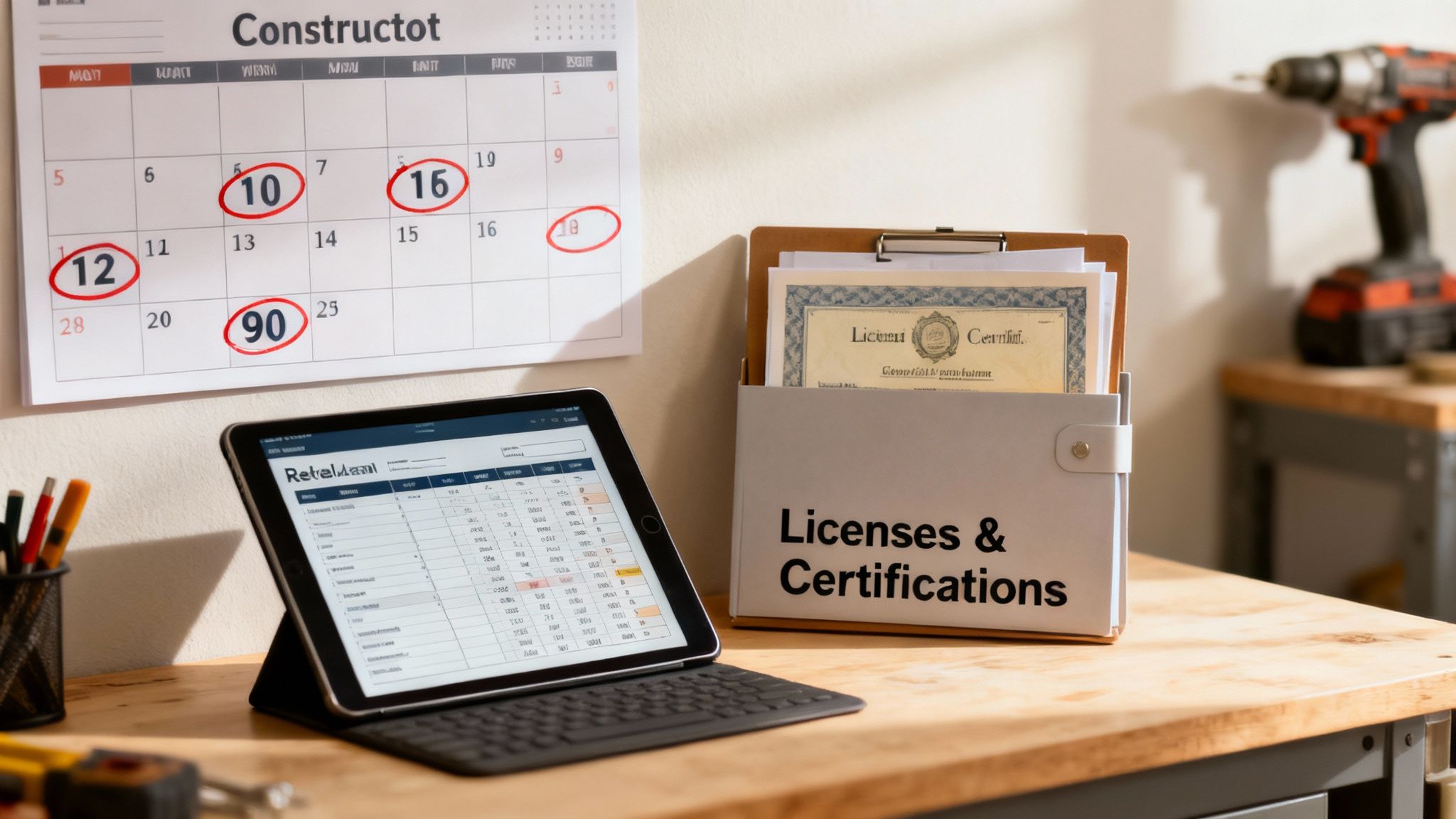
This strategy involves tracking every certification and planning renewals 90 to 120 days in advance. This gives you plenty of time to handle paperwork, schedule training, and avoid any gaps in your team’s qualifications. This is especially important as utility providers like PG&E now require special credentials, like Applicant Installer OQ certification, for their tie-ins.
Having a certified team also means being ready for new rules. For example, more properties now need certified backflow prevention systems, especially for fire lines and irrigation. Having AWWA-certified technicians on staff means you can handle these jobs without delay. A certified team shows clients and inspectors that you are a serious, professional partner.
How Certified Teams Prevent Delays
For city public works departments, working with certified contractors reduces risk. They can award contracts with confidence, knowing the team is qualified and the project won’t be stopped by a compliance issue. This is crucial for emergency repairs where you need qualified people on site immediately.
For general contractors and developers, having a certified crew protects project schedules and budgets. Here’s how:
- Meeting Utility Requirements: To work on PG&E gas lines or electrical conduits, you need Applicant Installer OQ certification. A certified team ensures these critical connections are approved without needing to be redone. This is a must for projects involving underground gas line installation.
- Passing Inspections: When an inspector asks to see proof of certification for backflow testing or trenching safety, you can provide it instantly. This keeps the project moving and builds trust.
- Winning Contracts: Municipalities often give preference to contractors who can prove their team is certified. Having AWWA-certified backflow testers or credentialed equipment operators makes your bid more attractive.
- Avoiding Disqualification: Many cities will automatically reject bids from contractors who can’t show proof of required licenses and certifications. Staying current means you are always eligible to compete.
Key Insight: Non-compliance causes costly delays. A team with the right certifications ensures that your work passes inspection the first time, saving you time, money, and your reputation.
Actionable Steps for Implementation
Building a certified, ready-to-go team takes organization. Here are steps you can take:
- Create a Certification Tracker: Use a spreadsheet or calendar to track every license and certification for your team. Set reminders for 90, 60, and 30 days before they expire.
- Schedule Regular Training: Plan for training and re-certification courses during your slower months to avoid pulling people from active job sites.
- Budget for Certifications: Include the costs for training, exams, and renewal fees in your annual budget. This treats compliance as a planned investment.
- Stay Updated on New Rules: Keep an eye on new requirements from PG&E, local water districts, and state regulators. Be ready to get your team the new certifications they need.
- Keep Digital Records: Store digital copies of all licenses and certificates in a central, cloud-based folder. This makes them easy to find for bids and inspections.
3. Conduct Thorough Pre-Construction Site Surveys
Hitting an unknown utility line while digging can stop a project in its tracks. It’s also dangerous and expensive. For utility work in 2026, conducting thorough pre-construction surveys is a must-do step. This means you stop reacting to problems and start managing risks before they happen. It ensures that your plans match the reality underground.

This process is more than just calling 811. It’s a full plan to document everything on site. This includes mapping all underground pipes and cables, finding any potential conflicts with your new installations, and creating detailed plans that help speed up permit reviews. When you give city agencies a clear picture of what’s underground, they have more confidence in your project, which helps avoid delays.
On California's Central Coast, this level of detailed planning is becoming expected. Permit offices are looking closely at plans to see if they might clash with existing PG&E, water, and sewer lines. A good survey report shows that you are committed to safety and getting the job done right. This paperwork is a key part of a winning bid and is essential for staying permit-ready.
How Proactive Surveys Prevent Delays
A detailed pre-construction survey is like an insurance policy against surprises. It gives your crew a clear map to follow and gives permit offices a record they can trust. This builds confidence and makes approvals go faster.
For city public works departments, these documents prove a contractor is prepared. When a sewer main fails, a contractor who already has utility maps can get to work faster and more safely. For planned projects, it ensures new lines won’t interfere with other important city infrastructure.
For general contractors and developers, the benefits are clear for their schedule and budget. Consider these situations:
- Avoiding Costly Rework: A developer’s survey finds an old storm drain right where a new sewer line is supposed to go. Finding this early allows the plans to be changed before the permit is even submitted, saving weeks of delays and expensive changes in the field.
- Getting Permits Faster: A home builder includes a full utility locate report with their permit application. The county planner sees that all potential problems have been addressed and can approve the trenching permit more quickly.
- Ensuring Safety: An inspector for a PG&E tie-in wants to know how close your trench is to a water main. Your site supervisor pulls out the pre-construction survey, shows the safe path, and keeps the project on schedule.
Key Insight: Pre-construction surveys de-risk the entire project by making the invisible visible. This documentation ensures your team can work safely and efficiently, while meeting all local utility standards.
Actionable Steps for Implementation
Creating a standard process for surveys makes every project smoother. Here’s how to do it:
- Use a Standard Checklist: Create a checklist for every pre-construction survey. It should include confirming the 811 locate, taking site photos, and noting any meetings with utility companies.
- Map with GIS Tools: Use mapping software to create clear site plans. These maps should show existing utility lines, your planned trenches, and any "no-dig" zones.
- Schedule Locates Early: Call 811 at least two weeks before you need to submit your permit. This gives utilities time to mark their lines and gives you time to document everything. To learn more, learn how to locate underground utilities with this contractor's guide.
- Check Existing Infrastructure: For sewer and water projects, ask for any existing inspection records. This helps you know if a pipe needs a simple repair or a full replacement, which affects your permit.
- Add Surveys to Your Schedule: Make the survey and documentation a formal step in your project timeline. Using tools like P6 scheduling options for managing activities helps make sure this important step isn’t skipped.
Partner for Permit Success on the Central Coast
Navigating utility work on California's Central Coast is tough. It takes skill, planning, and a smart approach to following the rules. As 2026 approaches, the strategies of organizing your documents, planning ahead, and keeping your team ready are no longer just suggestions. They are the keys to a successful project. By using these 3 ways to stay permit-ready for 2026 utility work, you can turn difficult hurdles into a smooth, easy process.
The time for reacting to permit problems is over. California's rules are getting stricter, from SB865 GIS mapping to new stormwater regulations. Not following these rules leads to expensive delays and hurts your reputation. One failed inspection can stop an entire project, affecting everyone from city agencies to general contractors. Being prepared is the best way to avoid these risks.
Your Blueprint for 2026 Permit Readiness
To make sure your projects in Monterey, Santa Cruz, or San Benito counties go off without a problem, focus on these key points:
- Get Organized Digitally: Stop using paper. Move to a single digital place for all your permits, plans, and certifications. This makes it easier to submit applications and gives you instant access to documents during an inspection.
- Invest in Your Team: Certifications are always changing. PG&E tie-ins require Applicant Installer OQ certification, and more places need backflow prevention systems. A well-trained and credentialed team is a must. Make training a regular part of your business.
- Plan Before You Dig: The most important permit work happens before you even start digging. Talking with permit authorities early, along with careful site surveys and utility checks, sets you up for a smooth approval process.
Ultimately, staying permit-ready is about being a trustworthy and excellent partner. It shows clients and inspectors that your team is prepared, knows what they’re doing, and is committed to doing the job right the first time. This not only keeps you in compliance but also builds your reputation as a leader who can handle the biggest challenges of 2026 and beyond.
Building in Monterey, Santa Cruz, or San Benito in 2026? Don't let permitting complexities derail your projects. Get ahead of inspection failures and project slowdowns—partner with Coastal Pipeline Inc. for utility infrastructure built to spec, on time, and up to code. Our certified experts are equipped to handle everything from SB865-compliant mapping to PG&E tie-ins, making us the ideal partner for permit-ready success on the Central Coast.