
Your building’s commercial fire line is the underground artery that feeds its entire fire suppression system. When it comes to installing this critical component, hiring a general plumber is a mistake that can have catastrophic consequences. You absolutely need a licensed fire line installation contractor for commercial buildings—a specialist who lives and breathes this high-stakes trade.
Why a Specialist Fire Line Contractor Is Non-Negotiable
Think of your building's fire protection system like the human body. The sprinkler heads and indoor pipes are the smaller veins and capillaries. The underground fire line? That’s the aorta. It’s the single, powerful pipeline responsible for delivering a massive volume of high-pressure water the instant it's needed.
Asking a general commercial plumber to install a fire line is like asking your family doctor to perform open-heart surgery. Sure, they’re both professionals, but only the surgeon has the specialized training, purpose-built tools, and deep knowledge of high-pressure dynamics to get it right. General plumbers work with domestic water lines, which operate at a fraction of the pressure and have entirely different installation and material requirements.
The Dangers of Generalists in a Specialist's Role
A dedicated fire line contractor brings a highly specific skill set that a generalist simply can't match. This expertise isn’t just about connecting pipes; it’s a science that involves complex hydraulic calculations, soil mechanics, and unwavering adherence to strict fire codes.
Here’s where a specialist truly stands out:
- Hydraulic Calculations: They perform the complex math needed to determine the exact pipe diameter and layout required to push the right amount of water flow and pressure to every single sprinkler head in your building, meeting strict fire code mandates.
- NFPA Code Mastery: They are experts in the National Fire Protection Association (NFPA) standards, especially NFPA 24, the definitive codebook for installing private fire service mains.
- Materials and Methods: They know precisely which materials—like ductile iron or C900 PVC—are approved for high-pressure fire service and understand the correct burial depths and backfilling techniques needed to prevent pipe failure under extreme stress.
The difference between a properly and improperly installed fire line is the difference between a minor, controlled incident and a total disaster. This system must work perfectly the very first time it’s ever used. There is zero room for error.
Protecting Your Investment and Occupants
At the end of the day, hiring a specialist fire line installation contractor for commercial buildings is one of the most important decisions you can make to protect your assets. It protects the lives of everyone in your building, keeps you in good standing with your insurance provider, and saves you from massive fines or rework orders from the fire marshal. An improperly installed line can easily lead to denied insurance claims and devastating liability.
A qualified expert knows the immense responsibility on their shoulders. Their job is to build a lifeline that you hope to never use but can trust completely to perform flawlessly when it matters most. To see what goes into this critical infrastructure, you can explore the details of professional underground fire line services in Monterey & Santa Cruz County.
Understanding Your Building's Fire Line System
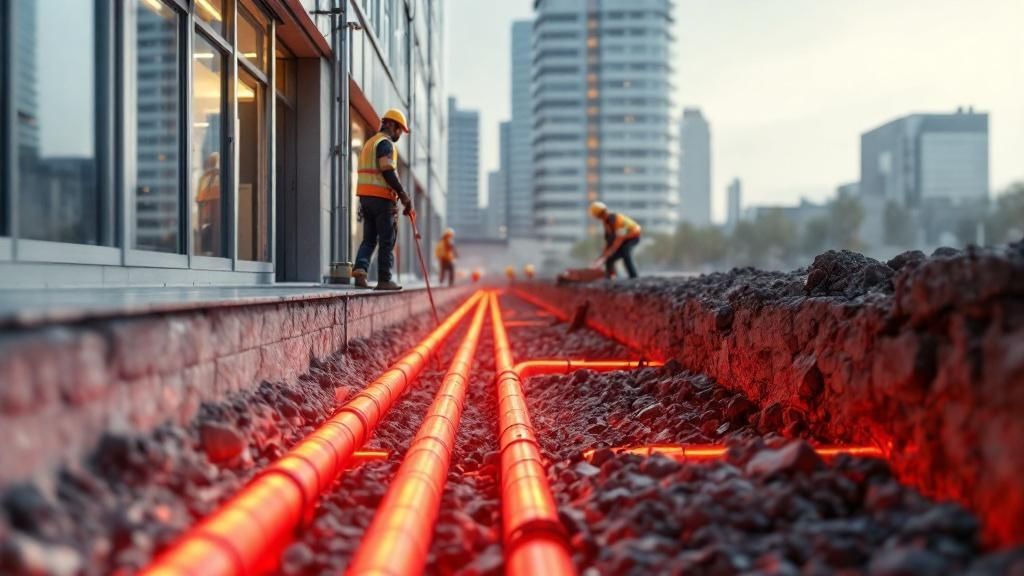
Before you can confidently hire a fire line installation contractor for your commercial building, it helps to understand exactly what they're building. Think of your fire line as a private, high-speed expressway for water. Its only job is to connect the city's main supply directly to your building's life-saving sprinkler system.
This isn't just another plumbing pipe. It's a high-pressure, high-volume pipeline built for a single, critical purpose: delivering an overwhelming amount of water exactly when you need it most. Getting a handle on its main parts and how they work together makes the whole installation process much clearer.
Tracing the Path of Emergency Water
The journey of that emergency water starts long before it ever hits a sprinkler head. It begins underground, at the municipal water main—the large public pipeline running right under the street. From there, a specialized contractor makes a crucial connection known as a "tap."
That tap is the starting gate. Once connected, the dedicated fire line pipe runs from the public right-of-way, across your property, and straight into your building. This forms the main artery of your entire fire suppression system, and along its path, several key devices are installed, each with a critical job to do.
The entire system is engineered for absolute reliability. Every single valve, pipe, and fitting is chosen and installed with the understanding that it must work flawlessly under the extreme stress of a fire, even after sitting untouched for years.
Key Components You Should Know
While the whole system is complex, there are a few key components every property owner should be able to recognize. These are the parts that ensure the system works as intended, allow firefighters to control it, and protect the public water supply.
- Post Indicator Valve (PIV): You've probably seen these. It’s the control valve that sticks out of the ground, usually a red post with a small window on top that clearly reads "OPEN" or "SHUT." It lets firefighters quickly turn off the water to the sprinkler system from a safe spot outside the building.
- Fire Department Connection (FDC): This is the inlet, typically found on an exterior wall, where fire trucks can hook up their hoses. It allows them to pump in extra water and pressure during an emergency, supplementing the system.
- Backflow Preventer: This might be the most critical device for public health. It acts as a one-way gate, letting water flow from the city main into your building but preventing stagnant sprinkler water from ever flowing backward and contaminating the public drinking supply.
These parts aren't optional—they are mandated by fire codes. Their correct installation and function are a primary focus for any qualified fire line installation contractor. To learn more about the requirements for this kind of underground work, check out our guide on underground utility services in Monterey & Santa Cruz County.
Matching the System to Your Building's Needs
A fire line is far from a one-size-fits-all product. Its design is tied directly to the kind of sprinkler system inside your commercial building, which itself depends on your building’s purpose and local climate.
| System Type | How It Works | Best For |
|---|---|---|
| Wet-Pipe System | The pipes are always filled with pressurized water, ready to go. | The most common type, used in heated buildings where temperatures stay safely above freezing. |
| Dry-Pipe System | The pipes are filled with pressurized air or nitrogen, not water. | Ideal for unheated spaces like parking garages or warehouses in colder climates. |
| Pre-Action System | A hybrid system that needs a second trigger (like a smoke alarm) before letting water into the pipes. | Used in areas with sensitive equipment, like data centers, to prevent accidental water damage. |
Your fire line must be engineered with enough capacity to support the specific demands of whichever system you have. This reality highlights the importance of fire protection. As urban areas grow, with projections showing 6 billion people in cities by 2045, the demand for robust fire safety is surging. In fact, the global fire sprinkler systems market is expected to hit $23.79 billion by 2032, driven by the construction of commercial buildings that require these exact types of specialized systems. You can read the full analysis of this growing demand for fire safety on internationalfireandsafetyjournal.com.
Navigating Critical Fire Codes and Regulations
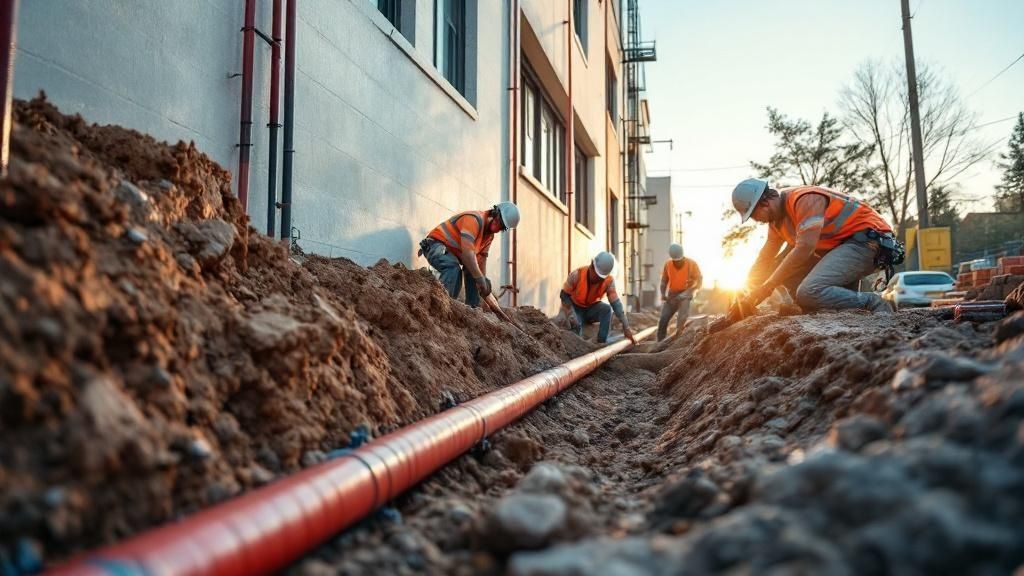
When it comes to your building’s fire protection system, compliance isn't just about checking boxes—it's the absolute bedrock of safety. For any fire line installation contractor for commercial buildings, the codebook isn’t a set of guidelines; it's the law. Stepping into this world means navigating a dense landscape of regulations that dictate every nut, bolt, and pipe.
Think of these codes as the structural blueprint for your building's most critical lifeline. An architect wouldn't dream of ignoring engineering principles that keep a building standing, and a fire line contractor must treat safety standards with the same gravity. In both cases, the stakes are identical: preventing disaster when it matters most.
The rules of the game come from the National Fire Protection Association (NFPA), the global authority on fire safety. In most places, their standards are the law, and a qualified contractor doesn't just know them—they live and breathe them.
The NFPA Bible for Fire Line Installation
Three core NFPA standards are at the heart of every fire line project. These aren’t just suggestions; they are exhaustive manuals covering everything from pipe materials and burial depths to the exact pressure required for system tests.
Here is a quick look at the most critical NFPA standards your contractor will need to master to ensure your project is compliant, safe, and effective.
Key NFPA Standards for Fire Line Installation
| NFPA Standard | Title and Core Focus | Why It Matters for Your Building |
|---|---|---|
| NFPA 13 | Standard for the Installation of Sprinkler Systems | This standard dictates the water flow and pressure the fire line must deliver to ensure your building's sprinklers work correctly during an emergency. It connects the underground supply to the in-building system. |
| NFPA 24 | Standard for the Installation of Private Fire Service Mains | This is the main rulebook for everything outside the building. It covers all underground components, including pipes, valves, hydrants, and burial techniques. A deep understanding is non-negotiable for a contractor. |
| NFPA 25 | Standard for the Inspection, Testing, and Maintenance of Water-Based Fire Protection Systems | This standard ensures long-term reliability. It outlines the mandatory post-installation tests, like hydrostatic pressure tests, that prove the system is leak-free and ready for service. |
These standards are a key driver behind the U.S. fire protection market’s projected growth to USD 76.9 billion by 2025. As building owners invest in compliant systems to meet safety codes like NFPA 13 and 25, the demand for expert installation continues to rise.
A good contractor follows these codes. An expert contractor anticipates how they apply to your specific site and building. Their real value is in navigating this complex regulatory maze to deliver a system that is not only functional but fully and unequivocally compliant from day one.
The Ultimate Authority: The AHJ
No matter how perfectly a system is designed and installed according to NFPA standards, it isn’t complete until it receives the blessing of one key entity: the Authority Having Jurisdiction (AHJ).
The AHJ is usually the local fire marshal or a fire department representative. They are the final judge of your project. They review plans before a shovel ever hits the ground, conduct inspections during installation, and witness the final tests. Their sign-off is the finish line.
A seasoned fire line installation contractor for commercial buildings knows that a professional, respectful relationship with the local AHJ is essential. They know what inspectors look for, how to prepare documentation, and how to resolve issues smoothly, ensuring your project passes inspection without costly delays or rework.
What to Expect During the Installation Process
When you hire a fire line installation contractor for commercial buildings, the process can feel like a bit of a black box. But it’s far more than just digging a trench and laying some pipe. A proper installation is a carefully choreographed dance of engineering, permitting, and precision construction.
Every step builds on the one before it, all to create a system that’s not only powerful but completely reliable when you need it most. Understanding this journey from start to finish clears up the mystery and helps you, the building owner, know what to look for. The work actually begins long before any dirt is moved.
Phase 1: Initial Assessment and System Design
The first thing we do is a deep dive into your property’s specific needs. A good contractor will perform a thorough site assessment, checking not just the building layout but also poring over utility maps to avoid any conflicts with existing gas, water, or electrical lines. It’s all about planning ahead.
From there, we get into the most critical part of the pre-construction phase: hydraulic calculations. This is where the real engineering happens. We figure out the exact water pressure and flow rate needed to protect your specific building, all based on NFPA 13 standards. These numbers drive every decision that follows, from the pipe diameter to the materials we use.
With the calculations complete, the contractor drafts detailed blueprints for the entire fire line system. These aren’t just rough sketches; they're professional engineering documents that map out:
- The exact underground path of the pipe from the city main to your building.
- The precise location of key components like the post indicator valve (PIV) and fire department connection (FDC).
- Specifications for all materials, including the type of pipe, valves, and thrust blocks.
- How deep the pipe needs to be buried to protect it from freezing and ground pressure.
This entire design package is then submitted to the Authority Having Jurisdiction (AHJ)—usually the local fire marshal—for approval. No digging starts until we have that official sign-off.
Phase 2: Permitting and Physical Installation
Once the blueprints get the green light, we handle all the permitting with both the fire marshal and the local water authority. This means getting permits for the excavation, the construction itself, and the all-important "tap" into the city water main. An experienced contractor makes this bureaucratic step feel seamless.
Permits in hand, the physical work can finally begin. This is the part everyone sees, starting with the trenching. Our crew excavates a corridor along the approved route, making sure the trench walls are stable and the depth is up to code. Then, the pipe is carefully laid in the trench on a prepared bed of gravel or sand, which gives it stable, long-term support.
After connecting the pipe sections, we flush the entire system with high-velocity water. This is a critical step that scours the inside of the new pipe, clearing out any dirt, debris, or construction gunk that could clog a sprinkler head during a fire. Once it’s flushed clean, we coordinate with the city to make the final connection to the water main.
The infographic below shows the essential workflow for keeping the project safe and compliant from start to finish.
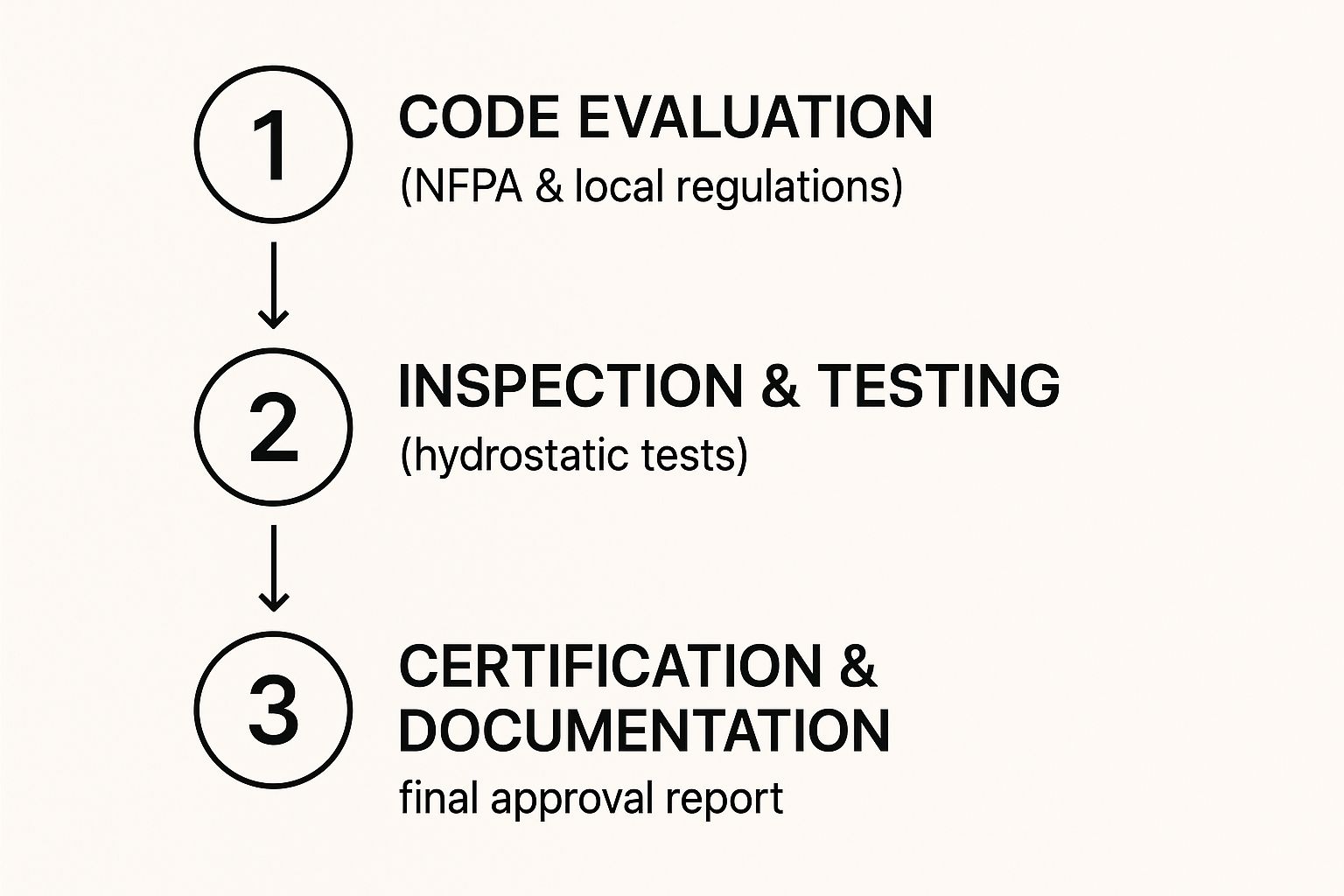
As you can see, the whole process is a cycle of evaluation, tough testing, and final certification. It's all about guaranteeing the system will work flawlessly.
Phase 3: Testing and Final Commissioning
With the system fully installed and connected, it’s time for the moment of truth: hydrostatic testing. This is a non-negotiable step required by NFPA 24. We fill the entire fire line with water and crank up the pressure to a level far beyond its normal operating state—typically 200 psi for two hours.
The hydrostatic test is designed to find any weak spots. It proves that the pipe, joints, and fittings can handle the massive surge of water during an emergency without a single leak. The AHJ has to be on-site to witness and officially sign off on this test.
If the system holds pressure perfectly, we carefully backfill the trench and compact the soil to prevent it from settling later on. The final step is commissioning. We complete all the required paperwork, including the "Contractor's Material and Test Certificate for Private Fire Service Mains," and submit it to the AHJ. This creates a permanent record that your system was installed and tested to code. Only then is the project officially done and your fire line is ready to protect your building.
How to Vet and Select Your Contractor

Choosing the right contractor for your commercial fire line installation is one of the most important decisions you'll make for your property's safety. This isn't a job you can gamble on. It takes a careful, structured approach to find a genuine specialist who can deliver a compliant and reliable system.
Think of this as your playbook for making the right hire. You're not just picking a vendor; you're building a critical line of defense for your property. The goal is to move past the price tag and find a partner whose expertise truly matches the gravity of the work.
Non-Negotiable Qualifications
Before you even glance at a bid, any potential contractor needs to clear a few absolute hurdles. These are the make-or-break requirements that separate a professional fire protection contractor from a generalist who could put your project—and your property—at risk.
Make sure your vetting process starts with these three fundamentals:
- Specialized Licensing: A standard plumbing license isn't enough. Your contractor must hold a specific fire protection or fire sprinkler contractor license. Some states even offer a "Level U" license, which is specifically for underground fire line work and is the gold standard.
- Verifiable Insurance: Don't just take their word for it. Ask to see current certificates for both comprehensive liability insurance and workers' compensation. A fire line project is a major undertaking, and you need to be completely shielded from any potential liability.
- Relevant Experience: The contractor needs a proven track record of comparable commercial projects. Ask for a portfolio with project addresses and contact info for recent clients. A good contractor will be proud to let you verify their work and speak to satisfied customers.
Any contractor who balks at providing proof of licensing, insurance, or references should be an immediate red flag. In a high-stakes field like this, transparency is everything.
Critical Questions to Ask Potential Contractors
Once a contractor meets the basic requirements, it's time to dig deeper into their process and expertise. The way they answer these questions will tell you everything you need to know about their experience with the real-world challenges of fire line installation.
Come prepared with a list of pointed questions, such as:
- How do you handle coordination with the local water authority and the fire marshal (AHJ)?
- What's your plan for dealing with unexpected site conditions, like hitting rock or finding unmapped utilities?
- Can you walk me through the hydraulic calculation process you use to design a system for a building like mine?
- What specific materials are you proposing for this job, and why did you choose them?
- Does your proposal include all permitting, testing, and final documentation fees?
Pay close attention to the quality of their answers. You're looking for confident, detailed responses that show they’ve been there before and have a plan for everything. This same level of detail is crucial for any major site work. To see how this expertise extends to other underground work, learn what to look for in qualified commercial excavation contractors.
How to Analyze Bids Beyond the Price Tag
Getting several bids can feel overwhelming, but it’s critical to look past the number at the bottom of the page. The cheapest bid can quickly become the most expensive one if it’s riddled with exclusions that lead to costly change orders, project delays, or a failed inspection.
A good proposal from a skilled fire line installation contractor for commercial buildings will be detailed, itemized, and transparent. To make sure you’re making a true apples-to-apples comparison, use a simple checklist to evaluate each bid.
Contractor Vetting Checklist
When you're comparing proposals, it's easy to get lost in the details. Use this table as a quick guide to systematically review each contractor's bid, ensuring nothing gets missed.
| Qualification Criteria | What to Look For | Red Flags to Avoid |
|---|---|---|
| Scope of Work | A step-by-step breakdown of the entire process, from design and permitting to final commissioning. | Vague language like "install fire line per code" without specifics. |
| Material Specifications | Clear identification of pipe types (e.g., C900 PVC), valve brands, and fitting details. | No mention of specific materials, or proposing low-quality, non-compliant options. |
| Included Services | Explicitly lists all costs for permits, engineering, city tap fees, and hydrostatic testing. | Hidden fees or exclusions that will show up later as expensive change orders. |
| Project Timeline | A realistic schedule with clear milestones for each phase, including time for approvals and inspections. | An overly optimistic timeline that seems too good to be true or has no dates at all. |
By using a structured approach like this, you can look past the noise and confidently choose a contractor who offers fair value and will deliver a safe, compliant fire line system built to last.
Breaking Down the Costs of Fire Line Installation
Trying to budget for a commercial fire line installation can feel daunting. It's more than just a single number on a proposal; the total cost is a combination of many different factors, all tied to the unique needs of your property and building. When you hire a professional fire line installation contractor for commercial buildings, you're not just paying someone to bury a pipe—you're making a critical investment in a compliant, life-saving system.
The most obvious expenses are the "hard costs." These are the physical materials and direct labor that go into actually building the fire line.
- Pipe Length and Diameter: This is the most straightforward cost driver. A huge commercial campus requiring a long, large-diameter pipeline will naturally have higher material and labor costs than a small retail shop needing a shorter run.
- Site Complexity: Not all dirt is the same. Digging a trench in a flat, empty lot is one thing. But when the crew has to navigate rocky soil, a high water table, or a maze of existing underground utilities, the job demands more time, specialized machinery, and expert labor, which all adds to the final price.
- Material Specifications: Your local fire marshal and engineering plans dictate the specific type of pipe that must be used, whether it's heavy-duty ductile iron or C900 PVC. This choice is based on safety and compliance requirements, not just what’s cheapest.
Beyond the Trench: The Overlooked Soft Costs
Just as crucial are the "soft costs"—the essential professional services that are easy to overlook in an initial quote. These include things like engineering fees for designing the system and running hydraulic calculations, city and county permit fees, charges for tapping into the municipal water main, and fees for third-party inspectors who must witness the final hydrostatic pressure tests.
For many property owners, the process and cost structure feel similar to other major underground utility projects. You can get a better sense of what these associated costs look like by reviewing our guide on sewer line replacement costs.
It's vital to understand that the cheapest quote is rarely the best deal. A suspiciously low bid often means a contractor is cutting corners—using substandard materials, skipping essential soft costs like proper engineering, or simply underbidding because they lack the experience to price the job right. This almost always leads to costly change orders, project delays, and serious safety risks.
The growing demand for these systems really highlights their importance. The global fire sprinkler systems market was valued at USD 8.11 billion in 2022 and is expected to soar to USD 15.11 billion by 2030. This boom is directly linked to the rise in commercial construction, where a properly installed fire line is an absolute, non-negotiable part of the build. You can dive deeper into these fire protection market trends on grandviewresearch.com.
Common Questions About Fire Line Installation
Even after you get the basics down, you’ll probably have a few practical questions. Hiring a fire line installation contractor for commercial buildings is a big step, and you deserve clear answers before moving forward. Here are a few of the most common questions we hear from property owners just like you.
How Long Does Installation Take?
Honestly, it varies quite a bit. A commercial fire line installation can take anywhere from a few weeks to several months. The timeline really depends on the size of the project, how much pipe we need to lay, and what the site looks like when we start.
Some of the biggest time sinks are completely out of our hands. Things like waiting for the local Authority Having Jurisdiction (AHJ) to issue permits or coordinating a live water tap with the city can add unexpected delays. A good contractor will walk you through a detailed project timeline with all the key milestones laid out after they’ve done an initial site assessment.
What’s the difference between a fire line and a regular water line? A fire line is a dedicated, high-pressure pipeline built exclusively for your fire suppression system. It’s held to a much higher standard because it absolutely has to work in an emergency. A domestic water line, on the other hand, just supplies everyday fixtures like sinks and toilets at a much lower pressure.
Can I Just Hire a Commercial Plumber?
We get this question a lot, and the answer is a hard no. In fact, most fire marshals won't even allow it.
Fire line installation is a highly specialized field that falls under strict NFPA codes. A general commercial plumber simply doesn't have the training for it. This work demands a deep understanding of hydraulic calculations, backflow prevention devices, and the specific system tests required by law.
You need a licensed fire protection contractor with the right certifications to make sure the job is done safely, legally, and is ready to perform when you need it most. For instance, some areas require a special Level U license just for underground fire service mains—that’s how specialized this work is. Going with a certified expert isn't just a good idea; it's the only way to protect your property and ensure your system is compliant.
When you need an infrastructure specialist with proven expertise in underground utility construction, trust Coastal Pipeline Inc. to deliver compliant, high-performance solutions for your commercial property. Learn more about our services and how we can support your next project.