Hiring subcontractors is about so much more than just plugging a hole in your project schedule. It’s a strategic move that can define your project's outcome and your company's ability to adapt and grow. The modern way of thinking treats subcontracting not as a temporary fix, but as a long-term competitive edge.
Why Your Subcontractor Strategy Matters
In today's fast-paced project environments, being able to bring specialized talent on board quickly and efficiently is absolutely critical. The old-school approach of just finding the cheapest crew available is a recipe for disaster. One bad subcontractor can derail an entire project, blowing up your budget, timeline, and—most importantly—your hard-earned reputation.
The goal has shifted. We're no longer just filling slots; we're building a flexible, high-performing extension of our own team. This is about building resilience into your operations. By tapping into expert subcontractors, your company can pivot quickly to meet new market demands and skill shortages without the massive overhead of keeping a large, permanent workforce for every single trade.
The Rise of Flexible Workforces
The modern construction and engineering world demands agility. Project needs can change in a heartbeat, and the skills you need for one job might be completely different from the next. This is where building a reliable network of subcontractors gives you a serious advantage.
This isn't just a trend in our industry, either. Businesses everywhere are choosing more flexible arrangements to scale their teams up or down based on what's on the books. In fact, one recent report on global hiring trends showed a 46% increase in contractor engagements from 2023 to 2024. That's a massive shift away from permanent hires and toward more dynamic workforce models.
A well-curated network of subcontractors is no longer a "plan B." It's a primary strategy for growth, enabling a company to bid on more diverse projects and respond to opportunities faster than competitors weighed down by fixed overhead.
Adopting a Partnership Mindset
The real key to making this work is to stop thinking of subcontractors as temporary help and start treating them like genuine partners. This means building relationships based on mutual respect, crystal-clear communication, and shared project goals. When you see subcontractors as collaborators, you create a culture of accountability and quality that benefits everyone.
For specialized work like ours in pipeline and utility installation, this partnership approach is non-negotiable. The technical precision these jobs require means you need partners who are just as committed to safety and compliance as your own crew. For those of us in this field, understanding the fine details of choosing the right specialists is everything. That’s why we put together a guide on what to look for when hiring commercial excavation contractors.
To put it simply, learning how to hire subcontractors the right way turns a routine operational task into a powerful growth engine for your entire business.
Before diving into the full process, it helps to see the big picture. The table below outlines the key stages you'll go through when bringing a subcontractor on board, from initial planning to final review.
Key Stages of the Subcontractor Hiring Process
| Stage | Objective | Key Action |
|---|---|---|
| 1. Define Scope | Clearly outline project needs and subcontractor responsibilities. | Create a detailed Scope of Work (SOW) document. |
| 2. Source & Prequalify | Identify potential, reliable subcontractors. | Tap into industry networks and require prequalification forms. |
| 3. Vet & Select | Thoroughly evaluate the top candidates. | Check references, review safety records (EMR), and conduct interviews. |
| 4. Negotiate & Contract | Finalize terms and create a legally sound agreement. | Draft a comprehensive contract covering payment, schedule, and compliance. |
| 5. Onboard & Manage | Integrate the subcontractor and oversee their performance. | Hold a kickoff meeting and establish regular communication channels. |
Viewing the process through these stages helps ensure you cover all your bases, setting up a partnership that's built for success from day one.
Defining Your Project Needs with a Clear Scope

Before you even think about picking up the phone to call a subcontractor, you need to get crystal clear on the work you need done. A vague or incomplete project scope is a direct path to disputes, expensive change orders, and blown schedules. Trust me, I’ve seen it happen.
Your best insurance policy against all that headache is an airtight scope of work. This document, often called a Statement of Work (SOW), needs to be so precise that it leaves absolutely zero room for interpretation. It’s not just a to-do list; it’s the blueprint that gets everyone on the same page from day one.
From Vague Ideas to Specific Tasks
So, how do you turn a broad project goal into something a subcontractor can actually bid on and build? You have to get granular. Think of it like taking apart a complex engine—every single component needs to be accounted for.
A request for "commercial HVAC installation," for instance, is practically useless. It’s too broad. A solid SOW breaks that down into specific, actionable tasks, so potential partners know exactly what they’re getting into.
Here’s a real-world example of how to deconstruct a larger job:
- Ductwork Installation: Be specific. Mention the required type, gauge, and linear feet of all ductwork, including hangers, supports, and insulation, all cross-referenced to the mechanical plans.
- Unit Placement: Clearly define the make, model, and tonnage of the rooftop units. Don't forget crane requirements and the specific structural mounting details.
- Controls & Thermostats: Detail the exact brand and model of the building automation system (BAS) or thermostats, right down to the low-voltage wiring and programming.
- Testing & Commissioning: Lay out the explicit requirements for system balancing, pressure tests, and the final commissioning report format they need to hand over.
This isn’t overkill; it's just good planning. That level of detail helps you attract bids from true specialists who understand the work.
Laying Out Deliverables and Quality Standards
Your SOW has one primary job: to clearly state what "done" looks like. This means defining not just the tasks but the tangible outcomes—the deliverables—and the quality standards they absolutely must meet.
A well-defined scope acts as a mutual yardstick for success. It empowers you to hold a subcontractor accountable for specific outcomes and gives them a clear target to hit, preventing guesswork and assumptions on the job site.
Let's talk about a site preparation project. The deliverables aren't just "dig a trench." They're much more specific:
- Excavation: A trench excavated to a depth of 48 inches with a width of 24 inches, following the exact path outlined in drawing C-102.
- Backfill: Compaction of backfill material must be done in 6-inch lifts to 95% proctor density, with certified testing reports required.
- Surface Restoration: The asphalt surface must be restored with a 2-inch hot mix asphalt (HMA) top course, feathered perfectly to match the existing grade.
For complex work like our underground utility services, these details are completely non-negotiable. When you pinpoint the required skills and standards upfront, you avoid the costly mistake of bringing on a team that’s a bad fit for the job’s technical demands. This kind of clarity is the foundation of every single successful partnership we build.
Finding and Vetting the Right Subcontractors
Once you have a clear scope of work, the real hunt begins: finding and thoroughly vetting potential partners. Just relying on word-of-mouth is a gamble. To find the best-in-class subcontractors, you need a proactive, multi-channel approach to build a solid pipeline of qualified candidates. This is how you make sure you’re not just picking who’s available, but who’s truly the best for your project.
Expanding Your Sourcing Strategy
Your most trusted partners often come from your network, but to find the full spectrum of talent out there, you need to cast a much wider net. It's time to move beyond simply asking around and start actively building a list of potential subcontractors from a few key places.
- Industry Associations: Groups like the National Utility Contractors Association (NUCA) are absolute goldmines. Their members are often pre-vetted to a degree and have already demonstrated a serious commitment to their trade.
- Professional Networks: Don't sleep on platforms like LinkedIn. You can search for specialty contractors in your area, then dig into their project showcases and recommendations to see what others are saying.
- Specialized Platforms: Online directories and bidding platforms can introduce you to new players you might not have found otherwise, but be prepared—they require extra diligence during the vetting phase.
This graphic breaks down the essential steps for a structured interview and evaluation process.
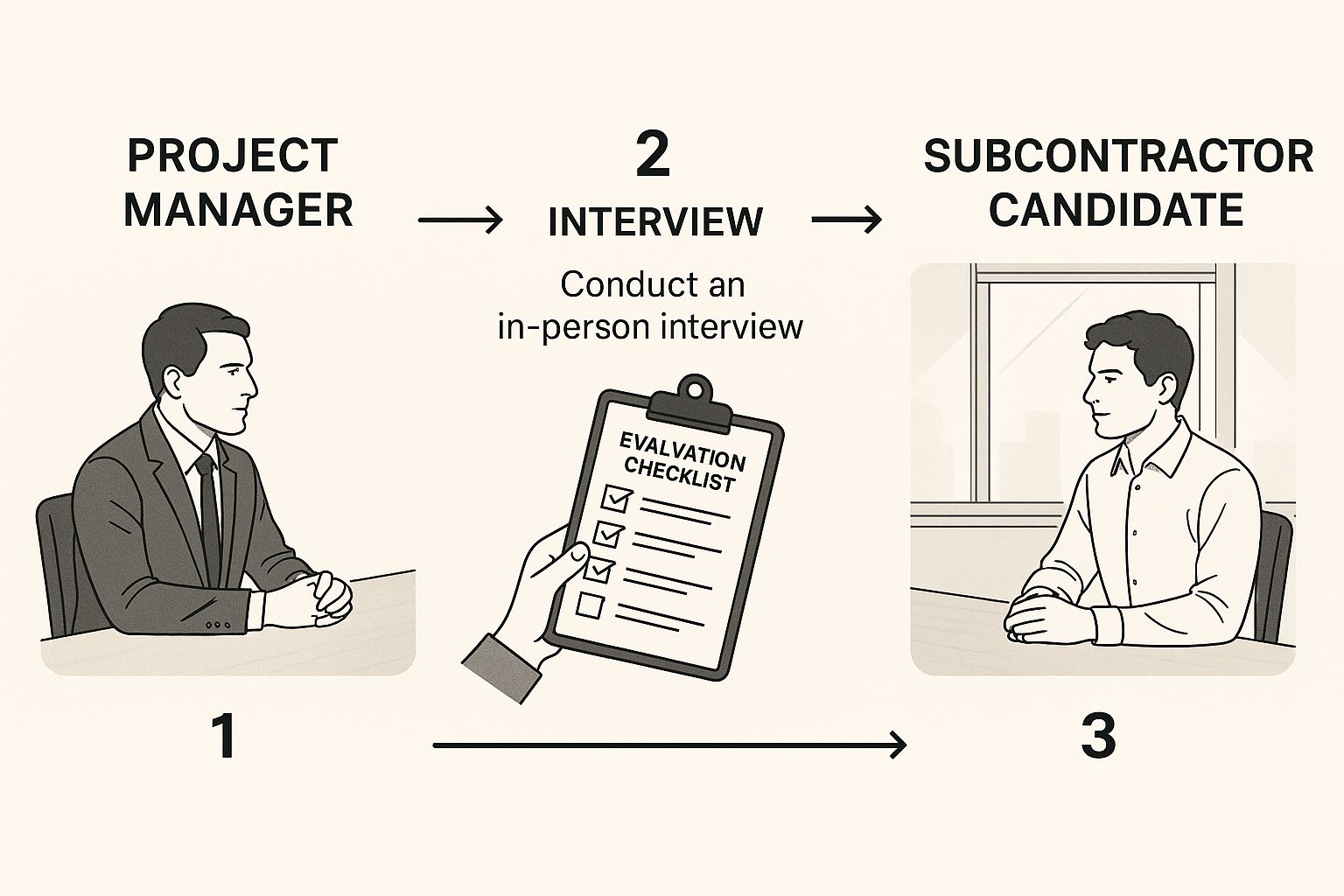
Having a systematic checklist like this is crucial. It allows you to compare different companies objectively and ensures you don't miss any critical details along the way.
This approach is only getting more important. Heading into 2025, the demand for specialized talent is climbing, especially in sectors like technology and energy. This is pushing companies to find skilled subcontractors in new regions they haven't explored before.
The Non-Negotiable Vetting Process
After you've got a shortlist, the real work starts. Vetting isn't just a quick phone call; it's a deep dive into a subcontractor’s stability, safety record, and past performance.
Your goal is to answer one fundamental question: Can this company deliver quality work safely, on time, and on budget?
To get that answer, your vetting process has to include these critical checks:
- Verify Licenses and Insurance: Always request and confirm their state contractor's license, general liability insurance, and workers' comp. Don't just take their word for it—get the certificate of insurance (COI) sent directly from their insurer.
- Scrutinize Safety Records: Ask to see their OSHA 300 logs and their Experience Modification Rate (EMR). An EMR below 1.0 shows a better-than-average safety record, while a rate significantly above that is a major red flag you can't ignore.
- Check References Systematically: Don’t just ask if the reference "liked" working with the sub. You need to dig deeper. Ask specific, pointed questions like, "Did they stick to the project schedule?" or "How did they handle unexpected change orders?" I always make it a point to call at least three references from projects similar to mine.
Evaluating Financial Stability and Past Performance
A subcontractor who is on shaky financial ground can quickly become a massive liability for your project. They might start cutting corners on materials, fail to pay their own suppliers (which could lead to liens on your project), or, in the worst-case scenario, just abandon the job completely.
A subcontractor's financial health is a direct indicator of their ability to complete a project successfully. Don't skip this step. It’s your best defense against performance issues and liens.
Ask for a financial statement or a letter from their bank or bonding agent. They might not be willing to share detailed profit-and-loss statements, but their willingness to provide some kind of financial assurance speaks volumes about their stability.
This step is especially critical for specialized jobs. For instance, when it comes to hiring an underground gas line installation contractor, their financial stability is directly tied to project safety and long-term success. Following this systematic approach helps you filter out the unreliable partners, letting you select the best with total confidence.
Crafting a Rock-Solid Subcontractor Agreement
On a busy job site, a handshake deal can feel quick and easy. In reality, it’s a recipe for disaster.
Once you’ve found the right subcontractor and you’re ready to get them started, the single most critical step is getting a clear, comprehensive agreement in writing. This legal document is your best defense against scope creep, payment arguments, and all the legal headaches that can derail a project. It’s not just paperwork—it’s the very foundation of a professional relationship.
Think of the contract as the final, official rulebook for the job. It takes all your conversations and turns them into binding commitments, making sure everyone knows exactly what’s expected of them. Trying to wing it with a generic template or, worse, no contract at all, leaves your business wide open to serious risks.
Core Components of a Strong Contract
Every subcontractor agreement needs to be dialed in for the specific project. A well-written contract should be so clear that it leaves nothing up for debate. While your lawyer should always give it a final look, you need to know what goes into it so you can lead the process.
At a minimum, your agreement must spell out these key details:
- The Statement of Work (SOW): This is the heart of the deal. The detailed SOW you already put together should be physically attached or written directly into the contract. This makes the deliverables, timelines, and quality standards legally binding.
- Payment Schedule and Terms: Get specific about the money. State the total price and how payments will be made—is it after hitting certain milestones, a monthly draw, or all at once upon completion? You also need to detail how they should submit invoices and your payment terms (e.g., Net 30).
- Insurance Requirements: Never just assume they’re covered. The contract must demand specific minimums for General Liability, Workers' Compensation, and Auto Liability. And here’s the most important part: the contract must require them to name your company as an "additional insured" on their policy and give you a Certificate of Insurance (COI) as proof before they set foot on your site.
Clauses That Protect Your Business
Beyond the basics, a few other clauses add crucial layers of protection. For any serious project—especially high-risk work performed by commercial excavation contractors—these are completely non-negotiable.
An indemnification clause is one you can't skip. This clause simply means the subcontractor agrees to cover any losses your company faces because of their mistakes or negligence. It’s your shield. For instance, if one of their crew gets hurt on-site because they weren't following safety rules, this clause helps protect you from getting sued.
A "flow-down" provision is another critical piece. This clause ensures that your subcontractor is legally obligated to adhere to all the relevant terms and conditions of your prime contract with the project owner. This alignment is essential for maintaining compliance across the entire project.
Finally, make sure there’s a clear dispute resolution process. Nobody wants to end up in court. This clause should map out the steps for handling a disagreement, usually starting with mediation before anyone considers arbitration or a lawsuit. It gives you a structured way to solve problems without things getting messy.
Putting It All Together
A strong contract isn't about mistrust; it’s about clarity. It protects both you and your subcontractor by making sure everyone is on the same page from day one. While federal contracts can be terminated for the government's convenience, your agreements with subcontractors are typically binding unless there is a default.
Before any work kicks off, get the contract signed by someone with authority from both companies. This signed document, along with the SOW and COI, becomes the official project record. By taking the time to build a rock-solid agreement, you’re creating a framework for accountability, minimizing risk, and setting your project up for a professional and successful partnership.
Managing Performance for Project Success

A lot of people think hiring a subcontractor is done once the ink on the contract is dry. From my experience, that’s when the real work actually begins. Your ability to manage their performance on-site is what separates a successful partnership from a project riddled with constant headaches.
This isn’t about micromanaging every single task. Not at all. It’s about building a truly collaborative environment where everyone knows the expectations, communication flows freely, and we’re all accountable for the same outcome. The goal is simple: integrate your subcontractor so they feel like a natural extension of your own crew.
Kicking Off on the Right Foot
A strong partnership always starts with a structured kickoff. Don't just fire off an email with a start date and hope for the best. A formal, in-person (or virtual) kickoff meeting is your best tool for setting the tone and getting everyone aligned from day one.
Think of this first meeting as your chance to cover the absolute non-negotiables:
- Safety First, Always: Walk them through your site-specific safety plan, emergency protocols, and how to report incidents. This isn't just a box to check; it shows that safety is your culture, not just a policy.
- Putting Faces to Names: Introduce their key people to your project manager, site superintendent, and anyone else they’ll be interacting with daily. Knowing who to call for what is critical for efficiency.
- The Nuts and Bolts: Go over the practical stuff—site access, where to store materials, work hours, and what you expect in daily reports. Nailing down these details early prevents small misunderstandings from snowballing into major issues.
Keeping the Lines of Communication Open
Vague communication is a project killer. You need a clear and consistent rhythm for updates that keeps you in the loop without bogging down your sub with endless paperwork.
Set up a regular check-in schedule. This could be a quick daily huddle on-site or a more formal weekly progress meeting. This dedicated time allows everyone to discuss what’s been done, tackle any roadblocks, and plan for the week ahead. Be clear about what you need in their reports, like daily logs detailing their crew size, equipment on-site, and work completed.
A well-managed project is built on proactive communication, not reactive fire-fighting. When you set up a clear reporting structure, you create a system that catches potential problems early, giving you the runway to fix them before they derail the schedule or budget.
This becomes even more crucial for specialized work. For instance, when our team handles underground electrical conduit services in Monterey and Santa Cruz County, constant coordination with plumbers, excavators, and other trades is the only way to prevent costly conflicts and ensure a clean installation.
Proactively Managing Quality and Getting Paid
Watching the clock is one thing, but verifying quality is another. Get out on site and conduct regular walks to inspect the work against the contract’s plans and specs. Document everything with photos and detailed notes, especially if you spot any deficiencies that need correction.
Then, when the work hits the mark and milestones are achieved, process payments promptly. Seriously, paying on time is one of the most powerful ways to build trust and goodwill. It shows you’re a reliable partner, which encourages your subcontractor to prioritize your project and keep delivering top-notch work. They’ll be eager to work with you again, and that’s the kind of relationship that pays dividends down the road.
Common Questions About Hiring Subcontractors
Even with the best plan in place, questions always pop up when you start bringing subcontractors on board. Getting answers to these common concerns ahead of time helps you move forward with confidence and keeps small hiccups from turning into major project roadblocks. Let's tackle some of the most frequent questions we hear from project managers out in the field.
What Is the Difference Between a Subcontractor and an Employee?
This is probably the most critical distinction to get right, as it has huge legal and financial consequences. The main difference really comes down to one word: control.
- Employees are on your payroll. You control their work hours, you provide their tools, and you direct not just what work gets done, but how it gets done. You’re also on the hook for their payroll taxes, insurance, and any benefits.
- Subcontractors, on the other hand, are independent business owners. They bring their own equipment, set their own hours (within the project’s schedule, of course), and have full control over their methods. You’re paying for a specific result, not for their time.
Mishandling this classification can bring serious penalties from the IRS and state labor departments. Always make sure your agreements and your day-to-day working relationship clearly reflect a true subcontractor dynamic.
How Much Should I Expect to Pay a Subcontractor?
There’s no magic number here. Rates depend heavily on the specific trade, your location, and how complex the job is. But one thing I've learned over the years is that the lowest bid is rarely the best deal. A price that seems too good to be true is often a red flag for inexperience, poor safety practices, or a plan to cut corners on materials.
Instead of just chasing the lowest price, you should evaluate bids based on value. A slightly higher bid from a subcontractor with a rock-solid safety record, glowing references, and proven experience on similar jobs is almost always the smarter investment. Why? Because they’re far less likely to cause delays or perform shoddy work that needs to be redone, which saves you a ton of money and headaches in the long run.
Is My Company Liable If a Subcontractor's Employee Gets Hurt?
Liability is a huge concern, and the short answer is: yes, you could be. This is exactly why verifying their insurance is a non-negotiable step in your vetting process. Your subcontractor agreement must require them to carry adequate Workers' Compensation and General Liability insurance.
Always get a Certificate of Insurance (COI) sent directly from their insurer that names your company as an "additional insured." This piece of paper is your proof of coverage and your first line of defense if something goes wrong on your job site.
This proactive risk management fits into a broader trend. The 2025 global hiring outlook shows that employers are taking a more cautious, strategic approach, often favoring contingent staff to remain agile. Using subcontractors allows businesses to adapt to market shifts while managing certain risks effectively. You can read more about these developing hiring trends for 2025.
Ultimately, your best protection comes from a combination of a strong contract, verified insurance, and a robust site safety plan. Managing these details is a core part of hiring subcontractors the right way.
At Coastal Pipeline Inc., we understand that successful projects are built on a foundation of reliable, expert partnerships. For professional underground utility, excavation, and paving services across California’s Central Coast, trust our experienced team to deliver. Contact us today to discuss your next project.