
That small puddle lingering by the curb after a rainstorm? It might look harmless, but it's often the first warning sign of a clogged storm drain. If you ignore it, you could be setting yourself up for expensive property damage—turning a tiny issue into a massive headache after just one heavy downpour. Thinking about residential storm drain cleaning as a proactive investment, not a chore, is the key.
Why Ignoring Your Storm Drain Is a Costly Mistake
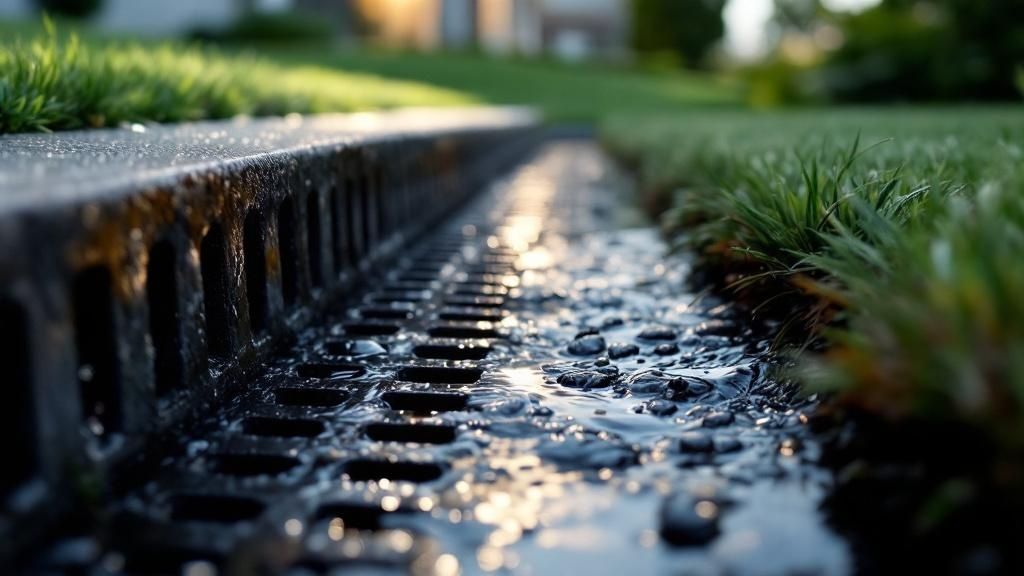
The real problem with a neglected storm drain isn't just the visible street-level flooding. It’s the hidden consequences that can quietly wreak havoc on your home's value and structural integrity. When water has nowhere to go, it backs up and seeps into the ground around your property.
This constant saturation creates a domino effect of problems. Over time, that persistently wet soil can weaken your home's foundation, leading to cracks and serious structural shifts. It also creates the perfect damp environment for mold and mildew to thrive, which can pose a risk to your family's health.
Spotting Trouble Before It Starts
The signs of a failing drain system are often subtle before they escalate into a full-blown emergency. Catching these early clues can save you a fortune in repair bills down the road.
Here are a few things I always tell homeowners to watch for:
- Persistent Damp Spots: If parts of your lawn or driveway stay soggy long after the rain has stopped, water isn't draining correctly.
- Foul Odors: That unpleasant smell, especially on warm days, is likely from leaves and other gunk rotting inside the drain.
- More Pests: Standing water is a breeding ground for mosquitoes and other unwanted pests.
Noticing these symptoms means a blockage is already starting to undermine your property. It's no surprise the demand for professional help is growing. The global sewer cleaning services market is expected to jump from USD 4.5 billion to USD 7.2 billion by 2033, a clear sign that homeowners are realizing the high cost of neglect.
Early Warning Signs of a Clogged Storm Drain
To help you spot issues quickly, I've put together this simple reference table. Think of it as a quick diagnostic tool for your property's drainage health.
| Symptom | What It Means | Recommended Action |
|---|---|---|
| Water Pooling in Yard | The drain is partially or fully blocked, preventing proper water flow away from your property. | Inspect the drain grate for visible debris and consider a professional inspection. |
| Gurgling Sounds | Air is trapped in the pipeline due to a blockage, causing a gurgling noise as water struggles to pass. | This is an early sign of a clog forming. Schedule a cleaning before it worsens. |
| Slow Draining Sinks | If indoor drains are also slow, the blockage may be in the main sewer line connected to the storm system. | Call a professional plumber immediately to diagnose the issue. |
| Unpleasant Odors | Trapped organic matter like leaves and sludge is decomposing inside the drain. | A hydro-jetting service can effectively clear out smelly buildup. |
Catching these signs early and taking action is the best way to prevent a small problem from becoming a costly, property-damaging emergency.
A simple clog of leaves and dirt can quickly escalate. When soil becomes saturated, it loses its structural strength. This leads to landscape erosion that can strip away topsoil, kill your plants, and even damage retaining walls and patios.
Taking a moment to understand how comprehensive storm drainage systems in Monterey and Santa Cruz County are designed to work can really highlight their importance. At the end of the day, treating residential storm drain cleaning as routine preventative maintenance is one of the smartest financial moves you can make as a homeowner.
Gathering Your Essential Tools and Safety Gear
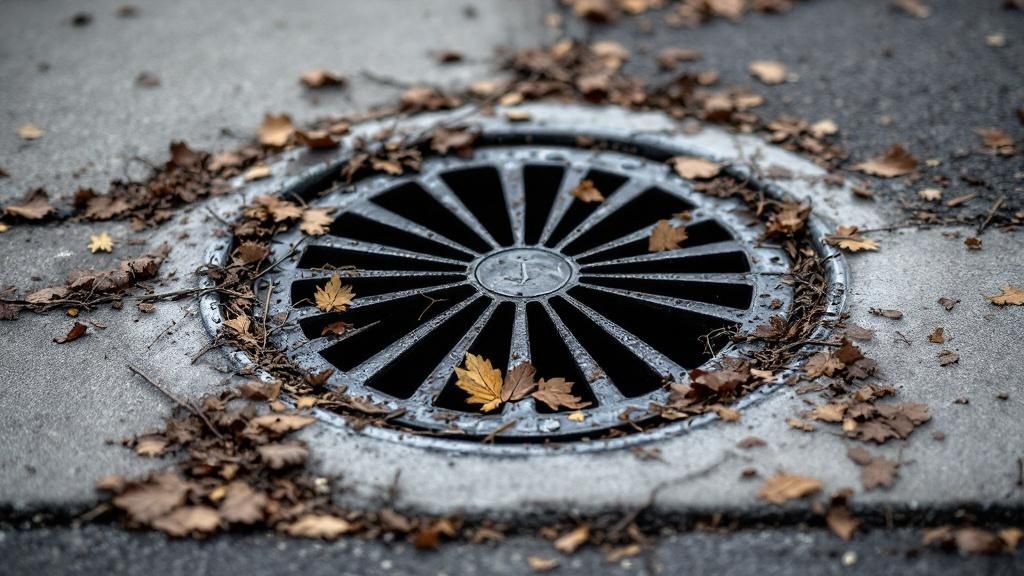
Before you even think about lifting that heavy grate, a successful storm drain cleaning project starts with having the right equipment ready to go. Good preparation doesn't just make the job easier—it's absolutely critical for your safety.
You're not just dealing with a bit of mud and a few leaves here. You're about to tackle a mix of stagnant water, sharp debris, and plenty of unseen bacteria. So, let’s get your gear in order.
The first things on your list, no exceptions, should be your safety equipment. Heavy-duty, waterproof gloves are a must. They’re your first line of defense against jagged metal, broken glass, or nasty germs. Just as important are safety glasses or goggles to shield your eyes from the inevitable splashback, especially when you start flushing the drain with water.
Your Core Cleaning Toolkit
With your safety sorted, it’s time to assemble your tools. You don't need a truck full of professional-grade equipment, but a few key items will make all the difference between a quick cleanup and an all-day struggle.
Here’s what I recommend having on hand:
- Pry Bar or Large Flat-Head Screwdriver: Those grates can be surprisingly heavy, and they often get sealed shut with rust and grime. A sturdy lever is essential for safely popping it open without throwing out your back.
- Garden Trowel and Bucket: Perfect for scooping out that first layer of thick, smelly sludge—the compacted leaves, dirt, and whatever else has washed down there.
- High-Pressure Hose Nozzle: This little attachment turns your standard garden hose into a powerful flushing tool. It’s great for blasting away compacted gunk deeper inside the pipe.
- Drain Auger (or "Snake"): If flushing doesn’t clear a stubborn clog, a manual drain auger is your go-to for breaking it up and getting things flowing again.
Keep in mind, this approach is for clearing the immediate pipe leading from the curb. More complex setups, like those detailed in our guide on the benefits of a drainage trench, have different maintenance needs.
Having these tools ready before you start ensures you can handle most common blockages efficiently and safely. It's the best way to prevent a minor cleanup from escalating into a major headache.
Your Practical Guide to Clearing a Clogged Drain
Alright, you've got your tools and safety gear on. It's time to get your hands dirty and tackle that clogged storm drain. The trick is to work smart, not just hard. Always start with the simplest fix before you bring out the heavy-duty equipment.
First thing's first: you need to see what you're up against. Pop open the drain grate and take a good look inside. Is it just a top layer of leaves and stray trash, or are you dealing with a deep, packed-down mess of mud and sediment? What you see will dictate your next move. For a lot of clogs, the problem is right there at the surface.
Manual Debris Removal
Your initial attack should be manual. Grab your trowel and bucket and start scooping out all the gunk you can reach—leaves, twigs, plastic, and that thick, smelly sludge. You’d be surprised how often this simple step does the trick.
Sometimes, just clearing out that top layer of junk is all it takes to get the water moving again, especially if the clog is fresh. Once you've pulled out the obvious debris, step back and watch. If you see the water level start to drop, you know you're making progress. This is the foundation of any good drain maintenance routine.
This visual guide breaks down the entire process, from that first look to the final check.
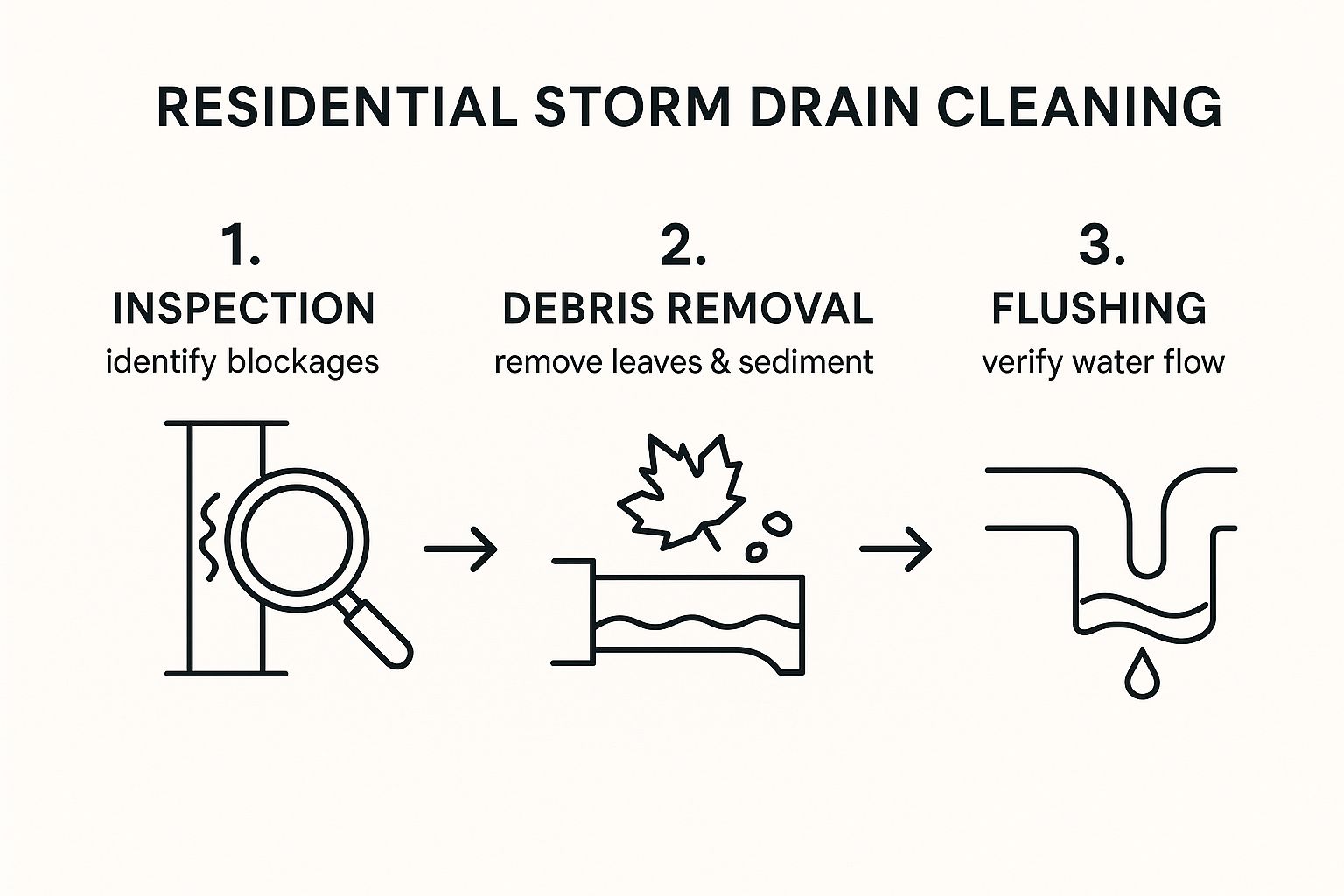
As the infographic shows, a successful cleaning always follows the same basic path: inspect the problem, remove what you can, and then flush the rest out. Sticking to this order ensures you cover all your bases.
Flushing and Advanced Techniques
With the surface-level debris gone, it's time to bring in some power. Grab your garden hose and attach a high-pressure nozzle. This is how you'll attack the gunk hiding deeper in the pipe.
Feed the hose a few feet down into the drain and let it rip at full blast. You’ll want to work the hose back and forth, aiming that powerful jet of water to break up stubborn grime caked onto the pipe walls. The idea is to use the water's force to dislodge the sediment and push it down the line. Keep at it for a solid 10-15 minutes. For more complex setups, like those with underground channels, you might find our complete guide to understanding a drainage trench helpful for their specific needs.
Expert Tip: If water is still pooling or draining at a snail's pace after 15 minutes of non-stop flushing, that clog is too tough for water pressure alone. That’s your signal to turn off the hose and try a different tool.
If the hose didn't cut it, it’s time to escalate to a manual drain snake, also called an auger.
- Carefully feed the auger’s cable into the pipe until you feel it hit the blockage.
- Once you feel that resistance, start turning the handle clockwise. This motion helps the auger's tip burrow into the clog and break it apart.
- Gently pull the auger back to pull the dislodged debris out of the pipe.
You may need to repeat this process a few times, but you'll know you've succeeded when you finally break through and the water starts flowing freely.
Knowing Your Limits and When to Call a Pro
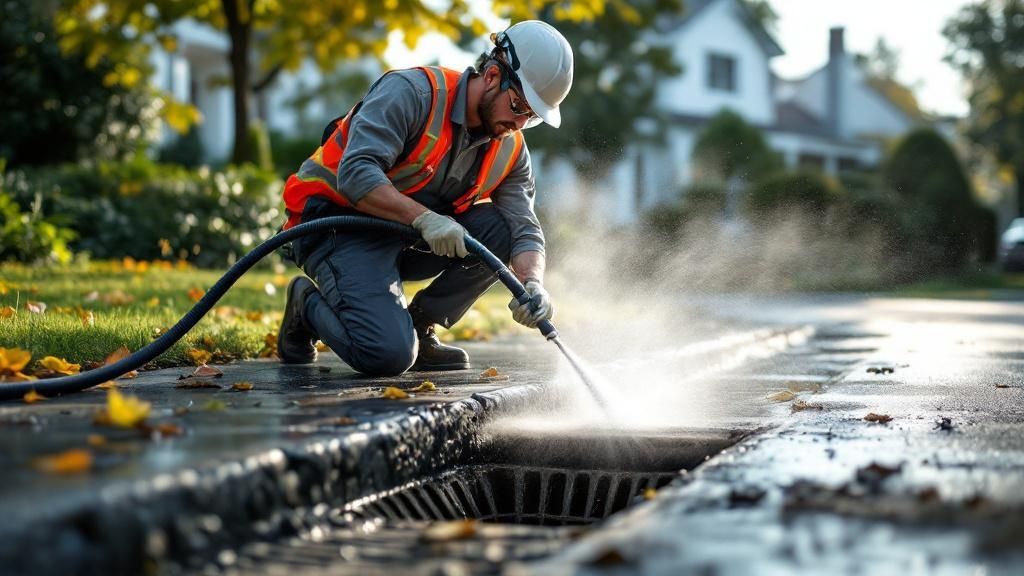
There's a lot of satisfaction in a successful DIY project, but a truly smart homeowner also knows when to step back. While you can handle minor storm drain clogs with the right approach, pushing your luck—or your tools—can quickly escalate a simple blockage into a much more expensive pipe repair.
Knowing the red flags is crucial. If you've already tried flushing and snaking the drain but water is still backing up or draining slowly, it's a good sign the blockage is deeper or more stubborn than household tools can manage. That’s your first cue to put down the auger and call in an expert.
Another major warning sign is any physical change to the ground surrounding your drain. Are you noticing new cracks in the pavement? Is there a sunken, perpetually soggy patch in your lawn? These are classic symptoms of a broken, crushed, or collapsed underground pipe. Attempting to force tools or more water through it will only worsen the damage.
When Professional Services Are Necessary
Sometimes, the issue isn't just a seasonal buildup of leaves and debris. Complex problems buried deep in your system demand specialized equipment and the experience to use it safely. This is where professional residential storm drain cleaning services are not just helpful, but necessary.
Calling a pro is the smartest move in these scenarios:
- Recurring Clogs: If you find yourself clearing the same drain every few months, there’s an underlying issue that a simple drain snake will never resolve.
- Suspected Tree Root Intrusion: Tree roots are powerful. They can work their way into pipes, creating a dense, tangled mass that requires high-powered cutting tools to remove.
- Deep Blockages: Clogs located far down the pipeline are simply out of reach for the consumer-grade drain snakes you'd buy at a hardware store.
- Visible Pipe Damage: Any sign of cracks, separation, or ground sinking means the pipe itself needs a professional assessment and likely a repair.
Calling a professional isn’t giving up; it’s making a strategic decision to protect your property. Services like hydro-jetting, which uses high-pressure water to obliterate stubborn blockages, are far more effective than any DIY method for severe clogs.
Even municipal governments rely on heavy-duty equipment for their systems. The US municipal sector dominates 53.4% of the storm water cleaning market, using specialized techniques like hydro-excavation and root cutting that are also available for serious residential issues. For backups that affect indoor drainage, like in a basement or crawl space, the issue might also involve your sump pump. Our guide to sump pump services in Monterey and Santa Cruz County can offer more specific insights.
Smart Habits for Long-Term Drain Maintenance
The best way to handle residential storm drain clogs is to stop them before they even start. I've seen it time and time again: shifting from reactive cleaning to proactive prevention saves homeowners an incredible amount of time, money, and hassle. It really just comes down to building a few simple habits into your regular home maintenance.
A little bit of prevention goes a very long way. The single most powerful habit you can adopt is to regularly sweep debris away from the path to your drain. Think about all the leaves, grass clippings, and dirt that build up on your driveway, patio, and along the curb. Every time you sweep, you're stopping that material from washing down and becoming the next big headache.
Creating a Seasonal Maintenance Rhythm
Consistency is your best friend when it comes to preventing clogs. Setting up a simple, repeatable schedule keeps your drains clear all year, even when the heavy rains hit. This doesn't need to be some complicated, all-day chore; just a couple of key cleanups will make all the difference.
Here’s a practical seasonal rhythm I recommend to homeowners:
- Late Fall Cleanup: This is your most important task of the year. After the trees have dropped all their leaves, do a thorough sweep of your property. Get all those leaves and twigs cleared away from the drain so they don't form a thick, matted clog over the winter.
- Spring Refresh: Winter storms can wash a surprising amount of sand, gravel, and other grit toward your drains. A quick spring cleaning ensures that all that water from April showers can flow away freely without backing up.
A fantastic way to boost your prevention efforts is by installing a simple drain guard or screen over the grate. These inexpensive devices are great at catching larger debris like leaves, twigs, and trash while still letting water pass through easily.
Adopting these habits is a key part of effective long-term storm water management systems. This proactive mindset is what separates a well-maintained property from one that's always on the brink of a drainage emergency. It’s not about adding another major chore to your list—it’s about making small, consistent efforts that pay off big in property protection and peace of mind.
Got Questions About Storm Drain Cleaning?
Even the most prepared homeowner runs into questions when dealing with storm drains. Getting the right answers helps you stay on top of maintenance, avoid costly mistakes, and keep your property's drainage system working as it should. Let's tackle a few common ones we hear from clients.
How Often Should I Clean My Drain?
This really depends on your property. For most homes, a good, thorough cleaning once or twice a year gets the job done. I usually recommend a schedule that includes one cleaning in late fall to get rid of all those leaves and another in the spring to clear out the sand and grit that builds up over the winter.
Now, if your yard is full of large, leafy trees or you live somewhere that gets hammered with heavy rain, you'll want to be more proactive. A quick visual check after a big storm can help you spot a small problem before it turns into a major backup.
Can I Use Chemical Drain Cleaners?
The short answer? Absolutely not. You should never pour chemical drain cleaners into a storm drain. These products are incredibly toxic and, unlike your indoor plumbing, storm drains empty directly into local waterways like rivers and lakes without any treatment.
This directly poisons fish, wildlife, and the entire ecosystem. It's best to stick with manual cleaning methods and flushing with plain water.
It's easy to get confused, but here's the key difference: a storm drain leads straight to the environment. A sanitary sewer drain, which handles water from your sinks and toilets, sends wastewater to a treatment plant first. One pollutes our natural resources, while the other can cause a messy backup inside your house.
Proper maintenance is becoming more critical than ever. The global market for stormwater cleaning is expected to reach USD 5 billion by 2035, driven by professional tools like vacuum loaders. This growth, highlighted in recent stormwater cleaning services market analysis, shows a clear shift toward taking this infrastructure seriously. For homeowners, it reinforces why using safe, effective methods is non-negotiable.
When a simple cleaning doesn’t cut it, it's time to bring in the pros. For expert assessments and services ranging from hydro-jetting to complete system repairs, you can trust the team at Coastal Pipeline Inc. Contact us today and we'll make sure your property is ready for whatever the weather throws at it.