
Fixing a cracked driveway might seem like a big job, but it's easier than you think. Learning how to repair a driveway asphalt is about a few simple steps: cleaning the broken area, filling it with the right material, and protecting the repair so it lasts. All you need is a little patience and the right tools to get a smooth, long-lasting finish.
Your Quick Guide to Asphalt Driveway Repair
Don't let ugly cracks and potholes ruin the look of your home. A damaged driveway is not just ugly—it's a sign that water might be getting underneath. This can lead to much bigger and more expensive problems later on.
Even small problems like thin cracks can get bigger quickly, especially in places where it freezes and thaws.
The good news? Fixing these problems yourself is probably easier than you think. With just a few hours of work, you can stop the damage from getting worse and make your driveway last longer. This guide will show you everything you need to know to do the job right.
Matching the Damage to the Right Repair
First, you need to figure out what kind of damage you have. A tiny crack needs a very different fix than a deep pothole. If you use the wrong material, you'll end up with a weak patch that won't even last through the next season.
A common mistake I see homeowners make is using one type of filler for all kinds of damage. This usually fails because the material can't stick correctly or handle the stress of a bigger hole.
To help you get started, I've made a quick guide to match the problem with the best product for the job. While doing it yourself can save money, it's also smart to know what a professional would do. You can learn more about the costs of professional work to help you decide on bigger projects.
Matching the Damage to the Right Repair
Use this quick guide to find your driveway's problem and the best product to fix it.
| Type of Damage | What It Looks Like | Best Repair Material |
|---|---|---|
| Hairline Cracks | Very thin cracks, less than 1/4 inch wide. | Liquid Crack Filler or Pourable Sealant |
| Alligator Cracks | A pattern of cracks that looks like a spiderweb. | Alligator Patch or Trowelable Sealant |
| Wide Cracks | Cracks between 1/4 and 1/2 inch wide. | Pliable Crack Stix or Thicker Filler |
| Potholes | Deep, round holes in the asphalt. | Cold Patch Asphalt Compound |
Choosing the right material from the start is the key to a repair that looks good and is strong enough to last.
Inspecting Damage and Gathering Your Supplies
Before you start patching, you need to be a detective for a little while. A good, careful check is the most important first step because it tells you exactly what you're up against. Not all cracks and holes are the same, and using the wrong product is a sure way to end up doing the same repair again next year.
Start by walking around your whole driveway. Get a good look at everything and maybe write down some notes. Do you see lots of thin, spider-like lines? Those are hairline cracks. They are the easiest to fix, but they can let a lot of water in if you ignore them.
Identifying Deeper Issues
Look for more serious problems, too. If you see a web-like pattern of cracks, you're looking at "alligator cracking." The name makes sense—it looks like an alligator’s back. This is usually a sign of a problem with the foundation underneath, meaning water has already started to weaken the base layer.
Potholes are the easiest problem to spot, of course. These are the deep, round holes that are bad for your car’s tires. They usually form when water gets into the ground, freezes, expands, and then melts. This causes the asphalt above to fall into the empty space. Knowing the specific types of cracks in your asphalt driveway helps you choose a lasting repair instead of a quick fix.
Here's the bottom line: you have to figure out how deep and bad the damage is. A simple crack on the surface just needs a liquid filler, but a big pothole needs a strong cold patch material to rebuild it.
Your Complete Shopping List
Okay, now that you know what kind of damage you have, it’s time to go to the hardware store. Getting all your supplies together before you start will make the job go much more smoothly. I like to think of any asphalt repair in two parts: cleaning and patching.
For the cleaning part, you’ll need:
- A pressure washer or a good stiff-bristled broom to get rid of dirt and loose bits.
- A wire brush or an old screwdriver to dig out the dirt and weeds from inside the cracks.
- An asphalt cleaner if you have any oil spots or stains.
For the repair part, your list will depend on what you found during your check.
- For hairline cracks: Get a bottle of pourable liquid crack filler.
- For alligator cracks: You’ll need a trowelable alligator patch compound.
- For potholes: A bag of cold patch asphalt is what you need.
- A tamper or a solid 4×4 wood block to pack the patch material down tight.
Last but not least, don't forget your safety gear. Always wear a pair of heavy-duty gloves to protect your hands. And safety glasses are a must—you don't want bits of rock or cleaner flying into your eyes. With your plan and tools ready, you're all set for a successful repair.
Prepping the Surface for a Lasting Fix
Here’s something I’ve learned from years of paving work: think of repairing your driveway like painting a wall. If you just paint over dirt and old, peeling paint, what happens? It fails. It’s the same with asphalt repair. The prep work you do now is the secret to a fix that really lasts.
A clean, dry, and solid surface is a must. Without it, the new filler or patch has nothing to stick to. This means all your hard work could come apart in just a few months, and you'll have to do the job all over again.
Clearing Out Debris and Weeds
Your first job is to get every crack and pothole you plan to fix perfectly clean. Don't just sweep it quickly; you need to dig in and get all the junk out from inside the damaged areas. Anything that could block a strong bond has to go.
- Start by digging out any weeds, grass, or moss. An old screwdriver or a painter's tool is perfect for this.
- Next, grab a stiff wire brush. Scrub the inside edges of the cracks and potholes hard to get rid of any loose asphalt, small rocks, and packed-in dirt.
Once you’ve loosened everything up, it’s time to get it out. A strong shop vacuum is your best friend here—it will suck out all the fine dust and tiny bits that a broom always misses. If you don't have one, a leaf blower or a very good sweeping can work too.
The goal here is simple: get the crack or pothole as clean as you possibly can. Any dirt or loose material left behind acts like a wall, stopping the new patch from sticking and creating a weak spot from the start.
Dealing with Stains and Moisture
Car fluids like oil and gasoline can sink deep into asphalt. They create a greasy film that stops new materials from sticking. If you see any of those dark, slick stains in the repair area, you must clean them up.
Use a special asphalt degreaser and scrub it into the stain with your wire brush. Just follow the directions on the product, which usually tell you to let it sit for a bit before rinsing it away. It might seem like an extra step, but it’s very important for a strong, lasting fix.
After all the cleaning, the final—and most important—step is to make sure the area is completely dry. Moisture is the #1 enemy of a good asphalt repair. Any dampness trapped under a new patch will turn to steam on a hot day. This will push the material up from underneath and cause it to fail.
Wait for a warm, sunny day and let the driveway air-dry completely. If you’re in a hurry, a leaf blower can help speed up the process.
It's clear why taking care of your driveway is so important. The global market for these repair products was worth about $4.88 billion in 2025 and is expected to keep growing. This shows just how vital this work is for property owners. You can find more information about the asphalt repair materials market and its growth in recent reports. Now, your perfectly prepped surface is ready for a lasting repair.
Applying Patches and Fillers the Right Way
With your driveway clean and dry, you’re ready for the fun part—actually fixing the damage. This is where you get to see those ugly cracks and potholes disappear. But how you apply the repair material is just as important as all the prep work you just did.
The goal is to create a solid repair that blends in and can handle traffic and weather. Whether you're fixing a thin crack or a big pothole, your method will decide how long the fix lasts.
Tackling Cracks with Precision
For smaller cracks—anything up to about half an inch wide—a liquid or pourable crack filler is your best choice. Using it is pretty easy, but being careful helps a lot.
- Cut the Tip Just Right: Start by cutting the end of the bottle's tip. You want the opening to be just big enough to make a line of filler that’s a little wider than the crack.
- Fill from the Bottom Up: Squeeze the bottle gently and put the filler right into the crack. You want to fill it completely from the bottom to the top to avoid trapping air bubbles.
- Smooth It Over: Once the crack is full, use a putty knife to smooth the filler so it’s level with the asphalt around it. Scrape away any extra for a clean look.
Don't worry if the filler seems to sit on top of very thin cracks. That's normal—it will sink in as it dries. The most important thing is that you've created a waterproof seal over the top.
Patching Potholes for a Solid Surface
Fixing a pothole is a bit more work, but it's still simple. You'll use a product called cold patch asphalt. This is a ready-to-use asphalt mix that gets hard as you pack it down.
Start by pouring the cold patch into the clean pothole. The key to a strong patch is to add it in thin layers, not all at once.
Add about 2 inches of the cold patch material and spread it out evenly. Now comes the most important part: packing it down. This step squeezes out air pockets and makes the repair strong. You can use a hand tamper or the end of a 4×4 piece of wood. Pound the material down hard until it feels completely solid.
Pro Tip: Keep adding and tamping the cold patch in 2-inch layers until it is about half an inch above the rest of the driveway. You're overfilling it on purpose. The patch will settle a little over time, and this extra height will make sure it ends up perfectly level.
Putting a piece of plywood over the fresh patch can help you make it flat when you drive your car over it for the final packing. For more ideas on how to do this, our article on professional asphalt patching and repair has some great tips.
This image shows the final sealing step after your patch has hardened.
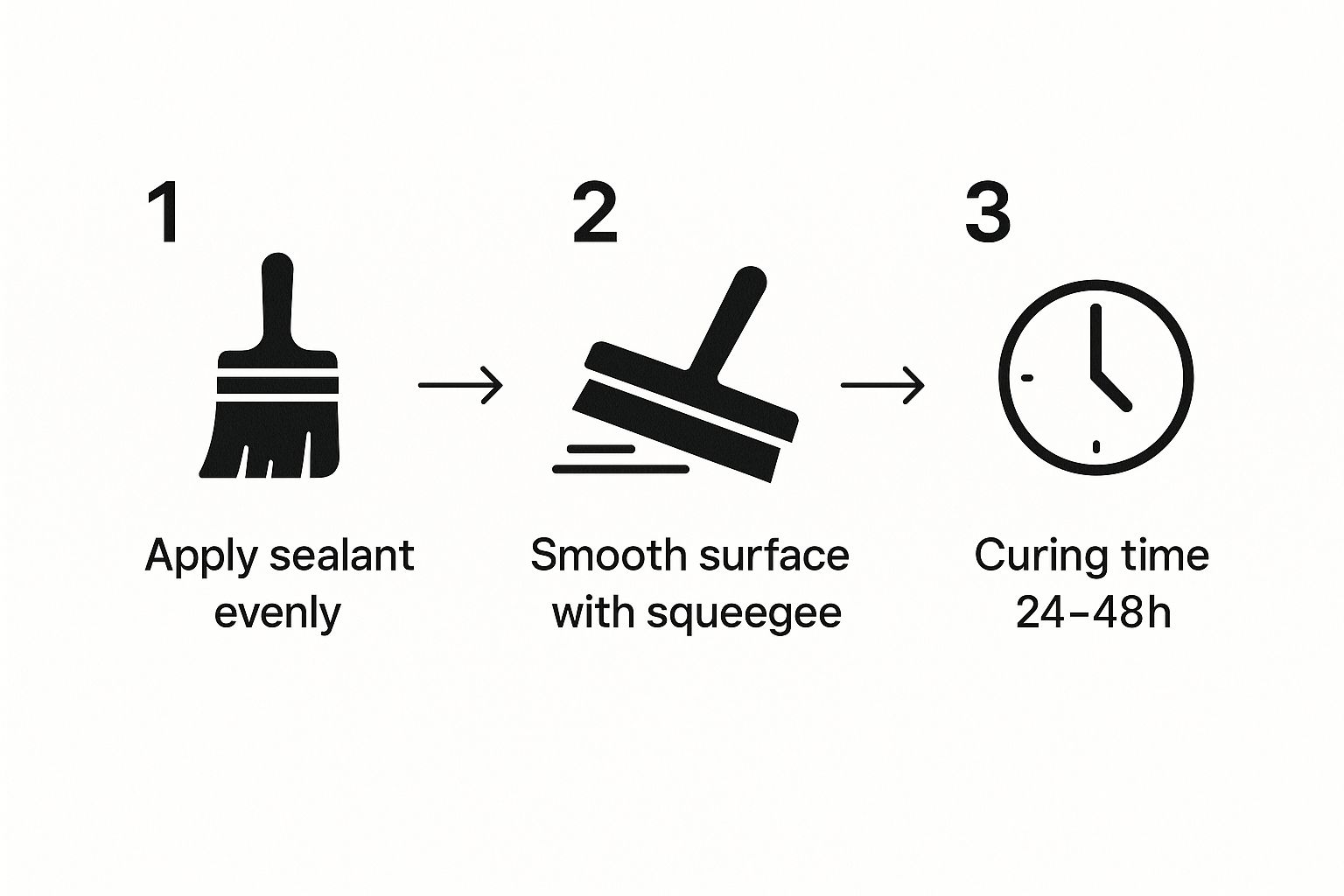
As you can see, putting on an even coat of sealant and giving it plenty of time to dry is what protects your new repair and makes it last.
Using cold mix asphalt is also a good choice for the environment. The global market for this material was worth $3.2 billion in 2024 because it doesn't need to be heated. This saves energy and lowers costs for homeowners. It's also easy to use, making it perfect for DIY driveway repairs.
Finishing and Sealing Your Repaired Driveway
You’ve done all the hard work of cleaning and patching, but don't stop yet. The final steps are about protecting your repairs so they last. Skipping this part is like building a great fence but leaving the gate open—it leaves your hard work at risk.
Finishing the job right means giving your patch time to get hard and then putting on a quality sealcoat. This last layer is like armor for your driveway. It protects it from the same things that caused the damage in the first place.
Let It Cure: The Waiting Game is Crucial
After you’ve patched a hole or filled a crack, the most important thing you can do is… wait. The material needs to cure. This is the process where it gets fully hard and sticks to the old asphalt around it. This is what makes the fix permanent.
Driving over a fresh patch too soon is the fastest way to ruin your work. The weight of a car will squeeze the filler out of place or leave deep marks, wrecking the repair before it even had a chance.
How long you need to wait depends on a few things:
- The Product: A bag of cold patch asphalt will take much longer to set than a liquid crack filler. Always check the directions on the package—the maker knows their product best.
- The Weather: Sunny, warm, and dry days are best. They help everything cure faster. High humidity or cool temperatures can make the wait time twice as long.
As a general rule, plan to keep all cars, bikes, and people off the repaired spot for at least 24 to 72 hours. If you’ve filled a deeper pothole, giving it an extra day or two is a good idea. Being patient now will save you a headache later.
Apply a Protective Sealcoat
Once your patch is fully cured and hard, it’s time for the final touch: a sealcoat. Think of it as sunscreen for your asphalt. It creates a tough, waterproof layer that protects the whole surface—including your new patches—from sun, water, and spills like oil and gas.
This protective layer does more than just protect. It gives your whole driveway a fresh, deep black look, making it seem brand new. More importantly, it helps stop new cracks from starting.
Putting on an even coat of sealant is the final step that brings the whole repair together. It protects the new patch and makes it blend in with the rest of the driveway for a clean, professional look.
The best tool for the job is a simple squeegee. Pour a line of the sealant at the top of your driveway and use the squeegee to pull it down in smooth, overlapping strokes. The goal is a thin, even coat without any puddles.
To learn more about this important step, you can look into the benefits of professional asphalt sealcoating services that keep your driveway in great shape for years. This final coat is what truly completes the job of repairing asphalt the right way.
Frequently Asked Questions About Driveway Repair
Even after reading the steps, you might still have a few questions. That's normal when you're learning how to patch an asphalt driveway. Let's go over some of the most common questions to help make sure your project is a success.
When Is the Best Time of Year to Repair My Driveway?
The best time to repair an asphalt driveway is during warm, dry weather. Think late spring, summer, or early fall.
Most patch and sealant products need temperatures to be at least 50°F (10°C) to cure and stick properly. If you try to patch a hole when it’s cold or wet, the material won't stick right and will probably fall apart within a few months. Sunny, warm days are best—they help everything get hard faster, creating a fix that will last. For more info, check out our guide on how weather affects asphalt repairs.
Can I Just Fill a Pothole with Gravel or Dirt?
That might seem like a quick fix, but it's one of the worst things you can do. Filling a pothole with loose material like dirt or gravel is not a real repair.
These materials don't stick to the asphalt around them. The next time it rains, they will wash right out. Even if it stays dry, your car tires will kick them out quickly. This creates a weak spot that can cause the nearby asphalt to break down even faster. For a lasting fix, you must use a real asphalt patching product, like a cold patch. It is made to be packed down and harden into a strong surface.
A temporary filler like gravel doesn't solve the real problem. It's like putting a bandage on a deep cut—it might cover it up for a little while, but it won't actually heal it.
The worldwide need for proper paving asphalt shows how important good materials are. The market was worth around $30.44 billion in 2021 and keeps growing. This shows the importance of real maintenance for roads and driveways everywhere. You can see the full research on the paving asphalt market's expansion to understand how vital this industry is.
How Often Should I Seal My Driveway After a Repair?
Once your new patch has had plenty of time to fully cure, sealing the whole driveway is a great idea. As a general rule, you should plan to sealcoat your asphalt every 2 to 4 years.
How often you do it really depends on your local weather and how much you use your driveway. A sealcoat acts as a protective shield against sun, rain, and oil spills. This helps stop new cracks from forming. It also brings back that deep, black color, making your whole driveway look new again.
For professional paving and underground utility services on California's Central Coast, trust Coastal Pipeline Inc. to handle your project with expertise. https://coastalpipelineinc.com