When we talk about commercial parking lot maintenance, we mean taking care of your asphalt or concrete. This includes cleaning, fixing, and protecting the surface. The goal is to keep your parking lot safe, useful, and looking good. This guide covers tasks like crack sealing, sealcoating, and fresh line striping. These jobs stop small problems from becoming big, expensive ones and help your pavement last longer. Taking care of your parking lot is one of the best things a property owner can do.
Your Parking Lot Is Your First Impression
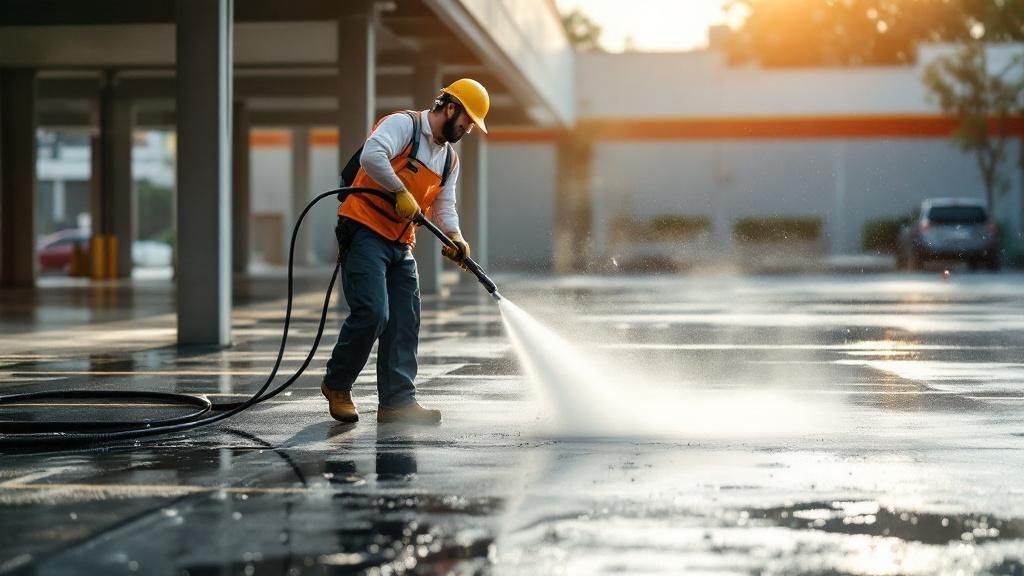
Think of your parking lot as a welcome mat for your business. A customer’s experience starts the moment they drive in, long before they walk through your door. A crumbling, faded lot with potholes sends a clear message: this place is not well-cared for.
That first look helps people form an opinion about your whole business. On the other hand, a clean, smooth, and clearly marked parking lot shows that you are professional and care about details. It also shows you care about your customers’ safety. It’s like the first handshake, and you want it to be a good one.
More Than Just Pavement
Besides looking good, a well-kept parking lot is a valuable part of your business. Regular commercial parking lot maintenance is not just another task. It is a smart move that protects your money and keeps your property safe.
Ignoring small problems like a few cracks or faded lines can lead to expensive trouble later. A small crack lets water get under the asphalt, which weakens it from the inside. Soon, that small problem can turn into a huge pothole. Potholes are dangerous for both cars and people.
A good maintenance plan is one of the best ways to protect your property’s value. It changes a huge expense—like replacing the whole lot—into smaller, regular costs you can manage.
By fixing small issues early, you stop them from turning into costly emergencies. This not only saves you a lot of money but also lowers the risk of accidents, like trips and falls, on your property.
A Growing Industry and a Smart Investment
The parking lot maintenance market is growing because property owners know how important it is. In North America, this market was worth about USD 16.08 billion in 2023 and is expected to grow. This shows that more owners see maintenance as a smart investment, not just a bill. You can learn more about the growth in the parking maintenance industry and its trends.
Putting money into your parking lot helps you in many ways:
- Better Customer Experience: A clean, safe lot makes customers feel welcome.
- Improved Safety: Clear markings and a smooth surface help prevent accidents.
- Higher Property Value: A nice parking area makes your whole property look better and worth more.
- Long-Term Savings: A little bit of care now is much cheaper than a full replacement later.
The Four Pillars of Pavement Protection
Keeping a commercial parking lot in great shape is not a secret. It comes down to four main jobs that work together. These jobs protect your investment, keep people safe, and make your property look professional. Think of them as four pillars that hold up the health of your asphalt.
When you break down the work into these key areas, it’s easier to make a smart plan. Each pillar handles a different type of problem, from daily dirt to serious damage. By paying attention to each one, you can keep your lot in good condition for years.
Here is a quick look at the main tasks every property manager should know about.
Core Parking Lot Maintenance Tasks at a Glance
| Maintenance Task | Main Purpose | Main Benefit |
|---|---|---|
| Cleaning & Sweeping | Remove dirt, trash, and spills. | Prevents dangers and stops harmful materials from damaging the asphalt. |
| Crack & Pothole Repair | Seal cracks to keep water out and protect the foundation. | Stops small damage from turning into big, costly problems. |
| Sealcoating | Apply a protective liquid layer over the surface. | Protects against sun, water, and oil, making the pavement last longer. |
| Line Striping & Signage | Repaint lines and put up clear signs. | Helps traffic move safely, creates organized parking, and meets legal rules. |
Each of these jobs is important. Understanding how they work together is the key to a good maintenance plan.
Pillar 1: Cleaning and Sweeping
The first and most basic pillar is keeping your parking lot clean. Regular sweeping is like cleaning your house. It gets rid of dirt, trash, leaves, and other junk that collects over time.
This is not just about looks. Debris can hide dangers like small cracks or potholes, making them hard to see until they get worse. Also, things like oil spills can break down the asphalt, making the surface weaker.
Sweeping is more than just for looks; it’s the first step in preventing damage. A clean surface lets you inspect it properly and stops harmful materials from damaging the pavement.
A clean lot is a safe lot. It makes visitors feel welcome and is a simple, cheap step that saves you from bigger, more expensive problems later.
Pillar 2: Crack Sealing and Pothole Repair
The second pillar is about fixing damage before it spreads. Think of a small crack in your asphalt like a small leak in your roof. It might not seem like a big deal at first, but if you ignore it, water will get in and cause major damage underneath.
Water is the biggest enemy of asphalt. Once it gets into cracks, it wears away the base layer that holds up the pavement. In cold places, that water freezes and expands. This pushes the cracks wider and can create potholes.
Crack sealing is the answer. The process involves cleaning the crack and filling it with a hot, flexible sealant. This material sticks to the asphalt and creates a waterproof seal, stopping moisture. For bigger problems, pothole repair is needed to make the surface safe and smooth. Fixing these issues early is a key part of any professional paving and grading plan.
Here, a worker is shown applying a protective sealcoat, a vital step in preserving the asphalt surface.
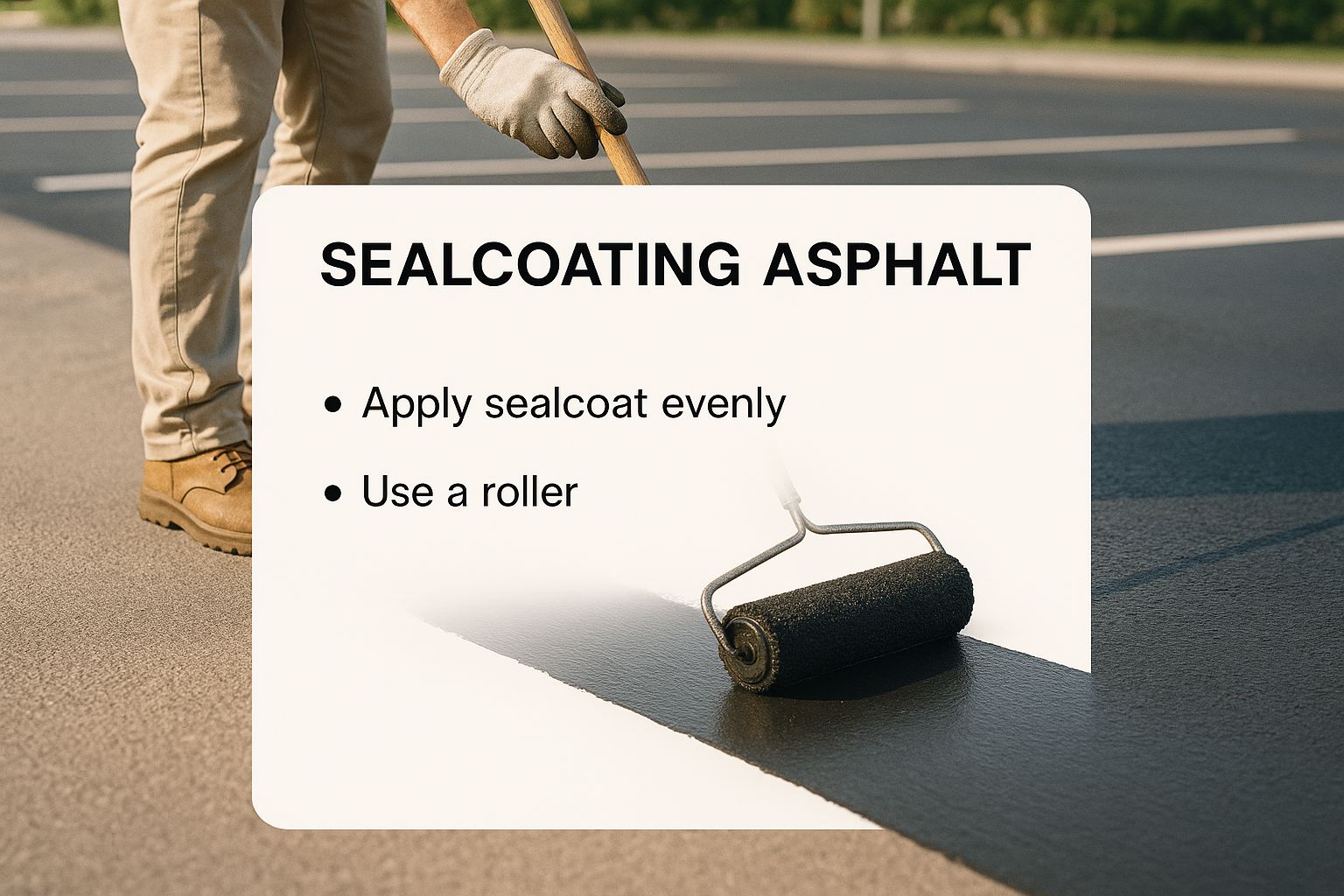
This image highlights the hands-on process of applying a consistent, protective layer that shields the pavement from damaging elements.
Pillar 3: Sealcoating
Our third pillar is sealcoating, which is like sunscreen for your parking lot. Asphalt is made from oil, and just like skin, it can be damaged by the sun’s ultraviolet (UV) rays. Over time, UV rays make the asphalt dry, brittle, and more likely to crack.
A sealcoat is a thin, protective liquid layer that is applied over the whole asphalt surface. It protects the pavement from:
- UV Rays: This stops the asphalt from getting brittle and keeps it flexible.
- Water: It fills tiny holes on the surface to create a waterproof barrier.
- Oil and Gas Spills: Sealant protects the asphalt from car fluids that can soften and damage it.
Sealcoating also brings back that deep, black color of new asphalt, which makes your property look better right away. Most experts suggest applying a new sealcoat every 3 to 5 years to help your pavement last much longer.
Pillar 4: Line Striping and Signage
The final pillar is all about safety, order, and following the rules. Fresh, clear lines and proper signs are like the traffic rules for your parking lot. They guide drivers safely, show where to park, and make sure you meet legal rules, like those for the Americans with Disabilities Act (ADA).
Faded lines can cause confusion, leading to messy parking and even car accidents. Poorly marked fire lanes or unclear arrows can create serious dangers. Repainting lines regularly is very important to keep order and help traffic flow smoothly.
This pillar is a big part of the maintenance market. As of 2023, the parking lot maintenance market in North America was worth USD 16.78 billion and is expected to grow. That number shows how much property owners rely on services like striping to lower their risks and give customers a better experience.
How to Build a Year-Round Maintenance Plan

Smart parking lot care is not about fixing problems after they happen. It’s about preventing them. A year-round plan keeps your property safe and looking good. It also saves you from the shock of expensive emergency repairs. Think of it like a service schedule for your car. You do different tasks at different times of the year to keep everything running well.
Breaking the job down into a seasonal checklist makes it simple. When you plan your maintenance around the weather, you stay ahead of damage and get more life out of your pavement.
H3: Spring: Your Action Plan
When winter ends, spring is the perfect time for a deep clean and a full inspection. The freezing and thawing of winter can be hard on asphalt. You need to know what damage has been done before the busy summer season starts.
Your spring to-do list is about checking and cleaning. Start by clearing away all the leftover sand, salt, and trash from winter. This lets you get a good look at the pavement and find any new problems.
This season’s main goals are:
- Full Inspection: Walk the whole lot. Look for new cracks, potholes, or faded lines left by winter.
- Deep Cleaning: Schedule a professional power wash or sweeping to clean away dirt and harmful de-icing chemicals.
- Drainage Check: Make sure all drains are clear of leaves and trash. You don’t want water sitting on your asphalt.
- Small Repairs: Fill any small cracks that have appeared. This stops water from getting underneath and making a small problem a big one.
Doing these jobs in the spring gets your lot ready for summer and stops winter damage from getting worse.
H3: Summer: The Season for Major Projects
Summer brings the heat, which is exactly what you need for big parking lot projects. The warm, dry weather is perfect for asphalt and sealcoat. It allows the materials to dry correctly and form a stronger bond.
This is the time to schedule the big jobs. Trying to sealcoat or pave in cold, damp weather will lead to a poor-quality job that will not last. Summer gives you the best conditions for results that will hold up.
Summer is your best time to invest in the health and protection of your pavement. The warm weather makes sure that repairs and coatings dry correctly, making them last longer and work better.
Planning these big jobs for the summer is the best way to protect your investment.
H3: Fall: Preparing for the Freeze
When the leaves start to change color, you need to think about defense. Fall maintenance is all about getting your parking lot ready for the cold and wet months ahead. It’s about creating a protective shield for your asphalt.
Any crack or weak spot you have now will only get worse once water gets in, freezes, and expands. Taking care of these weak spots in the fall is very important. This is your last real chance to make repairs before the weather turns bad. This will keep small problems from becoming major ones by next spring.
Your fall checklist should include:
- Final Crack Sealing: Fill every last crack to create a waterproof seal before the first freeze.
- Debris Removal: Clear all leaves and branches from the surface and drains to prevent clogs and water buildup.
- Line Striping Touch-Up: Make sure all traffic lines and fire lanes are bright and easy to see before winter weather arrives.
H3: Winter: Managing Snow and Ice
When winter arrives, the focus shifts to safety. You can’t fix pavement in the freezing cold, but you must have a solid plan for snow and ice. This makes sure your customers and employees can get around the lot safely, no matter the weather.
A good snow removal contractor is a must. You need a team that can clear snow quickly and use de-icing materials that work without damaging your asphalt or concrete. Proper care during these months is a key part of keeping your lot in good shape all year.
H3: Seasonal Parking Lot Maintenance Checklist
A good seasonal plan turns a big job into a simple routine. By giving specific tasks to each season, you make sure nothing is missed and your investment is protected. This checklist breaks down the main duties to help you stay ahead of problems and avoid costly surprises.
| Season | Key Tasks | Goal |
|---|---|---|
| Spring | Inspect for winter damage, deep clean, check drains, and fill small cracks. | Check the lot after winter and stop small problems from getting worse. |
| Summer | Schedule major repairs like paving, apply sealcoating, and repaint all lines. | Use the good weather to make sure repairs are strong and last a long time. |
| Fall | Perform final crack sealing, remove leaves from drains, and touch up important lines. | Create a protective barrier to shield the pavement from harsh winter weather. |
| Winter | Use a snow and ice removal plan, watch for safety hazards, and keep the lot accessible. | Keep the lot safe and open while reducing weather damage. |
Following this seasonal plan not only keeps your parking lot looking its best but also helps it last longer. This gives you a much better return on your investment. It’s the smartest way to manage one of your property’s most important assets.
Calculating the Real Cost of Maintenance
When you are planning your budget, it’s easy to see commercial parking lot maintenance as just another cost. Many property managers see the price for a service like sealcoating and decide to wait. This is a common but very expensive mistake.
The real cost of your parking lot isn’t what you spend on regular care. It’s what you’ll have to spend when you let it fall apart. Think of regular maintenance as a small, planned cost. A full pavement replacement is a huge expense that can ruin your budget.
Proactive Care Versus Reactive Repair
Let’s use a simple example: your car. You change the oil every few thousand miles for a small fee because you know it keeps the engine healthy. If you skip oil changes, you will eventually have a major engine failure—and a bill for thousands of dollars to replace it.
Parking lot maintenance works the same way. Small, regular investments prevent a total breakdown.
- Proactive Care: This is the smart approach. It includes sealing cracks when they appear and applying a sealcoat every few years. These jobs are not very expensive and act as a shield to keep your pavement strong.
- Reactive Repair: This is what happens when you ignore small problems. It means emergency pothole repairs, major fixes, and, in the end, a very expensive asphalt replacement.
The difference in cost between these two approaches is huge. A proactive plan saves you a lot of money in the long run.
A well-cared-for asphalt surface can easily last 20 years or more. A neglected one might fail in less than half that time. A full replacement can cost 4 to 10 times as much as a regular maintenance plan.
This simple fact shows that proactive care isn’t just a good idea—it’s a smart financial plan for any property owner.
Breaking Down the Costs
To make a good budget, it helps to know the general costs for common maintenance services. Prices will change based on your location, the size of your lot, and its condition. But here are some typical price ranges to keep in mind.
| Maintenance Service | Typical Cost Range (per square foot) | How Often | Main Financial Benefit |
|---|---|---|---|
| Crack Sealing | $0.50 – $1.25 (per linear foot) | Yearly or as needed | Stops water from getting under the pavement and destroying it. |
| Sealcoating | $0.20 – $0.40 | Every 3-5 years | Acts like a shield, making the asphalt last twice as long. |
| Pothole Repair | $2.50 – $4.50 | As needed | Fixes immediate safety dangers and stops damage from spreading. |
| Full Replacement | $4.00 – $7.00+ | When the lot is ignored | The most expensive option, needed only when the whole pavement has failed. |
As you can see, the cost of preventative care is much less than the cost of a full replacement. Spending a few hundred or a few thousand dollars every couple of years on sealing and coating is much smarter than facing a $50,000 or $100,000+ bill for a new lot. For more about what affects these costs, you can read our guide on what asphalt driveways cost, as many of the same ideas apply.
The True Return on Your Investment
Investing in regular commercial parking lot maintenance gives you more than just savings on future repairs. It’s about protecting the value of your entire property.
A well-maintained parking lot helps with:
- Increased Property Value: A clean, safe parking area is the first thing people see. It improves your property’s look and its market value.
- Reduced Liability: Fixing cracks and potholes is not just about looks. It lowers the risk of accidents and protects you from lawsuits.
- Improved Customer Perception: A clean, professional lot tells customers you care about their safety and experience. It builds trust from the moment they arrive.
When you start to see maintenance as an “investment” instead of a “cost,” you start protecting your property for the long term. A small, steady budget for upkeep will make your pavement last for years, making sure your property’s first impression is a good one.
How to Choose the Right Maintenance Contractor
The quality of your commercial parking lot maintenance depends on the contractor you hire. A great contractor will protect your investment and provide work that lasts. A bad one can waste your money and leave you with bigger problems.
Finding a pro you can trust is not hard, but you need to do some research. It’s about asking the right questions and choosing a team that cares about quality.
Essential Questions to Ask Every Contractor
Before you sign a contract, you need to check out your options. Think of it like a job interview—you’re hiring someone to protect your property.
Start with these key questions:
- Are You Licensed and Insured? This is the most important question. Ask for proof of insurance. If they don’t have it, you could be responsible for any accidents. This is a must.
- Can You Provide References? A good contractor will be happy to share a list of past clients. Take time to call them. Ask about their experience and if they were happy with the work.
- What Materials Do You Use? Not all sealants and asphalt are the same. Ask for the specific product names they plan to use. This helps you know they are using high-quality materials, not cheap ones.
These questions will help you rule out the bad contractors right away.
Looking Beyond the Price Tag
It’s easy to choose the lowest bid, but that’s a big mistake. A very low price is almost always a red flag. It usually means they’re cutting corners with cheap materials, unskilled workers, or by skipping important steps.
A very low bid often leads to higher costs later. Good work requires good materials and skilled workers, and that comes at a fair price. It’s always cheaper to pay a little more for a job done right than to pay to fix a bad job later.
Instead of focusing on price, look at the overall value. Think about their professionalism, how they communicate, and the quality of the materials they suggest. Do they have a clear plan to get the work done without disturbing your business too much? A great contractor understands you need to stay open. They will work with you to create a schedule that works for everyone. For tips on managing multiple workers, it’s smart to review best practices on how to hire subcontractors.
Red Flags to Watch Out For
As you talk with contractors, trust your gut. If something feels wrong, it probably is. Watch out for these common warning signs.
Be careful if a contractor:
- Uses High-Pressure Sales Tactics: A real pro will give you a detailed, written quote and time to review it. “Today only” deals are a sign of someone who cares more about making a sale than doing good work.
- Asks for Full Payment Upfront: A reasonable deposit is normal. But asking for 100% of the payment before any work begins is a huge red flag. Usually, you pay a part of it down, and the final payment is due only after the job is done right.
- Lacks a Professional Presence: Does the company have a real business address? A professional website? Company trucks and uniforms? A lack of these basics could mean you’re dealing with a company that is not stable or reliable.
Choosing the right partner is about finding a skilled professional who wants to protect your property. By asking smart questions and watching for red flags, you can feel good about your choice.
Modern Upgrades for Your Parking Lot
Taking care of your pavement is important, but true commercial parking lot maintenance also means looking to the future. Smart upgrades can make your property safer, more efficient, and more attractive to customers. These are not just quick fixes; they are investments that add real value.
For example, good drainage is one of the most important upgrades you can make. When water can’t drain, it sits on the surface and slowly gets into the asphalt’s foundation. This causes a lot of damage from the inside. A good drainage system stops this problem before it starts.
Embracing Sustainability and Efficiency
Many of the best modern upgrades are also good for the environment and your budget. These solutions show you care about being responsible while also saving you money.
One of the easiest changes is switching to LED lighting. Old parking lot lights use a lot of energy.
- LED Lighting: Modern LED lights use up to 75% less energy than old lights and last for years. This means you will save a lot on your electricity and maintenance bills.
- Permeable Pavers: Instead of solid asphalt, permeable surfaces let rainwater soak through into the ground. This helps manage storm runoff and is better for the local water supply.
- Eco-Friendly Materials: Many contractors now use sealcoating and repair products with fewer harmful chemicals. Choosing greener materials is better for the air and can be part of your company’s green goals.
Preparing Your Lot for the Future
Technology is changing how we use commercial spaces, and your parking lot is a big part of that. Thinking ahead makes sure your property stays up-to-date and can meet the needs of future customers. Right now, the biggest trend is the rise of electric cars.
Planning for future needs, like the growing demand for EV charging, makes your property a modern, desirable place. It’s an investment in convenience that attracts and keeps good tenants and customers.
Installing electric vehicle (EV) charging stations is becoming a basic need, not just a nice extra. Properties that offer charging are more attractive to EV owners, and that number of customers is growing every year.
Even if you aren’t ready to install chargers today, you can get ready for them. If you are already digging for repairs, you can run the electrical lines while the ground is open. It’s a smart, cheap way to prepare for the future. These upgrades don’t just solve today’s problems; they set your property up for success.
Common Parking Lot Maintenance Questions
Even with a good plan, you might still have questions. Getting clear answers helps you make smart choices that protect your investment. Here are a few of the most common things property managers ask.
How Often Should I Sealcoat My Parking Lot?
For most commercial properties, a fresh sealcoat every 3 to 5 years is a good idea. But this can change. It depends on how much traffic your lot gets. A busy shopping center will get more wear and tear than a small office building.
The best way to know is to just look at it. When your asphalt starts to fade from black to a dull gray, it’s a sign. It means the protective layer is wearing off and it’s time for a new coat.
What Is the Best Time of Year for Repairs?
You should schedule major asphalt repairs and sealcoating during warm, dry weather. Summer is almost always the best time. The heat helps the materials dry and harden correctly, which creates a stronger repair that will last for years.
Of course, small jobs like sweeping and cleaning can be done anytime. Just make sure you get all your cracks sealed in the fall before it freezes. This will stop water from getting in and causing more damage over the winter.
Good maintenance is not just about fixing damage—it’s about creating a safe place for everyone who visits your property. Regular care prevents dangers, reduces risks, and shows you care about your customers and employees.
Why Are Faded Parking Lines a Big Deal?
Faded lines are more than just ugly—they are a serious safety problem. Bright, clear markings guide traffic, prevent accidents, and keep you in line with ADA rules. Plus, a poorly marked fire lane can lead to a big fine.
Keeping your lot clearly marked is a key part of any good parking lot maintenance and safety strategy.
Protecting your property’s value starts from the ground up. For expert paving, grading, and underground utility services on California’s Central Coast, trust Coastal Pipeline Inc. to deliver professional results. Visit us at https://coastalpipelineinc.com to schedule your consultation.