
Dealing with a broken sewer line is stressful. Getting a price quote can make it even worse. The good news is that trenchless sewer line repair costs are often easier to predict—and more affordable—than you might think. Most jobs fall in the $1,900 to $6,000 range.
This modern method avoids the biggest cost of old-fashioned repairs: digging up your whole yard.
The Bottom Line on Trenchless Sewer Repair Costs
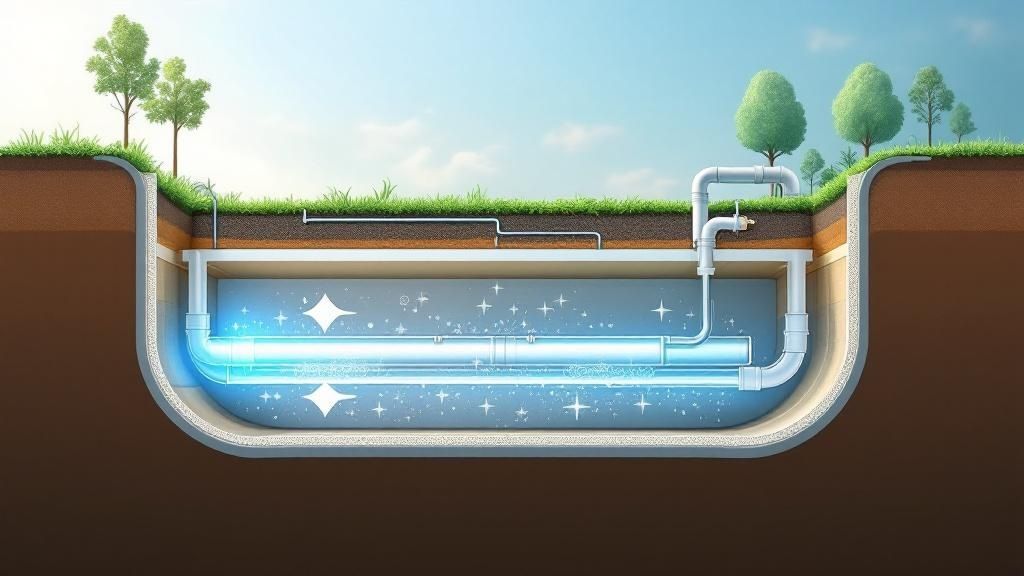
When your sewer line breaks, you have two choices: the old way or the new way. The old way uses an excavator to dig a huge trench across your property. It’s messy, disruptive, and gets expensive quickly.
The new, trenchless method fixes the pipe from the inside. This simple difference saves your lawn, driveway, and peace of mind. While protecting your yard is a big plus, the real savings come from avoiding the hidden costs of traditional repairs.
A Quick Cost Comparison
To see your options clearly, it helps to look at the numbers side-by-side. Here’s a quick breakdown of what you can expect.
Trenchless vs Traditional Repair Costs at a Glance
| Factor | Trenchless Repair | Traditional Repair |
|---|---|---|
| Initial Repair Cost | $60 – $250 per foot | $50 – $250 per foot |
| Landscaping Restoration | Little to none | $3,000 – $15,000+ |
| Hardscape Repair | Usually none | High (driveways, patios) |
| Project Duration | 1-2 days | Several days to weeks |
| Total Estimated Cost | $1,900 – $6,000+ | $4,000 – $25,000+ |
As you can see, the "all-in" cost tells the real story. A traditional repair might look cheaper per foot, but that price doesn't include putting your property back together.
At first, the price for trenchless repair might seem close to the traditional method. But when you add the thousands of dollars needed to fix your yard, replace concrete, and repair sprinkler systems, the traditional method’s cost can shoot up.
This is why trenchless pipe lining, which costs $60 to $250 per foot, is almost always cheaper than a traditional dig-and-replace job at $50 to $250 per foot plus thousands in restoration costs.
Key Takeaway: Trenchless repair saves you money by protecting your property. You're not just paying to fix a pipe; you're choosing a solution that avoids thousands of dollars in costs to fix your landscape, patio, and driveway.
This method is one of many modern ways to handle underground pipes. To learn more about how these systems are installed and managed, you can read about our underground utility services in Monterey and Santa Cruz County.
How No-Dig Sewer Repair Actually Works
Before we talk about the price, it helps to understand what happens underground. Imagine fixing a pipe buried deep in your yard without turning your nice lawn into a giant dirt pit. That’s the magic of trenchless repair.
This modern method avoids the mess of traditional digging. Instead of a huge trench, we use small access points—usually at each end of the damaged pipe—to do all the work. It saves you from the headache and hidden costs of rebuilding your garden, driveway, or patio. This is a big reason why the trenchless sewer line repair cost often makes more sense in the long run.
There are two main ways plumbers do this, and the right one depends on your specific problem.
Pipe Lining: A New Pipe Inside the Old One
The first method is called pipe lining, also known as Cured-in-Place Pipe (CIPP). Think of it like a doctor putting a stent in a blocked artery. It creates a brand-new, smooth pipe right inside your old, damaged one.
Here’s a quick look at how it works:
- Inspection and Cleaning: First, we send a camera down the line to see the damage. Then, the pipe is cleaned out to remove any roots, buildup, and trash.
- Liner Insertion: Next, a flexible tube covered in a special resin—the liner—is put into the old pipe from an access point.
- Inflation and Curing: The liner is then filled with air, pushing it tightly against the walls of the original pipe. We use hot water, steam, or UV light to "cure" the resin, which makes it hard and strong, like a new pipe.
This method is perfect for fixing pipes with cracks, small gaps, or root problems, as long as the old pipe has not completely caved in.
Pipe Bursting for Severely Damaged Lines
The second method is pipe bursting. This one is stronger and is used when the old pipe is too damaged for lining or has totally collapsed. It’s like pulling a new pipe through the path of the old one, breaking the old pipe out of the way as it goes.
During a pipe bursting job, a cone-shaped "bursting head" is pulled through the old sewer line. As it moves, it breaks the old, damaged pipe apart into the soil around it. A brand-new, super-strong HDPE (high-density polyethylene) pipe is pulled right behind it and slides perfectly into place. Installing sewer lines this way is very efficient.
Pipe bursting is great for replacing lines that are beyond repair. It even lets us "upsize" the pipe by pulling a wider one through, which can improve your system's flow for good. Both of these advanced methods give you a long-lasting solution with almost no mess.
What Really Drives Your Final Repair Bill
Have you ever wondered why one trenchless sewer line repair quote is $3,000 while another is over $10,000? That final price isn't a random number. It’s based on your specific property and the condition of the pipe. Knowing what goes into that number helps you have a smarter talk with your plumbing contractor.
Think of it like getting your car fixed. The cost to fix a small dent is much less than replacing a broken engine. The same idea applies to your sewer line. A few key details determine how big the job is and, of course, how much it will cost.
This infographic shows how the length and condition of your sewer pipe are the biggest factors in your final bill.
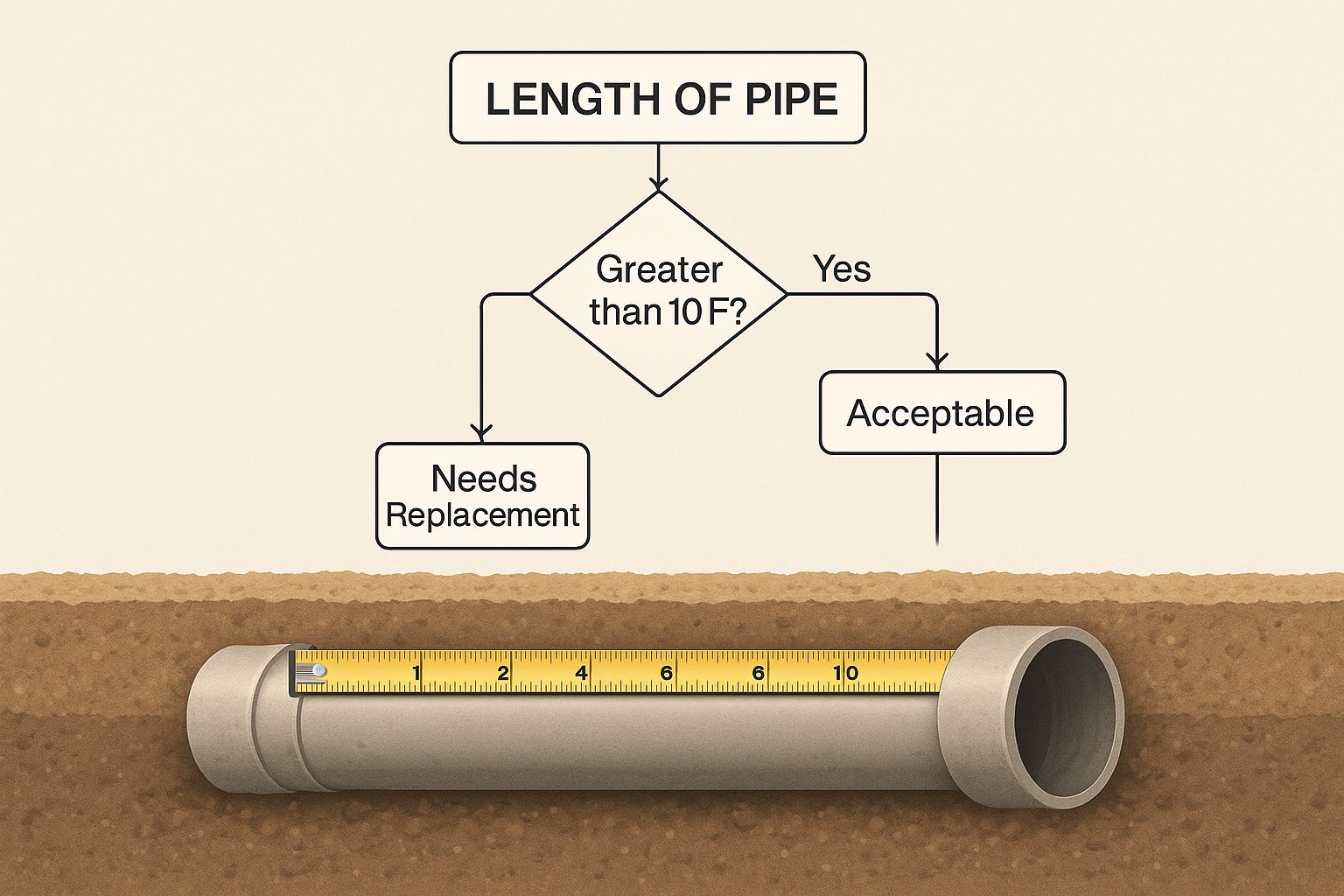
As you can see, a longer pipe means more materials and more time, which makes the cost go up. Also, a completely collapsed pipe is much harder—and more expensive—to fix than one with a few simple cracks.
The Big Three Cost Factors
While every project is different, the trenchless sewer line repair cost usually comes down to three main things. Let's look at each one.
-
Pipe Length and Diameter
This one is simple. The longer the section of pipe that needs to be fixed, the more materials and work you’ll need. A short 50-foot repair will cost less than a 150-foot repair that runs the full length of your property. In the same way, a wider pipe (like a 6-inch pipe instead of a standard 4-inch one) needs more expensive lining material or a larger bursting head, which adds to the total cost. -
The Pipe's Condition
What's actually wrong with the pipe is just as important as its size. A line with small cracks or some roots in it is a simple fix for pipe lining. But if the pipe has completely collapsed or is badly out of line, the job gets much harder. A collapsed line often needs pipe bursting instead of lining, which is a bigger job and can raise the cost. -
Accessibility and Location
Where is the problem pipe? A sewer line that runs under a simple grass lawn is easy to reach. A line buried deep under a concrete driveway, a wall, or your favorite flower garden is a bigger challenge. While trenchless methods avoid big digging, workers still need small access points at each end of the repair. If making those access points is hard, it will add to the labor costs.
Key Insight: Your final quote is based on the materials, time, and difficulty of your specific situation. A simple, short repair under an open yard will always be on the lower end of the cost range.
On top of this, your location can affect labor costs and local permit fees. For a closer look at how these things come together, you can check out this helpful guide on general sewer line replacement costs. Each of these factors helps a contractor give you an accurate estimate just for your home.
Comparing Costs: Pipe Lining vs. Pipe Bursting
Not all trenchless methods are the same. The final trenchless sewer line repair cost on your quote will show that. When a plumber inspects your line, they will suggest one of two main methods: Cured-in-Place Pipe (CIPP) lining or pipe bursting.
Knowing what makes them different is key to understanding your estimate.
Think of pipe lining as the smoother, less messy option. It’s the first choice when your original pipe is mostly in one piece but has problems like small cracks, tiny leaks, or tree roots. Because it uses the old pipe as a mold for the new one, it's usually faster and costs a little less.
Pipe bursting, on the other hand, is the heavy-duty option. You use this when the old pipe is completely ruined—collapsed, broken, or just too small for your home. This is a bigger job that requires serious tools and equipment, and the price shows that.
Breaking Down the Costs Per Foot
While prices always depend on your location and the details of the job, there's a clear cost difference between these two trenchless methods.
Here’s a quick look at how they usually compare:
- Pipe Lining (CIPP): This method typically costs between $80 and $250 per foot. It's the perfect solution for fixing long sections of pipe that are damaged but still holding their shape.
- Pipe Bursting: This more intense replacement process generally costs from $100 to $300 per foot. The higher cost covers the special equipment needed to break the old pipe and pull a brand-new, seamless one into its place.
These numbers aren't random. A contractor suggests one over the other to give you the best, longest-lasting fix for your specific problem. You simply can't use a liner to fix a pipe that has already caved in.
Key Takeaway: Pipe lining is a good value for repairing damaged but still working pipes. Pipe bursting is the necessary, slightly more expensive option for replacing pipes that are collapsed or need to be made larger for better flow.
When to Choose Each Method
Making the right choice between lining and bursting ensures you get a permanent repair without spending more than you need to. It all comes down to the current condition of your sewer line.
A professional camera inspection is the only way to know for sure, but the table below gives you a good idea of what to expect. It shows when each method is best and what the costs look like.
Cost and Use Case Comparison: Pipe Lining vs. Pipe Bursting
| Feature | Pipe Lining (CIPP) | Pipe Bursting |
|---|---|---|
| Best For | Pipes with cracks, leaks, or roots that are still structurally sound. | Collapsed, severely broken pipes, or pipes that need to be larger. |
| Average Cost | $80 – $250 per foot | $100 – $300 per foot |
| Main Advantage | Cheaper and quicker for fixing existing pipes. | Completely replaces the old pipe and can increase flow capacity. |
| Limitation | Cannot fix collapsed sections or make the pipe wider. | Higher equipment and labor costs due to the more difficult process. |
In the end, having a clear picture of these two options helps you. When your plumber shows you the findings from their camera inspection, you'll be able to have a smart conversation and feel good about the solution they recommend for your home.
The Hidden Savings of Trenchless Repair
When you get a quote for trenchless sewer line repair, the first number can sometimes look a little higher than an old-school, dig-and-replace estimate. But that first price doesn't tell the whole story.
To really see the value, you have to look past the plumbing work and think about all the forgotten costs that come with digging up your yard.
Imagine a backhoe digging a deep, long trench from your home to the street. It’s not just tearing up grass. That trench could cut right through your nice stone walkway, a concrete patio, or the sprinkler system you just installed. Suddenly, that "cheaper" repair job comes with a second, huge bill for putting everything back together.
Calculating the True Cost
The real price of a traditional sewer repair is the first plumbing quote plus all the money you'll spend rebuilding your property. These extra expenses can easily pile up, adding thousands of dollars to the final bill.
Just think about some of these common restoration jobs:
- Landscaping: This can cost anywhere from $3,000 to $15,000 (or more) to replace grass, trees, and flower beds.
- Hardscaping: Fixing or re-pouring a concrete driveway, patio, or walkway can add another $2,000 to $7,000.
- Other Systems: Don't forget the cost of repairing sprinkler lines or other utilities that might be in the way. You can learn more in guides on underground utility trenching for electrical lines.
When you add it all up, the total cost for the traditional method often soars past the cost of a trenchless repair, which leaves your yard almost completely untouched.
Long-Term Value and Peace of Mind
The savings don't stop when the crew leaves. Trenchless methods like pipe lining create a brand-new, seamless pipe inside of the old one. This new pipe has no joints, making it very resistant to roots—one of the biggest causes of sewer line problems.
This means you aren't just patching the current problem; you're investing in a solid, long-term fix. By choosing trenchless, you greatly lower the chances of dealing with another messy and expensive sewer emergency anytime soon. It’s a smarter investment that provides serious savings and peace of mind for years.
Why This Technology Is Here to Stay
Trenchless sewer repair is not just a clever trick for homeowners. It has become a huge part of how we manage the important systems hidden under our feet. This technology has grown beyond backyards and is now used by cities everywhere.
City works departments are choosing trenchless methods more and more to fix old water and sewer pipes. It makes sense. They get to avoid the chaos of shutting down major roads, causing traffic jams for weeks, and turning neighborhoods into construction zones. This widespread use is pushing the technology forward, making it more available and more affordable for everyone.
A Growing Industry Backed by Big Investment
The move to trenchless solutions isn't just a trend—it's a huge, growing market. Seeing it used so often in large-scale utility systems construction proves that the technology is reliable, efficient, and built to last. When you choose a trenchless repair, you're not just getting a special service from one plumber.
The global trenchless pipe repair market was valued at around $4.64 billion and is expected to reach $6.86 billion by 2032. That growth is driven by the need for smart, affordable ways to fix our infrastructure.
This huge industry investment means we are always seeing better materials, smarter methods, and more advanced equipment. The fact that North America leads the way, with 36.2% of the industry, shows how important these methods have become for maintaining our aging wastewater systems without tearing everything up. You can learn more about the global trenchless repair market to see how fast things are growing.
When you understand this bigger picture, it's clear that investing in a lower trenchless sewer line repair cost is a solid, future-proof choice backed by a strong and growing industry.
Your Trenchless Repair Questions Answered
Even after reading all the details, you probably still have a few questions. That's completely normal. Making a big decision about your home's pipes means understanding every angle, especially the trenchless sewer line repair cost and what the process is really like.
This final section gives you clear, simple answers to the questions we hear most from homeowners. We want to clear up any confusion so you can feel 100% confident in your choice.
Is Trenchless Repair Always the Cheaper Option?
Not always, at least not on the first quote. But when you look at the total cost, it almost always is. A traditional dig-and-replace job might seem cheaper per foot, but that price rarely includes the thousands of dollars you'll spend rebuilding your lawn, fixing your driveway, or putting your patio back together.
Trenchless repair skips all those huge restoration costs. That’s what makes it the more affordable choice in the long run. It saves you from being hit with a second, often much bigger, bill for landscaping and concrete work.
How Long Does a Trenchless Repair Last?
A professionally done trenchless repair is built to last. The strong liners and tough HDPE pipes we use are very durable. They are designed to resist rust, cracks, and annoying tree roots.
In fact, these modern materials are expected to last for 50 years or more. This isn't a quick patch. It's a permanent solution that gives you true peace of mind for decades.
Will My Yard Be Completely Undisturbed?
Almost, but not quite. "Trenchless" is a great word, but it doesn’t mean zero digging. The key difference is that the digging is very small.
Instead of a long, destructive trench tearing up your property, our workers just need one or two small access pits at each end of the damaged pipe. These holes are just big enough to get the equipment in and out. When you compare that to the huge mess from old-school methods, the impact on your yard is tiny and very easy to fix.
Ready to get a clear, no-nonsense estimate for your sewer line project? The experts at Coastal Pipeline Inc. are here to provide a detailed assessment and walk you through the best trenchless solutions for your home. Learn more on our website.