When we talk about building strong underground utilities, the conversation has changed. It’s no longer just about using the toughest materials. Now, it's about smart, sustainable practices that create systems built for the future.
From using recycled materials to planning for climate change, sustainability is the new standard. It helps ensure our hidden pipes and wires can stand up to whatever comes their way.
Why Sustainability Is The New Standard Underground
The way we think about underground utilities is different now. Sustainability is no longer just a nice extra. For cities and developers, it’s a core expectation. Environmentally friendly solutions are now the starting point for underground construction projects, not an optional add-on.
This change is about more than just protecting the environment. It's a practical way to build stronger, longer-lasting systems that provide a better return on investment over time.
Think of it like a building’s foundation. An old foundation might have been fine in the past. But a modern one is built to handle earthquakes and other stresses. Sustainable utility practices do the same thing for the pipes and wires buried underground.
Resilience And Sustainability Go Hand-In-Hand
Green practices, like using better materials and smarter designs, are what make our utility systems strong. They help our utility networks last longer, showing that resilience and sustainability are two sides of the same coin.
Here’s how these ideas work together in the real world:
- Durable, Eco-Friendly Materials: We're moving away from old materials like clay and iron. Modern materials like High-Density Polyethylene (HDPE) and C900 PVC pipes are not just better for the environment; they are also very tough. They don't rust or break down easily, which prevents leaks and helps them last much longer.
- Advanced Erosion Control: It sounds simple, but managing soil and grading the land correctly is very important. These practices stop the ground from shifting around pipes, which can cause them to break.
- Smarter System Design: A well-planned layout for drains and utilities does more than just move water. It can prevent flooding and reduce stress on the whole network, making it stronger during bad weather.
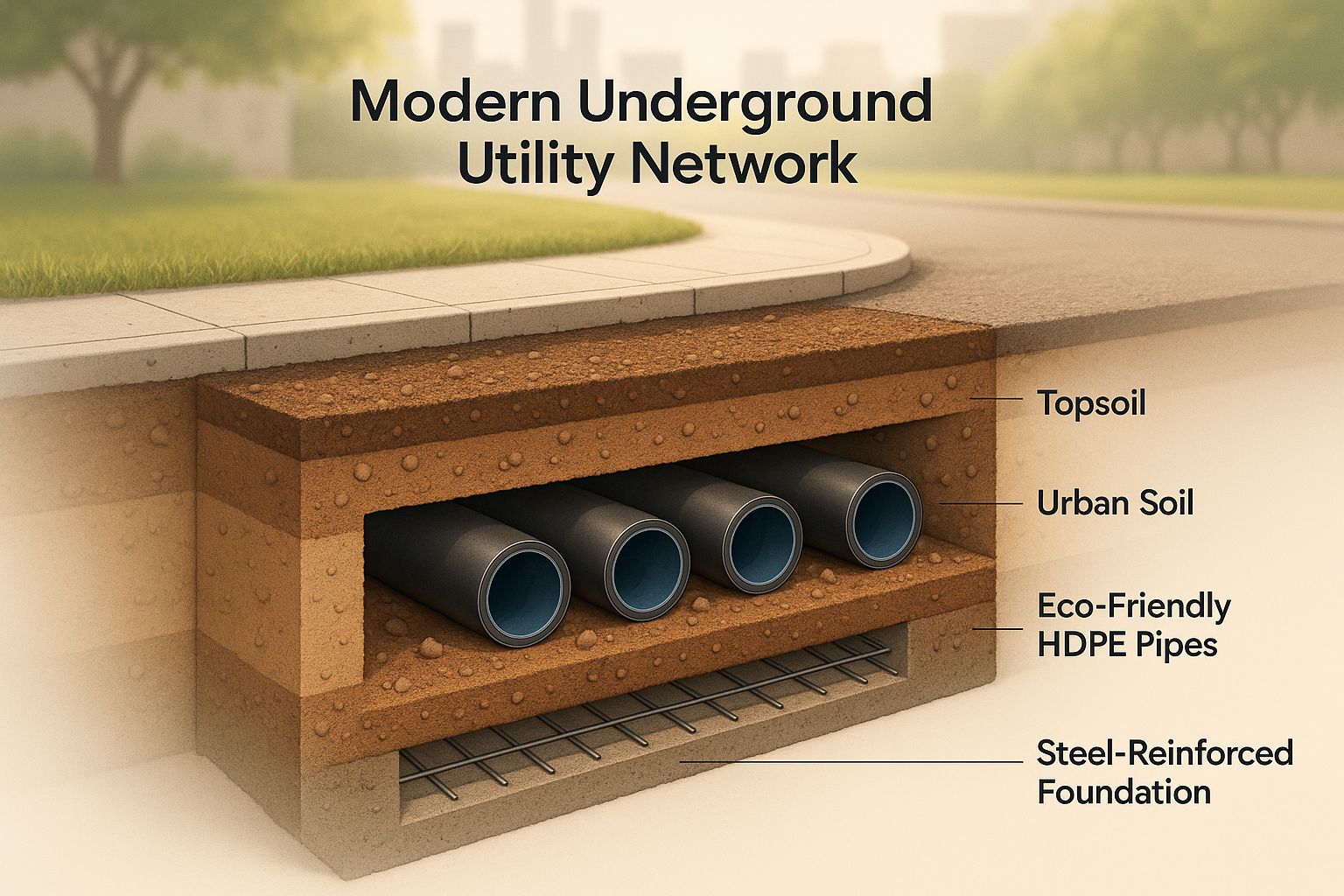
This infographic shows how these parts come together. You can see how modern pipes and strong construction create a system ready for today’s challenges.
The industry is no longer just digging a trench and putting a pipe in it. The table below shows how things have changed.
The Evolution from Traditional to Resilient Utility Construction
| Practice Area | Outdated Approach | Modern Resilient Approach |
|---|---|---|
| Material Choice | Clay, Cast Iron, Concrete | HDPE, C900 PVC, Recycled Composites |
| Design Focus | Meeting minimum codes | Designing for climate change and future capacity |
| Installation | Basic trenching and backfill | Precision grading and advanced erosion control |
| Water Management | Rapid drainage to local waterways | Integrated stormwater systems, permeable surfaces |
| Lifecycle Planning | Short-term cost savings | Long-term value and minimal maintenance |
This table shows the big shift from quick fixes to smart, long-term planning for our infrastructure.
A Growing Market Driven By Smarter Construction
This focus on strong, well-planned infrastructure has led to growth in related fields. As sustainable practices become common, the need for exact planning and mapping has grown. The global market for mapping underground utilities is expected to reach $3.3 billion by 2030. This shows that the industry is serious about getting things right from the start.
By making sustainability a priority, we are not just helping the environment. We are building smarter, more cost-effective infrastructure that is ready for the future.
Well-designed stormwater management systems are a great example of this. They protect the local environment while also preventing flood damage. To see how these standards are changing around the world, you can read this expert guide to green building in Dubai.
How Climate Pressures Are Reshaping Our Infrastructure
The utility systems under our feet are facing new challenges. We are dealing with more powerful climate events, and our infrastructure must be ready. This is especially true on California’s Central Coast, where communities face increasing droughts, storms, and fire risk.
These local challenges are making the need for resilient utility systems more urgent. We need leak-resistant water mains to save water, protected electrical conduit to keep the power on, and better storm drain networks to prevent flooding. Building stronger, smarter utility systems is necessary to keep our communities safe.
Why Old Systems Fail Under New Stresses
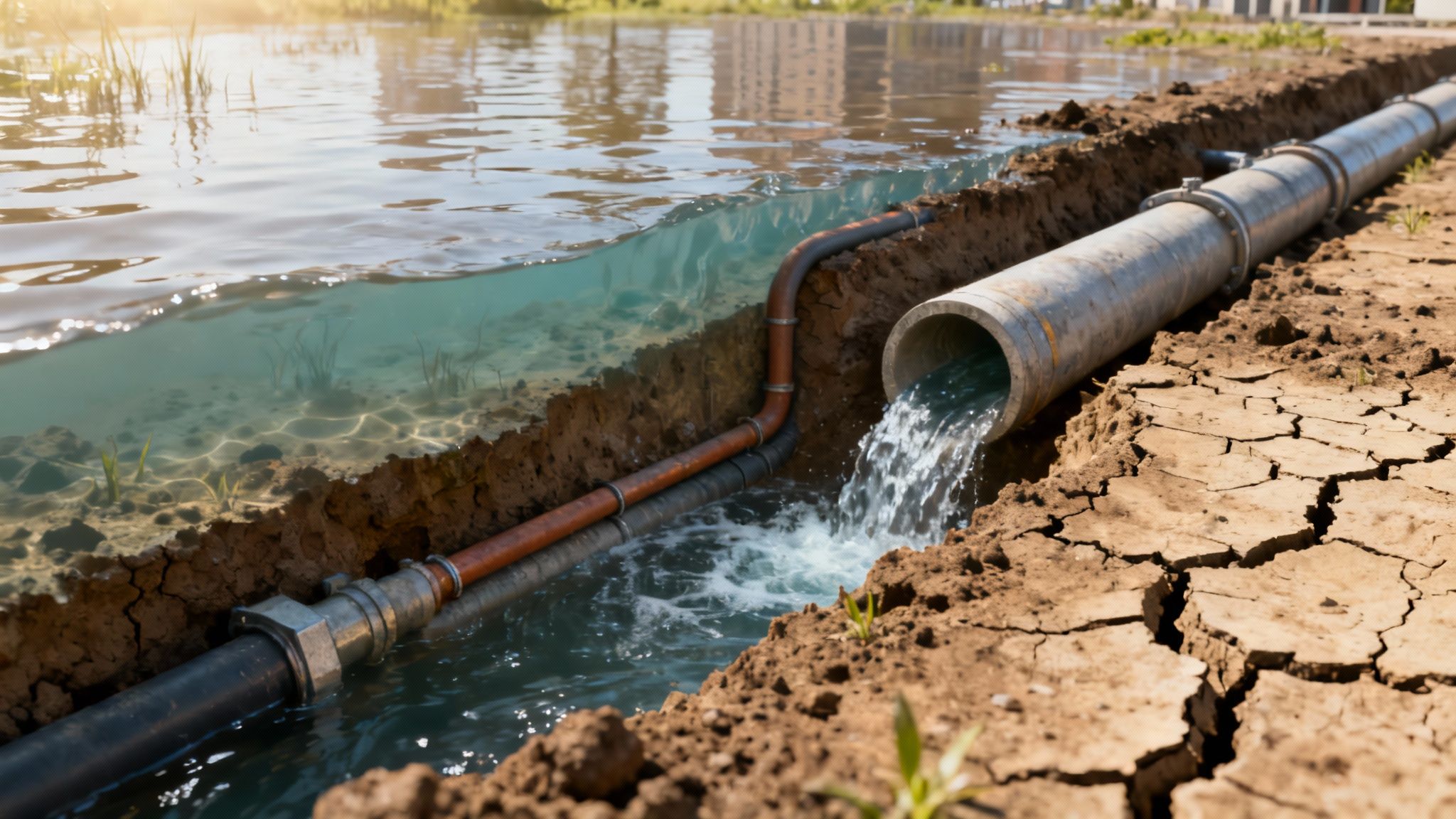
Simply put, our old utility infrastructure was not built for today's weather. An old water main might work for years, but during a drought, it can become a problem. The dry soil shifts and puts pressure on old, brittle pipes. This can cause them to break, losing a lot of water when we need it most.
The same is true for electrical lines. A standard system might be fine in good weather, but a flash flood can cause major problems. If water gets in, it can lead to power outages for homes, businesses, and emergency services. These failures show us that what was "good enough" in the past is not safe today.
The construction industry produces about 39% of the world's energy-related carbon emissions. This is a big reason why switching to sustainable building is so important for fighting climate change.
Designing Utilities for Climate Resilience
To protect our communities, we need to upgrade our underground networks to handle specific climate threats. This means thinking ahead and choosing parts that will work well when conditions are tough.
Here are a few real-world examples:
- During a Drought: We use leak-resistant water mains made from modern materials like HDPE or C900 PVC. These pipes are flexible and don't rust, which helps prevent the cracks and breaks common in older pipes. This helps us conserve water.
- In a Major Storm: Upgraded storm drain networks that can handle more water are a town's best defense against flooding. Smart grading and using special backfill material also help manage large amounts of water and prevent damage.
- After a Wildfire: Strong, fire-resistant electrical conduits are important for protecting the power grid. Keeping the lights on helps emergency responders and allows a community to recover faster.
A Broader Strategy for a Stable Future
Building resilient infrastructure is about more than just stronger pipes. It’s also about creating an energy grid that can adapt. To handle both changing weather and growing energy needs, many areas are investing in utility-scale energy storage projects. These systems act as a backup power source during emergencies.
When you connect all these pieces, the picture is clear. The environmental challenges we face require a new standard for our hidden infrastructure. Investing in resilient, sustainable underground utilities is a key step toward keeping people safe, saving resources, and securing our future.
Putting Sustainable Utility Practices Into Action
It's one thing to talk about big ideas like resilience, but it's another to see how they work on a job site. For experienced contractors like Coastal Pipeline, a resilience-first approach changes how underground utilities get built. It involves specific steps that create strong, eco-friendly systems from the start.
This is about more than just picking a different type of pipe. It's about rethinking the entire process, from digging the trench to filling it back in. Every step is a chance to prevent future problems and build infrastructure that lasts for generations.
Proper Soil Handling to Prevent Future Failures
The dirt itself is one of the most important parts of an underground project. When soil is not handled correctly, it can lead to future problems. If the ground settles or shifts, it puts a lot of stress on pipes and conduits. This can cause cracks, leaks, and breaks years later.
A smart, sustainable approach treats soil with care. This means:
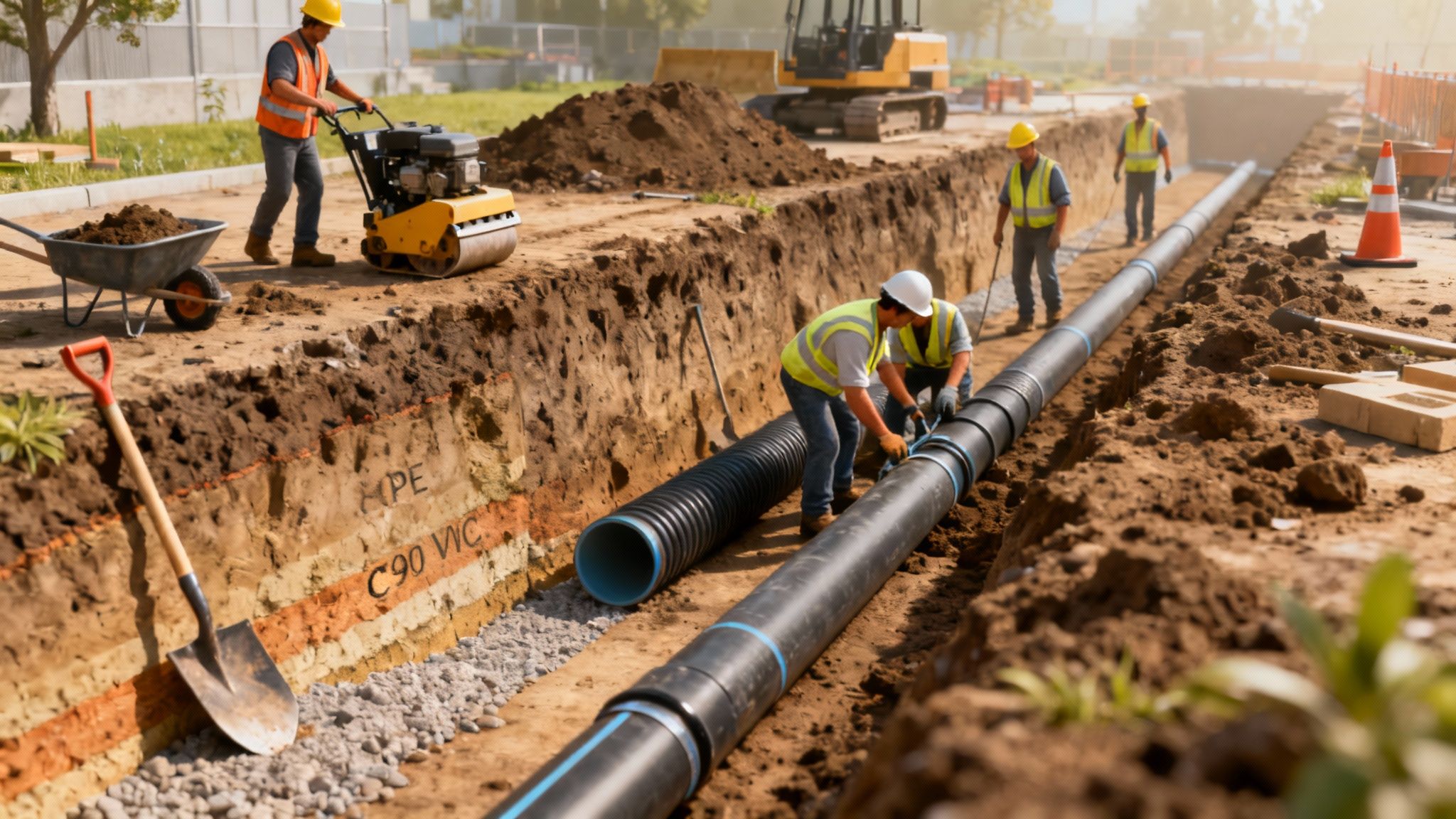
- Careful Excavation: Trenches are graded carefully to give the pipe a stable bed to rest on.
- Soil Segregation: Topsoil is kept separate from the soil underneath. This allows the nutrient-rich topsoil to be put back on the surface, which helps plants grow and controls erosion.
- Engineered Backfill: The right material is used to fill the trench back in. It's packed down in layers to create a solid base around the utility line that won't shift.
Taking these steps helps prevent ground movement that can lead to expensive repairs later. At Coastal Pipeline, we emphasize practices like proper soil handling to ensure our work lasts.
Modern Materials That Are Built to Last
The materials we use for underground utilities have improved a lot. We no longer rely on brittle clay pipes or heavy cast iron that rusts. Today, we use advanced materials that perform better and last much longer.
Two of the best new materials are High-Density Polyethylene (HDPE) and C900 PVC. For building strong water, sewer, and storm drain systems, these modern plastics are a great choice.
Unlike older materials, HDPE and C900 PVC pipes are very durable and flexible. They don't break down from chemicals in the soil, they don't rust, and they can handle ground movement without breaking. This greatly reduces the risk of leaks and adds decades to their lifespan.
Choosing the right material is a key part of sustainable work. Preventing leaks saves water and stops pollution. And because these pipes last longer, they don't need to be replaced as often, which saves resources and reduces long-term costs. When thinking about system upgrades, it's also helpful to understand the value of modern methods by looking into the trenchless sewer line repair cost.
Strategic Stormwater Management Layouts
A truly resilient utility network must also be smart about managing stormwater. A poorly designed drainage system can cause flooding, erosion, and pollution. The sustainable approach is to design layouts that work with the natural environment.
Instead of just sending all the rainwater into a pipe, a smart design uses other solutions:
- Permeable Surfaces: Using special backfill materials that let water soak into the ground naturally. This helps refill groundwater and reduces the amount of runoff the system has to handle.
- Bioswales and Rain Gardens: Adding green features to the landscape. These act as natural filters, cleaning pollutants from stormwater.
- Properly Sized Systems: Designing pipes and drains that can handle heavy rainfall, which is becoming more common. This prevents the system from overflowing and protects communities from flooding.
By using these methods, we can build stormwater management systems that meet environmental regulations, protect against floods, and last a long time without compromising on code compliance.
The Financial Case for Green Infrastructure
Many people think that "building green" is always more expensive. But for underground utilities, the opposite is often true, especially in the long run. Choosing sustainable designs is a smart financial investment that pays off for years. It reduces long-term maintenance costs and improves the system's strength.
Making green choices in materials and installation saves real money. It leads to lower maintenance bills, fewer emergency repairs, and an easier time meeting environmental rules.
Lower Maintenance and Fewer Emergency Repairs
One of the biggest financial benefits of sustainable utilities is the drop in long-term costs. Old materials like clay and cast iron often crack and rust, leading to constant, expensive repairs.
In contrast, modern materials like HDPE or C900 PVC pipes are built to last. They resist leaks and damage for a very long time. This means fewer service problems and a sharp decline in emergency repair calls.
Every dollar spent on a stronger pipe today can save ten dollars in repair costs a decade from now. It’s a smart approach that turns a potential problem into a low-maintenance asset.
The market for maintaining underground facilities was valued at $71.1 billion in 2024. This number is expected to grow as we update our aging infrastructure. By building sustainably from the start, you can avoid a large part of these rising costs. You can learn more about the underground facilities maintenance market on The Business Research Company.
Smart Design Choices That Reduce Overall Project Costs
Sustainable practices also save money by working with the environment instead of against it. Simple, smart techniques can prevent the need for more expensive solutions later.
Here’s how that works on a job site:
- Low-Impact Trenching: Instead of tearing up a large area, precise digging methods cause less disturbance. This reduces the cost of restoring the site because there's less damage to fix.
- Permeable Backfill Materials: Using permeable materials for backfill allows rainwater to soak into the ground. This can reduce the load on the storm drain system, sometimes enough to avoid building extra drainage structures. Proper grading and permeable backfill can prevent erosion, flooding, and runoff damage.
- Strategic Grading: Good grading is a defense against erosion. It protects new utilities from being damaged by shifting soil, which can save a lot of money on future repairs.
Investing in green infrastructure is about building it right the first time. The choices made during design and installation directly affect the total cost of ownership over the next 50 years or more.
Simplifying Compliance and Avoiding Penalties
Finally, focusing on sustainability helps clients deal with environmental rules. Meeting standards for stormwater, erosion, and materials is not optional. When green practices are part of the process from the beginning, following the rules becomes much easier.
This approach helps clients avoid expensive fines, project delays, and other problems. Choosing a green approach is a form of risk management.
By following city sustainability plans and state rules from the start, developers and property owners protect their investment and ensure long-term reliability. A good plan starts with a good budget. Our guide on the best free construction estimating software can provide some helpful tools.
Finding a Contractor Who Builds for the Future
You can have the best plans and materials, but a project's success depends on the team you hire. If your contractor doesn't prioritize sustainable building, even the best plans can fail.
That's why choosing a partner with a sustainability-first mindset is so important. They can help you navigate complex rules, meet city green-building goals, and protect your investment. Agencies and property owners alike are now seeking eco-conscious contractors.
Why an Eco-Conscious Contractor Is a Non-Negotiable Partner
Today, clients are not just hoping for contractors who care about sustainability—they're demanding it. This is because of stricter regulations and the risks of a changing climate. A contractor who uses outdated methods can become a problem.
For example, a project may need to meet specific city sustainability plans or state mapping standards like SB865. A contractor who doesn't understand these rules can cause costly delays and fines. Choosing a contractor with a sustainability-first mindset helps clients avoid these issues and secure long-term reliability.
A sustainability-first mindset is a commitment to building infrastructure that is stronger, more efficient, and compliant from the start. This approach reduces long-term maintenance costs and improves the entire utility system.
What to Look for in a Sustainable Contractor
So, how do you find a contractor who is truly focused on sustainability? You need to look for real evidence of their commitment in their practices and past projects.
Here are the key things to look for:
- Material Expertise: Do they have experience with modern materials like HDPE and C900 PVC pipe? Ask them to explain their installation methods.
- Soil and Stormwater Management: How do they manage soil and backfill to prevent future problems? Ask about their strategies for stormwater layouts and erosion control, which is a major issue on the Central Coast.
- Regulatory Knowledge: Can they talk about local and state environmental rules? They should be familiar with the sustainability goals of cities in Monterey, Santa Cruz, and San Benito Counties.
- Proven Portfolio: Ask to see examples of past projects that included green infrastructure or resilient utility upgrades. This shows they have real-world experience.
Finding the right team can take time. For more tips, check out our guide on how to hire subcontractors. Remember that the right contractor is an investment in the future of your infrastructure.
Bringing Your Sustainable Utility Project to Life
Putting these ideas into action is where the real value is. For anyone developing property in Monterey, Santa Cruz, or San Benito Counties, building resilient underground utilities is a smart investment.
The benefits are clear: infrastructure that can handle climate-related stress, which leads to cost savings and an easier time with permits.
Coastal Pipeline is here to help you turn your ideas into reality. With a deep focus on underground systems, our team specializes in compliant, environmentally responsible trenching and utility services tailored to local needs. We make sure the infrastructure we build is designed to last.
Aligning Your Project With California’s Goals
When you choose a contractor who focuses on sustainability, you get a better final product. You also align your project with important state and local goals. It means meeting SB865 mapping standards and supporting city sustainability plans. This helps you avoid regulatory problems and protects your investment.
We focus on the practices that make a real difference:
- Smart Soil Management: We handle soil correctly to prevent future problems that can damage pipes.
- Modern Pipe Installation: Our team are experts at installing modern, durable materials like HDPE and C900 PVC pipe, which are built to last for decades.
- Thoughtful Stormwater Design: We design stormwater management layouts that meet environmental regulations without compromising durability or code compliance.
Investing in sustainable upgrades is a direct investment in your property's future. It’s about building smarter, safer infrastructure that conserves resources and protects the community.
Ready to see how your next project can align with California’s sustainability goals while protecting your infrastructure investment? Get in touch with Coastal Pipeline to explore compliant, environmentally responsible utility solutions.
Got Questions? We've Got Answers
Thinking about building stronger underground utilities can bring up a few questions. Let's cover some of the most common ones to help you understand what it means for your next project.
What Exactly Does a "Resilient" Utility Look Like?
A resilient utility is built to handle problems and recover quickly. It’s designed to withstand disruptions like a flood or soil erosion.
This means using strong, rust-proof materials like HDPE pipes and installation methods that keep the ground stable. It's about building a system that can handle whatever nature sends its way.
In simple terms, it's about building for the long term, not just meeting today's minimum building codes.
Do Sustainable Methods Cost More Upfront?
Sometimes, but it's important to look at the big picture. While some sustainable materials and methods might cost more at first, they almost always save you money over the life of the system.
Resilient infrastructure means fewer emergency repairs, lower maintenance costs, and no surprise fines for environmental problems. It's a smart investment that pays off for years.
Can These Practices Be Used on Older Systems?
Yes. Sustainable techniques are just as useful for upgrading existing systems as they are for new ones.
Modern methods like low-impact trenching allow for careful upgrades without tearing up an entire area. Replacing old, brittle pipes with new, leak-proof ones is one of the best ways to improve an aging system. It’s about updating what you have, not just starting over.
How Does This All Tie into Regulatory Compliance?
Using sustainable practices makes dealing with regulations much easier. Cities and state agencies are encouraging, and sometimes requiring, green designs.
When you start with sustainability, you're already on the right track. Your project will align with city plans and state standards, like the SB865 mapping requirements. This helps you avoid problems, get approvals faster, and show that you are helping the community reach its long-term goals.
Ready to build smarter in Monterey, Santa Cruz, or San Benito Counties? Coastal Pipeline Inc. specializes in environmentally sound trenching and utility services that meet California's high standards. Get in touch to discuss how we can protect your infrastructure investment while aligning with our region’s sustainability goals.