Waking up to a backed-up sewer is a homeowner’s nightmare. It’s stressful, messy, and immediately brings up one big question: who has to pay for the repair bill?
To avoid surprise sewer repairs, you first have to understand ownership of the pipes buried under your property. Knowing where your responsibility ends and the city’s begins is the best way to protect yourself from thousands of dollars in unexpected costs.
The Hidden Problem That Can Cost You Thousands
Most people don't think about their sewer lines until something goes wrong. That’s when they learn the difference between the private sewer lateral and the public sewer main—a lesson that often comes with a high price.
Think of it like your driveway meeting a public road. You're responsible for your driveway up to the curb, but the city takes care of the street. Your sewer system works in a similar way:
-
Your Private Sewer Lateral: This is the pipe that connects your home's plumbing to the city's large sewer line. It’s like your property's "sewer driveway," and you are responsible for maintaining and repairing it.
-
The Public Sewer Main: This is the large, shared pipeline—usually under the street—that collects wastewater from the whole neighborhood. This is the "public road," and the city or town is responsible for it.
Why Is This So Confusing?
Here on the Central Coast, much of our infrastructure is old. Many local sewer systems are over 50 years old, which makes them more likely to have problems like cracks, collapses, or blockages from tree roots.
But the real issue is a lack of clear information. Homeowners and HOA managers are often unsure about their responsibilities because most contractors don't explain it clearly. Depending on your city’s rules, your responsibility might end at your property line, or it could go all the way to the main pipe under the street. Finding this out during a sewage backup is a terrible, high-pressure situation.
Understanding who’s responsible for your sewer line can save time, money, and frustration during urgent repairs. If you’re unsure where your responsibility ends and the city’s begins, Coastal Pipeline offers NASSCO-certified inspections and site-specific consultations to help you navigate ownership, permitting, and repairs with confidence.
Drawing the Line Between Your Pipe and the City's
When you think about your home's plumbing, you probably picture the pipes under your sinks. But what happens after the water leaves your property? Understanding that journey is the key to avoiding a surprise repair bill.
Imagine your plumbing system is like a tree. The small drains in your house are the twigs, which lead to bigger branches—your home's main plumbing lines. Those all connect to one large branch called the private sewer lateral. You are responsible for this single pipe. It carries all the wastewater from your home out toward the street, where it connects to the trunk of the tree: the public sewer main.
Who Owns What?
The public main is the huge pipeline, usually buried deep under the street, that serves your entire neighborhood. Your local city or utility district owns and maintains it. You don't have to worry about that part.
Your private sewer lateral, however, is almost always your responsibility. From where it leaves your house to the point it connects with the city's system, the repair costs are yours.
This diagram shows that division of responsibility.
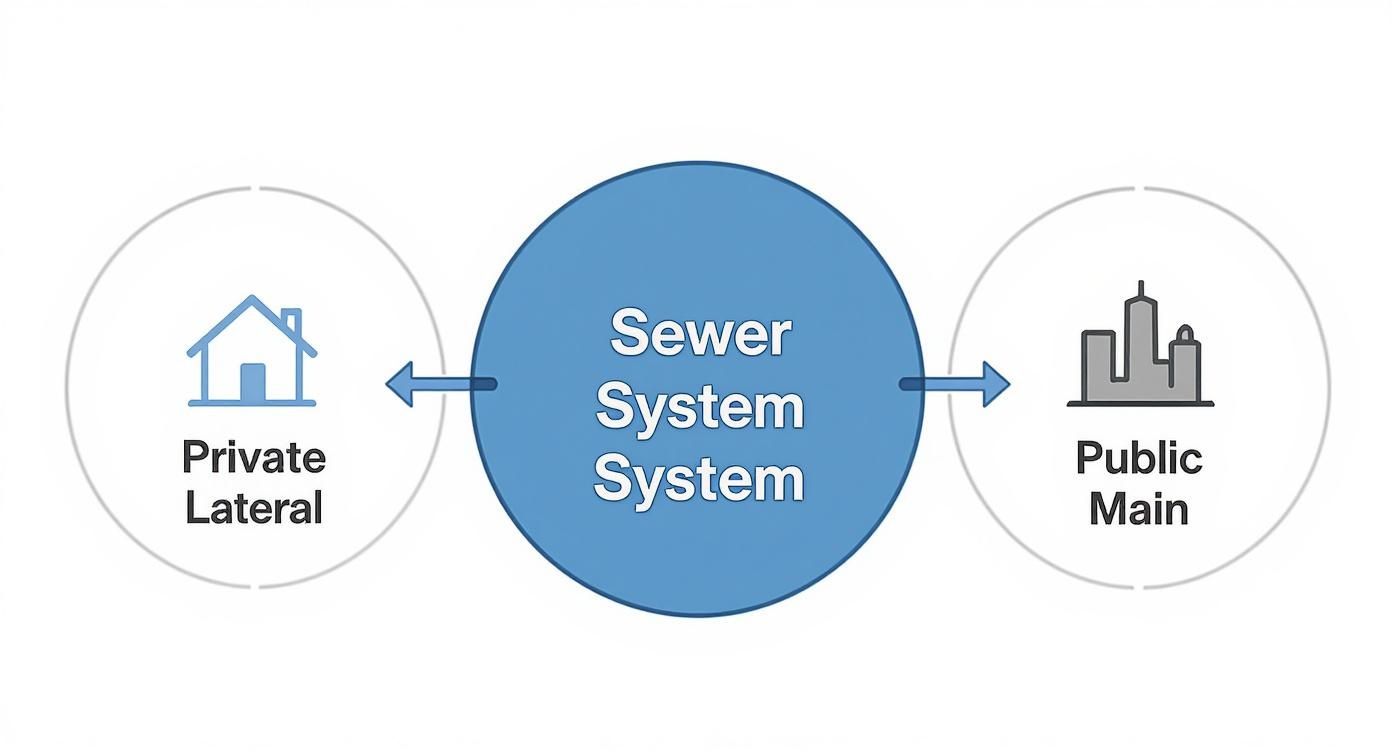
It’s a simple idea, but the details can cost you.
The All-Important Connection Point
So, where does your pipe end and the city's begin? This is where it gets tricky, because the answer is different in every city. This single detail is often the source of shocking repair bills for homeowners.
The rules are set by your local government, and they usually fall into one of two categories:
- Connection at the Curb: In some places, your responsibility stops at your property line, which is usually the curb or sidewalk.
- Connection at the Main: In many other areas, including here on the Central Coast, your ownership extends all the way to the city's main line under the street.
That second scenario is a big deal. It means you could be responsible for repairing a pipe that's buried under the public street. If you're interested in learning more, check out our guide on how to locate underground utilities.
Finding out where this connection point is can save you from a surprise five-figure bill. Never assume the city will cover a repair just because the problem is not on your property.
Knowing exactly where your ownership ends gives you power. Many sewer systems on the Central Coast are over 50 years old and are starting to fail. When you know what you're responsible for, you can get ahead of problems and avoid a major failure that can disrupt your life and drain your bank account.
How to Confirm Who Owns Your Sewer Line
To truly avoid surprise sewer repairs, you need a definite answer for your property. Figuring out the line between your responsibility and the city's isn't a guessing game—it just takes a little research. Thankfully, there are clear ways to get the information you need before a crisis hits.
These methods range from a simple phone call to a full professional inspection. Taking these steps puts you in control, so you can act with knowledge, not panic.
Check with Your Local City
The fastest way to get started is by going straight to the source. Your city or county’s public works department is the final authority on sewer systems. Their official maps and policies will show exactly where their responsibility ends and yours begins.
You can often find this information on their website, but a direct phone call to the local sewer utility works just as well. Simply ask for their official policy on private sewer lateral ownership.
Review Your Property Documents
Next, look at the documents for your own property. Important papers like your property's plat map or a land survey often contain key details about your sewer line.
Look for notes that show:
- Utility Easements: These are areas on your property where utility companies have the right to access their equipment.
- Connection Points: This shows the specific spot where your private pipe connects to the public sewer main.
Finding these details on your property map gives you a clear picture of your system's layout and where your responsibility ends.
Get a Professional Inspection
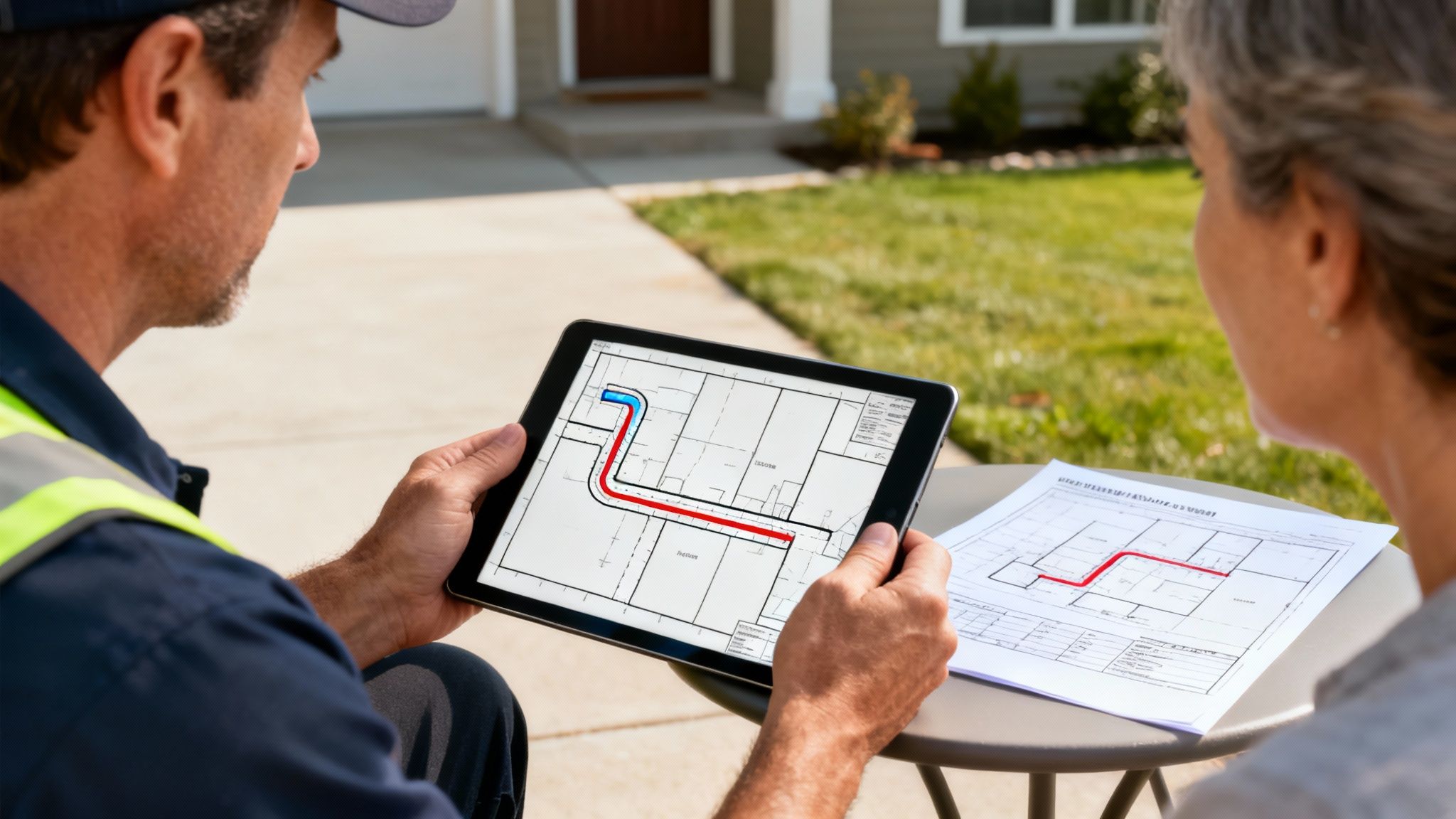
For a 100% certain answer, nothing beats a professional video camera inspection. An experienced technician feeds a high-resolution camera down your sewer lateral, mapping its exact path from your home all the way to the city main.
This process removes all guesswork. It doesn't just show the location of the connection; it also gives you a real-time look at any problems like cracks, blockages, or tree roots. You can learn more about how this technology works by exploring professional underground utility services. A camera inspection gives you clear proof, so you never pay for repairs that aren't your responsibility.
Common Sewer Problems and Who Typically Pays
Let's be honest, no one thinks about their sewer line until something goes wrong. A gurgling drain or a strange smell in the yard are often the first warning signs of a coming repair bill.
The real question is, who’s going to pay for it? The answer almost always comes down to one thing: location. Knowing where the problem is located is the key to figuring out who has to pay the bill.
If you have a clog inside your house, that’s on you. But it gets trickier once the pipe leaves your home and heads toward the street. Any problem in your private lateral line—even the part under the public sidewalk—is almost always your responsibility to fix. The city only steps in when the problem is in their main line.
A Breakdown of Common Issues
Different problems have very different costs, and knowing who’s responsible can be the difference between a simple cleaning and a huge digging project. Here on the Central Coast, many of our sewer systems are over 50 years old. If your home is in an older neighborhood, it’s a good idea to understand what property owners should know about aging sewer lines.
To make it easier, here’s a quick look at who typically pays for what.
Who Pays for Common Sewer Repairs?
| Problem | Location | Typical Financial Responsibility |
|---|---|---|
| Tree Root Intrusion | In your yard, crushing the lateral line. | Homeowner |
| Grease or Debris Clog | Anywhere inside the home's plumbing. | Homeowner |
| Cracked/Collapsed Pipe | In the private lateral, under the sidewalk. | Homeowner |
| Main Line Blockage | Under the street, affecting multiple homes. | City/Municipality |
| Connection Point Failure | At the "tap" where your lateral meets the main. | Often Homeowner (Varies by City) |
As you can see, most common problems fall on the homeowner.
The connection point itself is often the most confusing area. Never assume the city will cover a repair at the tap without checking, as local rules often make the property owner responsible.
So, what about your insurance? It's important to understand what homeowners insurance typically covers for various property damages. Most standard policies will not cover sewer line failures.
However, you can often get an add-on for "service line coverage." This can be a financial lifesaver, offering protection against these unexpected and often large costs.
How to Get Ahead of Costly Sewer Surprises
Knowing who owns which pipe is half the battle. The other half is taking action before a small problem turns into a messy, expensive disaster. This means shifting from panicked repairs to smart, proactive maintenance.
A little prevention goes a long way, especially here on the Central Coast. Many of our local sewer systems are over 50 years old, meaning those pipes have seen a lot of use. Older pipes are just more likely to fail, making a proactive mindset essential.
Smart Maintenance Is Simple
You don’t need a complex plan to keep your private sewer lateral in good shape. It really comes down to being aware of what’s underground and having a professional check on it every few years.
Here’s what you can do:
- Book a Video Inspection: This is the best thing you can do. A camera inspection lets you see exactly what’s going on in your pipe—small cracks, growing tree roots, or grease buildup—long before you have a backup.
- Watch What You Flush: Treat your drains with care. Your sewer line isn't a trash can. Keep grease out of the kitchen sink, and never flush "flushable" wipes. They are known for creating huge, stubborn clogs.
- Plant Smarter: If you're adding trees to your yard, know where your sewer line runs and plant them far away from it. Roots are drawn to the water in your pipes and can cause a lot of damage.
This kind of forward thinking is important because the city is only responsible for the public mains. Global reports on water infrastructure investments show that public upgrades are on the rise, but that doesn't include your private line. Taking charge of your lateral is the only way to protect your property.
Think of it this way: proactive maintenance isn't just about fixing a pipe. It's about protecting your home from the stress, damage, and unexpected bills that a sewer emergency always brings.
Navigating Sewer Repairs with Confidence
A gurgling drain or a sewage backup is a homeowner's nightmare. In that moment of panic, it's easy to make quick decisions, but the first step is always the same: call a certified professional. This isn't just about getting a quick fix; it's about getting an accurate diagnosis that can save you from headaches and unnecessary costs.
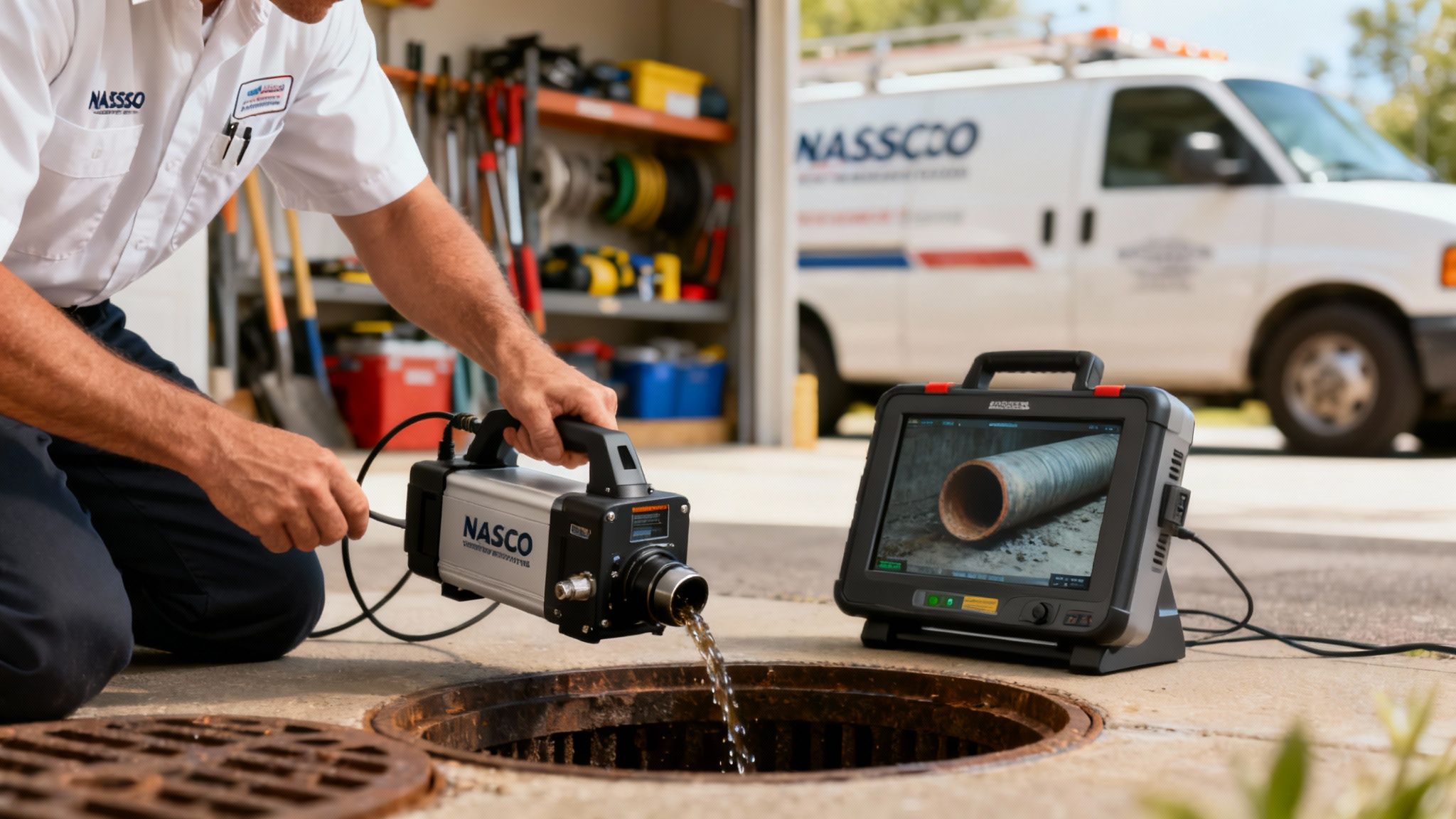
An experienced team can use special equipment to find the problem, pinpoint its exact location, and—most importantly—determine who is responsible for the repair before any digging starts.
Why a Professional Diagnosis Matters
When you're looking for a contractor, make sure they have NASSCO-certified inspectors. NASSCO sets the industry standard for pipeline assessment, and cities and contractors respect their evaluations. This certification means you’re getting an unbiased, detailed report on the condition of your sewer line.
This clarity is your best defense in any disputes with the city. It ensures you only pay for the repairs that are truly yours, turning a high-stress emergency into a manageable process. If you're wondering about the potential price, our guide breaks down the factors that influence https://coastalpipelineinc.com/trenchless-sewer-line-repair-cost/.
If you have a major backup, you'll also want to find professional sewer remediation services. They handle the special cleanup needed to address health hazards and restore your property after the pipe is fixed.
The key takeaway is simple: A professional diagnosis is the best way to save time, money, and stress. It provides the proof you need to handle repairs with confidence.
Ultimately, the small cost of a camera inspection can protect you from a five-figure mistake. It’s the smartest first move you can make to avoid surprise sewer repairs and understand ownership from the start.
Your Questions About Sewer Line Ownership, Answered
Even with the basics covered, you probably have a few specific questions. Let's answer some of the most common questions property owners have about sewer line responsibility.
Will My Homeowners Insurance Cover Sewer Lateral Repairs?
This is a big one, and the answer surprises most people: no, a standard homeowners policy almost never covers sewer line repairs from normal aging, wear and tear, or tree roots. Thinking you're covered is a common and costly mistake.
The good news? Most insurance companies offer a special add-on for this situation. It might be called "Service Line Coverage" or "Underground Utility Coverage." This extra coverage is usually affordable and can save you from the huge costs of digging up and fixing the pipe. It's worth calling your agent to see if you have this coverage or how to add it.
What’s a NASSCO Certification, and Why Should I Care?
NASSCO is the National Association of Sewer Service Companies, and they set the standard for inspecting underground pipes. When a technician is NASSCO-certified, it means they are trained to check pipes using a uniform, nationally recognized system.
For you, this certification is proof that you're getting a reliable and accurate diagnosis. NASSCO reports use a standard code to pinpoint every crack, root, or blockage. The result is a professional assessment that cities, contractors, and insurance companies trust.
Think of it this way: a NASSCO-certified inspection gives you an unbiased report card for your sewer line. It’s the best tool for clarifying who is responsible for a problem and making sure the right fix is done.
The City Is Replacing the Main Sewer on My Street. How Does That Affect My Lateral?
This is a golden opportunity. While the city's project is focused on the main line, your private lateral still has to connect to it. This is the perfect time to get your own line inspected by a professional.
Think about it—connecting an old, weak lateral to a brand-new city main is asking for trouble later. In fact, some cities might even require you to repair a failing lateral before they'll connect it. An inspection lets you handle any issues while the street is already dug up, which could save you thousands in digging costs later.
I Live in an HOA. Who’s Responsible for the Sewer Lines Here?
In an HOA community, the answer is in your governing documents, usually called the CC&Rs (Covenants, Conditions, and Restrictions). There is no single rule, so you can't make assumptions.
Some HOAs take care of everything from your building all the way to the city main. In other communities, you are responsible for your lateral just like any single-family homeowner. Because the rules can be very different, it's important to find those documents or contact your property manager to get a clear answer before you have a problem.
If you're feeling unsure where your responsibility ends and the city's begins, the expert team at Coastal Pipeline Inc. can help. We provide NASSCO-certified inspections and site-specific advice to help you navigate ownership, permits, and repairs with total confidence. Visit us online to learn more about our underground utility services.