
For property owners in Carmel, getting a road or driveway that lasts and meets local codes is key. It all comes down to finding the right contractor—someone who understands our unique coastal area. It takes a pro's touch on asphalt paving & resurfacing to build something that's safe, follows the rules, and is built to last for years.
Your Guide to Lasting Asphalt Pavement in Carmel
Carmel's beautiful coast is great, but it's hard on paved surfaces. The salty air, constant moisture, and special soil conditions can ruin standard asphalt. This can lead to cracks, potholes, and a much shorter lifespan. A good project is more than just laying down blacktop; it's about creating a surface that is truly built to last for decades.
This guide will show you what it takes to get a high-quality asphalt surface that makes your property more valuable and useful. We'll look at the key differences between starting from scratch with new paving versus giving an old surface new life with professional resurfacing. Think of it like building a new home versus doing a major exterior remodel—both work, but the right choice depends on the condition of your foundation.
Building a Foundation for Success
Understanding the main parts of a paving project is the first step to making a smart choice. For any driveway, road, or parking lot in Carmel, a successful result comes down to a few key things working together.
- Engineered for Longevity: We use premium asphalt mixes and precise grading to deliver long-lasting pavement built to withstand Carmel’s coastal climate and vehicle load demands.
- ADA-Compliant Surface Solutions: Our paving services meet ADA accessibility guidelines, ensuring compliant walkways, parking areas, and curb ramps for commercial and municipal projects.
- Full-Scope Site Preparation: From excavation and grading to utility coordination, we handle every phase of your paving project for a seamless, infrastructure-ready foundation.
- Local Expertise, Regional Impact: Serving Carmel and the greater Monterey County, we understand local permitting, soil conditions, and regulatory standards—ensuring smoother approvals and faster project timelines.
A successful asphalt project needs careful planning and management. This is where good construction project management tools can make a big difference. By focusing on these basics from the start, you can be sure your investment will last.
To see how we use these ideas, check out our guide to professional asphalt paving & resurfacing in Carmel.
Choosing Between Asphalt Paving and Resurfacing
Deciding if your Carmel property needs a completely new asphalt surface or just a simple resurfacing can be a tough call. But the right choice usually comes down to one thing: the health of your pavement’s foundation.
Think of it this way: new paving is like building a house from the ground up, while resurfacing is like giving that same house a beautiful, strong new roof. One deals with the main structure, while the other protects and improves what’s already there.
New paving is the complete, built-from-scratch solution. It means we dig up the old, failed surface and build a brand-new, multi-layer system. This is the only way to go for surfaces with serious damage like deep "alligator" cracks, large potholes, or major drainage problems. It's also the clear choice for any new construction.
Resurfacing, often called an overlay, is a more focused fix. We add a fresh, strong top layer of asphalt over the existing pavement. It's a great, affordable solution for surfaces that are still strong but are starting to show their age with small cracks or fading. For an overlay to work, though, the base underneath has to be solid.
When to Pave and When to Resurface
The condition of your current asphalt is the biggest factor in this decision. A professional can walk through and spot the signs that point to one solution over the other. The most serious problems—the ones that need more than a simple cover-up—almost always come from a failing foundation.
For example, if you see large, connected cracks that look like alligator skin, that's a clear sign the base layer has failed. Water has gotten in and weakened the whole support structure. Just putting a new layer of asphalt on top is a short-term fix, and those cracks will come right back through.
A well-kept surface, on the other hand, doesn't just last longer; it improves the whole look of a coastal property.
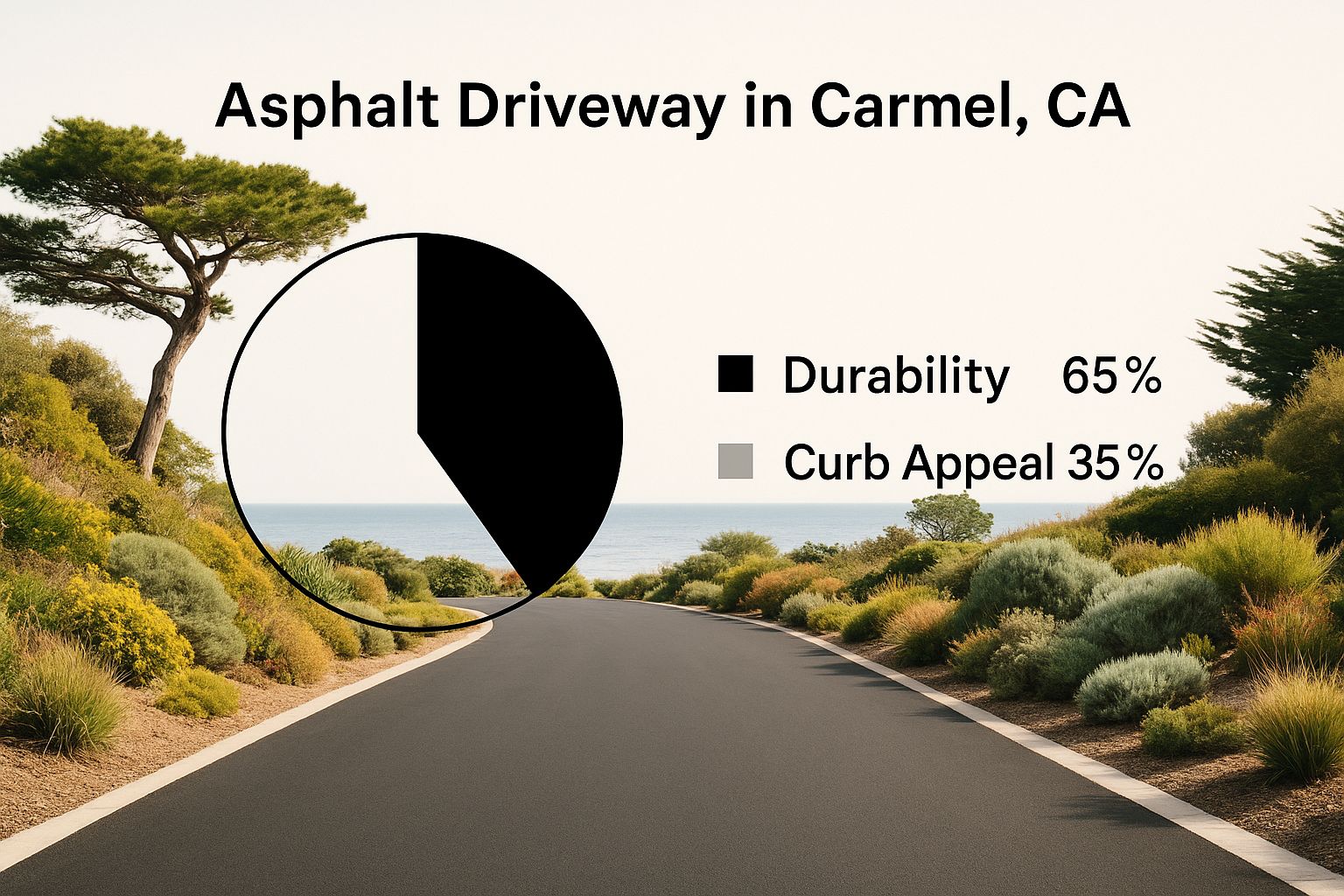
This kind of smooth, professional finish is what proper asphalt paving & resurfacing in Carmel, CA is all about. It creates a look that fits in perfectly with our beautiful local landscape.
Making the Right Long-Term Investment
Choosing the right method isn't just about a quick fix. It's about getting a durable, long-term solution for your roads and driveways. While resurfacing costs less at first, using it on a failing foundation is just wasting money. The problems underneath will ruin the new surface in no time.
A full paving project, however, deals with those foundational problems from the very start.
A strong pavement structure begins with a stable sub-base. By ensuring proper grading and compaction from the ground up, a new paving installation provides a reliable foundation engineered for decades of performance in Carmel's demanding coastal environment.
That foundation work is a key part of our complete paving and grading services. It makes sure water drains correctly and the pavement can handle traffic without moving or cracking.
To make the choice easier, here’s a quick comparison to help you decide which path is right for your Carmel property.
Paving vs. Resurfacing: Which Is Right for You?
| Consideration | Asphalt Paving (New Installation) | Asphalt Resurfacing (Overlay) |
|---|---|---|
| Best For | New construction, surfaces with deep cracks, potholes, or a failed foundation. | Surfaces that are structurally sound but have minor cracks, fading, or surface wear. |
| Process | Involves full excavation of the old surface and building a new aggregate base and asphalt layers. | A new layer of asphalt (typically 1.5-2 inches) is applied over the existing, prepped surface. |
| Lifespan | 20-30 years or more with proper maintenance. | Extends pavement life by 8-15 years. |
| Cost | Higher initial investment due to labor, materials, and excavation. | More budget-friendly upfront since it requires less material and labor. |
| Key Benefit | A brand-new, long-lasting solution that fixes all underlying structural problems. | A cost-effective way to restore the appearance and function of existing pavement. |
In the end, whether you need to invest in a full paving project or can get great results with a smart resurfacing, the goal is the same: a safe, code-compliant, and long-lasting surface for your property.
Engineering Pavement for Carmel's Coastal Climate
Paving an asphalt surface that really lasts in Carmel isn’t a one-size-fits-all job. It needs a smart, engineered approach that’s built for our unique coastal environment. Between the salty air and constant moisture, standard materials just don’t stand a chance—they start breaking down way too soon.
To prevent those problems, we use top-quality asphalt mixes designed to fight against salt damage and moisture. These aren't just generic mixes; they’re made to handle the specific needs of your property, whether it’s a quiet home driveway or a busy commercial lot. This planning is what gives the pavement its strength to last for years.
But the right materials are only half the story. The real secret to a long life is perfect grading.
The Critical Role of Proper Grading
Think of grading as the art of making water your pavement's best friend instead of its worst enemy. A properly graded surface is designed to get rid of water, much like a good roof sends rain into the gutters. We shape the land to create a slight, planned slope that guides every drop of water off the asphalt and away from its foundation.
Why is this so important? Because standing water is asphalt’s number one enemy.
When water pools on the surface, it slowly gets into tiny pores and cracks. Soon, it seeps down into the sub-base, turning the solid foundation into a soft, unstable mess. This underground damage is what causes potholes, alligator cracking, and complete pavement failure.
Proper grading isn't just a "nice to have"—it's an absolute must for durable pavement. It’s the single most effective defense against water damage, guaranteeing a stable foundation that can handle Carmel’s wet seasons without falling apart.
By engineering the surface to drain correctly, we turn every rainfall into a force that cleans your pavement instead of destroying it from the inside out. This careful attention to detail makes all the difference.
Local Knowledge for Lasting Results
Building strong pavement here means knowing Carmel’s unique history and environmental factors. Since it was founded, our community has worked hard to balance development with saving its natural beauty, especially its famous urban forest. This directly affects modern asphalt paving & resurfacing in Carmel, CA, because local codes are written to protect the very tree roots that can lift and destroy roads.
Over the years, those powerful roots have caused a lot of damage. This has forced us to develop stronger, more flexible paving methods that protect both the pavement and the town’s character. You can see how this affects local planning by looking at public reports on local development.
This is where our deep local knowledge is so valuable. We know the challenges specific to the Monterey Peninsula and how to engineer solutions that last. By combining top-quality, climate-resistant materials with expert grading and a true understanding of local conditions, we deliver pavement that is built for the long haul.
Making Your Paving Project Fully ADA Compliant
Here in Carmel, any paving project for a commercial or public property isn't truly finished until it meets the strict standards of the Americans with Disabilities Act (ADA). These aren't just rules to check off a list; they're about ensuring safe and equal access for every person in our community.
This means your parking lot, walkways, and entry points must be designed and built so that everyone can use them easily.
When it comes to professional asphalt paving & resurfacing in Carmel, CA, ADA rules must be part of the project from the very first plan to the final coat of paint. It’s a required part of the job and involves a lot more than just painting a few blue lines on the pavement.
Key Pavement Features for ADA Compliance
To ensure full accessibility, a few key parts have to be done perfectly. Each one has very specific requirements for its size, slope, and placement that are critical for passing inspection.
- Accessible Parking Stalls: These aren't just wider parking spots. They have to be a specific width and located on the shortest possible accessible route to the building's entrance. They also need clearly marked access aisles for van ramps.
- Safe Paths of Travel: All walkways need to be wide enough for easy wheelchair access and must have a smooth, stable surface. The slope is also strictly controlled to make sure it's not too steep for safe travel.
- Compliant Curb Ramps: Ramps must be built with a gentle, exact slope and have detectable warnings. Those are the textured bumps at crosswalks that help alert visually impaired people that they're approaching a street.
These elements all work together to create a safe and easy experience. As a property owner, it's important to understand the details, like required sizes and markings. We've put together a detailed guide in our article on the rules for handicap parking spaces.
Building Compliance In From the Ground Up
You can't just "add" ADA compliance at the end of a project. A contractor has to know how to build these features into the job from the very beginning.
Proper grading is essential to get the slopes right for ramps and pathways. The entire layout has to be planned carefully to provide the most direct and safest routes for everyone. It's a core part of the work, not an afterthought.
An ADA-compliant property is a reflection of a community's commitment to inclusivity. It ensures that businesses, public parks, and municipal buildings are truly open to everyone, removing physical barriers and promoting equal access for all.
A professional paving contractor handles all of this. They make sure every measurement and material choice leads to a final product that is not only strong and beautiful but also fully compliant. For projects focused on improving accessibility, it's also worth looking into funding options by learning more about applying for accessibility grants.
From the first design and digging to the final striping, every step is managed to create a truly accessible property for all.
The Critical Role of Full-Scope Site Preparation
That beautiful, smooth asphalt surface you see is only the tip of the iceberg. Its real strength—the kind that lasts for decades—comes from the foundation hidden underneath. Before any hot mix asphalt is laid, a lot of important work has to happen. This full-scope site preparation is the single most important factor in creating strong, long-lasting pavement.
It all starts with proper excavation. We dig down to the necessary depth, clearing out any unstable topsoil to create a solid, reliable base. From there, we move on to professional grading. This isn't just about making things level. It's about carefully shaping the earth to ensure water drains away from the pavement. It's a vital step for preventing water damage that leads to cracks and potholes later on.
Building from the Ground Up
With the site dug out and graded, we can install a solid sub-base. This layer of compacted aggregate material acts as the pavement's structural backbone. It's what distributes the heavy weight of vehicles and provides the key stability everything else relies on. A poorly compacted base is a guaranteed recipe for disaster, leading to sinkholes and early failure.
Think of the sub-base as the concrete foundation of a house. Without a strong, stable foundation, the entire structure above it will eventually shift, crack, and fail. The same principle applies directly to asphalt pavement.
Taking this complete approach prevents future headaches and truly protects your investment. When you're planning a paving project, just remember that the work done below the surface is just as important as the final product you see. You can learn more about how this applies to different projects in our guide to driveway resurfacing in Monterey County.
Our complete approach to asphalt paving & resurfacing in Carmel, CA, even includes working with utility services to prevent conflicts with any underground lines. From start to finish, we handle every detail to build a surface that’s not just a quick fix, but a real long-term solution.
Navigating Carmel and Monterey County Regulations
Any paving job in Carmel isn't just about laying down asphalt—it's a detailed process that has to follow local and county rules. Working with a contractor who knows this area inside and out isn't just helpful; it's necessary to get the project done right, on time, and without any costly problems.
Managing a project here means knowing all about local permits, understanding the unique soil conditions across Monterey County, and following environmental codes exactly. For example, the sandy or clay-heavy soils common here act very differently under pressure. You need special site prep methods to make sure a road or driveway will stay stable for years.
A contractor with this local knowledge can get through the entire approval process much faster. They know what challenges to expect from our local geography and can make sure every step of the job meets city standards from the start.
Local Expertise for Faster Project Timelines
This proactive approach is what keeps projects moving smoothly. Instead of just reacting to problems, a knowledgeable team plans for them from day one. This prevents frustrating delays and ensures a compliant build from start to finish.
To keep track of all the local and state requirements, a business compliance checklist can be a very useful tool. It helps ensure every permit, inspection, and standard is taken care of, leading to a fully code-compliant paving solution.
This sharp focus on regulatory details is especially important for asphalt paving & resurfacing in Carmel, CA, where every project has to balance long-term durability with care for the environment.
In an area celebrated for its natural beauty, following the rules is about more than just compliance. It's about being a responsible member of the community and ensuring every project respects our local standards and preserves the environment we all love.
Meeting State and Regional Standards
There’s a good reason asphalt is so common in California. In fact, over 95 percent of all paved surfaces in the state are asphalt because it consistently meets strict codes for durability, safety, and environmental impact.
California’s Department of Transportation (Caltrans) encourages sustainable practices, like using recycled tires in asphalt mixes. This not only makes the pavement more flexible but also cuts down on landfill waste. This commitment to regulated, sustainable materials is why asphalt projects in Carmel deliver durable, code-compliant solutions for public roads and private driveways alike. You can learn more about California's approach to sustainable asphalt and its benefits.
When you work with a team that has a proven track record in this region, you get a partner who knows exactly how to deliver a project that meets every local requirement. That expertise means faster approvals and a final product that’s truly built to last.
Common Questions About Asphalt Paving in Carmel
If you're thinking about a paving project, you probably have a few practical questions about how it all works, the best timing, and what the local rules are. Getting straight answers is the first step to making a confident decision and seeing the real value in professional asphalt paving & resurfacing in Carmel, CA.
Let's look at some of the most common questions we get from homeowners and property managers.
How Long Does a New Asphalt Driveway Last in Carmel?
With a professional installation using high-quality materials suited for our coastal climate, you can expect a new asphalt driveway to last a solid 20 to 30 years. The secret to reaching that 30-year mark is proper maintenance.
Regular sealcoating every three to five years is a must. Think of it as sunscreen for your driveway—it protects the surface from the constant sun and moisture we get in Carmel. Catching and filling small cracks as soon as they appear is also key to stopping water from getting into the base and causing bigger, more expensive problems down the road.
What Is the Best Time of Year for Paving?
The best time for any asphalt work here in Carmel is during our warmer, drier months, which is usually late spring through early fall. Asphalt needs consistent warmth and dry air to be installed and cure properly.
This curing process is what allows the liquid binder and aggregates to lock together, creating that strong, durable surface you want. Paving in the right season ensures your new driveway or road can handle traffic and weather for years to come.
A well-timed project ensures the materials perform exactly as engineered. Rushing a job in poor weather can compromise the pavement's structural integrity before it even has a chance to fully harden, leading to premature wear and a shorter service life.
Will I Need a Permit for My Driveway?
It really depends on the size of your project. If you're just doing a simple resurfacing job—adding a fresh top layer—you probably won't need a permit. But for anything more involved, like a brand-new installation, an expansion, or work that changes drainage or the curb cut, a permit is almost always required. If you're wondering about the budget for these projects, you can explore our overview of what asphalt driveways cost.
A good local contractor knows the rules for Carmel and Monterey County. They'll handle the entire permitting process, making sure your project is 100% compliant with all local codes.
How Is My Property Protected During Paving?
A professional crew always puts protecting your property first. This means knowing and following Carmel's strict tree protection rules and using specific methods to keep your existing landscaping and hardscaping safe.
For properties with large, mature trees, we might install root barriers to prevent the roots from causing pavement to lift and crack in the future. It’s all about a careful, thoughtful approach that improves your property without harming its natural beauty.
For durable, code-compliant paving solutions built to last in Carmel's unique climate, trust the experts at Coastal Pipeline Inc. Contact us today to discuss your project and get a free estimate.