
So, you’ve started to see some small cracks in your asphalt driveway. Don't worry. This is often the first sign of damage from weather, water, and daily use. Figuring out what’s causing these cracks is the first step to fixing them. A good repair will protect your driveway and keep your home looking nice.
Understanding Why Your Driveway Is Cracking
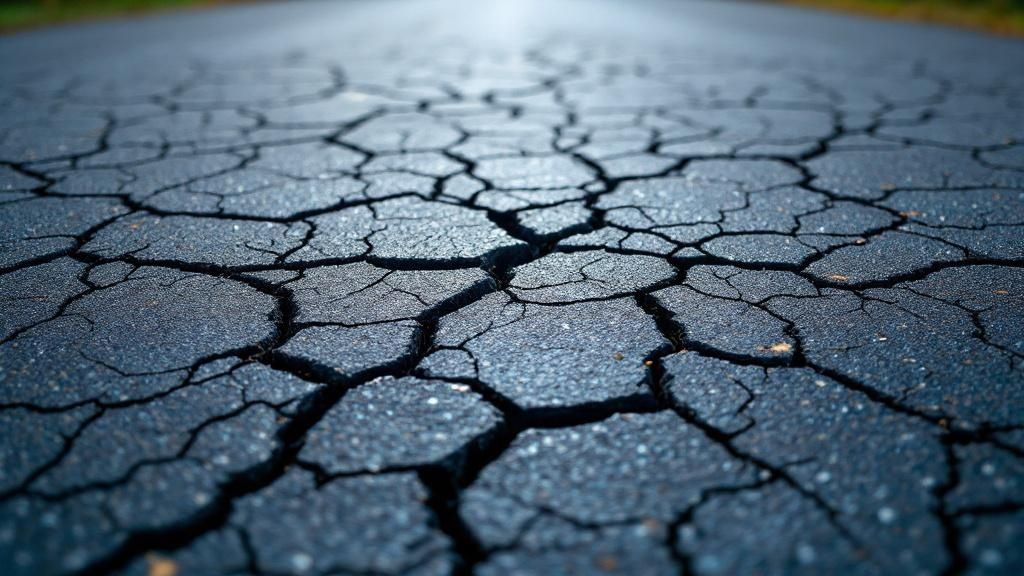
Your asphalt driveway might look tough, but it's always fighting against the weather. Over time, these forces cause the pavement to break down, and that’s when cracks appear. It’s a natural process, but you can manage it if you know what to look for.
The biggest problems are usually water and changing temperatures. When water gets into tiny holes in the asphalt and then freezes, it expands. This is called the freeze-thaw cycle. It acts like a tiny hammer, pushing the asphalt apart from the inside. This is how small flaws turn into big cracks.
The Main Causes of Driveway Cracks
Sunlight also plays a big part. The sun's UV rays bake the oils out of the asphalt, leaving it dry and brittle. A brittle driveway is more likely to crack under the weight of a car.
Besides weather, the ground under your driveway can move. A base that wasn't packed down well can settle, creating weak spots. When heavy trucks park on these weak spots, you can get serious cracks.
Here are the most common reasons for cracks:
- Water Damage: Water gets under the surface, freezes and thaws, and weakens the foundation.
- Sun Exposure: The sun makes the asphalt less flexible and more likely to crack.
- Heavy Loads: Parking heavy cars in the same spot day after day can cause cracks.
- Poor Foundation: If the gravel base wasn't installed right, it can shift and cause the surface to crack.
- Age: Like anything else, asphalt gets older and weaker over time.
The truth is that almost every asphalt driveway will crack eventually. The key is to fix them quickly so they don't become bigger, more expensive problems.
Knowing the Different Types of Cracks
It's important to know that not all cracks are the same. You need to know what kind of crack you have to choose the right repair. A thin crack might just be a sign of aging, but a web of cracks points to a much bigger problem.
To help you out, here’s a quick guide to common crack types.
Common Types of Driveway Cracks
| Crack Type | What It Looks Like | Common Cause | How Urgent Is It? |
|---|---|---|---|
| Hairline Cracks | Thin, shallow cracks, often less than 1/8-inch wide. | Early signs of sun damage and aging. | Low: Watch them and seal them soon. |
| Transverse Cracks | Single cracks running across the driveway. | Pavement shrinking in cold weather. | Medium: Fill to keep water out. |
| Longitudinal Cracks | Cracks that run the length of the driveway. | Badly made joints or temperature changes. | Medium: Needs filling to stop them from getting wider. |
| Alligator Cracks | A web of connected cracks that looks like an alligator's skin. | A weak base or stress from heavy cars. | High: This points to a serious problem. |
Knowing these patterns helps you choose the right fix. That web-like pattern, which we call alligator cracking, is a big warning sign. It usually means the foundation is failing and needs more than a simple patch.
Taking care of asphalt is a big business. The worldwide asphalt industry is expected to be worth around USD 151.8 billion by 2027. This is because roads and driveways always need to be repaired. You can learn more about these trends at StreetWorksUS.com.
Choosing the Right Tools and Repair Materials
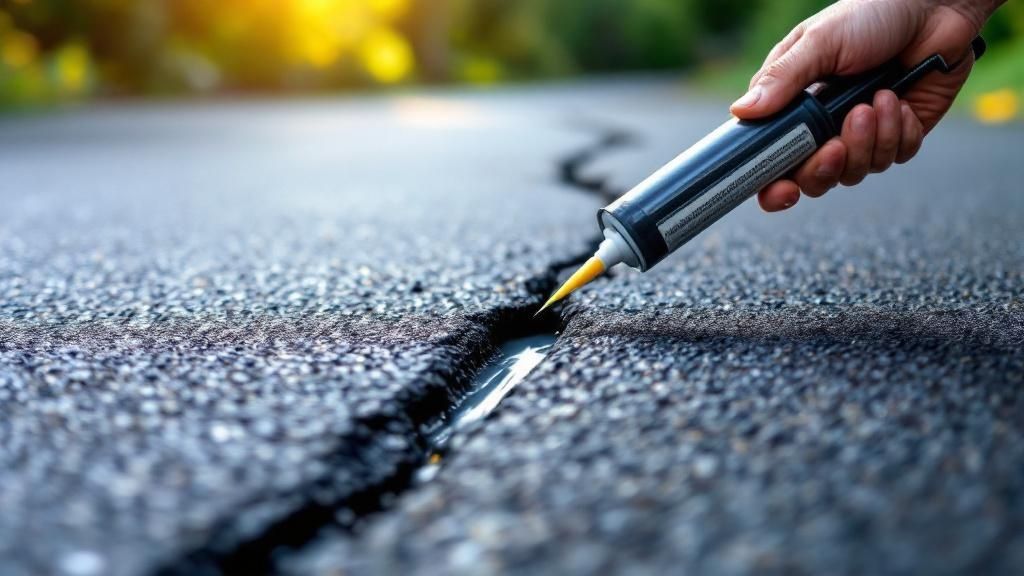
Going to a hardware store without a plan can be confusing. To properly fix the cracks in an asphalt driveway, you need the right tools. A shopping list saves you time and keeps you from having to make a second trip.
Your first job is to clean the cracks. You can't just pour filler into a dirty crack and hope it sticks. Get a few basic tools to get the area ready.
- Wire Brush: Use this to scrub out dirt and loose bits from inside the cracks.
- Leaf Blower or Shop Vacuum: After brushing, you need to blow or vacuum out all the dust.
- Screwdriver or Weeding Tool: Use a screwdriver to dig out stubborn weeds or rocks stuck in the cracks.
Once you have your cleaning tools, it's time to pick the right repair material. This part is simpler than it sounds. The product you need depends on the size of the crack.
Matching the Filler to the Crack
For tiny hairline cracks (anything less than a half-inch wide), a pourable liquid crack filler is best. It comes in a squeeze bottle with a small tip. This lets you put a thin line of filler deep into the crack to seal out water.
If you are fixing bigger cracks (over a half-inch wide), you’ll need something thicker. Look for an asphalt patching compound. This has a thick texture, like peanut butter. It gives the structure needed to fill the large gap. You'll spread this with a putty knife or a small trowel.
A very important tip is to check the weather before you start. Most fillers need at least 24 hours of dry weather with temperatures above 50°F to dry properly. If you work in the wrong weather, your repair will likely fail.
Safety and Finishing Tools
Finally, don't forget safety gear and tools for a clean finish. These items are just as important as the filler. They protect you and make the repair look good. If you want to know what pros use for a strong fix, you can learn more about expert asphalt crack filling services and the products they use.
Here’s a quick checklist for the rest of your items:
- Safety Glasses to keep dust and bits out of your eyes.
- Work Gloves to protect your hands from chemicals and scrapes.
- Putty Knife for smoothing the patch material for a clean finish.
Getting all these items first makes the job go much smoother and helps your repair last.
How to Prepare and Clean Cracks for a Lasting Repair
Do you want to know the secret to a driveway repair that lasts? It's all in the prep work. You can't just put filler into a dirty crack and think it will work. Taking time to prep the surface helps the new filler stick to the old asphalt. This makes a tough, weatherproof seal that won't open up again next year.
Think of it like painting a wall. You wouldn't paint over dirt, would you? The same idea works for fixing cracks in an asphalt driveway. A clean, dry surface is the only way to make a repair that will last.
Removing Dirt and Weeds
First, get everything out of the crack that doesn't belong. Start with any weeds or grass. A screwdriver or a weeding tool is perfect for digging them out by the root. Make sure you get every last bit.
Next, take a wire brush and scrub the inside edges of the crack. This is important to loosen all the packed-in dirt, dust, and crumbling bits of asphalt. Your goal is to get to a solid, rough surface for the filler to stick to.
After you’ve scrubbed everything loose, it’s time to clean it all out.
- For the best results, a shop vacuum is great. It will suck out every last bit of dust that can ruin the bond.
- A good alternative is a leaf blower. Just blow the dust and dirt completely out of the cracks and away from your work area.
- If you don't have either, a stiff broom can work. But you’ll probably need to sweep the area a few times to get it really clean.
Making Sure the Crack Is Completely Dry
Once the crack is clean, it must be dry. Any water trapped inside will stop the filler from sticking. Your repair will fail within months. If it has rained recently, you have to be patient and wait.
As a rule, give the cracks at least 24 hours of dry, sunny weather to air out. If you're not sure, touch the inside of the crack. It should feel completely dry, not cool or damp. Rushing this step is a common mistake that can ruin the whole job.
Sometimes, the damage is too much for a simple DIY fix. If you see a lot of cracks, it's good to know when a patch job isn't enough. You can learn more about when to choose driveway paving or crack repair to make the right choice.
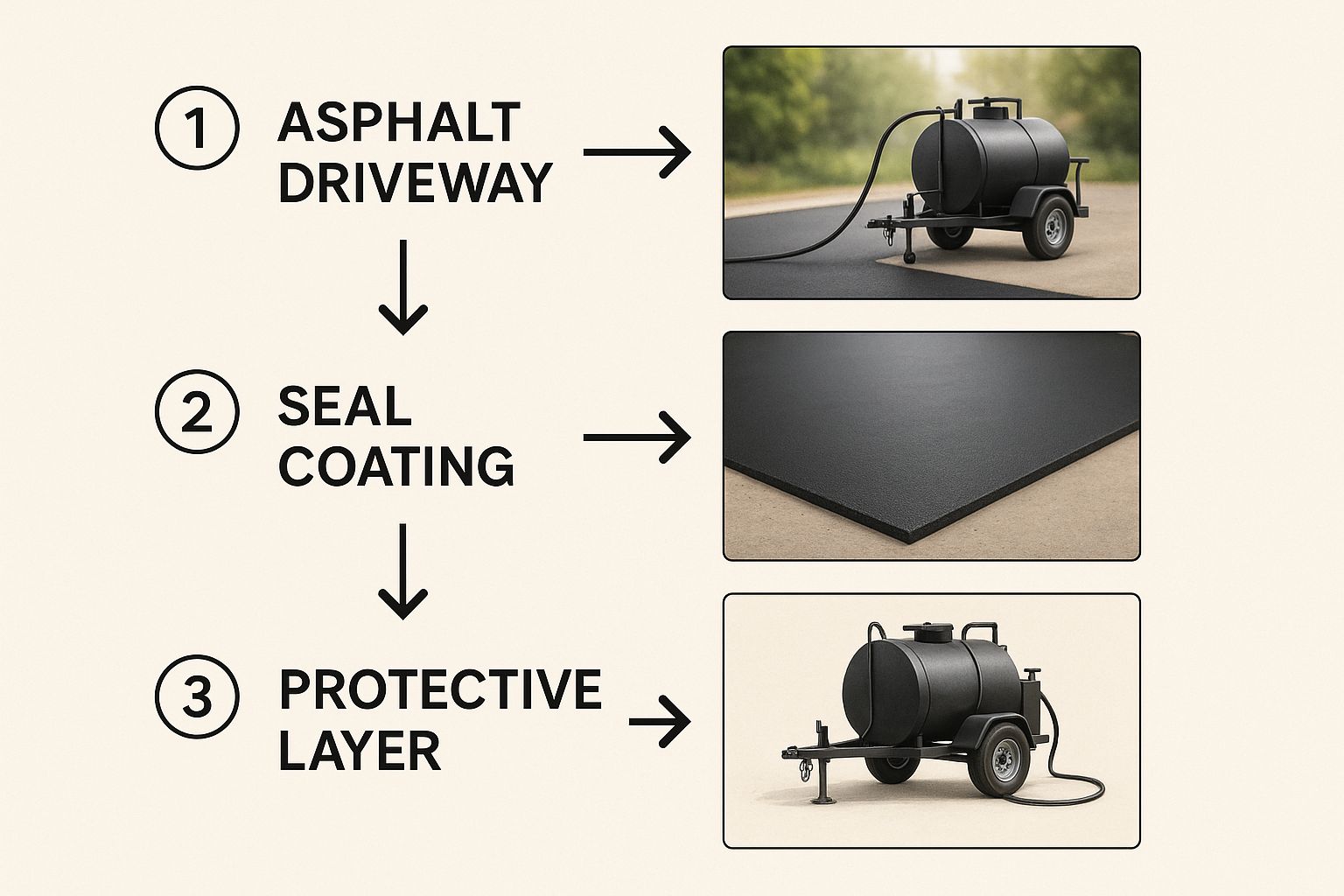
This picture shows what you want in the end: a smooth, protected driveway. And it all starts with careful cleaning. Taking these prep steps seriously is the key to a strong, long-lasting fix.
Applying Crack Filler and Sealant Like a Pro
Now for the fun part. With the prep work done, it's time to fix those cracks in an asphalt driveway. Applying the filler correctly makes the difference between a temporary patch and a strong repair that lasts for years. Don't rush this step. Using too much filler will leave you with a bumpy finish that will fail.
The goal is to get a smooth, steady flow of filler deep into the crack without it overflowing. For smaller cracks, put the tip of the filler bottle into the crack and squeeze gently as you move along. You want the filler to be level with the driveway surface, not piled on top.
Getting a Smooth, Professional Finish
Once the filler is in, you need to smooth it out. A putty knife works great for this. Gently press and drag the blade across the fresh filler to make it level with the asphalt around it. This removes any extra filler and makes it look smooth.
One of the most common mistakes is overfilling a crack. People think more is better, but it creates a bump that gets torn up by car tires or scraped off by a snow shovel. A level fill is always stronger.
If you're working with wider cracks and a thick patching compound, scoop a small amount onto a trowel. Press it firmly into the crack. It's best to work in thin layers, pressing down each time to squeeze out any air pockets. Do this until the patch is level with the driveway. When the damage is too much for simple filling, you might need to call a pro. It's good to know what professional asphalt patching and repair services can do.
The Final Step: Sealing for Protection
After your crack repairs have had time to dry—check the product label, but give it at least 24 hours—it's time for the final, most important step: sealing the whole driveway. Think of it this way: filling cracks is like surgery, but sealing is like putting on a protective coat. It protects your new repairs and the rest of the asphalt from the sun and rain that caused the damage.
A good sealer acts as a tough barrier. Here’s what it does for your driveway:
- Blocks UV Rays: The sun is hard on asphalt. Sealer stops it from drying out the asphalt.
- Keeps Water Out: A sealed driveway makes water run off instead of soaking in, where it can freeze and make more cracks.
- Resists Stains: It makes it harder for oil and gas to stain or damage the surface.
- Looks Great: Nothing looks better than a fresh, deep black finish. It makes your whole property look sharper.
This protective step is so important that the market for it is growing. The global market for asphalt driveway sealers was worth about $1.8 billion in 2023 and is expected to reach $2.7 billion by 2032. You can see more about the asphalt sealer market trends on Dataintelo.com. Putting on a fresh coat of sealant every two to three years is one of the smartest things you can do for your home.
Long-Term Driveway Care to Prevent Future Cracks
You’ve done the hard work, the cracks are fixed, and your driveway looks great. The next step is to keep it that way. Taking care of your driveway is the secret to preventing new cracks in an asphalt driveway from showing up. This will save you a lot of time and money later.
The single best thing you can do for your asphalt is to seal it regularly. Think of it as sunscreen for your driveway. It creates a tough, protective layer that shields the surface from sun, rain, and car fluids. A fresh coat every two to three years is a small cost that helps a lot.
Smart Habits for Driveway Care
Besides sealing, a few simple changes in how you use your driveway can make a big difference. Water is asphalt's worst enemy, so good drainage is a must. Make sure your gutters and downspouts point away from the driveway's edges. If you see puddles after it rains, that’s a bad sign. It means water is slowly soaking in and weakening the foundation.
Also, think about what you park on the asphalt. It's strong, but it has limits.
- Avoid Heavy Loads: If you have an RV or a heavy truck, try not to park it in the exact same spot for a long time. This is especially true on hot days when the asphalt is softer. The weight can create dips and cracks.
- Clean Spills Quickly: Oil, gas, and antifreeze are bad for asphalt. They can dissolve the material that holds it together. If you have a spill, clean it up right away. Cat litter can soak up the fluid before it does real damage.
- Keep Edges Clear: Don't let grass and dirt grow over the edges of your driveway. This traps water right where it can get underneath the asphalt and cause problems.
Remember, preventing problems is always cheaper and easier than fixing them. A little care each season will keep your driveway strong, smooth, and free of new cracks.
A Bigger Look at Asphalt Care
The fight against cracks in an asphalt driveway isn't just happening at your house. It's a huge task all over the world. A stunning USD 4 trillion was spent worldwide on building and fixing roads in 2022. This shows how important it is to keep surfaces in good shape. You can find more details about global asphalt market trends at Expert Market Research.
For homeowners planning for the future, knowing about different surfaces is smart. Our guide on asphalt versus pavers has great information for anyone thinking about future projects. By following these simple care tips, you'll make sure all your hard work pays off for years to come.
Common Questions About Driveway Crack Repair
Even after you've fixed a crack, you might still have questions. Getting the right answers can help you feel sure you made the right choice for your driveway.
Here are some quick answers to common questions about when to do the work, what to do about "alligator cracks," and when to call a professional.
When Is the Best Time of Year to Repair Cracks?
The timing of your repair is very important for good results. You’ll get the strongest repair by working during warm, dry weather. For most places, that means late spring, summer, or early fall.
The temperature is the most important part. Most crack fillers and sealants need the temperature to stay above 50°F (10°C) for at least 24 hours to dry right. If you try to fix cracks when it’s too cold or rainy, the filler won't stick well, and the crack will probably come back.
Should I Fix Alligator Cracks Myself?
If you see a web of cracks that looks like an alligator's skin, that's a serious warning sign. This pattern almost always means there is a problem with the foundation under the asphalt. The base that supports your driveway has failed.
Pouring filler into these cracks is a waste of time and money. It's just a temporary fix that won't last. The only real solution is to cut out the broken section, repair the base underneath, and put in a new asphalt patch. Because this is a big job, it’s best to call a professional.
A DIY fix is great for small, single cracks, but alligator cracking means the foundation is weak. Patching it without fixing the problem underneath is a short-term fix that you'll have to do over and over again.
DIY Repair vs. Hiring a Professional
So, when can you do it yourself, and when should you call for help? It really depends on the type and amount of damage.
- DIY Is a Great Option For: Small, single cracks less than a half-inch wide and regular sealing. You can get all the materials you need for under $100, making it a cheap way to do basic upkeep.
- Hire a Professional For: Large areas of alligator cracking, deep potholes, or big dips in the driveway. A professional job might cost $300 to over $1,000, but it's worth it for serious problems. If your driveway is covered in large cracks, professional asphalt resurfacing is often the best long-term choice.
When major repairs or full paving projects are needed, trust the experts at Coastal Pipeline Inc. to deliver durable, professional results. Contact us today to discuss your project needs.