
It's easy to see a small crack in your driveway and think, "I'll fix it later." But ignoring it can be a costly mistake. Doing a proper driveway crack repair asphalt job is more than just making it look good; it's important for keeping your driveway in shape. Water is the biggest enemy of asphalt, and a small fix today can save you from having to replace the whole driveway later.
Why Fixing Asphalt Driveway Cracks Is Not Just About Looks
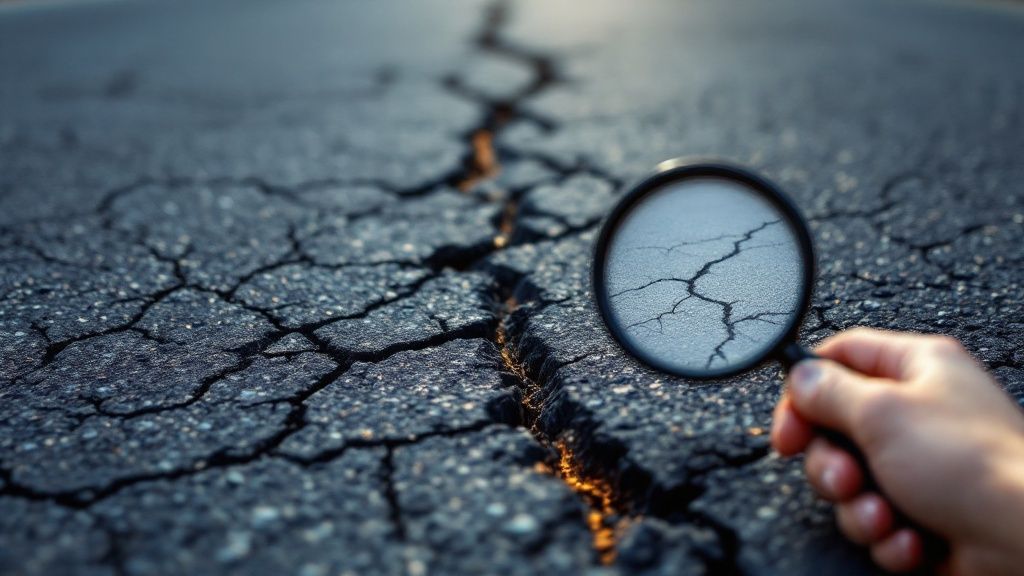
Many homeowners see small cracks as just a minor problem. But those little cracks are like open doors for water, which is the number one thing that ruins asphalt. Once water gets into a crack, it washes away the base that holds up your driveway.
This problem gets much worse in the winter. When water freezes, it gets bigger by about 9%. This acts like a powerful wedge that pushes the crack wider and deeper. A tiny crack you saw in the fall can turn into a huge gap by spring.
The Real Cost of Waiting
Here’s something I see all the time: a homeowner finds a few small cracks but decides to wait. The repair would have been easy—maybe $20 for a bottle of filler and an hour of work on a Saturday.
But they wait. Winter comes, and water gets in, freezes, and expands. By spring, those small cracks have spread out into a web of "alligator" cracking. The base underneath is now wet and weak. That simple $20 fix is no longer an option. Now, they might have to pay $2,000 for a professional to cut out and replace a large part of their driveway.
Not fixing a small asphalt crack is like ignoring a small leak in your roof. It starts as a small problem but can lead to major damage that costs a lot more to fix.
This shows why doing driveway crack repair for asphalt early is a smart move, not just another chore. By fixing problems early, you can:
- Prevent Potholes: You stop small cracks from turning into big, car-damaging potholes.
- Extend Driveway Life: A well-kept asphalt driveway can last for many years.
- Save Money: A little time and money now helps you avoid big repaving costs later.
- Boost Curb Appeal: A smooth, black driveway looks great and adds value to your home.
Choosing the Right Tools and Crack Fillers
Walking into a hardware store for a driveway crack repair asphalt project can feel overwhelming. The shelves have a lot of different products, and it's easy to grab the wrong one. But if you know what to look for, you can get the right tools for a repair that will last.
Let's start with tools. A few basic items will make the job much easier. You'll need a stiff wire brush and something strong like a screwdriver or a 5-in-1 painter's tool. You'll use these to dig out dirt, weeds, and loose asphalt from the cracks.
After you get the big pieces out, you need to get rid of the fine dust. A shop vac works best for this. It sucks up everything, leaving a clean surface for the new filler to stick to. If you don't have a shop vac, a strong leaf blower can also work.
Selecting the Right Asphalt Filler
This is the most important step. Picking the wrong filler is a common mistake and the reason many DIY repairs don't last. You wouldn't use wall spackle to fix a big hole, would you? The same idea applies here.
Asphalt is a very popular material. In the U.S., people are expected to use around 30 million tons of it by 2025, mostly for roads and repairs. This shows how important it is to keep asphalt surfaces, like your driveway, in good shape to avoid bigger problems.
Matching the product to the crack is key. We offer more tips on choosing products in our guide on how to repair a driveway with asphalt.
The success of your driveway crack repair depends on your choice before you even start. Matching the filler to the crack size is the most important decision you will make.
Choosing the right filler might seem hard, but it's really about the size of the cracks. This simple table can help you pick the right one.
Crack Filler Product Comparison
| Filler Type | Best For | Application Method |
|---|---|---|
| Pourable Liquid Filler | Hairline cracks up to 1/2 inch wide. | Squeeze bottle with a nozzle. |
| Trowelable Patch Compound | Cracks wider than 1/2 inch and shallow holes. | Trowel or putty knife. |
As you can see, it's a simple choice once you know what you need.
Here’s a little more about each type:
- Pourable Liquid Fillers: These come in easy-to-use squeeze bottles. They are thin enough to get deep into hairline cracks up to 1/2 inch wide. They create a flexible seal that keeps water out.
- Trowelable Patch Compounds: This filler is thick like peanut butter and comes in a tub. You need this for cracks wider than 1/2 inch or for filling shallow holes. It won't sink like a liquid filler would in a large gap.
Prepping Your Driveway for a Flawless Repair
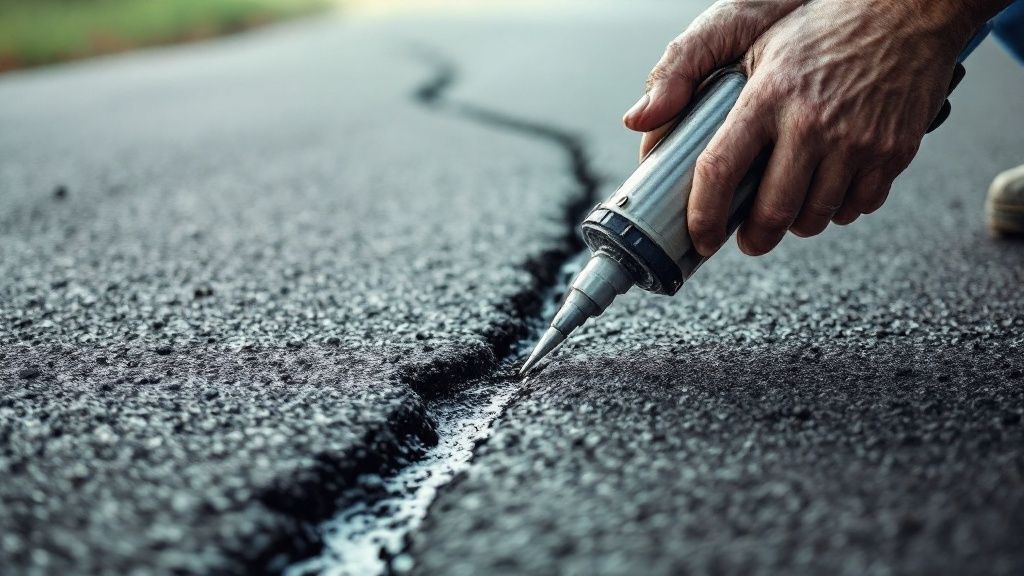
Here's a tip that separates good repairs from bad ones: a successful driveway crack repair asphalt project is all about the prep work. I've seen many DIY repairs fail in less than a year, and it's almost always because this first step was rushed.
Think about painting a dusty wall—the paint won't stick well. It's the same with asphalt filler. If you leave any dirt, weeds, or loose gravel in the crack, the filler can't bond properly. This weak spot lets water get in, freeze, and push your repair out.
Getting the Cracks Perfectly Clean
First, you need to get everything out of the cracks. Grab a screwdriver and a wire brush and start digging. Your goal is to remove anything that isn't solid asphalt.
- Remove Weeds: Pull out all the grass and weeds you see. Make sure to get the roots, not just the tops.
- Scrub the Sides: Scrape the inside walls of the crack hard. This will get rid of packed-in dirt and any loose asphalt pieces.
- Go Deep: Clean all the way to the bottom of the crack. A quick clean isn't enough.
Once you've scraped everything loose, it's time for the final cleanup. A shop vac is great for this—it will suck out every last bit of dust. If you don't have one, a leaf blower can blast the area clean.
To learn more about why a good foundation is important, check out our guide on what to do about cracks in an asphalt driveway.
A perfectly clean crack is a must for a repair that lasts. If the filler can't stick to clean, solid asphalt on all sides, the repair will fail early.
Taking the time to do this right will make sure your hard work pays off with a strong, nice-looking repair.
Applying Asphalt Crack Filler Like a Pro
Now that your driveway cracks are clean and ready, you can start the fun part. Applying the filler the right way is what makes your driveway crack repair asphalt project look good. How you do it will depend on the type of crack and the filler you chose.
For thin, pourable fillers on small cracks, you need a steady hand. Cut the tip of the squeeze bottle to make a small hole. This gives you more control. Gently squeeze the bottle as you move along the crack. Put in a little more filler than you need, as it will sink down as it dries.
Working With Thicker Compounds
If you have wider cracks, you'll probably use a thicker patch compound. This filler is like peanut butter and needs to be applied differently. Put a small amount on your trowel or putty knife and press it down firmly into the crack.
The key is to pack it in tightly to get rid of any air pockets. Air pockets can make the repair weak. Once the crack is full, use the flat side of your trowel to smooth the top. Make the edges even with the driveway so it blends in.
Pro Tip: For cracks deeper than half an inch, apply the filler in layers. Fill the crack about halfway, let it dry for a few hours, and then add the top layer. This stops the filler from sinking and leaving a dent.
This image shows the final steps, from putting on the filler to letting it dry, so you know when your driveway is safe to use.
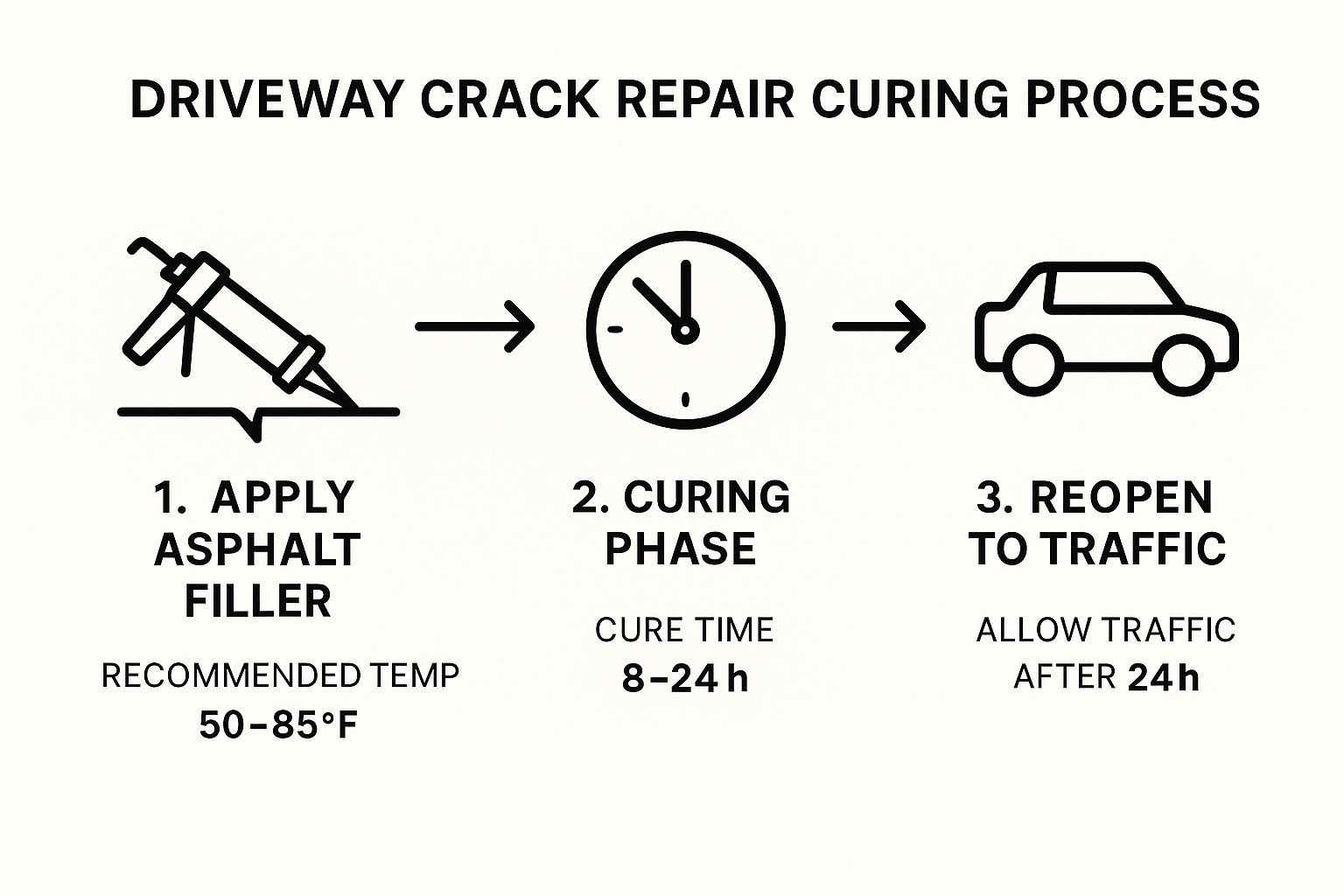
As you can see, being patient is important. Letting the filler dry for a full 24 hours makes sure your hard work isn't ruined by driving on it too soon. These repair products are becoming more popular. The world market for asphalt repair materials is expected to be worth $4.876 billion in 2025, which shows how important these repairs are.
It's good to know your options, whether you're fixing small cracks or thinking about a bigger paving job. For more help on deciding to repair or repave, read our guide on deciding between driveway paving or crack repair. By following these steps, you'll get a strong repair that looks great and protects your driveway from water.
Protecting Your Repair and Preventing Future Cracks
You’ve finished your driveway crack repair asphalt project, but don't park on it just yet. The last steps are to protect your new repair and think about how to keep your driveway healthy in the long run.
First, give the filler time to dry. This is where being patient is important. Most asphalt fillers need 24 to 48 hours to get completely hard and stick to the pavement. If you drive on it too early, you'll just squeeze the filler out of the crack. This will undo your work and make a mess. Use a rope or some tape to block off the area.
The Power of Proactive Sealcoating
After your repairs are fully dry, it’s time to think ahead. The best thing you can do to protect your whole driveway—and your new patches—is to apply a good sealcoat. Think of it like a shield for your asphalt.
Putting on a sealer every few years is a smart way to protect your driveway from common problems:
- UV Rays: The sun is harsh. It dries out the asphalt, making it brittle and more likely to crack.
- Water: Sealer creates a waterproof layer. This stops water from getting into the base and causing big problems.
- Oil and Gas Spills: It also keeps car fluids from softening and damaging the asphalt.
Sealcoating is not just for looks; it's the best way to care for your driveway. It keeps the oils in the asphalt that make it flexible and can make it last much longer.
The world market for asphalt sealers is worth about $852 million in 2024, which shows how important this step is. The market is growing because people know that new products can help prevent cracks and potholes. You can find more details on asphalt sealer market trends at IntelMarketResearch.com.
Besides what you put on the driveway, you also need to think about what's around it. A perfect sealcoat can't stop problems if water is always pooling on it. Understanding the importance of proper drainage in landscape design can help you stop the water problems that cause cracks. You can also look at our guide on the costs associated with asphalt driveways to help you plan your budget.
Common Questions About Asphalt Driveway Repair
Even if you have a good plan, you might still have questions during a driveway crack repair asphalt project. Getting the right answers can mean the difference between a repair that lasts for years and one you have to do again next year. Here are some of the most common questions we get.
What Is the Best Temperature to Repair Asphalt Cracks?
The weather is very important for a good repair. You need to find the right day—one where the temperature will stay above 50°F (10°C) with no rain for at least 24 hours.
These mild, dry days are perfect. They let the filler dry correctly without drying too fast in the heat or getting washed out by rain.
Can I Repair a Very Deep or Wide Crack Myself?
Yes, but the product you choose is very important. For any crack wider than an inch, the normal liquid filler won't work. It will just sink in.
You'll need to use a thicker, trowel-ready asphalt patch. The best way to use it is to apply it in thin layers. Let each layer dry a little before you add the next one. This will keep the patch from sinking as it dries.
Look out for "alligator cracking"—a pattern of cracks that looks like a reptile's skin. This is often a sign that the foundation under your driveway is bad. Filler won't fix this kind of problem, and you should call a professional.
When you have big repairs, you might wonder if there's a better driveway material. For a look at how different surfaces compare, our article on asphalt vs. pavers explains the pros and cons.
How Long Before I Can Drive on the Repaired Cracks?
Be patient, and always check the directions on the product you used.
Some thin, pourable fillers dry quickly and might be ready for cars in just 4-6 hours. But the heavy-duty patch compounds need more time, often a full 24 to 48 hours to get completely hard. Driving on the repair too soon is the easiest way to mess it up—it will squeeze the filler out and make a sticky mess on your tires.
For those who own a home services business, it's important to connect with homeowners who have these problems. Learning about good construction marketing strategies can help you find the customers who need your help.
For professional paving and repair services on California’s Central Coast, trust the experts. Contact Coastal Pipeline Inc. today to discuss your project and get a free estimate at https://coastalpipelineinc.com.