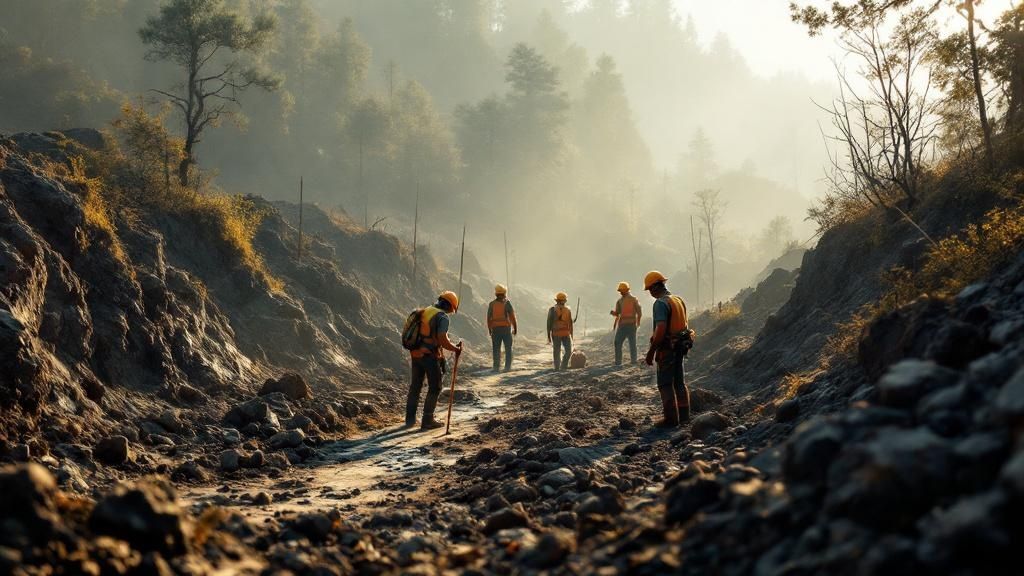
When you look at a raw piece of land—overgrown with trees, dotted with boulders, and covered in thick underbrush—it’s hard to imagine a new home or building standing there. That’s where excavation land clearing comes in. It’s the essential first step that transforms rugged, unusable terrain into a clean, stable slate ready for whatever you have planned.
This isn’t just about knocking down a few trees. It's a strategic process that involves earthmoving, grading, and debris removal to prepare a property for construction, agriculture, or major landscaping.
What Is Excavation Land Clearing Really About
Think of it like preparing a canvas before an artist starts to paint. You can’t create a masterpiece on a dirty, uneven surface. Similarly, you can't build a lasting structure on ground that hasn't been properly prepared. Skipping this step is like building on a flawed foundation, a mistake that almost always leads to serious and expensive problems down the road.
This is a detailed operation that tackles everything on and below the surface, going far beyond what most people think of as simple tree removal.
A properly cleared and graded site is the most important investment you can make before breaking ground. It's the difference between a project built to last and one destined for costly repairs.
This foundational work solves several critical issues that could otherwise threaten your project's safety and longevity.
Key Goals of Professional Land Clearing
When professionals handle excavation and land clearing, they’re not just clearing space. They're working toward specific, interconnected goals that make a site truly ready for its next chapter.
The table below breaks down the main objectives.
| Objective | What It Achieves |
|---|---|
| Create a Blank Canvas | Removes all obstacles—trees, boulders, stumps, and vegetation—that get in the way of your project plans. |
| Ensure Proper Drainage | Shapes the land to guide water away from future buildings, preventing floods, soil erosion, and foundation damage. |
| Establish a Stable Base | Gets rid of organic matter and compacts the soil, creating a solid platform that can bear the weight of structures. |
| Improve Site Accessibility | Clears paths and levels the ground so heavy machinery and work crews can move around the site safely and easily. |
Each goal builds on the last, culminating in a site that is both stable and usable.
Ultimately, professional land clearing is all about managing risk. For homeowners, knowing the basics is crucial, even for smaller jobs. You can see how these principles apply by learning more about a top-quality residential excavation service. By taking care of the land upfront, you avoid future headaches and protect your investment for years to come.
The Land Clearing Process From Start to Finish
Turning an overgrown, untouched piece of land into a site that’s ready for construction isn't a one-and-done job. It’s a carefully orchestrated process. Professional excavation land clearing is a multi-step journey where every phase sets the stage for the next.
If you rush or skip a step, you’re asking for trouble—major delays, safety risks, and expensive do-overs. It’s a lot like building a house: you have to pour a solid foundation before you even think about putting up the walls. The real work actually starts long before the first piece of heavy equipment rolls onto your property.
Stage 1: Site Assessment And Permitting
Before a single tree is touched, we need to know exactly what we’re working with. A seasoned contractor will walk the entire property to get the lay of the land. They'll identify property lines, check the density and type of vegetation, take note of the terrain, and pinpoint any potential roadblocks like massive boulders or marshy spots.
This is also when we do the critical work of locating underground utilities. The last thing anyone wants is to accidentally hit a water, gas, or electrical line. It's dangerous and incredibly costly.
With that information, the contractor creates a detailed action plan. This blueprint covers the most efficient clearing methods, the specific equipment required, and how all the debris will be managed. At the same time, they handle the local permitting process. Most land disturbance projects require official approval, and trying to bypass this step can shut your project down and lead to hefty fines.
Stage 2: Vegetation And Obstacle Removal
Once the plan is set and the permits are in hand, the physical clearing can finally begin. This is the part everyone pictures: the removal of trees, thorny shrubs, and thick underbrush. The specific approach really depends on what you want to achieve. Some projects only need selective tree removal, while others require the entire lot to be cleared.
Modern equipment makes this process incredibly efficient. Tools like forestry mulchers can grind up smaller vegetation on the spot, turning it into a protective layer that helps stop soil from eroding. For the big stuff—large trees and stumps—excavators and stump grinders make quick work of them. Any surface-level obstacles, like boulders, are also dealt with here, either by breaking them up for removal or moving them out of the way.
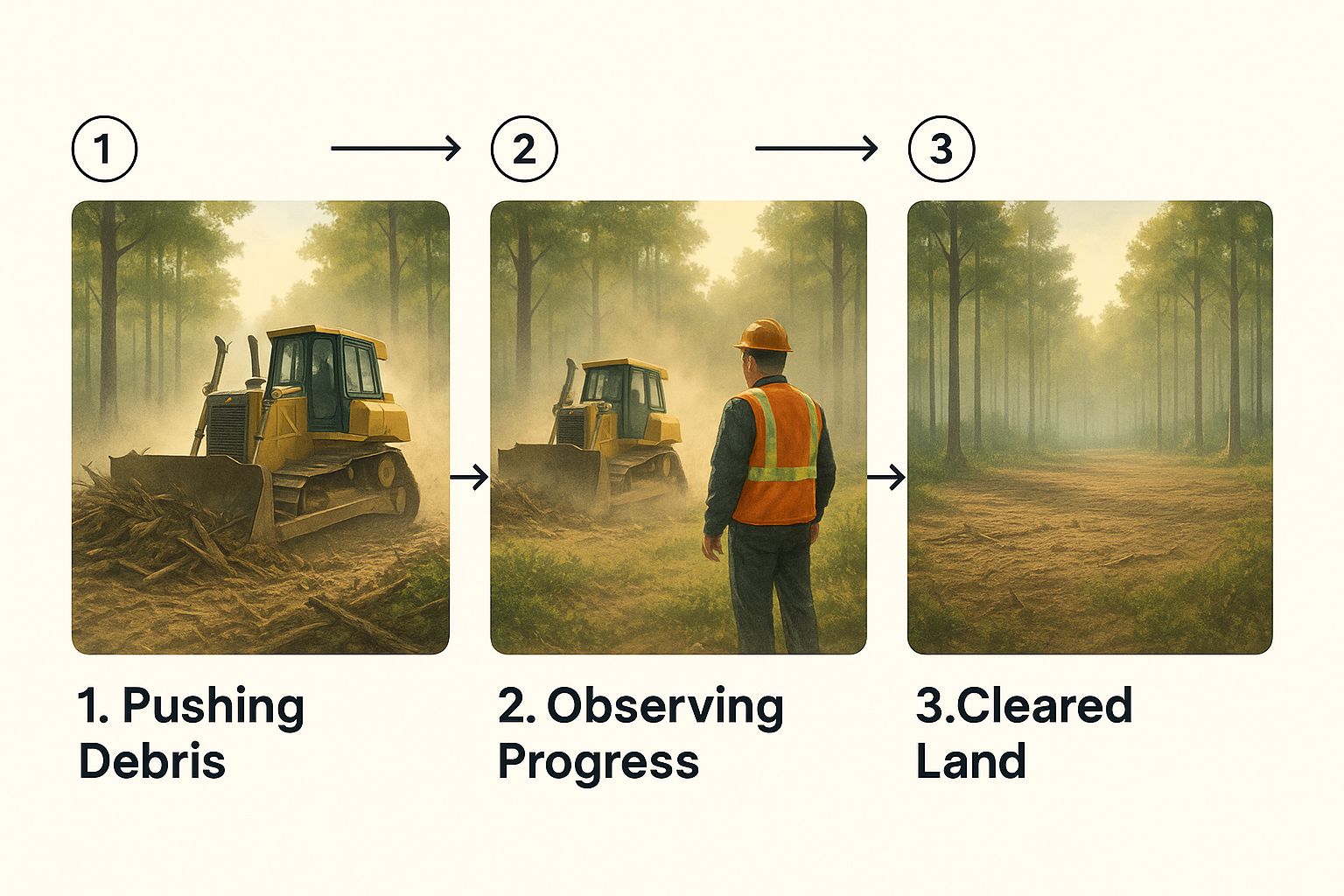
This visual really drives home how crucial methodical planning and execution are for efficiently transforming raw land.
A successful land clearing project flows seamlessly from one stage to the next. For instance, handling debris properly in Stage 2 is essential so it doesn't get in the way of grading the land in Stage 3.
Stage 3: Rough Grading And Final Cleanup
With the big obstacles gone, the focus shifts from clearing to shaping. This is called rough grading. Using heavy-duty machinery like bulldozers and graders, operators begin to sculpt the land to match the project's plans.
This is where we level out spots for building pads, create gentle slopes for proper water drainage, and cut pathways for future roads or driveways. Rough grading is all about establishing the site's foundational contours. You can find more details on how this fits into a building project in this guide to land clearing for construction in Monterey.
Finally, it's time for cleanup. All the leftover debris—piles of brush, logs, and roots—is hauled away, chipped into mulch, or burned (where regulations allow). The site gets a final once-over to make sure everything lines up with the plan. What's left is a clean, stable, and perfectly prepped canvas, ready for whatever you plan to build next.
The Essential Heavy Equipment for Land Clearing
Successful excavation land clearing isn't just about brute force; it’s about having the right tool for the job. Think of it like a surgeon’s toolkit—every instrument has a specific purpose. Choosing the right heavy machinery is crucial for getting the work done safely, efficiently, and without breaking the budget.
The true workhorse on any land clearing site is the excavator. With its powerful arm and bucket, it can dig trenches, yank out stubborn tree stumps, and carefully move massive boulders. This versatility makes it the go-to machine for a huge range of tasks.
Its importance is reflected in the market. The global excavator market was valued at around $46 billion in 2021 and is expected to climb to nearly $65 billion by 2027. This growth, detailed in projections on BusinessWire.com, is driven by its essential role in construction and earthmoving. It's truly a cornerstone piece of equipment.
The Power Players: Bulldozers and Mulchers
While excavators are the precision specialists, bulldozers are the undisputed champions of raw power. These machines are built to push enormous amounts of soil, level large tracts of land, and plow through dense vegetation. When you need to reshape a landscape with sheer force, you bring in a dozer.
On the other hand, forestry mulchers offer a more refined, eco-friendly approach. Instead of ripping everything out of the ground, these machines grind trees and brush into mulch on the spot. This process is fantastic for controlling erosion and enriching the soil with organic matter.
The choice between a bulldozer and a mulcher really boils down to the project’s goal. Bulldozers are for total site transformation and grading, while mulchers are for selective clearing and environmental preservation.
To give you a clearer picture, here’s a quick rundown of the common machinery you'll find on a land clearing project.
Common Land Clearing Equipment and Their Uses
| Equipment | Primary Function | Best Used For |
|---|---|---|
| Excavator | Digging, lifting, and trenching | Removing tree stumps, digging foundations, moving large rocks. |
| Bulldozer | Pushing soil and debris | Leveling large areas, clearing dense vegetation, rough grading. |
| Forestry Mulcher | Grinding trees and brush | Selective clearing, creating mulch, controlling erosion. |
| Motor Grader | Fine-tuning and leveling surfaces | Creating smooth, finished grades for roads and foundations. |
| Skid Steer Loader | Small-scale moving and cleanup | Working in tight spaces, final debris removal, versatile tasks with attachments. |
Each machine plays a vital role in the overall process, working together to take a site from overgrown to project-ready.
The Support Crew: Graders and Skid Steers
After the initial heavy lifting is done, a different set of machines comes in to handle the finishing touches. Motor graders are precision tools used to create a perfectly flat and smooth surface, which is absolutely essential before laying a foundation or paving a road.
Then you have the skid steer loaders, the agile and compact members of the team. Their small footprint lets them zip around tight areas where bigger equipment simply can't fit. Outfitted with different attachments, from grapples to buckets, they are perfect for final cleanup and moving smaller piles of debris.
Knowing which combination of machines to deploy is a skill in itself. Professional excavation services in Monterey have the experience to match the right equipment to the unique challenges of your property, ensuring the job is done right the first time.
Decoding the Costs of Land Clearing Services
Figuring out the cost of excavation land clearing isn't as straightforward as picking a product off a shelf. No two properties are the same, so there's no simple per-acre price. Think of it more like a custom-built project, where two lots of the exact same size could have completely different price tags based on what's on the land and what it takes to clear it.
A contractor’s final quote is a careful calculation based on several key variables. Once you understand these factors, you can budget more accurately and have a much clearer conversation about the scope of your project.
The Primary Cost Drivers
The biggest things that will influence your final bill are the condition of your land and the effort required to clear it. These factors determine the time, labor, and type of equipment needed to get the job done right.
-
Land Density and Type of Vegetation: A property with just some light brush and a few small trees is much easier and cheaper to clear than a lot covered in a dense, mature forest full of deep-rooted stumps. The more there is to remove, the higher the cost.
-
Terrain and Soil Conditions: Is your land flat and even, or is it a steep, rocky hillside? Working on slopes requires specialized techniques and extra safety precautions. Rocky soil can also slow down the excavation work and cause more wear and tear on the equipment, adding to the cost.
-
Site Accessibility: How easy is it for heavy machinery to get to and from the work area? If your property is remote, has narrow access points, or is surrounded by sensitive areas that need protection, it adds a layer of complexity and cost to the project's logistics.
The rule of thumb is simple: the more obstacles the crew has to overcome, the more time and resources the job will require. This directly translates to the final price on your invoice.
Debris Disposal and Project Scope
What happens to all the cleared material—the trees, brush, and stumps—also plays a big part in the total cost. You have a few options, and each comes with a different price point. Hauling all the debris off-site to a disposal facility is usually the most expensive choice because of transport and landfill fees.
A more cost-effective and environmentally friendly alternative is to have the vegetation chipped or mulched right there on-site. This material can then be spread across the cleared land to help with erosion control. If your project involves valuable timber, logging and selling the wood can even help offset some of your clearing expenses.
Ultimately, the best way to understand your excavation land clearing costs is to get a detailed, on-site assessment from a qualified contractor. They can evaluate all these factors firsthand and give you a transparent quote that reflects the true scope of your project, ensuring there are no surprises when the bill arrives.
Safety and Environmental Rules You Cannot Ignore
When it comes to excavation land clearing, you can't just cut corners on safety and environmental protection. These aren't just boxes to check—they are the absolute foundation of any responsible project. Ignoring the rules doesn’t just put you at risk for fines; it can cause catastrophic accidents, bring your entire project to a grinding halt, and do permanent harm to the local environment. Any true professional knows that protecting people, property, and the planet comes first.
The single most important step before a single bucket of dirt is moved is to find and mark every underground utility. Just imagine an excavator hitting a gas line—the result could be disastrous. That's why the "Call Before You Dig" service (811) isn't just a good idea; it's the law. This service ensures that all public utility lines—gas, water, electricity, and communications—are clearly flagged, preventing a dangerous and incredibly expensive mistake.
Protecting the Environment During Clearing
Beyond what lies beneath the surface, a responsible land clearing job means actively managing the impact on the land itself. A huge concern here is soil erosion. As soon as you remove trees and vegetation, the bare soil is left completely exposed. A single heavy rain can wash it away, clogging up local streams and rivers with sediment and devastating aquatic habitats.
To stop that from happening, experienced contractors rely on proven erosion control methods.
- Silt Fences: These are temporary fabric barriers set up around the worksite's edge. They act like a filter, trapping sediment-filled runoff before it can escape the property.
- Mulching: Spreading a layer of wood chips—often made right on-site from the cleared vegetation—over exposed soil is a great way to hold it in place and help it absorb moisture.
- Diversion Berms: These are small, temporary ridges of earth built to guide rainwater away from vulnerable slopes and toward designated drainage areas.
Putting these measures in place isn't just good practice; it's essential for staying compliant. You can learn more about the crucial connection between erosion control and effective site grading in our other guide.
The Right Tools and a Commitment to Compliance
The equipment you use has a major say in both safety and how efficiently the job gets done. The durability of your tools is critical, especially the ground engaging tools (GET), like the teeth on an excavator bucket. These are the parts doing all the hard work, so they have to be tough enough to withstand brutal conditions without breaking down. Modern high-strength alloys are now the standard for these components, which boosts their lifespan and makes the whole operation more cost-effective.
Ignoring safety protocols and environmental regulations is a recipe for disaster. A single shortcut can invalidate insurance, trigger stop-work orders from local authorities, and leave the landowner liable for extensive damages and cleanup costs.
This need for tough, reliable equipment is a big deal in the heavy machinery world. In fact, the global GET market is expected to surge to $13.1 billion by 2034, driven by the non-stop demand for high-performance parts for jobs just like this. You can check out more details about this growing market for ground engaging tools on market.us.
At the end of the day, it's the combination of following the rules and using the right equipment that separates a professional from an amateur. It's how you ensure your project gets done safely, responsibly, and without any costly surprises.
How to Hire the Right Land Clearing Contractor
Picking the right partner for your excavation land clearing project is probably the single most important decision you'll make. Get it right, and your site is prepped correctly, safely, and on schedule. Get it wrong, and you could be looking at expensive fixes and frustrating delays.
Think of it like hiring a pilot for a cross-country flight—you want someone with a proven track record of safe landings, not just a freshly printed license.
Your vetting process has to start with the absolute non-negotiables. Any contractor you consider must be fully licensed and insured. Don't be shy about asking to see their general liability and worker's compensation insurance certificates. This is what protects you from liability if an accident happens on your property. If a contractor hesitates or makes excuses, that's a giant red flag. Just walk away.
Questions That Reveal True Expertise
Once you’ve covered the basics, it's time to really see what they know. A top-tier contractor will have a solid portfolio of projects that look a lot like yours. Ask for before-and-after photos, and definitely ask for references from past clients. A quick phone call with a previous customer gives you the real, unfiltered story on their work quality, communication, and overall professionalism.
When you sit down for a consultation, have a few smart questions ready that go beyond the bottom-line price.
- What specific equipment will you use for my project and why? An expert can tell you exactly why a mulcher is a better fit for your terrain than a bulldozer, or why a specific size of excavator is necessary to get the job done right.
- How will you handle debris disposal? This simple question reveals whether they've thought through the entire project from start to finish, including the hidden costs.
- What potential challenges do you see with my property? This is a great test of their experience. A seasoned pro has seen it all and can spot potential issues a mile away.
A true professional's answers will be confident, specific, and packed with details that reflect years of hands-on experience. If you get vague, evasive responses, it’s a good sign they lack the expertise you need.
Finding the right team is about more than just moving dirt; it's about starting a partnership built on trust and skill. To see what a dedicated, professional crew looks like in action, you can learn more about trusted excavation contractors who put safety and quality first. By doing your homework upfront, you'll hire a reliable partner who can turn the vision you have for your property into a reality.
Got Questions About Land Clearing? We Have Answers.
Even after reading a guide, it’s normal to have a few more questions pop up. Here, we'll tackle some of the most common things landowners ask us before they get started on their excavation land clearing project.
How Long Does Excavation Land Clearing Usually Take?
Honestly, it varies wildly. There’s no one-size-fits-all answer. For a small, half-acre residential lot with just some light brush and a few small trees, we might be in and out in as little as 1-3 days.
But if we're talking about a massive commercial site packed with mature trees and sitting on tricky, rocky ground, the project could easily stretch over several weeks. The only way to get a solid timeline is for a professional contractor to walk the site and see exactly what they're up against.
Do I Need a Permit for Land Clearing?
In almost every case, the answer is a big yes. Most local governments require permits for any kind of major land disturbance. This is especially true if your plans involve taking down large trees, changing the slope of the land, or working anywhere near protected zones like creeks or wetlands.
Don't sweat the red tape. A qualified, professional contractor will handle the entire permitting process for you. This keeps your project fully compliant, so you can avoid the headache of steep fines or frustrating stop-work orders.
What Happens to the Trees and Debris After Clearing?
You've got options, and what we do with the cleared material really depends on your goals and the local regulations. We generally handle debris in one of a few ways.
- Chipping and Mulching: We can run brush and smaller trees through a chipper to create mulch right on your property. It’s a great, eco-friendly choice that helps prevent soil erosion.
- Hauling and Disposal: If you just want it all gone, we can load up everything—logs, stumps, and all—and haul it to an approved disposal facility.
- Logging and Milling: Have some valuable timber on your land? We can transport the logs to a sawmill to be processed into lumber.
The excavation and demolition field is a major player in the world economy, valued at around $540.84 billion in 2024. A lot of that activity is driven by government spending on infrastructure, like the $143.3 billion the U.S. allocated in 2022. You can dig deeper into these excavation market trends on GII Research. Your contractor will lay out the best disposal method for your project in the quote.
For professional excavation land clearing that puts safety and environmental standards first, you can count on the experts at Coastal Pipeline Inc. Contact us today for a comprehensive site assessment and quote.