
When you need to install or replace the water lines for your building's fire sprinklers and hydrants, you don't call a regular plumber. You call a fire line installation contractor. These are specialists who install the special, high-pressure water pipes that connect your fire safety system to the city's main water supply.
This important system is completely separate from your regular plumbing. It’s a direct lifeline for your sprinklers and hydrants, built to work in an emergency. Choosing the right contractor is one of the most important safety choices you'll make for your property.
What Is a Fire Line and Why Is It So Important?
Think of your building's water system like roads in a city. Your everyday plumbing for sinks and toilets is like the local neighborhood streets. But a fire line? That’s the big, special highway built for one reason: getting a lot of water where it needs to go, fast.
This underground pipe connects right to the city water main and is built to handle very high pressure. Its only job is to deliver a powerful, steady flow of water to your fire hydrants and sprinkler system the moment they're needed. Without it, your building’s main defense against a fire is completely useless.
The Lifeline for Your Building's Safety
A well-installed fire line is the foundation of your entire fire protection plan. It’s much more than just a pipe; it's a carefully designed system with several key parts working together.
- Underground Piping: This isn't your normal plastic pipe. Fire lines are made from very strong materials like ductile iron or high-density polyethylene (HDPE). They are designed to fight off rust and ground pressure for many years.
- Control Valves: These special valves are needed for maintenance. They let the system be tested or shut off without stopping the main water supply to other properties.
- Backflow Preventer: This is a safety device you must have. It makes sure that old water from your sprinkler system can't flow backward and pollute the public drinking water.
The world is focusing more on this kind of strong safety system. The market for fire protection systems was valued at USD 75 billion and is expected to grow to USD 160.08 billion by 2035, mostly because of stricter building and fire codes.
A fire line is your building's first and most important responder. It starts working the moment a fire is found, often controlling or putting out a fire long before the fire department even gets there.
More Than Just Pipes and Valves
Putting in a fire line is a serious construction project that needs a skilled fire line installation contractor. The process involves working closely with city officials, careful engineering, and a deep knowledge of local fire codes and water authority rules. You can get a better idea of how complex this is by reading this guide to https://coastalpipelineinc.com/underground-utilities-explained/.
In the end, a fire line is your property’s silent guardian. It sits ready, day and night, to protect what you've invested in and, more importantly, save lives. And while this system gives you permanent protection, it's also important to know about temporary safety steps. Knowing the local fire watch requirements is key for staying safe when the system is shut down for work or during construction.
Choosing the right contractor isn't just a business choice—it's a key investment in safety and peace of mind.
A Step-by-Step Look at the Fire Line Installation Process
So, what does it actually take to get a fire line installed? It’s a lot more than just digging a trench and laying some pipe. From the first plan to the final approval from the city, every step is carefully planned between engineers, construction crews, and local officials. As an experienced contractor, we manage this whole process to make sure your system is strong, follows all rules, and is ready when you need it most.
It all starts on paper, not in the ground. Engineers and designers carefully map out the system. They look at your building's layout, how it's used, and the water pressure available from the city. They decide on the right pipe size, the best path from the street to your building, and where every valve and connection should go. This first planning step is the base for the whole project.
This diagram shows you exactly how the system fits together. It creates a direct, special pipeline from the city's water supply to your building's fire protection system.
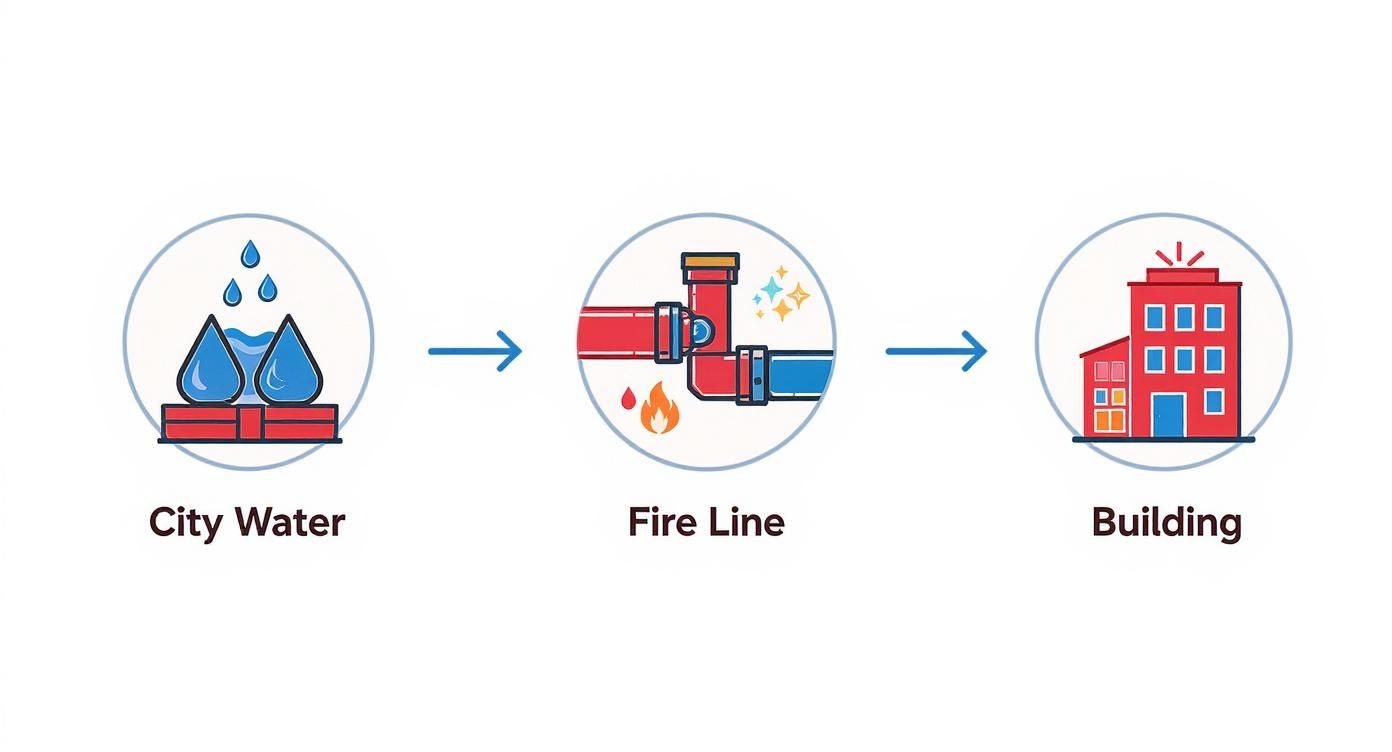
As you can see, the fire line is like a private superhighway for water. It skips all the normal plumbing to make sure nothing gets in the way of the massive flow needed to stop a fire.
Getting the Green Light: Permits and Approvals
Before a single shovel hits the ground, we have to deal with permits. This is a step you can't skip. The detailed engineering plans are given to local government agencies for them to review.
Think of it as getting approval from two key groups:
- The Local Water Department: They need to be sure that connecting your new line won’t mess up the public water system. They focus on approving the "tap" into their main line.
- The Fire Marshal: This person has the final say on fire safety. The fire marshal’s office will check the plans carefully to make sure every single part meets the strict fire codes and rules.
A good contractor handles all this paperwork—the forms, the meetings, and the follow-ups. Our experience and good relationships with city officials are what keep the project moving without long delays.
The Real Work Begins: Construction and Installation
With permits approved, the physical work can finally start. This is the part you can see, and it involves heavy machines and a skilled crew. First comes the digging, where we carefully make a trench along the approved path. You can get a deeper look at what this involves in our guide to underground fire line trenching and backflow installation.
Once the trench is ready, the crew carefully lays the pipe. We're not talking about your average plumbing pipes here. These are usually made of ductile iron or other strong materials, built to handle high pressure and fight rust for many years underground. Then comes the most important connection: tapping into the city water main. This is exact work, done only by certified professionals to create a perfect, leak-proof seal.
The growing demand for these systems shows how much we all care about safety. The global market for fire sprinkler systems, which need these fire lines, was valued at $12.3 billion and is expected to grow to $29.3 billion by 2034. That's a huge jump, which shows how important these systems are for protecting property and lives everywhere.
The Grand Finale: Testing, Inspection, and Completion
Before we fill that trench back in, we have to prove everything works perfectly under pressure—literally. Your contractor will run a series of tough tests to make sure the whole system is solid.
Here's what that looks like:
- Hydrostatic Pressure Test: We fill the line with water and raise the pressure way beyond what it will ever face in normal use. This is how we confirm there are no leaks in the pipes or joints.
- Flushing Test: A huge amount of water is blasted through the line to clear out any dirt, rocks, or other things that might have gotten in during construction.
- Backflow Preventer Test: A certified technician tests the backflow device to make sure it’s working right. This is very important for protecting the public water supply.
After we pass these tests, the local fire marshal and a water department inspector come out for the final check. Once they give their official approval, the trench is filled, and we fix any surfaces like asphalt or grass. At that point, your fire line is officially ready and on guard to protect your property.
Typical Fire Line Installation Timeline
To give you a clearer picture of how a project happens, here’s a simple timeline. Remember that every project is different. Things like permit reviews or surprise problems at the site can change the schedule.
| Phase | Description | Estimated Duration |
|---|---|---|
| 1. Planning & Design | Engineers create detailed plans for the system based on the building and local codes. | 1-3 Weeks |
| 2. Permitting & Approval | Plans are sent to the fire marshal and water department for them to review and approve. | 4-8 Weeks |
| 3. Material Procurement | All the needed pipes, valves, and fittings are ordered and brought to the site. | 1-2 Weeks |
| 4. Site Work & Installation | The crew digs, lays the pipe, connects to the city main, and installs key parts. | 1-2 Weeks |
| 5. Testing & Inspection | The system is tested with pressure, flushed, and checked one last time by city officials. | 3-5 Days |
| 6. Restoration & Completion | The trench is filled in, and the site (grass, pavement) is fixed to look like it did before. | 2-4 Days |
This table gives you a general idea, but your contractor will give you a more detailed schedule for your project once the design is finished.
Navigating Permits and Local Regulations
Installing a new fire line isn’t just a construction project. It's also about following local rules, codes, and getting official approvals. Before any digging starts, your project has to get through a complex maze of rules. This isn't just extra work—it's an important process that makes sure your fire line is safe, reliable, and legal.
Think of it like building a bridge. You'd want engineers and inspectors to approve every detail to make sure it's safe for people to use. In the same way, local officials like the Fire Marshal and the water department are in charge of fire line projects. They make sure every contractor follows strict safety and quality standards.
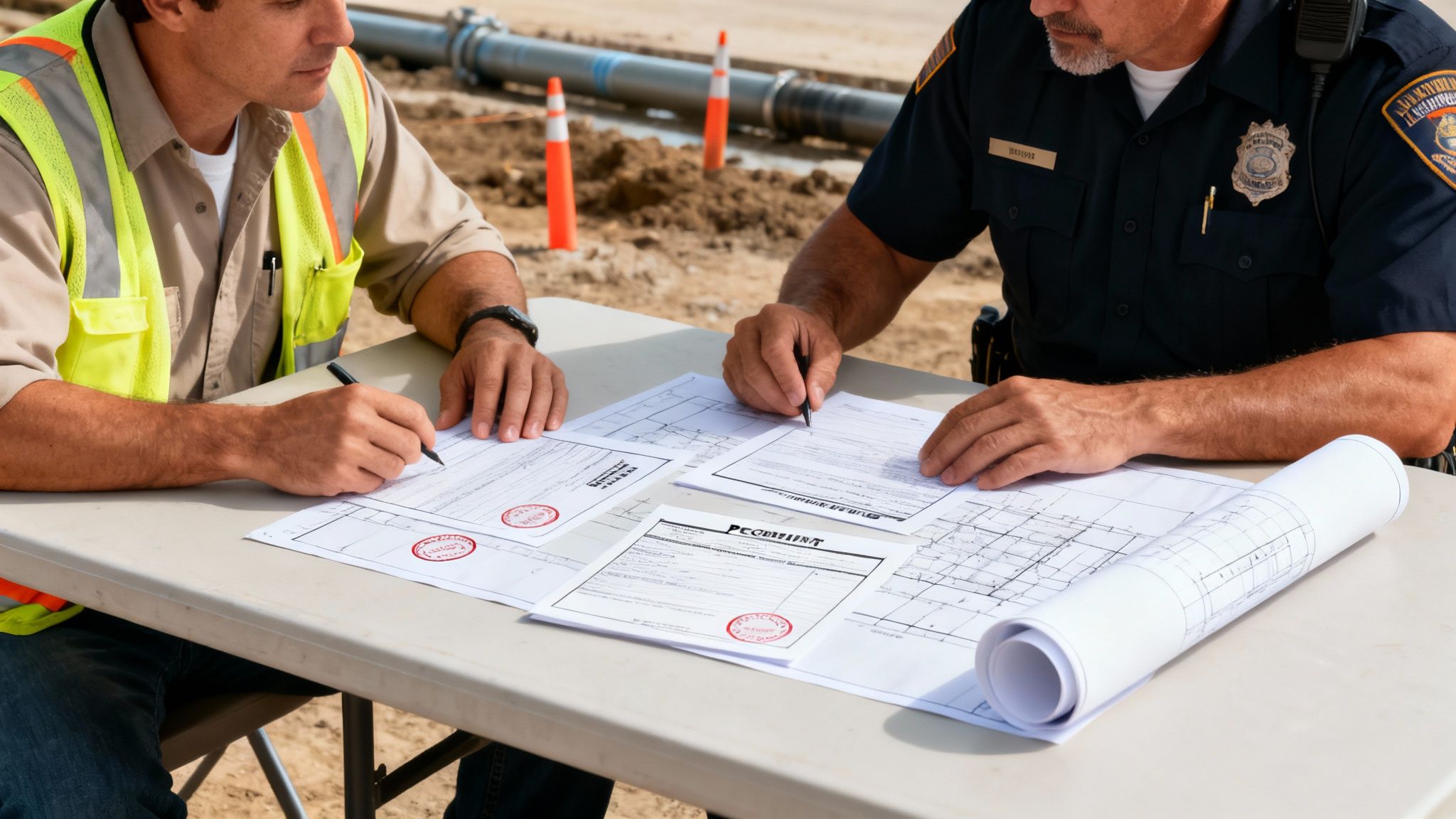
This process is all about making sure the job is done right. A truly professional fire line installation contractor takes full responsibility for getting every permit and meeting every rule. This is why hiring an experienced expert from the start is so important.
The Key Players and Their Roles
You'll find that several different government groups have a say in your fire line project. A good contractor knows the rules and, just as importantly, knows the people. Their job is to work with each group, sending in detailed plans and documents to get that important stamp of approval. Having good relationships with these officials can turn a difficult process into a smooth one.
Two main groups will be involved:
- The Fire Marshal: This is the top authority on fire safety where you live. The Fire Marshal's office carefully checks the plans to make sure the pipe size, layout, and every part meet or beat national standards and local codes. They have the final say on whether your system is truly ready for an emergency.
- The Local Water Department: This group is in charge of the public water supply. They have to approve the physical connection, or "tap," into their water main. They mainly want to protect the public water system. They make sure your new line won't cause pressure problems or, worse, create a risk of water pollution for the whole neighborhood.
Common Permits Your Project Will Need
While the exact names of the permits can change from town to town, the main requirements are usually the same. Your contractor should handle all the applications for you.
Here are the usual permits you'll need:
- Encroachment or Excavation Permit: This gives you the legal right to dig on public property—like sidewalks, roads, or the grass by the curb—to reach the city water main.
- Building Permit: It might seem strange for underground work, but a fire line is a key part of your building's safety system. Because of this, it almost always needs a building permit.
- Water Connection Permit: This is the specific approval from the water department to connect to their main pipe. It usually comes with a long list of technical rules for the parts and methods used.
Of course, these permits are just one piece of the puzzle. The job involves a lot of special work, which you can learn more about by reading about https://coastalpipelineinc.com/underground-utility-services/. Managing the site properly is just as important as the paperwork.
The permit stage is where a contractor’s experience really shows. A skilled pro knows what officials are looking for, sends in perfect plans the first time, and has the right contacts to fix any problems quickly. That kind of skill can save you weeks, or even months, of expensive delays.
It's also important to remember all the other rules for a construction site. Following local construction site signage requirements is necessary to keep the crew and the public safe. A true professional manages the whole site, from safety signs to the final pressure test.
What Factors Influence Installation Costs
Trying to figure out an exact price for a fire line installation without a site visit is almost impossible. It's like asking a builder for the cost of a house without showing them the plans. Every project is unique. It has its own challenges and needs that a professional fire line installation contractor has to include in their estimate.
When you understand what drives the cost, you're in a much better spot to understand the quotes you get. It helps you see why one price might be higher than another and shows you what a complete, well-planned proposal looks like. The final price always depends on the labor, materials, and how complex the job is.
The Biggest Drivers of Your Project Budget
A few major things have a big impact on your total cost. The most obvious is the size of the project—how much pipe is needed and how big it has to be to connect your building to the city water main.
A short, 100-foot pipe to the street will cost less than a 500-foot pipe that winds across a large property. In the same way, a bigger pipe, which is needed for a larger building that needs more water, costs more for both the pipe and the heavy equipment needed to install it.
The ground itself is one of the biggest unknowns in any digging project. Digging through soft soil is one thing, but hitting solid rock or a lot of groundwater completely changes the job. That kind of surprise requires more time, more labor, and special equipment to get the job done right.
Beyond Just the Pipe and Trench
While the pipe and the trench are the main parts of the project, a few other key things play a big role in the final bill. A good contractor will always list these items in their proposal so there are no surprises when the final bill arrives.
These extra costs often include:
- Complexity of the Tap: Connecting to the city’s water main isn't always simple. Tapping into a brand-new plastic main is very different from cutting into a 70-year-old cast iron pipe under a busy road. This is special work that needs skill and experience.
- Permit and Inspection Fees: Every city and county charges fees to review plans, give out permits, and send inspectors to the job site. These are fixed costs for any legal installation and are simply passed on to you.
- Site Restoration Work: The job isn't done just because the pipe is buried. The budget must include the cost of fixing everything that was dug up—repaving asphalt, pouring new concrete sidewalks, or replacing plants and grass. This is a key part of finishing the project correctly.
The following table breaks down the most common things that will affect your project's budget.
Primary Cost Drivers for Fire Line Installation
| Cost Factor | Why It Matters | Potential Cost Impact |
|---|---|---|
| Pipe Length & Diameter | This is the main cost for material and labor. Longer pipes and bigger pipes need more materials, more digging, and bigger equipment. | High |
| Site Accessibility | Can heavy machines get to the trench area easily? Tight spaces or protected landscaping add time and labor. | Medium to High |
| Soil Conditions | Soft dirt is easy. Rock, clay, or a lot of groundwater needs special tools (like rock hammers) and pumps, which adds time and cost. | Medium to High |
| Pavement & Surface Type | Digging through dirt or grass is simple. Cutting through thick asphalt or strong concrete is much more expensive and takes longer. | High |
| Depth of Installation | Deeper trenches need more support for safety and more time to dig and fill back in. This directly affects labor costs. | Medium |
| Permitting & Fees | These are costs set by the local city, water department, and fire marshal that you must pay. | Low to Medium |
| Site Restoration | The cost to professionally fix sidewalks, parking lots, and landscaping can be a big part of the total budget. | Medium to High |
Understanding these points is key to getting a realistic and complete quote from any contractor you speak with.
These ideas aren't just for fire lines. You can see similar factors when looking at what determines sewer line replacement costs. In both cases, planning for site conditions and full restoration is needed for a correct estimate. By knowing these parts, you can better compare bids and find a contractor who plans for the whole project from start to finish.
How to Find and Hire the Right Contractor
Choosing the right fire line installation contractor is the most important decision you'll make for the whole project. This isn't just another construction job; it's a vital safety system that has to be done perfectly. Hiring a crew that isn't qualified or is careless can lead to terrible failures, expensive fines for breaking rules, and big legal problems you don't want.
Think of it like hiring a surgeon. You wouldn't pick one just because they're the cheapest. You’d want someone with a lot of experience, special training, and a history of success. The same idea applies here. The contractor you choose is responsible for a system designed to protect your property and everyone inside it.
Here's a simple guide to help you check and choose a trustworthy pro who will get the job done right the first time.
Starting Your Search for a Qualified Contractor
Finding a specialist in underground fire lines isn't like looking for a general plumber or a digging company. You need a contractor with very specific skills. A good place to start is searching for local companies that list "underground utilities" and "fire line installation" as their main services.
Good places to find potential contractors include:
- Your Local Fire Marshal's Office: They often have a list of contractors they've worked with and who know the local rules very well.
- Engineering Firms: Civil engineers who design site plans work with utility contractors all the time and can suggest the good ones.
- General Contractors: If you're part of a bigger building project, your main contractor will have a network of trusted subcontractors. You can also check out our own advice on how to hire subcontractors for more tips.
Once you have a short list of three or four companies, the real homework begins. It's time to start checking them out.
Essential Questions to Ask Every Potential Contractor
Before you even look at a price, you have to make sure a contractor is qualified, insured, and has the right experience. Treat this part like a job interview, because that's what it is.
Here are the questions you must ask:
- Are you licensed for this specific type of work? Don't just take their word for it. Ask for their state license number for underground fire protection or general engineering work. Then, go online and check it with your state's licensing board.
- Can you provide proof of insurance? They must have both General Liability and Workers' Compensation insurance. Ask them for a certificate of insurance (COI) that shows how much coverage they have. This protects you if someone gets hurt on your property.
- How many fire line installations have you completed in this city/county? General experience is great, but local experience is even better. A contractor who already knows the local soil, the permit process, and the inspectors is a huge help.
- Can you provide references from three recent, similar projects? Ask for names and contact information for property owners or general contractors they've worked with. A confident, professional contractor will have this information ready for you.
If a contractor hesitates to give you their license, proof of insurance, or references, that is a huge red flag. If they can't or won't share these basic documents, thank them for their time and move on. Your project is too important to take that risk.
What to Look for in a Professional Proposal
After you've checked your candidates, it's time to ask for detailed proposals. A real professional's proposal is much more than just a price at the bottom of a page. It should be a clear, detailed document that proves they fully understand your project.
A good proposal will always include:
- A Detailed Scope of Work: It should list everything they plan to do, from getting permits and digging the trench to testing the line and fixing the site.
- A Clear Breakdown of Costs: The quote should separate the costs for materials, labor, permit fees, and other major expenses. This makes it easier to compare bids fairly.
- Specific Materials to be Used: The proposal needs to say the type and size of pipe (e.g., C900 PVC, Ductile Iron), valves, and the backflow preventer.
- An Estimated Timeline: It should give you a realistic schedule for big steps, including getting permits, construction, and final inspection.
- Exclusions: A good proposal also clearly states what is not included, like replacing special landscaping or dealing with unexpected rock. This prevents arguments later.
This level of detail is very important in commercial projects. The commercial market—warehouses, hotels, stores—is expected to make up 34.7% of the global fire sprinkler market. The risks are higher in these buildings, so a perfect installation is a must.
By following these steps, you can do more than just "find a contractor." You can confidently hire a true professional partner—one who will protect your investment and keep your property safe for years to come.
Your Fire Line Installation Questions, Answered
If you are facing a fire line installation project, you probably have a lot of questions. That’s completely normal. This is a very specialized job. Learning the details will give you peace of mind and help you know what to look for in a contractor.
We’ve put together answers to the most common questions we hear from property owners. The goal here is to explain things simply and give you a clear picture of what the process is really like.
How Long Does a Fire Line Installation Usually Take?
This is almost always the first question, and the answer is more complicated than you might think. While the actual on-site work—digging and laying pipe—might only take one to two weeks for a typical project, that’s just the part you can see of a much longer process.
The part that often takes the most time is what happens before construction. This is when the detailed engineering and plan creation happens, followed by the important step of getting those plans approved. Going through the permit process with the local water authority and the fire marshal can easily take several weeks, and sometimes a couple of months, depending on how busy they are.
The biggest thing that can change a fire line project's timeline is almost always the permit and approval stage. A contractor with a lot of local experience can often get through this process faster, but city delays are something no one can control.
Once the permits are ready and materials are on-site, the crew can get to work. Of course, things like hitting unexpected rock, dealing with tough soil, or a string of bad weather can add a few days. After the pipe is in the ground, testing and final inspections take another few days before the crew can fully fix the site.
What Is the Difference Between a Fire Line and a Normal Water Pipe?
It’s easy to think "a pipe is a pipe," but when it comes to fire safety, the difference is huge. Think of it like this: your building’s regular water pipes are like a garden hose—perfect for everyday tasks like sinks and toilets. A fire line, however, is the high-pressure cannon on a fire truck, designed for one critical, high-stakes job.
Here’s how they are different:
- Purpose and Capacity: A fire line is a special, large pipe that connects right to the city water main. Its only job is to deliver a huge amount of high-pressure water to your fire hydrants or sprinkler system the moment it’s needed.
- Pressure Rating: The materials are completely different. Fire lines are typically made from very strong materials like ductile iron. They are built to handle much higher pressures than the plastic or copper used in standard plumbing.
- Separation: This is a key safety difference. A fire line is a completely separate system. It never mixes with your drinking water, which is why a backflow preventer is always required to prevent any chance of it polluting the clean water.
In short, one pipe provides daily convenience; the other provides life-saving protection.
Who Is Responsible for Maintaining the Fire Line?
This is a key point every property owner needs to understand. Once your fire line installation contractor finishes the job and it passes all final checks, the ownership—and the full responsibility for taking care of it—is passed to you.
A fire line isn't something you can "set and forget." Local and national fire codes require regular checks and tests of the whole system, with a special focus on the backflow preventer. This is to make sure that when you need it most, it works perfectly.
While your contractor might offer a yearly maintenance plan, the legal duty to keep the system working right falls on the property owner. Ignoring this can lead to the system failing, insurance claims being denied, and big fines from the fire marshal. It's a critical, ongoing part of owning a property with a fire protection system.
Can My Regular Plumber Install a Fire Line?
The simple answer is no. Installing a fire line is a specialized type of construction, very different from the work of a standard plumber. Your plumber is an expert on the systems inside your building, which use smaller pipes and much lower pressures.
Installing a fire line is a different kind of job. It requires:
- Specialized Licenses: A contractor needs specific state licenses for underground utility or fire protection work. A standard plumbing license is not enough.
- Heavy Equipment: This work requires excavators, trenchers, and other heavy machines that most plumbers do not have.
- Code Expertise: The contractor must have deep knowledge of National Fire Protection Association (NFPA) standards, as well as the complex and often unique codes of the local fire and water departments.
- Proven Experience: This isn’t a job you learn as you go. You need a team that has done this hundreds of times and has good working relationships with local inspectors.
Trying to cut corners by hiring an unqualified plumber is a huge risk. A bad installation could fail in an emergency, cause major water damage to your property, or even pollute the public water supply. This is one job where you must insist on a licensed, insured, and experienced professional.
At Coastal Pipeline Inc., we specialize in the complex world of underground utilities. If you need a reliable, licensed, and experienced team for your fire line project on California's Central Coast, we have the expertise to get the job done right.
Contact us today to discuss your project needs by visiting https://coastalpipelineinc.com.