Bringing natural gas into a new development is a major undertaking, but getting it right comes down to following a solid, phase-by-phase plan. The entire process is really a sequential roadmap that takes you from the first site evaluation and engineering drawings all the way to system activation and final site cleanup. If you want to sidestep costly delays and keep your project running smoothly, proactive planning is your best friend.
Your Project Blueprint for Gas Infrastructure Success
A successful gas main and service lateral installation isn’t just a single job—it's a carefully coordinated series of steps. You're not just digging trenches; you're managing a complex web of stakeholders, regulations, and technical details. The main goal here is to build a safe, compliant, and dependable gas distribution system that will serve every single home or business in the new development.
This work starts long before any dirt gets moved. The initial stages are all about understanding the full scope of the project, from the main utility tie-in point down to the final meter set at each property. It’s about creating a detailed blueprint that will guide every action that comes next.
The Lifecycle of a Gas Installation Project
The whole process can be broken down into clear phases, and each one has its own specific goals and key people involved. Recognizing this lifecycle helps you allocate resources effectively, set realistic timelines, and get ahead of challenges before they become real problems.
- Planning and Design: This is where the engineers get together with the utility companies to map out the entire system. They figure out the right pipe sizes based on the expected gas load, plan the route for the main gas line, and pinpoint exactly where the service laterals will go.
- Permitting and Approval: Before a single shovel hits the ground, all plans have to be submitted and approved. This involves local municipalities, the utility providers, and sometimes even environmental agencies. This phase is all about ensuring every part of the plan meets strict safety codes and regulations.
- Execution and Installation: Now we get to the hands-on construction. This covers everything from trenching and laying the pipe to pressure testing the lines and connecting the laterals to each property.
- Activation and Restoration: The final step is getting the utility company to activate the system. Once that's done, it’s time for complete site restoration, which means backfilling all the trenches and repairing any surfaces that were disturbed, like asphalt or landscaping.
A mistake I see all the time is underestimating how long it takes to coordinate with the utility company. You absolutely have to start talking with the gas provider during the earliest planning stages. It's a critical move for keeping your project timeline on track.
Tapping Into a Global Network
The new gas system for your development isn't an island; it's connecting to a huge, existing infrastructure. As of late 2024, the global gas pipeline network is made up of about 3,859 active pipelines, stretching a combined length of roughly 1.42 million kilometers worldwide. To connect to this massive network, you have to follow strict, standardized procedures to guarantee safety and reliability for everyone. You can learn more about this global infrastructure from the Global Energy Monitor's project page.
To give you a clearer picture, the table below breaks down the major phases you'll be working through. Understanding this framework gives you a great high-level overview before we jump into the specific, actionable steps for your project.
Key Phases of Gas Installation for New Developments
| Phase | Primary Objective | Key Stakeholders |
|---|---|---|
| Phase 1: Pre-Construction | Design the system, secure all necessary permits, and coordinate with utilities. | Civil Engineers, Utility Company, Municipal Permitting Office |
| Phase 2: Site Work & Trenching | Prepare the site, safely excavate trenches, and manage spoils. | Excavation Contractor, Site Superintendent, Safety Officer |
| Phase 3: Installation | Lay and fuse gas main and service lateral pipes according to specifications. | Certified Pipe Fitters, Welding Inspectors, Project Manager |
| Phase 4: Finalization | Pressure test the system, complete inspections, and restore the site. | Utility Inspector, Landscape Contractor, Developer |
Having this high-level view helps you see how each piece of the puzzle fits together, from the initial paperwork to the final handshake.
Navigating the Pre-Construction and Permitting Maze
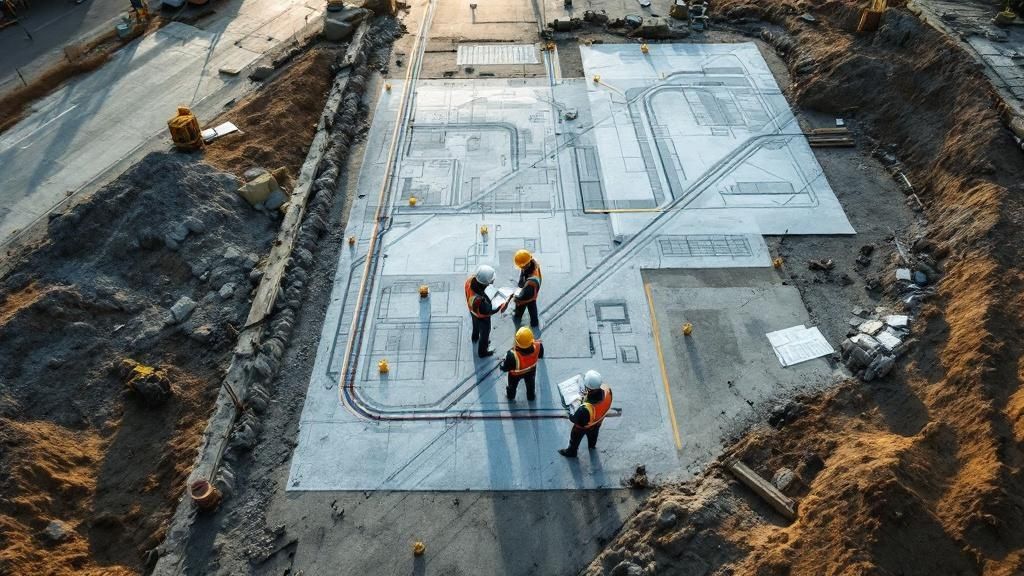
Before a single shovel hits the dirt, the most crucial work for a successful gas main and service lateral installation for new developments happens at a desk. This pre-construction phase is a complicated dance of meticulous planning, engineering teamwork, and navigating the often-tricky world of city permits.
Get this part right, and your project will run like a well-oiled machine. Get it wrong, and you're staring down the barrel of expensive delays and frustrating redesigns.
The process kicks off with a tight collaboration between your team, civil engineers, and the local gas utility company. The main objective is to design a gas distribution system that not only handles the development's future demand but also strictly follows all local, state, and federal codes. This isn't just about drawing lines on a blueprint; it’s about making smart, strategic decisions that affect the entire project from start to finish.
Designing a Conflict-Free Utility Corridor
One of the biggest headaches in new developments is managing the crowded space underground. Gas lines don't get the ground to themselves—they have to coexist with water, sewer, electrical, and telecom infrastructure. Creating a conflict-free utility corridor from the very beginning is absolutely essential.
Think about a 50-unit mixed-use development with townhomes and small storefronts. Your team has to get all utility stakeholders on the same page to create a master plan. This typically involves:
- Layered Mapping: Using detailed CAD drawings that map out the exact horizontal and vertical locations of every single utility line.
- Clearance Standards: Sticking to the mandated separation distances between gas lines and other utilities. These rules can change a lot depending on the jurisdiction, and a high-pressure gas main will need much more space from an electrical line than a low-pressure one.
- Phased Installation Schedules: Creating a clear schedule that dictates which utility goes in the ground first. This prevents crews from tripping over each other or, even worse, damaging infrastructure that was just installed.
This level of coordination is non-negotiable. When it’s managed well, you avoid the nightmare of having to tear up a brand-new road because a water line was laid too close to the gas main. The complexity is right up there with projects needing an expert underground electrical conduit installation contractor, where foresight is everything.
My best advice is to treat the initial utility coordination meeting like the most important milestone in your project. Get every single provider in the same room (or video call) with the master site plan. Hashing out potential conflicts here will save you hundreds of hours and thousands of dollars down the road.
Mastering the Permitting Process
Once you have a solid design, the next hurdle is getting all the required permits. If you're not prepared, this can be a long and frustrating process. Permitting a gas line installation isn't a one-and-done deal; it involves multiple agencies, each with its own checklist and review timeline.
You'll almost always need approvals from:
- The Local Gas Utility: They have to sign off on your engineering plans to make sure they meet their specific standards for materials, tie-in points, and safety protocols.
- The Municipal Planning/Building Department: These are the folks who issue the main construction or "right-of-way" permits, confirming your project follows local laws.
- Environmental Agencies: If your development is near sensitive areas like wetlands, you might need extra environmental clearances.
The key to avoiding bottlenecks is to think ahead. Don't just give them what's on the checklist—think about what the reviewer needs to see to give you a "yes." This means submitting exceptionally clear drawings, detailed specs on your materials, and a thorough safety plan.
Some jurisdictions even require a fixture unit calculation to prove your pipe sizing is adequate. This means adding up the gas demand for every appliance—furnaces, water heaters, stoves—in every single unit. Submitting this kind of detailed info upfront, even if it's not explicitly asked for, shows you've done your homework and can seriously speed up approvals.
Mastering Site Preparation and Trenching
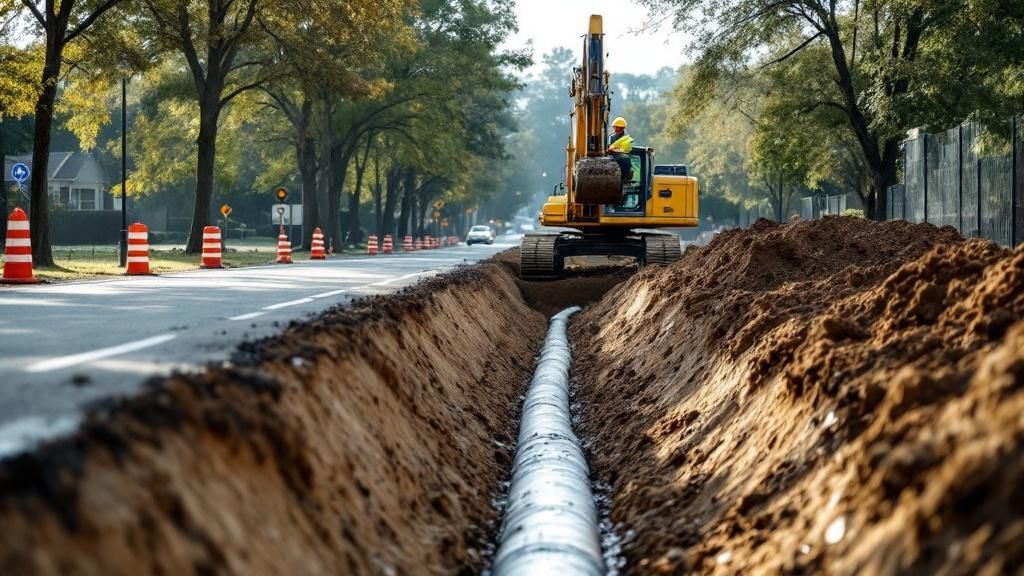
Once the permits are in hand and the plans are signed off, the real work begins. Your project moves from the office to the field, where meticulous site prep and precision trenching for the gas main and service lateral installation for new developments get underway.
Success at this stage is all about controlling the variables. From tricky ground conditions to a web of existing utilities, everything needs to be managed with a sharp eye. A well-prepared site isn't just efficient—it's safe. It sets the foundation for a smooth and compliant installation down the line.
Beyond Calling Before You Dig
Everyone knows the first rule: "Call 811 Before You Dig." But let's be clear—that call is just the starting gun, not the finish line. After you call, utility locators will come out and mark the approximate location of underground infrastructure with colored paint or flags. Your crew absolutely has to know what these colors mean.
Your next job, and it’s a critical one, is to "pothole." That means carefully hand-digging to expose and visually confirm the exact depth and location of every marked utility. You do this before any heavy equipment starts moving dirt. Trusting the paint on the ground alone is a gamble that can lead to a dangerous and incredibly expensive utility strike.
- Red: Electric power lines, cables, or conduit.
- Yellow: Gas, oil, steam, petroleum, or other gaseous materials.
- Orange: Communication lines, like telecom and cable TV.
- Blue: Potable water lines.
- Green: Sewer and drain lines.
This verification process is non-negotiable. It protects existing infrastructure, keeps your crew safe, and is the true starting point for any excavation.
Choosing Your Excavation Method
Not all trenches are dug the same way. The best method really boils down to your site’s specific conditions—soil type, nearby buildings, and local rules all play a huge part. The two main ways to get it done are open-cut trenching and directional boring.
Open-Cut Trenching is the classic approach. You dig a traditional trench, lay the pipe, and backfill it. In wide-open areas with stable soil, it’s straightforward and generally the most cost-effective option.
Directional Boring (HDD), on the other hand, is a trenchless method we use to install pipes under obstacles like roads, driveways, or sensitive landscaping without tearing them up. A machine drills a pilot hole along a planned path, which is then widened to pull the new gas pipe right through. It costs more upfront, but it can save a fortune in surface restoration costs and headaches.
Understanding the local geology is key. For example, the specifics of trenching for utility lines in Monterey County can be very different from other areas, and that knowledge dictates the right approach.
A critical detail that often gets overlooked is managing the spoil pile—the dirt you dig out of the trench. OSHA is very clear on this: spoil piles must be kept at least two feet back from the edge of the trench to prevent it from collapsing back in. On a crowded job site, that two-foot buffer can be a real logistical puzzle if you haven't planned for it.
Ensuring Trench Safety and Stability
An open trench is one of the biggest hazards on any construction site. Following OSHA standards isn't just about avoiding fines; it's about making sure your crew goes home safely every day. Any trench deeper than five feet requires a protective system. Period.
- Sloping or Benching: This involves cutting the trench walls back at an angle. The angle depends entirely on the soil. Solid rock can be nearly vertical, but sandy, loose soil requires a much flatter, gentler slope.
- Shoring: This system uses supports like hydraulic jacks and heavy plates to brace the trench walls and prevent a cave-in. It’s the go-to method in tight spaces where you can't slope the walls.
- Trench Boxes (or Shields): These are heavy, pre-built steel boxes that crews work inside. A trench box won't stop a collapse from happening, but it will protect the workers inside if it does.
You also have to think about groundwater. If the water table is high, you'll likely need dewatering pumps to keep the trench dry and stable. A wet trench is a weak trench—it can ruin your pipe bedding and lead to serious problems later on.
Installing and Connecting Mains and Connecting Laterals
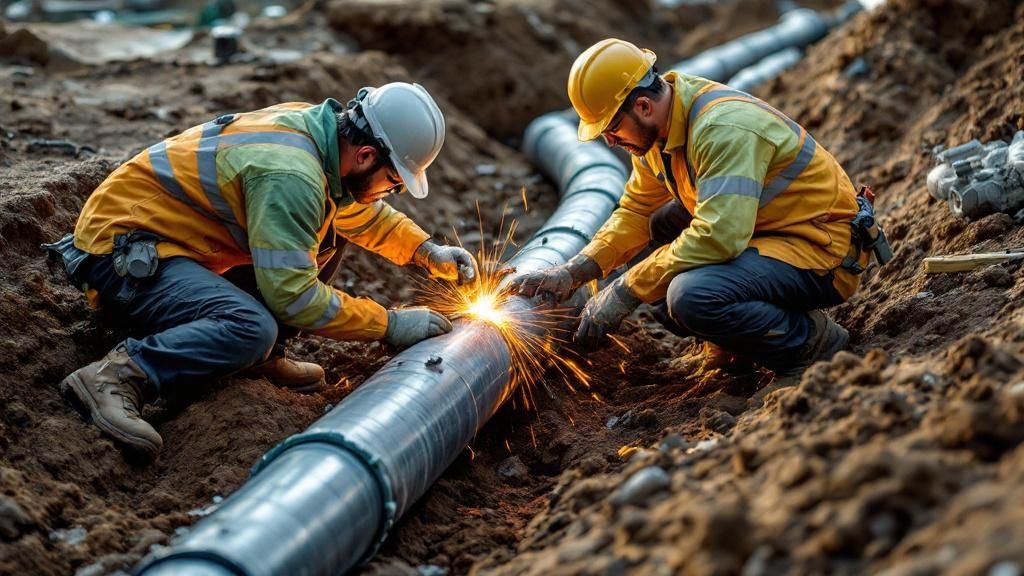
With the site prepped and trenches ready, we get to the most technical part of the job: the gas main and service lateral installation for new developments. This is where the blueprint becomes reality. Precision is everything at this stage—from the specific materials we use to the exact fusion and welding techniques needed to join everything together.
You can't afford a single mistake here. Even a tiny flaw can put the whole system at risk. This work demands certified professionals who know the ins and outs of different pipe materials and can execute connections that meet tough utility and manufacturer standards.
Working with Polyethylene and Steel Pipe
For gas mains, you’ll typically run into two materials: high-density polyethylene (PE) and steel. Both are incredibly tough, but they require completely different methods to install. The choice usually comes down to the gas main's operating pressure and what the local utility company specifies.
Polyethylene (PE) Pipe: This is what we see most often in modern distribution systems. It's flexible, doesn't corrode, and is joined together using heat fusion. This process essentially creates a single, continuous pipeline that's even stronger than the original pipe sections.
- Butt Fusion: We use this for joining the larger main lines. It involves heating the squared-off ends of two pipes to a precise temperature and then pushing them together with controlled pressure. The plastic melts and fuses into a permanent, leak-proof joint.
- Electrofusion: This is our go-to for service tees and couplings. Electrofusion fittings have tiny heating coils built right in. We hook them up to a special power source, and the coils melt the inside of the fitting and the outside of the pipe, bonding them into one solid piece.
Steel Pipe: You'll see steel pipe used for higher-pressure transmission lines or in places that need extra strength, like under major roads. Unlike PE pipe, steel sections are welded together. Every weld has to be done by certified welders who follow strict API 1104 standards. Often, each one is X-rayed to make sure there are no hidden flaws.
Tapping Mains and Running Service Laterals
Once the main line is in the ground, it's time to run the individual service laterals to each house or building. This is a delicate operation where we create new connections without taking the main line out of service.
We install a service tee on the gas main where each property needs its connection. For PE mains, this is typically an electrofusion tapping tee. After fusing the tee to the main, we use a built-in cutter to drill through the tee and into the main line, all while keeping the system completely contained. No gas escapes.
From that tee, a smaller service lateral is run through its own trench to the building. Where it comes out of the ground, we install a riser. This is the part that transitions the underground PE pipe to the above-ground steel piping that connects to the gas meter.
One of the toughest jobs we handle is a "hot tap" on an existing, pressurized gas main. This takes highly specialized equipment and a crew that knows exactly what they're doing. A special fitting is bolted or welded onto the live main, a valve is attached, and a drilling machine cuts into the pipe through the valve. It’s a high-stakes task that requires perfect execution.
Addressing Common Installation Challenges
Every installation has its quirks. Crossing a busy road, for example, often means we use directional boring to avoid shutting down traffic and tearing up expensive pavement. This trenchless method lets us install the pipe right under the road without ever digging a trench on the surface.
Coordinating with other utilities is just as important. The ground beneath our feet is a crowded space, and meticulous planning is key. The same principles of careful underground planning apply to gas lines as they do to other critical systems. To see how these systems work together, you can check out our resources on sewer line services and installation, which often run in the same utility corridors.
This infographic breaks down the crucial final steps of testing and inspection that every new installation must pass.
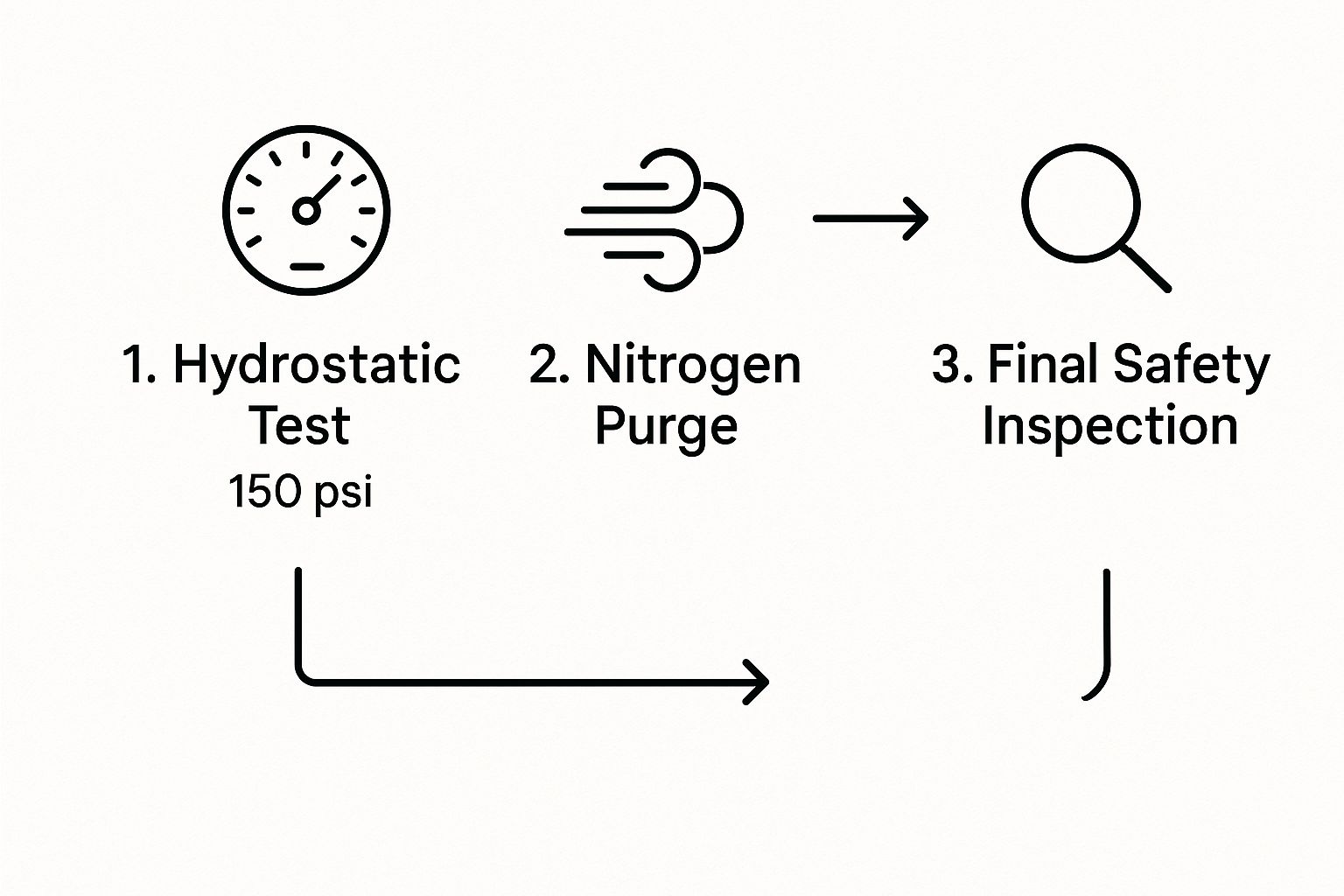
As you can see, after the physical work is done, a strict validation process begins. It starts with a high-pressure test and doesn't end until we have a final safety sign-off from the utility inspector.
Finalizing Your Project with Testing and Restoration
Connecting the last pipe doesn't mean the job is done. Far from it. A gas main and service lateral installation for new developments only truly wraps up after the system's integrity is proven and the site is flawlessly restored.
This is the final, critical phase. It’s what separates a professional, compliant project from one that leaves behind hazards and a frustrated community. The real finish line is getting the utility's official sign-off and handing over a site that looks like you were never there.
The Crucial Pressure Test
Before an ounce of natural gas enters the system, every inch of new pipeline has to pass a tough pressure test. This is how we verify that every single joint, fusion, and connection is perfectly sealed with zero leaks. It’s not a suggestion—it's a mandatory step, and the utility inspector will be watching closely.
The process involves pumping the new gas main and laterals with an inert substance, usually just compressed air or sometimes nitrogen. Never use natural gas for this initial pressure test. We bring the system up to a specific pressure, which is often much higher than its normal operating pressure, and hold it there for a designated time.
A common standard for a new polyethylene main might be 90 PSI held for one hour. The inspector watches the gauge like a hawk. Any drop in pressure, no matter how tiny, signals a leak that has to be found and fixed. Then, you start the test all over again.
The paperwork is just as critical as the test itself. We use a certified chart recorder to create a paper or digital log of the pressure throughout the test period. This gives you undeniable proof of a successful test for your project records.
Navigating the Final Utility Inspection
With a passed pressure test documented, it's time for the final utility inspection. This is the moment of truth. The utility company’s representative will give the entire system a final, thorough review before they officially accept it into their network.
The inspector is looking at much more than just the pressure chart. They will verify:
- Correct Materials: Are all the pipes, fittings, and risers the exact ones specified in the approved plans?
- Proper Depth and Separation: Is the pipeline buried at the correct depth and maintaining the required clearance from other underground utilities like water and electrical lines?
- Tracer Wire Integrity: Is the tracer wire—essential for locating the plastic pipe later—installed correctly and showing electrical continuity from one end to the other?
- As-Built Drawings: Do the as-built plans you provide accurately document the final, real-world location and depth of the new infrastructure?
If the inspector finds any issues, they’ll create a "punch list" of items to be corrected. Getting these items addressed quickly is the key to securing that final approval and moving on to the last step.
Pressure testing requirements can vary depending on the pipe material and local utility standards. It's crucial to confirm the exact specifications for your project before you begin.
Pressure Testing Requirements Comparison
This table offers a general look at typical pressure testing standards for different gas piping materials. It’s a good starting point, but always defer to the utility's specific requirements.
| Pipe Material | Typical Test Pressure (PSI) | Minimum Test Duration | Common Medium |
|---|---|---|---|
| Polyethylene (PE) | 90 – 100 PSI | 1 – 3 Hours | Air / Nitrogen |
| Steel | 1.5x Max Operating Pressure | 8 – 24 Hours | Air / Nitrogen |
| PVC (Low Pressure) | 10 – 15 PSI | 30 Minutes | Air |
| Copper (Interior) | 10 – 15 PSI | 15 – 30 Minutes | Air |
Understanding these differences helps ensure your test is performed correctly the first time, avoiding costly re-dos and project delays.
Professional Site Restoration and Handover
Once the utility gives its final sign-off, our focus shifts completely to restoring the site. The mission is simple but demanding: leave the area looking as good as, or even better than, how we found it. This step is non-negotiable for keeping the developer, future residents, and the entire community happy.
Proper site restoration starts with the backfill. You can’t just push all the excavated dirt back in. It must be done in "lifts"—thin, even layers of soil that are compacted one by one to prevent the ground from settling later. For a deeper look at this process, understanding professional backfilling services for pipelines in Monterey highlights how critical proper compaction is for long-term stability.
After backfilling, we restore every surface we disturbed. This includes:
- Pavement Repair: Any asphalt or concrete that was cut gets professionally patched or repaved to create a smooth, durable finish.
- Landscaping Restoration: We bring back the topsoil, then re-grade and either seed or sod the area to blend seamlessly with the surrounding landscape.
- Curb and Gutter Repair: Damaged concrete curbs or gutters are repaired to their original specifications.
A clean, professionally restored site is the final signature on a successful project. It reinforces your reputation as a contractor who respects both the client and the community.
Common Questions on Gas Line Installation Projects
Even when you have a solid plan, you can bet questions and curveballs will pop up during a gas main and service lateral installation for new developments. Knowing the answers ahead of time is what separates a smooth project from a stressful one, helping you stay agile, protect your budget, and keep everyone on the same page.
Let's dive into some of the most common questions we hear from developers and project managers. We'll give you straight-up, practical insights to help you navigate your project with confidence.
How Long Does a Typical Gas Installation Project Take?
This is the big one, and the only honest answer is: it really depends on the scale of your project. A quick main extension for a few homes might wrap up in a couple of weeks. But if you're looking at a multi-phase subdivision with miles of pipeline, you could be looking at several months from the first permit application to the day the gas is turned on.
A few key things really drive the timeline:
- Permitting Lead Times: This is often the biggest wildcard. We’ve seen municipal and utility reviews take 60-90 days or even longer, especially if your work crosses major roads or sensitive environmental areas.
- Utility Coordination: You're on the local gas company's schedule for tie-ins and inspections, not the other way around. Getting on their calendar can add significant time, and you just have to work with it.
- Site Conditions: Hitting unexpectedly rocky soil, a high water table, or discovering old, unmarked utilities can bring work to a screeching halt while the team figures out a new game plan.
My best advice is to build a contingency buffer into your schedule. I always tell clients to add 20% to their timeline estimates. If you think permitting will take 60 days, plan for 72. That buffer is your single best defense against delays that can throw the entire project off track.
What Are the Biggest Cost Drivers?
Everyone budgets for materials and labor, but it’s the less obvious expenses that can sneak up and blow a budget. Knowing what to watch for from day one will help you build a much more accurate and realistic financial plan.
The main cost drivers usually come down to:
- Trenching Method: Standard open-cut trenching is almost always the most budget-friendly option. But if you have to use directional boring to get under roads, driveways, or mature landscaping, your excavation costs for those specific sections can easily double.
- Dewatering Requirements: If your trenches start filling with groundwater, you're not just paying for pumps. You’re paying for the fuel or power to run them continuously, plus the labor to manage them. Those costs add up fast.
- Pavement and Surface Restoration: The cost to properly repair asphalt, concrete, and landscaping is a major line item that’s easy to underestimate. Restoring high-end decorative concrete or putting mature landscaping back to its original condition is especially pricey.
Getting a handle on the full scope of work, like the details we cover in our guide to underground utility services in Monterey and Santa Cruz County, is crucial for forecasting these costs accurately.
How Do We Handle Unforeseen Site Conditions?
No matter how many geotechnical reports you run, the ground can always hide a few surprises. The most common "gotcha" we see is hitting uncharted utilities—old water lines, forgotten electrical conduits, or other pipes that were never properly documented.
The second this happens, the rule is simple: stop all work immediately in that spot. The next step is to carefully identify the line, which usually means cautious hand-digging and calls to local utility providers to see if their maps show anything.
Once you know what you're dealing with, you can plan to either work around it or have it professionally and safely removed. This is exactly where a contingency fund in your budget becomes a lifesaver, covering the unplanned time and expense. It’s also why we push so hard for thorough site investigation and proactive planning from the very beginning.
This kind of forward-thinking is only getting more critical. According to 2024 data from the International Energy Agency, global natural gas demand is expected to climb by more than 2.5% in 2024, which means we'll be building more of this infrastructure. You can read the full IEA forecast on rising gas demand to see the trends shaping our work.
Bringing new gas infrastructure to life is a detailed process, but it’s completely manageable with the right team in your corner. At Coastal Pipeline Inc., we have the hands-on experience to guide your project through every single phase, from initial planning to final restoration, ensuring your development is powered safely and built to last.