
When you build a driveway, parking lot, or road, grading and paving are the two key steps that make sure it lasts. Think of it like building a house. Grading is like making sure the ground is perfectly level before you start. Paving is the strong top layer, like the roof that protects the house from rain and sun.
The Groundwork for Any Great Project
Every paved surface you use, from the highway to your driveway, starts with these two steps. Getting them right is the secret to a surface that lasts for years, instead of one that cracks after a few seasons.
First up is grading. This is more than just flattening the dirt. The real goal is to create the perfect slope, or "grade," so that water drains away properly. If you don't do this, rainwater will make puddles, soak into the ground, and cause problems like cracks, potholes, and washed-out areas.
Paving is the final step that you see. After the ground is ready, a tough material like asphalt or concrete is put down to create a smooth, strong surface. This is the layer that has to handle cars, people, and bad weather. When it's done right, it protects the carefully graded ground underneath.
Why Both Grading and Paving Matter
It's easy to focus on the smooth blacktop, but the real strength of a paved surface is hidden below. How well the grading and paving work together decides how long the surface will last.
A perfect paving job on a poorly graded base is going to fail. The best asphalt in the world can't fix a foundation that lets water pool up and weaken the soil.
This is why pros treat them as one single system. One can't work without the other. Doing both correctly ensures:
- It Lasts Longer: Good grading stops water damage that can break down pavement from below, especially when water freezes and thaws.
- It's Safer: A properly graded surface prevents dangerous puddles and icy spots from forming, making it safer to walk and drive on.
- It Saves Money: Paying for expert grading now saves you a lot of money on future repairs, patching, and having to replace the whole thing too soon.
Understanding this team effort is the first step to a great paving project. For homeowners wanting to fix a driveway, learning about professional driveway grading and leveling shows just how important this groundwork is.
Getting Your Site Ready for a Perfect Finish
A great grading and paving project is set up for success long before the first bit of asphalt is laid down. Think of it like a chef carefully preparing all the ingredients. That same level of care is needed to get a smooth, durable surface and avoid expensive problems later.
It all starts with clearing the site. This isn't just cutting the grass; it’s about creating a clean slate for the work ahead.
Starting with a Clean Slate
Before we can even think about grading, the project area has to be completely cleared. This is a step you can't skip if you want a professional finish. It makes sure the new foundation is built on solid, stable ground.
Here’s what usually needs to be removed:
- Old Pavement: Any old, cracked asphalt and concrete has to be broken up and taken away.
- Plants: Trees, stumps, bushes, and weeds are removed. If they're left, their roots can grow back and tear up your new pavement from below.
- Big Rocks and Junk: Buried rocks or old construction trash can create weak spots. They have to be dug up and removed.
Once the area is clear, we can get to the real foundation work. This is where what’s happening under the ground is just as important as what you see on top.
Why We Must Test the Soil
Not all dirt is the same. The kind of soil on your property plays a huge role in how stable your new paved surface will be. That’s why professional soil testing is a very important part of the process.
It’s like building a sandcastle. You wouldn't use dry, loose sand, would you? You need damp, packed sand for a strong castle. The same idea applies here, as different soils handle weight and water differently.
Knowing what your soil is made of isn't just a good idea; it's the plan for building a strong foundation. Knowing if you have clay, sand, or something else tells us how to pack the ground and build the sub-base.
Clay soil, for example, can swell up when wet and shrink when dry, which leads to cracks. Sandy soil drains well but often needs other materials mixed in to hold it together. This knowledge helps us build a solid base, which is the heart of any quality paving and grading project.
Building the Sub-Base: The Unseen Hero
With the site cleared and the soil tested, it’s time to build the most important layer you'll never see: the sub-base. This is a layer of crushed stone or recycled materials that sits right under the pavement. It acts as the project’s skeleton, providing strength, stability, and drainage.
This layer does two main jobs. First, it spreads out the weight of cars and trucks, which stops the surface from sinking or forming ruts. Second, it gives water a place to go, keeping it from pooling underneath and weakening the soil. The sub-base can be anywhere from 4 to 12 inches thick, depending on the soil and how much traffic it will handle.
Good site prep is a big deal in a growing field. The worldwide road building market was worth $2,372.82 billion and is expected to reach $4,008.83 billion by 2033. This growth comes from the need for reliable roads and parking lots, and it all starts with getting these first steps right.
How Proper Grading Prevents Water Damage
Water is the number one enemy of any paved surface. It might seem harmless, but when it’s not controlled, water can seep into the ground, weaken the foundation, and cause costly cracks and potholes. This is where professional grading and paving becomes your best defense.
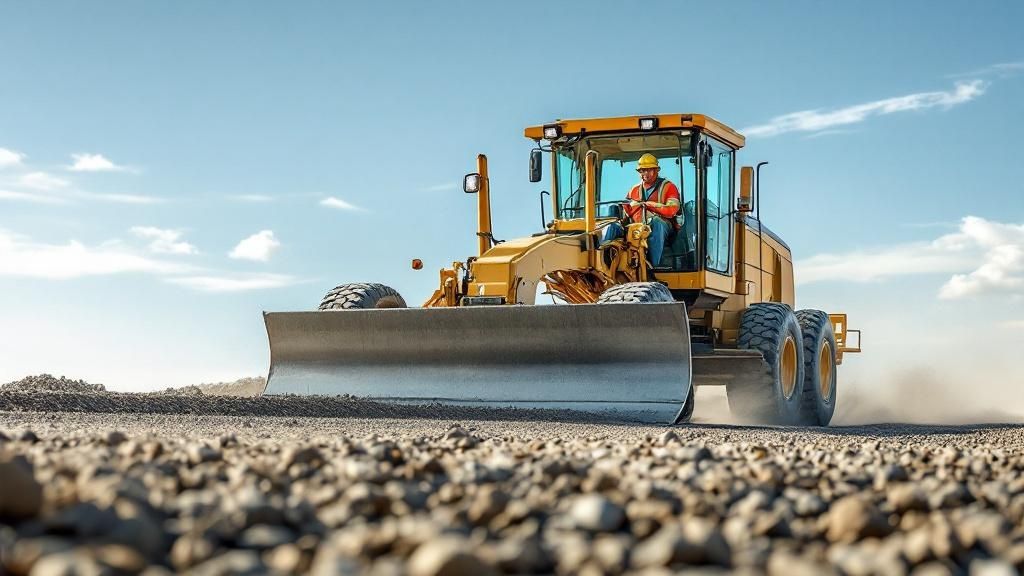
Think of good grading as creating a gentle, invisible slide for water. The goal isn't to make the ground perfectly flat. Instead, it’s about creating a slight slope—what we call a "pitch" or "grade"—that makes every drop of rainwater flow away from buildings and the pavement itself.
This slope is often so small you might not even see it. A standard slope is about 2%, which means the surface drops about a quarter of an inch for every foot. That tiny angle is all it takes to keep water moving toward a drain instead of sitting still and causing problems.
The Science of Slopes and Water Flow
Creating the right grade is a careful process that stops a chain reaction of damage before it can start. When water sits on a surface, it eventually finds its way into tiny cracks. In colder weather, this trapped water freezes, expands, and turns small problems into big, expensive ones.
Proper grading is all about prevention. It keeps the pavement and its sub-base as dry as possible. A well-graded parking lot, for example, will direct rainwater away from a store's entrance and toward storm drains. This keeps customers' feet dry and stops dangerous ice patches from forming in the winter.
"Grading is about controlling where water goes. It's the art of making sure water works with your pavement, not against it."
By managing water from the start, you protect the whole structure. This smart approach is a key part of any successful grading and paving project and is the secret to protecting your investment for years.
Tools of the Trade: From Simple to High-Tech
Getting the perfect grade requires the right tools, and the equipment we use changes based on the size of the project. There's no room for guessing when you're trying to control water flow.
Common Grading Equipment Includes:
- Levels and String: For smaller projects like driveways, these basic tools are often enough to set a good, even slope.
- Transit Levels: This is a tool used by surveyors to set exact heights, making sure the grade is the same over larger areas.
- Laser-Guided Systems: On big projects, graders are often fitted with advanced laser systems that read a set point and automatically adjust the blade. This technology creates a perfect grade with amazing accuracy.
This mix of skill and modern technology ensures every square foot is shaped to help manage water.
When Grading Needs Extra Help
Sometimes, grading alone isn't enough to handle all the water, especially in places with heavy rain or bad natural drainage. In these cases, we add special drainage solutions right into the grading and paving plan.
These systems work with the graded surface to give extra water a clear path to escape. Some of the best solutions include:
- French Drains: A popular choice for a reason. It's a trench filled with gravel and a pipe with holes that collects water from the ground and surface and carries it away safely.
- Catch Basins: These are the grates you see at low points in parking lots. They connect to an underground storm drain system to quickly get rid of large amounts of water.
- Swales: These are wide, shallow ditches with gentle slopes, often lined with grass or rock. They collect runoff and guide it away slowly to prevent soil from washing away.
By combining a perfect grade with these solutions, you create a strong system that can handle even the heaviest storms. You can learn more about how grading prevents soil loss by reading about the importance of erosion control grading and how it protects your property. In the end, this smart approach to water is what makes a paving project last.
Choosing the Right Paving Material
Now that your site is graded and ready, it's time for the big decision in your grading and paving project: picking the surface material. This choice protects all the foundation work you've done and creates the final look of the area. The two most common options, asphalt and concrete, are very different, and the right one for you depends on your goals.
This isn't just about picking a color. You need to think about your local weather, how much traffic the area will get, what kind of upkeep you're willing to do, and your budget. Understanding the differences between these materials is key to making a smart choice you'll be happy with for years.
Here's a look at fresh asphalt being laid, a key step that happens right after the grading is done.
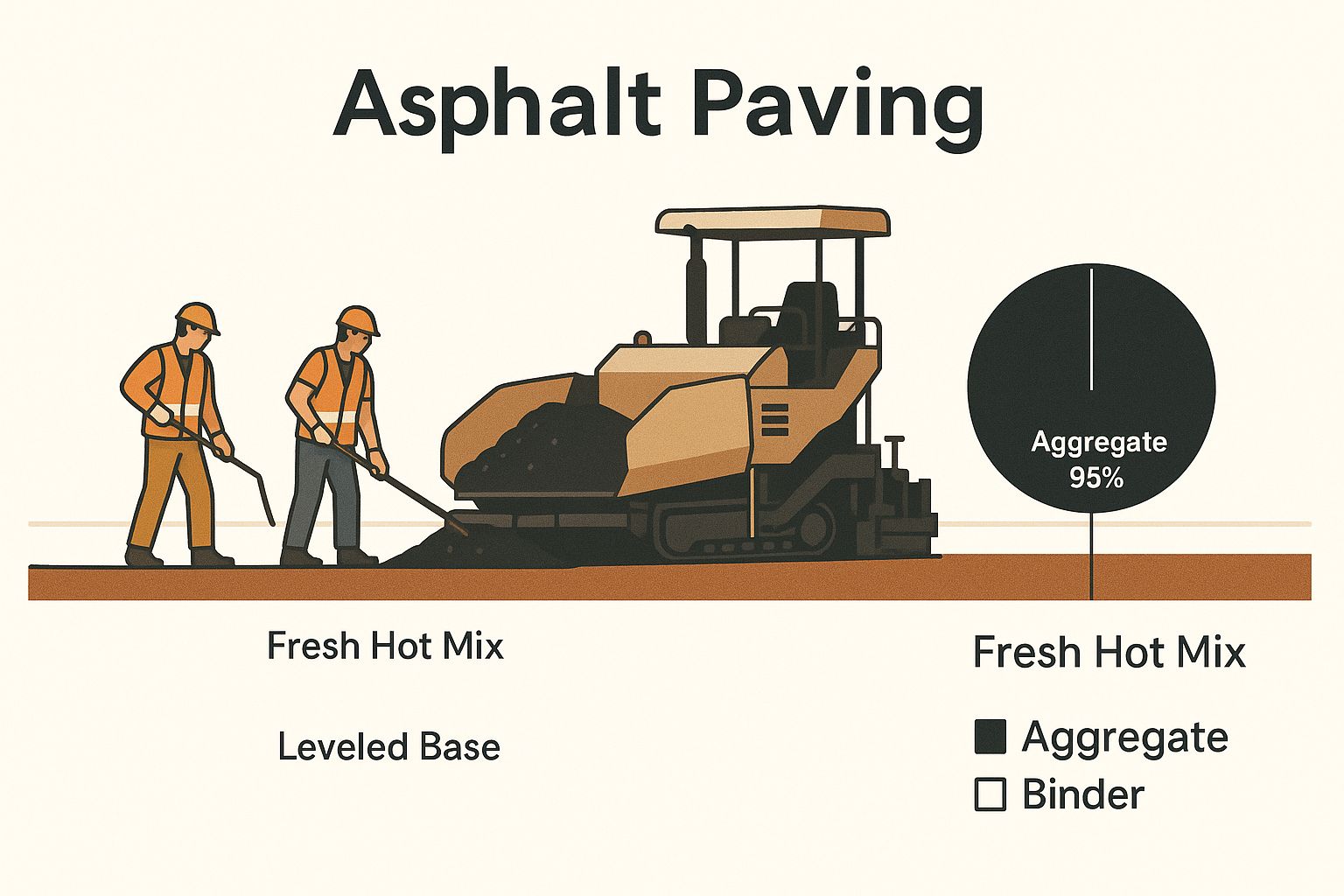
As you can see, the paving machine puts down a smooth, even layer of hot asphalt. A roller then packs it down to create a dense, strong surface ready for use.
Asphalt: The Flexible and Affordable Choice
Asphalt, also called blacktop, is made from petroleum. It's known for being flexible and cheaper to install. It's the surface you see on most roads, and for good reason.
Its dark color is a big plus in colder areas because it soaks up heat, helping snow and ice melt faster. But asphalt's real strength is that it can flex with changing temperatures and ground movements. This helps it resist cracking from freezing and thawing.
Key Takeaway: Asphalt is often the best choice when budget and cold weather performance are most important. It's tough, quick to install, and you can usually drive on it much sooner than concrete.
This makes it a great choice for driveways and parking lots. It does need a little more care over time, like sealcoating every few years, to protect it from the sun and rain. The worldwide market for paving asphalt is expected to reach $35,788 million by 2025, which shows how popular it is.
Concrete: The Strong and Long-Lasting Option
Concrete is a mix of cement, sand, gravel, and water that hardens into a very strong slab. It's famous for its strength and long life, often lasting 30 years or more with very little upkeep. That makes it a great long-term investment.
Unlike asphalt, concrete gives you more design options. You can get it in different colors, add textures, or have patterns stamped into it. Plus, its light color reflects heat, making it a cooler surface in hot climates.
The downside? Concrete costs more to install and takes longer to harden—you might have to wait a week before you can drive on it. Its stiffness can also be a problem in cold climates, as it's more likely to crack if the ground freezes and heaves. Besides concrete and asphalt, pavers are another great choice. We compare them in our guide on asphalt vs pavers to help you find the right fit.
Asphalt vs Concrete: A Side-by-Side Look
So, how do you pick? It all depends on what your project needs. To make it easier, here is a simple table to help you compare the most important points.
This chart breaks down the key features of asphalt and concrete to help you see the pros and cons for your project.
| Feature | Asphalt (Blacktop) | Concrete |
|---|---|---|
| Initial Cost | Lower cost to install | Higher cost to install |
| Durability | Usually lasts 15-20 years | Can last over 30 years |
| Maintenance | Needs sealcoating every 3-5 years | Needs cleaning and sealing once in a while |
| Climate | Great for cold climates (it's flexible) | Better for hot climates (reflects heat) |
| Repair | Easier and cheaper to patch | Harder and more expensive to repair |
| Installation Time | Hardens quickly, usable in 24-48 hours | Hardens slowly, may take up to 7 days |
| Design Options | Usually just black or dark gray | Many colors and stamped patterns available |
In the end, there is no single "best" choice—only the best choice for you. By thinking about your weather, budget, and how you'll use the surface, you can pick a material that will work well for a long time.
The Paving and Curing Process Explained
After all the careful site prep and grading, we get to the part everyone looks forward to: laying down the new surface. This is where skill and heavy machinery come together to create the smooth, strong pavement you’ll use for years. It’s the final step that makes all that foundation work worthwhile.
The success of the entire grading and paving project depends on this final step. Whether we're using asphalt or concrete, the methods used here decide the pavement's strength and how long it lasts. It's a mix of science and skilled work.
Applying and Compacting Asphalt
Paving with asphalt is a fast-moving process. The "hot mix" asphalt is cooked at a plant at temperatures between 275°F and 325°F. Then, it's quickly brought to the job site in special trucks that keep it hot.
Once it arrives, the asphalt is put into a paving machine. This machine is designed to lay down a smooth, even layer of asphalt at a certain thickness. At the back, a heated plate called a screed levels the mix and creates a smooth surface right before the next step.
The equipment for this is always improving. By 2025, for example, wheel pavers are expected to make up about 59% of the global market because they are so good for repair work. You can find more data on the asphalt paver market to see how things are changing.
The Big Role of Compaction
As soon as the hot asphalt is down, heavy rollers move in. This is called compaction, and it’s the most important part of paving. Compaction squeezes all the air out of the asphalt mix, forcing the stone particles together. This creates a dense, strong, and water-resistant surface.
Without good compaction, even the best asphalt mix will fail early. This is what gives the pavement the strength to stand up to traffic and weather.
Crews use different kinds of rollers to reach the right density, which is usually around 92-96% of the highest possible density. Getting this right is what keeps ruts and cracks from ruining your new pavement.
Pouring and Finishing Concrete
Working with concrete is a different process. Instead of a hot mix, concrete is poured wet and has to be shaped and finished before it starts to get hard.
- Pouring: We start by pouring ready-mix concrete into forms, which are wooden or metal frames that create the shape you want.
- Screeding: A long, straight board is pulled across the top of the forms to level the concrete and remove any extra.
- Floating: Next, a tool called a float is used to smooth the surface more and push the bigger stones just below the top.
- Finishing: Finally, a trowel gives it a clean, smooth finish. If you need more grip, like on a sidewalk, we can use a broom to create a rougher texture.
Understanding the Curing Process
The last, and often forgotten, step is curing. Curing isn't just about drying—it's a chemical reaction where the material gets its full, final strength. For both asphalt and concrete, being patient here is very important.
- Asphalt Curing: Asphalt gets hard pretty fast. You can usually walk on it in a few hours and drive on it within 24-48 hours. But it takes months to fully cure and become completely resistant to scuffs from things like turning your car's wheels while stopped.
- Concrete Curing: Concrete is a slow process. It needs to stay damp for several days to reach its full strength. Plan on waiting at least 7 days before driving on a new concrete slab. It will keep getting stronger for weeks and even months.
Weather plays a big role here. Hot, sunny days can speed things up, while cold, damp weather will slow the process down. The best way to protect your new pavement is to follow your contractor’s advice on how long to wait.
Common Questions About Grading and Paving
Even after you understand the basics, it's normal to have more questions when you're planning a grading and paving project. Getting clear, simple answers is key to setting a good budget, knowing what to expect, and feeling confident in your choices. We've gathered some of the questions we hear most often to give you that clarity.
Think of this section as a guide to the real-world details of any major property project. From how long it will take to how to care for it later, these answers will help you finalize your plan.
How Long Does a Typical Project Take?
One of the first things people want to know is the timeline. Every project is different, but we can give you a general idea for a standard driveway or a small parking lot.
Most of the time, a typical project is finished within 2 to 4 days. That time frame, however, depends on a few things.
Here’s how it usually goes:
- Day 1: This is all about prep work. This means clearing the site, removing any old pavement, and doing the first round of grading.
- Day 2: The main job is laying and packing the sub-base. Then, we do the final grading to set the perfect slope for water drainage.
- Day 3: It's time for the main event—paving the surface with asphalt or concrete, which then needs to start curing.
Bigger jobs, like a large parking lot or a private road, will naturally take longer. You also have to think about problems like bad soil that needs extra work or a sudden spell of bad weather, which can definitely add time to the schedule.
What Factors Influence the Final Cost?
Getting the budget right is very important. Understanding what affects the cost of a grading and paving job is key to planning without surprises. It's about more than just the price per square foot; several things add up to the final price.
The biggest costs are almost always the size of the area and the material you choose—concrete usually costs more to install than asphalt. But don't forget about the other factors that can make a big difference.
Quick tip: the cheapest price isn't always the best deal. A low price might mean they are cutting corners on site prep or using a thinner sub-base, which will just lead to expensive repairs in a few years.
Keep these points in mind when you look at an estimate:
- Site Condition: If a site needs a lot of clearing, removal of old pavement, or major soil work, the cost will be higher.
- Sub-Base Thickness: A thicker sub-base is more durable, but it also uses more material and labor, which adds to the cost. For busy areas, you might need a sub-base that is 8 inches or more.
- Drainage Needs: Does your project need special drains like French drains or catch basins? That will be an extra cost to add to the budget.
- Access: A tight spot that's hard for heavy equipment to get into can increase labor time and may require smaller, special machines.
What Is the Best Season for Paving?
Timing is very important, especially for paving. To get the best results, you need mild temperatures and dry weather. That's why some seasons are just better for this kind of work.
For most of California, the best grading and paving season is from late spring through early fall. This period usually gives us the stable, warm weather that paving materials need to be installed and harden correctly.
Asphalt, especially, needs warmth. It has to stay hot while it's being applied and packed down to form a dense, strong surface. Paving when the temperature is below 50°F is risky because the asphalt can cool too fast, which leads to weak spots and a poor finish.
Concrete is also picky about temperature. Pouring it in extreme heat can make it dry too quickly and crack. Freezing temperatures can ruin it before it even has a chance to set. Scheduling your project during a mild season is the best way to get a high-quality, long-lasting result.
How Can I Maintain My New Pavement?
Once your beautiful new surface is finished, a little regular care will go a long way in protecting your investment and making it last for years. The goal is to fix small issues before they turn into big, expensive problems.
The good news? The upkeep is pretty easy and doesn't take much effort.
Here are a few key maintenance tips to follow:
- Keep It Clean: Sweep away dirt and leaves regularly. This stops grime from getting into the surface and helps you see potential problems early.
- Clean Spills Quickly: Oil, gas, and other chemical spills should be cleaned up right away. These things can damage asphalt and concrete sealers.
- Sealcoat Your Asphalt: Plan on getting your asphalt driveway or lot seal-coated about 6-12 months after it's installed, and then again every 3-5 years. This protective layer is like sunscreen, shielding it from sun, water, and chemicals.
- Fill Cracks Quickly: Small cracks will appear over time. Sealing them as soon as you see them is the most important thing you can do to stop water from getting underneath and causing major damage.
Follow these simple rules, and you can expect your new pavement to stay safe, useful, and looking good for a very long time.
For professional grading and paving services that handle everything from site preparation to final restoration, trust the experts at Coastal Pipeline Inc. We build high-performance infrastructure for clients across California’s Central Coast. Learn more about how we can help with your next project by visiting us at https://coastalpipelineinc.com.