To keep your business open during a parking lot repave, you need a smart plan. The secret is to find a contractor who can do the work in stages. This is called phased construction. By working on one section at a time, keeping parts of your lot open, and using clear signs, you can avoid a full shutdown. This keeps customers from getting frustrated and going somewhere else.
Can You Repave a Parking Lot Without Losing Customers?
Let's be honest—the idea of your whole parking lot being torn up is scary. Business owners know their lot needs repaving, but they fear shutting down or losing customers. It's a real concern. They want to know if there’s a smarter way to get the job done without a major disruption. The good news is, there is. You don't have to lose business to get a new parking lot.
Why Poor Planning Hurts Your Business
A common mistake is assuming the paving has to happen all at once or during your busiest hours. Many contractors do what's easiest for them, not what's best for your customers. This can hurt your foot traffic and even damage your business's reputation.
When a contractor doesn't plan well, it leads to customer complaints and lost sales. In fact, if you read negative reviews for paving companies, you'll often see the same problem: they didn't do the work in phases or communicate clearly with the property manager.
During any construction, your main goal should be to keep your current customers. Learning some good customer retention strategies can help you keep your patrons loyal through the process.
The difference between a nightmare project and a smooth one is often a smart, phased plan. A little planning can make a huge difference for your customers and your sales.
Table: Construction Disruption vs. Smart Phasing
| Challenge | Typical Disruption (All-at-Once Approach) | Smart Solution (Phased Approach) |
|---|---|---|
| Customer Parking | No available spots, forcing customers to go elsewhere. | 50% or more of the lot remains open at all times. |
| Business Operations | Forced closure or severely limited hours. | Business stays open, maintaining revenue flow. |
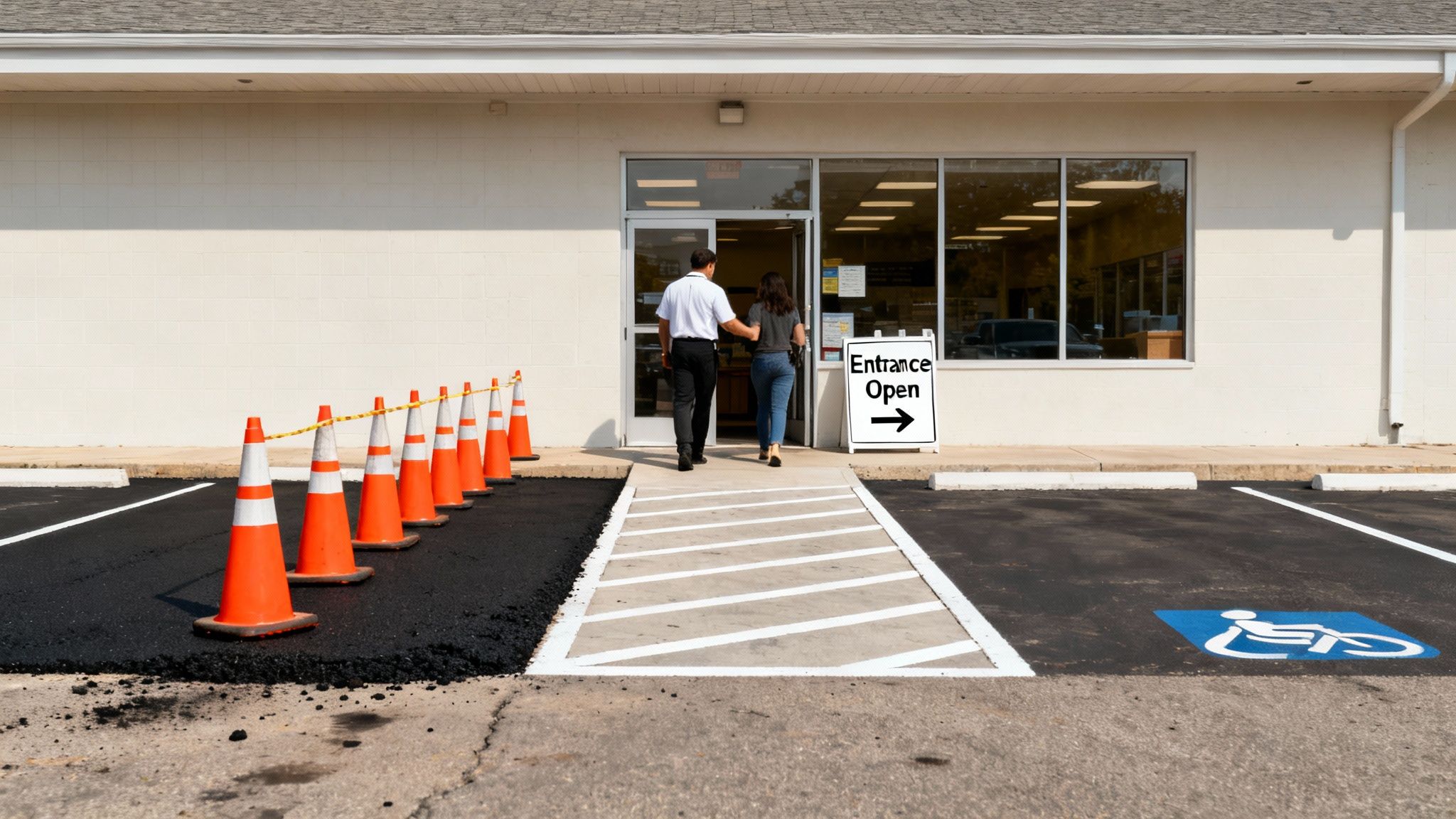
| Safety & Access | Confusing, unsafe paths for pedestrians. | Clear, marked walkways and temporary entrances. |
| Customer Perception | Frustration and feeling that the business is "closed." | Customers see progress and appreciate the effort to stay open. |
As you can see, planning the project in stages is key to protecting your business during a big upgrade.
The Right Contractor Makes It Possible
So, what should you do instead? Find a contractor who acts like a partner in keeping your business running. Before you sign any contract, ask them specific questions about how they work.
Ask questions like these:
- Phased Scheduling: "How will you break the project into sections (like front-half vs. back-half) to make sure parking is always available?"
- After-Hours Work: "Can you work at night or on weekends to stay out of our way during peak hours?"
- Temporary Access: "What is your plan for setting up temporary signs, safe walkways, and clear driving lanes for customers?"
Your paving partner should also have a plan for important details like ADA compliance, final striping, and protecting storm drains. These things should be part of the main plan, not surprise costs later.
This level of detailed planning is what turns a potential disaster into a smooth, professional upgrade. Coastal Pipeline specializes in parking lot phasing and offers night/weekend paving options. We work closely with owners and property managers to ensure businesses remain accessible and compliant throughout construction.
Your Pre-Construction Playbook for Zero Downtime
A great parking lot project starts long before the heavy equipment shows up. This planning stage is your chance to prevent customer frustration and protect your sales. Rushing this step will only create problems. A good plan, however, ensures your business can do well, even with construction crews on site.
The most important decision you'll make is choosing the right contractor. You're not just hiring someone to lay asphalt. You're hiring a partner who needs to care about your business as much as their own schedule. A great contractor knows their job site is your storefront and will work with you to keep disruptions small.
Finding a Partner, Not Just a Paver
To see if a contractor is a good fit, you need to ask some specific questions in your first meeting. Their answers will tell you if they see the project from your point of view.
Start with the most important things: scheduling and access. You want a team that can work around your business needs.
Here’s what you should be asking:
- "Can you perform the work after hours or on weekends?" This is the best way to avoid messing with your busy hours.
- "How do you typically phase projects to keep customer access open?" Ask for real examples. You want to hear about plans like a "front-half, back-half" split or doing employee parking areas first.
- "What's your detailed plan for temporary signage and ADA-compliant walkways?" A vague "we'll handle it" answer is a bad sign. They should have a clear process for guiding your customers safely.
A contractor who can't answer these questions well is likely the type to shut everything down. A true partner will be ready to make a plan with you.
Avoiding Common Contractor Missteps
One of the most damaging assumptions is that paving has to happen all at once, in the middle of a business day. Unfortunately, many contractors take this easy route because it’s simpler for their crews. But this can kill your foot traffic and hurt your reputation.
A proactive contractor doesn't just pave—they manage the entire site. This means they have a plan for everything, from protecting storm drains to scheduling the final striping for the least disruptive time.
These details should be part of the first plan, not treated as surprise costs later. A contractor's job is to give you a new parking lot while helping you stay open. It’s also very important that they know what’s buried underground. Knowing how to locate underground utilities is a must to prevent costly and dangerous mistakes.
Building a Project Plan for Success
Once you’ve found a contractor who thinks like a business partner, it's time to create a plan. This should be a shared document that maps out the whole project from your customer's point of view. It should clearly define every phase, timeline, and who is responsible for what.
Your pre-construction plan should cover:
- A Phased Schedule: A map of the lot, broken into zones with clear dates for when each will be closed and reopened.
- A Signage and Wayfinding Plan: Details on exactly where signs, cones, and barriers will be placed to guide cars and people.
- An ADA Compliance Strategy: A clear outline of how accessible parking and paths will be kept available during every phase.
- A Communication Protocol: An agreement on who the main contact person is and how updates will be shared.
If you’re planning a parking lot upgrade in Monterey, Santa Cruz, or San Benito County, Coastal Pipeline makes it easy to keep your doors open while your pavement gets a fresh start—on your schedule.
Executing a Phased Project Without Losing Customers
Okay, you’ve done your planning. Now it's time to put that plan into action. This is where a phased construction plan really helps you keep your doors open and customers happy.
Phasing just means breaking your big parking lot project into smaller, more manageable zones. You work on one section at a time, making sure there's always a clear path for your customers. This isn't just about putting up a few cones; it's a real strategy.
For example, your contractor might pave the back half of the lot during the first week. Once that's ready, all traffic moves to the new pavement while the crew works on the front. Another smart idea is to work on employee parking areas first. Staff can park somewhere else for a short time, which keeps the best spots open for customers as long as possible.
The Power of Smart Phasing in Action
The main idea is to treat your parking lot like a puzzle. You're making smart moves to keep traffic flowing. I can't tell you how many negative reviews I've seen that come down to one thing: a contractor took the easy way out and blocked off a huge part of the property, which hurt business.
A well-phased project makes things feel less chaotic. It sends a clear message to visitors that you are still open. The goal is to make the construction feel like something happening in the background, not the main event.
This simple flowchart shows how a good contractor should think to keep your business running.
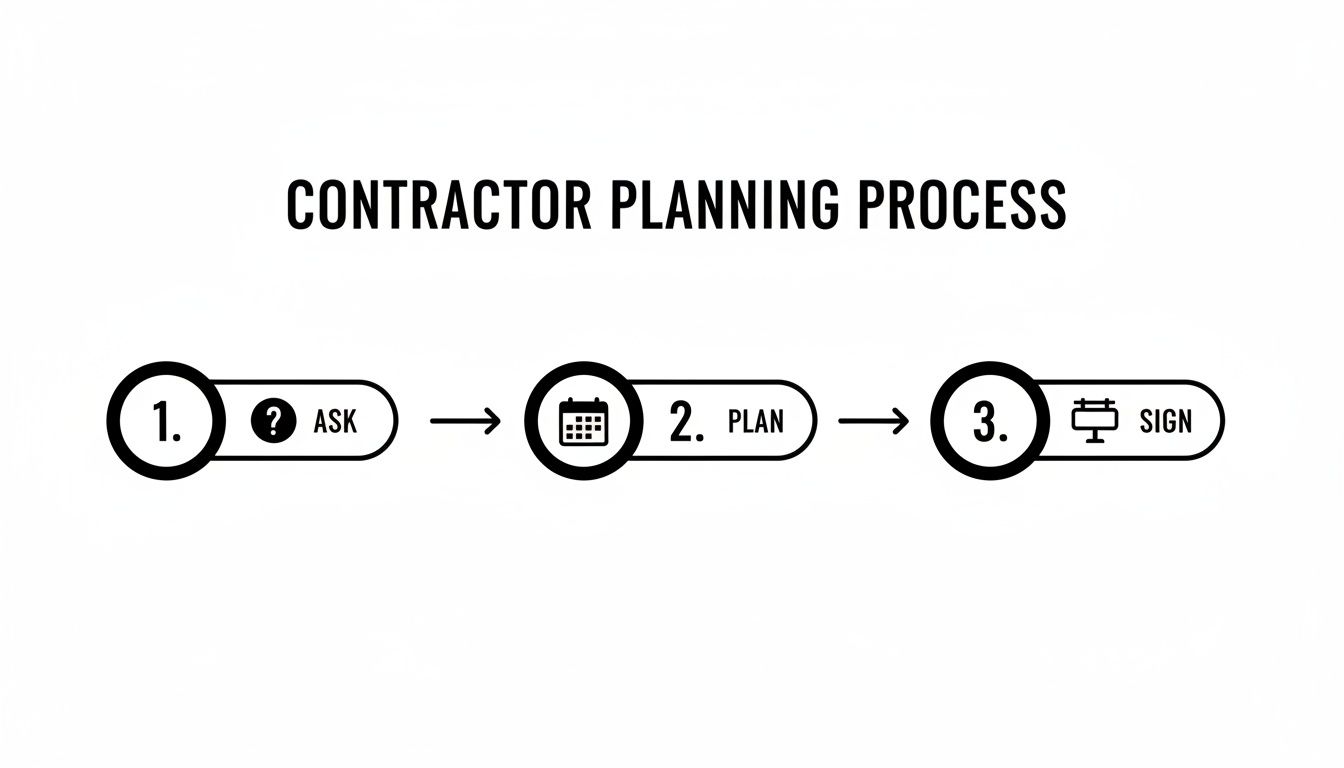
It really is that simple. It all starts with asking the right questions, making a schedule that works for you, and using clear signs.
Signage Is Your On-Site Tour Guide
Your success during construction depends on great signs. I'm not talking about one dusty "Pardon Our Dust" sign. Your signs need to actively guide drivers and walkers through a changing area. One confusing sign can be the difference between a customer finding a spot and just leaving.
Think bigger about your signage plan.
- Directional Arrows: Use large, bold arrows that clearly point cars toward open parking areas.
- Temporary Parking Areas: Clearly mark sections as "Customer Parking" to avoid confusion.
- Safe Pedestrian Paths: Create well-marked and protected walkways to guide people safely from their cars to your front door.
A very important point: ADA compliance is required at every stage. You must always have the right number of accessible parking spots in a good location, with clear, easy paths to your entrance. A true professional plans for this from the start.
A good contractor also knows it's the little things that matter. They’ll control dust with water trucks and schedule noisy work, like grinding old asphalt, for off-peak hours. These small things make a big difference in the customer experience. For more on managing all these moving parts, check out our guide on construction project management tips.
Integrating All the Moving Parts
An experienced contractor knows the job is more than just laying asphalt. The project plan must include every detail, from start to finish, to make sure the project moves smoothly between phases. This complete approach is what prevents delays and gets your lot back to 100% as quickly as possible.
Ask about after-hours or weekend work, phased scheduling (e.g., front-half vs. back-half), and temporary signage or access lanes for customers. The paving contractor should also coordinate ADA compliance, striping, and storm drain protection as part of the plan—not as afterthoughts.
At Coastal Pipeline, this is exactly how we run our projects. We work with businesses in Monterey, Santa Cruz, and San Benito County to create a plan that keeps you open, accessible, and compliant. By offering night and weekend paving options, we work around your schedule—ensuring your pavement gets a fresh start without disrupting your success.
Keeping Your Customers in the Loop During Construction
Once you have your plan for keeping access open, it's time to talk to your customers. And I mean really talk to them. The biggest mistake business owners make is not saying anything during a project. That silence leads to frustration and confusion for customers.
A smart communication plan does more than just manage what people expect—it builds trust. It shows your customers and tenants that you respect their time. Think of it this way: you're not just saying sorry for the dust and noise. You're advertising your investment in making their future experience better.
The most important advice I can give is this: start communicating before any work begins. A simple heads-up goes a long way. It’s a basic courtesy that prevents a lot of headaches and builds goodwill.
How to Frame Your Message (It's All About the Positives)
Your tone is everything. You have to present this project as an exciting upgrade, not just something you have to do.
Instead of a boring "Construction in Progress" sign, try something like, "Pardon our dust! We're building a better, safer parking experience for you." See the difference? One is an excuse; the other is a promise. Always focus on how this will help the customer.
Your positive message needs to be everywhere.
- Big, Bold On-Site Signs: These are your most important communicators. They need to be easy to see. Use them to announce the project start date and give a quick overview of what's happening.
- Social Media Updates: Use sites like Facebook or Instagram to post simple maps showing customers where to park during each phase. Progress photos are also great for showing that work is moving forward.
- Email Blasts: Before work starts, send an email to your customer list or tenants. Let them know what's coming, how you're managing access, and thank them for their patience.
Pro-Tip: Pick one person on your team to be the main contact for all construction questions. This is a game-changer. It prevents mixed messages and gives customers a direct person to talk to who can solve their problem.
A Simple Schedule for Consistent Communication
Being consistent is your best friend here. You don't need to send updates every day, but a regular schedule keeps everyone calm and informed. A simple weekly communication plan works great.
The key is to keep it visual and simple. A quick map with "Park Here This Week" in big letters works much better than a long explanation. By showing people what to expect, you remove the guesswork.
This clear communication is also tied to safety. A big part of managing temporary access is making sure you have the best parking lot ADA compliance solutions included in your plan from the start.
A simple schedule can make a big difference in keeping your communication organized. Here’s a template you can use.
Sample Weekly Communication Schedule
This schedule ensures your customers get timely, consistent information, which reduces confusion and shows them you have a solid plan.
| Day | On-Site Signage | Social Media Post | Email/Tenant Update |
|---|---|---|---|
| Friday (Before Phase Starts) | Update signs to show the upcoming week's parking changes. | Post a simple map showing the plan for next week. "Heads up! Parking will shift to the east lot starting Monday." | Send a brief email to tenants or customers with the same map and a quick thank-you. |
| Monday (Phase Start) | Make sure all signs are correct and visible for morning traffic. | Share a "We're open!" post, reminding customers where to park and thanking them. | N/A |
| Wednesday (Mid-Week Check-in) | N/A | Post a quick progress photo. "The new south lot is almost ready! Thanks for navigating the cones with us." | N/A |
By following a simple but consistent plan, you turn a frustrating experience into a way to show your commitment to your property and your customers.
Turn Disruption Into an Opportunity for Your Business
Sure, clear communication and a good construction plan are your best defense against losing customers. But why just play defense? Instead of just trying to reduce the negative impact, you can turn your parking lot project into a marketing event that actually brings in customers.
This positive mindset shows customers you value their business and appreciate their patience. It's a great way to build goodwill that will last long after the new asphalt is finished.

You have a real chance to turn a potential headache into a positive experience for everyone.
Create Irresistible Incentives
Don't just say sorry for the cones and dust—reward people for dealing with them. By offering special deals tied to the construction period, you make customers feel like insiders who are getting a great deal for their loyalty.
Here are a few ideas that work well:
- "Pardon Our Dust" Discount: A simple 15% off for anyone who makes a purchase during the project is easy and effective.
- Construction Special: Create a special combo deal or service package that's only available while the crews are on site.
- Freebie for the Brave: Offer a small, free item—like a cup of coffee or a dessert—to every customer who visits.
These simple gestures do more than just boost sales. They change the story from "this is an inconvenience" to "this is a great time to stop by."
Remove Parking Pain Points Completely
Even with the best plan, some customers just won't want to deal with a construction zone. You can remove this problem by making it super easy for them to get to your front door without having to look for a spot.
One of the best strategies is offering validated or discounted parking. Studies show that offering 20-30% off parking or even free parking can make a customer much more willing to make the trip.
You could also get creative by partnering with a nearby business that has extra space. Another great option is to team up with a rideshare service to offer discounted trips right to your door.
Gamify the Experience with a Loyalty Program
People love a good challenge, especially when there’s a reward. A special loyalty program just for the construction period can turn repeat visits into a fun game.
Try creating a "Construction Crew" punch card. Every time a customer visits during the project, they get a punch. After a few visits, they earn a big reward, like a huge discount or a valuable free product.
This encourages your most loyal customers to keep coming back and shows them you appreciate their effort. It's also smart to look at internal strategies. It's worth learning a few tips to reduce customer walk-outs during any disruption.
These creative ideas, combined with a solid construction plan, will keep your customers happy. For those planning a project in Monterey, Santa Cruz, or San Benito County, Coastal Pipeline can make this process as smooth as possible. We’ll help you keep business flowing while your pavement gets a fresh start.
Choosing a Contractor Who Protects Your Business
Everything we've covered points to one truth: the right contractor is key to keeping customers happy during a parking lot project. You aren't just hiring a paver. You need a partner who understands that every day your lot is torn up, your sales are at risk.
I've seen it happen many times. A crew shows up, puts up barriers everywhere, and creates a mess. This leaves the business owner to deal with angry customers. This happens when a contractor does what's easiest for them, not what's best for your business.
Look for a Partner in Business Continuity
An experienced commercial paving company brings more than just asphalt. They bring knowledge in planning, safety, and—most importantly—keeping your business running. They know a successful project is measured by how little it hurts your sales.
You want a team that brings you solutions for the biggest problems before they even start.
- Smart Phased Scheduling: Can they map out a plan to do your lot in sections? Maybe they'll do the back half first, then the front, so part of your parking is always open.
- Flexible Hours: A contractor willing to work nights or weekends respects your busy hours. This is a huge plus.
- Constant Communication: A pro crew will stay in touch with you, giving daily updates and making sure signs are always clear for your customers.
The goal is simple: find a team that plans for your customers, not just your pavement. They should handle the important details—like ADA compliance, final striping, and protecting storm drains—as part of a single, smooth plan.
Why Local Expertise Matters
This kind of detailed, business-first planning is exactly what we specialize in at Coastal Pipeline. As a core part of our service, Coastal Pipeline specializes in parking lot phasing and offers night/weekend paving options. We work hand-in-hand with property managers and business owners to make sure your doors stay open and your property stays compliant from start to finish.
For more tips on choosing the right teams, check out our guide on how to hire subcontractors.
If you’re planning a parking lot upgrade in Monterey, Santa Cruz, or San Benito County, hiring a local expert is the secret to a smooth project. We make it easy to keep business flowing while your pavement gets a fresh start—all on your schedule.
Questions We Hear All the Time About Paving Projects
"Do I really have to shut down my business to get my parking lot repaved?"
Not at all. This is probably the biggest worry we see from property owners. A good paving contractor won't just show up and start tearing everything up.
Instead, we'll map out a smart phasing plan. We work on your lot in smaller sections. This ensures a part of your lot always remains open for your customers. It’s all about careful planning and clear communication. That's the secret to keeping your doors open, even during a big project.
"How much extra will it really cost to have the work done after hours?"
It's true that paving at night or on the weekend usually has higher labor costs. But you have to look at the bigger picture.
Think about the cost of closing your business, even for one day. The lost sales and customer frustration can quickly add up to far more than the extra cost for off-hours work. It's a trade-off: a slightly higher project cost to protect your daily sales is often the smartest financial move.
"Who's on the hook for temporary ADA access during the project?"
Ultimately, the property owner is always responsible for staying ADA compliant. However, your paving contractor should be your expert partner in making that happen.
Any professional crew will include temporary accessible parking, ramps, and safe paths in their project plan. It’s not an extra. It’s a key part of the job that we plan for from day one.
If you’re looking to upgrade a parking lot in Monterey, Santa Cruz, or San Benito County, Coastal Pipeline Inc. specializes in keeping businesses like yours running smoothly while we give your pavement a fresh start. We work around your schedule. Learn more and get a quote today.