
Are you dreaming of a beautiful outdoor space for relaxing and entertaining? Paving stone patios are a great way to upgrade your backyard. They add both value and style to your home. You have many design choices, from classic brick patterns to modern, sleek styles. But with so many options, it can be hard to know where to start.
This guide will make the process easier. We will show you eight different examples of paving stone patios. We will explain what makes each design work well. For each style, we will look at the materials used, the reason for the pattern, and the benefits. You will learn how different parts come together to create a beautiful outdoor area.
By the end of this article, you will have plenty of new ideas and useful tips. This will help you plan and create the perfect paver patio that matches your home and your family's needs. Let's look at the designs that can change your backyard.
1. Herringbone Brick Pattern Patio
The herringbone pattern is a classic and eye-catching choice for paving stone patios. This design uses rectangle-shaped pavers, like bricks, set in a zigzag pattern. The name comes from its look, which is like the skeleton of a herring fish. This creates a sense of movement that is interesting to look at. Its interlocking design makes it very strong and long-lasting. That's why it has been used for centuries in busy areas.
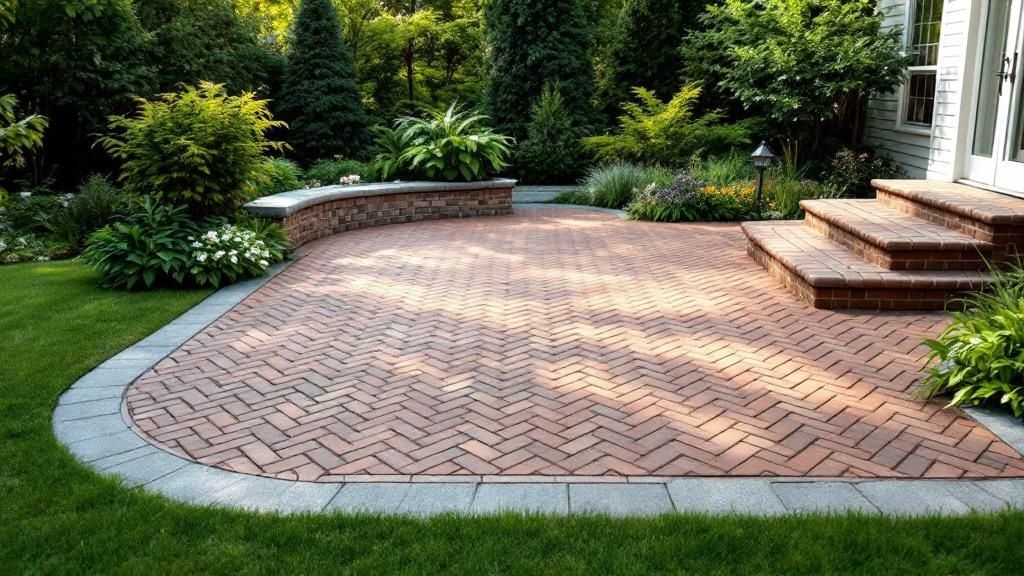
This timeless pattern has been used in old courtyards in Charleston, South Carolina, and English garden patios for years. Its strength and formal style make it a great choice for paving projects that need to last. The interlocking pavers spread weight evenly. This stops them from shifting or sinking over time, making it great for homes and public spaces.
Strategic Analysis: Why Choose Herringbone?
The main benefit of the herringbone pattern is its strength. The interlocking pavers create a surface that holds up well to wear and tear. This makes it perfect for patios that will get a lot of use, like those with outdoor kitchens or big furniture.
Key Insight: The zigzag layout locks each paver in place. This prevents the common problem of pavers spreading apart over time. This makes it a smart choice for long-lasting paving stone patios.
The pattern also offers a lot of design freedom. It may look complicated, but it works well in both small and large spaces. It can make a small patio feel more exciting and a large patio look more organized. This is why you see it in many places, from cozy homes to large walkways.
Actionable Takeaways for Your Project
To create a great herringbone patio, you need careful installation and good materials. A strong foundation is a must for any paving project.
- Start from the Center: Begin laying the pattern from the middle of the patio and work your way out. This makes sure the design is even and balanced.
- Use Border Pavers: Frame the pattern with a border of pavers laid side-by-side. This defines the space and gives the design a clean, finished look.
- Prioritize Safety: Preparing the base and laying the pavers needs careful planning. To learn about job site safety, it's a good idea to review construction site safety tips.
- Order Extra Material: Always buy about 10% more pavers than you think you need. This covers the angled cuts needed at the edges and gives you extras for any future repairs.
2. Natural Flagstone Irregular Pattern Patio
A natural flagstone irregular pattern gives paving stone patios a rustic, natural look. This design uses flat, odd-shaped pieces of natural stone, like slate or bluestone. The stones are fitted together like a puzzle. The beauty of this style is in its natural flaws. The different colors, textures, and shapes create a unique surface that feels connected to the outdoors.
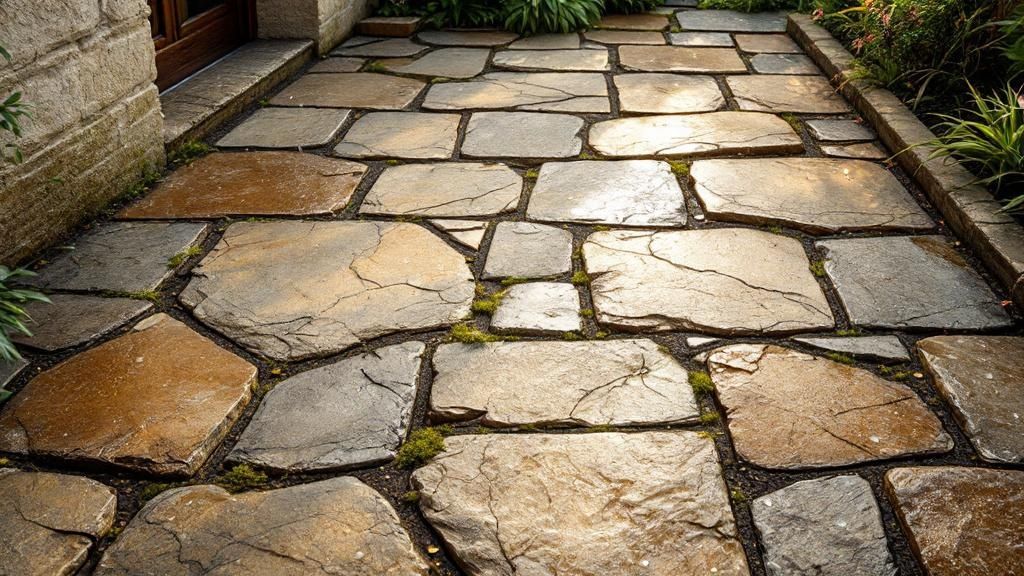
This classic style is found in many places, from sunny resort patios in Arizona to old bluestone terraces in Pennsylvania. Its natural look was favored by the famous architect Frank Lloyd Wright, who used natural materials in his designs. The result is a patio that looks both fancy and natural. This makes it a popular choice for mountain homes and gardens.
Strategic Analysis: Why Choose an Irregular Flagstone Pattern?
The main benefit of an irregular flagstone pattern is its unique beauty and natural feel. No two patios are the same because each stone's shape guides the layout. This creates a custom, high-end look that goes well with natural landscaping and home styles that use organic materials.
Key Insight: The irregular pattern avoids the boring look of same-sized shapes. It makes outdoor spaces feel more natural and less structured. This design turns paving stone patios from a simple surface into an important part of the landscape.
This design is also very durable. Natural flagstone is very dense and strong. It can handle bad weather and heavy foot traffic for many years. Its textured surface is less slippery than many other pavers, making it a safe choice for pool areas and walkways.
Actionable Takeaways for Your Project
A successful flagstone patio needs careful stone selection and patient work. The skill is in fitting the pieces together nicely.
- Dry-Fit Before Setting: Lay out all the stones in one area before you set them permanently. This lets you arrange the puzzle, make sure the fits are tight, and get a balanced look.
- Maintain Consistent Joints: Try to keep the spaces between stones about 1-2 inches wide. This creates a clean, professional look and gives the sand or mortar enough room to lock the stones in place.
- Plan for Precise Cuts: Use a special saw to make clean cuts where stones meet edges or other objects. This ensures a tight, custom fit.
- Select Complementary Tones: Choose stones that have similar colors to create a unified look. Mixing too many different colors can make the patio look too busy.
3. Modern Linear Large Format Patio
The modern linear patio design uses large rectangular pavers laid in clean, straight lines. This simple style creates a feeling of space and elegance. It's a popular choice for modern homes and businesses. The design focuses on straight lines and a clean look, using materials like large concrete pavers or porcelain tiles in neutral colors like gray or beige.
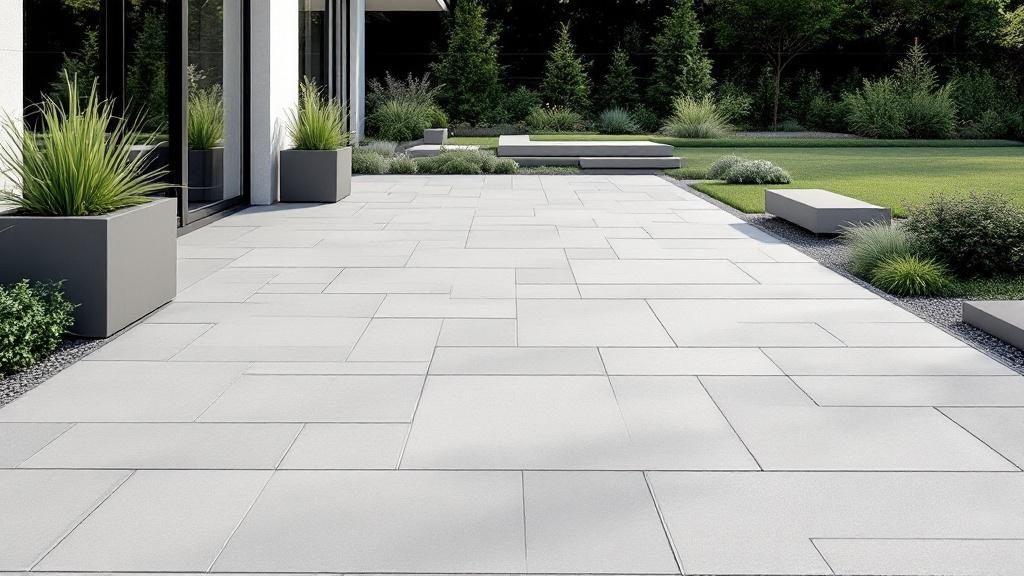
This sleek style is a key feature of modern architecture. You can see it in places from the hills of Los Angeles to the rooftops of New York City. The clean lines and large pavers make the space feel bigger. They help blend indoor and outdoor living areas together. This design is perfect for creating paving stone patios that feel both elegant and large.
Strategic Analysis: Why Choose a Modern Linear Design?
The main benefit of a modern linear pattern is that it creates a sense of space and openness. The large pavers and few grout lines make the area look less cluttered. This can make smaller patios seem larger and more welcoming. This sleek look is a perfect match for modern homes and landscaping.
Key Insight: Using large pavers creates a smooth, unbroken surface that makes the outdoor space feel like part of the home. This design trick is a great way to make a patio feel like a natural extension of the house.
This style also offers many material choices. Concrete is common, but porcelain pavers are becoming more popular. They are very durable, don't stain or fade easily, and have consistent color. This gives you a high-end look that is also easy to care for. That's an important thing to think about for busy paving stone patios.
Actionable Takeaways for Your Project
A successful large format patio depends on careful installation and a solid base. The weight and size of these pavers mean you have to handle them with care.
- Plan for Drainage: A slight, barely visible slope is needed for water to run off. This keeps the clean look while stopping water from collecting on the surface.
- Use Mechanical Lifters: Large pavers are heavy and hard to move. Using vacuum or clamp lifters is important for safe and accurate placement. This reduces the risk of injury or breaking the pavers.
- Incorporate Soft Elements: To avoid a cold look, soften the hard lines with built-in planters. You can also use different border materials like smooth river rocks or dark gravel.
- Ensure a Solid Base: The foundation is extra important with large pavers. Good paving and grading are needed to prevent the large tiles from cracking or shifting.
4. Multi-Color Tumbled Stone Mosaic Patio
A multi-color tumbled stone mosaic is an artistic style for paving stone patios. It turns an outdoor space into a unique piece of art. This design uses a mix of tumbled natural stones, such as travertine, marble, and granite, in different shapes, sizes, and colors. The stones are laid in complex patterns to create a lively, textured surface that is both beautiful and useful.
This style is often seen in Mediterranean-style patios in California and the courtyards of hotels in Santa Fe. The design uses a mix of earthy tones and rich colors to create a warm, welcoming feel. The tumbled finish gives the stones a soft, aged look that feels good to walk on and adds classic elegance.
Strategic Analysis: Why Choose a Stone Mosaic?
The main benefit of a multi-color mosaic is its amazing look. Each patio is a custom creation, giving you complete artistic freedom. This design turns a simple surface into the main attraction of your yard. It shows a high level of skill and personal style.
Key Insight: The mix of different stone types and colors creates a rich look that can hide dirt and small flaws. This makes it a surprisingly practical choice for areas that get a lot of use. This design is beautiful without needing constant cleaning.
Another key benefit is that it fits well in odd-shaped spaces. Unlike patterns with uniform pavers that need a lot of cutting for curved patios, a mosaic naturally fits any layout. The free-form installation process makes it perfect for going around garden beds, water features, or other structures.
Actionable Takeaways for Your Project
Creating a good mosaic patio needs careful planning and a good eye for color. The installation is more of an art than a science.
- Create Sample Boards: Before you start, lay out small sections of your stone mix on a board. This lets you test color combinations and patterns to make sure you like the final look.
- Use Larger Anchor Stones: Place larger stones in key spots throughout the design. Arrange smaller stones around them to create a sense of flow and balance.
- Plan in Sections: Divide the patio area into smaller, manageable sections. Completing the mosaic one section at a time makes the project less overwhelming and helps keep the pattern consistent.
- Seal for Protection: Use a high-quality sealer that works with all the different stone types. This will protect the stones from stains and weather, and it can also make their natural colors look richer.
5. Circular Compass Rose Pattern Patio
A circular compass rose pattern turns a simple patio into a beautiful centerpiece. This elegant design uses paving stones arranged in circles or radiating patterns. It often uses different colors and materials to create a medallion-like design in the middle. Inspired by old compasses, this design adds a feeling of importance and style to any outdoor space.
This stylish design is often seen in high-end projects, from large estate patios to luxury hotel courtyards. The precise geometric layout creates a big visual impact, guiding where people walk and look. Using it for paving stone patios turns the area from a simple surface into a piece of landscape art.
Strategic Analysis: Why Choose a Circular Pattern?
The main benefit of a circular or compass rose design is that it creates a strong visual focus. It naturally draws attention to the center. This makes it a great choice for patios that are a main gathering spot or need a strong design to tie a large area together.
Key Insight: This pattern is perfect for creating different zones within a larger outdoor space. The medallion can be the center of a dining area, a fire pit, or a seating area. This gives the patio a clear structure and flow.
This design also adds a custom, artistic touch. Unlike simple repeating patterns, a compass rose is a special feature that shows high-quality work and thoughtful design. It lets property owners add personal meaning or style right into their patio, making it a unique and memorable feature.
Actionable Takeaways for Your Project
A successful circular pattern depends on exact planning and careful installation. The complex geometry requires more than just careful measuring.
- Establish a Perfect Center: The whole design spreads out from one point. Make sure this center point is marked exactly before you lay the first paver.
- Scale the Design: A large, detailed medallion can be too much for a small patio. A tiny one might get lost in a big space. Make the size of your design fit the overall size of your patio.
- Use Contrasting Colors: The impact of a compass rose comes from how clear it looks. Use pavers in different colors and textures to make the points and circles stand out.
- Plan Sight Lines: Think about how the design will look from key spots, like from inside the house or a main doorway. Place the pattern to create the best effect from these views.
6. Permeable Interlocking Paver System
A permeable interlocking paver system is a green-friendly choice for paving stone patios that helps manage rainwater. Instead of solid surfaces that make water run off, these systems use special pavers with gaps between them. These gaps are filled with small, clean stones that let water soak through into the ground below. This approach reduces stormwater runoff, helps refill groundwater, and is often required by new building codes.
This eco-friendly design is used in many modern projects, from green-certified buildings to homes in cities like Austin, Texas, that focus on being green. The system is not only a durable and nice-looking patio surface but also a key part of a property's drainage plan. Its popularity is growing thanks to groups like the Interlocking Concrete Pavement Institute (ICPI) and green building programs.
Strategic Analysis: Why Choose a Permeable System?
The main benefit of a permeable paver system is its great stormwater management. By letting rainwater soak into the ground right under the patio, it lessens the load on city storm drains. It also reduces puddles and soil washing away. This makes it a perfect choice for areas with heavy rain or properties with strict environmental rules.
Key Insight: Permeable pavers turn your whole patio into a working drainage area. This can reduce or get rid of the need for more complex drainage solutions like French drains or catch basins.
This system also offers long-term environmental benefits. It helps filter pollutants from rainwater as it soaks into the soil and refills local groundwater. For property owners, this can help them follow local rules and maybe even get tax breaks in some cities. Its mix of function and style makes it one of the most innovative choices for modern paving stone patios.
The following infographic shows the key steps of installing a permeable paver system, from testing the site to placing the final paver.
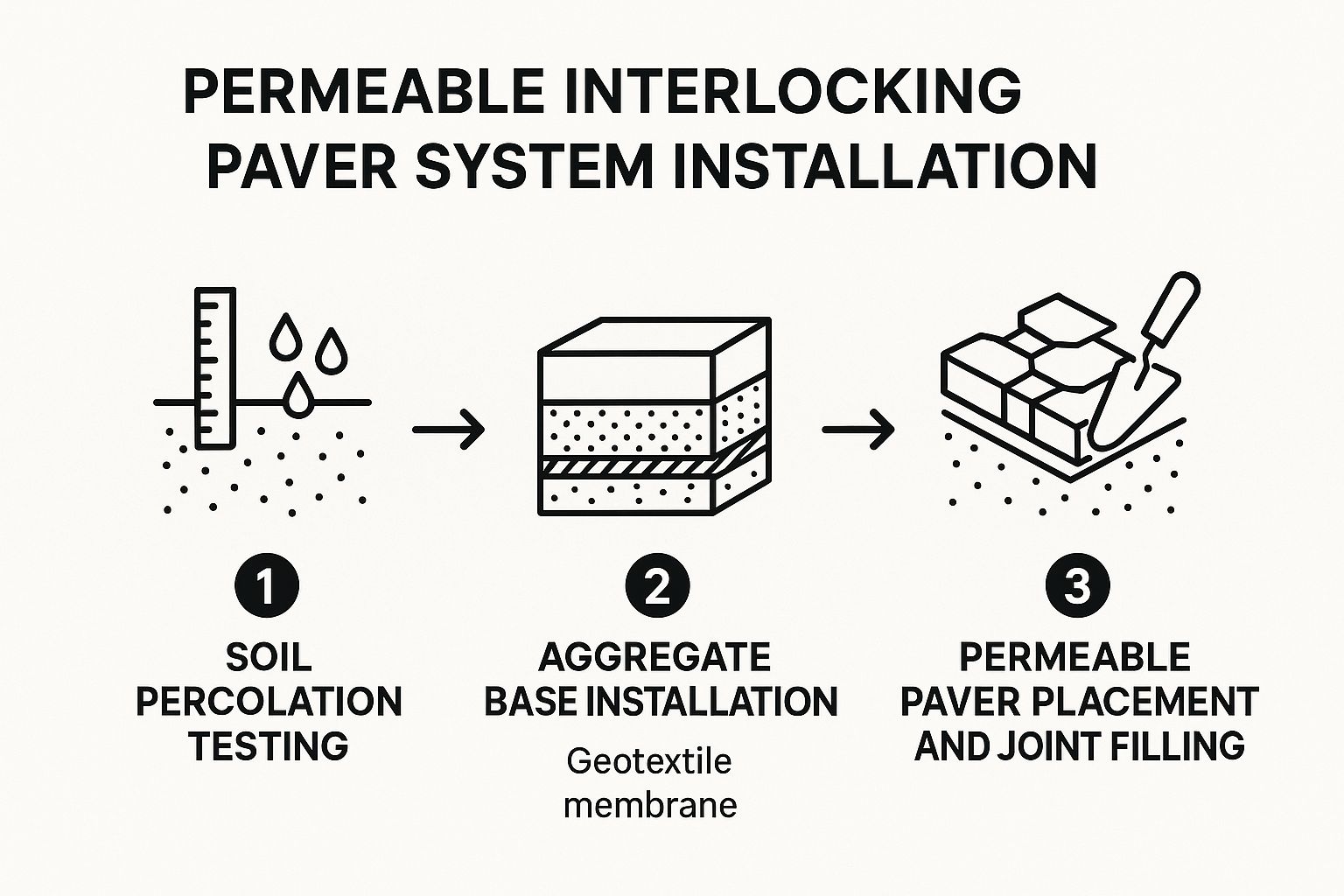
This step-by-step process shows how the system's success depends on a well-prepared, multi-layered base designed to let water soak in properly.
Actionable Takeaways for Your Project
A successful permeable patio needs careful planning and special installation methods. It's more than just laying pavers; it's building a small drainage system.
- Test Your Soil: Before you start, do a soil test to make sure your ground can absorb water well. If the soil has a lot of clay, the system might not work right.
- Build the Right Base: Use specific sizes of clean, open-graded gravel for the base layers. This creates the needed empty space for water to be stored before it soaks into the ground.
- Plan for Maintenance: Keep the paver joints free of dirt and leaves by sweeping or using a vacuum. This prevents clogs and makes sure water can keep passing through.
- Consult Local Rules: Check with your local building department for specific rules about permeable surfaces. For more detailed information, learn about storm water management systems.
7. Mixed Material Transition Patio
A mixed material transition patio is a stylish design that combines different surfaces like paving stones, natural flagstone, concrete, and decorative gravel. This approach creates separate zones for different activities, like dining, relaxing, or a fire pit area. The mix of textures and colors adds depth and a custom, high-end feel to outdoor living spaces.
This design style is often seen in luxury resorts, modern homes, and botanical gardens. By defining different areas with different materials, this style turns a simple patio into a lively and interesting environment. The transitions between materials become a key part of the design itself.
Strategic Analysis: Why Choose a Mixed Material Patio?
The main benefit of a mixed material design is its functional zoning. By using different paving surfaces, you can naturally divide a large patio into smaller, cozier areas without building walls. For example, smooth concrete might be used for a dining area, while decorative river rock surrounds a fire pit.
Key Insight: This technique allows for a lot of creativity. It goes beyond a single, plain surface. It lets designers and homeowners create truly unique paving stone patios that show their personal style and meet specific needs.
Another key benefit is visual interest. The contrast between different textures, such as smooth pavers next to rough flagstone, creates a rich and layered look. This can make the entire outdoor space feel larger and more carefully designed.
Actionable Takeaways for Your Project
Success with a mixed material patio depends on careful planning to make sure the different parts work well together.
- Create a Unified Color Palette: Choose materials with colors that go well together to create a cohesive look. A consistent color family will tie the different textures and materials together.
- Plan for Transitions: Make sure the edges where different materials meet are clean and level. Metal or stone edging can be used to create a crisp border and handle small height differences.
- Consider Maintenance: Different materials need different levels of care. Understand the upkeep for each surface you choose to make sure the patio stays beautiful over time. You can explore a comparison of different paving solutions to understand their long-term needs.
- Manage Drainage: Each material may have different drainage needs. Make sure your plan includes proper grading and drainage for each zone to prevent water from pooling.
8. Old World Cobblestone Pattern Patio
The Old World cobblestone pattern brings timeless European charm to any outdoor space. This design uses small, squarish stones to copy the look of old city streets and charming courtyards. The result is a paving stone patio with rich texture, real character, and a sense of history.
This classic style can be seen in the historic areas of Savannah, Georgia, and in the winery courtyards of Napa Valley. Its rustic yet elegant look connects a modern home to traditional building methods. It creates a surface that is as durable as it is beautiful. The slightly irregular shapes and varied colors of the cobblestones give each patio a unique, handcrafted feel.
Strategic Analysis: Why Choose Old World Cobblestone?
The main appeal of a cobblestone pattern is its authentic, rustic look. It provides a level of historic character that can make a new patio feel like it has been there for centuries. The small size and textured surface of the stones create visual depth and a non-slip surface that is great for walking paths and seating areas.
Key Insight: The use of smaller, individual stones makes this pattern great for curved paths and odd-shaped patios. Unlike large, stiff slabs, cobblestones can easily follow the natural curves of your yard.
Cobblestone is also known for being very durable. These stones are incredibly dense and can handle heavy foot traffic, outdoor furniture, and harsh weather. When set correctly, a cobblestone patio is a long-term investment that gets better with age.
Actionable Takeaways for Your Project
A successful cobblestone patio depends on a solid foundation and careful stone selection. The small size of the pavers makes good base preparation very important to avoid shifting.
- Select Flatter Stones for Traffic Areas: Choose cobblestones with a fairly flat top surface for the main patio area. This will make sure furniture sits evenly and walking is comfortable.
- Use a Sand-Set Installation: Setting cobblestones in a bed of sand allows for slight movement. This helps prevent cracking from the ground shifting or from freezing and thawing.
- Ensure a Compacted Base: Because the stones are small, the base under them must be perfectly graded and packed down. Proper site preparation is very important. For a durable foundation, consider professional landscape grading services.
- Source Reclaimed Cobblestones: For the most authentic look, think about using reclaimed cobblestones from old projects. They have genuine color variations and a weathered look that is hard to copy.
Paving Stone Patio Style Comparison
| Patio Style | Implementation Complexity 🔄 | Resource Requirements ⚡ | Expected Outcomes 📊 | Ideal Use Cases 💡 | Key Advantages ⭐ |
|---|---|---|---|---|---|
| Herringbone Brick Pattern | Moderate to High | Moderate | Durable, classic pattern | Traditional or historic homes | Strong interlock, timeless look |
| Natural Flagstone Irregular | High | High | Unique, rustic, non-slip surface | Mountain homes, luxury resorts | One-of-a-kind look, durable |
| Modern Linear Large Format | Moderate | Moderate to High | Sleek, spacious, modern look | Contemporary homes, city rooftops | Fast installation, easy care |
| Multi-Color Stone Mosaic | Very High | High | Artistic, custom, textured surface | Mediterranean-style homes, gardens | Unique artistic style, hides dirt |
| Circular Compass Rose | Very High | High | Dramatic focal point, elegant | Grand estates, luxury hotels | Stunning design, adds value |
| Permeable Interlocking Paver | High | Moderate to High | Eco-friendly, manages water | Green-friendly homes and projects | Manages stormwater, eco-conscious |
| Mixed Material Transition | High | High | Defines zones, adds texture | High-end homes, resorts | Functional zones, creative design |
| Old World Cobblestone | High | Moderate to High | Authentic historic charm, durable | European-style homes, historic areas | Timeless character, very strong |
Bringing Your Patio Vision to Life
From classic designs to modern looks, we've explored the many styles of paving stone patios. Each example, from the detailed Herringbone Brick Pattern to the green-friendly Permeable Paver System, offers a unique mix of style and function. We hope this guide has given you inspiration and a clear plan for creating an outdoor space that fits your home and lifestyle.
The key takeaway is that a great patio project balances looks with practicality. The pattern you choose, like the Old World Cobblestone or the sleek Modern Linear design, sets the style. But the real long-term value of your patio is in the work done underneath—the proper site preparation and installation.
Key Strategic Takeaways
As you start to plan, remember these main ideas:
- Harmony is Essential: The best paving stone patios match the style of the home. A rustic flagstone design might look strange with a very modern house.
- Function Dictates Form: How you plan to use your patio should guide your design. If you want to host big parties, you'll need a large, open layout. For a quiet reading spot, a smaller, cozier pattern might be better.
- The Foundation is Everything: A beautiful surface won't last without a solid base. Proper digging, grading for drainage, and a well-packed base are steps you cannot skip. Skipping them will lead to a sinking, unstable patio.
- Material Matters: Think about the climate, how much foot traffic you expect, and how much maintenance you're willing to do. Natural stone is beautiful but may need more care. Concrete pavers are durable and come in many consistent colors and shapes.
Your Actionable Next Steps
With these ideas, you are ready to take the next steps toward building your dream outdoor living area. Start by looking at your property and setting your goals. Measure the space, think about where the sun hits, and plan how the patio will connect to your home and yard.
Once you have a clear vision, the next step is to talk to a professional. An experienced contractor can check your site's specific needs, from soil conditions to local drainage rules. They can give you good advice on materials and make sure the project is built to last. Building beautiful and durable paving stone patios is a big job. But with careful planning and expert help, you can create a welcoming extension of your home that you'll enjoy for many years.
Ready to turn your vision into a professionally constructed reality? The experts at Coastal Pipeline Inc. specialize in the essential groundwork, site preparation, and precision installation required for flawless paving stone patios. Contact Coastal Pipeline Inc. today to ensure your project is built on a foundation of excellence from the ground up.