Bare soil on a construction site is like a ticking clock. Every rainstorm or strong wind can wash away precious topsoil, clog drains, and weaken slopes. This is a serious threat that can cost a lot of money and cause major delays.
So, what causes soil to erode in the first place? It's a mix of natural and human factors.
- Natural Causes: Heavy rain, steep slopes, and water runoff are powerful forces that can easily carry soil away.
- Human Causes: Construction activities like grading (leveling the land), excavation (digging), and removing trees and grass make the problem much worse by exposing bare earth.
When these factors combine, they can destabilize trenches, undermine building foundations, and lead to expensive cleanup jobs. Protecting your site from erosion is a vital part of any construction plan. It helps keep underground utilities, paving, foundations, and roads safe and stable.
This article will show you the best ways to prevent soil erosion. We'll cover simple methods like silt fences and more complex ones like retaining walls and sediment basins. For more details on how flooding can speed up erosion, you can read these essential facts about flooding.
By using the right techniques, you can avoid fines, project delays, and costly repairs. Let's look at the top ways to keep your soil in place and your project on solid ground.
1. Silt Fencing and Sediment Barriers
Silt fencing is one of the most common ways to stop soil erosion on job sites. These are temporary fences made of a strong fabric held up by posts. Their main job is to slow down rainwater running off areas that have been recently graded or dug up.
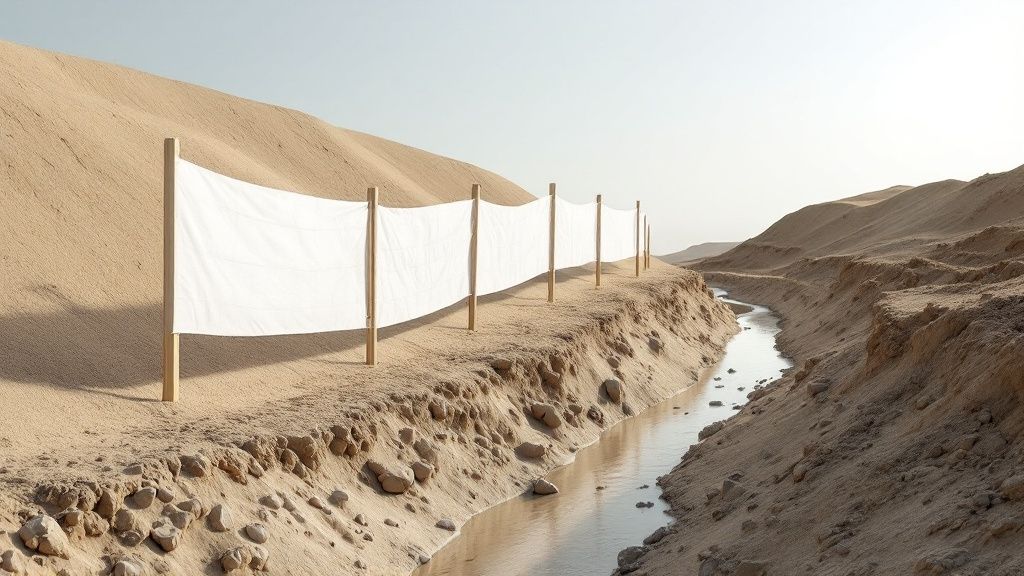
As the muddy water hits the fence, it slows down. This gives the heavy soil particles a chance to settle and drop out of the water. The cleaner water then passes through the fabric. This simple process keeps mud and dirt from washing into storm drains, streams, and rivers. That’s why you see silt fences on almost every kind of construction project, from new roads to housing developments.
When and Why to Use Silt Fencing
Silt fencing is a must-have for almost any project where the ground is disturbed. It works best when placed along the downhill edge of a construction site or at the bottom of dirt piles. For contractors and developers, using silt fences is often required by law to protect local water quality and avoid big fines.
Actionable Tips for Effective Implementation
To make sure your silt fence works well, you need to install and maintain it correctly.
- Secure Installation: Bury the bottom of the fabric in a trench at least six inches deep. Then, pack the dirt back in to create a tight seal so water can’t flow underneath.
- Regular Inspections: Check the fences every week and after every heavy rain. Look for rips, sags, or places where water has washed out the soil underneath.
- Sediment Removal: When the collected dirt reaches about one-third of the fence's height, remove it. This keeps the fence strong and working properly.
- Strategic Placement: If you can, place the fences at least 100 feet away from streams or wetlands to create an extra safety buffer.
2. Hydroseeding and Temporary Seeding
Hydroseeding is a fast way to grow grass and other plants on bare soil to control erosion. It involves spraying a wet mixture of seeds, mulch, fertilizer, and water onto the ground. This mixture immediately protects the soil from rain and wind. Soon after, the seeds start to grow, and their roots hold the soil particles together.
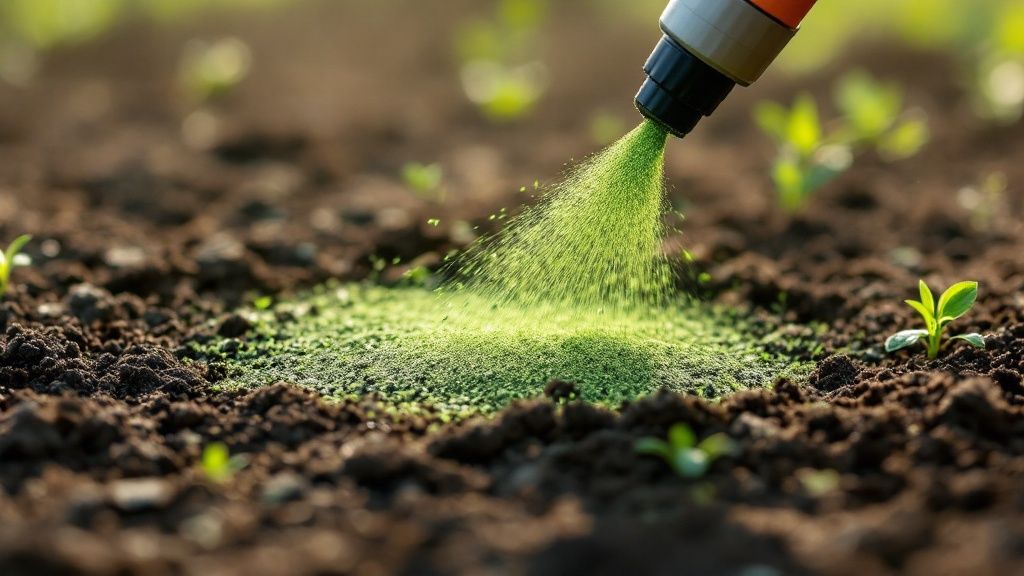
The mulch in the hydroseed mix acts like a temporary blanket. It holds in moisture to help the seeds grow and keeps the soil from washing away until the plants are established. Because it works so quickly, hydroseeding is one of the best ways to prevent soil erosion on construction sites where large areas are exposed for a short time.
When and Why to Use Hydroseeding
Hydroseeding is perfect for large areas, steep slopes, or places that are hard to reach with normal seeding methods. It’s often used on newly graded roadsides or large housing projects. For contractors, hydroseeding is a great way to meet environmental rules, stop muddy runoff, and stabilize a site quickly and without spending too much.
Actionable Tips for Effective Implementation
To get the best results, timing and technique are very important.
- Optimal Application: Spray the hydroseed mix during the best growing seasons, which are usually spring and fall. This helps the seeds sprout quickly.
- Moisture Management: Make sure the area gets enough water for the first few weeks. This is key for the seeds to start growing.
- Appropriate Seed Mix: Choose a seed mix that is right for the local climate, soil, and amount of sun. This will ensure the plants grow strong.
- Weather Conditions: Apply the mixture when the wind is calm (under 10 mph) to make sure it covers the ground evenly.
3. Erosion Control Blankets and Mats
Erosion control blankets and mats offer instant protection for bare soil. These coverings are made of materials like straw, coconut fiber, or synthetic fibers. They are rolled out directly onto the ground in areas that are at risk of erosion. They work by shielding the soil from the impact of raindrops and slowing down the flow of water across the surface.
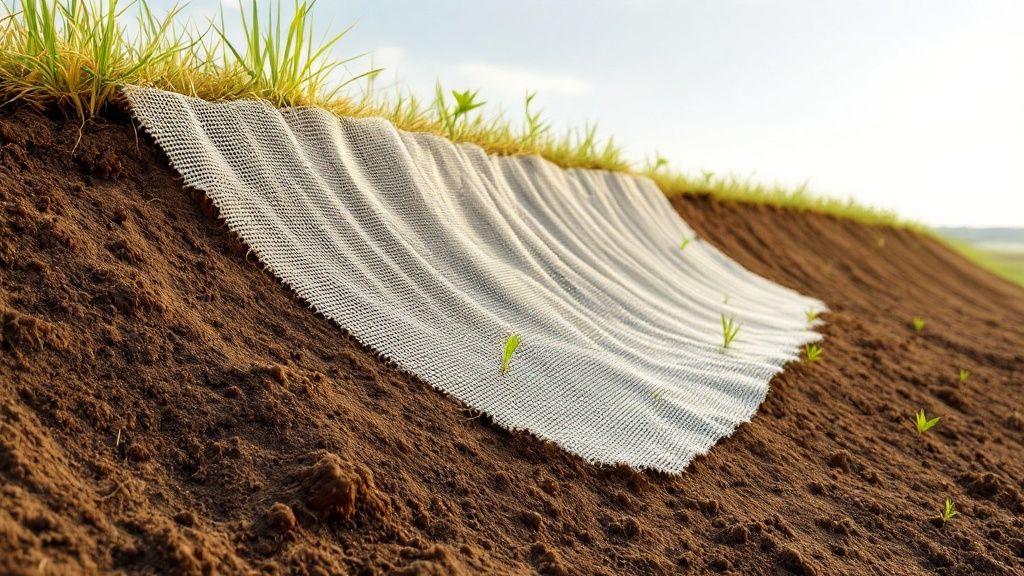
This protective layer also helps seeds grow by trapping moisture and keeping the soil temperature steady. As plants grow through the mat, their roots take over the job of holding the soil in place for the long term. This makes blankets a very effective tool for both immediate erosion control and helping vegetation get established, especially on slopes and in drainage channels.
When and Why to Use Erosion Control Blankets
This method is perfect for newly graded slopes, stream banks, and drainage ditches where plants need time to grow. For developers and contractors, using these mats is a key step in stabilizing a site, especially after major digging for utilities. They prevent soil from washing away, protect investments in infrastructure, and help meet environmental laws by keeping local water clean.
Actionable Tips for Effective Implementation
For erosion control blankets to work, they must be installed correctly.
- Ensure Good Contact: The blanket needs to be in direct, firm contact with the soil. Clear away rocks and smooth the ground before rolling it out.
- Overlap Correctly: Overlap the edges of the blankets by at least six inches. This stops water from getting underneath and carving out small channels.
- Use Proper Stapling: Secure the blanket with staples, using about three staples per square yard. This keeps it from moving, especially on slopes.
- Match Longevity to Need: Choose a blanket that will last long enough for the plants to fully grow. Some are designed to break down quickly, while others are made for long-term use.
4. Check Dams and Flow Control Structures
Check dams are small, temporary dams built across drainage ditches or channels. They are another great way to control erosion where water tends to flow in a concentrated path. Their job is to slow down the speed of stormwater runoff. By creating a series of small pools, they allow dirt and sediment to settle out of the water before it flows further downstream.
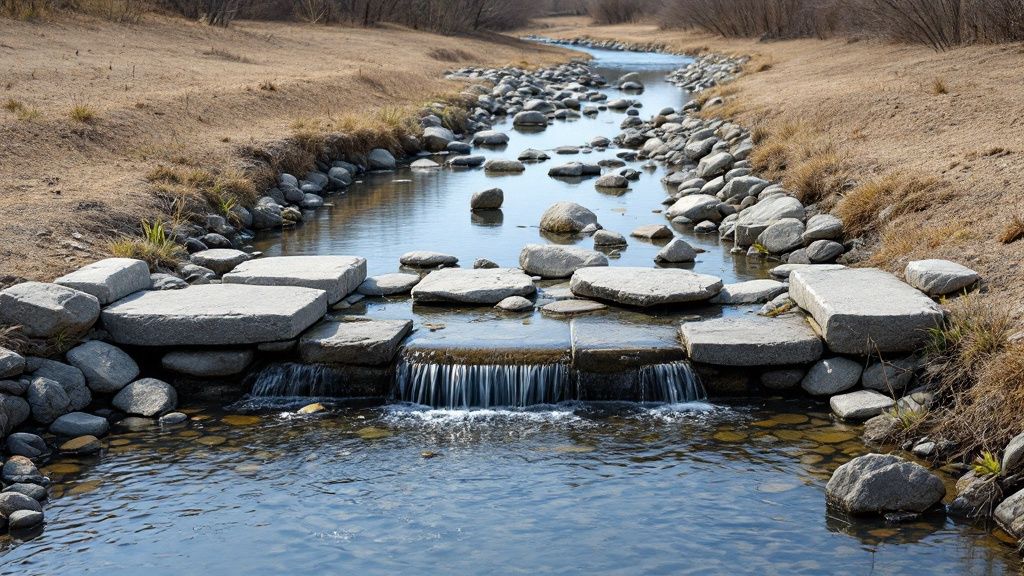
The main goal of a check dam is to reduce the energy of flowing water. This makes the water less able to erode the bottom and sides of the channel. Check dams can be made from rocks (also called riprap), bags of gravel, or special fiber logs. This makes them one of the best ways to prevent soil erosion on construction sites and developed properties where managing water flow is a big concern.
When and Why to Use Check Dams
Check dams are perfect for any project with drainage channels or ditches that can have fast-moving water, especially on sloped land. They are a critical tool for stopping erosion in channels, preventing deep gullies from forming, and trapping sediment on-site. For developers and public works departments, check dams help protect downstream infrastructure, like culverts and storm drains, from getting clogged with mud.
Actionable Tips for Effective Implementation
To work correctly, check dams need to be designed and placed properly.
- Correct Spacing: Space the dams so that the top of a downstream dam is at the same height as the bottom of the upstream one. This creates a smooth, controlled flow.
- Design for Flow: Make the center of the dam lower than the edges. This creates a spillway that directs water over the middle and stops it from eroding the banks around the sides.
- Prevent Scouring: Place rocks or other material on the downstream side of the dam. This breaks up the energy of the falling water and prevents it from digging a hole.
- Regular Inspections: Check the dams after every big storm. Look for damage or too much sediment buildup and make any needed repairs right away.
5. Retaining Walls and Terracing
For properties with very steep slopes, retaining walls and terracing are a permanent, structural solution for preventing soil erosion. These systems reshape a steep hill into a series of smaller, level steps. This reduces the slope's steepness, which slows down water runoff and makes it much less likely to wash soil away.
This method provides long-term stability and is one of the best ways to prevent soil erosion on developed properties with difficult terrain. Not only do retaining walls stop soil movement, but they also create flat, usable land for landscaping or buildings. This is a common solution for hillside homes and along highways, where keeping slopes stable is critical for safety.
When and Why to Use Retaining Walls
Retaining walls are perfect for projects on steep hills where simpler erosion control methods won't be enough. They are an investment designed to permanently stabilize a site. This makes them essential for protecting infrastructure like building foundations and underground utilities from the damaging effects of slow soil movement and landslides, ensuring the long-term safety of the development.
Actionable Tips for Effective Implementation
Proper engineering and construction are key for a long-lasting and effective retaining wall.
- Install Proper Drainage: Always include a drainage system behind the wall, like a pipe with holes and a layer of gravel. This relieves water pressure, which is a major cause of wall failure.
- Use Geotextile Fabric: Place a special fabric between the soil and the gravel drain. This lets water through but stops dirt from clogging the pipe.
- Ensure a Solid Foundation: The wall must be built on a solid, compacted base. A soil test is needed to figure out how deep and strong the foundation should be.
- Consider Modular Systems: For a faster and often cheaper installation, look into using engineered modular blocks from trusted brands.
6. Sediment Basins and Retention Ponds
For large construction projects, sediment basins are one of the most powerful tools for fighting soil erosion. These are large, dug-out ponds designed to collect all the stormwater runoff from a site. The water sits in the basin long enough for mud and other particles to settle to the bottom. Once the water is cleaner, it is slowly released.
This process greatly reduces the amount of pollution leaving a site and entering local streams and rivers. For big projects like new neighborhoods or industrial parks, these basins are one of the best ways to prevent soil erosion because they can handle large amounts of water. They are a key part of managing a site well, offering both erosion and flood control.
When and Why to Use Sediment Basins
Sediment basins are needed for projects that disturb large areas of land, usually 10 acres or more. In these cases, simple methods like silt fences aren’t enough. Basins are often required by environmental permits and are crucial for protecting downstream infrastructure, like underground pipes and roads, from being buried in sediment. For developers, building a well-designed basin shows a commitment to protecting the environment and ensuring the site will be stable for years to come.
Actionable Tips for Effective Implementation
To make sure a sediment basin works well, it needs to be designed correctly and maintained regularly.
- Proper Sizing: The basin must be large enough to hold the runoff from a typical heavy storm in your area. This prevents it from overflowing.
- Include a Forebay: It's a good idea to build a smaller settling area at the inlet. This traps the heaviest sediment, making the main basin easier to clean.
- Outlet Protection: Place riprap (large rocks) at the basin's outlet. This slows down the exiting water so it doesn't cause more erosion downstream.
- Regular Maintenance: Check sediment levels every month and after big storms. Clean out the basin when it is about half full of sediment to keep it working effectively.
These basins are often part of larger storm water management systems that provide long-term protection for a property.
7. Dust Control and Surface Stabilization
While water is a major cause of erosion, wind can be just as bad, especially in dry areas or on large, open sites. Dust control methods work by applying something to the soil to bind the particles together. This can be as simple as spraying water, or it can involve using special chemicals or polymers that create a crust on the soil surface. This is a very important way to prevent soil erosion on construction sites, especially where air quality is a concern.
These treatments keep fine soil particles from blowing away in the wind. This protects air quality and saves valuable topsoil. For example, on a large construction project in a dry place, special polymers can lock down the soil for weeks. In cities, demolition sites often use water trucks to keep dust down and protect the health of workers and neighbors.
When and Why to Use Dust Control
Dust control is necessary on any site with large areas of fine soil exposed to the wind. This includes big grading projects and demolition sites. For contractors, controlling dust is often required by law to meet air quality standards. Managing dust not only prevents soil loss but also makes the worksite safer by improving visibility and protecting everyone's health.
Actionable Tips for Effective Implementation
To get the most out of your dust control efforts, timing is everything.
- Optimal Application Conditions: Apply water or chemicals when there is little to no wind. This ensures the spray covers the area evenly and doesn’t drift away.
- Time Chemical Applications: If you’re using chemical stabilizers, apply them when no rain is expected for at least 24 hours. This gives the product time to set and form a strong crust.
- Follow Manufacturer Specifications: Always follow the directions on how to mix and apply the product. This will make sure it works correctly.
- Consider Environmental Impact: Choose products that are safe for the environment, especially when working near streams or other sensitive areas.
8. Geotextiles and Geosynthetic Reinforcement
Geotextiles are special fabrics that offer a modern, highly effective way to stabilize soil and prevent erosion. These materials are placed in or on the ground, where they can strengthen the soil, separate different layers, filter water, and help with drainage. By adding these fabrics to the ground, you can dramatically improve soil stability and make other erosion control methods last longer.
Unlike natural materials, geotextiles are engineered to have specific qualities, like strength and the ability to let water pass through. When used to strengthen a slope, they add structural support, holding the soil in place against gravity and water. For drainage, they act as a filter, letting water pass through while stopping fine soil particles from washing away and clogging pipes. This engineered solution is one of the best ways to prevent soil erosion, especially in tough situations.
When and Why to Use Geotextiles
Geotextiles are ideal for projects that need strong, long-term stabilization. They are often used to build reinforced soil slopes for highways, line landfills, and protect coastlines from erosion. For engineers and contractors, these materials provide a reliable way to create stable ground where other methods might not work, such as on sites with poor soil or very steep slopes.
Actionable Tips for Effective Implementation
Choosing the right material and installing it correctly is key for geotextiles to work properly.
- Match Material to Application: Carefully choose a geotextile with the right properties for your specific project.
- Ensure Proper Anchoring: Overlap and anchor all edges and seams according to the manufacturer's instructions to keep soil from getting underneath.
- Protect During Installation: Avoid driving heavy machinery directly on the fabric and be careful not to tear it during installation.
- Consider Site Conditions: Think about long-term conditions like sun exposure when choosing a product to make sure it will last.
Top 8 Soil Erosion Prevention Methods Comparison
| Method | Implementation Complexity 🔄 | Resource Requirements ⚡ | Expected Outcomes 📊 | Ideal Use Cases 💡 | Key Advantages ⭐ |
|---|---|---|---|---|---|
| Silt Fencing and Sediment Barriers | Low 🔄🔄 (simple installation) | Low ⚡ (geotextile, posts, labor) | Moderate sediment control for sheet/minor flows 📊 | Construction site perimeter control, residential and commercial sites | Low cost, easy & quick installation ⭐ |
| Hydroseeding and Temporary Seeding | Medium 🔄🔄🔄 (specialized equipment) | Moderate ⚡ (seed, mulch, fertilizer) | Rapid vegetation establishment (7-14 days) 📊 | Large disturbed areas, slopes up to 3:1, rapid soil stabilization | Fast protective cover, cost-effective ⭐ |
| Erosion Control Blankets and Mats | Medium 🔄🔄🔄 (labor-intensive) | Moderate to High ⚡ (materials, labor) | Immediate soil protection, supports vegetation growth 📊 | Steep slopes (up to 1:1), sensitive restoration sites | Immediate protection, moisture retention ⭐ |
| Check Dams and Flow Control Structures | Medium 🔄🔄🔄 (design & construction) | Moderate ⚡ (rock, logs, sandbags) | Reduces flow velocity, promotes sediment settling 📊 | Channels, swales, drainage control in construction & mining sites | Effective flow control, groundwater recharge ⭐ |
| Retaining Walls and Terracing | High 🔄🔄🔄🔄 (engineered structures) | High ⚡ (materials, professional labor) | Permanent slope stabilization, erosion prevention 📊 | Steep, severe erosion sites requiring structural support | Long-term solution, creates usable land ⭐ |
| Sediment Basins and Retention Ponds | High 🔄🔄🔄🔄 (engineering & space) | High ⚡ (land area, construction cost) | High sediment removal efficiency (80-95%) 📊 | Large developments, sites needing flood and sediment control | Effective sediment/flood control, multi-benefit ⭐ |
| Dust Control and Surface Stabilization | Low to Medium 🔄🔄 (application) | Low to Moderate ⚡ (water, chemicals) | Immediate dust and wind erosion control 📊 | Arid/dust prone sites, active construction with vehicle traffic | Quick results, low cost ⭐ |
| Geotextiles and Geosynthetic Reinforcement | Medium to High 🔄🔄🔄🔄 (specialized installation) | Moderate to High ⚡ (synthetic fabrics, equipment) | Improves soil stability, drainage, erosion control 📊 | Reinforced slopes, landfill liners, mining, coastal projects | Long-term durability, enhances soil strength ⭐ |
Why Erosion Control Is Critical for Infrastructure Stability
Taking steps to prevent soil erosion is not just about keeping a construction site clean. It's about protecting the long-term stability and safety of the entire project. When soil washes away, it can cause serious damage to important infrastructure.
Erosion can weaken the ground supporting building foundations, roads, and pavement, leading to cracks and failure. It can also expose and damage underground utilities like water pipes and electrical lines. By being proactive and using the best ways to prevent soil erosion, you build a strong foundation that ensures your project will last for years to come. A smart erosion control plan is an investment in the future of your property.
How Coastal Pipeline Inc. Helps
At Coastal Pipeline Inc. (CPI), we are experts in protecting infrastructure during excavation and paving projects. We create site-specific erosion control plans based on the soil type, slope, and local rules for each job. Our certified team uses strategies that protect your investment and keep your project in compliance.
- Infrastructure-Focused Grading: We engineer the proper slope and drainage to guide rainwater away from sensitive areas and minimize erosion.
- Integrated Drainage Solutions: We build complete systems including culverts and storm drains to provide long-term protection from water damage.
Trusted by cities and developers across Monterey, Santa Cruz, and San Benito Counties, CPI has a proven track record of success. We help you build on solid ground.
Your Next Steps
Start by looking closely at your site. Find problem areas like steep slopes or large patches of bare ground. Then, create a specific plan that outlines the methods you will use before, during, and after construction. For more ideas on protecting your property, check out these proven landscaping and hardscaping strategies for preventing soil erosion.
In the end, protecting your soil is about protecting your investment. By using these proven techniques, you are building a stable and successful future for your project.
Don't let erosion undermine your project's integrity. For expert assistance with infrastructure-focused grading, integrated drainage solutions, and site-specific erosion control plans, partner with the trusted experts at Coastal Pipeline Inc. Contact us today to ensure your site is built on a stable, secure, and compliant foundation.