You may have heard stories about trenchless sewer jobs that didn't last. A contractor installs a liner and declares the job done, but the same problems come back a few months later. When this happens, it’s usually because they skipped the most important step: a detailed camera inspection.
Putting a new liner inside a pipe that is already crushed, badly misaligned, or has lost its shape is like painting over a rotting wall. It’s a shortcut that is guaranteed to fail. What should be a 50-year solution turns into a temporary fix that has to be redone the right way.
Is Trenchless Repair a Shortcut or a Solution?
When a sewer line breaks, people often ask, "Does trenchless repair actually last, or is it just a shortcut that will need to be redone?" The truth is, the technology itself is very reliable. Cured-In-Place Pipe (CIPP) liners are designed to last up to 50 years. They create a brand-new, seamless pipe inside of the old one.
The numbers back this up. The market for trenchless pipe relining is expected to reach $8.4 billion by 2030. This growth is driven by its proven success and long-term durability. When done correctly, trenchless repair is a permanent solution that saves your landscaping, time, and money.
The Most Common Misstep
If the technology is so good, why do some trenchless jobs fail? The answer is almost always the same: a poor diagnosis from the start.
Some contractors oversell trenchless technology as a fix for every problem without first using a camera to inspect the pipe. This is like a doctor prescribing surgery without ever seeing an X-ray—it's not a real solution, it's a guess.
Trying to line a pipe that has already collapsed, has a major dip (called a "belly"), or has joints that are far apart is a recipe for failure. The new liner is flexible when it's installed, so it will simply take the shape of the damaged pipe. It ends up with the same problems as the old pipe.
A successful trenchless repair isn't about the liner itself. It's about making sure the original pipe is in good enough shape to support it. Even the best technology will fail if it's used for the wrong problem.
The Right Way to Approach Sewer Repair
A trustworthy contractor doesn't rush to make a sale. They start with a careful inspection of your pipe. You should look for contractors who follow NASSCO (National Association of Sewer Service Companies) standards for their inspections. This gives you a clear and accurate report on your pipe's condition.
An honest expert will use the camera footage to show you why trenchless repair is a good fit—or explain why it isn't.
At Coastal Pipeline, we perform NASSCO-certified inspections and offer both trenchless and traditional open-trench solutions. This allows us to recommend the right one for your needs, not just the most convenient one for us. For trusted sewer replacement in Santa Cruz, Monterey, or San Benito County, contact us to assess your line and walk through the best options for a permanent fix.
The Number One Cause of Trenchless Repair Failure
What’s the single biggest reason some trenchless sewer jobs go sideways? It’s shockingly simple: a lack of proper homework. Too often, contractors jump the gun, pushing a modern solution without first running a detailed camera inspection. Think about it—would you want a surgeon operating without looking at an X-ray first? It's a gamble that almost never pays off in the long run.
Putting a new liner into a sewer pipe without knowing its true condition is just asking for a costly do-over. The new liner is only ever as strong as the pipe it’s inside. If that host pipe is already collapsed, riddled with spiderweb cracks, or has badly misaligned joints, the liner simply molds itself to those same flaws. You end up with a brand-new, but still structurally unsound, pipe.
This is why a "diagnose-first" approach is so critical. It's the only way to guarantee a repair that actually lasts. This decision tree lays out the simple but essential path to getting a trenchless project right from the start.
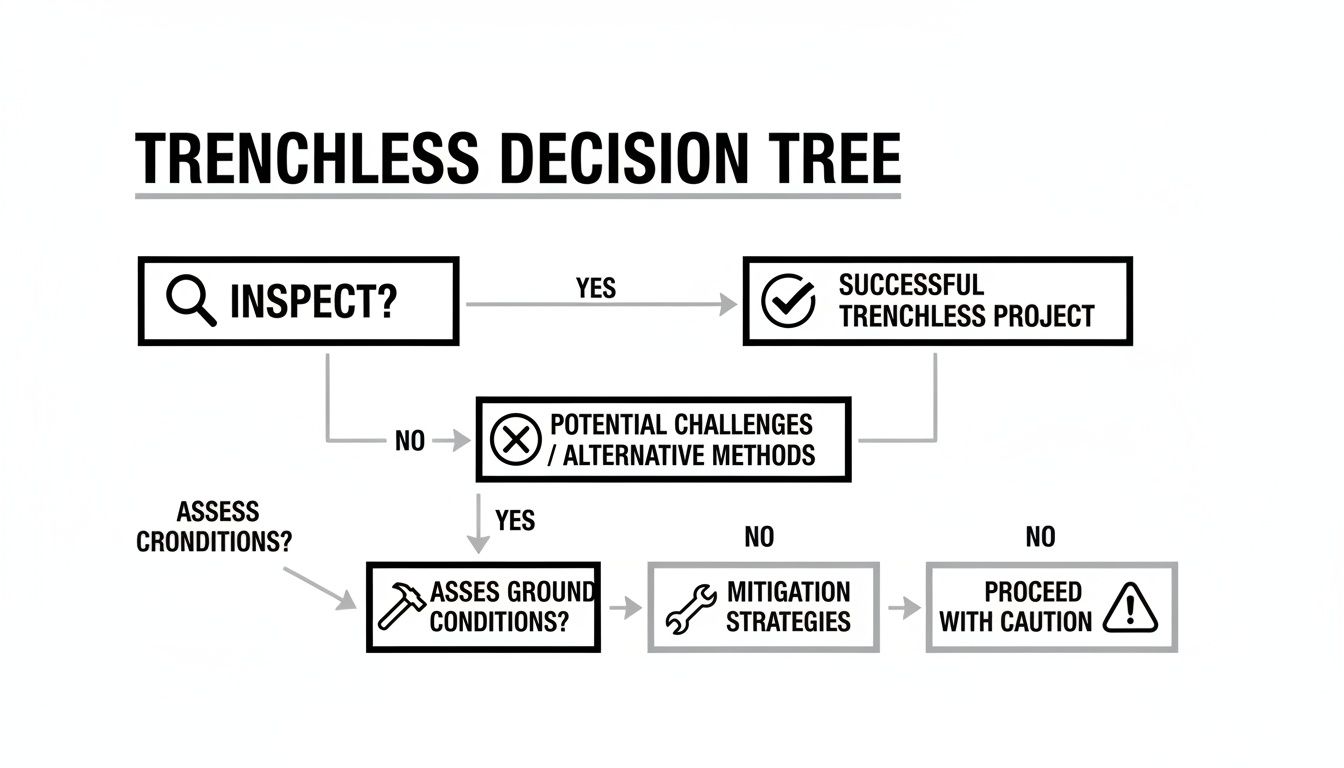
As you can see, the project's entire success hinges on that very first choice: inspect or guess. Skipping the inspection is a direct line to project failure and a wasted budget.
The Non-Negotiable Step: A Detailed Inspection
A professional video inspection isn't just a nice-to-have; it's the bedrock of a successful project. To make sure the findings are objective and universally understood, these inspections should meet the standards set by the National Association of Sewer Service Companies (NASSCO).
A NASSCO PACP (Pipeline Assessment Certification Program) certified inspection gives you a detailed "health report" for your sewer line. Certified technicians use a standardized coding system to pinpoint and grade every single defect, from hairline cracks to major structural issues. This gives everyone involved a clear, data-driven picture of what's really going on underground.
This isn't just about finding problems; it’s about confirming if the pipe is even a suitable host for a trenchless solution. In fact, analysis of over 400 million feet of sewer lines confirms that poor pre-job assessments are a top cause of failure. Without that certified inspection, it's easy to miss hidden defects that will cause a new liner to fail long before it should.
Key Takeaway: A trenchless liner can’t fix a collapsed pipe or correct a severe sag. It needs a structurally sound host to bond with. The camera inspection is what tells you whether you have a good candidate or a ticking time bomb.
What a Certified Inspection Looks For
Before you can decide if trenchless is the answer, you need to know if the pipe is strong enough to support a new liner. A certified professional will be on the lookout for a few key red flags:
- Structural Integrity: Are there major cracks, fractures, or holes that would compromise the new liner?
- Pipe Alignment: Have the pipe sections shifted apart, creating significant offsets that would trap debris and disrupt flow?
- Pipe Shape: Is the pipe still round, or has it been crushed into an oval shape ("deflected") by soil pressure?
- Grade and Slope: Does the pipe have a "belly" or sag where water and solids can pool, creating chronic blockages?
A detailed inspection checklist can help translate these findings into a clear decision.
Is Your Sewer Line Ready for Trenchless Repair?
Use this checklist to understand if a pipe is a good or poor candidate for a trenchless solution based on common inspection findings.
| Pipe Condition | Good Candidate for Trenchless? | Why It Matters |
|---|---|---|
| Minor Cracks, Root Intrusion | Yes | CIPP liners excel at sealing these issues and preventing future root growth. The host pipe is still structurally sound. |
| Severe Offsets or Separated Joints | No | A liner will just conform to the offset, creating a lip that catches waste. The joint must be repaired first. |
| Collapsed or Missing Sections | No | There is no host pipe for the liner to bond to. This requires a spot repair or traditional excavation. |
| "Belly" or Sag in the Line | No | A liner will follow the sag, creating a permanent low spot where water and solids will collect and cause blockages. |
| Significant Ovality/Deflection | Caution | The pipe may not be strong enough to support the liner installation process. Requires careful evaluation by an expert. |
By identifying these issues upfront, an honest contractor can give you the right recommendation. This diagnostic work prevents failures and ensures the repair method—whether it’s trenchless or traditional—is the right one from day one. A thorough inspection is also a critical part of our guide on how to locate underground utilities before any digging begins.
How On-Site Mistakes Can Ruin a Perfect Plan
You can have the most detailed inspection report and a bulletproof engineering plan, but a trenchless sewer job can still go sideways in a hurry. It all comes down to the crew on the ground. Think of it like a master chef's recipe—the ingredients and instructions can be perfect, but if the cook in the kitchen doesn't execute properly, you're not getting that five-star meal.
When it comes to trenchless repairs, the skill of the installation crew is just as critical as the technology itself. A few key mistakes during the installation can turn a 50-year solution into a costly, premature failure. It's why vetting your contractor and their team's experience is never a step to skip.
Let's dig into the two most common areas where on-site errors happen.
Improper Pipe Preparation
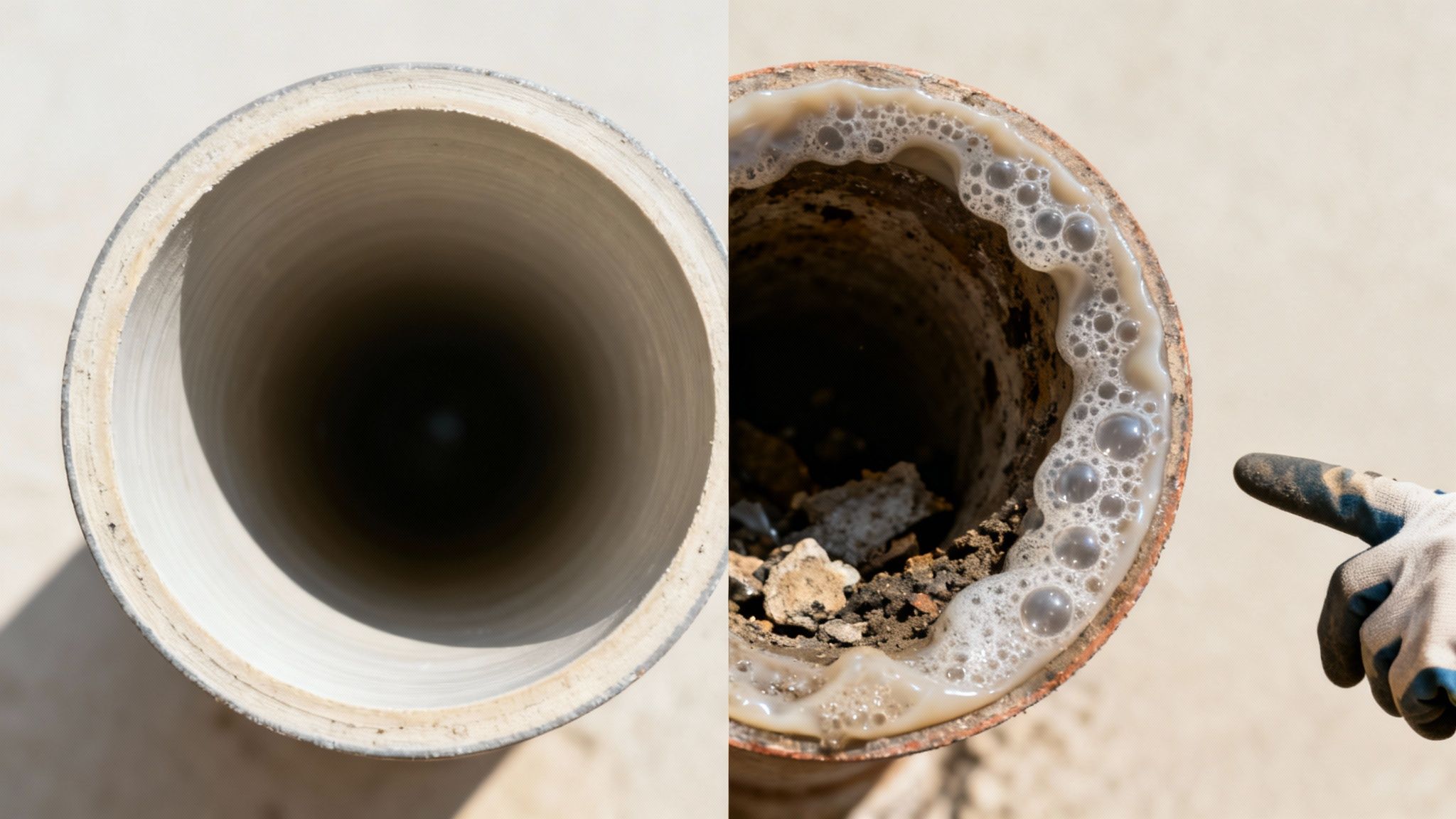
First up: the prep work. Before any liner goes in, that host pipe has to be absolutely pristine. This isn't just a simple rinse-out; it demands aggressive hydrojetting to scour away every bit of grease, scale, and built-up debris that has accumulated over decades.
If the crew gets lazy or rushes this step, any gunk left behind acts as a barrier. The new liner simply can't get a proper grip on the old pipe wall, and you end up with bubbles, weak spots, or delamination. That new pipe-within-a-pipe needs a clean, solid surface to bond to—anything less is a guarantee of future leaks and cracks.
Industry data confirms that sloppy prep is a leading cause of failure, especially in smaller-diameter Cured-In-Place Pipe (CIPP) systems. Whether it’s from inadequate hydrojetting or inconsistent epoxy coating, these human errors are entirely preventable with an experienced team that follows a strict, code-compliant process. For a deeper dive, NuFlow offers some great insights on the importance of proper CIPP installation.
Flawed Liner Curing
The second major pitfall is botching the curing process. After the resin-soaked liner is pulled or shot into place, it has to be hardened—or "cured"—to create the final, rock-solid pipe. This is a sensitive chemical reaction, and a lot can go wrong.
- Incorrect Resin Mixture: The epoxy and hardener aren’t just dumped together; they have to be mixed in precise ratios specified by the manufacturer. Get it wrong, and you'll get a liner that’s either too brittle or, worse, never fully hardens at all.
- Wrong Curing Temperature: Whether using steam, hot water, or UV light, the temperature and the exposure time are non-negotiable. Too little heat means a soft, under-cured pipe that won't last. Too much heat can scorch the liner and make it fragile.
- Weather Conditions: An experienced crew leader knows that ambient temperature and humidity play a huge role. They constantly make adjustments on the fly, because what works on a cool, dry morning won't work on a hot, humid afternoon.
These on-site variables are exactly why diligent project oversight is so important. A good plan is just the start; flawless execution is what delivers a lasting solution. You can read more about this in our guide on effective construction project management tips.
Knowing When Trenchless Is the Wrong Tool for the Job
Trenchless technology can be a game-changer for sewer repair, but even the most advanced tool fails when it's used on the wrong job. An experienced contractor knows it’s not a magic wand for every sewer problem. In fact, one of the biggest reasons why do some trenchless sewer jobs fail is because the solution was sold without a proper diagnosis in the first place.
The entire success of a trenchless job hinges on the condition of the original "host" pipe. If that pipe is too far gone, the new liner has nothing stable to bond to. Unfortunately, some contractors are quick to push a trenchless solution without a thorough pre-inspection, leading to failures on pipes that were never suitable candidates. This approach just sets project managers and property owners up for frustration and expensive re-dos down the line.
When Digging Is the Only Answer
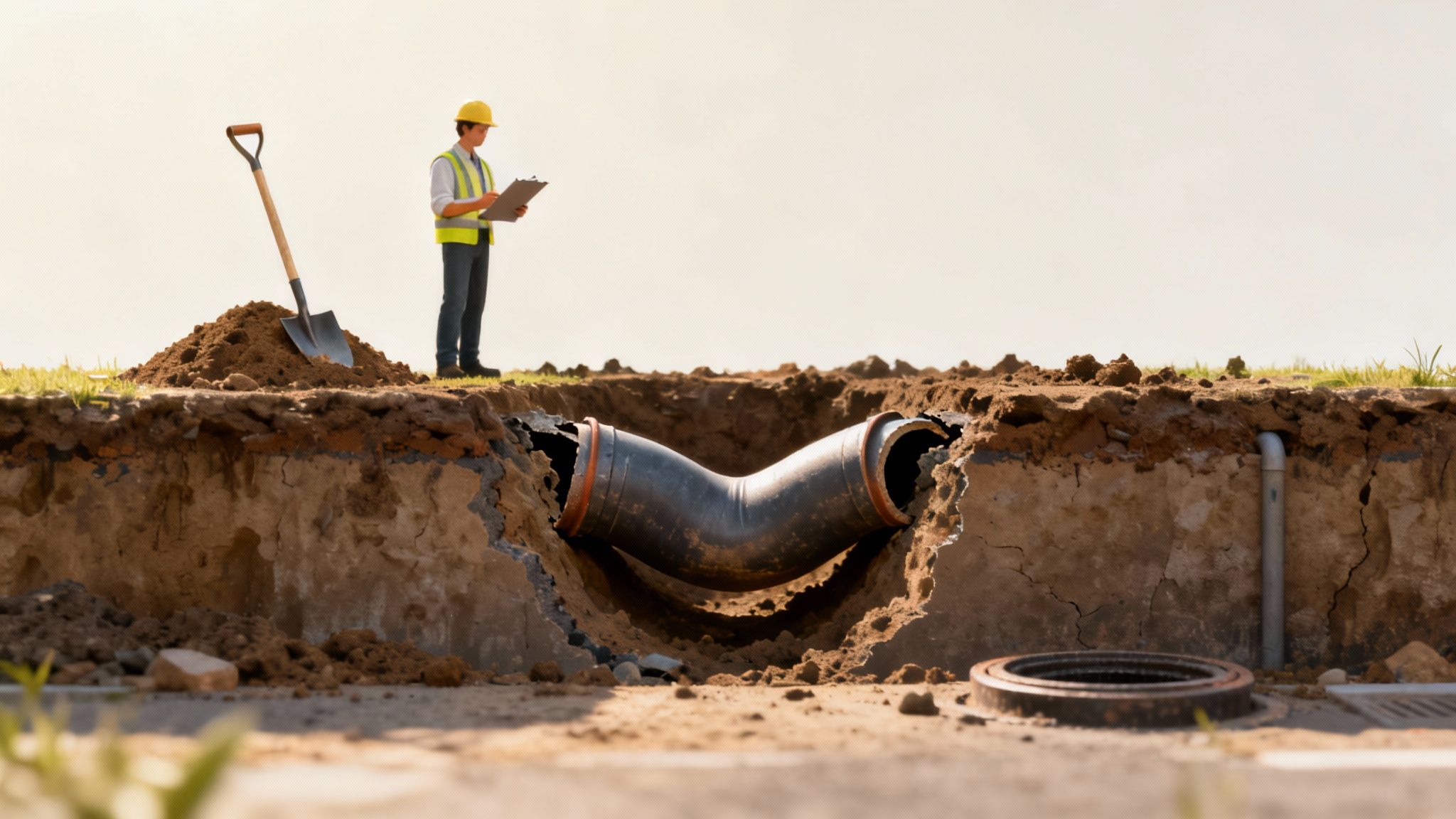
Understanding the limits of trenchless methods is critical to choosing a solution that will actually last. In some situations, traditional open-trench excavation isn't just a better option—it's the only viable one. A contractor who puts your interests first will always recommend digging when their camera inspection reveals these specific red flags.
Here are a few common scenarios where trenchless repair simply won't work:
- Completely Collapsed Pipes: If a section of pipe is crushed flat, there’s no channel left for a new liner to follow. It’s like trying to put a cast on a bone that’s been pulverized; you have to rebuild the structure from scratch, and that means you have to excavate.
- Severe Sags or "Bellies": A "belly" is a dip in the sewer line where water and waste pool, causing constant backups. A CIPP liner is flexible, so it will just conform to that incorrect slope. You’ll end up with a brand-new pipe that has the exact same drainage problem baked in. The only way to correct the grade is to dig it up and reset it properly.
- Major Offsets or Joint Separation: When pipe sections have shifted so dramatically that they're no longer aligned, a liner can't reliably bridge that gap. The liner would sag across the void, creating a structural weak spot that is almost guaranteed to fail over time.
Key Insight: A contractor who only offers trenchless solutions may be tempted to force that method onto a project where it doesn't fit. A true sewer expert offers both trenchless and traditional excavation, so they can recommend the right fix for the problem, not just the service they want to sell.
Choosing the Right Solution Over the Easy One
Our goal is always a permanent fix, not just the most convenient one. Being upfront about when trenchless technology isn't the answer is just as important as explaining when it is. It’s proof that our priority is the long-term integrity of your infrastructure.
That's why we start every single project with a NASSCO-certified video inspection. This gives us—and you—a complete and honest picture of your sewer line's condition.
This diagnostic-first approach ensures we can confidently recommend the best path forward, whether that’s a state-of-the-art trenchless repair or a carefully planned excavation. To get a better handle on what a full replacement involves, take a look at our guide on sewer line replacement costs.
For trusted sewer replacement in Santa Cruz, Monterey, or San Benito County, contact us to assess your line and walk through the best options for a permanent solution.
Choosing a Contractor Who Gets It Right the First Time
You've seen what can go wrong. Now, how do you find a contractor who makes sure everything goes right? The trick is to stop looking for a "trenchless company" and start searching for a true "sewer solutions expert." The difference is night and day.
A real specialist diagnoses the problem before they even think about prescribing a solution. This isn't about guesswork; it's about a methodical process that guarantees a successful, long-lasting repair. The most reliable contractors out there know their reputation is built on picking the right tool for the job, not just the one they happen to own or prefer to sell. An expert will take the time to educate you; a salesperson just hands you a quote.
Vetting Your Contractor: An Essential Checklist
To dodge the common pitfalls that send trenchless jobs sideways, you need to find a partner with a proven process. You're not just looking for a company with the right equipment, but one with the right philosophy—one that’s built on accuracy, transparency, and doing the job correctly the first time.
When you're vetting potential contractors, focus on these non-negotiables:
NASSCO Certification: This is the gold standard, and frankly, it's not optional. Insist on contractors who perform video inspections according to NASSCO standards. This is your only guarantee of getting an objective, detailed report on your pipe's true condition. It's the data that tells you when trenchless is a great fit, and just as importantly, when it's not.
A Full Toolbox: Do they offer both trenchless and traditional open-trench excavation? A company that's proficient in both is in a much better position to give you an unbiased recommendation based on your pipe's actual needs, not on the limitations of their fleet.
Clear Explanations: Can they sit down with you, walk you through the inspection footage, and clearly explain why they’re recommending one method over another? A good partner should be able to point to specific issues on the screen—sags, collapses, offsets—and connect them directly to their proposed solution.
A true sewer expert doesn't just sell you a service. They provide a comprehensive diagnosis and a clear, logical plan. Their goal is to solve your problem for good, not just put a bandage on it.
At Coastal Pipeline, we’ve built our entire process on this diagnostic-first approach. Every project kicks off with a NASSCO-certified inspection to give you the complete, unvarnished picture. Because we are experts in both trenchless and traditional methods, you can trust that our recommendation is the right one for the job, not just the most convenient one for us.
To learn more about selecting the best partners for your projects, check out our guide on how to hire subcontractors.
How We Guarantee Your Central Coast Sewer Project Succeeds
When a trenchless sewer job goes wrong, it's rarely a surprise. The root causes are almost always preventable: a rushed site assessment, a lack of deep-seated experience, or simply choosing the wrong tool for the job. Success isn't about luck; it's the direct outcome of a meticulous, diagnosis-first process.
For projects across Santa Cruz, Monterey, and San Benito Counties, our promise at Coastal Pipeline is built on transparency and genuine expertise. We know your infrastructure investment has to be a permanent solution, not a temporary patch. Our entire focus is on getting it right the first time, removing the guesswork that leads to those expensive, disruptive failures.
Our Diagnostic-First Promise
We kick off every single project with a comprehensive, NASSCO-certified video inspection. This isn't just a quick peek. It's an exhaustive assessment that gives us an objective, undeniable picture of what's happening inside your pipes. This data-driven approach means we know exactly what we’re up against before we even think about recommending a solution.
Because our crews are masters of both trenchless methods and traditional open-trench excavation, our recommendations are completely unbiased. We’re not here to sell you on one specific service; we're here to deliver the right, permanent fix for your infrastructure.
By pairing certified inspections with broad expertise across multiple repair methods, we ensure the solution truly fits the problem—not the other way around. This is how we guarantee a successful, long-lasting project.
If you’re looking for a reliable partner for your next sewer project on the Central Coast, reach out. We’ll deliver a thorough assessment and a clear, actionable plan to protect your investment for decades to come.
Frequently Asked Questions About Trenchless Repair
If you’re managing a project, you need to know the real-world limits and lifespan of trenchless sewer repair. Here are straightforward answers to the questions we hear most often from developers, engineers, and property owners.
How Long Does a Properly Installed Trenchless Liner Last?
A well-installed Cured-In-Place Pipe (CIPP) liner is engineered to last for 50 years. This isn't just a quick fix; it's a long-term solution.
But that impressive lifespan depends entirely on doing the prep work right—a thorough camera inspection, meticulous pipe cleaning, and using the correct resin and liner for the job. When the process is handled correctly, you get a brand-new, jointless pipe inside the old one that’s built to fend off roots and corrosion for decades. The market reflects this reliability, with projections showing it will grow to an $8.4 billion industry by 2030.
Can Pipe Bursting Fix a Sewer Line with a Sag?
No, it can't. This is a common and costly misconception.
Neither pipe bursting nor CIPP lining can correct grade problems like a "belly" or a sag in the line. Both methods are designed to follow the existing pipe's path, flaws and all. If the original pipe has a dip that collects waste and causes blockages, the new trenchless pipe will have that exact same dip.
Severe grading issues almost always require traditional excavation to dig up the problematic section and reset the pipe with the proper slope. This is one of the most common reasons why some trenchless sewer jobs fail—the technology was simply misapplied to a problem it can't solve.
The Bottom Line: A liner is only as good as the pipe it's in. It cannot correct fundamental structural or grading problems, which is why a detailed pre-inspection is non-negotiable.
What Does NASSCO PACP Certified Mean for My Project?
Think of it as the gold standard for pipe assessment. NASSCO's Pipeline Assessment Certification Program (PACP) provides a universal language for evaluating sewer pipe conditions.
When a technician is PACP certified, it means they are trained to use a standardized coding system to identify, classify, and rate every defect with precision. This gives you a reliable and objective report on your pipe's health, which is the critical first step in choosing the right repair method. Hiring contractors who adhere to these standards is your best insurance against a failed project.
You can learn more about how this impacts project success in our guide to trenchless sewer line repair cost and what to look for in a quote.
At Coastal Pipeline Inc., we believe in recommending the right solution, not just the easy one. We perform NASSCO-certified inspections and offer both trenchless and open-trench services. For a trusted partner in Santa Cruz, Monterey, or San Benito County, contact us to get an honest assessment of your sewer line. Find out more at https://coastalpipelineinc.com.