
When you think about the infrastructure that keeps your community running, you probably picture roads, power lines, and maybe sewer pipes. But there’s another critical system at play, one that works tirelessly to handle rainwater and snowmelt: stormwater management. These systems are engineered to prevent flooding, stop water pollution, and shield our urban areas from the damage caused by heavy storms.
Why Modern Storm Water Management Matters
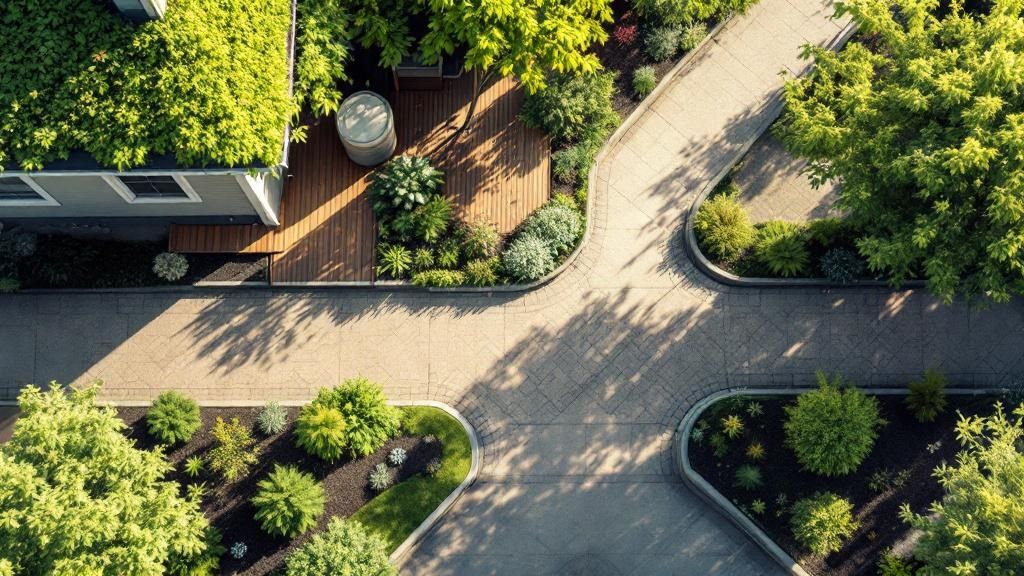
Think of your city streets as a giant funnel. Every time it rains, a massive amount of water needs to go somewhere. In the past, the solution was simple: build drains and pipes to rush that water away as quickly as possible. But as our communities have expanded, so has the amount of concrete, asphalt, and rooftops.
These impervious surfaces act like a giant shield, stopping rain from soaking into the ground the way it naturally would. This forces a huge volume of water to run off all at once, creating a situation that can easily overwhelm older, outdated drainage infrastructure. This runoff is behind two major problems that modern stormwater systems are built to solve.
Managing Water Quantity to Prevent Flooding
The first, most obvious goal is controlling floods. When a storm dumps a massive amount of water onto a city, traditional drain pipes can quickly hit their limit. The result is localized or even widespread flooding that damages property, gridlocks traffic, and poses a real threat to public safety.
Modern systems tackle this surge of water with a smarter approach. Instead of just trying to get rid of the water, they’re designed to slow it down, hold it temporarily, and release it back into the environment at a manageable rate. This prevents the peak flow that causes overwhelmed systems to back up and fail.
Improving Water Quality to Protect Ecosystems
The second job, which is just as vital, is protecting our environment. As that same stormwater flows over streets, parking lots, and industrial sites, it picks up a nasty mix of contaminants along the way.
Runoff can transport pollutants—including sediments, heavy metals, pesticides, and bacteria—directly from urban landscapes into local rivers, creeks, and coastal areas with little to no treatment. This makes water unsafe and harms aquatic ecosystems.
In fact, polluted runoff is one of the biggest sources of water quality problems in urbanized areas. A well-designed stormwater management system acts as our first line of defense. It includes features that are specifically designed to filter, treat, and clean the water before it ever reaches sensitive natural habitats.
This dual-purpose approach represents a huge shift in how we think about drainage. We’ve moved from simply getting water off the streets to an integrated strategy that builds healthier, more resilient communities. It’s not just about preventing floods anymore; it’s about ensuring our cities can handle the challenges of both water quantity and quality. To see what these systems look like up close, you can learn more about professional storm drain systems for Monterey and Santa Cruz County.
The Forces Driving Stormwater Innovation

The push for better storm water management systems isn’t happening in a vacuum. It’s a direct response to a perfect storm of environmental and developmental pressures that are fundamentally changing our relationship with rainfall. Two powerful forces—rapid urbanization and a shifting climate—are exposing the critical vulnerabilities of outdated drainage infrastructure.
This isn’t some distant problem; it’s a local one. You see it every time a new shopping center goes up or an old field gets paved over. These actions create huge stretches of impervious surfaces like roads, parking lots, and rooftops that act like a waterproof shell over the landscape.
When rain falls on a natural meadow, it soaks into the earth, nourishing plants and slowly replenishing groundwater. But when that same rain hits asphalt, it has nowhere to go but sideways, creating a massive volume of runoff that traditional systems were simply never built to handle.
The Urbanization Effect
Our world is becoming more urbanized by the day. This constant expansion is a primary driver of the stormwater challenge, with the global urban population expected to hit 5 billion by 2030. This explosive growth dramatically increases impervious surfaces, which means less natural infiltration and a huge surge in runoff that leads to flooding and pollution.
This new reality makes a proactive approach essential. Simply paving over land and sticking in a few drains is no longer a viable strategy for sustainable development.
The core issue is the disruption of the natural water cycle. Urban environments concentrate runoff, transforming a gentle rain into a powerful, erosive force that carries pollutants directly into our waterways.
This is where specialized construction techniques become non-negotiable. For instance, well-designed stormwater trenching solutions in Monterey are engineered not just to move water, but to manage it within the tight constraints of a developed landscape, stopping erosion and localized flooding before they can start.
The Climate Change Amplifier
Making the urbanization problem even worse is the undeniable reality of a changing climate. What used to be called a "100-year storm" is becoming a much more frequent event. Weather patterns are shifting, bringing more intense and unpredictable rainfall that pushes our infrastructure past its breaking point.
This new climate reality means that systems designed using historical weather data are now dangerously obsolete. A storm drain that worked perfectly 30 years ago might now be completely overwhelmed by a single downpour, leading to costly property damage and serious safety hazards.
This double-whammy of expanding cities and intensifying weather has created a clear and urgent need for innovation.
- Stricter Regulations: In response, federal, state, and local governments are tightening the rules. The National Pollutant Discharge Elimination System (NPDES) now requires municipalities to actively manage and treat stormwater, holding them accountable for the quality of water leaving their area.
- Market Growth: The global market for stormwater management is booming as cities and developers invest in compliant, resilient infrastructure. This demand is fueling research and development into more effective and efficient solutions.
- Sustainability Focus: There’s a growing global understanding that managing water is key to building sustainable communities. This has elevated stormwater management from a simple utility issue to a cornerstone of green building and responsible urban planning.
These driving forces have created powerful momentum. The industry is finally moving away from the old "convey and dispose" model and toward integrated systems that capture, treat, and even reuse stormwater as the valuable resource it is.
Comparing Green And Gray Infrastructure Solutions
When it comes to managing stormwater, planners and engineers essentially have two different toolkits to choose from: gray infrastructure and green infrastructure. While both aim to solve the same problem of excess runoff, they get there using completely different philosophies. Understanding the ins and outs of each approach is crucial for building resilient, modern communities that can handle whatever Mother Nature throws at them.
The Traditional Approach: Gray Infrastructure
Think of gray infrastructure as the classic, engineered solution. This is the world of concrete pipes, steel storm drains, culverts, and massive detention basins—a system built to control and move water away from developed areas as fast as possible.
The main job of gray infrastructure is conveyance. It’s designed to collect runoff from hard surfaces like roads and rooftops and channel it directly into a drainage network, which often empties into a nearby river or lake. This method is predictable, reliable, and has been the industry standard for decades because it can handle huge volumes of water within a controlled system.
For many projects, especially in dense urban areas where every square foot counts, gray infrastructure is still the most practical choice. Its biggest advantages are its massive capacity and dependable performance. Engineered systems like large-diameter pipes or underground vaults provide a critical level of flood protection. In fact, you can learn more about the key benefits of a drainage trench to see how these components form the backbone of many traditional systems.
But this efficiency comes with a few downsides. Gray systems do very little to improve water quality, often just flushing pollutants from streets straight into our natural waterways. They also short-circuit the natural water cycle by preventing rain from soaking into the ground and recharging local aquifers.
A Nature-Based Alternative: Green Infrastructure
In contrast, green infrastructure takes a more holistic approach. Instead of just funneling water away, it uses natural processes and nature-inspired designs to manage stormwater right where it falls. The goal is to mimic a natural landscape by allowing rain to be absorbed, filtered, and released slowly over time.
Picture a parking lot made of permeable pavement. Instead of acting like a waterproof sheet, it works like a giant sponge. Rainwater soaks through the surface into a gravel layer below, where it's held before seeping into the soil. This single solution reduces runoff, filters pollutants, and recharges groundwater—all at once.
This family of solutions is incredibly diverse and can be adapted to almost any setting. Common examples include:
- Bioswales and Rain Gardens: These are basically landscaped ditches and shallow depressions filled with plants and special soil. They slow down runoff, allowing water to pool and soak into the ground while the vegetation filters out contaminants.
- Green Roofs: A layer of living plants on a rooftop can absorb a significant amount of rainfall, drastically reducing the volume of water that ever makes it to the storm drain below.
- Permeable Surfaces: Beyond just pavement, materials like pervious concrete and interlocking pavers can turn sidewalks, patios, and plazas into functional infiltration systems.
This graphic gives a great visual breakdown of how different green infrastructure practices stack up in terms of runoff reduction and cost.
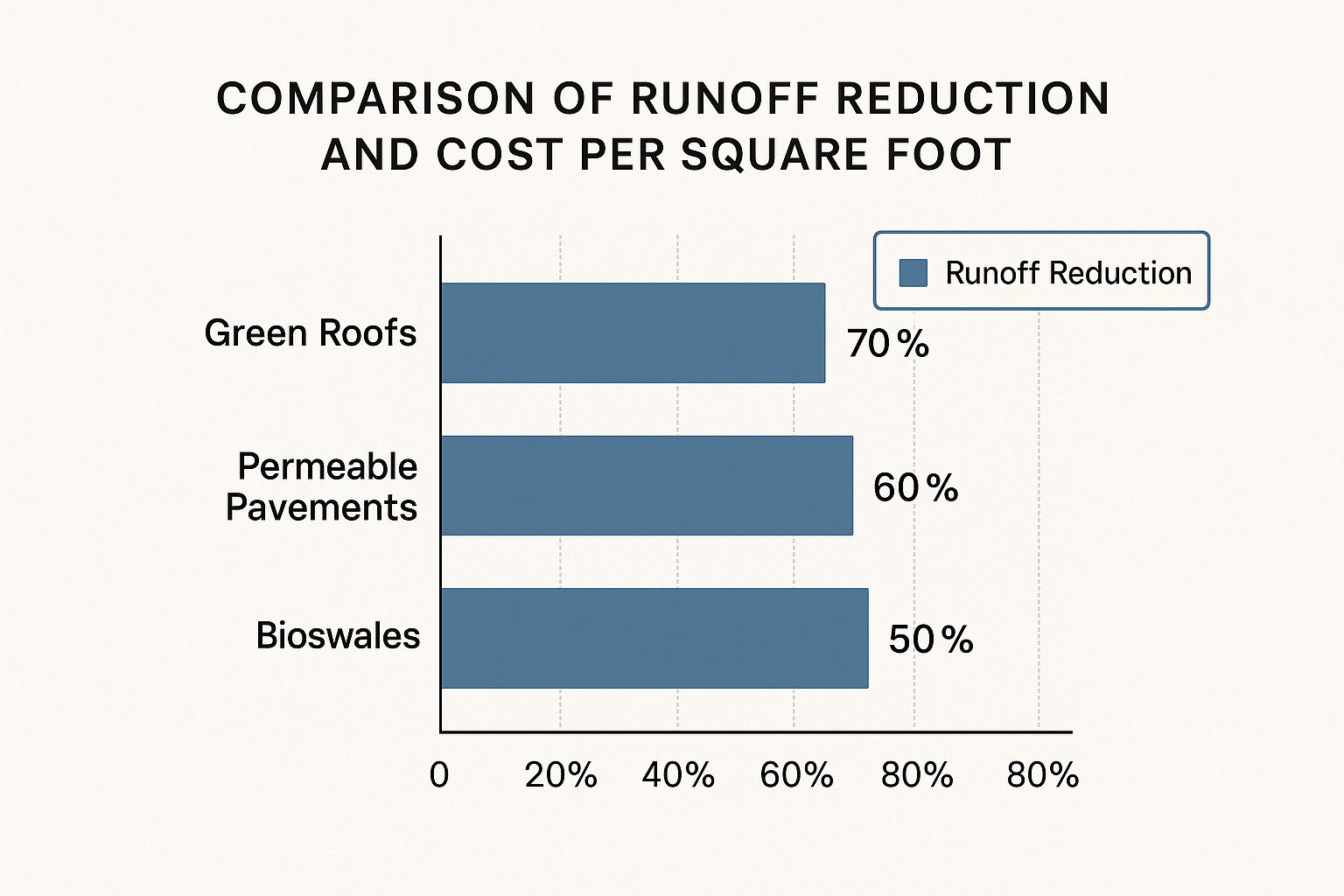
As you can see, while a green roof offers the highest potential for reducing runoff, a bioswale might be a more cost-effective choice for treating a larger area.
To make the comparison clearer, here’s a table that breaks down the key differences between gray and green infrastructure.
Comparison of Gray vs. Green Stormwater Infrastructure
| System Type | Primary Function | Key Examples | Environmental Co-Benefits | Typical Cost & Maintenance |
|---|---|---|---|---|
| Gray Infrastructure | Conveyance and detention. Move water away quickly. | Pipes, storm drains, concrete channels, culverts. | Limited. Primarily focused on flood control. | High initial capital cost. Maintenance involves inspection and repair of physical structures. |
| Green Infrastructure | Infiltration, filtration, and storage. Mimic natural hydrology. | Bioswales, rain gardens, permeable pavement, green roofs. | High. Improves water quality, recharges groundwater, creates habitat, reduces heat island effect. | Can have lower initial costs. Maintenance involves landscaping, weeding, and periodic cleaning. |
This table highlights how each approach offers a different set of trade-offs. Gray infrastructure excels at high-volume control, while green infrastructure delivers a wider range of environmental and community benefits.
Finding The Right Balance
So, which one is better? The truth is, the debate between green and gray isn't an either/or question anymore. The most effective and resilient stormwater management systems today often use a hybrid approach that gets the best of both worlds.
A new commercial development, for instance, might use permeable parking lots and bioswales to manage day-to-day rainfall. This reduces the load on the city’s drainage system and improves local water quality. At the same time, it would still connect to the traditional storm drain network—the gray infrastructure—to provide a reliable failsafe during a rare, major storm. This integrated design creates a system that’s efficient, eco-friendly, and built to last.
Critical Factors in System Design and Installation
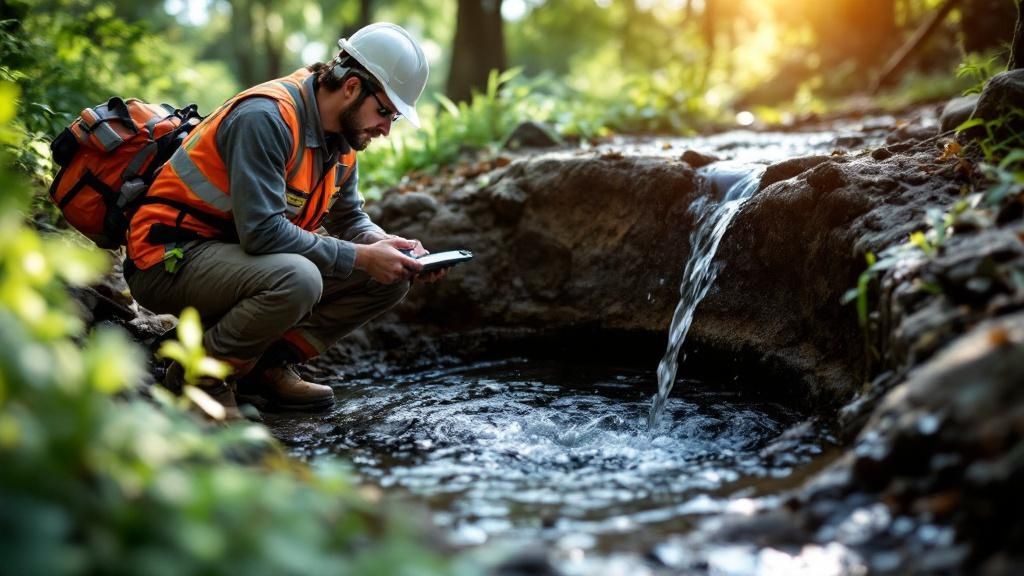
An effective storm water management system is never a one-size-fits-all solution. It’s a custom-engineered system built to handle the unique challenges of a specific location. Success really comes down to a thoughtful design and a precise installation that accounts for everything from the soil underfoot to the local regulations.
Think of it like building a custom home. You wouldn’t just start digging without a detailed blueprint that respects the property’s terrain and the homeowner’s needs. In the same way, designing a stormwater system kicks off with a thorough site analysis to get the critical data that will shape every decision down the line.
Conducting a Comprehensive Site Analysis
The first step is always to read the landscape. A detailed site assessment uncovers the natural and man-made features that will dictate how water behaves on the property. This foundational work prevents costly mistakes and ensures the final system is both effective and resilient.
Key factors we evaluate include:
- Soil Composition: Is the ground sandy and fast-draining, or is it packed with dense clay that water can’t penetrate? The soil type directly impacts whether green infrastructure like bioswales is even an option.
- Topography and Slope: The natural slope of the land determines where water will go and how fast it will get there. Proper grading is absolutely essential to guide runoff toward collection points and prevent erosion. Understanding the importance of erosion control and grading is fundamental to a stable site.
- Regional Rainfall Patterns: We use historical weather data to understand a region's typical rainfall intensity and duration. A system in Southern California, known for short, intense downpours, will be engineered very differently than one in an area with frequent, gentle rain.
- Existing Infrastructure: Knowing the location of existing sewer lines, water mains, and other underground utilities is critical. This helps us avoid conflicts during excavation and ensure the new system ties in correctly.
Sizing the System Correctly
Once we understand the site conditions, the next step is a technical one: calculating the expected stormwater load. This is where engineering precision is non-negotiable. Get the numbers wrong, and you end up with a system that’s either oversized and wasteful or undersized and bound to fail.
The core goal is to design a system that can handle the peak flow rate—the maximum amount of water expected during a design storm—without being overwhelmed.
This involves calculating the total runoff based on the area of impervious surfaces (like pavement and roofs) and the runoff properties of different materials. These calculations ensure that pipes, detention ponds, and infiltration trenches are all sized correctly to manage a storm's full force. An undersized system can lead to flooding and property damage, turning a routine storm into a costly disaster.
Navigating Regulatory and Compliance Hurdles
Finally, every storm water management system must be designed and installed in full compliance with local, state, and federal regulations. These rules aren't just red tape; they are there to protect public health, safety, and the environment.
Key regulatory considerations include:
- NPDES Permits: The National Pollutant Discharge Elimination System (NPDES) sets limits on what can be discharged into waterways. The system design must include features to meet these water quality standards.
- Local Ordinances: Cities and counties often have specific rules for stormwater detention or retention, dictating how much runoff must be managed on-site.
- Low Impact Development (LID) Mandates: Many areas now encourage or require Low Impact Development (LID) practices, pushing designers to use green infrastructure that mimics natural water cycles.
By carefully blending site analysis, precise hydraulic calculations, and regulatory know-how, a project manager can develop a truly robust design. This ensures the installed system is not only compliant but also perfectly suited to protect the property and the surrounding environment for years to come.
Essential Best Practices for System Maintenance
A modern stormwater management system is a big investment in your property’s future, but its real value comes from consistent, proactive upkeep. Without a clear maintenance plan, even the most advanced system will eventually clog, fail, and become a liability.
Think of it like taking care of your car. You wouldn’t just drive it for 50,000 miles without an oil change and expect the engine to keep humming. Stormwater systems, both the concrete pipes and the green gardens, need the same kind of regular attention to stay healthy.
Creating a Proactive Maintenance Schedule
The best way to protect your investment is with a documented maintenance schedule. This isn't just a checklist; it's a roadmap that outlines what to inspect, how often, and what to look for. Catching small issues early is always cheaper than fixing big, expensive problems later.
A smart maintenance plan for storm water management systems breaks down tasks by the type of infrastructure you have:
- Gray Infrastructure (Weekly to Monthly): Check your catch basins and storm drain inlets for trash, leaves, and other junk. This is especially important right before and after a big storm, as debris can cause instant blockages.
- Green Infrastructure (Monthly to Seasonally): Walk through your rain gardens and bioswales. You’re looking for invasive weeds, signs of erosion, or sediment buildup. The health of the plants is key, so make sure they aren’t overgrown or struggling.
- Permeable Surfaces (Annually): It's a good idea to test how well your permeable pavements are absorbing water. Over time, the tiny pores get clogged with fine sediment, which stops them from working correctly.
A lot of people forget what they can't see. The most common point of failure is deep inside the underground pipes, where sediment and debris build up over time, choke off water flow, and cause nasty backups.
Key Maintenance Activities and What to Look For
Doing regular inspections is half the battle. The other half is knowing what to do about what you find. Your maintenance efforts should be targeted to address the most common weak spots in both your gray and green infrastructure.
For gray infrastructure, the enemy is always blockage. Sediment is public enemy number one for pipes and culverts. As it settles and hardens, it can shrink a pipe’s diameter by over 50%, which is a recipe for flooding. Regular hydro-jetting is the best way to blast these obstructions out. For really tough clogs, it’s smart to bring in experts who handle professional drain cleaning services in Monterey County to get your system flowing freely again without causing damage.
For green infrastructure, the focus is more on keeping the living parts of the system healthy:
- Vegetation Management: This is more than just running a lawnmower over it. You need to pull out invasive weeds that steal resources from the native plants doing the filtration work. You also have to manage plant density so water can still move through the area.
- Sediment and Debris Removal: Just like in pipes, a layer of silt can smother the special filtration soil in a bioswale or clog up permeable pavers. Skimming off this top layer of gunk regularly is critical.
- Mulch Maintenance: Mulch is great for holding moisture in rain gardens, but it can also float away in a heavy downpour and clog your outlets. Check it annually and top it off as needed.
By creating and funding a maintenance plan from day one, property owners can make sure their stormwater system stays an asset that protects their property, not a problem waiting to happen.
Common Questions About Stormwater Management
As more people get serious about managing urban water runoff, a lot of practical questions pop up. Whether you're a homeowner or a large-scale developer, understanding the nuts and bolts of storm water management systems helps clarify their real-world purpose, cost, and benefits. Here are some of the most common things people ask.
What Is the Difference Between Stormwater and Wastewater?
The simplest way to think about it is this: stormwater is what falls from the sky, while wastewater is what goes down a drain inside a building.
Stormwater is just rain or snowmelt that hits hard surfaces like roofs, roads, and parking lots. From there, it flows straight into drainage systems that often empty directly into our local rivers and lakes with little to no treatment.
Wastewater, on the other hand, is the used water from your toilets, sinks, and showers. It’s sent through an entirely separate sanitary sewer system to a treatment plant, where it goes through a heavy-duty cleaning process before being released. A huge part of stormwater management is cleaning that runoff before it pollutes our natural waterways, since it completely bypasses those treatment plants.
Can a Small Property Benefit from Stormwater Management?
Absolutely. In fact, small-scale projects on individual properties can add up to a massive collective impact. You don’t need a huge, complicated system to make a real difference.
Even simple installations can cut down on localized flooding and take a lot of pressure off the city's storm sewers. A few great options include:
- A rain barrel tucked under a downspout to catch roof runoff for watering your garden.
- A small rain garden designed to capture and filter stormwater from a patio or driveway.
- Permeable pavers for a walkway, which let rain soak directly into the ground instead of running off.
These types of green infrastructure projects don't just manage water—they can also make a property look great and create a welcome habitat for bees and butterflies.
This approach is guided by a philosophy called Low Impact Development (LID). Instead of just piping water away as fast as possible, LID focuses on managing it right where it falls, using techniques that mimic nature's own water cycle.
How Much Does a Storm Water Management System Cost?
There's no single price tag—the cost of a storm water management system can vary wildly based on its size, type, and complexity. For a homeowner, a DIY rain garden might only cost a few hundred dollars for plants and materials.
On the other end of the spectrum, a large underground concrete detention vault for a new shopping center can easily run into the hundreds of thousands of dollars. Traditional "gray" infrastructure like pipes and vaults typically has high upfront material and installation costs. Green infrastructure solutions like bioswales can sometimes be cheaper to install and often deliver more long-term value through environmental benefits, though they do require ongoing maintenance.
When your project requires a team that understands underground utilities from the ground down, you need a partner with proven expertise. Coastal Pipeline Inc. delivers high-performance infrastructure solutions, including storm drain systems, for residential, commercial, and municipal clients across California’s Central Coast. To discuss your project needs, visit https://coastalpipelineinc.com.