Absolutely. You can definitely lay asphalt on top of concrete. In the paving world, we call this an “asphalt overlay,” and it’s a fantastic, budget-friendly way to get a fresh new surface without the headache and expense of a full concrete demolition.
When an Asphalt Overlay on Concrete Makes Sense
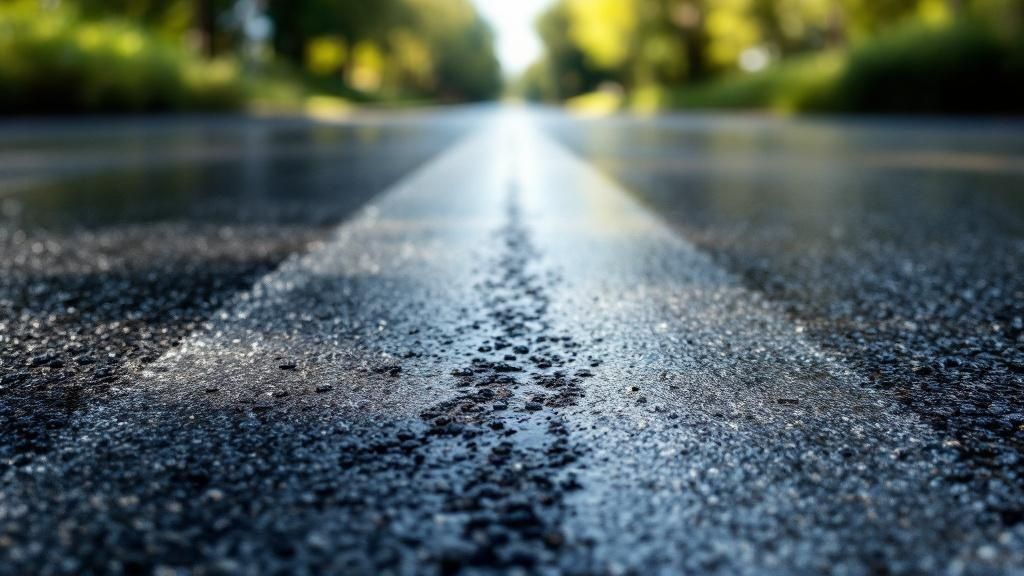
Choosing to pave over an existing concrete slab isn’t just about covering up flaws—it’s a strategic decision that depends entirely on the health of the current surface. An overlay works best when your concrete base is structurally solid but looks worn out.
Think of a driveway with a lot of surface-level cracks, discoloration, or minor flaking. If the slab itself isn’t heaving, sinking, or crumbling apart, you’ve got a prime candidate. The concrete provides a stable, strong foundation for the new asphalt.
When the conditions are right, this approach brings some serious advantages:
- Cost Savings: Tearing out old concrete is expensive. By avoiding demolition and disposal, you can cut project costs by up to 50%. That’s a huge saving on labor, machinery, and hauling fees.
- Time Efficiency: An overlay is much faster than a full replacement. A professional crew can often get the job done in a fraction of the time, meaning less disruption for your home or business.
- Better Look and Feel: A new layer of blacktop gives you a smooth, uniform surface that looks great. It also provides better traction and is quieter to drive on than old, worn concrete.
Is Your Concrete a Good Candidate for an Overlay?
The success of an asphalt overlay lives and dies by the integrity of the concrete underneath. If that concrete base is failing, the problems will just transfer right through the new asphalt. We call this “reflective cracking,” and it’s an expensive mistake to make.
Your concrete is likely a good fit if it only has minor cosmetic issues and is still a solid, even surface without significant movement. For bigger jobs, like parking lots or private roads, a professional assessment is crucial. You can see how the experts handle these evaluations by exploring services for commercial asphalt paving in Monterey.
From our experience, an asphalt overlay isn’t just a cosmetic fix; it’s a structural upgrade. The new asphalt layer improves smoothness, cuts down on tire noise, and waterproofs the surface, which protects the concrete base from further deterioration.
This method is so effective it’s a standard practice for road maintenance all over the world. In fact, road construction consumes about 70% of the bitumen produced globally, showing just how dominant asphalt is for surfacing. When concrete roads need work, an overlay is almost always the go-to solution over a disruptive and costly full replacement.
However, if your concrete has deep, wide cracks (anything wider than a quarter-inch), is heaving up, or has settled unevenly, an overlay is a bad idea. Covering up these major structural problems will only lead to failure and more expensive repairs later on.
Overlay vs. Replacement Decision Matrix
Deciding between an overlay and a full replacement can be tough. This table breaks down the key factors to help you weigh the pros and cons based on your specific situation.
| Factor | Asphalt Overlay on Concrete | Full Concrete Replacement |
|---|---|---|
| Best For | Structurally sound concrete with surface-level flaws (minor cracks, spalling, discoloration). | Concrete with major structural issues (heaving, sinking, deep cracks, crumbling). |
| Cost | Lower upfront cost (up to 50% less). Saves on demolition and disposal fees. | High upfront cost. Includes demolition, removal, and new base preparation. |
| Project Time | Fast. Often completed in 1-3 days, minimizing disruption. | Slow. Can take a week or more, including curing time for new concrete. |
| Durability | Good (5-15 years), but its lifespan is tied to the health of the underlying concrete base. | Excellent (20-40+ years). A brand new, long-term solution. |
| Key Risk | Reflective cracking. If the base concrete moves or cracks, the asphalt on top will too. | Higher initial investment. Potential for hidden issues (e.g., poor sub-base) that increase costs. |
Ultimately, the right choice depends on your budget, timeline, and the true condition of your existing concrete. An overlay is a fantastic solution for the right situation, but a full replacement is the only responsible choice for a failing foundation.
How to Properly Assess and Prepare Your Concrete
The long-term success of your new asphalt surface is pretty much decided before the first scoop of hot mix even shows up. When you’re putting asphalt on top of concrete, the job is 90% preparation and only 10% laying it down. If you rush this first part, you’re just setting yourself up for failure and turning a smart, cost-effective fix into a costly do-over.
Think of yourself as a detective. You need to get out there and walk every square foot of that concrete, figuring out what’s just a cosmetic issue and what’s a deep, structural problem that will wreck your new asphalt.
This is exactly what a pro inspection looks like—methodical, thorough, and focused on diagnosing the real health of the concrete before you even think about an overlay.
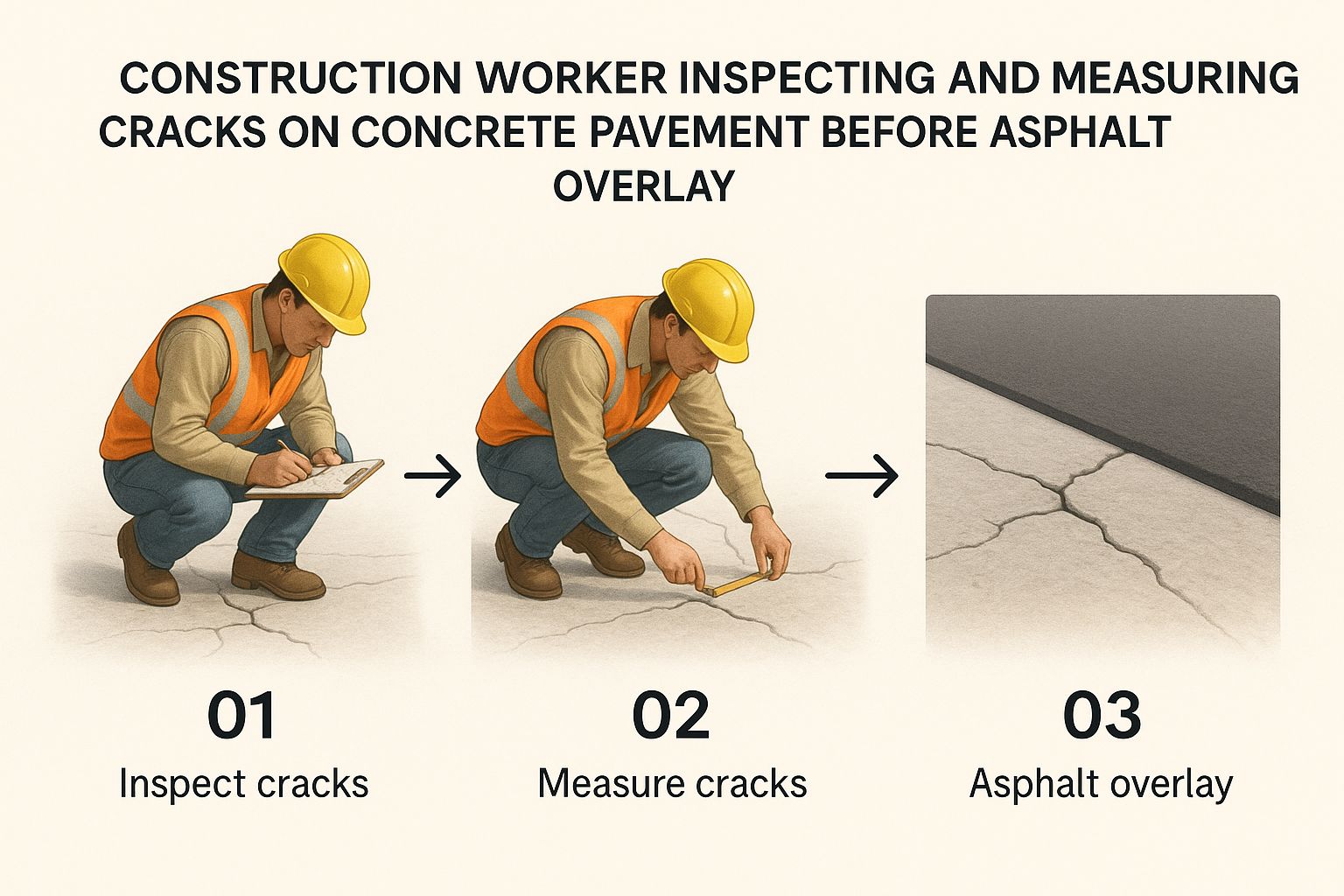
As you can see, it’s about more than just a quick glance. It involves measuring cracks, checking for low spots, and making sure no critical flaw gets missed.
Identifying Deal-Breaker Damage
Not all concrete damage is the same. You have to learn to spot the red flags that mean an asphalt overlay is a bad idea. If you see any of these, stop and reconsider.
- Significant Heaving or Sinking: Are parts of the slab pushed up or have they dropped down? This is a huge sign that the ground underneath is unstable. Paving over this is pointless; the asphalt will just crack and sink in the exact same spots.
- Severe Spalling or Crumbling: This is when the concrete surface is flaking and falling apart. It tells you the concrete itself is weak and won’t provide a solid base for the new asphalt to grab onto.
- Deep, Wide Cracks: Hairline cracks are one thing, but if you’ve got cracks wider than a quarter-inch, especially ones that go all the way through the slab, you’re looking at major movement. Those cracks will show up in your new asphalt almost immediately. We call this reflective cracking.
If your concrete has these kinds of problems, the only real solution is a full tear-out and replacement. Just covering it up is throwing good money after bad.
Pro Tip: Pay extra attention to the concrete expansion joints. They were put there to let the slab move. If you don’t handle them correctly, they will be the #1 cause of reflective cracking in your asphalt overlay. You’ll often need special fabric grids or a thicker layer of asphalt to bridge these joints and keep them from ruining your work.
Rehabilitating existing pavement this way is a huge part of modern infrastructure maintenance. In the early 2020s, the global asphalt concrete market was valued at up to USD 140 billion, mostly driven by repair projects where overlays are used to extend the life of roads. You can review the latest industry data to learn more about this market’s growth.
The Essential Preparation Checklist
Okay, so you’ve confirmed the concrete is in good enough shape for an overlay. Now the real work starts. Getting the prep right is what ensures the new asphalt bonds tightly, lays flat, and gives you a smooth, durable surface that will last.
First, you need to clean the surface—and I mean aggressively clean it. A quick sweep with a broom isn’t going to cut it. Get a high-pressure washer (at least 3,000 PSI) and blast away every bit of dirt, oil, grease, and loose material. Anything left behind will prevent the tack coat from sticking, creating a weak spot.
Next, you have to deal with every existing crack. For the smaller ones, clean them out with compressed air and fill them with a hot-pour, rubberized crack sealant. This stuff is flexible and will move with the concrete, which helps stop the crack from reappearing through the new asphalt.
Finally, get rid of any uneven spots. If there are high points or other irregularities in the concrete, they must be ground down. This process is called milling, and it creates a perfectly uniform surface. That ensures your new asphalt layer will have a consistent thickness everywhere. If you skip this, you’ll end up with thin spots in the asphalt that will fail fast.
Choosing the Right Materials for a Lasting Surface
All the prep work in the world won’t matter if you choose the wrong materials for putting asphalt on top of concrete. This is a critical step, and skimping here is a recipe for disaster. If you get this wrong, you’ll see a surface that fails years before it should, completely undermining your hard work.
Your project’s long-term success really boils down to two key components: the tack coat and the asphalt mix itself.
Think of the tack coat as the industrial-strength glue holding everything together. It’s a thin, sticky layer of liquid asphalt that gets sprayed onto the clean concrete surface just before we lay down the new asphalt. Its only job is to create an unbreakable bond between that old concrete and the new asphalt layer.
Without a solid tack coat, the two layers can’t fuse into a single, durable structure. The new asphalt can actually slip and slide over the concrete, leading to ugly cracks and rapid failure. We make sure coverage is complete and even—it’s absolutely non-negotiable for a professional job.
Picking the Perfect Asphalt Mix
Once that tack coat is down and ready, it’s time for the main event: the asphalt. And trust me, not all asphalt is created equal.
For an overlay project like this, the hands-down best choice is hot-mix asphalt (HMA). This material is produced at incredibly high temperatures, typically around 300-350°F, and has to be applied and compacted while it’s still hot. The real magic, though, is in the mix design, which is a carefully balanced recipe of aggregates (like crushed stone and sand) and a liquid asphalt binder.
Here’s what goes into a high-quality mix:
- Aggregate Size: The size of the stones in the mix really dictates the final texture and strength. Smaller aggregates create a smooth, tight surface that’s perfect for residential driveways. For a commercial lot that sees heavy traffic, we’ll use a larger aggregate for more robust strength.
- Performance Additives: For really demanding situations, we can add special polymers to the mix. Polymer-modified asphalt gives the pavement extra flexibility and crack resistance, making it an excellent choice for climates with dramatic temperature swings.
- Asphalt Grade: The liquid binder is graded based on how it performs in different climates. A good contractor will always select a grade that won’t get too soft in the summer sun or too brittle and crack-prone during a cold winter snap.
The right mix isn’t a one-size-fits-all solution. It has to be matched to your project’s specific demands, taking into account the local climate, how much traffic it will handle, and the condition of the concrete underneath. A residential driveway has completely different needs than a busy commercial loading zone.
Ultimately, your material choices have a direct line to the final surface’s durability and look. While asphalt gives you that smooth, seamless finish, it’s always smart to know all your options. For a detailed breakdown, you might find it helpful to learn more about the differences between asphalt and pavers in our guide. This context can help you feel confident that an asphalt overlay is the best investment for your property.
The Professional Asphalt Application Process
With your concrete base perfectly prepped and the right materials on hand, it’s time for the main event. Laying asphalt on top of concrete is a fast-paced operation where temperature, timing, and technique are absolutely everything. It’s a dance that has to be choreographed perfectly, leaving no room for slip-ups.
The first challenge is simply getting the hot-mix asphalt (HMA) from the plant to your site while it’s still at the perfect temperature. This isn’t a suggestion—it’s a critical requirement for making sure the asphalt is workable and can be compacted properly. HMA is cooked up at temperatures between 300-350°F, and it starts losing heat the second it leaves the plant. A professional crew will time the delivery down to the minute, so the trucks pull up with the asphalt hot and ready to go.
Laying a Uniform Foundation
Once the hot mix arrives, it’s immediately loaded into a paving machine. This isn’t just a dump-and-spread job; this specialized equipment is built to lay down the asphalt in a perfectly even layer across the entire surface. The paver’s “screed”—a heated, vibrating plate at the back—is what smooths the asphalt into a uniform mat, giving it a bit of pre-compaction.
This first pass with the paver is what sets the stage for the final grade and ensures water will drain correctly. You can always tell an experienced operator by how they maintain a steady speed and make tiny adjustments on the fly, creating a seamless surface without any lumps, thin spots, or bumps.
A lot of people think the paver does all the heavy lifting, but that’s a common mistake. The best crews have skilled workers with rakes and lutes walking alongside the machine. They’re the ones who manually touch up the asphalt around tricky spots like corners and drains, making sure the finish is flawless before the rollers even get close.
The Critical Compaction Phase
Now, this is where the real magic happens. If there’s one step that determines the success of the entire project, it’s compaction. The whole point is to press the asphalt particles together, squeeze out any air pockets, and create a dense, tough surface that won’t let water seep in.
Good compaction is what gives the new asphalt its strength and longevity. In fact, poor compaction is the #1 reason asphalt fails prematurely, leading to ugly ruts and potholes.
A professional crew follows a very specific rolling sequence to get the best density possible.
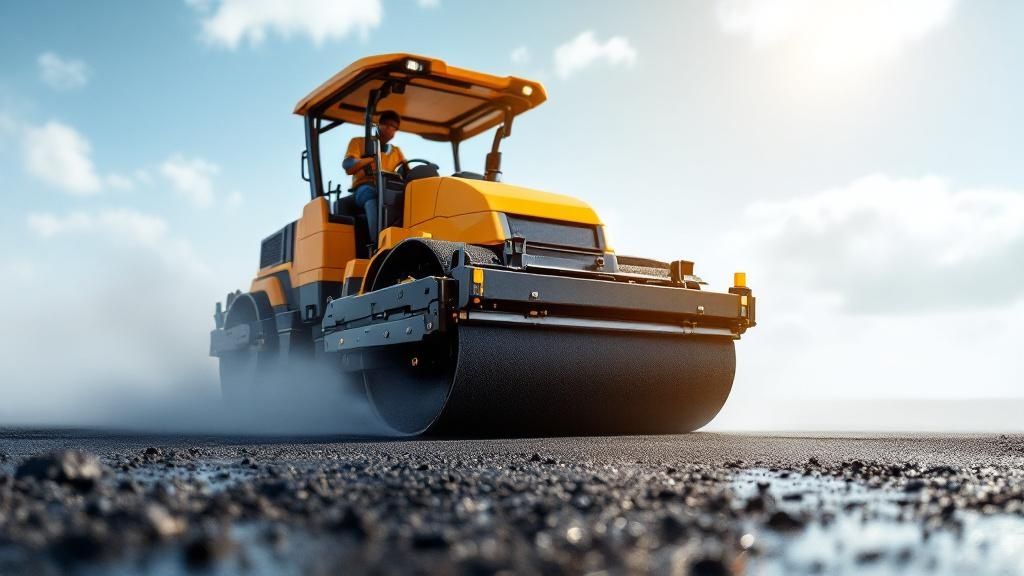
- Steel-Wheel Rollers (Breakdown Rolling): The first machine on the fresh, hot mat is a massive steel-drum roller. This initial “breakdown” pass does the bulk of the compaction while the asphalt is still incredibly hot and easy to shape.
- Pneumatic (Rubber-Tire) Rollers: Up next is a pneumatic roller, which uses a set of rubber tires to knead the asphalt. This pushes the aggregate particles into an even tighter arrangement, sealing up the surface even more.
- Vibratory Rollers (Finish Rolling): To wrap things up, a smaller steel-wheel roller, often using a vibration setting, makes the final passes. This is what smooths out any lingering marks from the other rollers and gives the pavement that sleek, professional look.
Even the rolling pattern is a science. Operators overlap each pass methodically, guaranteeing every single square inch gets just the right amount of pressure. This meticulous process is what ensures your new surface can stand up to traffic, weather, and the test of time. To see how seasoned pros handle this process, it’s worth checking out the work of professional asphalt paving contractors in Monterey County to see these principles in action. It’s this combination of advanced machinery and human skill that separates a shoddy job from a pavement that lasts for years.
Curing and Maintaining Your New Asphalt Surface
The job isn’t truly done just because the rollers have left. Once your new layer of asphalt on top of concrete is down, a whole new phase begins: curing and long-term care. A little patience now and some proactive maintenance later is the key to protecting your investment and getting the maximum lifespan from your new surface.
Think of fresh asphalt like a cake just out of the oven—it looks finished, but it needs time to cool and set properly. This curing process is when the liquid asphalt binder hardens and the pavement gains its final strength. If you rush it, you’ll end up with permanent scuffs, tire marks, and indentations.
The Curing Timeline: What to Expect
That curing timeline isn’t just a friendly suggestion; it’s a critical rule for preventing early damage. Your new asphalt might feel hard to the touch within hours, but the oils inside are still volatile and need time to fully evaporate.
Here’s a general timeline you should stick to:
- Foot Traffic: You can typically walk on the new surface after 24 hours. Just be mindful of sharp-heeled shoes, as they can still leave little marks.
- Vehicle Traffic: You’ll need to wait at least 3 to 5 days before driving on your new asphalt. For the first month, try to avoid parking in the exact same spot every day and, most importantly, don’t turn your steering wheel while the car is stationary. That’s a surefire way to grind into the still-soft surface.
- Full Curing: It can take anywhere from 6 to 12 months for the asphalt to cure completely. During this period, the surface will continue to harden and become less susceptible to damage. You’ll want to be extra careful on those hot summer days when the asphalt naturally gets softer.
A common mistake I see is people assuming the surface is bulletproof just because they can drive on it. Remember to keep heavy vehicles, like delivery trucks or RVs, off the pavement for at least a month, if not longer. Their weight can easily create depressions in young asphalt.
Proactive Maintenance for a Lasting Surface
Once the pavement has fully cured, a simple maintenance plan will keep your asphalt looking and performing its best for years. The two biggest things you need to focus on are sealcoating and crack filling.
Sealcoating creates a protective shield for your asphalt, guarding it against the elements that want to break it down: UV rays, water, and vehicle fluids like oil and gas. The first sealcoat should be applied about 9 to 12 months after installation, once the asphalt is fully hardened. You can learn more about the benefits from experts who provide professional asphalt sealcoating in Monterey County and see how they protect pavements. After that initial coat, you’ll want to reapply it every 3 to 5 years.
Just as important is staying on top of any cracks. Even the best asphalt will eventually develop a few small cracks. The key is to fill them right away with a rubberized crack filler before they get bigger and let water seep into the base—that’s the number one killer of any pavement. A quick walk-through once a year to spot and fill these little issues will save you from big, expensive problems down the road.
Common Questions About Laying Asphalt on Concrete
Even when you have a plan, putting asphalt over concrete can feel like stepping into the unknown. It’s natural to have questions, and getting solid answers is the best way to feel confident about the project. We hear a lot of the same concerns from property owners, so let’s tackle some of the most common ones right now.
How Thick Should the Asphalt Overlay Be?
The thickness of your new asphalt is a huge factor in how long it will last and whether you’ll see cracks pop up prematurely. For a typical residential driveway, we aim for a compacted thickness of at least 2 inches. This gives you enough strength for daily cars and SUVs without adding unnecessary weight.
But if you’re paving a commercial lot or an area that gets heavy truck traffic, you need more muscle. In those cases, we usually recommend bumping the thickness up to 3 inches or more. That extra depth provides serious structural support and does a much better job of spreading heavy loads across the concrete base.
Will the Expansion Joints in My Concrete Cause Problems?
Yes, they definitely will if they aren’t handled the right way. Those lines you see in your concrete slab are expansion joints, and they’re there to give the concrete room to move with temperature swings. If you just pave right over them, that movement has nowhere to go but up, and you’ll end up with perfect, straight-line cracks in your brand-new asphalt.
To stop that from happening, we have a few pro techniques we rely on:
- Reinforcing Fabric: We can install a special fiberglass or fabric grid over the joints before paving. It acts like a shock absorber, soaking up the stress from the concrete movement below.
- A Thicker Overlay: More asphalt mass can help resist the upward pressure from the joints.
- Joint Sealing: Sometimes the best approach is to clean the joints out and fill them with a flexible sealant before we even start paving.
The most important thing to remember is that you can’t just ignore expansion joints. A professional needs to look at your specific slab to decide the right strategy, so those joints don’t sabotage your entire project.
How Long Will an Asphalt Overlay on Concrete Last?
When it’s installed by a professional on a solid concrete base, a new asphalt overlay can give you anywhere from 10 to 20 years of service. What determines whether you hit the low or high end of that range really comes down to three things: the condition of the concrete underneath, the quality of the installation, and your maintenance routine.
If your concrete is in good shape and the prep work is done right, you’re starting off on the right foot. To get the most life out of it, regular maintenance is key—think sealcoating every 3-5 years and fixing small problems before they get bigger. To see how the pros approach long-term care, you can learn more about professional asphalt patching and repair in Monterey County and see what it takes.
At Coastal Pipeline Inc., we specialize in delivering infrastructure solutions that last. If you have a paving project on the Central Coast, our team has the expertise to ensure it’s done right from the ground up. Contact us today to discuss your project at https://coastalpipelineinc.com.