
When it’s time to bury electrical systems, your most important partner is an experienced underground electrical conduit installation contractor. These are the pros who handle it all—from digging the trenches and laying the protective conduit to making sure every detail meets the strict local and national electrical codes. Their work is what guarantees the safety and long-term reliability of your entire system.
Finding Your Ideal Conduit Installation Contractor

Choosing the right contractor for your underground electrical conduit job isn’t just another item on a checklist. It’s a foundational investment in your property’s safety and functionality. A bad choice here can spiral into expensive rework, dangerous electrical hazards, and major project delays. You need to be meticulous in how you vet them, focusing on verifiable qualifications that protect you from liability and deliver a high-quality result.
Core Credentials to Verify
Your first round of screening should cover the non-negotiables: licensing and insurance. A contractor’s license is obviously paramount, but you need to dig into the details. For instance, in many places, a licensed electrical contractor has the authority to perform the excavation work that’s part of their electrical scope, meaning they don’t need a separate underground utility license.
After licensing, solid insurance coverage is your main financial shield. You absolutely must verify two key policies:
- General Liability Insurance: This is what covers property damage or injuries that might happen on your site because of the contractor’s work.
- Worker’s Compensation: This protects you from being held liable if one of the contractor’s crew members gets hurt on your project.
The Importance of Proven Experience
Once you’ve confirmed the legal basics, it’s time to focus on what they’ve actually done. Not all conduit projects are created equal. A contractor who’s great at simple residential PVC jobs might be completely out of their depth on a commercial project that calls for rigid metal conduit (RMC) or large-diameter high-density polyethylene (HDPE).
One of the biggest hurdles in our industry right now is the shortage of skilled labor, especially for specialized conduit work. This makes it even more critical to find a contractor with a proven track record and an experienced, stable team.
Demand for these specialized skills is only growing as urbanization continues and safety codes get stricter. You can read more about this trend on expertmarketresearch.com. This boom just highlights the need for true professionals who know how to handle complex installations.
For any project of significant size, it’s also a smart move to find a contractor who handles the full scope of work. Someone who also manages utility trenching and backfilling can offer a much more integrated and seamless project from start to finish.
To keep things organized, it helps to use a checklist to compare your options side-by-side. This table breaks down what you should be looking for.
Contractor Vetting Checklist
Here’s a quick-reference table summarizing the essential criteria for evaluating any underground electrical conduit installation contractor.
| Vetting Criteria | What to Look For | Why It’s Critical |
|---|---|---|
| State Licensing | A valid, current electrical contractor’s license (e.g., C-10 in California). | Confirms their legal authority to perform electrical work and provides a path for accountability. |
| Insurance Coverage | Certificates for both General Liability and Worker’s Compensation. | Protects you from financial liability in case of accidents, property damage, or on-site injuries. |
| Relevant Experience | A portfolio of completed projects similar to yours (e.g., HDPE, RMC, specific site conditions). | Shows they have the specific technical skills required for your job, not just general experience. |
| Safety Record | Information on their safety program, training, and record (e.g., OSHA compliance, EMR rating). | A strong safety culture minimizes risks on your property and is a sign of a professional, well-run company. |
By using these criteria, you can move past the sales pitches and focus on the qualifications that truly matter for a safe and successful project.
Evaluating Real-World Technical Expertise
Licenses and certifications are just the entry ticket—they prove a contractor meets the minimum standards. But they don’t tell you the whole story.
To find a truly great underground electrical conduit installation contractor, you need to dig deeper. This means getting past the paperwork and asking sharp questions that reveal their hands-on, practical skills for a job like yours.
Every site is different, from tricky soil conditions to a maze of existing utilities already in the ground. A genuinely experienced contractor can talk you through how they handle these real-world curveballs. Their answers should be specific and confident, full of details from past projects—not just generic fluff from their website. This is how you separate the seasoned pros from the rest.
Probing Questions for Conduit Materials
Don’t settle for a simple “yes” when you ask if they’ve worked with a certain material. The real test is how they’ve used it. The details they provide (or don’t) will tell you everything.
- For HDPE Conduit: Try asking, “What type of fusion welding gear do you run, and what’s your QC process to make sure every weld is perfect?” A real expert will immediately start talking about butt fusion versus electrofusion, how they inspect the bead, and their protocols for pressure testing.
- For Rigid Metal Conduit (RMC): A good question would be, “Our local soil is pretty corrosive. What specific coatings and wrapping methods do you recommend for RMC to prevent it from degrading?” Their answer should include things like asphaltum paints, PVC coatings, or even sacrificial anode systems if the conditions are harsh enough.
Modern materials like high-density polyethylene (HDPE) are becoming the standard, especially with the boom in infrastructure upgrades and smart city projects. The global market for HDPE conduit hit around $5.1 billion and is on track to nearly double, driven by the need for tough, reliable underground cable protection. You can read more about the HDPE conduit market on researchnester.com. An expert contractor won’t just know about these trends; they’ll have hands-on experience with them.
A contractor’s portfolio should be more than a photo album; it should be a collection of solved problems. Look for projects with challenges similar to yours—tight urban digs, difficult soil, or complex utility crossings. Ask them to walk you through one, from the initial problem to the exact steps they took to solve it.
Analyzing Their Project Portfolio
A portfolio isn’t just a gallery of finished work. It’s evidence. When you’re looking through their past projects, look for tangible proof of their skill.
Are the photos sharp and clear, showing clean trench lines, properly supported conduit, and tidy, organized job sites? Or do they look like generic stock photos they pulled from the internet?
Always ask for examples that mirror your project’s scope. If your job involves a lot of site work, you’ll want to see that they have the equipment and experience to handle it. For instance, our extensive underground utility services in Monterey and Santa Cruz County show we can manage integrated projects from the first shovel of dirt to the final installation. That kind of comprehensive capability is a sure sign of a highly skilled team.
A top-tier contractor won’t hesitate to give you more details on request, like who the lead foreman was, how long the project took, and what the final outcome was. That level of transparency is a huge green flag—it shows they’re professional, confident, and stand proudly behind their work.
How to Verify Credentials and Check References

Alright, you’ve got a shortlist of contractors. Now comes the most critical part of the process: the deep dive. This is where you move past the sales pitch and start verifying everything. It’s not about being distrustful; it’s about being smart. Taking a company’s paperwork at face value is a rookie mistake that can lead to massive financial and legal headaches.
Your first move should be to independently check their license. Don’t just glance at a copy they hand you. Go directly to your state’s official contractor licensing board website. You can almost always search by the company’s name or license number. You’re looking for an “active” status and, just as importantly, a clean record with no public complaints or disciplinary actions. This simple check is your first line of defense.
Confirming Insurance Is Non-Negotiable
Insurance is just as crucial, if not more so. Ask every contractor for their Certificate of Insurance (COI). You need to see two specific policies on there: General Liability and Worker’s Compensation.
But don’t stop there. Call the insurance provider listed on that certificate. Confirm the policy is still active and that the coverage limits are high enough for the scale and value of your project. This protects you. If their crew damages your property or a worker gets hurt on your site, their insurance—not yours—is on the hook.
A contractor’s reluctance to provide direct contact information for their insurance agent is a major red flag. Transparency here is a sign of a professional and trustworthy operation that has nothing to hide.
How to Get Real Answers from References
Checking references is an art form. If you ask, “Were you happy with their work?” you’re going to get a simple “yes.” That tells you nothing. To get the real story, you need to dig deeper with specific, situational questions that reveal how they really operate under pressure.
Forget the generic stuff. Try asking questions like these instead:
- “Can you tell me about a time something unexpected came up? Maybe an unmarked utility line? How did they handle it?”
- “How was the communication throughout the project? Was it easy to get a hold of the right person when you had a question?”
- “When it came to the final bill, how did it stack up against the original quote? Any surprises?”
- “What was the job site like? Did their crew keep things clean and safe?”
These questions aren’t just about the finished product. They get to the heart of a contractor’s problem-solving skills, professionalism, and financial integrity. The experiences of their past clients are the single best predictor of what yours will be.
A top-tier underground electrical conduit installation contractor, especially one equipped to handle the complexities seen by specialized commercial excavation contractors, will have a list of references who can confidently speak to their ability to manage tricky logistics and maintain clear communication from start to finish.
Analyzing Bids and Understanding the Contract
Once the proposals start rolling in, the real work begins. It’s tempting to just scan for the lowest number, but when you’re hiring an underground electrical conduit installation contractor, the cheapest bid is often a red flag, not a great deal. A number that seems too good to be true probably is—it could signal corner-cutting on materials, an inexperienced crew, or hidden costs that will blow up your budget down the line.
Your real job here is to make a genuine apples-to-apples comparison. This means looking beyond the final price and digging into what each bid actually covers. A professional, detailed quote will be itemized, breaking down the costs for labor, materials, equipment, and everything in between. If you get a bid that’s just a single number on a page, don’t hesitate to ask for a proper breakdown.
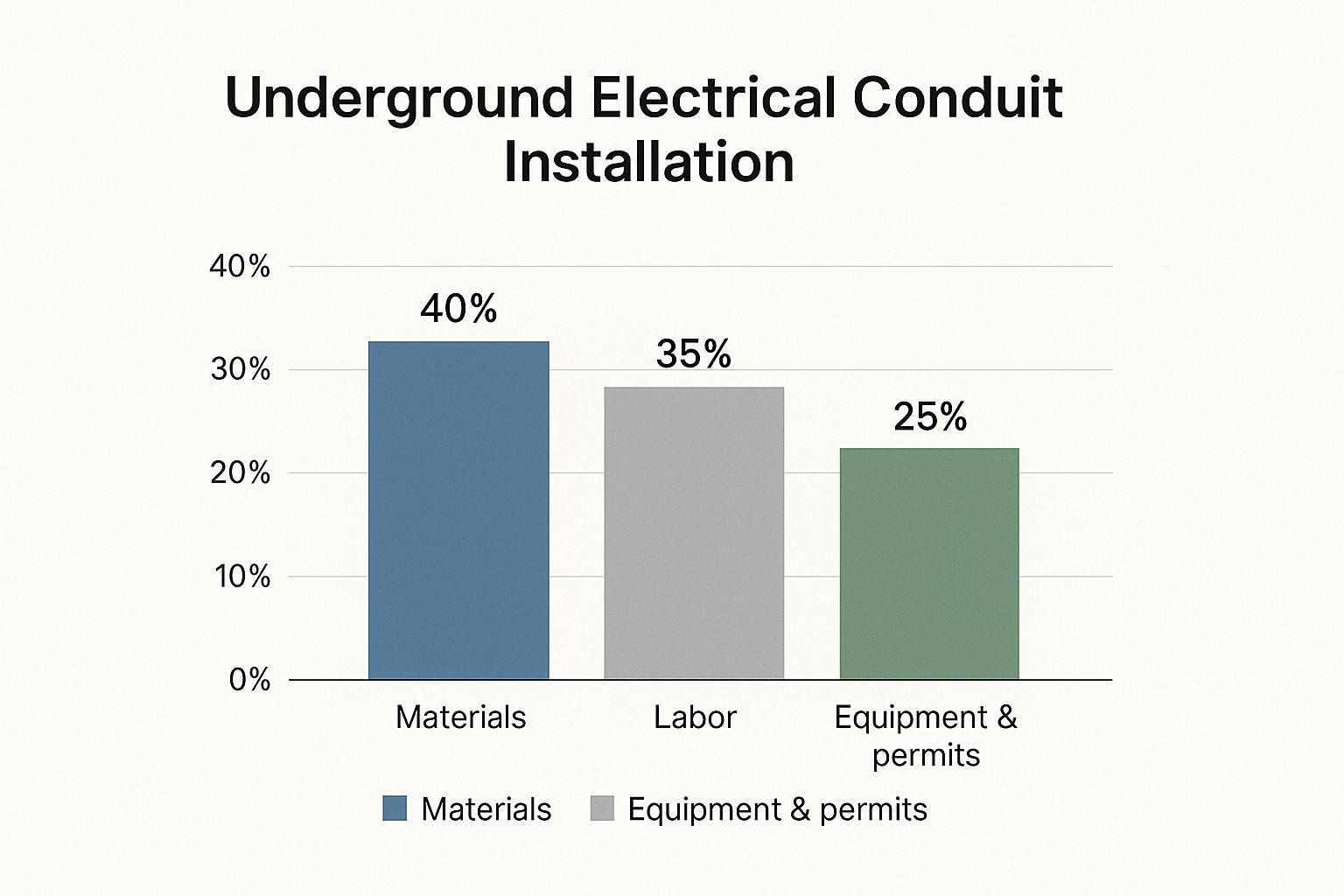
As you can see, materials and labor are the heavy hitters. This is exactly why you need to be crystal clear on the quality of both before you make a decision.
Deconstructing the Quote
To really compare these bids fairly, it helps to get organized. A simple spreadsheet is your best friend here. List out every key component of the job and see how each contractor stacks up.
- Materials: Does the bid specify the type and grade of conduit being used, like Schedule 40 PVC or Rigid Metal Conduit (RMC)? There’s a huge difference in quality and cost. For example, metal conduits are a major player in this field—valued at around $4.36 billion in 2024—because they’re incredibly durable and fire-resistant in tough conditions.
- Labor: Is the labor cost a fixed price for the whole job or a running hourly rate? A fixed price gives you cost certainty, which is always a plus.
- Site Work: Does the quote explicitly mention critical tasks like trenching, backfilling, compaction, and final site restoration? This includes fixing any disrupted landscaping or pavement. You need to ensure comprehensive trenching and backfilling services are part of the deal, not an extra charge.
- Permits and Fees: Who’s on the hook for pulling and paying for all the necessary municipal or utility permits? This should be spelled out clearly.
- Exclusions: Pay very close attention to the “what’s not included” section. This is where you’ll find the surprise costs that can completely derail a project budget.
To help you visualize this process, here’s a template you can use to compare your bids. It’s all about finding the best value, not just the lowest price tag.
Scrutinizing the Contract Language
After you’ve picked the bid that offers the best value, the contract becomes the rulebook for your entire project. It needs to be clear, incredibly detailed, and fair to both you and the contractor.
Never, ever sign a contract that feels vague or one-sided. Every single promise and detail discussed during the bidding process has to be in writing. If it’s not in the contract, it doesn’t exist.
Before you put pen to paper, double-check that the contract includes these non-negotiable clauses:
- Detailed Scope of Work: This section must lay out, in precise detail, all the work to be done. It should reference the project plans and specifications directly.
- Payment Schedule: This defines when payments are due. Typically, payments are tied to specific project milestones, like 25% after trenching is complete.
- Change Order Process: Projects evolve. This clause outlines the formal procedure for handling any changes to the original plan, including how costs will be adjusted and approved by you.
- Completion Timeline: This specifies a firm start date, a substantial completion date, and any penalties for delays that aren’t excused.
Taking the time to thoroughly analyze the bids and vet the contract is your best defense against unexpected costs, project delays, and frustrating disputes. It’s the final step to ensure the contractor you hire is not just skilled at the work, but also a transparent and reliable partner for your project.
Overseeing the Project and Final Inspection
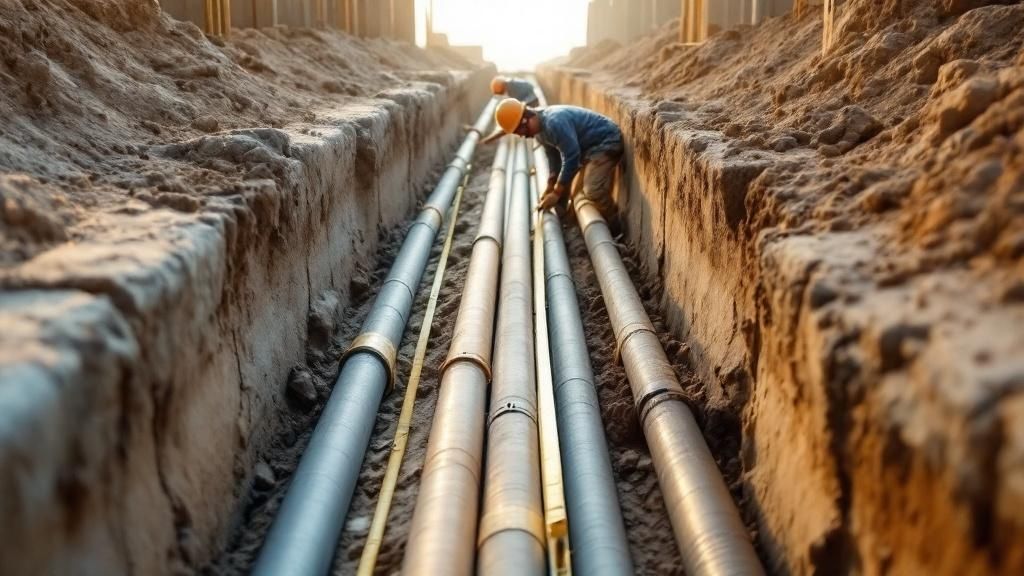
Once your chosen underground electrical conduit installation contractor gets to work, your job shifts from vetting to managing the project on the ground. This doesn’t mean you need to micromanage every single move the crew makes. It’s really about setting up clear communication, keeping good records, and having structured check-ins to make sure the work stays on schedule and on budget.
The first thing to do is lock in a single point of contact. This is almost always the project foreman or site supervisor. If you try to talk to multiple crew members, you’ll just get mixed messages and cause confusion. Having one go-to person gives you a direct line for any questions, progress updates, and approvals.
Keeping the Project on Track
Right from the start, agree on a schedule for regular progress updates. This could be a quick 15-minute phone call every couple of days or a more detailed email at the end of each week. What you’re aiming for is a predictable rhythm. This way, you’re never in the dark about how things are going, especially if they hit an unexpected snag like solid rock or an old, unmarked utility line.
Also, get everything in writing. If a decision is made on-site that changes the original plan—even something small—document it. A quick email confirming the change (“Just confirming our chat this morning—we’re shifting the trench two feet to the east…”) creates a paper trail that protects both you and the contractor if any questions pop up down the road.
A well-run project should feel like a partnership, not a battle. Your role is to make sure the work matches the contract and help clear any roadblocks, not to tell the crew how to do their jobs. You hired them for their expertise, so trust it.
The Final Walkthrough and Sign-Off
The project isn’t over just because the last piece of conduit is in the ground. The final walkthrough is your last, best chance to confirm every detail was handled correctly before you sign that final check. This isn’t a casual glance; it needs to be a methodical, thorough inspection.
Pull out your contract and the project plans—these are your guide. Go through everything point by point. I highly recommend using a checklist to make sure you don’t miss anything critical.
Your Final Inspection Checklist Should Cover:
- Trench Compaction and Backfilling: Is the ground level and stable? A poorly compacted trench will sink over time, creating a hazard.
- Site Restoration: Look at the landscaping, pavement, or concrete. Has it been repaired to its original condition, or better, as laid out in your contract?
- Conduit Depth Verification: The marker tape is a crucial safety feature. Confirm it was laid at the correct depth, which is typically around 300mm below the surface in areas without vehicle traffic.
- Cleanup: Has the crew removed all their equipment, leftover materials, and construction trash? The site should be left clean.
- Final Paperwork: Make sure you get all the necessary documents. This includes any “as-built” drawings that show the final path of the conduit and any required inspection certificates.
This careful final check is what gives you peace of mind. It ensures the installation is safe, up to code, and built to last, confirming the job was done right from beginning to end.
Common Questions About Hiring Conduit Contractors
Even when you have a solid plan, a few questions are bound to pop up when you’re hiring an underground electrical conduit installation contractor. That’s completely normal. Getting these common concerns cleared up from the get-go can save you a world of confusion and keep your project running smoothly.
Let’s walk through some of the most frequent questions we hear from clients.
Who Is Responsible for Digging the Trenches?
This is one of the first practical questions that comes up: can the electrical contractor actually dig the trench, or do I need to hire a separate excavation crew?
The answer is almost always yes. In most areas, a licensed electrical contractor’s official scope of work includes any trenching or excavation needed for their installation. You generally don’t need two different companies for one job.
Having one qualified contractor handle everything from digging to backfilling is a huge plus. It streamlines the whole process and cuts down on the headaches that come from trying to coordinate multiple teams.
What Is the Correct Depth for Underground Conduit?
Conduit depth isn’t just a best practice—it’s a critical safety requirement spelled out in electrical codes. While the exact depth can change based on your location and what’s being installed, there are some hard-and-fast rules.
- Under Lawns or Gardens: In areas without vehicle traffic, conduit is usually buried at a minimum depth of 300mm.
- Under Driveways or Traffic Areas: For any surface that will bear the weight of vehicles, the depth increases significantly to at least 600mm to prevent the conduit from being crushed.
You’ll also see an orange marker tape laid in the trench, typically about 100mm to 150mm above the conduit itself. This is a crucial warning for anyone who might be digging in that area years down the road.
Your contractor absolutely must know and follow these local depth requirements. Burying conduit too shallow is a serious safety violation that will fail an inspection and create a dangerous situation.
Can Electrical Conduit Share a Trench with Other Utilities?
It’s pretty common to run multiple utility lines underground, but you can’t just bunch them all together. Electrical codes have very specific rules about separation distances to prevent electrical interference and keep everything safe.
For instance, electrical conduits running parallel to a water line in the same trench must be separated by at least 100mm. You’ll also notice different colored conduits are used—orange for electrical, white for communications—to make future identification easy and safe.
When you need comprehensive underground electrical conduit services, your contractor has to be an expert in these multi-utility rules. An experienced pro will manage these separations carefully, making sure every line is installed by the book.
When your project demands an expert in underground utilities, from precise trenching to final paving, Coastal Pipeline Inc. delivers professional, code-compliant results. Visit us online to learn how we can support your next infrastructure project.