
Choosing the right underground gas line installation contractor is one of the most important safety decisions you'll make for your property. A properly installed gas line is an invisible, reliable workhorse, but a bad installation is a serious ticking time bomb. This isn't just a minor repair—it's a choice that directly affects the safety of your home or business for years to come.
Why Your Choice of Contractor Matters
Think of your property's gas system like its circulatory system. It's essential for delivering energy to your appliances, but a compromised line is catastrophic. A small mistake during installation isn't just a future repair bill; it's a direct path to potential gas leaks, fires, or even worse. This is why you can't rush the decision or just pick the cheapest quote.
The stakes are simply too high for anything less than a seasoned professional. The contractor you hire is responsible for navigating a complex web of safety codes, material specs, and installation techniques. Their expertise is the only real barrier between you and significant danger.
The Foundation of a Safe Installation
A successful project is so much more than digging a trench and laying a pipe. It demands a deep understanding of local soil conditions, strict adherence to legal codes, and a commitment to meticulous testing. An experienced underground gas line installation contractor brings several non-negotiable skills to the job:
- Code Compliance: They have an expert's knowledge of the International Fuel Gas Code (IFGC) and all the local amendments that dictate burial depth, pipe materials, and connection methods.
- Permitting Expertise: A true professional handles the entire permitting process for you, from the initial application to the final inspection, making sure the project is fully legal and documented.
- Proper Insurance: They carry substantial general liability and worker's compensation insurance. This protects you from any financial liability if an accident or property damage occurs.
- Technical Skill: They know how to perform critical pressure tests to certify the system is 100% leak-free before it ever goes live.
Key Takeaway: Hiring a contractor isn’t like buying a product off a shelf. You are investing in an expert whose primary job is to prevent a low-probability, high-consequence event on your property. This work is a core part of comprehensive underground utility services that keep properties safe and functional.
What Happens When You Hire the Wrong Person
Opting for an unqualified or uninsured installer can unleash a flood of problems. They might use the wrong materials that corrode quickly, fail to bury the line at a safe depth, or completely skip the crucial pressure testing phase to save time.
These shortcuts create hidden hazards that might not show up for months or even years. By then, the installer is long gone, leaving you with a dangerous and expensive mess to clean up. This guide is here to help you avoid that nightmare by showing you how to select a competent, licensed, and safety-obsessed underground gas line installation contractor from the very start.
Verifying Contractor Credentials and Qualifications
Choosing the right contractor for an underground gas line installation is a huge decision. You’re not just hiring someone to dig a trench; you’re trusting them with the safety of your property and everyone on it. This is one job where you can't afford to cut corners, so it’s critical to vet every candidate thoroughly.
Think of it this way: a handshake and a low bid mean nothing if the contractor isn't properly qualified. When dealing with natural gas, you need proof of legitimacy, competence, and accountability. Let's break down what to look for.
Licensed, Certified, and Insured Explained
You’ll hear these three words thrown around a lot, but they aren't interchangeable. They represent three distinct pillars of a contractor’s credibility. If one is missing, the whole operation is risky.
-
Licensing: This is the absolute bare minimum. A license from the state or local authority proves the contractor has met the basic legal requirements to perform gas line work. It's their permission slip to even be in business.
-
Certifications: These go a step beyond licensing. Certifications are often voluntary and show a commitment to specialized training. A contractor might be certified by a pipe manufacturer or an industry group, proving they’ve mastered specific materials or advanced techniques.
-
Insurance: This is your financial shield. If an accident happens—say, a line is damaged or someone gets hurt—their insurance covers it. Without proper insurance, you could be left footing the bill for property damage or medical expenses.
Any reputable contractor will gladly show you their credentials. If you get any hesitation or excuses, consider it a major red flag and walk away.
The Non-Negotiable Insurance Policies
Insurance isn't a one-size-fits-all policy. For a high-stakes job like installing a gas line, two types of insurance are absolutely essential. A contractor operating without them isn't a professional—they're a massive liability.
Before you hire anyone, confirm they have:
-
General Liability Insurance: This is what protects your property. It covers the costs if the contractor damages your home, landscaping, or even your neighbor’s fence. For this kind of work, a policy should provide at least $1 million to $2 million in coverage.
-
Worker's Compensation Insurance: This policy protects the contractor's own crew. If one of their employees is injured on your property, this insurance covers their medical bills and lost wages. Without it, you could be sued directly. It’s a critical policy that shields you from any job-site injury claims.
Crucial Insight: Don't just take their word for it. Always request a Certificate of Insurance (COI) be sent to you directly from their insurance agent. This is the only way to confirm the policy is active and hasn't been canceled. It’s a simple step that gives you complete peace of mind.
How to Independently Verify a Contractor
Trust, but verify. The great thing is that you don't have to rely on what the contractor tells you. You can—and should—check their credentials yourself.
The easiest way is to visit your state’s contractor licensing board website. Most states have a public database where you can search by the contractor’s name or license number to see their official status. It only takes a few minutes and tells you everything you need to know.
To make things easier, we've put together a quick checklist to help you evaluate potential contractors. Run every candidate through this before making a final decision.
Contractor Vetting Checklist
| Credential | What to Look For | Why It Matters |
|---|---|---|
| License Status | Check that the license is active and in good standing. | An expired or suspended license means they are operating illegally and without any oversight. |
| Complaint History | Look for any documented complaints or disciplinary actions. | A pattern of unresolved issues is a clear warning sign of poor work or bad business practices. |
| Business Address | A physical address, not just a P.O. Box. | A real office shows an established, stable business, not a fly-by-night operator. |
| Years in Business | How long have they been licensed and operating? | Experience counts. A long track record suggests they are stable and know local codes and conditions. |
Ultimately, this vetting process is about filtering out the risks. By focusing on these qualifications, you can confidently hire an underground gas line installation contractor who will prioritize the safety and integrity of your property above all else.
Navigating Permits and Local Safety Codes
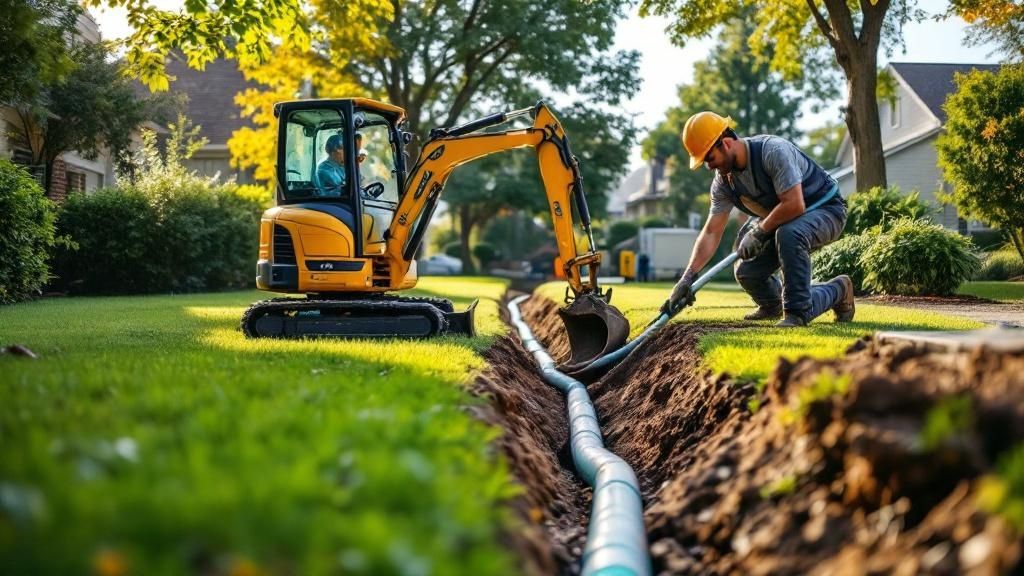
When you hire an underground gas line installation contractor, you’re getting more than just someone to dig a trench and lay pipe. You're bringing in an expert who can navigate the maze of rules and regulations designed to keep your property and family safe.
Think of permits and safety codes as the official playbook for a project where there’s zero room for error. These aren’t just bureaucratic hoops to jump through; they’re strict standards built on decades of experience to prevent gas leaks, fires, and other hazards. They represent the absolute minimum for a safe installation.
A true professional sees these regulations as their blueprint for success, not a roadblock. If a contractor ever suggests skipping the permit process to "save a few bucks," it's a massive red flag. That’s not a risk you can afford to take.
The Permit Process and Your Contractor's Role
Getting a permit is far more than just paperwork. It’s a structured system of checks and balances that ensures the job is planned correctly, installed properly, and inspected thoroughly. A good contractor handles this entire process for you.
Here’s what that journey usually looks like:
- Plan Submission: Your contractor will draft detailed plans showing the pipe route, materials, burial depth, and connection points and submit them to the local building department.
- Plan Review: A city or county inspector reviews these plans to ensure every detail complies with local and national codes before a single shovel hits the ground.
- Permit Issuance: Once the plans get the green light, the municipality issues the permit, officially authorizing the work to begin.
- Scheduled Inspections: The permit requires at least one on-site inspection during critical phases, like after the trench is dug but before it’s backfilled.
- Final Approval: The final step involves an inspector witnessing a successful pressure test to confirm the system is 100% leak-free. Only then is the project signed off and considered complete.
An experienced contractor doesn't just meet the code; they anticipate what the inspector will look for. They make sure every joint is perfect and every measurement is precise, so the inspection is a smooth formality, not a stressful ordeal.
Key Safety Codes Your Contractor Must Follow
While local codes can have minor variations, most are based on the International Fuel Gas Code (IFGC). This is the gold standard for safe gas system installation, and any qualified underground gas line installation contractor knows it inside and out.
These codes cover every aspect of the job, but here are a few critical rules that directly affect the safety of your new gas line:
- Proper Burial Depth: Gas lines need to be deep enough to be protected from accidental damage. For most residential properties, that means a depth of 18 to 24 inches, and even deeper under driveways or other areas with vehicle traffic.
- Correct Pipe Material: The code dictates exactly which materials are safe for underground use. Modern polyethylene (PE) pipe is the top choice for its durability and corrosion resistance, but your contractor must select the right grade based on local soil conditions and gas pressure.
- Tracer Wire Installation: Plastic pipe can’t be found with a standard metal detector. That's why the code requires a conductive tracer wire to be laid in the trench right alongside the pipe. This allows utility locators to find the line easily in the future, preventing a dangerous accident during any digging.
Handling this kind of excavation requires specialized skill. You can learn more about how the pros do it in our guide to hiring a utility trenching contractor in Monterey County.
Ultimately, working with a contractor who has mastered these codes is the best way to ensure your project is done right. They won’t just get the permits—they’ll deliver a safe, legal, and reliable installation that will serve you well for decades.
What to Expect During the Installation Process
When you hire a professional for an underground gas line installation, knowing what’s coming can make all the difference. Instead of a stressful, drawn-out affair, the project becomes a clear, manageable process. When you understand the steps, you can ask the right questions, see the progress for yourself, and feel confident that the job is done right.
Any expert underground gas line installation contractor follows a proven, five-stage process. Each step builds on the last, ensuring everything is handled safely and correctly from day one. Let’s walk through what you can expect to see on your property.
Stage 1: Site Assessment and Planning
Before a single shovel hits the ground, we conduct a thorough site assessment. This is much more than a quick glance. We start by coordinating with the 811 "Call Before You Dig" service to locate and mark every existing underground utility. This is a non-negotiable step that prevents dangerous accidents with water mains or electrical lines.
With all existing utilities mapped out, we finalize the best path for the new gas line. We'll look at your property's slope, soil conditions, landscaping, and the location of your driveway and buildings. This meticulous planning finds the most efficient route with the least disruption, setting the entire project up for success.
Stage 2: Trenching and Excavation
This is when you’ll see the most activity. Depending on your property and budget, we’ll use one of two methods to create the channel for the new pipe.
- Conventional Trenching: This is the most common approach. We use a walk-behind trencher or a small excavator to dig an open ditch, usually between 18 to 24 inches deep. It's cost-effective but does mean some temporary disturbance to your lawn or pavement.
- Directional Boring (Trenchless): Have mature trees or a brand-new driveway you don’t want to tear up? Directional boring is the perfect solution. A specialized machine drills a horizontal path underground between two small entry and exit points. The pipe is then pulled through without needing a long, open trench. It costs a bit more, but it keeps your property’s surface intact.
No matter which method we use, precision is key. We ensure the trench meets the exact depth and grade required by local building codes.
Stage 3: Pipe Laying and Connections
With the trench or bored path ready, it’s time to lay the pipe. For most modern jobs, we use a corrosion-resistant polyethylene (PE) tubing. This material is incredibly durable, with a lifespan of 50+ years.
We carefully place the pipe in the trench, making sure it rests on a bed of fine soil or sand to protect it from sharp rocks. Right alongside it, we lay a conductive tracer wire. Since the PE pipe is plastic, this wire is a crucial safety feature that allows utility locators to find the line easily in the future.
Finally, we make the connections at the gas meter and the appliance stub-out points. We use specialized heat-fusion or mechanical fittings to create permanent, leak-proof joints that are built to last.
Stage 4: System Testing and Inspection
This is the most critical stage of the entire project. Before we backfill the trench or let any gas into the system, the new line must pass a rigorous pressure test. This is a mandatory safety requirement—no exceptions.
We seal the new pipeline and pressurize it with air to a specific level, typically around 5 to 10 PSI. A sensitive pressure gauge is attached, and we monitor it for 30 minutes or more. If the pressure holds steady without dropping, it proves the system is perfectly sealed and has zero leaks.
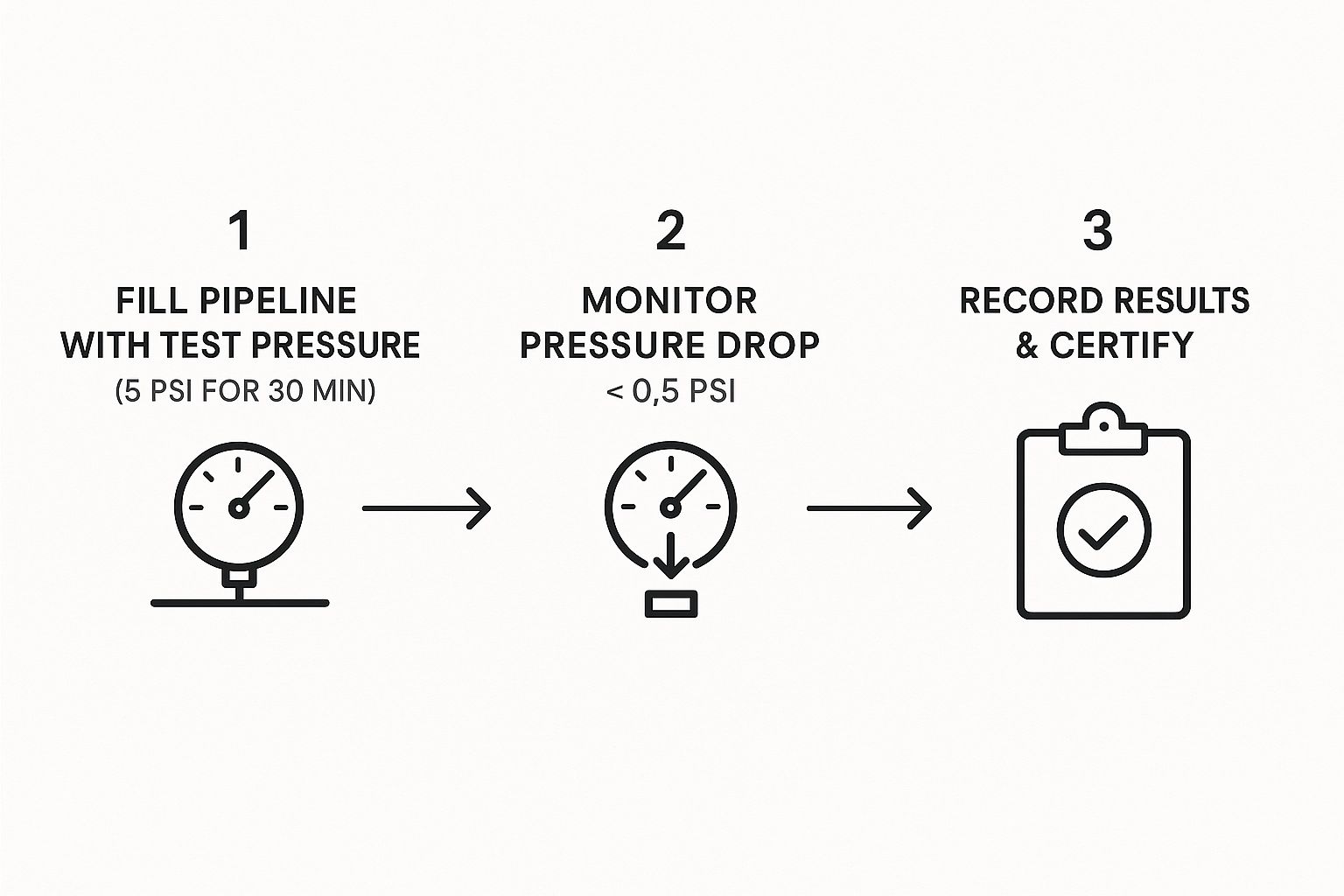
As this infographic shows, there is no room for error. Even a tiny drop in pressure is unacceptable. A local building inspector is usually required to witness and sign off on this test before we can move forward.
Expert Insight: An experienced contractor never cuts corners here. We know that a successful pressure test is the ultimate proof of quality workmanship and the final guarantee of your safety. For a closer look at our professional standards, you can see our underground gas line services in Monterey & Santa Cruz County.
Stage 5: Backfilling and Restoration
Once the system passes the pressure test and gets the green light from the inspector, we begin the final step. Our crew carefully backfills the trench, using the excavated soil once we’ve made sure it’s free of large rocks or debris that could damage the new pipe.
We add the soil back in layers, compacting it as we go to prevent it from settling later on. A true professional takes pride in leaving your property looking as good as it did when we arrived. This can include raking the area smooth, reseeding the lawn, or coordinating the repair of any concrete or asphalt that was cut. You’re left with a safe, invisible gas system and a clean, restored landscape.
The need for these skills is on the rise. As the world looks for reliable energy sources, the global underground gas storage sector is growing. At the end of 2022, there were 76 new storage projects under construction worldwide. This boom requires a skilled workforce of contractors to build out the pipeline infrastructure, reinforcing just how important proper installation techniques are.
Breaking Down Gas Line Installation Costs
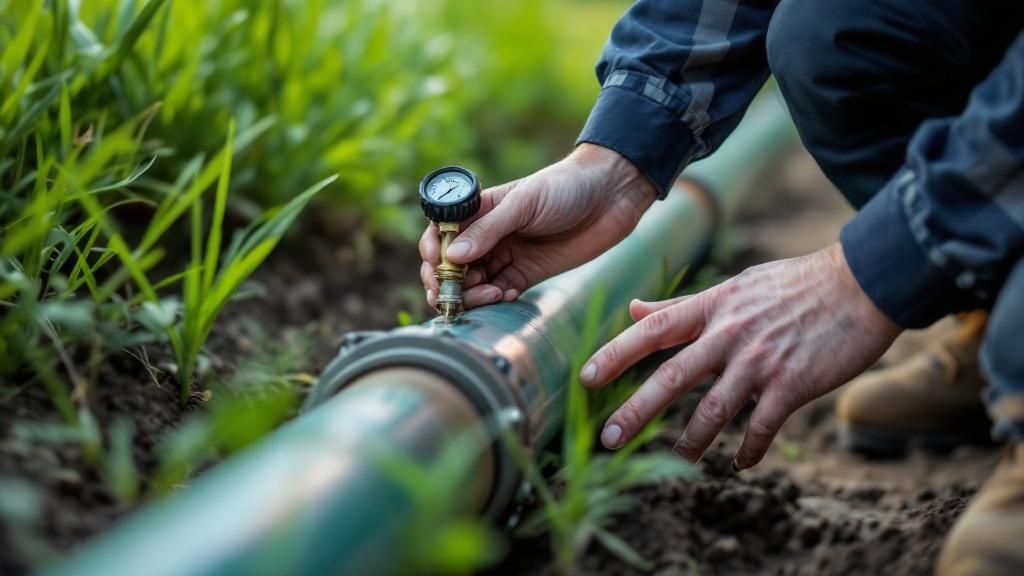
When you start looking into a new gas line, it's easy to get fixated on a simple price-per-foot number. But the reality is much more nuanced. The final quote you get from an underground gas line installation contractor is a blend of several factors, and each one can significantly move the needle on your total cost.
Thinking about it like building a custom car helps. The base price is just the starting point. The engine you choose, the tires, the interior—all these details change the final sticker price. A gas line installation is no different. The specifics of your property and your project are what truly determine the investment.
Core Cost Factors You Can Control
Right off the bat, a few key decisions you make will have a direct impact on the project's cost. The two biggest drivers are almost always the pipe material and the installation method.
- Pipe Material: You'll typically choose between modern polyethylene (PE) pipe and traditional steel. For most residential jobs, we and other pros prefer PE pipe. It’s flexible, resists corrosion, and is often more affordable and faster to install.
- Installation Method: The standard approach is open trenching, which is direct but tears up your yard. On the other hand, trenchless boring costs more upfront but saves your driveway, landscaping, and the headache of major restoration work later. It’s a classic trade-off between the installation cost and the restoration cost.
Site and Project-Specific Variables
Beyond the choices you make, the unique layout of your property plays a huge part in the final price. This is why two jobs that seem identical on the surface can end up with very different quotes.
Of course, the total length and diameter of the pipe matter—a longer run means more materials and more labor. But the real wild card is the terrain. A flat, open yard with soft soil is one thing. A rocky, sloped lot with a ton of tree roots and limited access? That’s a whole different ballgame, requiring more time, specialized equipment, and higher costs.
Key Insight: Be wary of a suspiciously low bid. It often means the contractor hasn't accounted for site complexities like rocky soil or difficult routing. A professional quote will always reflect a thorough site assessment, not just a guess.
Unpacking the 'Soft Costs' in Your Quote
The price you're quoted isn't just for digging and laying pipe. A legitimate, safe, and legal installation includes several "soft costs" that should be clearly itemized on any professional bid.
- Permit Fees: Every city or county charges a fee to review the plans and issue a work permit. This is a non-negotiable part of any legal job.
- Inspection Fees: After the work is done but before the trench is filled, a local inspector must sign off that it meets all safety codes. You're paying for their time and expertise.
- Regional Labor Rates: The cost of a skilled, certified technician will vary depending on where you live. Labor rates in a major metro area are naturally going to be higher than in a more rural community.
These are essential parts of any professional underground utility project. You’ll find the same principles apply to other critical services, as you can see in our guide to sewer line services and installation.
Sample Gas Line Installation Cost Factors
To give you a clearer picture of how these pieces fit together, we’ve put together a sample table. Think of this as a cheat sheet for understanding what's driving the numbers on your quote.
| Cost Factor | Description | Typical Impact on Price |
|---|---|---|
| Project Length | The total linear footage of the gas line from the meter to the appliance. | High Impact (Directly scales material and labor costs) |
| Terrain Difficulty | Presence of rock, tree roots, steep slopes, or hardscape like concrete. | High Impact (Increases labor hours and may require special equipment) |
| Installation Method | Choice between open trenching and minimally disruptive trenchless boring. | Medium to High Impact (Trenchless is more expensive per foot but saves on restoration) |
| Permit & Inspection | The administrative fees charged by your local building department. | Low Impact (A necessary but smaller portion of the total cost) |
By keeping this breakdown in mind, you can review a quote from any underground gas line installation contractor with confidence. You’ll know exactly what you’re paying for and have a much better sense of the value you're receiving.
Long-Term Safety and Maintenance for Your Property
Once your professional underground gas line installation contractor finishes the job, the keys to ongoing safety are handed over to you, the property owner. A properly installed gas line is built to last, but staying vigilant is what ensures it remains safe for decades to come. It all comes down to knowing how to spot potential trouble and exactly what to do if you suspect a problem.
Your own senses are your best first alert system for a gas leak. Learning the tell-tale signs isn't just a good idea—it's a fundamental part of responsible homeownership. Keep an eye (and ear, and nose) out for these red flags on your property.
Recognizing the Warning Signs of a Gas Leak
You don't need special equipment to detect a natural gas leak; the signs are often unmistakable if you know what you're looking for.
- The Smell: Natural gas is odorless on its own, so utility companies add a chemical called mercaptan to give it a very distinct "rotten egg" or sulfur smell. This is the #1 sign of a leak.
- The Sound: Listen for a hissing or even a roaring sound near a gas appliance or along the path where the pipeline is buried. This can mean gas is escaping under pressure.
- The Sight: Look for strange visual cues like bubbling water in puddles, dust or dirt blowing up from a spot on the ground, or a patch of dead or dying plants in an otherwise healthy lawn. Escaping gas can kill vegetation.
If you notice any of these signs, you need to act fast.
Emergency Action Plan: If you think you have a gas leak, don't flip any switches, use your phone, or operate any electronics. Leave the area immediately. Once you're a safe distance away (and preferably upwind), call 911 and then your gas utility company. Use your cell phone only when you are far away from the suspected leak, or use a neighbor's phone.
Proactive Habits for Long-Term Safety
Beyond just knowing how to react in an emergency, a few proactive habits are crucial for keeping your underground gas line in good shape. The single most important rule is to call 811 before you dig. It’s a free service that sends locators to mark all your underground utilities, which is essential for preventing a dangerous line break when you're doing anything from landscaping to installing a new fence.
This simple habit is a small part of a massive global effort. There are over 1.42 million kilometers of natural gas pipelines worldwide, and that number is growing every day. This vast network really underscores the critical expertise of the contractors who build these systems and why homeowner vigilance is so important for maintaining them.
It also helps to know the lifespan of your pipes. Modern polyethylene (PE) lines are incredibly durable and can last over 50 years, while older steel pipes might have a shorter service life. Doing occasional visual checks of any above-ground connections and scheduling a professional inspection every few years is a small price to pay for total peace of mind. Similar protective thinking is just as important for any buried utilities, a topic we cover in more detail in our guide to installing underground electrical conduits.
Frequently Asked Questions About Gas Line Installation
Even with a solid plan, it’s completely normal to have a few more questions pop up. Choosing an underground gas line installation contractor is a big step, and you deserve to feel confident that every detail is covered. We’ve put together answers to the most common questions we hear from property owners just like you.
Think of this as the final check-in before the work begins. Our goal is to give you straightforward answers so you can move forward with your project, knowing exactly what to expect.
How Deep Should an Underground Gas Line Be Buried?
The exact depth is dictated by local codes, but for most residential properties, the standard is between 18 and 24 inches. This depth is crucial for keeping the pipe safe from everyday activities like gardening or landscaping, as well as protecting it from frost heave in colder climates.
If the gas line needs to run under a driveway or another area that sees vehicle traffic, it has to go deeper. In those situations, 24 inches or more is typically required to protect the pipe from the constant weight and vibration. Your licensed contractor is responsible for knowing and following the precise depth requirements for your area.
What Is the Difference Between Trenching and Trenchless Boring?
While both methods get a pipe from point A to point B, they are worlds apart in how they do it.
Trenching is the traditional method of digging a long, open ditch where the pipe is laid. It's often the more budget-friendly option but comes at the cost of major disruption to your yard, driveway, or other surfaces. In contrast, trenchless installation (also called directional boring) uses specialized drilling equipment to create a path for the pipe underground between two small entry and exit points.
Trenchless boring costs more upfront, but it’s the clear winner for protecting your property's surface. It’s the perfect solution if you have established landscaping, mature trees, or expensive hardscaping you want to keep intact.
Can I Install an Underground Gas Line Myself?
Absolutely not. We can't stress this enough—DIY gas line installation is not only illegal in nearly all areas but also incredibly dangerous. A single misstep with materials, a poorly sealed connection, or an improper pressure test can lead to a gas leak, which creates a serious risk of fire or explosion.
This is a job strictly for licensed and insured professionals. Only a qualified underground gas line installation contractor has the training, tools, and knowledge to pull the necessary permits and ensure the system passes a mandatory safety inspection before it’s ever turned on.
How Long Does a New Underground Gas Line Last?
The lifespan of your gas line really comes down to the material used. The modern standard for residential projects is polyethylene (PE) pipe, a durable plastic that is highly resistant to corrosion and rot. A properly installed PE gas line has an expected service life of 50 years or more.
This is a huge improvement over older materials like unprotected steel pipe, which is prone to rust and degradation, especially in wet soil. Investing in a modern PE pipe installation is a far more reliable and safer choice for the long haul.
When you need a job done to the highest safety and compliance standards, trust the experts. Coastal Pipeline Inc. specializes in underground utility construction with a commitment to technical accuracy and client transparency. For professional infrastructure solutions on California's Central Coast, visit us at https://coastalpipelineinc.com.