When you're dealing with natural gas lines, you can't just hire any contractor with a shovel. For any project touching PG&E’s gas grid, you absolutely need a PG&E OQ certified gas line trenching company. This Operator Qualification (OQ) isn't just a recommendation—it's a non-negotiable federal and state requirement. It proves a technician has been thoroughly trained, tested, and found competent to handle specific, high-risk jobs on the gas system.
Why PG&E OQ Certification Is So Important
The stakes are incredibly high anytime someone digs near a gas pipeline. One small miscalculation can lead to catastrophic leaks, property damage, or far worse. That’s exactly why the Operator Qualification (OQ) program was created. It's more than a piece of paper; it's documented proof that a technician has been rigorously evaluated on their ability to perform "covered tasks" safely and correctly.
For a homeowner or project manager, hiring an OQ-certified company gives you two critical layers of protection:
- Real-World Safety: Qualified crews know the exact protocols for everything from trenching depth and pipe handling to ensuring connection integrity. Their training is designed to prevent accidents before they ever have a chance to happen.
- Legal and Financial Security: If an incident occurs and the work was done by an uncertified crew, you could be held liable. Worse yet, PG&E will likely refuse to connect service to any gas line installed by a non-compliant contractor, forcing you to pay to have the entire job redone from scratch.
Think of it like this: in an emergency, you want a trained professional who can act with speed and accuracy. PG&E’s own data from 2023 shows its average emergency response time for gas incidents was just 19.8 minutes. That kind of rapid response underscores the importance of having qualified people on the job from the very beginning—people who know how to prevent those emergencies in the first place.
The Bottom Line: OQ certification is the single most important credential that separates a professional, legally compliant gas contractor from a massive liability. It’s your assurance that the team working on your property has met strict, task-specific standards set by federal regulators and PG&E.
Quick OQ Verification Checklist
Before any work begins, use this checklist to quickly confirm your contractor's OQ status. A legitimate company will have this information ready and available.
| Verification Step | What to Look For | Why It Matters |
|---|---|---|
| Ask for OQ Card | Each crew member should have a physical or digital OQ card listing their qualified tasks. | This is the most direct proof of an individual's specific qualifications. |
| Confirm Company Certification | Ask for the company’s OQ program documentation or proof of affiliation with a third-party verifier. | This shows the entire company, not just one person, is committed to compliance. |
| Check Task-Specific Qualifications | Ensure their qualifications match the work you need (e.g., "Tapping and Stopping" or "Plastic Pipe Joining"). | A general OQ isn't enough; they must be certified for the exact tasks of your project. |
Taking a few minutes to verify these details upfront can save you from major headaches, expenses, and safety risks down the road.
Ultimately, choosing a PG&E OQ certified gas line trenching company is all about managing risk. To see what this looks like in practice, check out our guide on the principles of safe and efficient PG&E-approved trenching. This certification is your primary guarantee that the job will be done right the first time, protecting your property, your investment, and public safety.
How to Verify a Contractor's OQ Credentials
So, a company tells you they're a PG&E OQ-certified gas line trenching company. Great! But how do you actually know it’s true?
Trusting a contractor's word isn't enough when it comes to gas lines. Verifying their credentials is your most important step for ensuring a safe, compliant project. You need to ask for tangible proof.
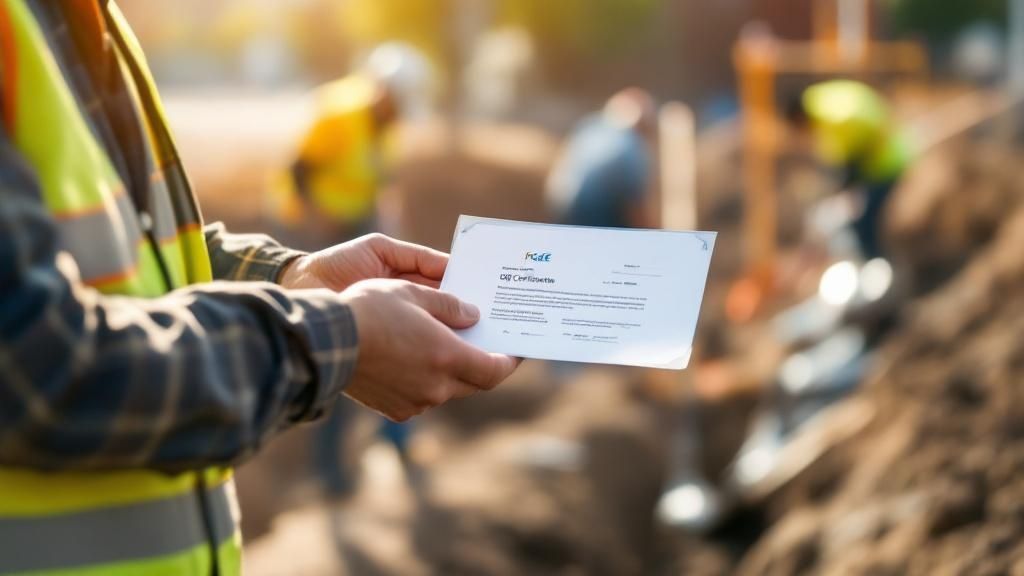
The most direct way to check a contractor's status is to ask for the OQ credentials of the specific crew members who will be on your property. A general company certificate is a good start, but the individual qualifications are what really count. Every qualified technician has a physical or digital Operator Qualification (OQ) card.
This card is the ultimate proof. It lists the technician's name, their OQ number, and—most importantly—the specific "covered tasks" they are certified to perform.
Pro Tip: Never assume a company's general certification applies to every single employee. A simple but firm question can separate the true professionals from the rest: "Can you please provide the OQ cards for the foreman and crew who will be handling the trenching and gas line installation on my job?"
Checking the Details on the OQ Card
When they hand you the OQ card, don't just give it a quick glance. You need to confirm that the qualifications listed explicitly cover the work being done on your property. Look for tasks related to excavation, plastic pipe joining, or pipeline installation.
Also, be sure to check the expiration dates. Qualifications aren't permanent, and you want to ensure everyone on site is current.
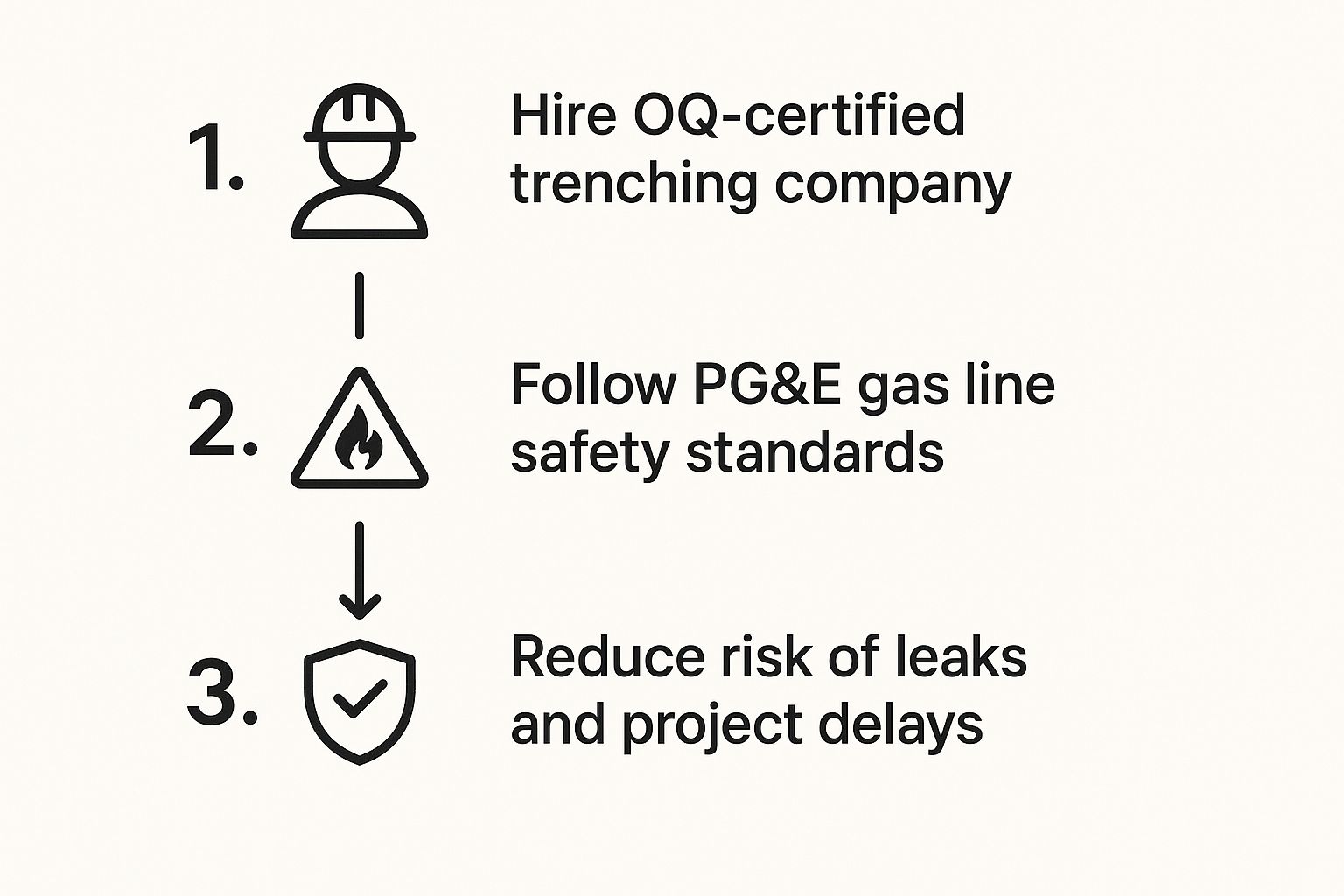
This simple verification step is a non-negotiable part of the process for any utility work. As the graphic shows, following PG&E standards starts with hiring a certified team, which is the key to minimizing risk.
This due diligence ensures every part of your project meets the highest safety standards from the ground up. To get a better handle on the initial groundwork, you can learn more about the specifics of trenching for utility lines in Monterey County in our detailed guide.
Evaluating Real-World Trenching Expertise and Safety
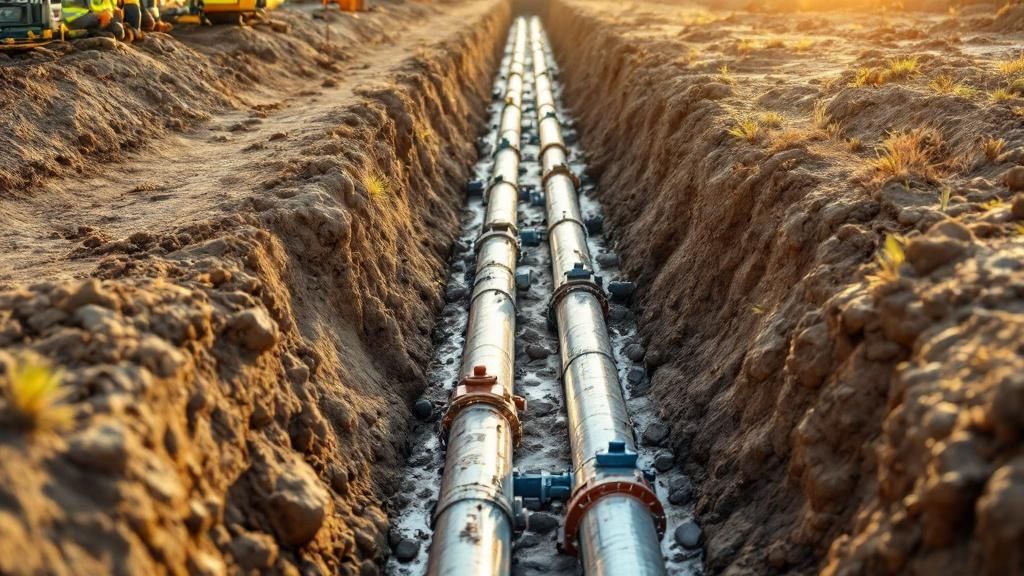
While a PG&E OQ certification is the non-negotiable starting point, it’s really just the price of admission. True expertise in gas line trenching comes from years of hands-on, in-the-dirt experience and a genuine, top-down commitment to safety. You need to look past the certificate to see how a company actually operates in the real world.
A good place to start is their project portfolio. Any reputable company should be eager to show you their past gas line trenching work. Look for projects that feel similar to yours in scope and complexity—maybe they dealt with the same tricky soil conditions, property types, or logistical hurdles you're facing.
Digging Into Safety Records
A company’s safety culture is one of the most honest reflections of its professionalism. You can get a clear snapshot of this by asking about their safety metrics. The big one here is their Experience Modification Rate (EMR), a number insurance companies use to measure past injury costs and predict future risk.
An EMR below 1.0 is considered good, signaling a better-than-average safety record. Anything over 1.0 suggests a history of more frequent or expensive incidents. A contractor should have no problem providing this number if you ask.
Beyond the EMR, probe into their specific safety protocols for gas line jobs. How do they handle surprises, like discovering unmarked private utility lines or hitting unexpected rock? Their answers will tell you whether safety is just a buzzword for them or a fundamental part of how they do business. This is especially critical for projects in diverse terrains, and you can see how a professional utility trenching contractor in Monterey County handles these exact challenges.
Reading Between the Lines
Finally, check online reviews and ask for references—but do it with a purpose. Don't just settle for a curated list of their happiest customers. Ask for references from projects that hit a snag or presented a real challenge.
When you make the call, ask pointed questions that go deeper than, "Were you happy with the work?"
- How did the crew communicate with you during the project?
- Was the job site kept clean and secure at the end of each day?
- What did the property look like after they restored it? How was the cleanup?
This approach gives you the full story of a company’s competence, reliability, and—most importantly—how they handle pressure when things don't go perfectly. It's the surest way to know the PG&E OQ-certified company you hire has the proven, real-world expertise your project deserves.
Understanding PG&E's Big Picture: The Push to Go Underground
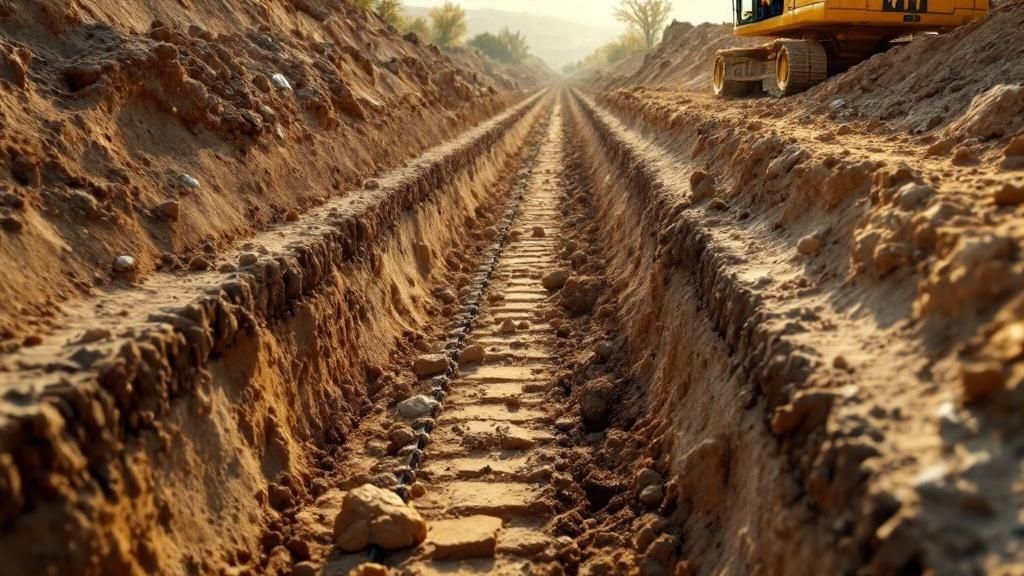
When you hire a PG&E OQ-certified gas line trenching company, you’re doing more than just completing a private project. You're actually plugging into a massive, state-wide mission to build a safer and more resilient energy grid for all of California.
PG&E is in the middle of one of the boldest public safety projects in the state's history: burying thousands of miles of overhead power lines. The main driver for this is to drastically cut down on wildfire risk, a constant danger we all face. The scale of this operation is truly immense.
Just look at the numbers. In 2023 alone, PG&E trenched and installed 350 miles of conduit as part of this program. That’s not just busy work—it's an effort proven to slash wildfire ignition risk from electrical equipment by an incredible 98%. This statistic really drives home why proper, professional excavation is so critical. You can get the full rundown on this milestone by reviewing the program details here.
Why This Matters for Your Gas Line Project
So, how does this huge power line project affect your gas line installation? It’s all connected. This massive undergrounding campaign is exactly why PG&E's OQ (Operator Qualification) standards for all underground work, including gas lines, are enforced so rigidly. PG&E can't do this alone; they depend on a network of highly skilled, certified contractors to get the work done safely and correctly.
The very same principles of precision, safety, and compliance that are essential for large-scale power line projects apply directly to your residential or commercial gas line installation. Every certified contractor is a trusted partner in this critical public safety effort.
Hiring a PG&E OQ-certified gas line trenching company brings that top-tier expertise right to your property. You’re getting professionals who are trusted with the public’s most critical infrastructure, ensuring your project is a solid, secure piece of the community grid. To see what this level of work looks like up close, check out our overview of underground utility services in Monterey and Santa Cruz County. Your properly installed gas line becomes another safe, reliable link in a much stronger system.
Alright, you’ve done your homework. You’ve confirmed their PG&E OQ certification and glanced through their safety history. Now comes the real test—the conversation you have before any ink dries on a contract.
This isn’t about just haggling over price or timelines. This is where you dig into the nitty-gritty operational details that truly protect your property, your investment, and ultimately, your peace of mind. Any professional PG&E OQ certified gas line trenching company worth its salt will have ready, confident answers to these questions.
Think of it this way: anyone can give you a quote, but how they handle the unexpected is what separates the pros from the problems. Digging trenches isn’t always straightforward. Sometimes, you uncover a tangled mess of old pipes from a previous owner's shoddy work. Knowing how a company deals with surprises like these is critical, as it can be the difference between a small hiccup and a major project delay. In fact, these situations are common enough that we've even put together resources on dealing with complicated sewer or water pipeline issues.
Final Vetting Checklist
Before you commit, it's time to run through one last checklist. The answers you get here will paint a crystal-clear picture of their professionalism and exactly what you can expect once the work starts.
-
Who is actually handling the permits and scheduling the PG&E inspections? A truly full-service contractor takes this completely off your plate. They should manage every bit of municipal paperwork and coordinate directly with PG&E for that all-important final sign-off. If they expect you to handle it, that’s a red flag.
-
What’s your exact protocol if you hit an unexpected utility line? Don't accept a vague answer. They need to detail an immediate stop-work procedure, who they notify (and in what order), and the safety plan they enact on the spot. Hesitation here is a massive warning sign.
-
How will my yard look when you're finished? Get specific. Ask them to define "restoration." Does that mean just pushing dirt back into the trench, or does their service include re-seeding the lawn, replacing sod, or even repairing hardscaping like a cracked patio stone or walkway?
The goal here is to find a contractor offering a "turnkey" solution. The best companies manage everything from the first permit to the final site cleanup, leaving you with nothing but a finished, functional, and clean job site.
And for the final, most crucial question: "Can I get a current copy of your general liability insurance certificate?" This isn't just about checking a box. You need to see that their coverage is active and adequate for high-risk gas line work. This simple step is your ultimate protection before a single shovel hits the ground on your property.
To make this easier, you can use a simple scorecard to compare your top candidates side-by-side. It’s a great way to move past a gut feeling and make a decision based on clear, comparable information.
Contractor Comparison Scorecard
| Question/Criteria | Company A Response | Company B Response | Company C Response |
|---|---|---|---|
| Handles all permits & PG&E scheduling? | |||
| Clear protocol for hitting utility lines? | |||
| What's included in site restoration? | |||
| Provided a current insurance certificate? | |||
| Overall Professionalism & Confidence? |
By filling this out during your calls, you’ll have an objective way to see which company truly offers the most complete and professional service, ensuring your project is in the best possible hands.
Answering Your Top Gas Line Trenching Questions
After you've done your homework, there are always a few lingering questions that pop up. I get it. Getting straight answers helps you feel confident before the digging starts on your property.
Let's walk through some of the most common questions we hear from clients about hiring a PG&E OQ-certified trenching company.
What Happens If Someone Uncertified Works On My Gas Line?
This is a big one, and the consequences are serious. If an uncertified contractor touches your gas line, PG&E will almost certainly refuse to connect or turn on your service. That means you'll have to hire a certified company to come in and do the entire job over again at your expense.
Even worse, you personally take on all the liability for any accidents, gas leaks, or property damage that happens because of that non-compliant work. It's a massive financial and safety risk you just can't afford to take.
How Long Does a Typical Project Take?
For a standard residential gas line installation, you can usually expect the work to take between one and three days. This timeline covers everything from the initial trenching and laying the new pipe to backfilling and scheduling the final inspection with PG&E.
Keep in mind that unforeseen issues like rocky soil or delays in getting the PG&E inspector on-site can stretch this out. A good contractor will always keep you in the loop about any changes to the schedule.
Do I Need to Mark the Utility Lines on My Property?
No, you don't. Your certified contractor is legally required to contact 811 (USA North) to get all the public utility lines marked before a single shovel hits the ground. It's a non-negotiable safety step.
However, it's your job to tell the contractor about any private lines you have. These are things the public utility marking service won't know about.
This includes common items like:
- Sprinkler and irrigation systems
- Electrical lines running to a detached garage, shed, or landscape lighting
- Private water wells or septic systems
Pointing these out is crucial. It helps prevent expensive damage and keeps the crew safe while they work.
When you need a job done right—and to code—you need a team with proven expertise. For professional, compliant trenching and utility services on the Central Coast, contact Coastal Pipeline Inc. today.