
When people think about fire protection, they usually picture the sprinklers inside a building or the alarms on the wall. But the real heart of the system—the powerful, high-pressure water supply—is buried deep underground. A fire hydrant and fire line installation contractor is the specialized expert who builds this hidden, life-saving infrastructure.
These pros are more than just construction workers who dig trenches. They are highly skilled professionals who connect a property's fire protection system directly to the city’s water supply, ensuring firefighters have the water they need the moment an emergency strikes.
What a Fire Line Installation Contractor Actually Does
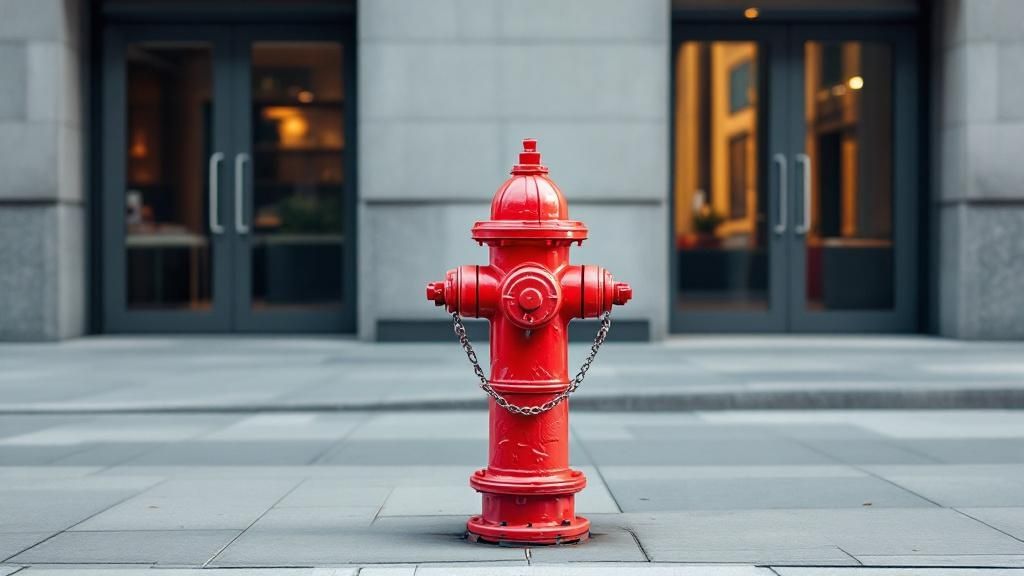
Think of a fire line contractor as a specialized surgeon for a property’s most critical utility. Their job is to take complex civil engineering plans and turn them into a functional reality. It’s a delicate dance of heavy construction, precision engineering, and navigating a maze of strict regulations.
They are responsible for the entire process, from tapping into the city water main to installing the bright red hydrant on the curb. This isn't your average plumbing job; this is high-stakes work where a single mistake could have catastrophic consequences.
Core Responsibilities and Expertise
A qualified fire line contractor manages every step of bringing water from the public main to your property for fire suppression. Their work ensures that when firefighters arrive and connect their hoses, they get an immediate and powerful stream of water.
Key responsibilities typically include:
- Connecting to Municipal Systems: This involves performing "hot taps" into live city water mains, a complex procedure that demands careful coordination with public works departments.
- Precision Excavation: They dig trenches to exact depths and grades, skillfully avoiding existing underground utilities like gas lines, sewer pipes, and communication cables.
- Installing Fire Lines: Contractors lay and join large-diameter pipes—often 6-inch or 8-inch ductile iron or C900 PVC—built to handle immense water pressure without failing.
- Setting Hydrants and Valves: This is the final, visible step. It includes installing fire hydrants for easy firefighter access and placing control valves that let crews isolate parts of the system for maintenance.
A fire hydrant is completely useless without the expertly installed underground pipes and valves that supply it. An improper installation can lead to major failures, like dangerously low water pressure or leaks that undermine the entire fire protection network.
More Than Just Construction
A true fire line installation contractor is also your compliance guide. They know the ins and outs of the complex codes set by the National Fire Protection Association (NFPA) and local city ordinances. They make sure every single component, from the type of pipe used to how far the hydrant sits from the curb, is up to code.
Once the installation is complete, the job isn’t over. The contractor performs intense testing, including flushing the lines to clear out debris. They also conduct hydrostatic pressure tests, pushing the system to over 1.5 times its normal operating pressure to confirm it is completely leak-free and built to last. This final step is crucial for getting the sign-off from the local fire marshal and officially putting your property’s first line of defense into service.
The Fire Line Installation Process from Start to Finish
Installing a fire hydrant and fire line is a bit like a carefully choreographed dance—every single step has to be perfect, and precision is everything. Getting a peek behind the curtain helps you understand why this isn't a DIY job and why true expertise is so important. It’s a journey that transforms a simple patch of dirt and a set of blueprints into a life-saving water system.
This work is a powerful reminder of how critical infrastructure is. In fact, the global fire hydrant market is expected to hit around $7.32 billion by 2025, a number pushed higher by growing cities and tougher safety rules. It shows a global commitment to building safer communities, one pipeline at a time.
Site Assessment and Strategic Planning
Before a single shovel hits the ground, the first order of business is a detailed site assessment. A seasoned fire line contractor doesn't just do a quick walkthrough. They come to the property to analyze the lay of the land, spot any potential roadblocks, and pore over the civil engineering plans.
A huge part of this is locating all the other utilities buried underground—we're talking gas lines, electrical conduits, sewer mains, and communication cables. One wrong move during excavation could mean a dangerous utility strike, leading to major service outages and serious safety hazards. This initial planning phase is all about mapping the safest, most direct route for the new fire line.
Navigating Permits and Regulatory Hurdles
You can't start a fire line project without getting the right approvals. Your contractor is responsible for securing all the required permits from local authorities, which usually means dealing with the public works department and the fire marshal's office. This can be a maze of paperwork and red tape, and it takes someone who knows the local codes inside and out.
This step makes sure the project is fully legal and compliant before construction begins. It saves a world of headaches, preventing expensive delays and failed inspections later on. Think of it as the final green light that confirms the project’s design meets all public safety standards.
Precision Excavation and Trenching
Once the plans are approved and permits are in hand, the real work begins. The crew brings in heavy equipment, like excavators, to dig a trench along the planned path. This is much more than just digging a ditch. The trench has to be a specific depth—often below the local frost line to keep the pipes from freezing—and graded with a precise slope to ensure water drains correctly.
Digging these channels is a core skill in underground utility work, and it takes a skilled operator to maneuver around the marked utility lines. You can learn more about what this involves by exploring specialized underground fire line services.
Pipe Laying and System Assembly
With the trench ready, the crew starts laying the fire line pipes. These aren't your average pipes; they're typically made of heavy-duty materials like ductile iron or C900 PVC, specifically chosen for their strength and ability to handle intense water pressure. Each section is carefully lowered into the trench and fitted together to create a seamless, leak-proof line.
The material placed under and around the pipe, known as bedding, is also critical. The right kind of sand or gravel gives the pipe stable support and protects it from shifting soil or sharp rocks, which is key for long-term durability.
Setting Hydrants and Valves
After the main line is in place, the fire hydrants and control valves are installed. The hydrant is connected to the main line with a smaller pipe and set at a precise height and distance from the curb, exactly as the local fire code requires. This makes sure firefighters have quick, easy access when it counts.
Crucial shut-off valves are also installed underground. These allow maintenance crews or emergency responders to isolate specific sections of the fire line without shutting down water to the entire area.
This visual helps break down a few key moments in the installation process.
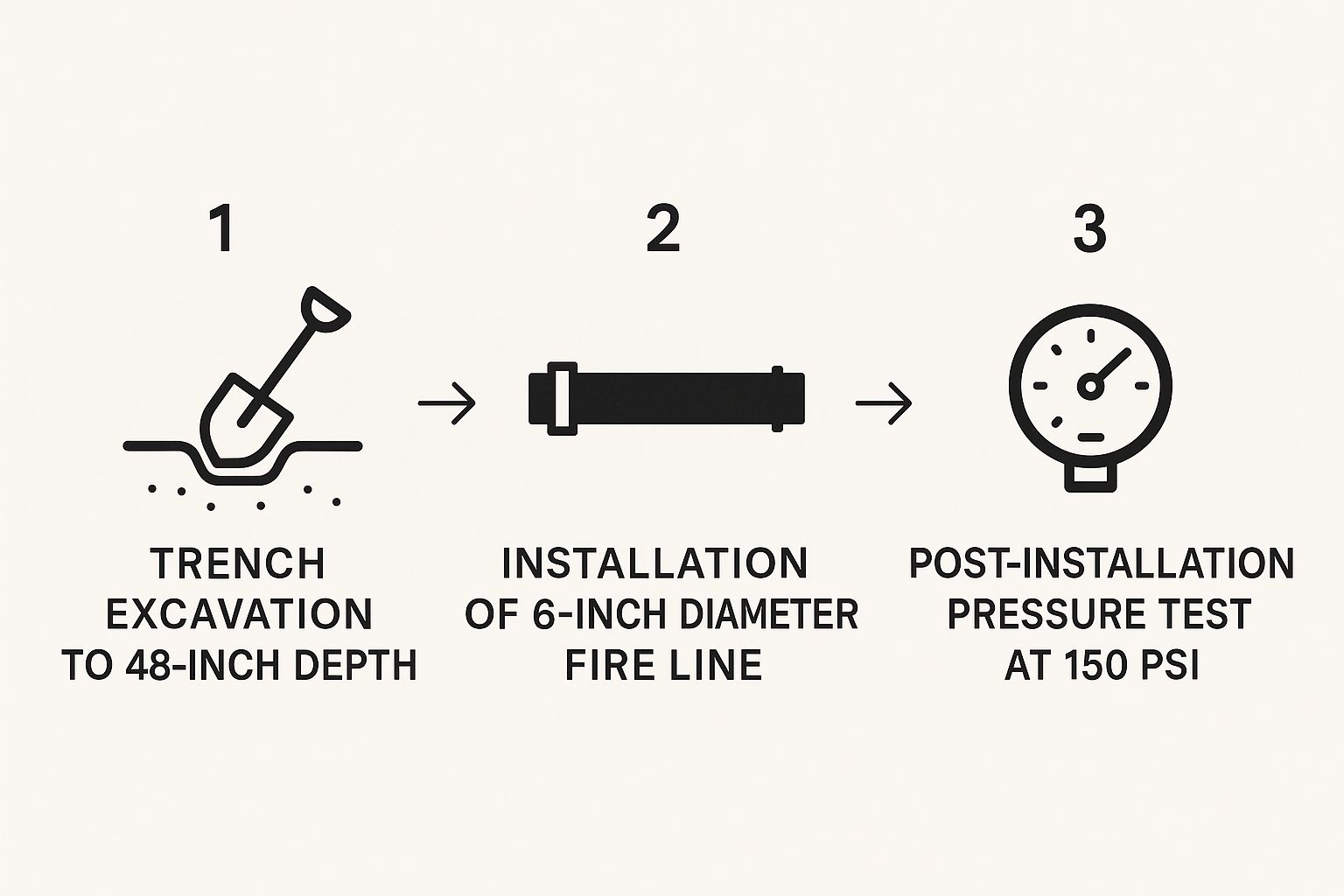
As you can see, precise digging, careful pipe installation, and thorough testing all have to work together for a project to succeed.
Critical Flushing and Hydrostatic Testing
With the system fully assembled, it's time for two final, non-negotiable tests. First up is flushing. This is where a massive amount of water is blasted through the new pipes to clear out any dirt, rocks, or debris that might have gotten in during construction.
Next is the hydrostatic test. The contractor seals the entire system and pumps it full of water, pressurizing it to a level way higher than its normal operating pressure—often 150 psi or more. The system has to hold this pressure for a set time, usually two hours, to prove there are absolutely no leaks. Passing this test is a must for final approval.
Final Inspections and Handover
Finally, the local fire marshal and a public works inspector come to the site for one last look. They review the entire installation, check the pressure test results, and make sure every last component is up to code.
Once they give their official approval, the trenches are backfilled, the ground is compacted, and the surface is restored. What's left behind is a fully commissioned fire protection system, ready to serve and protect.
Navigating Fire Protection Codes and Compliance
When it comes to fire protection, codes aren't just suggestions—they're the law. An experienced fire hydrant and fire line installation contractor knows that every pipe, every fitting, and every procedure is dictated by a dense network of regulations. This isn't just about ticking boxes; it's about ensuring absolute reliability when lives are on the line.
Cutting corners on these standards can lead to failed inspections, expensive do-overs, and serious legal headaches. Think of the codes as the ultimate instruction manual for a life-saving system. They ensure a fire hydrant in California works exactly like one in Florida, giving firefighters the universal consistency they need to act fast and save property.
The Authority of the NFPA
On a national level, the National Fire Protection Association (NFPA) is the definitive authority. This organization develops the codes and standards that form the bedrock of fire safety across the United States. For any underground fire line project, the most critical document is NFPA 24, Standard for the Installation of Private Fire Service Mains and Their Appurtenances.
NFPA 24 lays out the non-negotiable requirements for things like:
- Materials: It specifies which types of pipes, fittings, and valves are tough enough to handle high pressures and resist long-term corrosion.
- Installation Depths: The standard dictates how deep pipes must be buried to protect them from traffic above and from freezing in cold climates.
- Testing Procedures: It provides the exact methods for pressure testing and flushing the system to make sure it's 100% leak-free and clear of debris.
You can see the official landing page for the NFPA 24 standard here, a document that professional contractors live and breathe.
This standard is what guarantees every private fire main is installed to the same high benchmark for safety and performance, no matter where it's located.
Local Codes: The Final Word
While the NFPA provides the national rulebook, the local jurisdiction always has the final say. This is the Authority Having Jurisdiction (AHJ), which is usually the local fire marshal or the city's public works department. They adopt national codes like NFPA 24 but often add their own requirements based on local conditions.
For example, a town in a seismic zone might mandate special flexible pipe joints that aren't required elsewhere. A coastal city will likely demand tougher corrosion protection for hydrants and fittings to combat the salty air.
A contractor's deep knowledge of these local quirks is absolutely essential. They need to know the specific hydrant models, setback distances, and connection methods that the city requires. This local expertise is what separates a smooth, successful project from one that gets stuck in a cycle of failed inspections and delays.
As cities expand, the need for this specialized knowledge is only growing. The fire hydrant system market is expected to climb from USD 3.3 billion in 2025 to over USD 5 billion by 2035, all driven by the demand for compliant fire infrastructure.
This thorough understanding of regulations is a key part of professional underground utility services, because compliance is what ensures both safety and project success. Choosing a fire line contractor who is fluent in both NFPA standards and local codes is the single best way to ensure your project is done right the first time and is ready to protect your property.
Understanding the Costs of a Fire Line Installation
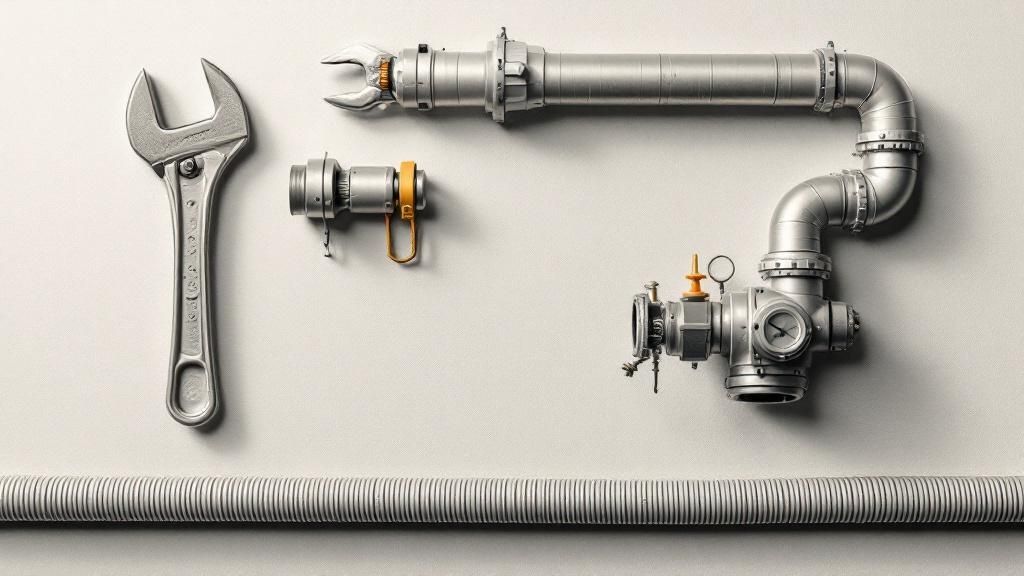
Figuring out the cost of a new fire hydrant and fire line isn't as simple as picking an item off a store shelf. The final price tag is a unique blend of materials, specialized labor, and site-specific services that can swing wildly from one job to the next. Getting a handle on what goes into a bid is the first step to budgeting smart and picking the right contractor.
A professional quote from a fire hydrant and fire line installation contractor should be more than just a single number. Think of it as a detailed recipe—each ingredient has its own cost, and if you leave something out, the whole thing can be ruined. Transparency is key.
Primary Cost Drivers in Fire Line Projects
The total cost of an installation is really shaped by a few major factors. The biggest line items are almost always the materials, the skilled crew, the heavy equipment, and the required permits and engineering work. These aren't optional—they're essential for a system that's safe, compliant, and ready when you need it.
Here’s a look at the major cost factors:
- Materials: This bucket includes all the physical components, from the pipes (ductile iron or C900 PVC) and the fire hydrant itself to the valves, fittings, and even the sand or gravel for the pipe bedding. Prices here can change with the market.
- Specialized Labor: This isn't just any construction crew. You're paying for a certified team that knows the ins and outs of underground utility work, including a foreman, equipment operators, and experienced pipefitters. Their expertise is what ensures the job is done right.
- Heavy Equipment: You can't dig a trench without an excavator or move materials without a loader. The costs here cover equipment rental or operational fees, fuel, and getting everything to and from your job site.
- Permits and Fees: Every city and county has its own fee structure for permits, inspections, and tapping into the main public water supply. These can vary dramatically from one jurisdiction to another.
- Engineering and Testing: Before a shovel ever hits the ground, there’s planning, blueprint reviews, and design work. Afterward, the system must pass a hydrostatic pressure test and be flushed, all of which come with their own costs.
A suspiciously low bid that lumps everything into one vague line item should be a major red flag. A reputable contractor will give you a clear, itemized quote. That way, you know exactly what you’re paying for and can be sure no corners are being cut.
The Impact of Project Scale on Your Budget
It goes without saying, but the size and complexity of your project are the biggest drivers of your final budget. Installing a short fire line for a small commercial building is a completely different animal than designing a massive network of hydrants for a new industrial park or an entire residential subdivision.
A project that calls for 3,000 feet of 8-inch pipe and several hydrants will have far higher material and labor costs than one needing just 100 feet of 6-inch pipe and one hydrant. It's not just about length, either. Working in a crowded urban area with a web of existing underground utilities requires a level of precision and care that naturally increases labor costs.
While a versatile contractor might also be a professional underground gas line installation contractor, hiring a team that specializes in fire lines ensures they are laser-focused on the unique safety standards and regulations that apply.
Estimated Cost Breakdown for Fire Line Installation Projects
To give you a clearer picture of how these costs can scale, we’ve put together a sample comparison. Think of this as a general guide to help you understand the moving parts of a project budget.
| Expense Category | Small Commercial Project (Est. Range) | Large Industrial Complex (Est. Range) |
|---|---|---|
| Engineering & Permits | $2,500 – $6,000 | $15,000 – $40,000 |
| Materials (Pipes, Hydrants, Valves) | $8,000 – $15,000 | $75,000 – $200,000+ |
| Heavy Equipment Rental | $4,000 – $9,000 | $30,000 – $80,000+ |
| Specialized Labor | $10,000 – $25,000 | $100,000 – $250,000+ |
| Testing & Inspection | $1,500 – $4,000 | $8,000 – $20,000 |
| Total Estimated Cost Range | $26,000 – $59,000 | $228,000 – $590,000+ |
Note: These are illustrative estimates only. Actual costs will always depend on site-specific conditions, local labor rates, and current material prices. The best way to get an accurate number is to request a detailed quote from a qualified contractor for your specific project.
How to Choose the Right Fire Line Contractor
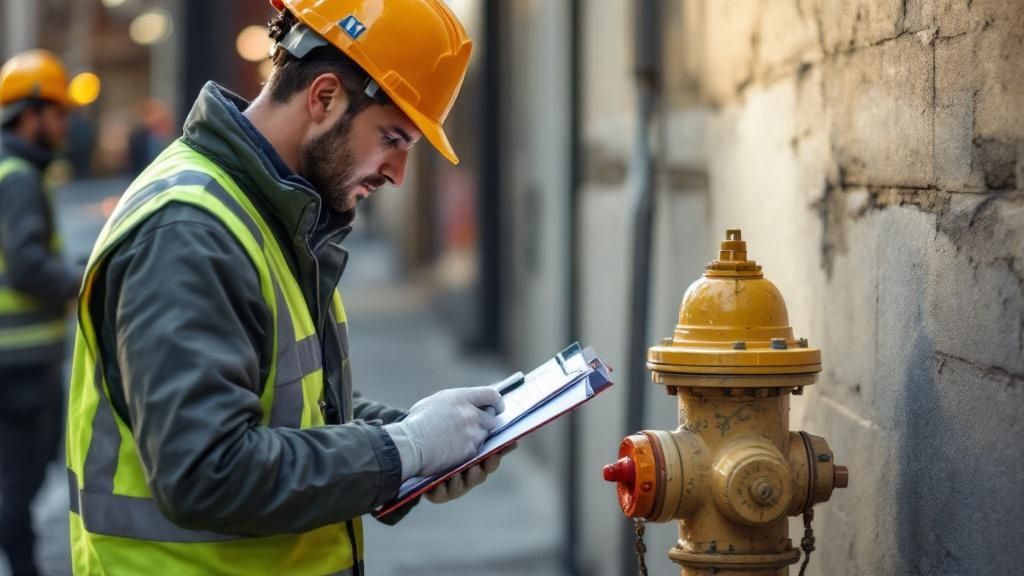
Picking your fire hydrant and fire line installation contractor is probably the single biggest decision you'll make for your entire project. This isn't just another trade you hire. You're handing over responsibility for a critical life-safety system. The quality of their work directly impacts the safety of your property, the people inside it, and the first responders who might have to depend on it.
Think of it this way: you wouldn't ask your family doctor to perform open-heart surgery. You'd find a specialist. It’s the same thing here. You need a contractor with proven expertise in high-pressure water systems, not a general plumber or a standard excavation crew. The real difference is their deep understanding of fire codes, their working relationships with local inspectors, and their experience with the specific challenges this work brings.
Vetting a Contractor The Right Way
Before you even glance at a price, you have to verify a contractor’s basic qualifications. This first step weeds out the amateurs and leaves you with true professionals. Any legitimate contractor will have no problem providing this documentation.
Here are the non-negotiables you must check:
- Proper Licensing: In California, this means a valid C-16 Fire Protection Contractor license. This specialty license proves they have the specific knowledge and have passed exams on fire protection systems. Don’t let anyone tell you a general engineering or plumbing license is good enough. It isn’t.
- Comprehensive Insurance: Ask for their certificates of insurance for both general liability and worker's compensation. This is what protects you from financial headaches if an accident happens on your property.
- Relevant Project Portfolio: A qualified contractor will be eager to show you their past fire line projects. Ask to see work that's similar in size and scope to yours, whether it's commercial, industrial, or residential.
- Verifiable Client References: Don't just take their word for it. Actually call their past clients. Ask them about the experience—were they on time and on budget? How did they handle communication and the inevitable surprises?
This isn't just about doing your homework; it's a crucial part of managing risk for your property.
Key Questions to Ask Every Potential Contractor
Once you have a shortlist of qualified companies, it’s time to dig deeper. The way they answer these questions will tell you everything you need to know about their expertise and professionalism.
Ask them how they handle unexpected problems. What happens if they hit solid rock or an unmarked utility line during excavation? A seasoned pro will have a clear plan ready to go. An inexperienced one will be scrambling, which means expensive delays for you.
You should also ask about their relationship with the local Authority Having Jurisdiction (AHJ), which is usually the fire marshal and the public works department. A contractor with a solid reputation and good working relationships with these inspectors can help your project move along much more smoothly.
This focus on safety and compliance is a big deal in our industry. The global market for indoor fire hydrants alone is on track to hit $2.135 billion by 2025, largely because of strict safety codes.
Finally, choosing the right partner is especially critical for commercial properties, which have a unique and complex set of fire code requirements. You can learn more by checking out our guide on finding a fire line installation contractor for commercial buildings. Partnering with a specialist ensures your investment is not just compliant today, but built to last.
Common Questions About Fire Hydrant and Line Installation
Even after the digging and installation are done, property owners usually have a few lingering questions. As your expert fire hydrant and fire line installation contractor, we believe in giving you clear, straightforward answers so you can manage your new life-safety system with confidence.
Most questions boil down to long-term care, the specific equipment used, and whether it’s even possible to upgrade an older property. Getting these answers upfront prepares you for the responsibilities that come with owning the system.
How Often Do New Fire Hydrants Need Inspection?
Once your new hydrant is installed and running, the job isn't over. NFPA 25 and local fire codes mandate a regular inspection schedule. This isn't a "set it and forget it" system—consistent checks are what keep it reliable for years to come.
Generally, your maintenance plan will look something like this:
- Annual Visual Inspections: At least once a year, someone needs to give the hydrant a thorough visual check-up to make sure everything looks right on the outside.
- Five-Year Flow Tests: Every five years, a more in-depth test is required to confirm the hydrant can still deliver the right amount of water pressure and flow. This is a critical performance check.
- Annual Valve Checks: All the control valves connected to the system must be inspected and operated every year to keep them from seizing up.
Your contractor should hand you a clear, detailed maintenance schedule when the project is wrapped up.
What Is the Difference Between Wet and Dry Barrel Hydrants?
The main difference here is all about the climate. It's not really a choice—the type of hydrant you get is determined by your local weather to prevent a major failure right when you need it most.
A dry barrel hydrant is the standard for any region that experiences freezing temperatures. The main valve is buried deep in the ground, well below the frost line. This keeps water out of the hydrant's upper body, so there's nothing to freeze, expand, and crack the casting.
On the other hand, a wet barrel hydrant is used in warmer climates where freezing isn't a concern. The hydrant stays filled with water all the way up to the nozzles, which allows for slightly faster operation in an emergency.
Can You Retrofit an Existing Property with a New Fire Line?
Absolutely. Retrofitting older properties with modern fire lines is a common and essential project. It's definitely more complex than working on a new construction site because you’re dealing with existing pavement, mature landscaping, and a hidden maze of other utilities.
A detailed site assessment is the first, most critical step. We need to map out every potential obstacle to find the least disruptive path for the new line. This involves careful excavation and a deep knowledge of how to perform the work safely. To get a better idea of what this looks like, you can see our breakdown of a professional utility trenching contractor in Monterey County. A good contractor handles everything, from the first dig to restoring the site back to how it was before we started.
At Coastal Pipeline Inc., we provide the specialized expertise needed to ensure your fire protection infrastructure is installed correctly and performs reliably. If you need a trusted partner for your next project, contact us today.
Learn more about our underground utility services at Coastal Pipeline Inc.