Choosing the right construction project delivery method is one of the most important calls you'll make on a project. It sets the tone for everything that follows—budget, timeline, and how well your team actually works together. Think of it like a game plan for a championship team; the right strategy gets everyone in sync and defines how you'll win.
Your Blueprint for Project Success
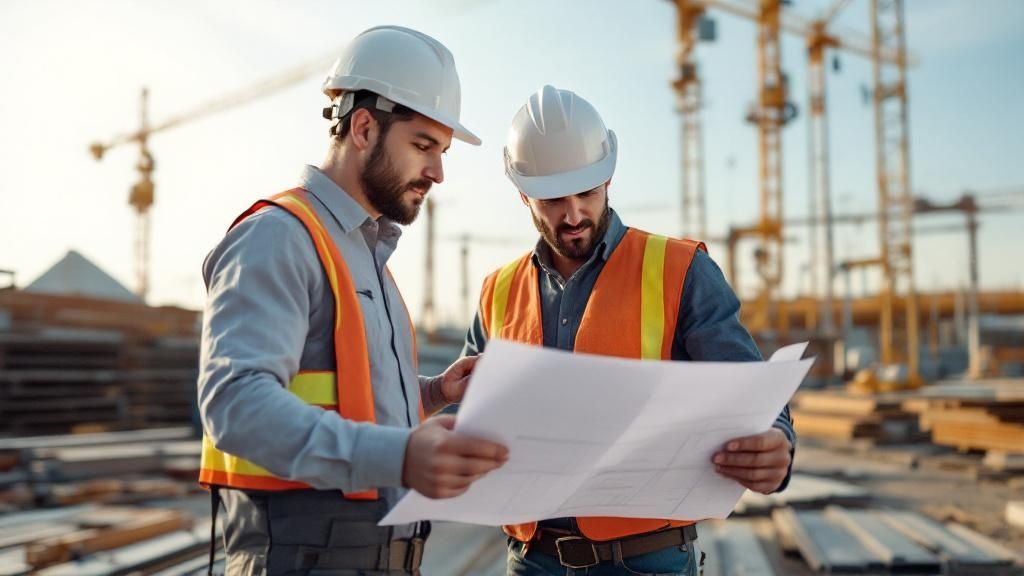
At its core, a project delivery method is the framework that outlines how owners, designers, and contractors will interact. It establishes the contracts, the lines of communication, and the entire sequence of events from a sketch on a napkin to the final handover. This choice isn't just an administrative checkbox—it's what allocates risk and sets the whole culture for the project.
There's no single "best" method, which is why understanding the options is so crucial. The right fit depends entirely on what you're trying to achieve. Are you prioritizing:
- Cost Certainty? Maybe a fixed, predictable budget is your absolute top concern.
- Speed to Market? In some cases, getting the project done fast is what matters most.
- Design Innovation? A highly complex or unique design might demand maximum collaboration.
- Risk Mitigation? Protecting yourself from unforeseen costs and delays could be the main goal.
The Foundation of Project Relationships
Think of a delivery method as the operating system for your construction project. It defines the rules of engagement. For instance, some methods are strictly linear, meaning the design has to be 100% complete before a builder is even brought on board. It’s like a relay race—the first runner has to finish their leg completely before passing the baton.
Other methods, however, are built on partnership. They bring the builder’s real-world expertise into the design phase early on. This is more like a football team huddling up to draw a play together, making sure it’s something they can actually execute on the field. This kind of early collaboration is a game-changer for complex jobs, like integrating extensive underground utility services into a new commercial development.
A project delivery method isn't just a contract; it's a strategic choice that defines the project's culture. It determines whether the environment will be collaborative or siloed, transparent or guarded.
A Growing Industry Demands Smarter Strategies
Getting this choice right is more important than ever, especially with the industry's explosive growth. Globally, construction output is projected to grow by 85%, hitting $15.5 trillion by 2030, and the U.S. is one of the key players driving that boom. This expansion is tied directly to the adoption of smarter, more integrated delivery methods that squeeze more efficiency out of every project stage.
Ultimately, your goal is to match your project’s unique needs with a method’s inherent strengths. When you understand the different options available, you can build a team structure that paves the way for a successful outcome, helping you sidestep the common headaches of mismatched expectations and contractual friction.
Understanding the Traditional Design-Bid-Build Method
If you were to ask someone to describe a major construction project, chances are they'd picture the Design-Bid-Build (DBB) method without even knowing its name. It's the industry's most time-honored route, so much so that it's simply known as the "traditional" approach. This method breaks a project down into three distinct, sequential phases: design, bidding, and construction.
Think of it like a relay race. The owner first brings on a design team—the architect and engineers—who are the first runner. This team has to finish their entire leg of the race, delivering a 100% complete set of plans and specifications, before the baton is ever passed. Only after that can the next phase kick off.
With a finished design in hand, the project goes out for bids. General contractors study the plans and submit competitive proposals, usually in a lump-sum or fixed-price format. The owner, often with the designer's help, picks a contractor, and the final "build" phase gets underway. This clear-cut separation of duties is what truly defines the DBB model.
The Appeal of Price Certainty and Clear Roles
For many project owners, especially in the public sector, DBB's biggest draw is cost predictability. The competitive bidding process, based on a fully detailed design, often drives the initial price down to the lowest possible figure. The owner knows exactly what construction will cost before a single shovel hits the ground—a massive advantage for projects with strict, immovable budgets.
This structure also draws very clear lines in the sand for roles and responsibilities.
- The Owner holds two separate contracts: one for the designer and another for the builder.
- The Designer is on the hook for the quality and completeness of the design documents.
- The Contractor is responsible for building precisely what's specified in those documents.
This separation creates a natural system of checks and balances. During construction, the designer often acts as the owner's representative, making sure the builder is sticking to the plan. For many, this formal, arm's-length relationship is a familiar and comfortable way to run a project.
In the Design-Bid-Build method, the owner signs separate contracts with the designer and the contractor. While this linear process delivers cost certainty through competitive bidding, it keeps the design and construction teams separate, which prevents early collaboration.
The Downside of a Siloed Approach
But the very structure that creates clarity can also create some major headaches. The single biggest drawback is the total lack of collaboration between the designer and the builder. Since the contractor isn't involved in the design phase, their practical, real-world construction knowledge is completely left on the table.
This often leads to trouble once work begins. If the plans have errors, omissions, or a design that’s just plain impractical to build, the owner gets stuck in the middle. The contractor will start submitting change orders for the extra time and money needed to fix the problem, and the finger-pointing between the design and construction teams begins. This adversarial dynamic is a notorious risk of the DBB method.
On top of that, DBB is almost always the slowest of all construction project delivery methods. Because each phase has to be fully completed before the next one can begin, there’s no room for overlapping tasks or fast-tracking the schedule.
The linear process can also kill innovation. The builder is hired to construct exactly what’s on the page, not to suggest better, smarter, or more cost-effective ways to get it done. These issues make DBB a poor fit for complex or fast-paced projects where teamwork and speed are essential. When it comes to critical early-stage work like site preparation, having proven experts on board is non-negotiable; you can learn more about the importance of skilled professionals from our partners, the leading commercial excavation contractors on the Central Coast. Ultimately, DBB works best for straightforward projects where the scope is crystal clear, the budget is the number one priority, and the timeline has plenty of wiggle room.
How Construction Manager at Risk Creates Balance
When you’ve got a complex project, but the budget is just as critical, you need something more flexible than the rigid, sequential nature of Design-Bid-Build. But you might not want the all-in-one approach of Design-Build either. This is exactly where the Construction Manager at Risk (CMAR) delivery method comes in, offering a smart hybrid that balances cost control with expert collaboration right from the start.
Think of it like hiring an expert mountain guide to help you map the safest, most efficient route before you even start climbing. With CMAR, the owner brings a construction manager (CM) on board during the design phase, not after. This CM isn't just waiting to build; they act as a consultant, providing invaluable pre-construction services.
This early involvement is a total game-changer. As designs take shape, the CM is right there, offering practical feedback on constructability, scheduling, material availability, and, most importantly, cost. This collaborative input helps iron out potential design flaws and budget busters before they turn into expensive change orders down the road—a common headache in more linear construction project delivery methods.
The Guaranteed Maximum Price
So, where does the “at Risk” part come from? It all hinges on a critical milestone: the Guaranteed Maximum Price (GMP). Once the design is developed enough, the CM gives the owner a firm, not-to-exceed price for the entire construction cost. The GMP puts a hard ceiling on your project's budget.
From that point on, the CMAR steps into the role of a general contractor to get the project built. The key difference is that the CMAR is now financially on the hook for any cost overruns beyond that GMP. If things end up costing more than planned, the CM absorbs that loss, shielding the owner’s budget.
The CMAR model creates a powerful incentive for efficiency. The Construction Manager is highly motivated to keep costs down and manage the project well, since their own profit is directly tied to staying under the Guaranteed Maximum Price.
This setup fosters a true partnership. Many CMAR contracts also include a savings clause. If the project comes in under the GMP, the owner and the CM share the leftover funds. It’s a win-win that encourages everyone to work together toward the same goal.
Ultimately, the CMAR model gives an owner access to a builder's real-world expertise during design while still keeping separate contracts with the designer and the CM. This maintains clear lines of accountability and a solid system of checks and balances.
To help visualize how CMAR stacks up against other common methods, this table breaks down the key differences.
Comparing Key Project Delivery Methods
This table offers a side-by-side look at the most common delivery methods, highlighting their core structures, risk levels for the owner, and best-fit scenarios.
| Delivery Method | Contract Structure | Owner's Risk Level | Timeline Potential | Best For |
|---|---|---|---|---|
| Design-Bid-Build (DBB) | Separate contracts with designer and contractor. | High (cost overruns, delays) | Slower (linear phases) | Simple projects where cost is the main driver. |
| Design-Build (DB) | Single contract for both design and construction. | Low (single point of responsibility) | Faster (overlapping phases) | Projects where speed and simplicity are top priorities. |
| CMAR | Separate contracts with designer and CM. CM provides a GMP. | Moderate (risk shifts to CM at GMP) | Moderate to Fast (early collaboration) | Complex projects needing budget control and expert input early. |
| IPD | Multi-party contract uniting owner, designer, and contractor. | Low (shared risk and reward) | Fastest (fully integrated team) | Highly complex projects where innovation and collaboration are crucial. |
Each method has its place, but as you can see, CMAR fills a vital role for owners who need a balance of control, collaboration, and cost certainty.
Benefits and Ideal Applications
The CMAR approach isn't just a compromise; it offers a unique blend of advantages that make it the perfect fit for certain projects. It’s all about striking that ideal balance between owner control, team collaboration, and a predictable budget.
Here’s what makes CMAR so effective:
- Early Cost Certainty: The GMP is set relatively early, giving owners a reliable budget much sooner than in a traditional Design-Bid-Build process.
- Reduced Risk for the Owner: The CM takes on the financial risk for any construction costs that go over the GMP, giving the owner powerful budget protection.
- Enhanced Collaboration: With the designer and CM working together from the start, you get a better-thought-out project with fewer conflicts.
- Faster Project Delivery: Because some construction activities can start before the design is 100% finished, the project timeline can often be compressed.
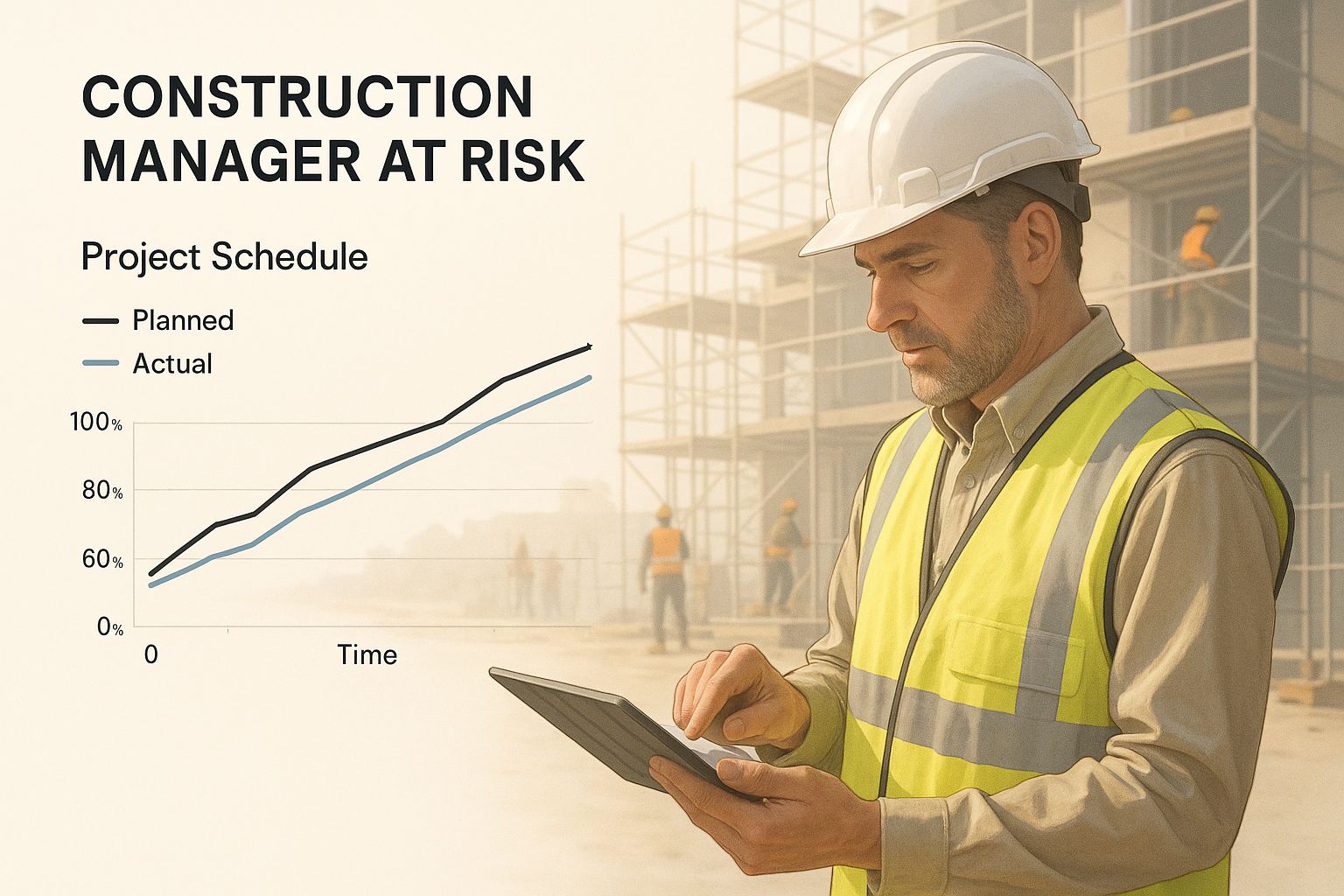
This method really shines on moderately to highly complex projects. Think new schools, healthcare facilities, or large-scale public buildings—places where getting the design right and locking in the budget are equally important. It’s the go-to choice when an owner wants to stay actively involved but needs an expert partner to navigate the nuts and bolts of construction.
Streamlining Projects with Design-Build
What if you could simplify the entire construction process? Instead of juggling multiple contracts, contacts, and potential conflicts, imagine having just one. That's the core promise of the Design-Build (DB) delivery method.
This approach brings the design and construction phases together under a single contract. It creates one unified team responsible for taking a project all the way from a rough concept to a finished building.
Think of it like commissioning a custom piece of furniture. You wouldn't hire one person to sketch it and a totally separate person to build it, just hoping they see eye-to-eye. You'd hire a master craftsman who both designs and builds, ensuring a seamless flow from idea to product. That's the Design-Build model in a nutshell—it gets rid of the finger-pointing by creating a single point of responsibility.
This unified structure is a major shift from the traditional, step-by-step nature of Design-Bid-Build. By having designers and builders on the same team from day one, you build a culture of collaboration, not conflict. The builder’s practical, real-world knowledge helps shape the design, catching potential problems before they become expensive mistakes on the job site.
The Power of a Single Contract
The defining feature of Design-Build is the single contract between the owner and the Design-Build team. This team might be led by a contractor who hires the architect or an architect who brings on the construction crew. Either way, the owner has one simplified point of contact.
This setup delivers two huge benefits: accountability and speed.
- Total Accountability: With one team handling everything, there’s no blame game. If a problem comes up, the Design-Build firm owns it and is responsible for fixing it.
- Faster Delivery: Since the team is integrated, construction can often start before the design is 100% finished. This overlap, known as fast-tracking, can seriously shorten the project timeline.
The numbers back this up. Research consistently shows that Design-Build projects are delivered up to 33% faster and have a 6% lower unit cost compared to projects using the traditional Design-Bid-Build method.
In Design-Build, the owner signs a single contract with one entity responsible for both designing and constructing the project. This unified approach fosters collaboration, accelerates the timeline, and provides a clear, single point of accountability for the project's success.
When Design-Build Is the Best Choice
While no single method is perfect for every job, Design-Build really shines on projects where speed, simplicity, and a cohesive team are the top priorities. It's a go-to choice for private-sector projects where owners want to minimize their own risk and management headaches.
Consider these scenarios where Design-Build is a great fit:
- Complex Industrial Facilities: For projects with specialized equipment or complex processes, having builders and designers collaborate from the start ensures the final facility works exactly as intended.
- Repeatable Projects: If you're a franchise owner or a developer building similar structures over and over (like warehouses or retail stores), the Design-Build process becomes incredibly efficient.
- Projects Requiring Early Site Work: The ability to fast-track is a game-changer here. A Design-Build team can get started on crucial site work, like grading or foundations, while the final interior designs are still being tweaked. This is especially helpful for projects needing significant upfront work, which you can read more about in our guide to excavation and land clearing.
The main trade-off with Design-Build is that the owner has fewer built-in checks and balances compared to methods with separate contracts. The key to making it work is choosing a reputable, experienced Design-Build firm with a proven history of delivering quality projects. When you find the right partner, this method provides an incredibly effective path to a successful outcome.
The Future Is Collaborative with Integrated Project Delivery

While other construction delivery methods certainly encourage teamwork, Integrated Project Delivery (IPD) takes it to a whole new level by making collaboration the very core of the project. IPD contractually binds the owner, designer, and primary builder into a single, unified team. This model goes way beyond a simple partnership; it creates a structure where all key players share the project's risks and rewards together.
Think of it less like a traditional client-vendor relationship and more like a true business alliance. Everyone’s financial success is directly tied to the project’s success, which is a powerful motivator for genuine teamwork and creative problem-solving. This shared-fate approach tears down the silos that so often lead to finger-pointing and disputes in other delivery models.
Under an IPD framework, the team operates with almost radical transparency. Budgets, big decisions, and unexpected challenges are all tackled openly by the group. This allows the combined expertise of every single stakeholder to be used to find the best possible solutions. This high level of integration makes IPD one of the most effective and forward-thinking delivery methods out there.
How IPD Contracts Drive Performance
The real secret to IPD’s success is its unique contractual structure, which is typically a multi-party agreement. This single contract, signed by the owner, architect, and contractor, sets the stage for a completely different kind of working relationship. It legally aligns everyone's goals right from day one.
Financial incentives are built to reward collective performance, not just individual milestones. If the project comes in under budget and ahead of schedule, the entire core team shares in the savings. On the flip side, if there are cost overruns or delays, everyone shares in the financial pain, motivating the team to work together to prevent issues before they even start.
In Integrated Project Delivery, risk and reward are not just transferred—they are shared. This collective accountability forces a level of problem-solving and collaboration that is unmatched by other delivery methods, making the team truly "all in this together."
When to Use This Advanced Method
Let's be clear: IPD isn't the right fit for every project. It's the gold standard for builds that are exceptionally complex, innovative, or on a very tight schedule. It really shines in environments where peak performance and out-of-the-box thinking are absolute must-haves.
This approach is a perfect match for:
- Highly Complex Facilities like hospitals, laboratories, or data centers where integrating countless different systems is a massive challenge.
- Fast-Tracked Projects that demand seamless coordination between design and construction to hit aggressive deadlines.
- Innovation-Driven Builds where the goal is to push the boundaries of design, sustainability, or new construction techniques.
- Projects with intricate site challenges, such as those requiring advanced storm water management systems to protect sensitive environments.
The rapid growth of IPD really speaks to how well it works. The global IPD market is projected to skyrocket to $10.47 billion by 2033, a huge leap from an estimated $2.851 billion in 2025. This growth is being driven by a growing demand for faster project timelines and better ways to manage risk on today's more challenging projects. You can dive deeper into these market trends and projections.
Choosing IPD does require a significant upfront investment in building team chemistry and trust. But for the right kind of project, it unlocks a level of efficiency and shared commitment that can lead to truly extraordinary results.
How Technology Amplifies Every Delivery Method
In today's world, construction technology isn't just a nice-to-have extra; it's a powerful force multiplier for any of the construction project delivery methods you choose. We've moved past simply digitizing old pen-and-paper processes. Modern tools fundamentally change how teams collaborate, manage risk, and bring plans to life.
Think of technology as a high-performance engine. You can drop this engine into any vehicle—whether it's the steady, traditional Design-Bid-Build model or the fast-paced, collaborative Integrated Project Delivery framework—and it will immediately boost performance. The delivery method is the chassis that sets the rules of the road, while technology provides the horsepower to get you there better and faster.
Take a CMAR team, for instance. They can use Building Information Modeling (BIM) to build a detailed 3D model of the project. This is far more than a digital drawing; it’s a living database. With it, the team can generate hyper-accurate cost estimates for their GMP, run clash detection to find and fix system conflicts before a single shovel hits the ground, and create a 4D schedule that visually links the model directly to the project timeline.
Centralizing Communication and Data
One of the biggest impacts of technology is its ability to smash through communication silos, a classic headache in methods like DBB. Cloud-based project management platforms create a single source of truth that every stakeholder can rely on.
Whether you have a Design-Build team sharing drawing updates in real-time or an IPD team working together on RFIs, everyone is on the same page, working from the most current information. No more confusion, no more outdated plans.
This shift is changing the game. Forecasts show that by 2025, cloud platforms and AI-driven tools will be standard issue for managing projects. These tools make real-time collaboration and automated workflows possible, no matter where your team is located. They are key for spotting potential delays, optimizing how you use your crew and materials, and cutting down on waste. You can find more on these trends in this 2025 construction trends report.
Creating Digital Twins for Lifecycle Management
Maybe the most exciting application is the creation of a "digital twin"—a dynamic, virtual replica of the physical building. An IPD team, which is naturally focused on the building's long-term value, might build a digital twin to optimize the facility's entire operational life. This model is continuously fed real-time data from sensors inside the finished building.
A digital twin isn't just a static 3D model; it's a living, breathing digital counterpart of the physical asset. It allows owners to simulate operations, predict maintenance needs, and test efficiency upgrades in the virtual world before spending a dime on real-world work.
This delivers real, practical benefits across different delivery methods:
- For CMAR: A digital twin helps prove out the GMP by simulating construction logistics and material use with incredible accuracy.
- For Design-Build: The unified team can use the model to make project handover seamless, giving the owner a powerful facility management tool from day one.
- For IPD: It becomes the ultimate collaborative tool, used from the first design brainstorm all the way through decades of operational fine-tuning.
At the end of the day, technology doesn't replace the need to pick the right delivery method. What it does is elevate the performance of whichever framework you choose. It unlocks smarter, data-driven decisions, supercharges communication, and drives a higher level of efficiency and quality—ensuring your project is built not just faster and cheaper, but better.
Common Questions About Project Delivery Methods
It’s only natural to have questions when you’re trying to choose a project delivery method. Whether you’re an experienced developer or a first-time owner, getting clear on the details helps you pick the right path for your specific goals. Let's break down some of the most common questions we hear.
Which Delivery Method Is Best for a Tight Budget?
When cost certainty is your top concern, Design-Bid-Build (DBB) is usually the first method people look at. The whole process is built around competitive bidding on a fully completed design, which typically gets you a fixed, lump-sum price from the general contractor.
This gives you a clear, predictable final cost before any dirt gets moved—even before initial site work like grading or trenching. If you want a refresher on this critical first step, check out our guide on understanding what excavation means. The big "but" with DBB is that its strength relies on a perfect design. If any mistakes pop up during construction, you’re looking at expensive change orders that can blow that initial budget certainty right out of the water.
Can I Switch Delivery Methods Mid-Project?
Trying to switch delivery methods once a project is already moving is a nightmare. It's incredibly difficult, expensive, and something we strongly advise against. Each method is built on a specific set of contracts that lock in roles, responsibilities, and risk from day one.
Trying to change things mid-stream means tearing up all those legal agreements and starting over. You're guaranteeing major delays, heated disputes, and even potential lawsuits. It’s always better to put in the time upfront to choose the right method from the start.
How Does Project Complexity Influence the Choice?
Project complexity is one of the biggest factors when weighing different construction project delivery methods. The rule of thumb is simple: the more complex the job, the more collaboration you need.
- For simple projects with a clear, straightforward scope (like a standard warehouse), the linear, step-by-step nature of Design-Bid-Build often works just fine.
- For complex projects like hospitals or data centers loaded with specialized systems, you’ll be far better off with collaborative methods like CMAR, Design-Build, or IPD.
These more advanced models bring the contractor’s practical, on-the-ground expertise into the design phase. Getting that input early is crucial for spotting potential problems, finding creative solutions, and managing complicated system integrations way more effectively than a siloed approach ever could.
At Coastal Pipeline Inc., we bring technical expertise to every phase of your project, from underground utility installation to final paving. Contact us today to discuss your next infrastructure project.