
Have you ever tried to park a car in a really tight spot? Now, think about doing that while also needing room to safely use a wheelchair ramp. This is a daily challenge for many people. It's why the right handicap parking dimensions are not just about rules—they're about making sure everyone is safe and can access buildings easily.
Why Accurate Parking Dimensions Matter
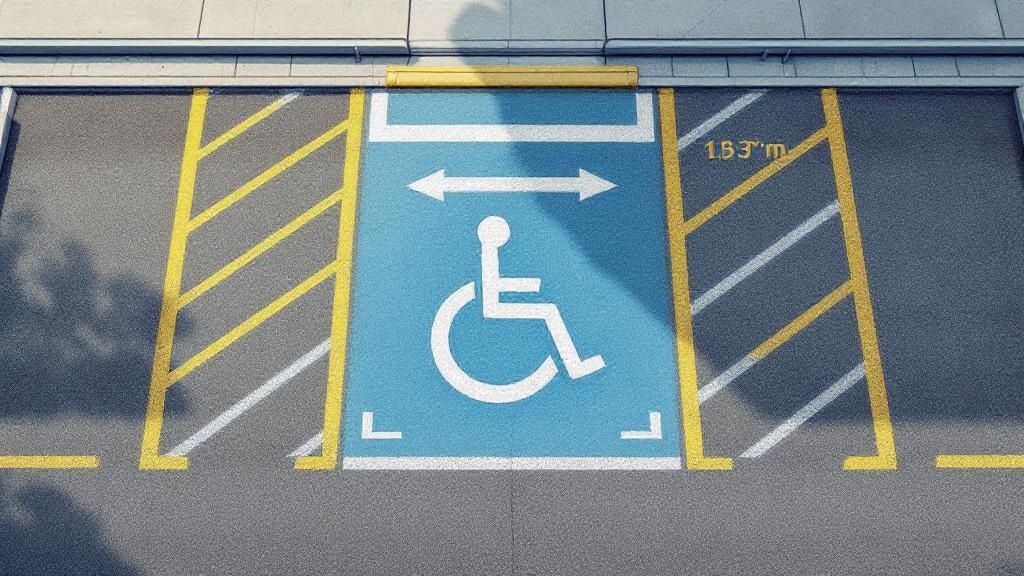
Think about how much space someone using a wheelchair needs to get in and out of their car. A normal parking spot is just too small. This is why there are laws about the size of these spaces. The measurements make sure people with mobility challenges have the room they need. This keeps them from being too close to moving cars or other parked vehicles.
This is more than just convenient; it's a serious safety issue. The striped area next to an accessible spot is called an access aisle. It is a very important safety zone. It creates a clear path for someone to move a wheelchair or walker to the sidewalk. Without that space, people might have to go into traffic lanes, which is a risk no one should have to take.
More Than Just a Parking Spot
A well-designed parking lot is the first step in making a place feel welcoming to everyone. It sends a clear message that all people are valued and can get into the building on their own. For business owners, getting these details right is a must for a few big reasons:
- Keeps All Visitors Safe: Proper spaces don't just help people with disabilities. They also lower the risk of accidents for everyone, including parents with strollers and older visitors.
- Follows the Law: Following the Americans with Disabilities Act (ADA) and state laws helps you avoid big fines and lawsuits.
- Shows You Care: It shows that you want to serve everyone in the community, which helps build a good reputation.
By following ADA parking rules, you create a safer place for everyone—drivers, walkers, parents with strollers, and older visitors. The rules focus on the needs of people with disabilities, which in turn makes the area safer for all.
In the end, getting the dimensions right means understanding how these lines and signs affect people's lives. Building a safe place from the start is important. If you want to learn more, our guide on https://coastalpipelineinc.com/construction-site-safety-tips/ has great information on why planning and following rules is so important.
Understanding Federal ADA Parking Rules
The Americans with Disabilities Act (ADA) is like a national rulebook for accessible parking. It sets the basic rules to make sure everyone can safely get to buildings and services. Let's look at what these federal rules mean for a parking lot.
What Makes Up an Accessible Stall
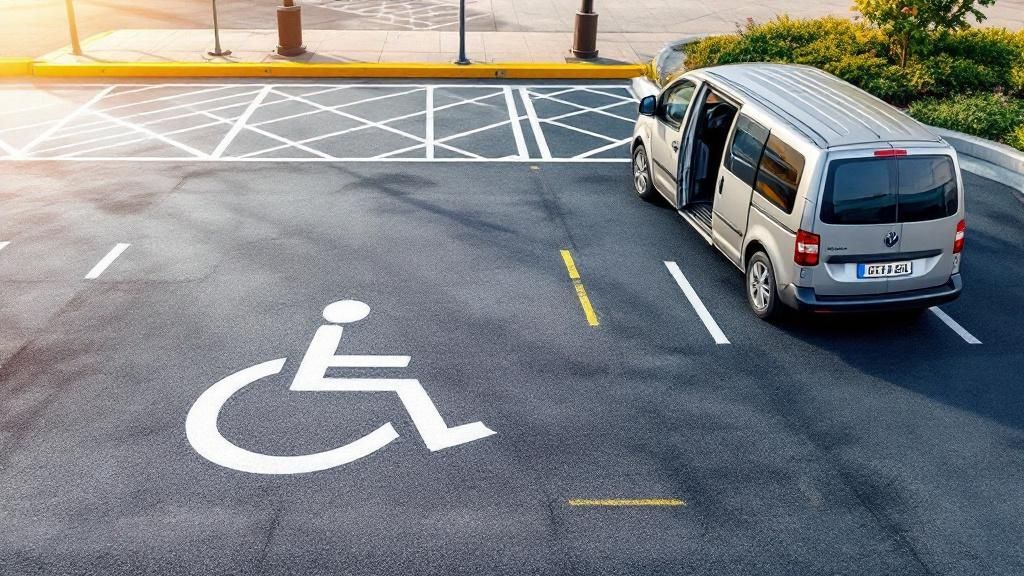
The main rule for handicap parking dimensions starts with the parking space itself. Every accessible parking space must be at least 8 feet (96 inches) wide. This extra room isn't just for comfort—it's needed so people can open their doors all the way without hitting the car next to them.
But the parking space is only part of it. Next to it, you'll see a striped, empty area called an access aisle. This is the required "safety zone" for wheelchair ramps and lifts. It creates a buffer from moving cars. Without it, someone might have to get out of their car right into a traffic lane.
The access aisle is required for safety and access. It provides the space for people to use ramps or lifts and safely move to a wheelchair or other device without being stuck between cars or in traffic.
Standard vs Van Accessible Spaces
The ADA knows that not all vehicles with accessibility features are the same size. That's why it has rules for two different types of accessible spaces. The main difference is the width of the access aisle.
- Standard Accessible Space: This needs an access aisle that is at least 5 feet wide. This is usually enough for cars where someone can get out and move a wheelchair around.
- Van-Accessible Space: Vans often have lifts on the side that need more room. For this reason, van-accessible spaces need a much wider access aisle of at least 8 feet.
To make sure there's always a spot for bigger vehicles, the law says that one of every six accessible spaces must be van-accessible. These specific handicap parking dimensions ensure that people who use larger, modified vehicles can find a usable spot. To learn more, you can read about the different rules for handicap parking spaces.
To make it simple, here’s a chart that shows the federal ADA dimension rules.
Federal ADA Parking Dimension Quick Reference
| Feature | Standard Accessible Space | Van-Accessible Space |
|---|---|---|
| Parking Stall Width | At least 8 feet (96 inches) | At least 8 feet (96 inches) |
| Access Aisle Width | At least 5 feet (60 inches) | At least 8 feet (96 inches) |
| Van Designation | Not Required | "Van-Accessible" Sign Required |
These are the basic numbers you need to know, but remember, your state or city might have even stricter rules.
Why Surface Slope Matters
It's not just about width—the ground itself is very important for safety. The ADA is clear that both the parking space and the access aisle must have a slope no steeper than 2.08%. This is a 1:48 ratio.
What does that mean? It means for every 48 inches you go across, the ground can't go up or down more than one inch. This makes the surface nearly flat. It stops wheelchairs from rolling away and gives people a stable place to get out of their vehicle. It may seem like a small detail, but this rule is a key part of making a space truly safe.
How Many Accessible Spaces Does Your Lot Need?
Figuring out the right number of accessible spots can seem hard, but the ADA has a clear and simple formula. The number of accessible spaces you need is based on the total number of parking spots in your lot. This system makes sure that as your property gets bigger, the number of accessible spots grows with it.

This means that as your lot gets bigger, you have a bigger duty to provide accessible parking. For example, a small lot with only 1 to 25 total spaces must have at least one accessible space. Big lots may need up to 6% of their total spots to be accessible.
Calculating Your Required Spaces
The ADA provides a simple chart to make this easy. This table breaks down the rules so any property owner can quickly check if their lot follows the law.
Here’s a quick look at the number of accessible spaces you need:
| Total Spaces in Lot | Minimum Accessible Spaces |
|---|---|
| 1 to 25 | 1 |
| 26 to 50 | 2 |
| 51 to 75 | 3 |
| 76 to 100 | 4 |
| 101 to 150 | 5 |
| 151 to 200 | 6 |
| 201 to 300 | 7 |
| 301 to 400 | 8 |
| 401 to 500 | 9 |
| 501 to 1,000 | 2% of total |
| 1,001 and over | 20, plus 1 for each 100 over 1,000 |
This system is designed to make sure that the more people a place can serve, the more accessible it is. Laying out these spaces correctly requires professional work to meet all handicap parking dimensions. For property owners planning new lots or repaving old ones, including these rules from the start is a must. You can learn more about how asphalt driveway paving services can be used for commercial lots to make sure they follow all the rules.
The Van-Accessible Space Rule
There's one more rule that people often miss. It's not just about the total number of accessible spots. The ADA also has a special rule for van-accessible spaces. These wider spots are very important for vehicles with side ramps or lifts, which need more room to work safely.
For every six accessible parking spaces required, at least one of them must be a van-accessible space. This spot must have the wider, 8-foot access aisle.
This 1-in-6 rule is very important. For example, let's say your lot has 151 spaces. Based on the chart, you need 6 accessible spots. The rule then says that at least one of those six must be a van-accessible spot, with the right sign and the extra-wide access aisle. This makes sure every lot can serve visitors who use larger, modified vehicles.
Navigating California's Unique Parking Rules
The federal ADA sets the basic rules for accessible parking across the country. But states can add their own rules, and California is a state that has stricter requirements.
If your property is in California, you must follow both the ADA and the California Building Code (CBC). The CBC has its own rules for handicap parking dimensions that are tougher than the federal law. Getting this right is important, because you can face fines even if your lot follows the ADA but not the California rules.
California’s Stricter Stall Width Requirements
One of the biggest differences is the width of the parking space. The federal ADA says an accessible space must be at least 8 feet wide. California, however, requires more room.
The California Building Code (CBC) says that a standard accessible parking space must be at least 9 feet wide. That extra foot may not sound like a lot, but it makes a big difference for someone moving from a car to a wheelchair.
It gives people a safer space to fully open their doors without hitting the car next to them. It's a small change with a big impact on safety and daily access.
This image shows the total width needed for different types of spaces when you include the access aisle.
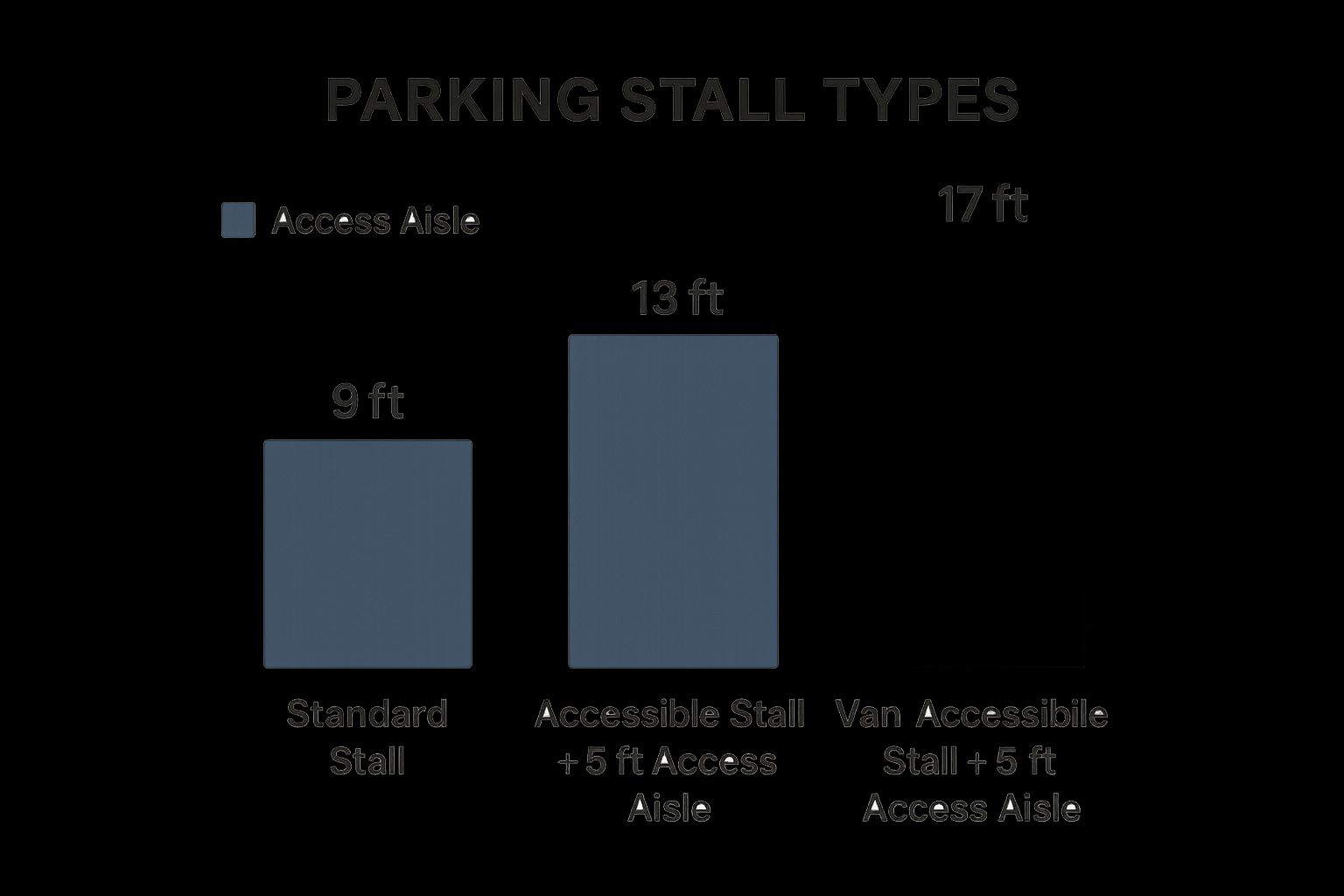
As you can see, a van-accessible space that follows California's rules needs a total of 17 feet of space for the stall and aisle. This offers plenty of room for a wheelchair lift to work without being blocked.
Unique Signage and Pavement Markings
California's special rules don't stop with the size of the space. The state also has rules for how the access aisle is marked and what signs must be put up. These details are meant to make it very clear how these spaces should be used.
- Distinct Crosshatching: The access aisle must be painted with a bold crisscross pattern. The color must stand out from the pavement—usually blue or white—to show that it's a no-parking zone.
- Bold Blue Border: To make the aisle stand out even more, the CBC requires the crisscross area to be outlined on three sides with a 12-inch wide blue line.
- Mandatory Fine Signage: Along with the usual blue-and-white wheelchair symbol, California requires another sign. This sign must clearly say "MINIMUM FINE $250." This helps stop people from parking there illegally.
These extra rules are all about protecting these important spaces. By making the rules and penalties easy to see, California helps make sure accessible spots are open for those who need them.
The table below gives you a quick side-by-side look at the differences.
Federal ADA vs California CBC Parking Requirements
Here's a direct comparison showing the key differences between the federal ADA rules and California's stricter state rules.
| Requirement | Federal ADA Standard | California (CBC) Standard |
|---|---|---|
| Stall Width | At least 8 feet | At least 9 feet |
| Access Aisle Marking | Diagonal or straight stripes | Crisscross pattern with blue borders |
| Additional Signage | "Van-Accessible" where needed | Required "Minimum Fine $250" sign |
Understanding these differences is the first step to making sure your parking lot follows all the rules and is truly accessible for everyone.
Getting Signage and Surface Slopes Right
Getting the handicap parking dimensions right is the first step. But a truly safe and legal space also needs two other things: clear signs and a nearly flat ground surface.
Think of these as the finishing touches that make an accessible spot work well. Without them, even a perfectly measured spot can be confusing or unsafe for people with mobility challenges.
The Importance of Sign Height and Placement
Good signs guide drivers to the spaces they need while keeping other cars out. The most common sign is the International Symbol of Access—the classic white wheelchair icon on a blue background. The ADA has very specific rules for where this sign goes.
The bottom edge of the sign must be at least 60 inches (5 feet) from the ground. Why so high? This makes sure the sign can be seen over the hood of a parked car or even a tall van. If it’s too low, it can get hidden, making it hard for drivers to find an open spot.
Van-accessible spaces also need an extra sign that clearly says “Van-Accessible.” This small detail helps drivers of larger vehicles find the spots with the wide access aisles they need to use their ramps safely.
Why Surface Slope is a Critical Safety Feature
Besides the signs, the ground itself must be very stable. The ADA says that the slope of the parking spot and its access aisle can’t be any steeper than 1:48 in any direction. This might sound technical, but the reason is all about safety.
A 1:48 slope means that for every 48 inches you move sideways, the ground can only go up or down by one inch. This creates a surface with a slope of just 2.08%. In other words, it's almost perfectly level.
This strict rule is there to stop a wheelchair from rolling away while someone is getting in or out of their vehicle. It also gives a person using a walker a solid surface to stand on. Any more of a slope could be dangerous. That's why this is one of the most important safety rules for accessible parking. Keeping the surface level is a big part of taking care of a parking lot. You can learn more about lot care in this guide to parking lot maintenance safety.
Common Compliance Mistakes to Avoid
Even when you try to do everything right, it’s easy to miss small details that can make a parking lot illegal. These aren't just small mistakes. They create real problems for people with disabilities and can lead to serious fines.
Knowing the most common mistakes is the best way to make sure your lot is truly accessible and safe for everyone.
One of the biggest problems is confusion over access aisles. People often paint these striped areas in a way that makes them look like skinny parking spots. This encourages people to park there, which blocks the space needed to use a ramp or lift. This makes the accessible spot next to it useless.
Incorrect Signage and Placement
Signs are another area where things often go wrong. If a sign is put up too low—often below the 60-inch minimum height—it can be hidden behind a parked van. This forces drivers who need an accessible spot to drive around looking for something that should have been easy to see.
Forgetting the special "Van-Accessible" sign is another big mistake. Without it, drivers who need the extra-wide access aisle won't know which spot is made for their vehicle.
Surface and Dimension Errors
Getting the handicap parking dimensions right is about more than just the width of the space. Many property owners don't know how important the surface slope is. If the ground slopes more than the 1:48 ratio, it can be dangerous and cause a wheelchair to roll away.
A small error, like the wrong slope or a badly painted access aisle, is not just a legal problem—it’s a safety risk. It can be the difference between someone getting into a building on their own and not being able to leave their car safely.
A final, big mistake is not having the right number of van-accessible spaces. The rule is clear: one of every six accessible spots must be designed for vans. Forgetting this leaves many people in the disabled community without a safe place to park.
Taking a few minutes to check your lot can help you find these problems before they become a bigger issue. For professional help and paving work that follows the rules, looking into asphalt services in Monterey and Santa Cruz County will make sure every detail is handled correctly.
Here’s a simple checklist to help you start:
- Sign Height: Is the bottom of every accessibility sign at least 60 inches off the ground?
- Access Aisles: Are all access aisles clearly marked with stripes to stop people from parking there?
- Van Spots: Do you have at least one van-accessible space for every six accessible spots?
- Surface Slope: Is the surface of the spots and aisles nearly flat, without any steep slopes?
Frequently Asked Questions About Accessible Parking
Getting all the details right on handicap parking dimensions often leads to a few questions. Here are quick answers to the most common ones we hear from property owners.
Can Two Accessible Spaces Share an Access Aisle?
Yes, they can. It’s a common and smart design to have two accessible parking spaces share one access aisle between them. This is allowed, as long as the aisle is wide enough for the spots it serves. For standard accessible spots, that shared aisle must be at least 5 feet wide.
Do I Need to Update My Lot When I Repave It?
Yes. Under the ADA, repaving or restriping your parking lot is considered a change. This means you must update your accessible parking spaces to meet the current rules for size, slope, and signs. It's a perfect time to make sure everything is correct.
Why Are Van Accessible Spaces So Important?
Many people with disabilities use vans that have side ramps or lifts. A standard access aisle isn’t wide enough for these ramps to open all the way. This can leave a person stuck in their vehicle. The much wider 8-foot aisle for a van-accessible space gives them the room they need to safely use a ramp or lift and move a wheelchair.
Making sure your parking lot meets every state and federal rule, from dimensions to signs, is key for both safety and the law. Coastal Pipeline Inc. is an expert in ADA-compliant paving and utility services. We provide careful, professional results for city, business, and home projects.
For expert help, visit us online at https://coastalpipelineinc.com.