This winter, two big things are happening at once for Central Coast property owners: experts are predicting heavy rains, and a lot of public infrastructure funding is coming into our area. For anyone who owns property here, this mix makes it very important to get ahead of potential problems. The best thing you can do right now is to check your underground pipes to prevent major flooding and expensive emergency repairs later.
A Perfect Storm Is Coming to the Central Coast
This is not a normal winter. Weather experts predict more rain than usual for Monterey, Santa Cruz, and San Benito counties because of a strong El Niño pattern. At the same time, a lot of government money is finally reaching our local towns. This money is for much-needed upgrades to old sewer, water, and storm drain systems.
This overlap creates a special challenge. The coming storms will test our underground pipes and drains, many of which are old and weak. Also, with all the new public projects starting, good utility contractors are busier than ever.
More Projects and More Risk
For property owners, this perfect storm of funding and flooding means you can't just "wait and see." Small problems, like a storm drain that's a little slow or an old sewer pipe you've been meaning to check, can turn into big disasters when the ground gets soaked.
The real danger is what you can't see. A cracked sewer pipe or a clogged storm drain is a hidden problem. A heavy rainstorm can cause a sewage backup, a sinkhole, or flooding that can ruin your property.
This is a real risk that happens every winter in places like Santa Cruz and Salinas. New maps show that flood risk is often higher than we think, especially when heavy rains soak the ground. You can learn more by looking at the 2025 Central Valley Flood Map.
It's Time to Be Proactive
With cities starting their "shovel-ready" projects, it's more important than ever to make sure your property's pipes are securely connected to the main public lines. Understanding how your own drains work is the first step to protecting your property from storms. You can learn more about how modern drainage infrastructure is evolving and what it means for you.
This season, it's better to prepare now instead of reacting to a problem later. Getting your underground pipes inspected before winter is not just a precaution—it's a smart investment to protect your property from the high cost of a system failure.
To help you understand the risks, here is a breakdown of the main threats and what you can do.
Winter Risk Factors for Central Coast Properties
| Risk Factor | What Could Happen | How to Prepare |
|---|---|---|
| Heavy El Niño Rains | Wet soil, overflowing public storm drains, and flooding on your property. | Video Camera Inspection: Find blockages or damage in your storm drains and sewer pipes before it rains. |
| Old Pipes | Cracked or broken pipes can't handle heavy water flow, leading to backups and sinkholes. | Preventive Cleaning: Hydro-jetting can clear out trash, roots, and gunk to make sure water can flow freely. |
| High Demand for Contractors | Longer waits and higher costs for emergency repairs when everyone needs help at once. | Schedule an Inspection Now: Book an appointment early to find and fix problems on your own schedule, not during a crisis. |
Taking these steps now can be the difference between a small cost and a huge disaster. A little planning goes a long way in protecting your property this winter.
Why Old Pipes and Heavy Rains Are a Costly Mix
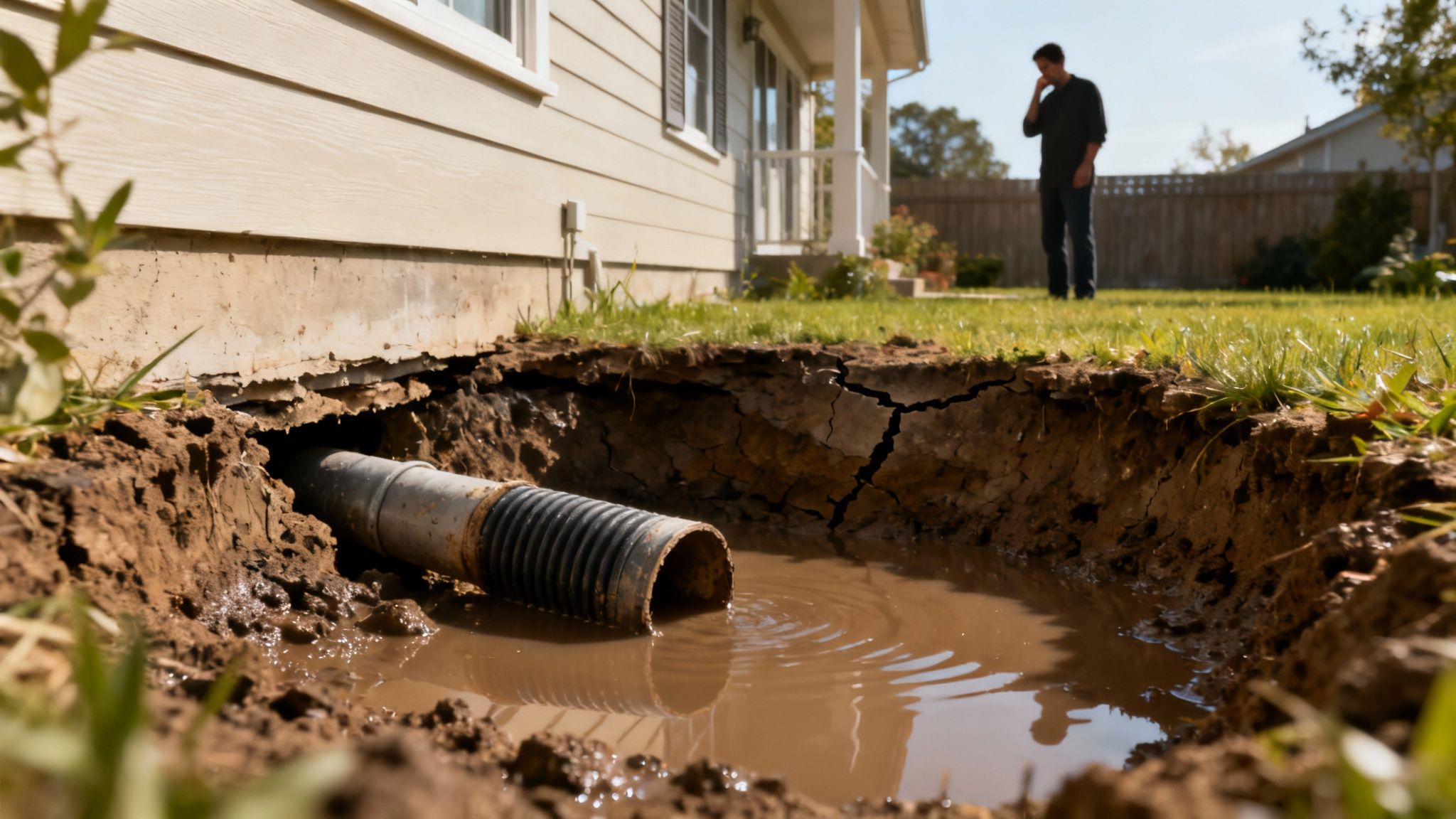
It's easy to think of winter storms as just some rain. But for the pipes under your property, these storms are a big test. Imagine an old, cracked pipe in your yard. On a dry day, it might seem fine.
Then, the heavy Central Coast rains come. The ground gets soaked, like a sponge that can't hold any more water. This puts a lot of pressure on everything underground, including the public sewer and storm drain systems. When those big systems get full, the pressure needs to go somewhere.
Often, that "somewhere" is the weakest pipe around: an old sewer or storm drain on your property. That's how a big storm can become your personal—and very expensive—problem.
From a Small Crack to a Major Disaster
We see this happen every winter in towns across Santa Cruz and Salinas. A clogged storm drain can back up and flood a shop. A small crack in a sewer line can break open under pressure, forcing raw sewage back into a home. These are not small problems; they cause real damage.
The pressure from wet ground can turn a small pipe problem into a sinkhole that can damage a building's foundation. This is where a weather forecast becomes a real, costly emergency for you.
The most dangerous problems are the ones you can't see. An inspection before the storms is a smart investment. It helps find hidden weak spots before they turn into emergencies that can cost thousands of dollars in property damage and repair bills.
The costs can be huge. The Public Policy Institute of California reports that billions of dollars in buildings are at risk from flooding. Yet, very few people in flood-prone areas have flood insurance. As risks grow, insurance costs are also rising. You can learn more about the rising costs of flood risk in California on ppic.org.
Your Property’s Connection to the Public System
The condition of your underground pipes is your property's main defense against flooding. The strength of your sewer pipes and storm drains determines how well your property handles a big storm. If your pipes are already weak, the risk of major damage is much higher. If you want to learn what property owners should know about aging sewer, water, and gas lines, it starts with a professional check-up before the storms arrive.
Making Sense of the New Infrastructure Money
You may have heard about new laws providing money for infrastructure. But what does that mean for your property here on the Central Coast? Right now, billions of dollars are coming to our local towns to upgrade the old underground pipes we all use.
This is great for our area in the long run, but it can create problems for property owners right now. The money is speeding up "shovel-ready" projects. Cities in Monterey, Santa Cruz, and San Benito counties are finally fixing public sewer mains, water lines, and storm drains. That means more construction, which can put stress on the pipes connecting your property to the main public lines.
A Mix of Good and Bad for Property Owners
While it's good that our public pipes are getting fixed, all this construction creates new risks. Think of the public sewer line as the freeway and your private pipe as the on-ramp from your house. The construction is like fixing every freeway at once. The work is needed, but it's going to mess with all the on-ramps.
If your "on-ramp"—your private pipe—is old or weak, the shaking from nearby construction can be the last straw. Suddenly, you could be cut off from the main system, leading to sewage backups and emergency repairs.
With so much public construction happening, it's more important than ever to make sure your own pipes are strong. Being proactive isn't just about storms; it's a smart move with all the construction going on.
This situation requires some planning. For more ideas on how to handle these projects, our guide on construction project management tips has some helpful information.
Your Proactive Winterization Checklist
This winter, the mix of heavy rain and heavy construction means we all need to be more careful. A simple inspection can find weak spots before a storm or a construction crew does. Think of it as a check-up for your property.
Below is a simple checklist to help property owners, HOAs, and facility managers get their underground utilities ready for the season.
Property Owner's Winterization Checklist
| Area to Check | What to Look For | What to Do |
|---|---|---|
| Sewer Lateral | Slow drains, gurgling toilets, bad smells, or wet spots in the yard. This often means cracks, roots, or broken sections in the pipe. | Schedule a professional video camera inspection. It’s the only way to see the real condition of your pipe from the inside. |
| Storm Drains & Catch Basins | Piles of leaves, dirt, and trash that block the drain. Anything that stops water flow can cause flooding. | Get a professional cleaning and hydro-jetting service. This will clear out blockages so your drains can handle heavy rain. |
| Known Problem Areas | Any spot on your property that has a history of flooding, slow draining, or past pipe repairs. These are weak points. | Reinforce or upgrade these trouble spots. This could mean strengthening a trench to prevent soil washing away or replacing an old piece of pipe. |
Taking these simple steps now can save you a lot of trouble later, making sure your property is safe and ready for winter.
Taking Action: Your Guide to Winterizing Your Utilities
Knowing about the risks is one thing; doing something about it is another. Let’s talk about how to protect your property. We call this "utility winterization," which just means getting your underground pipes and drains ready for winter storms.
For anyone who owns property on the Central Coast, from Watsonville to Monterey, taking these steps now is the key to avoiding a huge emergency bill later. The main idea is simple: stop waiting for a problem to happen, and start preventing it. This means finding weak spots in your pipes and drains before the heavy rains do.
This infographic shows the link between public funding, construction projects, and the risk to your private property. It shows how big, important projects can accidentally put stress on your pipes.
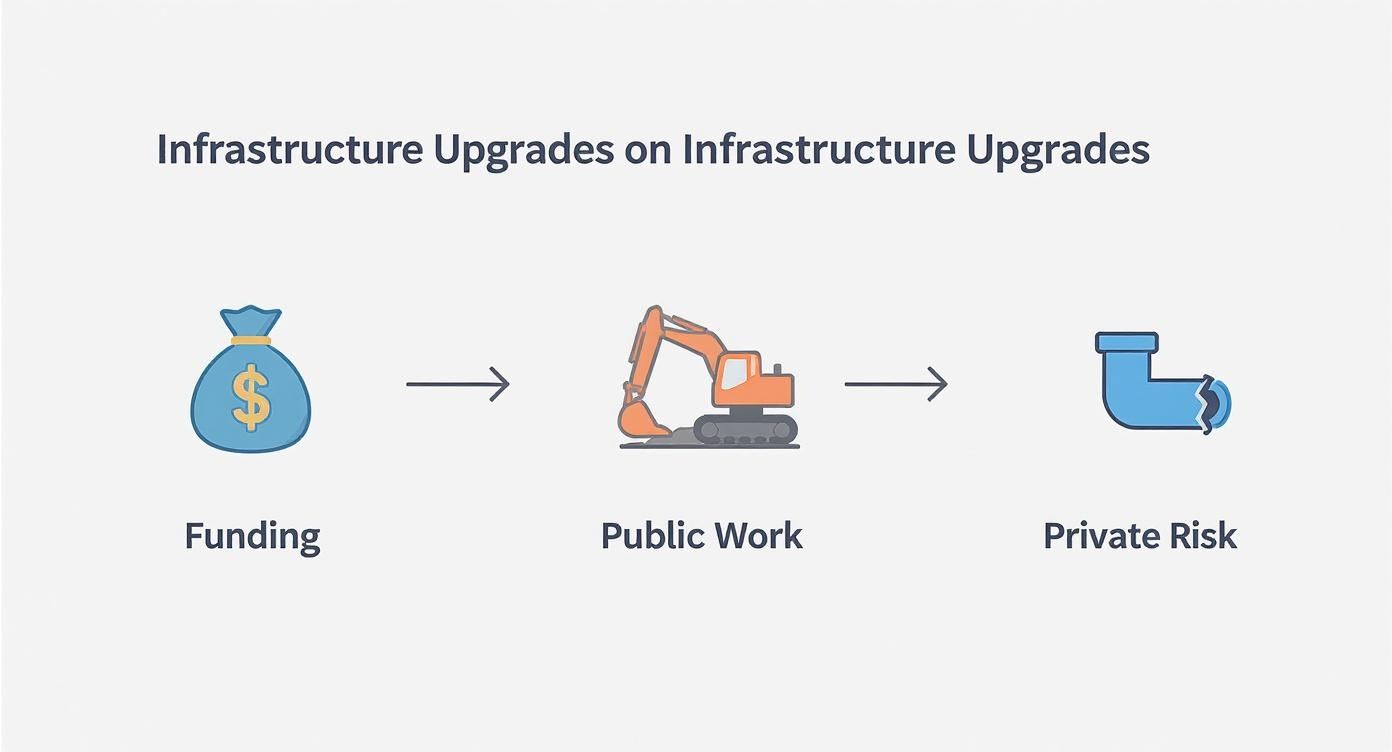
When public systems are being worked on, the pressure shifts to where your private lines connect. This is why it is so important to make sure your own utility connections are strong.
Building Your Winterization Game Plan
A good plan helps you deal with possible problems one by one. Instead of just hoping for the best, you can use proven methods to see what's going on underground. This works for a single home, a business, or an entire neighborhood.
Your plan should focus on three key things: inspection, cleaning, and reinforcement.
-
Schedule a Camera Inspection: This is the most important first step. A special waterproof camera goes through your sewer and storm drain lines, showing you a live video of their condition. It's the only way to be 100% sure about problems like cracks, tree roots, or broken pipes that you can't see from above.
-
Get Your Drains Cleared Out: Clogged storm drains are a main cause of local flooding. Professional hydro-jetting uses high-pressure water to clean out years of built-up gunk from your drains. This helps them handle a lot of rain. You can learn more about professional residential storm drain cleaning and how it protects your property.
-
Reinforce Any Weak Spots: If the camera finds a problem—like old, fragile pipes or soil washing away around the pipe—it's time to act. Fixing these weak spots can stop a small problem from turning into a disaster when the ground gets soaked.
Why Spending a Little Now Saves a Lot Later
Every dollar you spend on prevention now can save you ten or even a hundred times that amount in emergency repairs and damage. A flooded basement or a broken sewer line can easily cost thousands of dollars, not to mention the stress it causes.
By finding and fixing issues on your own schedule, you are in control. You avoid the high costs and long waits that happen when you're trying to find a contractor during a big storm when they are very busy.
This winter, we are facing heavy rains and major construction. A proactive approach to winterizing your pipes isn't just a good idea—it's your best defense to make sure your property is ready for anything.
Finding the Right Partner for Preparedness and Response
When a pipe breaks during a winter storm, who you call is very important. This is not a job for a regular plumber. You need a specialist who understands the unique problems we have here on the Central Coast. Choosing the right certified contractor is the most important decision you can make to protect your property.
A real professional knows the local city rules in towns from Salinas to Santa Cruz. That knowledge is very valuable, especially since they will work with public works departments to make sure every repair is done correctly and meets local codes.
Thinking Beyond the Quick Fix
The first goal is to stop the water, but the real goal is to make your property stronger for the future. A qualified contractor will make sure every utility connection is updated to modern, climate-resilient standards. This isn't just about preventing the next problem; it's about protecting you from issues that come with bad, non-compliant work.
Choosing the right partner means you have a guide who can handle permits, work with city inspectors, and give you a solution that lasts for years, not just until the next storm.
This long-term view is very important. Poor water management can cause big economic problems. In California’s Central Valley, for example, sinking land has caused property values to drop. As the ground shrinks, it cracks building foundations and breaks pipes. This shows how water issues can hurt a property's value. You can read more about how water management impacts home values on realtor.com.
What to Look for in a Utility Contractor
When you are looking for a contractor, here are a few things to check for:
- Local Experience: Do they have a history of working here in Monterey, Santa Cruz, or San Benito counties? They need to know our local soil and weather.
- Municipal Coordination: Ask them about their experience working with local city and county public works departments. This is key for a smooth connection to public pipes.
- Rapid Emergency Response: When there's an emergency, you need fast action. A good contractor has crews and equipment ready to go at any time to limit the damage.
By choosing a contractor with these skills, you are making a smart investment in a safe future for your property, no matter what this winter brings.
Take Action Before the First Major Storm Hits
This winter on the Central Coast is a perfect storm—literally. We expect heavy rains at the same time as major infrastructure work. For anyone who owns or manages property here, that should be a warning. It greatly increases the risk of flooding, backups, and expensive property damage.
The "wait and see" approach is a big gamble this year. A hidden crack in a sewer pipe or a clogged storm drain won't warn you. It will fail during the worst of a storm. At that point, you're not dealing with a simple repair; you're in an emergency.
Whether you're a property owner in Watsonville, a facility manager in Monterey, or a public works lead in Hollister, getting an inspection done now is key.
Don’t wait for a big storm to find a major problem underground. A proactive check-up puts you in control, letting you fix problems on your schedule—and your budget.
It all comes down to one simple idea: get ahead of the problem. Knowing the real condition of your underground pipes is the only way to be truly ready. If you want to learn more about getting your property prepared, reading about professional storm drain installation and inspection services is a great next step.
Your Questions Answered
When it comes to the pipes under your property, a little knowledge can help a lot. As we get ready for a wet winter on the Central Coast, many people are asking good questions about what to look for and who is responsible. We’ve put together some simple answers to help you.
Let's clear things up so you can feel good about protecting your home this season.
What Are the Warning Signs of a Pipe Problem?
Some warning signs are easy to see. These include slow drains, gurgling toilets, or bad smells from your pipes. Outside, you might see wet or extra-green spots on your lawn, even when it’s not raining. These are common signs of a blockage or a break in your pipe.
But the worst problems often show no signs at all. Small cracks, pipes moved by shifting soil, or growing tree roots can go unnoticed until the pipe fails, usually during a storm. Waiting for a sign to appear is a risk.
The only way to be 100% certain about your pipes is with a professional video camera inspection. It’s like a check-up from the inside, letting you see hidden problems before they become a disaster.
Am I Responsible for the Sewer Line on My Property?
Yes, almost always. As a property owner, you are responsible for the sewer lateral. This is the pipe that connects your home's plumbing to the main public sewer line, which is usually under the street.
If that pipe cracks, gets clogged with roots, or breaks on your property, you have to pay for the repairs. This is an important detail many people don't know until it's too late. A major repair can be a large, unexpected cost.
How Much Does a Winterization Inspection Cost?
The cost of an inspection depends on the size of your property and the length of your pipes. But one thing is always true: a preventive camera inspection and drain cleaning costs much less than an emergency repair.
An emergency repair often includes fixing water damage, hiring cleanup crews, and digging up your yard. A small investment now can easily save you from a huge bill later. From funding to flooding, what Central Coast property owners should know this winter is that prevention pays off.
Don’t wait for the next major storm to reveal what’s wrong underground. Coastal Pipeline serves Monterey, Santa Cruz, and San Benito Counties with winter-ready utility services. Contact us to schedule a utility inspection or storm prep service tailored to your site conditions by visiting us at https://coastalpipelineinc.com.
FAQ on Winter Utility Preparedness
Answering your most common questions.
| Question | Answer |
|---|---|
| Why is winter a bigger risk for my pipes? | Heavy winter rains soak the soil, causing it to move and put pressure on pipes. This can turn small cracks into big breaks. More water flow from storms also overwhelms pipes that are already blocked. |
| What does a camera inspection actually show? | A high-quality camera goes through your pipes and shows a live video of the inside. It can find cracks, tree roots, blockages, low spots where water sits, and separated pipe joints. |
| Will my homeowners insurance cover a sewer line failure? | It depends on your policy. Standard homeowners insurance often does not cover sewer line backups unless you have a special add-on. It's best to check your policy with your insurance agent. |
| How often should I have my pipes inspected? | For older homes or properties with big trees, an inspection every 2-3 years is a good idea. For newer properties, every 5 years is usually enough unless you see any warning signs. |
Getting clear answers is the first step to being prepared. Knowing what's happening underground helps you act before a small issue becomes a big, wet, expensive problem.