
If your search for "storm drain installation near me" brought you here, you already know that uncontrolled water is a major threat. Here on California's Central Coast, heavy rains aren't just a small hassle—they're a serious problem that requires a professional, lasting solution to protect your property.
Why Proper Drainage Is Your Best Defense Against Water Damage
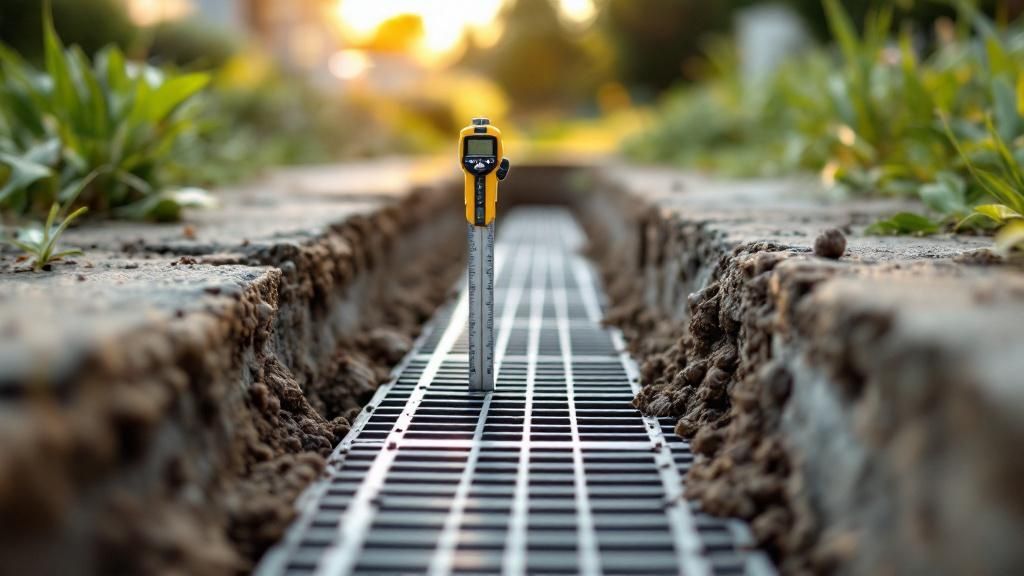
Think of a good drainage system as your property's personal bodyguard. Without one, every storm puts your home at risk. When water has nowhere to go, it quietly starts causing damage that is both destructive and incredibly expensive to fix down the road.
The biggest problem is when water soaks the soil around and under your foundation. This creates what's known as hydrostatic pressure—a relentless force pushing against your foundation walls. Over time, that pressure can lead to cracks, a leaky basement or crawlspace, and can even threaten the structural integrity of your entire house.
More Than Just a Puddle Problem
The damage doesn't stop at your foundation. Poor drainage causes a whole list of other issues that can ruin your property's appearance and usability. A professional storm drain installation is designed to stop these exact problems before they start.
A proper system solves key issues like:
- Landscape Erosion: Runoff carves up your lawn and garden beds, washing away topsoil, mulch, and plants you've worked hard to maintain.
- Soggy, Unusable Yards: Standing water turns your yard into a swampy mess, making it useless for kids, pets, or just enjoying your outdoor space.
- Pest Infestations: Puddles and constantly wet soil are perfect breeding grounds for mosquitoes and other pests.
- Damage to Hardscapes: Water pooling on patios, walkways, and driveways leads to stains, cracks, and premature failure of concrete and pavers.
A well-designed drainage system isn’t just a patch job; it's a fundamental upgrade to your property. It proactively captures rainwater and sends it safely away from vulnerable areas. For a closer look at how these solutions work, you can learn more about comprehensive storm drainage systems in Monterey and Santa Cruz County and how they're built for our local climate.
The concept is simple but powerful: give water a planned, safe path to follow. By doing this, you protect your biggest investment from the ground up, ensuring it stays stable and secure for years.
Ultimately, investing in a professional storm drain installation is one of the smartest defensive moves a homeowner can make. It’s a strategic decision that protects your property, prevents massive repair bills, and gives you peace of mind when the next big coastal storm rolls in.
Choosing the Right Storm Drain System for Your Property
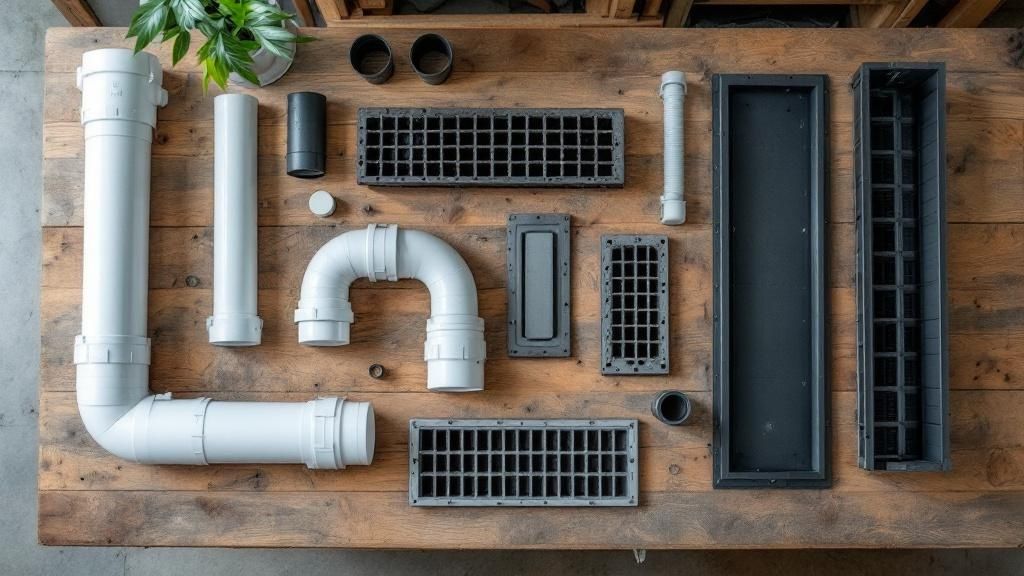
Not all water problems are the same, so the solutions shouldn't be either. Picking the right storm drain system is a lot like choosing the right tool for a job—you wouldn't bring a hammer if you need a screwdriver. To find a permanent fix, you first have to understand the different types of systems and what they’re actually built to do.
Think about it: are you dealing with surface water, like a flooded driveway after a heavy rain? Or is your problem subsurface water, like a lawn that stays soggy for days? The answer to that question points you directly to the best type of drain for your Central Coast property.
Surface vs. Subsurface Drainage Solutions
Most residential drainage systems fall into one of two main camps. Surface drainage solutions, like channel drains and catch basins, are designed to intercept and move water flowing across hard surfaces. Subsurface drainage, which is where French drains shine, is all about managing water that has already soaked into the ground.
A professional diagnosis is the key to matching the right system to your specific water woes. An experienced contractor will evaluate your landscape’s slope, soil type, and impervious surfaces to pinpoint the most effective solution.
A common mistake we see is installing a surface drain to fix a subsurface problem. A catch basin on a lawn won't solve soil saturation, just as a French drain won't stop a driveway from flooding during a downpour. Proper diagnosis is everything.
Sometimes, the best answer is a hybrid approach. For instance, a catch basin might collect runoff from your roof's downspouts, channeling it into a solid pipe that leads to a dry well at the edge of your property. This kind of integrated system ensures every drop of problem water is managed effectively. Understanding how these pieces fit together is crucial, and you can get more details in our guide on professional drainage trench installation in Monterey County.
Comparing Common Storm Drain Systems
To make it easier to see how these systems differ, let's break them down. Each one has a specific job, and knowing which does what is the first step toward getting your water issues under control for good.
| Drain Type | Best For | How It Works | Typical Location |
|---|---|---|---|
| Channel Drain | Preventing pooling on flat hardscapes | A long, grated trench intercepts sheets of water and funnels it into a pipe. | Driveways, patios, pool decks |
| Catch Basin | Capturing concentrated runoff at low spots | A grated box set at a low point collects large volumes of water quickly. | Low points in yards, near downspouts |
| French Drain | Relieving saturated soil and protecting foundations | An underground trench with a perforated pipe and gravel draws water out of the soil. | Soggy lawns, along retaining walls |
Ultimately, whether you need a single solution or a combination of systems, the goal is to create a clear path for water to exit your property safely and efficiently.
The Role of Dry Wells
So, where does all this collected water go? In many Central Coast installations, the final destination is a dry well. A dry well is basically an underground holding tank designed to collect stormwater and let it slowly seep back into the soil.
Instead of just dumping water onto the street or into a neighbor's yard—which can violate local codes—a dry well manages it right on your property. It’s an environmentally friendly solution that helps replenish local groundwater and is often the final piece of a comprehensive drainage puzzle.
What to Expect During the Installation Process
A professional storm drain installation can feel like a big, disruptive project. But when you break it down step-by-step, it becomes much more straightforward. Understanding what a qualified contractor will actually do on your property clears up the uncertainty and shows you the value in each phase. A great project isn't just about digging holes; it's a careful, systematic approach to solving your water problems for good.
The whole process unfolds in a clear sequence, from the first look at your property to the final handshake. Each step builds on the last, guaranteeing your new system is effective, built to last, and blends right into your property.
This flowchart gives you a bird's-eye view of the key steps a professional follows, starting long before the digging begins and ending with the final grate in place.
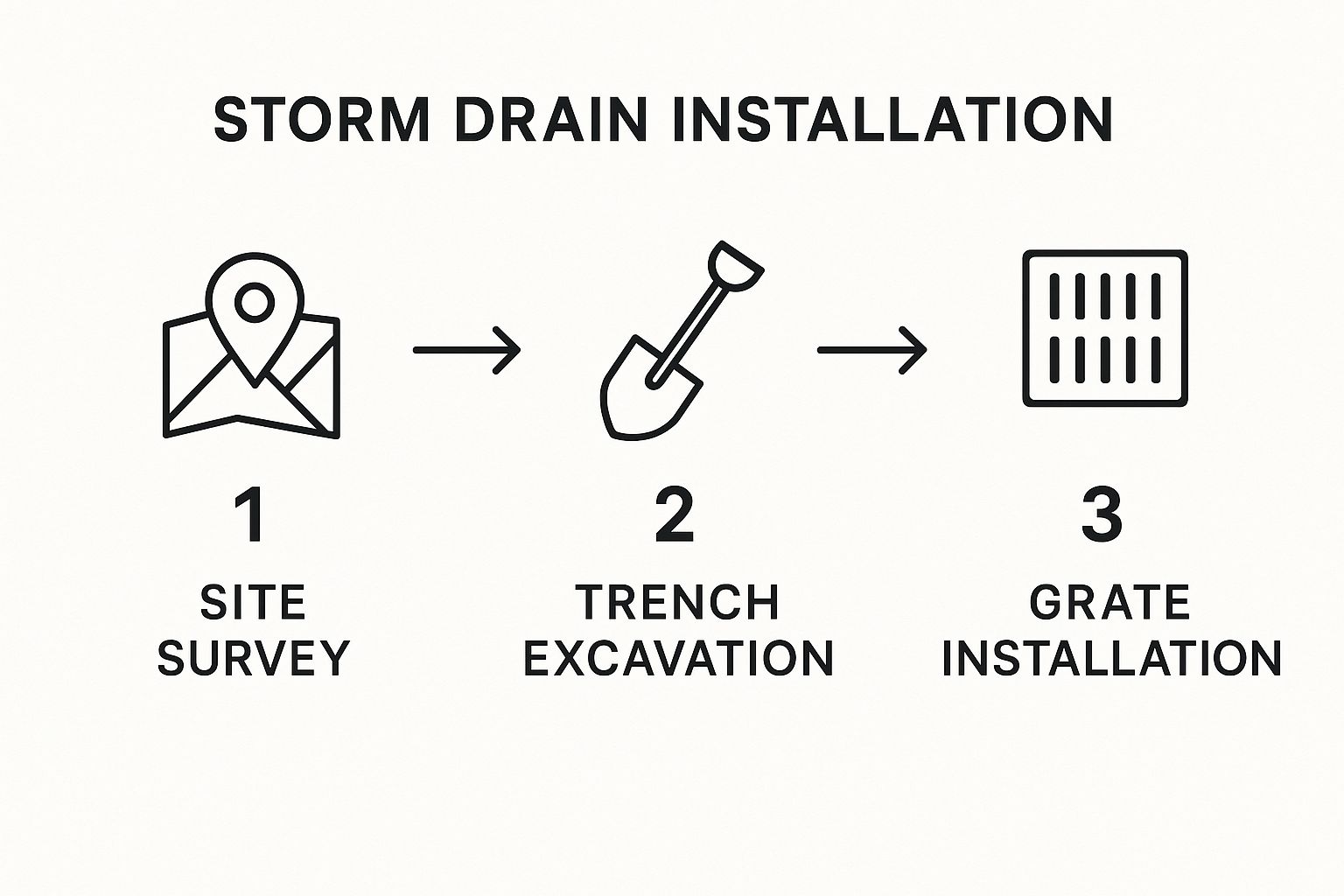
As the chart shows, a successful job starts with smart planning and a thorough site analysis.
Stage 1: Initial Site Assessment
The first, and most critical, step is the site assessment. This is where a drainage expert becomes a detective, hunting down the root cause of your water woes. It’s a lot more involved than just glancing at a soggy patch of lawn.
A contractor will analyze:
- Property Topography: They’ll map out the high and low points to see how water naturally wants to travel across your land.
- Soil Type: On the Central Coast, our heavy clay soils drain much differently than sandy ones, and the solution needs to match.
- Impervious Surfaces: They’ll account for all the runoff coming from your roof, driveway, and patios.
- Existing Utilities: Locating underground pipes and cables is crucial for planning a safe excavation route.
This initial diagnosis is what ensures the proposed system will actually solve your specific problem. It's the foundation for everything that follows.
Stage 2: System Design and Permitting
With a clear diagnosis in hand, the contractor gets to work on the design. This is no cookie-cutter plan; it’s a custom blueprint built just for your property. The design will specify the right type of drain (like a French drain, channel drain, or catch basin), the pipe materials and diameter, the precise layout, and where the water will ultimately go.
A well-designed system works with gravity, not against it. The plan ensures a consistent, gentle slope—often just a 1% to 2% grade—to keep water flowing smoothly and prevent sediment from building up and causing clogs.
Once the design is locked in, the contractor takes care of the permitting process with your local city or county. This is a vital step that protects you. Permits make sure the work is up to code and complies with all local environmental rules, saving you from major headaches down the road.
Stage 3: Professional Excavation
This is the part everyone pictures when they think of storm drain installation. Using specialized equipment, the crew carefully digs the trenches based on the design plan. Precision is everything here. Trenches have to be the exact depth and width to properly hold the pipe and the surrounding gravel bedding.
Safety is the top priority during excavation. Professional crews have strict protocols to shore up trenches to prevent collapses. They also work meticulously to minimize damage to your landscaping, carefully navigating around tree roots and sprinkler lines. You can learn more about how experts do this safely in our guide on how to avoid costly mistakes during the trenching process. This makes sure the foundation for your new system is solid and secure.
Stage 4: System Installation
With the trenches ready, the crew gets to work laying the actual system components. If it's a French drain, this means laying a bed of gravel, placing the perforated pipe, and covering it with more gravel. For systems with catch basins or channel drains, it involves setting the basins at the perfect elevation and connecting them with solid, non-perforated pipe.
Every joint and connection is sealed to be completely watertight. This prevents leaks that could saturate the soil and defeat the whole purpose of the drain. The crew ensures every piece, from the pipes to the grates, is perfectly sloped and aligned to guarantee water flows exactly where it should. It’s this attention to detail that makes a system last for decades.
Stage 5: Backfilling and Grading
After the system is installed and inspected, it's time to fill the trenches back in. This isn't as simple as just shoveling dirt back in. It's done in layers, and the soil is compacted at each stage to prevent it from settling later. If the ground settles, it can create dips in your yard or, even worse, change the pipe’s slope and cause the system to fail.
The final layer is topsoil, which is carefully graded to blend in with the rest of your landscape. Good grading doesn't just hide the work; it also helps direct surface water toward the new drain inlets, making the entire system work even better.
Stage 6: Final Site Restoration
The job isn’t done until your property looks right again. A top-tier contractor takes pride in the final restoration. This might involve replacing sod that was carefully set aside, seeding the disturbed areas, or hydroseeding for a lush new lawn. They’ll also completely clean up the work site.
The goal is to leave your property looking as good as it did before they arrived, if not better. A successful storm drain installation should solve your water headaches without creating an eyesore, giving you back a protected, usable, and beautiful landscape.
Navigating Central Coast Permits and Regulations
When you're searching for "storm drain installation near me," it's easy to get focused on the hands-on work—digging trenches and laying pipes. But a successful project is about so much more than just moving dirt. It means skillfully navigating the maze of local rules and regulations that govern any construction project on the Central Coast.
Think of a building permit as your project’s official permission slip. For communities in Monterey, Santa Barbara, and San Luis Obispo counties, these permits aren't just bureaucratic red tape. They’re critical safeguards that protect you, your property, and our local environment. A permit is your assurance that the new system is designed and built correctly, will function safely, and won’t create a flooding nightmare for your neighbors.
Why Permits Are Non-Negotiable
Trying to skip the permitting process might seem like a shortcut to save time or money, but it almost always backfires with costly consequences. Unpermitted work can lead to stop-work orders, hefty fines, and even a mandate to rip out the entire system you just paid for.
Even more importantly, permits guarantee your installation meets crucial local codes. These regulations cover everything from the exact slope of the pipes to the right way to handle site grading. A licensed contractor who is fluent in these local requirements is your best defense against project delays and a faulty installation that could fail when you need it most.
The demand for proper stormwater management is growing fast. In North America, the market for this kind of infrastructure was valued at USD 26.31 billion this year and is on track for major growth. This is largely driven by regulations under the U.S. Clean Water Act, which now requires cities to get a handle on stormwater runoff. You can dig into the details on this trend in the latest stormwater management market research.
Understanding MS4 Requirements
One key regulation your contractor will manage is compliance with the Municipal Separate Storm Sewer System (MS4) program. This is a federal rule that dictates how cities and counties must manage stormwater to prevent pollution.
While it sounds complicated, the bottom line for homeowners is simple: your new storm drain can’t just dump water wherever it’s convenient. It has to connect to an approved discharge point, like the city’s storm sewer or a professionally installed dry well on your property.
An experienced contractor already knows the specific MS4 rules for your city. They design systems that not only fix your drainage problem but also meet all environmental standards, protecting you from future liability.
This kind of expertise is absolutely essential when dealing with underground utility services in Monterey and Santa Cruz County. A qualified professional knows how to safely excavate around and install new lines without disrupting the existing sewer, water, or gas infrastructure.
Ultimately, a contractor’s knowledge of local regulations is just as important as their ability to operate an excavator. Their expertise is your peace of mind that your storm drain will be a lasting, compliant, and effective solution to your water problems. Hiring a pro who handles the permits correctly isn't just a good idea—it's a non-negotiable step for a successful project.
How to Choose the Right Drainage Contractor
Picking the right professional for your storm drain installation is the most critical decision you'll make in this entire process. The long-term success, compliance, and even the safety of your property all come down to this choice. It’s easy to look at a few online reviews, but finding a true expert on California’s Central Coast means you have to dig a bit deeper.
Think of it like hiring a surgeon for an important operation—you wouldn't just pick anyone. You'd want a specialist with a proven track record. Your search for "storm drain installation near me" should be the start of a vetting process, not the end of it. The right partner won't just install a drain; they'll protect your property and your investment from day one.
Verify Their License and Specialization
Here in California, any contractor doing this kind of work needs a valid license from the CSLB (Contractors State License Board). For storm drain installation, you're not looking for a general handyman. You need a contractor with a specific, specialized license.
Keep an eye out for these two classifications:
- C-34 Pipeline Contractor: This license is tailor-made for our kind of work. It covers all aspects of pipeline installation for storm drains, water lines, and sewer systems.
- A-General Engineering Contractor: This license is for bigger, more complex projects, often involving extensive drainage systems and public works infrastructure.
Always take a minute to verify a contractor’s license number on the CSLB website. It’s a simple check that tells you they are legally allowed to do the work, have passed competency exams, and are properly bonded.
Confirm Comprehensive Insurance Coverage
A license is the first box to check, but proper insurance is completely non-negotiable. It’s what protects you from any liability. Let's be honest, excavation and underground work come with risks, and a true professional is always prepared for them.
Any legitimate contractor will be happy to show you their certificate of insurance. If they hesitate, make excuses, or just can't produce it, that's a massive red flag. This certificate is your proof that you won’t be on the hook financially for accidents or injuries on your property.
You need to see proof of two key policies:
- General Liability Insurance: This is what covers accidental property damage—say, if a piece of equipment cracks your driveway or a retaining wall.
- Workers’ Compensation Insurance: This policy is for the contractor’s crew. It covers them if they get hurt on the job. Without it, you could find yourself facing a lawsuit.
Ask to See Their Local Project Portfolio
A picture is worth a thousand words, but a portfolio of completed projects is proof. Ask potential contractors to show you examples of jobs they’ve done that are similar to yours, especially projects right here on the Central Coast. This is how you know they have real-world experience with our local soil, hilly terrain, and specific city codes.
A strong portfolio isn't just a gallery of photos; it’s tangible evidence that they can deliver the quality they’re promising.
Crucial Questions to Ask During an Estimate
Once you've narrowed your list down to a few licensed and insured contractors, the on-site estimate is your interview. This is your chance to see how they operate and gauge their expertise. How they answer detailed questions will tell you everything you need to know.
Here are a few essential questions to get the conversation started:
- "What's your detailed plan for protecting my landscaping, driveway, and any irrigation lines during the excavation?"
- "What kind of warranty do you offer? Does it cover both the materials and your team's labor?"
- "How do you handle site cleanup and restoration after the job is finished?"
- "Can you walk me through the permitting process for my specific city and explain how you handle it?"
Hiring the right drainage contractor is about more than just getting a quote. It’s about finding a qualified, insured, and transparent partner. By taking these steps, you’re setting yourself up to find a real professional who stands by their work and delivers a storm drain installation that’s built to last.
Breaking Down the Costs of Storm Drain Installation
Figuring out the cost of a storm drain installation isn't about finding a single, flat-rate price. It's about understanding what goes into a professional job so you can evaluate contractor quotes and see the project for what it is: a vital investment in your property.
When you're looking up "storm drain installation near me," remember that the final cost is a blend of several key variables. Think of it like commissioning a custom piece of furniture. The final price tag reflects the specific materials, size, and complexity of the design—it's not an off-the-shelf product. A simple French drain running along a garden bed will naturally cost less than a complex system with multiple catch basins designed to handle heavy runoff from a large paved driveway.
Key Factors That Drive the Price
Every project is unique, but a few core elements almost always have the biggest impact on the final quote you'll receive. Each one demands specific materials, labor, and professional expertise.
Here are the primary cost drivers:
- System Complexity and Length: This is a big one. A long, intricate system with multiple connection points, different pipe sizes, and several catch basins requires more materials and, just as importantly, more labor hours. Trenching is a major part of the job and is often priced per linear foot.
- Site Accessibility: Can a crew get heavy equipment like an excavator to the work area easily? A tight backyard with fences, established landscaping, or other obstacles might require more manual digging or specialized mini-equipment, which can drive up the time and cost.
- Soil Conditions: Here on the Central Coast, we see all kinds of soil. Digging through soft, loamy soil is a relatively quick job. But hitting hard-packed clay or rocky ground? That slows everything down and may require more powerful equipment to get the job done right.
- Permitting Fees: Every city and county on the Central Coast has its own fee schedule for construction permits. While these are a direct pass-through cost from the contractor to you, they are non-negotiable for ensuring the project is fully compliant and up to code.
The Bigger Picture on Infrastructure Costs
It's also helpful to see your project as part of a much larger need for better water management. Across the country, our public stormwater infrastructure is facing serious funding gaps. In fact, the estimated 20-year investment needed for municipal storm sewer systems jumped to a staggering $115.3 billion by 2022.
This massive increase highlights just how much our public drainage networks are aging. While some federal funding has been allocated, a significant financing gap remains. This really underscores the importance of every single project, both public and private. You can learn more by checking out the full report on our nation's stormwater infrastructure challenges.
A detailed quote isn't just a price—it's a transparent breakdown of the work. It should clearly outline the costs for labor, materials, equipment, and permits, ensuring you know exactly what you're paying for.
Ultimately, it’s a mistake to view a storm drain’s cost as a simple one-time expense. It’s a strategic move to protect your home’s foundation, stop landscape erosion, and preserve your property’s value for years to come. This proactive step helps you sidestep much more expensive and stressful emergency repairs down the road. By understanding what goes into a professional installation, you can better appreciate the long-term rewards of a properly executed drainage trench.
Common Questions About Storm Drain Projects
It’s completely normal to have a few lingering questions, even after you understand the basics. When you're thinking about a project like a storm drain installation, the practical details are what really count. Here are some straightforward answers to the questions we hear most often from homeowners here on the Central Coast.
How Long Does a Storm Drain Installation Take?
The timeline really depends on the size and complexity of the job. A simple residential French drain in a yard with soft, easy-to-dig soil might only take one to three days from start to finish.
On the other hand, a bigger system with multiple catch basins, deep trenches, or a connection to the city’s main line could easily take a week or more. Things like rocky soil, a surprise rainstorm, or even the local permitting process can add time to the schedule. Any professional contractor worth their salt will give you a clear, realistic timeline in their official proposal.
What Kind of Maintenance Does a System Require?
Modern storm drains are designed to be pretty low-maintenance, but they aren't "zero-maintenance." A little bit of proactive care goes a long way in making sure your system is ready to perform when the first big storm hits.
- Annual Debris Clearing: At least once a year—especially right before the rainy season kicks off—it's crucial to inspect and clear out all your drain grates and catch basin inlets. Getting rid of leaves, dirt, and other gunk is the single most important thing you can do to prevent clogs.
- Professional Inspections: For underground systems like French drains, it’s a smart move to have a pro come out and inspect them every few years. They can spot issues like silt buildup or root intrusion that can slowly choke off the system's effectiveness over time.
Will the Installation Process Destroy My Yard?
Look, any project that involves digging is going to cause some temporary disruption. But a reputable contractor’s main goal is to leave your property looking as good as they found it. They should walk the property with you beforehand to map out the trenching routes, making sure to avoid sensitive landscaping, sprinkler heads, or major tree roots.
Here's a key sign of a quality contractor: how they handle site restoration. A good team will carefully remove and save the existing sod so it can be put back once the work is done. Your contract should spell out that the job isn't finished until they've backfilled the trenches, compacted the soil, and properly graded the area to restore its original look.
Can a Storm Drain Increase My Property Value?
Without a doubt. A professionally installed drainage system is a huge asset for any property. It’s not just about preventing expensive water damage that can sink your home’s value; it’s about providing proven protection that future buyers find incredibly attractive. It tells them the home has been well-cared-for and is shielded from one of the most common and costly problems a homeowner can face. That peace of mind makes your property far more valuable and easier to sell.
If you're ready to protect your Central Coast property with a professional, long-lasting drainage solution, Coastal Pipeline Inc. has the local expertise to get the job done right. We specialize in designing and building compliant, high-performance storm drain systems for homes and businesses. Contact us today to schedule your site assessment and get a detailed quote.