
As a hands-on property owner, it's natural to look at a project and think, "I could probably do that myself and save some money." When it comes to replacing your main water line, however, the answer is a hard no. This isn't just a bigger plumbing job; it's a project that involves tapping into a regulated public utility system, and that changes everything.
Why Water Main Replacement Is a Job for Professionals
Many property owners or even small contractors wonder: “Can I replace this main water line myself and skip hiring a utility contractor?” It’s a tempting thought, especially when you see the potential bill. But the gap between a standard plumbing repair and a water main replacement is enormous.
Think of it this way: fixing a leaky faucet is like changing a lightbulb in your lamp. Replacing your water main is like trying to rewire the connection from the street's power pole to your house. One is a simple, self-contained task. The other involves a complex, high-stakes system that affects more than just you.
Your water main is the critical link between your property and the municipal supply. The moment that pipe crosses your property line and connects to the city's system, it becomes part of a much larger, heavily regulated network. This single fact is why the job is strictly reserved for licensed and insured professionals.
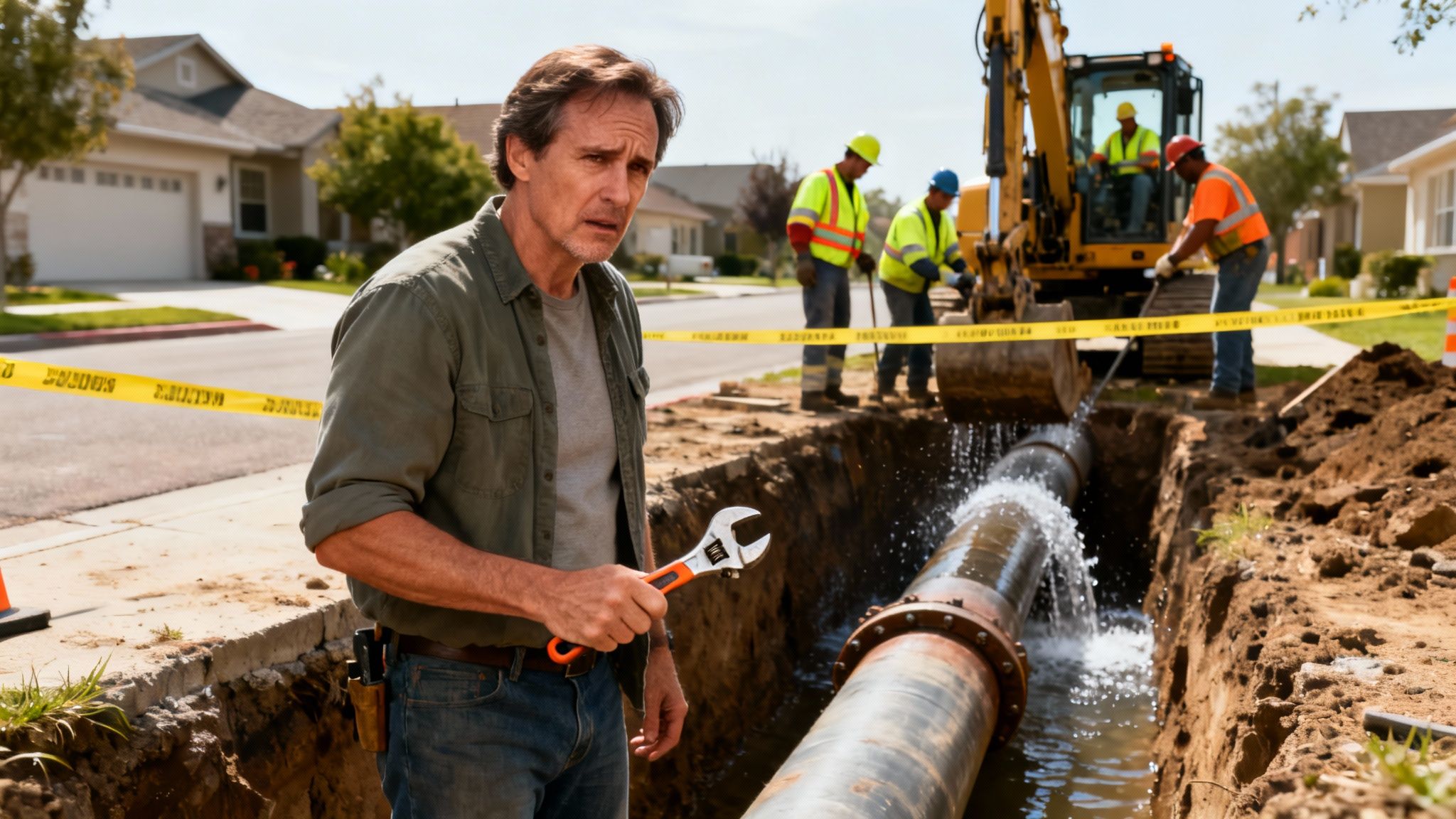
The Scale and Responsibility Involved
This project goes far beyond just digging a trench and laying some new pipe. The responsibilities that come with it are significant, and they're why cities and utility districts require certified experts.
A licensed contractor is responsible for:
- Navigating a Maze of Regulations: Every step is governed by strict municipal and state codes. These rules dictate everything from the type of pipe material allowed and its burial depth to how it’s bedded in the trench.
- Protecting Public Health and Safety: A botched connection can do more than just flood your yard. It can contaminate the public water supply with bacteria and debris or create pressure drops that affect your entire neighborhood.
- Applying Specialized Engineering Knowledge: Professionals understand soil mechanics, hydrostatic pressure testing, and critical backflow prevention methods. This isn't just plumbing; it's civil engineering on a small scale.
To give you a clearer picture, here’s a quick comparison of what you’d be up against versus what a professional handles.
DIY vs Professional Water Main Replacement At a Glance
| Task | DIY Approach (High Risk) | Professional Contractor (Required) |
|---|---|---|
| Permits & Inspections | Unlikely to secure permits; work would be uninspected and illegal. | Manages all permit applications and schedules mandatory city/county inspections for each phase. |
| Utility Location ("Call 811") | May forget or misinterpret markings, risking a catastrophic gas or electrical line strike. | Legally required to coordinate with 811; expertly interprets markings to ensure safe excavation. |
| Excavation & Shoring | High risk of trench collapse, property damage, or injury from using rented equipment. | Uses appropriate machinery and legally required trench shoring to prevent cave-ins and ensure worker safety. |
| Material Selection & Installation | May choose incorrect, non-compliant pipe materials; improper connections will leak. | Selects and installs code-compliant materials (e.g., copper, HDPE) with specialized tools for durable, safe seals. |
| System Connection & Testing | Improper tie-in risks contaminating the public water supply; lacks pressure testing gear. | Performs a sanitized, code-compliant connection and pressure-tests the new line to guarantee it's leak-free. |
| Liability & Insurance | 100% liable for all damages, injuries, fines, and future failures. No insurance coverage. | Fully insured and bonded; assumes all liability for the work, protecting you from financial disaster. |
This table really highlights the immense risk you take on by trying to tackle this alone. The potential for catastrophic failure is real. These regulations aren't just red tape; they are essential safeguards for the community’s water supply and infrastructure. Understanding the risks of https://coastalpipelineinc.com/time-to-upgrade-what-property-owners-should-know-about-aging-sewer-water-and-gas-lines/ is the first step.
An incorrect installation can trigger massive fines, legal liability for damages to public or private property, and an order to have the entire job dug up and redone by a professional—at your expense. As you can learn from reading any leading water technology industry blog, treating a water main replacement as a DIY task is a dangerous and costly gamble. Specialized expertise isn't just recommended; it's required.
It's Not Just Your Pipe, It's Part of a Public System
The moment your plumbing connects to the city's water supply, the game changes. You're no longer just dealing with pipes on your property; you're tapping into a complex, highly regulated public utility system. This is the single biggest reason why replacing your water main isn't a weekend DIY project.
If you’re not a licensed underground utility contractor familiar with municipal codes, you're not just doing work “on your property”—you're modifying a public utility system, which triggers enforcement and inspection protocols. This distinction is crucial. It immediately shifts the project from a simple plumbing fix into the realm of public works. This isn't about red tape; it's about protecting everyone.
Why a Pipe in Your Yard Isn't "Yours" to Replace
It's a common and understandable mistake to think that any pipe on your land is your responsibility to fix however you see fit. But the reality is quite different. Recent insights show that underground water mains are part of regulated infrastructure, and replacing them involves utility notifications (811), pressure testing, city inspections, and often backflow prevention compliance. Skipping these steps can lead to project shutdowns or fines.
- Public Health is Paramount: An amateur connection can easily introduce dirt, bacteria, or other contaminants into the clean water supply. One mistake could create a health hazard for your entire neighborhood.
- The System's Integrity is at Stake: Municipal water systems are pressurized engineering marvels. A botched installation can cause pressure to plummet, affecting water flow for blocks and even crippling the ability of firefighters to do their job.
- Infrastructure Safety is Non-Negotiable: Digging without knowing what's below is a recipe for disaster. Hitting a gas line could cause a catastrophic explosion. Severing a fiber optic cable could knock out internet and 911 services for thousands.
Because the stakes are this high, cities enforce a strict, unavoidable process for any work that touches their system. To understand the difference between residential plumbing and utility-scale work, you can read our post about Underground Utility Installation Contractors.
The Unforgiving World of Codes and Inspections
Every single part of a water main replacement is governed by rules you are legally required to follow. These aren't suggestions; they are enforceable laws with real penalties.
First, there's the mandatory call to 811 ("Call Before You Dig"). This is the law. It triggers a process where every local utility comes out to mark the location of their buried lines—gas, electric, sewer, and communications. Digging without these markings is not only illegal, it’s incredibly dangerous.
Beyond that, municipal codes dictate the technical specifications down to the last detail. They tell you:
- What Materials to Use: You can't just grab any pipe from the hardware store. Cities demand specific, approved materials like C900 PVC or ductile iron pipe that are proven to last and keep water safe.
- How Deep to Dig: The pipe must be buried at a specific depth—no more, no less—to protect it from freezing in the winter and damage from activity on the surface.
- How to Make the Connection: The "tie-in" where your new line meets the city main is the most critical part. It requires specific fittings and proven techniques to create a seal that will hold under pressure for decades.
It's not enough to just know who to call; you have to understand the rulebook. The regulatory framework can be incredibly detailed. For a global perspective on how complex these rules can be, you can look at examples like the Dubai building codes and essential regulations.
Finally, after all the work is done but before the trench is filled, a city inspector must come out to personally sign off on it. They will check the materials, measure the depth, and examine the connection. If anything fails inspection, you have to dig it all up and do it again, all on your own dime. This strict oversight is what keeps the public water supply safe and reliable for everyone.
The Specialized Skills and Equipment Required
Setting aside the red tape for a moment, let's talk about the actual physical work. Replacing a water main is in a completely different universe from your typical weekend home improvement project. It demands a highly specific skillset and an arsenal of industrial-grade equipment you just can't rent from the local hardware store.
This is where the rubber really meets the road on why water main replacement is not a DIY project.
First off, there's the excavation. We're not talking about digging a little trench for a sprinkler system. Water mains have to be buried deep—well below the frost line and safe from surface impacts. That often means digging a trench several feet deep and wide, and that’s a job for heavy machinery like a mini-excavator or a backhoe. And you can't just have anyone operate it; it takes a skilled hand to dig safely around all the other utilities buried down there.
Once that trench is open, you’re facing an immediate and serious danger: collapse. A deep, unsupported trench can cave in with thousands of pounds of force. That's why the pros use trench shoring boxes. These are heavy steel structures lowered into the trench to protect workers from being buried alive. This isn't just a good idea; it's a mandatory safety requirement.
The Technical Demands of the Job
With the trench safely prepared, the real technical work begins. A professional utility contractor brings a depth of knowledge that’s absolutely critical for a secure, leak-free installation that will last for decades. They’re trained in very specific procedures that protect both the integrity of your new line and public health.
Here are three key tasks that show just how specialized this work is:
- Hydrostatic Pressure Testing: Before a single shovelful of dirt goes back in the trench, the new pipe has to be tested to prove it can handle the city’s water pressure. A special pump is used to fill the line with water and crank the pressure up to 150% of its normal operating level. The pipe has to hold that intense pressure for a set amount of time. If the gauge drops even a little, there’s a leak somewhere that has to be found and fixed.
- Certified Backflow Prevention: This is a non-negotiable safety device. It acts like a one-way valve at the connection point, letting city water flow in but physically blocking anything from your property—like fertilizer-tainted sprinkler water or other contaminants—from flowing out into the public water supply. These devices must be installed by a certified professional to comply with strict public health codes.
- Proper Bedding and Compaction: You can’t just toss the new pipe into the trench and bury it. The pipe needs to rest on a carefully prepared "bedding" of sand or fine gravel to support it evenly along its entire length. Then, as the trench is filled, the soil has to be compacted in specific layers. Skipping this step leads to settling over time, which can create dangerous sinkholes or even break the brand-new pipe.
This process flow shows the mandatory steps every professional must follow for a compliant utility installation.
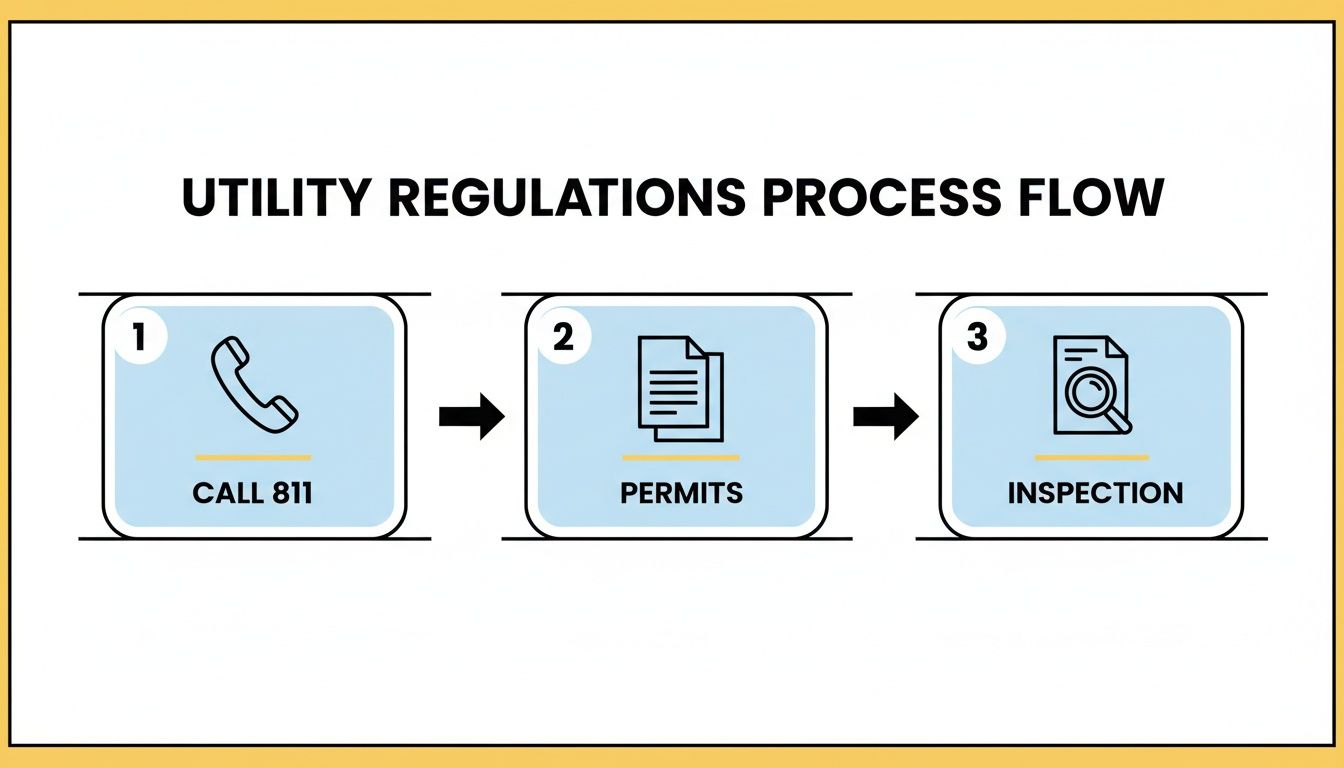
As you can see, this is a formal, regulated process from start to finish—not a simple repair. Each step requires specialized knowledge, from knowing how to interpret the paint and flags from an 811 call to passing the final city inspection. If this workflow looks unfamiliar, this contractor's guide on how to locate underground utilities is a real eye-opener.
The tools, the safety protocols, and the technical procedures are simply in a different league than any DIY project. Professional expertise isn't just recommended; it's essential.
The True Cost of a Water Main Project Gone Wrong
I get it. The idea of tackling a water main replacement yourself to save a few thousand dollars is tempting. But trust me on this one: the potential fallout carries a price tag that makes a professional's quote look like a bargain. When a project of this magnitude goes south, the consequences aren't just inconvenient—they're financially devastating. The real cost isn't what you spend on pipe and fittings, but what you'll pay in emergency repairs, city fines, and legal liability.
The problem gets even bigger when you consider the state of our infrastructure. Water mains all over the country are on their last legs. In the U.S. and Canada, we're seeing about 260,000 water main breaks every single year, adding up to a mind-boggling $2.6 billion in annual repair costs. Those numbers come from a major Utah State University study that looked at 400,000 miles of pipe data. Trying to splice your own line into a system this fragile is like adding a lit fuse to a ticking time bomb.
The Snowball Effect of DIY Costs
When an amateur water line installation fails, the costs don’t just add up; they multiply. What might start as a "small leak" can very quickly spiral into a financial nightmare with layers of expenses you never saw coming.
A failed DIY job usually kicks off a domino effect of compounding problems:
- Hefty Fines for Unpermitted Work: Your first unwelcome letter will probably be from the city. Municipalities hit property owners with steep fines for any unpermitted work on public utility systems. These penalties are meant to be a serious deterrent and can easily run into the thousands.
- Liability for Damaging Other Utilities: This is where things can get astronomically expensive. Let's say your shovel slices through a buried fiber optic cable. You could be on the hook for the entire repair bill and the lost business revenue for every home and company in the area that lost internet. The same goes for accidentally hitting a gas or sewer line.
- Emergency Professional Repair Bills: Once your DIY connection blows and starts flooding the street, you have no choice but to call in a pro for an emergency fix. Those emergency call-outs come at a premium, especially for after-hours work or when specialized equipment is needed to contain the mess.
- Complete Project Redo: The city won't let you just patch up your mistake. They'll require you to hire a licensed contractor to dig up your entire failed project and do it all over again—this time, with the right permits and inspections. You literally pay for the job twice.
- Property and Landscape Restoration: A major water line break can wash out your driveway, decimate your landscaping, and even compromise your home's foundation. The cost to restore your property after a disaster like that can be immense, and your homeowner's insurance will almost certainly deny any claim related to unpermitted, illegal work. The hidden expenses can be shocking, much like the factors that drive the cost of trenchless sewer line repair.
Professional Work Is Your Best Insurance Policy
When you stack up these potential catastrophic costs against the quote from a licensed underground utility contractor, the whole picture changes. A professional's fee isn't just an expense; it’s your insurance policy against total failure.
What you're paying for is not just the pipe and the labor. You are paying for accountability, compliance, and peace of mind. A licensed contractor's work is permitted, inspected, insured, and warrantied—a financial safety net that a DIY project simply cannot offer.
This is the fundamental reason why water main replacement is not a DIY project. The initial savings are an illusion, one that can be instantly wiped out by a single, costly mistake. Investing in a qualified professional turns an unpredictable gamble into a controlled, predictable, and protected project, guaranteeing the job is done right the first time and shielding you from the devastating true cost of a project gone wrong.
How to Hire the Right Underground Utility Contractor
Okay, so you understand this isn't a weekend DIY job. That's the easy part. The real challenge is finding the right professional for the job, because not all contractors are created equal.
You'll find plenty of general plumbers and handymen out there, but only a handful are true specialists in underground utility work. Making that distinction is absolutely crucial for protecting your property and ensuring the project is done right the first time. Honestly, knowing how to vet a pro is another big reason why water main replacement is not a DIY project—it takes a specific kind of due diligence.
Here’s a practical checklist to help you sift through the options and find a real expert.

Step 1: Verify the Correct License
First things first: check their license. This is non-negotiable. For underground utility work here in California, you are looking for a General Engineering Contractor license (Class A).
A standard plumbing license (Class C-36) is for work inside the home. A Class A license, on the other hand, means the contractor is qualified for heavy-duty projects involving excavation, grading, and major infrastructure—exactly what a water main replacement entails. A great plumber might be a wizard with your sink, but they likely aren't licensed or equipped to dig up the street and tie into a city main.
Step 2: Confirm Their Experience and Insurance
Once you’ve confirmed they have the right license, it's time to look at their track record and their insurance coverage. Skipping this step is a gamble you can't afford to take, as it's what shields you from massive liability.
Make sure you ask for and receive these documents:
- Proof of Experience with Municipal Tie-Ins: Don't just ask if they've done it before. Ask for specific examples of similar projects in your city or county. This proves they know the local codes, the right inspectors to call, and the unique quirks of your utility district.
- Certificate of Insurance (COI): They need to show you proof of both general liability and workers' compensation insurance. General liability covers damage to your neighbor's driveway or a city sidewalk. Workers' comp covers their crew if someone gets hurt on your property. Without it, you could be on the hook for medical bills and damages.
A contractor's detailed proposal is a roadmap for your project. A vague or incomplete bid is a major red flag, suggesting they may not fully grasp the scope of work or could hit you with surprise charges later.
Step 3: Analyze the Proposal in Detail
A true professional will hand you a proposal that is clear, comprehensive, and leaves nothing to the imagination. It’s a direct reflection of their thoroughness. A flimsy, one-page quote is a sign of someone who either cuts corners or doesn't know what they're doing.
A proper bid must break down the costs and responsibilities for:
- Permitting and Fees: The proposal should explicitly state they are responsible for pulling all required city or county permits.
- 811 Utility Location: It should mention their plan to coordinate the mandatory "Call Before You Dig" service to locate other underground lines.
- Materials and Labor: Look for itemized costs for everything, including the specific type of pipe (like C900 PVC) and the labor involved.
- Testing and Inspection: The bid needs to include the hydrostatic pressure test and the final sign-off from the municipal inspector.
- Surface Restoration: What happens after the pipe is in the ground? The quote must cover the costs of backfilling, compacting the soil, and restoring whatever surface they dug up—asphalt, concrete, or your lawn.
Choosing the right team means finding someone who lives and breathes this kind of work. For more guidance on finding the right partners for a big project, check out our guide on how to hire subcontractors. By following this checklist, you can confidently hire a genuine expert who can handle the complexities of a water main replacement and protect your investment.
Your Final Pre-Excavation Reality Check
Before you even think about grabbing a shovel, let's have a frank discussion. We've talked through the regulations, the heavy-duty equipment, and the serious financial gamble you'd be taking. Now it's time to put it all together with an honest, actionable step.
The Decisive Checklist
This isn't just a home plumbing project; you're dealing with public works infrastructure. Can you confidently handle these critical tasks yourself?
-
Utility Location and Interpretation: Are you ready to call 811 and patiently wait for every single utility company to come out and mark their lines? More importantly, can you look at a spray-painted rainbow on your lawn and know exactly what each color means and how to dig safely around it?
-
Permitting and Code Navigation: Do you know the specific trenching depth rules for your city or county? Are you prepared to fill out a dense, multi-page permit application and then coordinate with a city inspector to come out and sign off on your work?
-
Backflow Prevention Compliance: How will you know if your municipal connection requires a backflow preventer? These are critical public health devices, and you have to select the right certified model and install it perfectly to meet code.
Before any excavation, call 811, check with your local jurisdiction for trenching depth and permitting rules, and ask whether backflow prevention is required at the tie-in. If any of this sounds unfamiliar, that’s a sign to hire a qualified contractor.
If you hesitated on any of those questions, you have your answer. That hesitation isn't a knock on your skills—it's a clear signal that this job belongs in the hands of a licensed professional. It’s the single biggest reason why water main replacement is not a DIY project.
The risks of getting it wrong are just too severe, both for your safety and your wallet. To get a better sense of the protocols professionals follow, take a look at these essential construction site safety tips.
If you're planning a water line upgrade in Monterey, Santa Cruz, or San Benito County, Coastal Pipeline can walk you through the permitting and installation process—no surprises, no shortcuts. Contact us for guidance before you dig.
We Get These Questions All The Time
It's natural to have questions when you're facing a project this big. We've put together some answers to the most common ones we hear from property owners. The bottom line? This job is for pros, and for good reason—it’s about protecting your safety, your wallet, and your community.
What's the Difference Between My Water Line and the Water Main?
Here's an easy way to picture it: the public water main is the freeway, and your private water service line is your driveway.
The main is that massive pipe running under the street, supplying water to your whole neighborhood. Your service line is the smaller (but still vital) pipe that branches off that main and runs directly to your property. While you own the service line, that tap-in point where it connects to the main is a critical piece of public infrastructure. Any work done there has to meet the same exacting standards, permits, and inspections as work on the main itself.
So, What's the Real Cost for a Professional Water Main Replacement?
Honestly, it varies quite a bit. A professional replacement could cost anywhere from a few thousand dollars to well over ten thousand. The final price tag really depends on things like the length and depth of the pipe, the type of soil we have to dig through, and how much the local city or county charges for permits.
But a professional quote is about more than just a crew and some pipe. That price covers everything you need to do the job right and stay out of trouble.
- Permits and Inspections: We handle all the municipal paperwork and schedule the required check-ins.
- Heavy Equipment: Safe, professional excavation requires machinery, not just a shovel.
- Certified Materials: We only use pipes and fittings that meet strict, modern codes for drinking water safety.
- Pressure Testing: This is a mandatory step to prove the new line is sealed tight and won't leak.
- Full Restoration: The job isn't done until the landscaping, driveway, or sidewalk is put back the way we found it.
When you look at it that way, the professional price is your insurance against the surprise costs of fines, property damage, and even lawsuits that a botched DIY job can bring.
Can I Just Call My Usual Plumber to Replace the Line?
Not necessarily, and this is a crucial point. Your go-to licensed plumber is the absolute expert for every pipe inside your house. But the minute you're working in the public right-of-way—that strip of land between the sidewalk and the street—you're in a completely different world.
This type of work often demands a specialized license, like a General Engineering Contractor license. These contractors are trained in trenching safety, public works standards, and navigating municipal codes, which are totally separate from the building codes for indoor plumbing. Before you hire anyone, you must confirm they have the specific license and insurance for underground utility work. This is exactly why it pays to hire a specialist who knows the ins and outs of large-scale utility projects. You can get a deeper look at this in our guide to hiring the right underground utility contractors.
If you're planning a water line upgrade in Monterey, Santa Cruz, or San Benito County, Coastal Pipeline can walk you through the permitting and installation process—no surprises, no shortcuts. Contact us for guidance before you dig.