To protect your pavement from storm damage on the Central Coast, you have to think like water. Our wet coastal weather, with its heavy rain and soaked soil, needs more than just a standard paving job. It needs smart drainage, a solid base layer, and the right materials to handle our weather. Taking these steps early is the key to preventing the damage we often see in Santa Cruz and Monterey counties.
Why Central Coast Storms Wreak Havoc On Pavement
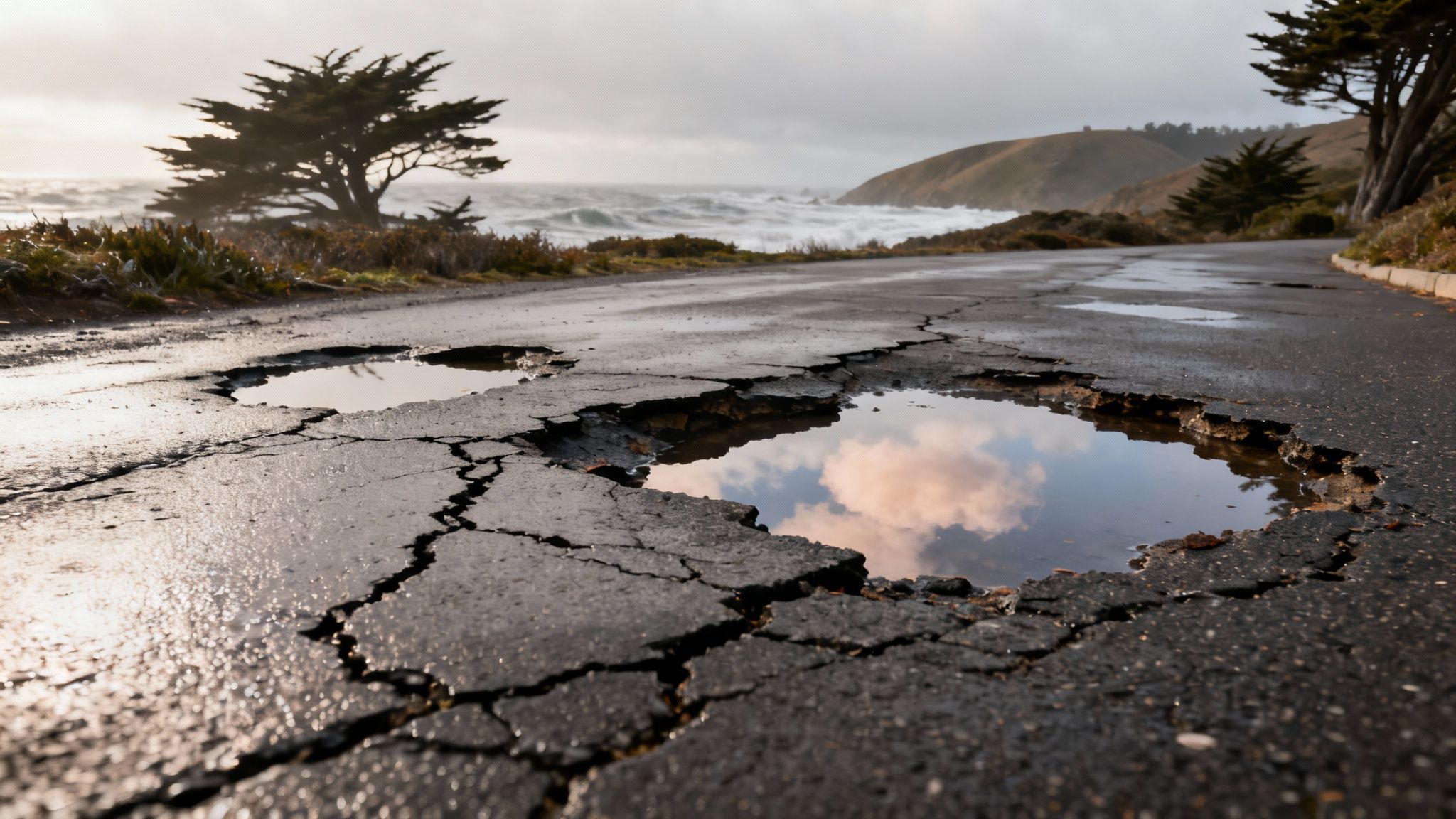
Residents of Santa Cruz and Monterey know that once the first winter storm hits, poorly paved surfaces deteriorate fast. Your driveway might look fine one day, but after a big storm, it's full of cracks and potholes. This isn't just bad luck. It's what happens when heavy coastal rainfall and changing temperatures team up against paved surfaces.
Our winters bring heavy rains that dump a lot of water quickly. This water soaks the ground under asphalt driveways and parking lots. When that foundation layer, called the subgrade, gets wet, it loses its strength and turns to mush.
The problem gets worse with our local temperature changes. Even small shifts cause asphalt to expand and shrink. When pavement flexes on top of a weak, wet subgrade, it cracks under the pressure. Coastal rainfall and fluctuating temperatures stress asphalt, exposing weak subgrades and causing potholes.
Poor Paving Makes a Bad Situation Worse
This natural cycle becomes a crisis when a paving job isn't done right for our local area. Pavement that might last for years in a drier place can fail here in just one season.
The two biggest problems are poor drainage and a weak subbase. When paving is done without drainage planning or compacted subbase materials, stormwater quickly erodes the surface.
This leads to common issues you’ve probably seen:
- Warped Surfaces: Driveways and lots start to sag or bulge as the wet ground shifts below.
- Persistent Puddles: Standing water that lasts for days is a bad sign. It shows poor drainage and is weakening your asphalt.
- Early Failure: Pavement that should last for decades starts to fall apart in just a few years. This leads to uneven driveways, standing water, and premature failure—especially on sloped lots or older utility trench restorations.
To see the problem clearly, it helps to understand how these issues connect. A small mistake in the planning stage can lead to big, expensive repairs later.
Storm Damage Risk Factors for Central Coast Pavement
| Vulnerability | Description | Resulting Storm Damage |
|---|---|---|
| Poor Subgrade Compaction | The foundational soil and rock layer isn't packed down tightly, leaving air pockets. | Water fills the voids, turning the base into a soft sponge. The pavement above cracks and develops potholes under weight. |
| Inadequate Drainage Slope | The pavement surface is too flat, without the minimum 2% grade needed to direct water away. | Water pools on the surface, seeping into small cracks and saturating the subbase over time. |
| Missing or Clogged Drains | No catch basins or storm drains are installed, or existing ones are blocked with debris. | Runoff overwhelms the pavement edges, eroding the foundation and creating large "alligator" cracks. |
| Unsealed Cracks | Small, existing cracks are left untreated before the rainy season begins. | Water penetrates deep into the pavement structure, freezes and expands (even in mild freezes), and widens the cracks. |
Understanding these weak points is the first step to building pavement that can handle our tough coastal weather.
Local ordinances in Santa Cruz and Monterey Counties often require drainage mitigation for any major resurfacing or new paving. We work directly with city inspectors to ensure our projects pass first review—saving clients rework costs.
Learning From Recent Disasters
We saw how powerful our storms can be during the 2022-2023 winter. The heavy rains caused huge floods across the Central Coast, leading to over $210 million in damage to state parks alone.
A clear example was the disaster at Seacliff State Beach near Santa Cruz. Storms destroyed the pier, seawall, underground utilities, and the entire parking lot. This is a powerful reminder of how bad paving and drainage can turn a storm from a problem into a total disaster.
These events show that protecting your property is about more than just the top layer of asphalt. It’s about controlling how water moves on and under the ground. You can learn more about preparing for heavy rain with storm drain and utility upgrades that are vital for Central Coast properties.
At Coastal Pipeline Inc., we design our paving and trench backfill projects for these wet coastal conditions, making sure your investment is built to last. By planning ahead, you can avoid becoming another storm damage statistic.
The Hidden Weaknesses Beneath Your Asphalt
The rain you see on your driveway during a storm isn’t the biggest problem. The real danger is the water you can't see. This is the water that seeps underneath, turning the foundation of your pavement into a soft, unstable mess. When paving is done without a plan for water, these hidden weaknesses can lead to fast and expensive storm damage.
Most people focus on the smooth, black surface of new asphalt, but its real strength comes from the layers below. The subbase (the packed layer of rock and soil) and the drainage system do all the hard work. If either one is weak, stormwater can quietly destroy your pavement from below.
Water that can't drain away quickly just sits and soaks the subbase. This slow erosion from underneath is what causes common problems like standing water, cracking, and sinking surfaces all over the Central Coast.
Why a Weak Foundation Guarantees Failure
Think of your asphalt like the roof of a house and the subbase as its foundation. A great roof on a weak foundation is useless. When a paving contractor cuts corners on preparing the site, they are building on weak ground. This usually means they used unpacked soil or skipped putting in a proper rock base to save money.
Then, the first heavy winter rains hit Santa Cruz or Monterey, and that weak foundation gets soaked. Every time a car drives over it, the weight pushes down on the mushy base. This causes the asphalt on top to flex, crack, and eventually fall apart.
A sloped driveway is a perfect example. If it isn't sloped correctly to guide water to a drain, water will collect in one area. This constant flow wears away the subbase, leading to a sunken path or potholes that come back every year.
The Problem with Old Utility Trenches
Another common weak spot is an old utility trench. Whenever a sewer, water, or storm line is fixed, the crew has to fill the trench back in. The fill needs to be packed down tightly, but this step is often rushed.
Over time, that poorly packed fill starts to settle, especially when winter storms soak it. This creates a dip in the asphalt above. The dip collects more water and makes the decay happen even faster. This is why you often see a straight line of cracks or a sunken area in a driveway or street—it follows the path of an old utility repair. Understanding how subsurface utility conditions impact pavement performance is key if you want to prevent these kinds of failures.
The High Cost of Ignoring What's Underneath
The results of cutting corners on paving become very clear during a major storm. In the 2023 winter storms, California was hit by 31 atmospheric rivers that brought record rain to the Central Coast. This caused an amazing $638.7 million in damage to state highways alone. Major roads like US 101 had major washouts. You can read more about the storm's effect on California's roads to see the full impact.
Your property is just a smaller version of this same problem. Without a solid, well-drained foundation, your pavement is at risk from the same forces that shut down our highways. The key to avoiding storm damage isn't just about the quality of the asphalt. It’s about the expert prep work that happens long before the paving starts.
Building Pavement That Withstands Coastal Rains
Anyone who has lived in Santa Cruz or Monterey knows how it goes: the first big winter storm arrives, and weak pavement starts to fall apart. To prevent storm damage, you need more than a simple layer of asphalt. You need a complete system built to handle the heavy rain our coast gets.
It all comes down to a good drainage plan, a strong foundation, and the right protection for our unique weather.
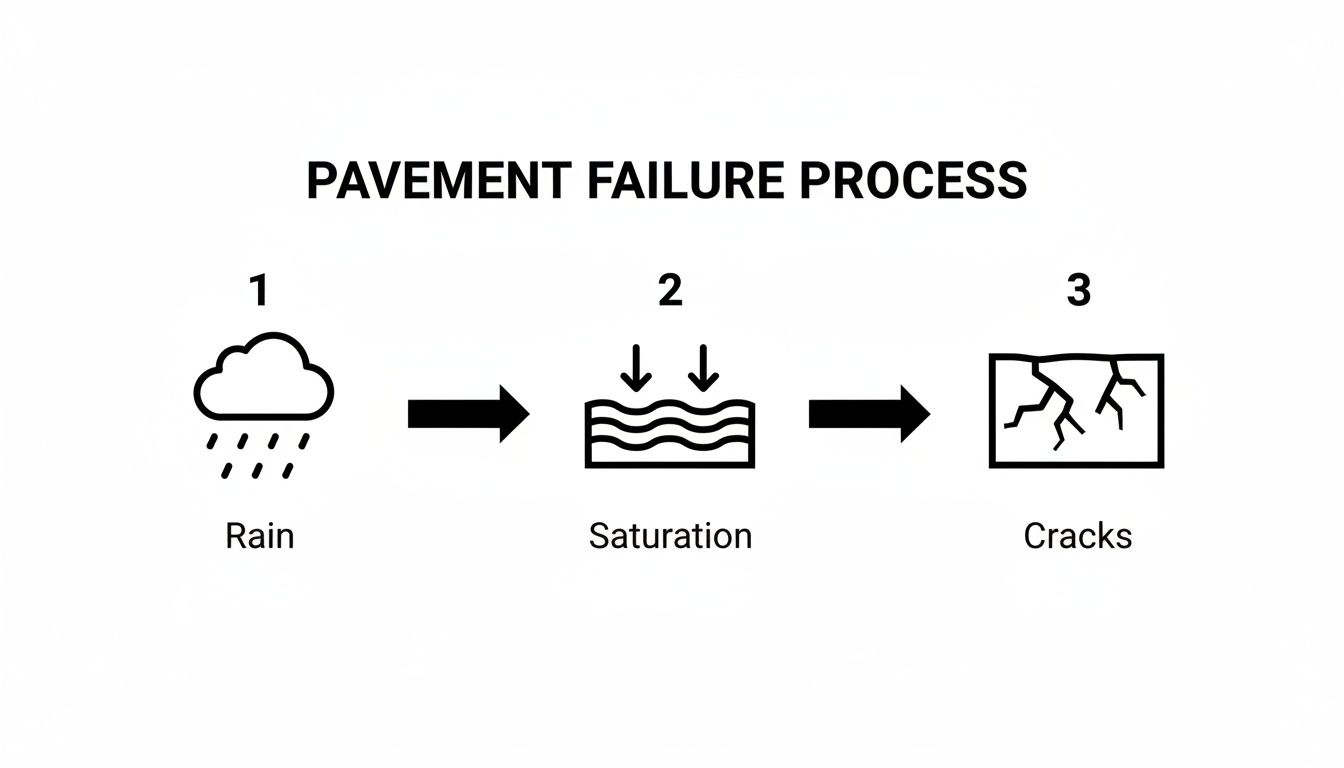
This picture shows just how fast things can go wrong. Once heavy rain soaks the ground under the asphalt, it’s only a matter of time before cracks show up and the pavement begins to fail.
The Foundation of Storm-Proof Paving
The secret to pavement that survives our wet winters isn't what you see on top—it's what's underneath. When a project is rushed without proper drainage or a well-packed subbase, stormwater eats away at the foundation. This is what causes uneven driveways, dangerous puddles, and early pavement failure. We see this most often on sloped properties or over old utility trenches where the ground was disturbed.
At Coastal Pipeline Inc., we tailor all paving and trench backfill to coastal moisture conditions. It all starts with a system that gets water off and away from your pavement quickly.
- Strategic Grading: We carefully shape the ground to create a minimum 2% slope. This simple but important step makes sure water flows away from buildings and toward drains.
- Durable Drainage Materials: We use tough drainage parts like Reinforced Concrete Pipe (RCP) and High-Density Polyethylene (HDPE) for drainage support. These materials can handle a lot of water and last for years.
- Proper Subbase Compaction: A solid, tightly packed subbase is a must. It gives the asphalt the support it needs to resist cracking, even when the ground is soaked.
This complete approach means water is controlled from the moment it hits the surface, so it never gets a chance to weaken the layers below. You can see more about how we build surfaces for the long haul in our guide to https://coastalpipelineinc.com/grading-and-paving/.
Sealing the Deal Against Winter Rains
With a solid foundation and drainage system, the last step is to protect the asphalt itself. Sealcoating is a protective layer that stops water from seeping into the surface and breaking down the asphalt. We also recommend asphalt sealcoating schedules that align with regional rain patterns.
But timing is very important. Applying a sealcoat at the wrong time of year can trap moisture underneath, which causes more harm than good.
Schedule paving work between April and September when surfaces are dry and temperatures are ideal for bonding. During these warmer, drier months, the surface is free of moisture and the temperatures are just right for the sealant to cure properly.
Sticking to this schedule means your pavement gets the best protection right before winter storms arrive. For a deeper look at building strong surfaces in our area, check out this comprehensive guide to concrete driveways on the Central Coast, which covers local soil and upkeep.
By combining smart drainage design, careful subbase prep, and a well-timed sealcoat, your pavement can become a strong, long-lasting asset that’s ready for our coastal winter.
Paving on the Central Coast? Here’s How to Handle Local Regulations
Building anything on the Central Coast that can handle our winter storms is a big job, especially for pavement. It's not just about what works; it's about what the law requires. Local governments in Santa Cruz and Monterey Counties know how much damage uncontrolled stormwater can cause. That's why they have specific rules for any new pavement or major resurfacing project.
Think of these rules as a guide for preventing expensive failures. They are made to stop erosion, keep your neighbor's property from flooding, and protect our local water sources from too much runoff.
In the end, the main rule is simple: you need a good plan to manage all the water that will run off your new pavement. Getting this right from the start is the key to a successful project.
Why City and County Inspectors Pay Close Attention
Once you apply for a paving permit, you can expect city or county inspectors to get involved. Their job is to make sure your project follows all local rules. For paving here, their biggest concern is almost always stormwater management.
They will look at your plans carefully, checking for a few key things:
- Proper Grading: Is the surface sloped correctly? They want to see at least a 2% slope to make sure water flows away from buildings and toward your drains.
- Effective Drainage: Do you have the right systems in place? This could mean catch basins, French drains, or a good connection to the city storm drain.
- Erosion Control: What is your plan to keep soil from washing away at the edges of the pavement? This is very important on sloped properties.
If your plan doesn't meet these standards, your project can be stopped quickly. A failed inspection means delays, extra costs to redesign the plan, and the hassle of redoing work that has already been done.
A Smoother Path to Approval
This is where having an experienced local contractor helps. We don't just show up and lay asphalt; we handle the whole process for you. We know the specific rules and what inspectors in Santa Cruz, Monterey, and San Benito Counties expect to see.
Instead of just submitting plans and hoping for the best, we are proactive. We work with city and county officials from the start, showing them designs that are already made to meet their needs. This simple step greatly reduces the risk of rejection or last-minute changes.
We work directly with city inspectors to ensure our projects pass first review—saving clients rework costs. Our goal is to save you time, money, and stress and keep your project on schedule.
Keeping Up with Evolving Rules
Stormwater management rules change over time. Local drainage requirements are updated as we learn more about what works best. Any new project has to follow the latest standards, and it's our job to stay on top of those changes.
Whether we're working on a home driveway or a large business parking lot, we make sure every detail follows the rules and is built to last. You can find out more about how drainage infrastructure is evolving and whether your systems are up to code in our detailed guide.
By treating rules as a key part of the design process, not a problem, we build pavement that’s more than just a nice surface. It’s a smart, long-term investment that protects your property when the winter rains come.
Keeping Your Pavement Healthy: A Property Owner's Guide
When you're trying to protect your asphalt from the Central Coast's tough winter storms, getting ahead of the problem is the best thing you can do. A little bit of smart upkeep during our dry season can save you from expensive repairs when the rains come.
The best advice is to schedule new paving work between April and September. Our long, dry season is perfect for paving. It gives new asphalt the time it needs to cure and bond. When you lay pavement on a dry, solid base, you are building in strength from the ground up, making it much tougher against winter rains.
Work With the Seasons, Not Against Them
Timing is very important. You wouldn't paint your house in a rainstorm, and the same idea applies here. Paving and sealing projects have a best time, and rushing a job in the fall when storms are coming is a recipe for failure.
A smart approach that works with our local weather will always give you a better, longer-lasting result.
Here is a quick calendar that shows how to time your paving and drainage projects for the best results here on the Central Coast.
Seasonal Paving and Maintenance Calendar
| Season | Recommended Action | Reasoning |
|---|---|---|
| Spring (April – June) | Walk your property after the last of the winter rains. Look for new cracks or low spots. This is the time to schedule repairs and sealcoating. | The ground is finally drying out, and the mild temperatures are perfect for materials to cure properly before the intense summer heat sets in. |
| Summer (July – Sept) | This is prime time. All major paving, resurfacing, and sealcoating projects should happen now. | With consistently dry ground and warm weather, you'll get the strongest possible bond for new asphalt and sealants. This is your window. |
| Fall (Oct – Dec) | Before the first big storm, get out there and clear all your drains, gutters, and culverts of leaves and debris. Handle any last-minute crack filling. | This simple cleanup prevents blockages that cause water to pool on your pavement—the number one cause of saturation damage and potholes. |
| Winter (Jan – March) | Keep an eye on your property during storms. Make notes of where water is pooling or running in strange patterns. | This is your diagnostic phase. What you observe now tells you exactly where the hidden drainage problems are, so you can fix them in the spring. |
This seasonal plan helps you stay ahead of problems before they become big emergencies.
After the Storm: What to Look For
If you already see standing water or new cracks after a storm, your pavement needs help. It's a clear sign of a drainage problem underneath. For post-storm repairs, ask about our storm drain inspections to prevent recurring surface failure. An inspection lets us see where blockages in your system are causing water to back up and damage your pavement from below. For more on protecting your property, these emergency water damage prevention and restoration insights for property managers offer good advice.
Protecting Your Bottom Line
The cost of storm damage in our area is serious. Between 1980 and 2024, California was hit by 46 different billion-dollar weather disasters, including six major floods that hit the Central Coast hard.
Pavement without good drainage allows water to sit and soak in, which weakens the base. This leads to 30-50% more failures in wet climates like ours. On the other hand, properties with good drainage systems see up to 65% less erosion.
The bottom line is simple: if you manage the water, you manage your risk. A small, smart investment in upkeep like sealcoating prevents the kind of major failure that comes from neglect.
Applying a high-quality sealant regularly is one of the most cost-effective things you can do to make your asphalt last longer. You can learn about our professional sealcoating and crack filling services in Monterey to see how we protect surfaces like yours. This simple step creates a tough barrier that stops water from getting in, which prevents the problems that create potholes and cracks.
Prepare Your Property Before the Next Storm Hits
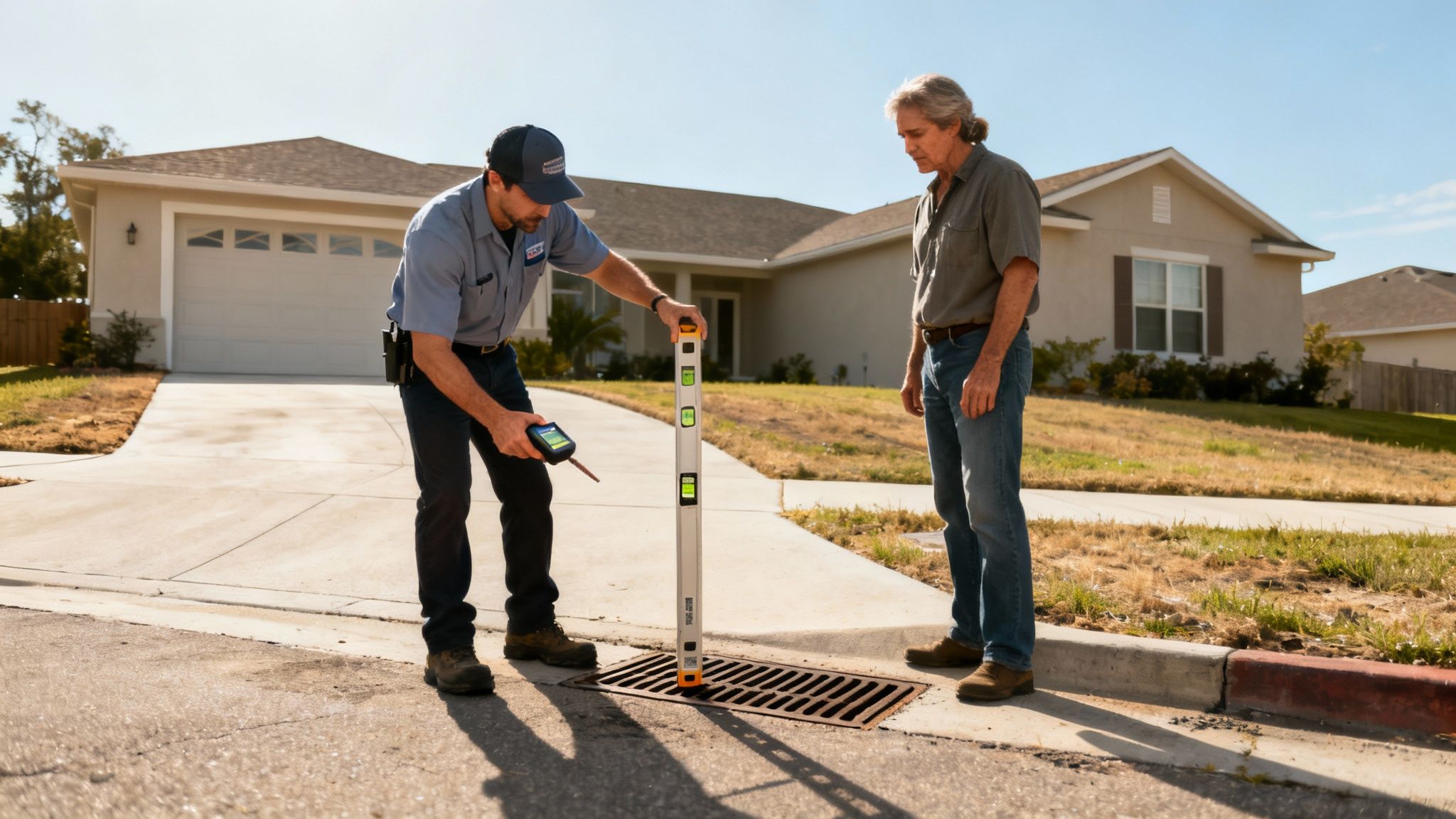
Anyone who lives in Santa Cruz or Monterey knows the story. The first big winter storm hits, and a small crack in the driveway becomes a pothole overnight. Our coastal rain and changing temperatures put a lot of stress on asphalt and quickly expose any weak spots in the ground below. This is a big problem on sloped properties or over old utility trenches, where the real issues are hiding under the surface.
The bottom line is simple: getting ready ahead of time is your best defense against winter storm damage. If you wait until the rain is already falling, you’re already too late.
A Local Solution for Coastal Conditions
I've seen it many times—paving projects that failed because they didn't plan for drainage or a properly packed subbase. When paving is done without drainage planning or compacted subbase materials, stormwater quickly erodes the surface. This leads to uneven driveways, standing water, and premature failure. At Coastal Pipeline Inc., every paving and trench backfill job we do is designed for our area's wet conditions.
We know what works here. That means using strong materials like RCP and HDPE for drainage systems. We also recommend asphalt sealcoating schedules that make sense with our local rain patterns.
It’s also important to know that local rules in Santa Cruz and Monterey Counties often have strict drainage needs for any major paving work. We handle that for you, working with city inspectors to make sure every project is up to code and passes the first time, saving you the hassle and cost of rework.
Need help preparing your asphalt or storm drain system before the next winter rain? Coastal Pipeline serves all of Monterey, Santa Cruz, and San Benito Counties. Let’s get ahead of the season—request a site check today.
Common Questions About Paving That Lasts Through Our Coastal Winters
Anyone who has lived in Santa Cruz or Monterey knows the drill. A well-paved surface looks great until the first big winter storm hits. That's when you see the real test. Our coastal rain and ever-changing temperatures are brutal on asphalt, quickly finding and exposing any weak spots in the subgrade, leading to those all-too-familiar potholes.
When a paving job skips proper drainage planning or uses poorly compacted materials, stormwater becomes the enemy. It will erode the surface from below, causing uneven driveways, frustrating puddles, and a much shorter lifespan for your pavement. This is especially true on sloped properties or where old utility trenches have settled.
Here are some of the most common questions we get from local property owners trying to avoid these exact headaches.
How Do I Know If My Driveway Has a Drainage Problem?
The most obvious clues show up right after it rains. Take a walk outside and look for these tell-tale signs:
- Standing Water: Are there low spots where water just sits for hours, or even days?
- Pooling Near Structures: Is water collecting right up against your foundation or garage door?
- Edge Erosion: Do you see dirt or gravel washing away from the sides of the pavement?
- "Alligator" Cracks: These interconnected, blocky cracks are a serious red flag.
That signature alligator cracking pattern is a strong signal that water has saturated the subbase beneath your asphalt, causing it to lose its structural strength. It means your drainage isn't working, and your pavement is on the fast track to failure.
Is Permeable Paving a Good Idea Around Here?
Permeable paving sounds like the perfect solution—it lets rainwater soak right into the ground, reducing runoff. And sometimes, it is. But its success on the Central Coast depends entirely on one thing: your soil.
Many parts of our region are known for heavy clay soil, which doesn't drain well at all. If you put a permeable system on top of clay, the water has nowhere to go, which defeats the whole purpose. A professional site assessment is absolutely crucial to see if your property's soil can handle it.
Honestly, for long-term stability and reliability in most local situations, a traditional sealed asphalt surface paired with a well-engineered drainage system (think catch basins and solid pipes) is often the better, more predictable choice.
Keep in mind that local regulations in Santa Cruz and Monterey Counties often have strict requirements for drainage when you do any significant paving. We handle these permits constantly, working with city inspectors to make sure everything passes the first time—a step that saves our clients from costly rework down the road.
How Often Should I Sealcoat My Asphalt in This Climate?
Given our unique blend of heavy winter rains and intense summer sun, we’ve found the sweet spot for sealcoating is every 2 to 4 years. A good sealcoat acts like a shield, protecting the asphalt from water seeping into cracks and from UV rays that make it brittle.
The best window for paving or sealcoating work is from April to September. The ground is dry and the temperatures are just right for the materials to cure and bond properly.
Think of regular sealcoating as the most cost-effective maintenance you can do. It will dramatically extend the life of your driveway or parking lot. And if you're dealing with damage after a storm, it's a good idea to have us inspect your storm drains, too. That way, you can fix the root cause and protect your investment.
Need help getting your asphalt or storm drain system ready for the next rainy season? Coastal Pipeline Inc. serves all of Monterey, Santa Cruz, and San Benito Counties. Let’s get ahead of the storms—request a site check today.