
Imagine waking up to a flooded yard, a cracked driveway, or a water bill that has suddenly doubled. For many homeowners, this isn't just a bad dream. It's a real risk tied to a part of their property they rarely see: the underground water main. As our local pipes get older, 2026 is a key year to check on them.
Every year, 260,000 water mains break in the U.S. and Canada, many causing flooding, property damage, and emergency repair costs. If your home’s water line is older than 30 years, it could be at risk—especially in older neighborhoods across Monterey and Santa Cruz counties. The good news is that your home gives you clues long before a big break happens.
From a small drop in water pressure to a wet patch in your lawn, these are signs that your home needs help. This guide will show you the five most important water main warning signs to look for. We'll explain what they mean, what to do next, and how catching them early can protect your property and save you money.
1. Low Water Pressure or Weak Flow Throughout the Home
A sudden or slow drop in water pressure that affects your whole home is one of the most common water main warning signs homeowners shouldn’t ignore in 2026. If the kitchen sink, the shower, and the outside hose all seem weak at the same time, the problem probably isn't a clogged faucet. Instead, it points to a problem with your main water line.
This is a big warning sign. Old pipes are reaching the end of their life. A break in your water main can waste thousands of gallons of water a day. This silently raises your utility bills and could lead to a major pipe burst.
What Causes Low Pressure Everywhere?
Unlike low pressure in just one bathroom, a drop in pressure all over the house means there's a bigger issue. It shows that less water is getting to your home from the street.
Common causes include:
- Underground Leaks: A crack in the water main lets water escape into the ground before it even gets to your house.
- Pipe Buildup: Older steel or iron pipes can rust from the inside. This buildup makes the pipe narrower, which reduces the water flow to your home.
- City Supply Issues: Sometimes the problem is with the city's main line, not yours. This is common in older areas of Santa Cruz and Monterey, where a city pipe failure can affect many homes at once.
Key Insight: The U.S. loses 6 billion gallons of treated drinking water every day due to leaking pipes. That’s water you pay for—but never use. An outdated water main may be silently draining both your budget and your pressure.
What to Do
If you think you have a problem, you can do a few things before calling a professional.
- Confirm It's Everywhere: Turn on a few faucets at once, like in the kitchen and a shower. If they both have weak flow, the issue is likely the main line.
- Check Your Water Meter: Turn off all water in your home. Find your water meter and look for the leak indicator (often a small triangle or star). If it's spinning, water is flowing somewhere, which means you have a leak.
- Note the Pressure Loss: Write down if the pressure drop is all the time or only during busy hours (like mornings and evenings). This info helps a technician find the cause faster.
- Call a Professional: To know for sure, you need a pro. A licensed contractor can test the pressure and use a camera to find any cracks or rust inside the pipe.
For homeowners with older homes, knowing the condition of your pipes is key. You can learn more about aging sewer, water, and gas lines here to be better prepared. Fixing low water pressure early not only makes your home work better but also helps you avoid the high cost of a surprise water main break.
2. Sinkholes, Foundation Cracks, or an Uneven Yard
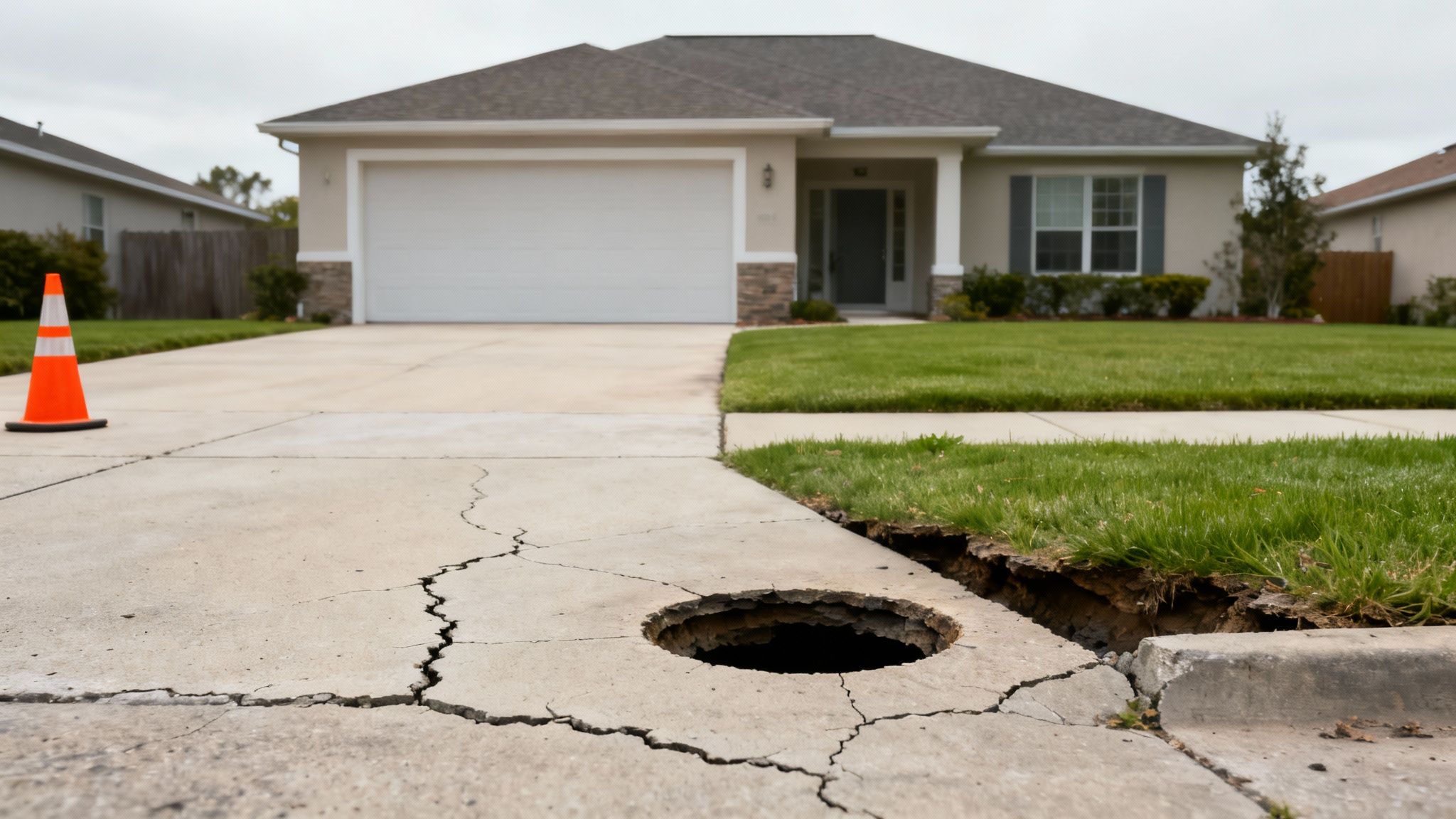
One of the most serious water main warning signs homeowners shouldn’t ignore in 2026 is seeing the ground change. A new sinkhole, cracks in your foundation, or a sunken driveway are not just small problems. They mean a serious issue is happening underground. These problems happen when a water main leak soaks the soil and washes it away, creating a hidden empty space that eventually collapses.
This is a major red flag, especially for homes on the Central Coast where old pipes are common. A slow leak can silently wash away soil for months. For example, a business in Seaside found a sinkhole in its parking lot caused by a water main losing 5,000 gallons of water a day.
What Causes the Ground to Move?
Solid ground depends on tightly packed soil. When a water main leaks, it adds a constant flow of water that makes the ground unstable. This can lead to big structural dangers.
Common causes include:
- Soil Washing Away: Water leaking from a cracked pipe washes away sand and dirt. This creates empty spaces underground, making the ground too weak to support what's on top of it.
- Wet Soil: When soil gets too wet, it can't hold as much weight and can shift. This is very dangerous under heavy things like foundations and driveways, causing them to sink or crack.
- Sudden Breaks: A big, sudden pipe break can wash away a lot of soil quickly. This can cause the ground above to collapse right away. This happened to a driveway in a San Benito County neighborhood when a 40-year-old water main failed.
Key Insight: Checking for leaks early can prevent a disaster. A small dip in your yard could be the only warning of a big underground problem that threatens your property and your safety.
What to Do
If you see any signs of the ground sinking, act fast to protect your property.
- Block Off the Area: If you find a sinkhole or a large dip, mark it off with cones or tape right away. The ground could be unsafe for family, pets, or visitors.
- Take Pictures: Take clear photos and videos of any cracks in your foundation, driveway, or sidewalks. Write down the date you first saw them and if they get worse. This is important for insurance and repairs.
- Look for Other Signs: Check for other clues like wet spots in the grass, low water pressure, or a high water bill. Seeing these signs together helps confirm that a water main leak is the likely cause.
- Call Professionals Right Away: Ground problems are not a DIY fix. First, call your local water company to report a possible main break. Then, contact a licensed contractor who works on underground pipes. They can find the leak without digging up your whole yard.
When a water main leak damages the ground under your home, fixing the pipe is just the first step. If you have serious issues like foundation cracks, you may need residential foundation concrete services to make sure your home is safe. You can learn more about how subsurface utility conditions impact pavement and ground stability here. Acting quickly protects your home from more damage and ensures a safe, lasting repair.
3. Discolored, Rusty, or Cloudy Water From Taps
When the water from your faucets looks brown, red, or cloudy, it’s a clear sign that something is wrong with your water pipes. This color change is often caused by rust inside your water main, or it could be dirt that got into the pipes. This is one of the most visible water main warning signs homeowners shouldn’t ignore in 2026, especially in homes with older plumbing.

In coastal areas like Monterey, Santa Cruz, and San Benito Counties, many homes still have old metal water mains made of galvanized steel or cast iron. According to the ASCE, 20% of water mains are overdue for replacement. Rusty water means these pipes are breaking down. This can harm your water supply and means a total pipe failure could be close.
What Causes Discolored Water?
Unlike cloudy water from air bubbles that goes away, water that stays discolored points to a serious problem with the pipes. The color can give clues about the cause.
Common causes include:
- Rusting Pipes: Older steel and iron pipes rust from the inside. This rust flakes off and mixes with your water, making it look brown or red.
- Dirt in the Pipes: When cracks form in a pipe, dirt and other things from the ground can get into your water. This not only changes the color but can also be a health risk.
- City Water Main Flushing: Sometimes, the city cleans its water mains, which can stir up dirt and cause temporary discoloration. This usually lasts only a few hours and affects the whole neighborhood. If your problem lasts longer, the issue is likely on your property.
Key Insight: The EPA has strict standards for safe drinking water. Discolored water is a clear sign that the barrier between your clean water and outside dirt is breaking down.
What to Do
If your water quality changes, take these steps to find the problem and protect your family.
- Get a Sample: Fill a clear glass with cold water. Let it sit for a few minutes and look at its color and clearness.
- Call Your Water Company: Ask your local water utility if they are cleaning mains in your area or if other people have reported similar issues. This helps you know if the problem is just yours or affects everyone.
- Test Your Water: For a clear answer, you can have your water tested by a lab. This will show exactly what is in your water.
- Use a Temporary Filter: While you figure out the problem, a whole-house water filter can help make your water clearer for daily use.
- Schedule a Professional Inspection: If the discolored water is only in your home, you need a professional inspection. A licensed contractor can use a camera to see inside your water line and find any rust or cracks.
Ignoring rusty water is a health risk and allows the pipe to get worse, leading to leaks and a costly main break. To learn more, you can read about common sewer or water pipeline issues here. Checking and replacing old pipes protects your water quality and your property's value.
4. High Water Bills Without Using More Water
A sudden jump in your monthly water bill when you haven't used more water is one of the clearest water main warning signs homeowners shouldn’t ignore in 2026. This money-related red flag is often the first sign of a hidden leak in your main water line. It shows up long before you see a wet yard or feel a drop in water pressure. It gives you an early warning to act before a small issue becomes a big one.
This sign is important because it's based on facts. A small leak, even just a gallon a minute, can waste over 40,000 gallons of water in a month. For homeowners on the Central Coast, where old pipes are a growing problem, a sudden high bill should be taken seriously to prevent major water loss and property damage.
What Causes High Bills?
A running toilet or a dripping faucet can raise your bill, but a big jump often points to a larger, constant leak between the street and your home. This is water you pay for but never use.
Common causes include:
- Small Leaks in the Pipe: Tiny cracks in the underground pipe can let a steady stream of water escape into the soil.
- Failed Pipe Joints: The connections in your water main can weaken over time. A bad joint can lead to a constant leak that you can't see on the surface.
- Cracks from Ground Movement or Tree Roots: Shifting soil or pressure from tree roots can crack your water line, causing a leak that makes your water usage go up.
Key Insight: Many water companies encourage homeowners to watch their water use. A home in Seaside found its bill went up 35% because of a main line leak that was losing 3,000 gallons a day under the front yard.
What to Do
If your water bill seems too high, you can take these steps to find out why.
- Check Past Bills: Look at your water bills from the last year. Compare your current bill to the same month last year to see if there's a big difference.
- Do a Meter Test: Turn off every faucet and water-using appliance in your home. Find your water meter and look for the leak indicator (a small triangle or dial). If it is moving, water is flowing somewhere on your property.
- Ask for Usage Data: Call your water company and ask for detailed reports on your water use. They can often help you see when the high usage started.
- Call a Professional: If you confirm there is a leak, a licensed contractor can find its exact location. Professionals use special tools to find the break without digging up your yard, which saves you time and money.
Fixing a leak you found because of a high bill not only saves you money but also protects your home from water damage. You can learn how fast action can save you thousands on emergency repairs and avoid the problems of a full water main break.
5. Sounds of Running Water When Faucets Are Off
One of the surest water main warning signs homeowners shouldn’t ignore in 2026 is a sound you can hear: running water when all your faucets are turned off. If you hear a constant hissing or gurgling sound from your walls or yard, it means you have a leak. This sound is made by pressurized water escaping from a crack in your pipe and flowing into the ground.
This sign is very important because you often don't need special tools to notice it. Just listening carefully during a quiet time is enough. For example, a homeowner in Monterey County heard a hissing sound under their driveway. It turned out to be a tiny leak in an old steel water main that was losing about 500 gallons of water every day.
What Causes These Sounds?
When water moves through a sealed pipe, it's quiet. A break in the pipe creates noise as the water is forced through a small opening.
Common causes include:
- Tiny Leaks: Small, high-pressure leaks can make a hissing sound.
- Broken Joints: As pipes get old, the joints connecting them can pull apart. This can create a gurgling or rushing sound as more water escapes.
- Cracks in the Pipe: Stress from the ground or tree roots can crack the pipe itself, leading to the sound of running water.
Key Insight: Water professionals use sound to find leaks. Homeowners can use the same idea to spot a problem early before it causes a lot of damage.
What to Do
If you hear strange water sounds, you can take these steps to check for a problem.
- Listen Carefully: At a quiet time, like late at night, turn off all water-using appliances. Walk around your property and listen near your water meter and along the path where the pipe runs to your house.
- Try to Find the Sound: You can use a long screwdriver pressed against the ground or an outdoor faucet to amplify the sound and help find where it's coming from.
- Check Your Water Meter: Confirm the leak by checking your water meter. With all the water off, see if the leak indicator is spinning. If it is, you have a leak.
- Call a Professional Right Away: Hearing water sounds means you have an active leak that needs a professional. A licensed contractor like Coastal Pipeline Inc. uses special sound equipment to find the exact spot of the leak. This avoids needless digging and ensures a quick repair. Finding the leak is the first step, and you can discover more about how contractors locate underground lines here.
Ignoring these sounds can lead to major failures, including damage to your driveway and foundation. Fixing the problem early with the right contractor gives you peace of mind.
2026 Comparison: 5 Water Main Warning Signs
| Warning Sign | 🔄 How Hard to Fix | ⚡ What's Needed | ⭐ Main Benefit | 📊 Impact | 💡 Best Tips |
|---|---|---|---|---|---|
| Low Water Pressure or Weak Flow | 🔄 Medium–High — Needs pressure tests and often a camera inspection. | ⚡ Needs skilled workers and maybe digging. | ⭐ Fixes pressure and stops bigger problems. | 📊 Saves a lot of water and lowers bills. | 💡 Test multiple faucets, check pressure, and ask for a camera inspection. |
| Sinkholes or Foundation Cracks | 🔄 High — Needs urgent digging and expert review. | ⚡ Needs heavy machines and a long repair time. | ⭐ Stops ground from washing away and saves your foundation. | 📊 Stops huge water loss but is expensive to fix. | 💡 Block off the area, take pictures, and call for help right away. |
| Discolored or Rusty Water | 🔄 Low–Medium — Needs water samples and a camera to find rust. | ⚡ Testing is fast, but replacement can take time. | ⭐ Makes water safe and finds rust before a pipe breaks. | 📊 Improves safety and stops pipes from getting worse. | 💡 Get a water sample, call the utility, and use a filter for now. |
| High Water Bills | 🔄 Low — Checking bills and the meter is usually enough to find it. | ⚡ Quick to find, but repair time can vary. | ⭐ An early warning that shows up before you see damage. | 📊 Can save thousands of gallons of water and a lot of money. | 💡 Check bills each month, test your meter, and ask the utility for data. |
| Sounds of Running Water | 🔄 Low–Medium — You can hear it, but a pro is needed to find the exact spot. | ⚡ Fast to notice, but finding the source needs special tools. | ⭐ Confirms a leak and helps find where to dig. | 📊 Stops water loss and lowers the risk of sinkholes. | 💡 Listen when it's quiet and call a leak-finding professional. |
Protect Your Home by Planning Ahead
Your home’s water main is the lifeline that brings clean, safe water to your family. Ignoring signs of a problem is a risk no one should take. Low pressure, wet spots, discolored water, high bills, and sounds of running water are not small problems. They are urgent warnings that your most important utility line could fail. Knowing these 5 water main warning signs homeowners shouldn’t ignore in 2026 is the first step to protecting your home.
Replacing your line before it fails helps preserve your pavement and landscaping—especially important if you’ve recently invested in asphalt paving or concrete work. A sudden break can cause major damage, from a ruined driveway to foundation cracks. The truth is, many older homes in Monterey and Santa Cruz counties have pipes that are past their lifespan.
Hiring the right contractor gives you peace of mind. Coastal Pipeline specializes in code-compliant water main installations, including tie-ins, trenching, and backflow prevention. We handle permitting and inspections, so you can avoid the stress of red tape or costly delays—and get a system that lasts. By taking action now, you are investing in your property's future. Upgrading to modern materials like C900 PVC or ductile iron gives you decades of reliable service. It's a smart move that helps you work toward ensuring your home is leak-proof.
Your plan should be clear:
- Check your property often. Walk your yard, look at your water meter, and listen for odd sounds.
- Don't ignore small signs. A small drop in pressure or a slight rise in your bill could be the first sign of a big issue.
- Call a professional. If you notice any of these five warning signs, contact a licensed contractor for an expert opinion.
Knowing this helps you take control of your home's future, prevent emergencies, and save yourself from stress and high costs. The care you take today is the best way to avoid a major problem tomorrow.
If you're a homeowner in Monterey, Santa Cruz, or San Benito County planning a water line upgrade, we’d love to help you design something that lasts, looks great, and adds real value to your home. Let’s start with a free consultation. Contact Coastal Pipeline Inc. at Coastal Pipeline Inc. today.