If you've heard people talking about sewer upgrades, there's a good reason. It turns out that 2026 is going to be a big year for fixing pipes. It’s not just one thing, but a mix of new funding, old pipes that are ready to break, and new rules that force everyone to take action.
For cities, builders, and even homeowners, waiting is becoming the most expensive choice.
The Clock Is Ticking: A Critical Window for Sewer Upgrades Is Here
Think of it like this: you know your house needs a new roof. Suddenly, the government offers a big one-time payment to help you pay for it, but only if you do it this year. At the same time, a big storm is coming, and the city sends a notice about new roofing rules. You would fix the roof, right?
That’s what is happening with the pipes under our feet all over California, and 2026 is the deadline. This special mix of money, old pipes, and new rules means it's time to act now.
Current market data shows a significant shift: federal and local funding for sewage and water infrastructure rose sharply in 2024, with $48B allocated to sewer upgrades alone. This surge is projected to sustain into 2026, putting more projects—and inspections—on the calendar across California.
This graphic helps show what's going on.
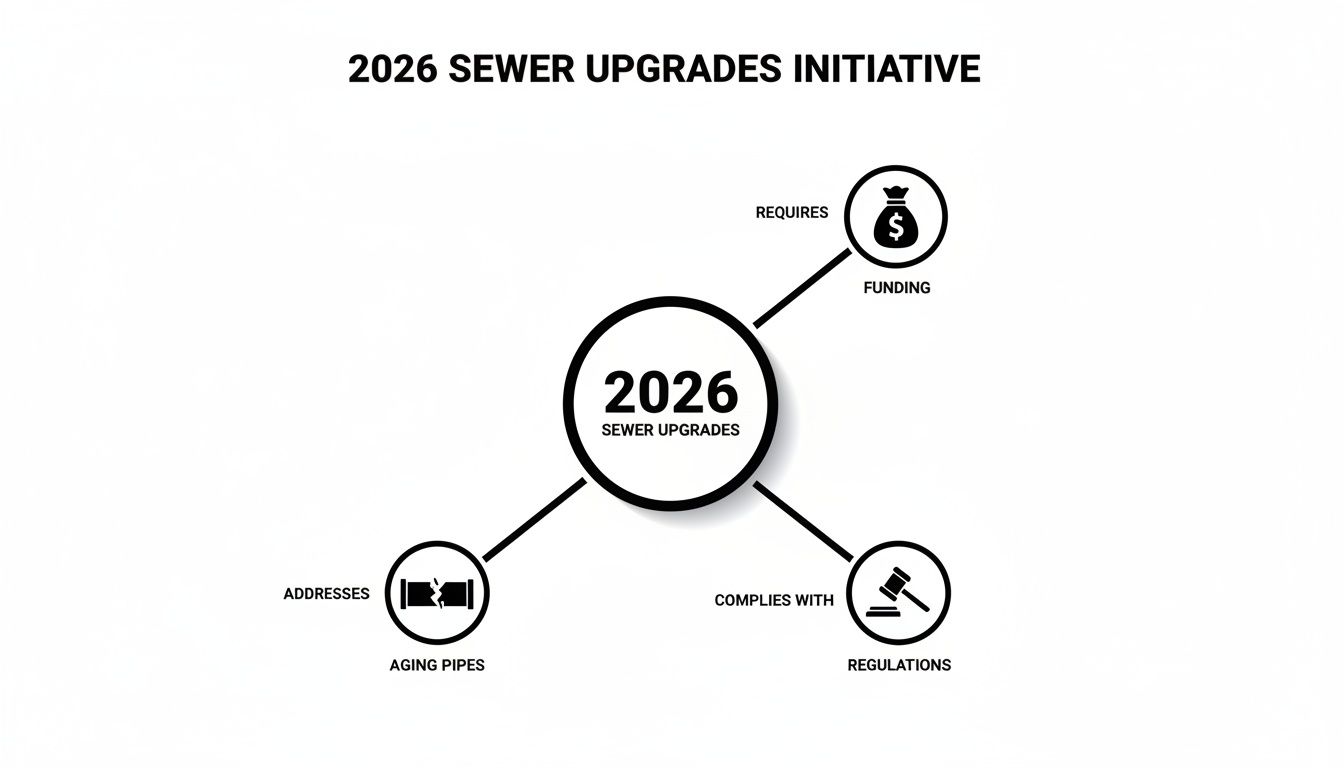
As you can see, there is new money available, old pipes are breaking, and new rules must be followed. It’s a perfect storm.
Here’s a quick look at what’s causing this push.
Key Factors Driving the 2026 Sewer Upgrade Push
| Driving Factor | What This Means for You | The Risk of Inaction |
|---|---|---|
| Funding & Grants | A rare chance to get money to help pay for important upgrades. | Missing out on funds that go to other projects, leaving you to pay the whole bill later. |
| Aging Infrastructure | Many pipes are 50+ years old and could fail, especially during heavy winter rains. | Big pipe failures, emergency repairs, property damage, and much higher costs. |
| Regulatory Deadlines | New state and federal rules have deadlines in 2026, which forces people to act. | Fines, being denied permits for new buildings (like ADUs), and long project delays. |
| Increased Construction | More projects mean busy schedules for inspectors, contractors, and city workers. | Getting stuck at the end of a long line, which can cause major delays for your project. |
Each of these is a big deal on its own. Together, they make it clear that anyone who owns property or is planning a new project needs to act soon.
What This Means for the Central Coast
What does this mean for homeowners, property managers, and public agencies? More projects are moving faster, and jurisdictions are tightening inspection windows and tie-in scheduling—especially in aging neighborhoods along the Central Coast. The old, slow way of getting permits is going away.
You can learn more about how aging sewer, water, and gas lines are driving a construction boom in our detailed article.
Ignoring this trend may lead to delays in permit approvals, missed funding opportunities, or worse—unexpected repair bills when older sewer lines collapse under pressure from new system loads or heavy rains.
The Proactive Approach Is Your Best Defense
Coastal Pipeline Inc. helps residential and municipal clients stay ahead with NASSCO-certified inspections, trenchless replacements, and site coordination that aligns with regional utility agencies.
We're already working with clients in Monterey, Santa Cruz, and San Benito Counties to meet new demand. By acting now, clients can lock in project dates, take advantage of rebates or regional funding, and ensure their sewer or water infrastructure is ready for new developments, ADUs, or code changes in 2026.
If your property’s sewer lines are 40+ years old—or if you’re planning a remodel or addition—now is the time to book an inspection. Coastal Pipeline is here to help you plan smarter across the Central Coast.
Unlocking Billions in New Infrastructure Funding
The biggest reason why 2026 is the year for sewer upgrades is simple: money. We’re not talking about the usual small grants. We are in the middle of a huge change in how big projects get paid for.
Right now, a massive $48 billion is going toward sewer upgrades. This money started flowing in 2024 and is expected to keep coming through 2026. This means more projects are happening across California. For property owners and cities, this is a great opportunity.
From Federal Programs to Local Projects
This money is coming from big government programs that want to fix America's old water systems. Programs like the Water Infrastructure Finance and Innovation Act (WIFIA) and State Revolving Funds (SRF) are putting billions of dollars into states and towns.
Think of it like this: the government is offering a big discount to fix the country's pipes, and states are helping to give out the money. But there isn't an endless supply. The people and cities who are ready to start their projects are the ones who will get the money.
The amount of money is huge. The U.S. Environmental Protection Agency (EPA) says that $630.1 billion is needed over the next 20 years to fix water systems. To help, the EPA’s WIFIA program has already helped raise $48 billion for projects, often working with state and local money.
This funding is what's driving the 2026 push. It's letting cities finally fix problems they've ignored for a long time. This means more work is happening faster than ever. For anyone who wants to get some of this money, a practical guide on how to write grant applications can be a very helpful tool.
What This Funding Means for the Central Coast
Here on the Central Coast, this money is already making a difference. Cities in Monterey, Santa Cruz, and San Benito Counties are using these new funds to speed up important sewer and water main repairs.
This wave of projects is making everything more competitive. Here’s what it means for you:
- Faster Timelines: Projects that were stuck in planning for years are now moving forward.
- Tighter Schedules: With so much work happening, local utility offices have less free time for inspections and new hookups.
- Increased Urgency: There is more pressure to get your own plans approved and on the schedule before it's too late.
Sitting this one out is a big risk. Waiting could mean you miss out on money that your neighbors get. Even worse, it could lead to surprise repair bills when an old sewer line breaks after a heavy rain or when a new building connects to it. The link between old pipes and expensive damage is real. You can learn more about the risks from funding to flooding.
The money is available now, but it won't be there forever. By planning now, you can take advantage of this historic opportunity and make sure your property is safe, follows the rules, and is ready for the future.
The Local Impact on Central Coast Timelines and Rules
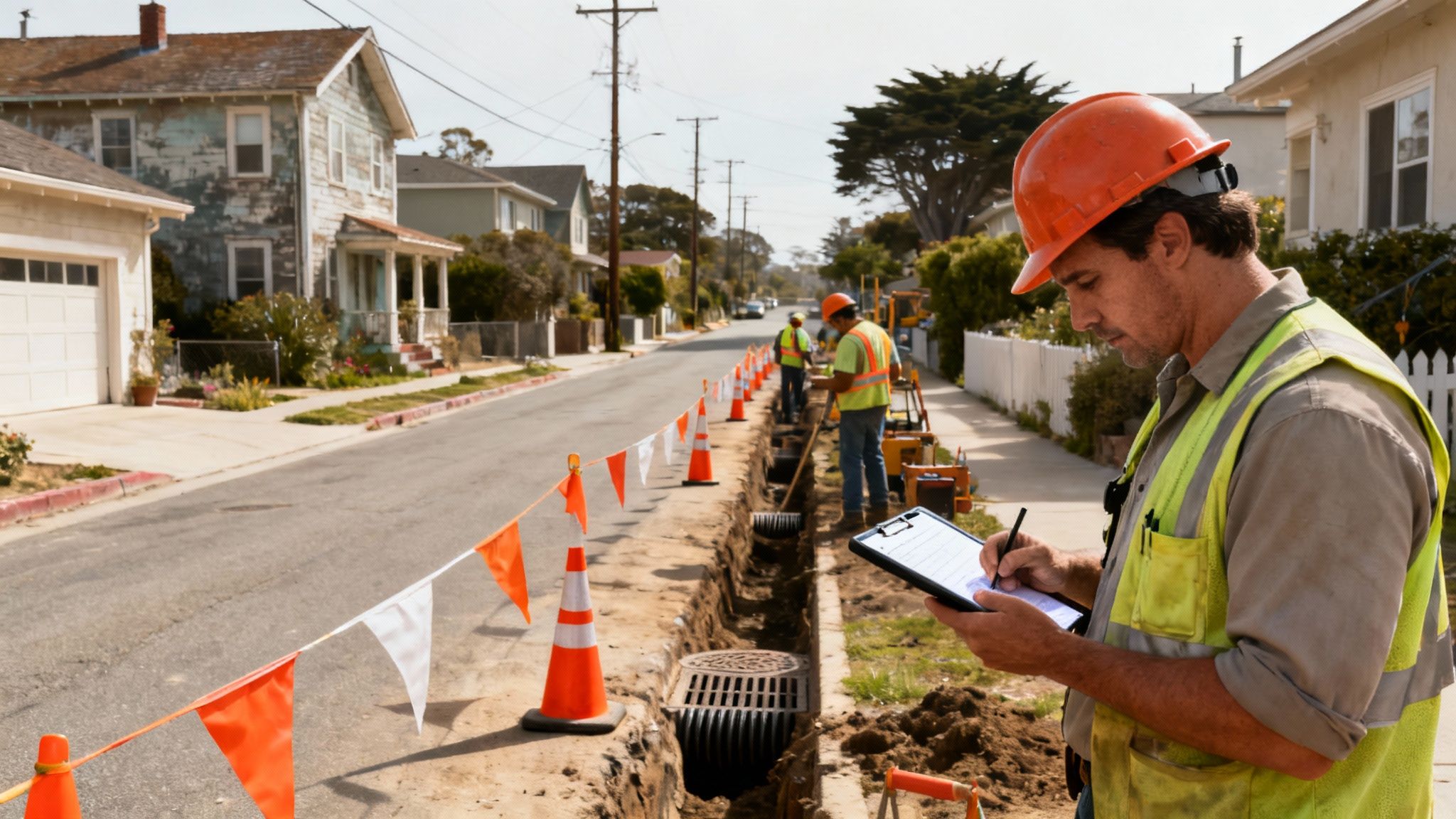
The billions in new funding might seem like a far-off story, but it’s having a real effect right here on the Central Coast. For property owners, builders, and cities in Monterey, Santa Cruz, and San Benito Counties, this national push is changing things quickly.
With so many new projects starting at once, there's more competition for everything—from building materials and workers to an inspector's time.
Crowded Calendars and Vanishing Timelines
This rush is putting a lot of pressure on local governments. City and county planning offices are suddenly getting way more permit requests than they are used to. What used to be a simple process is now crowded and complicated.
Imagine a popular restaurant where everyone shows up at once without a reservation. The kitchen gets busy, wait times get long, and everything slows down. That's what's happening with our local projects.
This new situation means you can expect:
- Longer Permit Wait Times: Getting a permit used to take weeks, but now it can take months as city workers try to keep up.
- Stricter Compliance Checks: Every job is being checked more carefully, so there is no room for mistakes. Your work has to be done right the first time to pass inspection.
- Limited Contractor Availability: The best and most reliable contractors are getting booked up, often months in advance.
The bottom line is simple: you can't plan projects at the last minute anymore. Whether you're building something new, doing a big remodel, or managing public projects, planning ahead is the only way to avoid expensive delays.
The Challenge in Aging Coastal Neighborhoods
This scheduling problem is even worse in the older neighborhoods you see along the Central Coast. Many of our towns have sewer lines that are 40, 50, or even 60 years old. These weak, old pipes are the first ones cities want to fix with the new funding.
When a city decides to dig up a street to replace a main sewer line, it affects every property connected to it. Homeowners are often told they have to replace their own private sewer pipes to meet new rules, which adds a sudden project they weren't expecting.
This is a big deal for anyone planning to build an Accessory Dwelling Unit (ADU). An ADU adds more stress to the sewer system. City inspectors will not approve the final hookup if the property’s connection to the main sewer line is old and failing. For more information on this, check out our guide on what homeowners need to know about ADU utility hookups on the Central Coast.
To succeed in this new environment, you need more than just building skills. You need good relationships with the local utility companies. It’s about knowing who to call, how to handle inspections, and how to time your project perfectly with the city's work. At Coastal Pipeline Inc., we use our local knowledge to help our clients, making sure your project stays on schedule in this busy time.
The High Cost of Delaying Your Sewer Upgrades
Knowing why 2026 is an important year for sewer upgrades is one thing. But understanding what can happen if you wait is what really matters. Putting off a sewer check is like ignoring a strange noise in your car's engine. You can hope it goes away, but we all know that ends with a breakdown on the side of the road, at the worst time and for the highest price.
The same is true for your sewer lines. Acting now isn't just a good idea; it protects you from very expensive problems. If you wait until the 2026 rush is happening, you will face risks that can stop projects and cost you a lot of money.
The Triple Threat of Procrastination
Putting off your sewer check and planning can lead to three specific, costly problems. Any one of them can cause a big headache. But when they happen together, they can create a nightmare for cities, builders, and property owners.
The risks of waiting are very clear:
- Permit and Approval Gridlock: Once all the funded projects start, city planning offices will be swamped. Permit requests sent in late will get stuck at the bottom of a huge pile, leading to expensive delays that can stop your project.
- Vanishing Funding Opportunities: Those billions in grants and discounts won't last forever. Most of these programs give money to those who ask first. While you're waiting, other people are getting that money, leaving you to pay 100% of the bill later.
- Catastrophic Emergency Repairs: This is the big one. An old sewer line, already weak with age, is a ticking time bomb. It could easily break under the pressure of heavy winter rains or from new construction nearby.
An emergency sewer line failure is more than just an annoyance. It’s a huge financial problem that involves emergency digging, property damage, and paying extra for immediate help. To see what that looks like, it's helpful to understand the average costs of sewer line replacement.
The Domino Effect of a Single Pipe Failure
Imagine a small, hidden crack in a 50-year-old clay sewer pipe. For years, it might not cause any problems. But then, heavy Central Coast winter storms soak the ground, making the soil move and putting a lot of pressure on that one weak spot. The pipe doesn't just crack more—it completely collapses.
Suddenly, you're not just planning a project; you're dealing with raw sewage backing up into houses or flooding a business. Your project stops. You now have to pay for emergency digging that tears up your yard, driveway, and sidewalks—all of which you have to pay to fix.
This whole situation can be avoided. A simple, early inspection is a small cost that prevents a much larger, and often terrible, financial disaster. It's the difference between replacing a worn-out tire in a shop and having a blowout on the freeway.
This isn't just a local problem; it's happening all over the world. By 2026, a mix of funding, climate change, and new rules will start a global push to fix infrastructure. With old sewers in the U.S. already 20-50% past their expected life, the risk of them breaking is growing every day. The EPA's estimate of a $630.1 billion national need shows how big the problem is. You can learn more about this global water catalyst on weforum.org.
The message is clear: the time to deal with this problem is now, before a crisis makes you act.
Your Proactive Solution for 2026 and Beyond
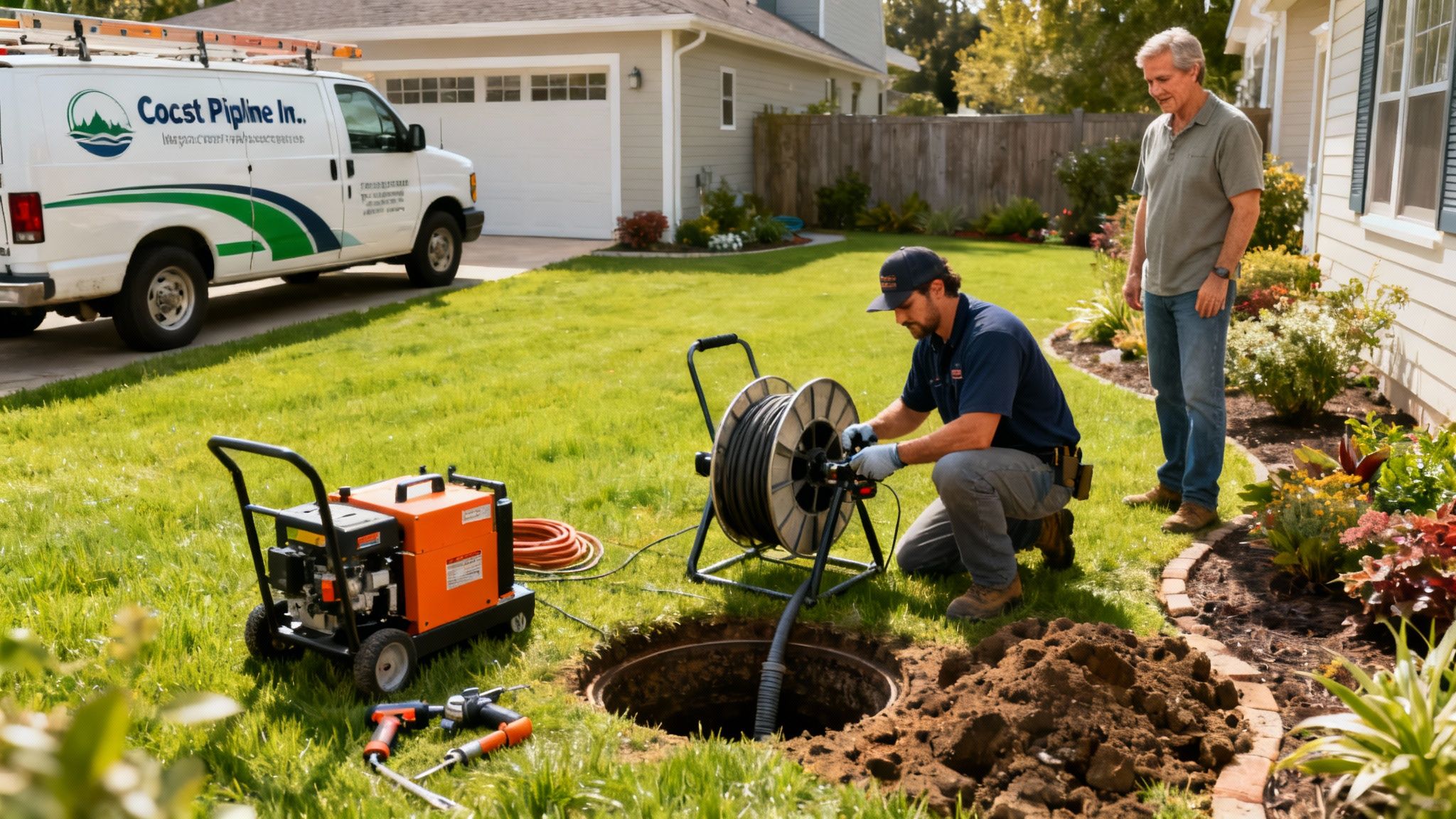
Seeing the problems coming in 2026 is one thing. Taking action is what really counts. If you wait, you risk getting caught in the rush—looking for contractors, missing out on money, or worse, dealing with a big failure when an old sewer line finally breaks.
Coastal Pipeline Inc. is already helping our clients across the Central Coast get ahead of this. We have the right knowledge, tools, and local experience to make your project a success.
NASSCO-Certified Inspections: The Gold Standard
Every good sewer upgrade starts with knowing exactly what you're dealing with underground. Our NASSCO-certified inspections are the best in the business for checking pipes. We use special video cameras to see the exact condition of your sewer lines without digging.
This isn't just a quick look; it's a full check-up. Our certified workers can find:
- Structural Flaws: We find cracks, collapses, or pipes that have moved, which could cause big problems later.
- Flow Obstructions: We find big tree roots or blockages that are stopping the flow in your pipes.
- Pipe Condition: We check the material and age, so you know if you have old clay or cast-iron pipes that are about to fail.
This clear information puts you in control. Instead of guessing, you get a clear plan for any needed repairs or replacements. You can also learn about new innovations in infrastructure inspections that are making the industry better.
By knowing the exact condition of your pipes, you can budget correctly and plan smart. This turns a possible crisis into a manageable project. This is the main reason why 2026 is the year for sewer upgrades—it’s about planning ahead, not panicking later.
Trenchless Replacements to Minimize Disruption
If an inspection shows your sewer line needs to be replaced, the idea of digging can be stressful. Old digging methods often mean tearing up lawns, driveways, and plants—a messy, expensive, and annoying process.
We specialize in trenchless pipe bursting. This modern method lets us replace your old, failing sewer line with a new, seamless pipe without digging a huge trench. We only need two small holes to guide the new pipe into place. This keeps your property looking good and saves you thousands of dollars in repair costs.
This technology is a big help for homeowners and busy cities. It’s faster, cleaner, and much less messy than old-school digging. We explain the basics of how to install sewer lines with modern methods in our detailed guide.
Your Local Partner on the Central Coast
For us, this isn't just an idea—it's what we do every day. We’re working right now to help clients in Monterey, Santa Cruz, and San Benito Counties get ready for what's coming. We know the local rules, have good relationships with utility companies, and understand how to schedule projects to meet city timelines.
The clock is ticking. The market for fixing water pipes is expected to grow by 6.9% from 2021-2026, because of the billions being spent to fix old pipes. That means more competition for good teams and materials.
Whether you're a homeowner planning an ADU, a property manager with an old building, or a public works director planning for the future, Coastal Pipeline Inc. is here to help you get it done right.
The Benefits of Securing Your Project Now
Knowing that 2026 is a critical year for sewer upgrades gives you a big advantage. While many people will wait until the last minute, acting now is a smart move that gives you real benefits and peace of mind. This isn't just about avoiding a problem; it's about taking control of your property's future on your own terms.
When you take the first step today, you stop reacting to problems and start planning ahead. You get control over scheduling, funding, and preparing for whatever comes next, whether it's a planned remodel or a new rule.
Lock In Your Project and Gain Certainty
As 2026 gets closer, the demand for good, NASSCO-certified contractors is already growing across the Central Coast. The best teams are getting booked up fast. If you wait, you’ll be struggling to find a spot, likely with less experienced workers.
Booking your inspection and project now means you can:
- Secure a spot on the calendar with a trusted partner like Coastal Pipeline Inc.
- Avoid the higher prices that always come with rush jobs and busy seasons.
- Plan the work on your schedule, not a schedule that a busy market forces on you.
This approach makes sure your project gets the attention it needs, without the stress of a last-minute panic.
Maximize Your Access to Funding
The new wave of federal and local funding is a great opportunity, but the money won't last forever. Discounts and grant programs are first-come, first-served. Property owners and cities who have their projects planned and ready to go will be the first to get that money.
Acting now puts you at the front of the line for available rebates and regional funding opportunities. Delaying means you risk leaving money on the table that could significantly offset the cost of your upgrades, forcing you to cover the entire expense yourself.
Future-Proof Your Property for What's Next
A modern, rule-following sewer system is a must for any future building plans. Thinking about adding an ADU, a big home addition, or a new business space? Your sewer pipes will be one of the first things inspectors look at. An old, failing line can stop your whole project.
If your property’s sewer lines are 40+ years old—or if you have any kind of remodel on the horizon—the time to book an inspection is now. Let Coastal Pipeline Inc. help you build a stronger and more valuable future for your property. We are the trusted Central Coast partner ready to help you plan smarter.
Your Questions About Sewer Upgrades, Answered
Starting a big property upgrade can feel overwhelming, especially with the 2026 deadlines getting closer. We understand. Here are some clear, simple answers to the questions we hear most often from property owners across the Central Coast.
How Can I Tell if My Sewer Line Is Over 40 Years Old?
If your home was built before the early 1980s and you have no record of the sewer line ever being replaced, you probably still have the original pipes. Age often shows up in small ways at first.
Look for signs like slow drains, toilets that make gurgling sounds, or damp, smelly spots in your yard that you can't explain. While these are strong clues, the only way to know the true condition of your pipeline is with a professional video camera inspection. We can run a camera through the line to give you a clear look at what's going on down there.
What Exactly Is Trenchless Pipe Bursting?
Think of it as smart surgery for your sewer line. Trenchless pipe bursting is a modern method that lets us replace your old, broken pipe without digging up your whole yard. We use the path of the old pipe as a guide, pulling a new, seamless pipe into its place.
As the new pipe moves forward, it breaks the old one apart, pushing it into the soil around it. This is a big help for homeowners.
- Minimal Disruption: Instead of a long, messy trench, we only need two small holes.
- Your Yard Stays Intact: Your plants, driveway, patio, and walkways are all saved.
- A Superior Result: You get a single, joint-free pipe that is stronger, resists tree roots better, and is made to last for many decades.
Can You Handle the Local Permitting Process for Me?
Yes, absolutely. Dealing with local permits is a key part of our service. We work directly with utility companies across Monterey, Santa Cruz, and San Benito Counties every single day.
We know the local rules, what inspectors look for, and how to manage the whole permit process. We take care of the paperwork and scheduling so your project follows the rules and moves forward without delays. This coordination is very important as deadlines get closer, which is a big reason why 2026 is the year for sewer upgrades.
Ready to get ahead of the 2026 rush? Coastal Pipeline Inc. is here to provide NASSCO-certified inspections and expert guidance to protect your property. Schedule your consultation today.