Trying to get a quick handle on asphalt driveway costs is the best way to set a realistic budget right from the start. On average, you can expect a new asphalt driveway installation to run between $7 and $13 per square foot. Of course, this number can shift based on your location, how complex the job is, and what material prices are doing at the moment.
Your Quick Guide to Asphalt Driveway Costs
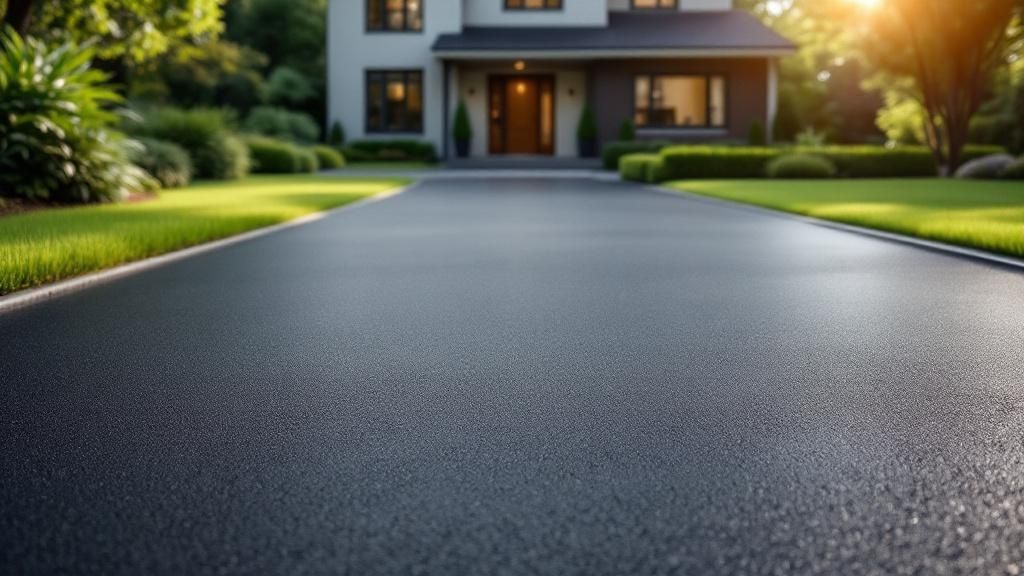
When you're budgeting for a new driveway, getting a grip on the core numbers is the first step. Think of it like buying fabric for a project—the final price really comes down to the total square footage and the quality of the materials you pick. A small, simple driveway will always be more affordable than a long, winding one that needs a ton of site prep.
For a ballpark figure, the national average is a great starting point. Most homeowners find their total project cost lands somewhere around $5,257, with a typical price range falling between $3,126 and $7,388. These numbers give you a solid financial benchmark before you start calling local contractors for quotes.
New Driveway vs. Replacement Cost
One of the biggest factors determining your final bill is whether you're starting from scratch or tearing out an old surface. A brand-new installation on a prepared dirt lot is almost always cheaper than a full replacement. Why? Because replacements mean demolition, hauling, and disposing of all that old material, which adds significant labor and fees to the job.
Key Takeaway: Replacing an existing driveway usually costs more than installing a new one because of the extra work involved in demolition and debris removal. Always make sure your contractor’s bid clearly states whether these costs are included.
To give you a clearer picture, here’s a quick table breaking down the difference in cost per square foot.
Asphalt Driveway Cost at a Glance
This table sums up the typical costs for a brand-new installation versus a full replacement.
| Installation Type | Average Cost Per Square Foot |
|---|---|
| New Asphalt Driveway | $7 – $13 |
| Driveway Replacement (includes removal) | $8 – $15 |
These figures should help you get a rough idea of what to expect for your project.
It’s also worth mentioning that some driveways might be good candidates for resurfacing instead of a full tear-out. If you're wondering about paving over an old concrete slab, our guide on applying asphalt on top of concrete has some critical insights into when this can be a smart, cost-saving move.
What Drives Your Final Paving Price
To really get a handle on an estimate for your paving project, you need to look behind the numbers. The final asphalt driveways cost isn’t just some random figure; it’s a combination of three core pillars: the materials used, the labor required, and the all-important site preparation. Think of it like building a house—the final price depends on the quality of the lumber, the skill of the carpenters, and how solid the foundation is.
Each of these pieces plays a huge role in both the upfront cost and how long your new driveway will actually last. Cutting corners on any one of them is a sure way to end up with a surface that fails way too soon.
This infographic breaks down the key factors that influence your total project cost.
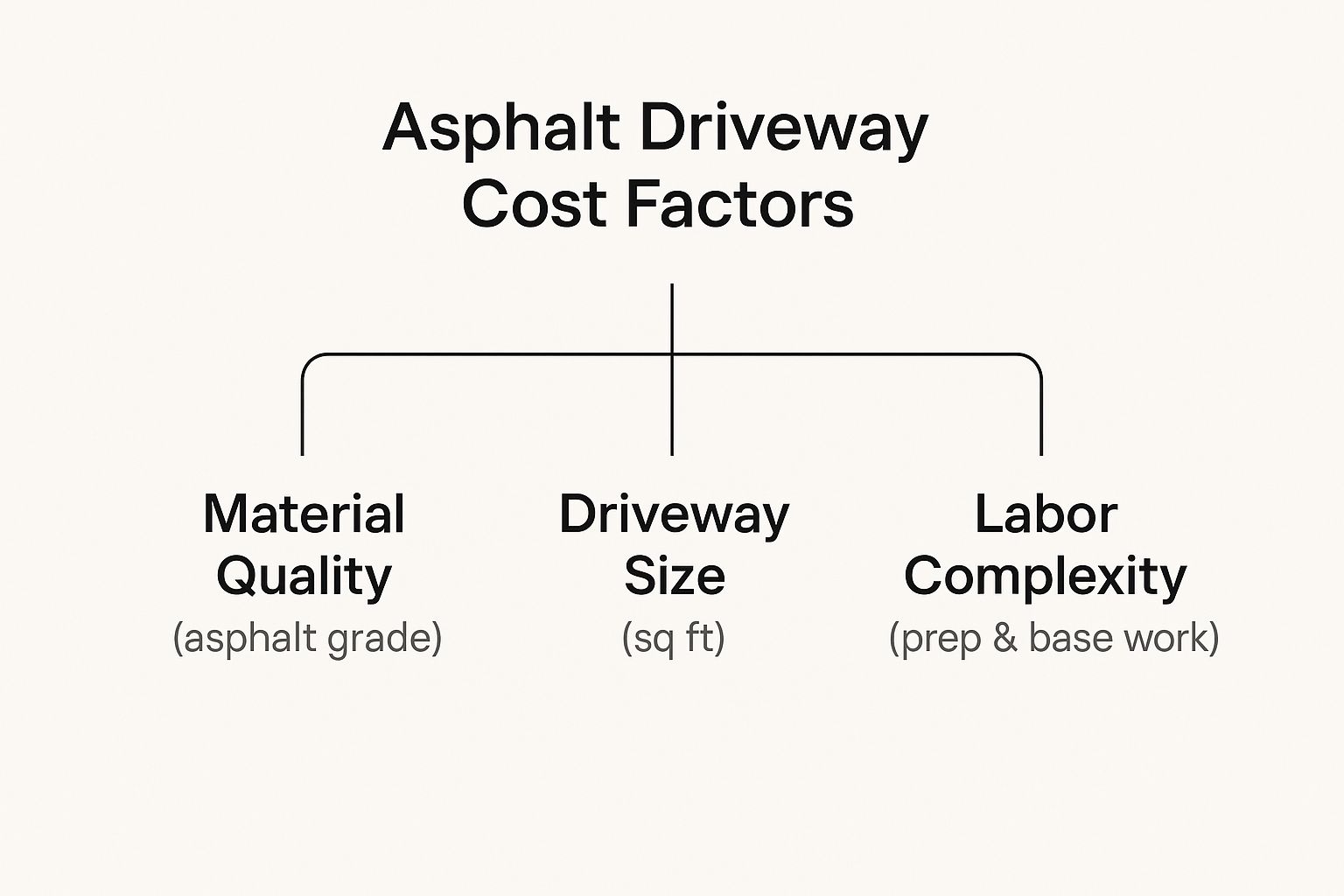
As you can see, the final price is a balance between how big the area is, the quality of the asphalt, and how much groundwork is involved.
The Role of Materials
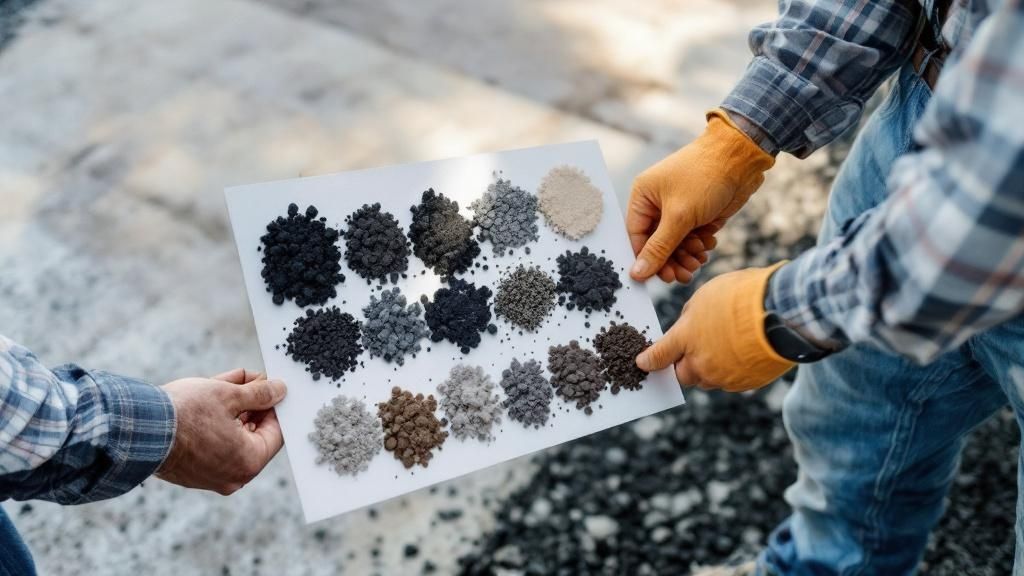
The asphalt itself is a major part of your budget, and its price is anything but static. Because asphalt is a petroleum product, its cost is directly tied to the ups and downs of the crude oil market. In fact, just a 1% increase in oil prices can push asphalt costs up by 0.7%. This means your quote can shift based on global economic factors completely outside your contractor's control.
The specific type of asphalt you choose also makes a difference. Most residential jobs use hot-mix asphalt, which usually runs between $100 and $200 per ton. Where you live matters, too. For instance, you'll often see higher prices in the Northeast U.S. compared to the South because of supply logistics and different labor rates.
Labor and Regional Rates
The second piece of the puzzle is labor, and it accounts for a big chunk of the total cost. Labor rates aren't the same everywhere; they can vary a lot depending on your location, how experienced the crew is, and how complex the job is. A simple, rectangular driveway on flat ground is going to take a lot fewer hours than a custom-shaped one on a steep hill.
An experienced paving crew might charge more upfront, but their skill almost always translates to a better, longer-lasting driveway. That initial investment can save you a bundle on future repairs.
The Importance of Site Preparation
Finally, we have site preparation—the unsung hero of a durable driveway. This is all the work that happens before a single drop of asphalt is laid, and it’s arguably the most critical part of the entire project. Proper prep work gives your driveway a stable foundation that can handle traffic, weather, and time.
Key steps in site preparation include:
- Excavation: Tearing out any old surfaces, topsoil, and grass.
- Grading: Shaping the ground so water drains correctly, away from your house.
- Sub-Base Installation: Laying and compacting a thick layer of aggregate (like crushed stone) to create a solid base.
Skipping or rushing these steps is a recipe for disaster. You'll end up with cracks, sinking spots, and a driveway that gives out years before it should. While a solid foundation adds to the initial asphalt driveways cost, it’s a non-negotiable part of a quality job. If you’re still weighing your options, our guide on asphalt vs. pavers breaks down the long-term value of different materials.
How Driveway Size and Shape Affect Your Budget

When it comes to budgeting for your asphalt driveway cost, the biggest piece of the puzzle is almost always its total size. It’s a lot like buying carpet for your house—a bigger room requires more material and more time to install, which naturally drives up the final price. The same logic holds true for paving. A larger driveway simply needs more asphalt, more prep work, and more hours from the paving crew.
But it’s not just about the total square footage. The specific shape and layout of your driveway also play a surprisingly important role in the final quote you receive.
Straight Paths Versus Complex Curves
A simple, rectangular driveway is the most straightforward and cost-effective shape to pave. Paving equipment can move in long, efficient passes, making the whole job quicker and simpler for the crew.
Things get a bit more complicated with winding driveways, circular turnarounds, or extra parking nooks. These custom shapes demand a lot more precision and careful maneuvering. It often means more detailed handwork with rakes and shovels to create those clean, crisp edges and ensure every corner is properly compacted. All that extra labor and time will be factored into the cost.
A complex, curved driveway can easily cost 10-20% more than a simple rectangular one of the same square footage due to the increased labor and time required for a quality finish.
Estimated Total Cost by Driveway Size
To give you a clearer picture of how size impacts your budget, we've put together a table with some ballpark figures. Keep in mind that these are just estimates based on average costs—your final price will depend on a professional quote that accounts for your property's specific needs and local material prices.
| Driveway Size (Square Feet) | Estimated Cost Range (New Installation) |
|---|---|
| Small (400 sq ft) | $2,800 – $5,200 |
| Medium (600 sq ft) | $4,200 – $7,800 |
| Large (1,000 sq ft) | $7,000 – $13,000 |
Ultimately, getting a handle on your driveway’s size and shape is the first step toward building a realistic budget. Understanding how these two factors influence the final asphalt driveway cost helps you know what to expect before you even start talking to contractors.
Uncovering Potential Hidden Project Costs
A standard estimate for a new asphalt driveway usually covers the essentials—materials, labor, and a solid foundation. But if you want to create a smart budget, you need to plan for the unexpected. Several factors can creep into your final asphalt driveways cost, and knowing about them upfront saves you from frustrating financial surprises later on.
It’s a bit like a kitchen remodel. The quote for cabinets and countertops is straightforward, but you never know what you'll find when you open up the walls. Your driveway project is no different. It might have unique site issues that go beyond a simple paving job. These "hidden" costs aren't about a contractor being sneaky; they're about doing the job right for your specific property so the driveway actually lasts.
One of the most common add-ons is the removal of an existing driveway. If you've got old, crumbling concrete or failed asphalt, it has to go before anything new can be laid down. This involves demolition, hauling away the debris, and paying disposal fees, which can tack on an extra $1 to $3 per square foot to the total project.
Addressing Site-Specific Needs
Not every property is a flat, perfectly graded blank slate. A good contractor has to adapt their work to the lay of your land, which can introduce some necessary extra costs. These adjustments are critical for the driveway's long-term health, preventing headaches like water damage and premature cracks down the road.
A few common site-specific costs include:
- Extensive Grading: If your property has a noticeable slope or uneven ground, your contractor will need to spend more time and effort grading the area. This is essential to ensure proper water drainage, keeping water from pooling on your new asphalt or, worse, flowing toward your house's foundation.
- Drainage Solutions: For properties with tricky water runoff, a simple graded slope might not cut it. Installing systems like French drains or culverts may be necessary to channel water away from your driveway and protect your investment.
- Permits: Depending on where you live, you might need a permit to install a new driveway or even just to resurface an old one. The fees vary by city or county, but they're a non-negotiable part of the budget.
Optional Upgrades and Enhancements
Beyond the must-haves, you might want to invest in upgrades that improve your driveway's durability or curb appeal. For instance, if you own heavy vehicles like an RV or a large work truck, choosing a thicker layer of asphalt is a smart move. It adds to the upfront cost but gives the driveway the extra strength it needs to resist rutting and damage over time.
Decorative options, like stamped or colored asphalt, can also make your home stand out but will increase the budget. While these extras aren't strictly necessary, they can be worthwhile investments. If you're trying to decide between a full replacement and a more cosmetic fix, learning more about driveway resurfacing in Monterey County can help you determine if it's the right choice for your situation.
How Global Markets Influence Your Local Cost
It might seem strange, but the final asphalt driveway cost you see on your quote has a lot to do with economic forces happening thousands of miles away. It's easy to think price changes are random, but they often trace back to global supply and demand. Think of it like your morning coffee—a drought in Brazil can make your daily cup more expensive, and the same idea applies to asphalt.
Asphalt is a global commodity. Its price is directly tied to major construction projects happening all over the world. When other countries launch massive initiatives to build new highways, airports, and infrastructure, they use up a staggering amount of asphalt. This creates a ripple effect that we feel right here at home.
The Impact of Global Construction Booms
When emerging markets get a taste for huge infrastructure projects, it can seriously tighten the global supply of asphalt materials. If demand skyrockets in one part of the world, it puts pressure on prices everywhere else—including your local paving supplier.
This isn't just a minor blip. For instance, there's enormous growth in asphalt construction happening right now across Asia and South America. The Asia Pacific region alone makes up about 35.80% of the global market, which is expected to climb from $4.23 billion in 2021 to nearly $6.65 billion by 2025.
This new competition for raw materials means your local contractor has to pay more for the hot-mix asphalt needed for your driveway.
So, what does that mean for you? A construction boom halfway across the planet can directly lead to a higher quote for your driveway renovation. Understanding this link gives you the full picture, helping you see that price swings aren’t just arbitrary—they’re connected to bigger economic trends.
Ultimately, knowing about these global factors can help you time your project and make sense of the bids you receive. For local expertise and professional services, you can learn more about the best asphalt paving and sealcoating in Monterey, where we combine quality work with deep regional knowledge.
Common Questions About Asphalt Driveway Costs
When you're planning a new driveway, it's natural for a lot of questions to pop up. Even after you get a handle on the basics like size and materials, you might still have some specific concerns. Getting clear, straightforward answers is the key to moving forward confidently and making sure the final asphalt driveways cost fits your budget.
Think of this section as your project FAQ. We’ve pulled together the most common questions we hear from homeowners weighing their options for an asphalt driveway. Use these answers to fill in any gaps and make sure you’re fully prepared for the project ahead.
Is an Asphalt Driveway Cheaper Than a Concrete One?
Generally, yes—at least when you’re looking at the initial installation cost. Asphalt is often the more budget-friendly choice right out of the gate, typically running $7 to $13 per square foot. Compare that to a new concrete driveway, which usually starts around $8 to $18 per square foot, and you can see how the savings add up, especially for larger driveways.
But that's not the whole story. The full financial picture has to include long-term maintenance. Asphalt is a flexible pavement, which means it needs more regular upkeep to stay in top shape. You’ll want to sealcoat it every three to five years to protect it from water, sun damage, and oil spills. This is an ongoing cost you’ll need to factor in.
Expert Insight: While concrete costs more upfront, its maintenance is often less demanding over its lifespan. Your choice really comes down to balancing your initial budget with your willingness to handle long-term care. On the other hand, asphalt’s flexibility makes it a better performer in colder climates where freeze-thaw cycles can cause rigid concrete to crack.
How Long Does a New Asphalt Driveway Last?
A professionally installed asphalt driveway that gets the right care can last a good long time—usually somewhere between 15 and 30 years. Hitting that 30-year mark isn't about luck; it comes down to a few critical factors working together.
The real lifespan of your driveway depends heavily on:
- A Solid Foundation: The sub-base is everything. A poorly prepared base will cause premature failure, no matter how good the asphalt on top is.
- Correct Asphalt Thickness: Your driveway needs to be thick enough to handle the weight of your vehicles. If you have heavy trucks or an RV, you'll need thicker layers.
- Consistent Maintenance: This is the one you control. Filling small cracks before they get bigger and sealcoating the surface every few years are absolutely essential for maximizing its life.
Without this ongoing care, a driveway’s lifespan can be cut short. A little neglect now can lead to much bigger, more expensive problems down the road.
Can I Pave a New Layer Over My Old Driveway?
Yes, in many cases, you can. This process is called an overlay or resurfacing, and it can be a great, cost-effective alternative to a full tear-out and replacement. An overlay simply involves applying a new layer of asphalt over the existing surface, giving you a fresh, smooth driveway without the high cost of demolition and new base work.
But an overlay isn't a magic fix for every old driveway. It's only a smart move if the existing foundation is still structurally sound. If your current driveway has deep, widespread "alligator" cracking, crumbling edges, or major sinking spots, paving over it is just putting a bandage on a bigger problem. The issues from the weak base will telegraph right through to the new layer, causing it to fail quickly.
Before you decide, have a professional contractor give your current driveway a thorough inspection. They can tell you if the underlying structure is strong enough for an overlay or if a full replacement is the smarter long-term investment. If you're weighing your options, exploring a full range of asphalt driveway paving services will help you see all the solutions available.
What Is the Best Time of Year to Install an Asphalt Driveway?
When it comes to asphalt paving, timing is everything. The absolute best time of year for installation is during warm, dry weather. Hot-mix asphalt, the standard for residential driveways, needs the right temperature conditions to be installed and compacted properly.
Ideally, both the ground and air temperatures should be consistently above 50°F (10°C). That warmth keeps the asphalt workable long enough for the crew to spread and grade it, and for the heavy rollers to compact it to the right density. This compaction process is what creates a strong, durable surface that can stand up to traffic and weather.
Trying to pave in cold, damp conditions is a recipe for a weak driveway. The asphalt cools down too fast, which prevents it from being compacted effectively. This leaves you with a porous, brittle surface that's prone to cracks, potholes, and a much shorter life. For most of the country, this makes late spring, summer, and early fall the prime seasons for paving.
At Coastal Pipeline Inc., we bring decades of expertise to every paving project, ensuring your new driveway is built to last. From site preparation to the final roll, we handle every detail with professional precision. Ready to get a quote for your project? Contact us today!