When you're looking for professional road grading near me, the best way to find a reliable pro is to zero in on people who know your local area. The fastest routes are usually targeted online searches, checking out local business directories, and, of course, asking around. Getting referrals from neighbors or even local agricultural co-ops can quickly give you a solid list of contractors who understand our region's specific soil and drainage challenges.
Quickly Find the Right Road Grading Service
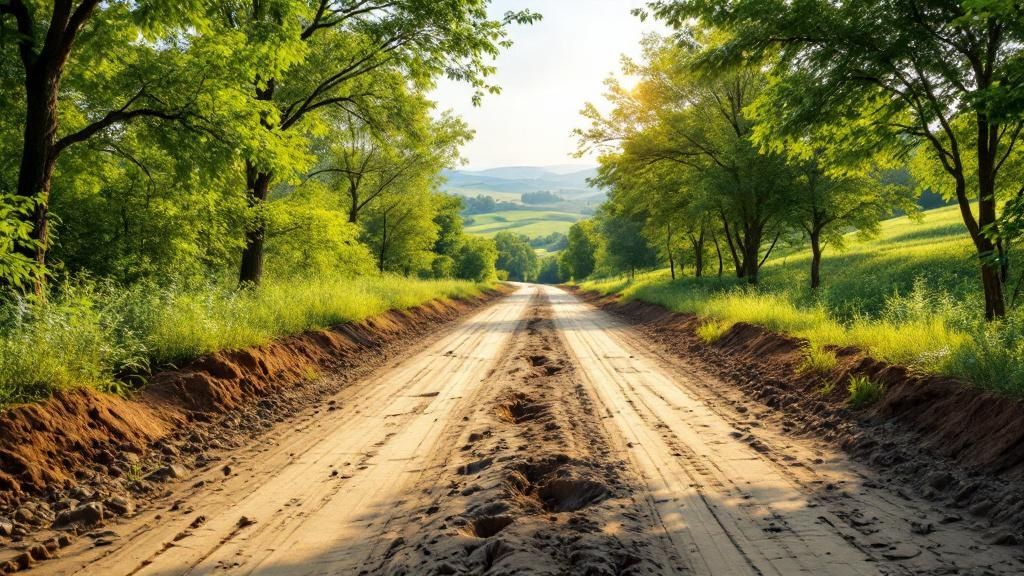
Finding the right crew for your road or driveway is about more than a quick Google search. You're not just hiring a machine; you're hiring an expert who knows how to transform a bumpy, water-logged mess into a smooth, safe, and durable surface that will last. Think of your search as a focused mission to find a pro with the right equipment and, just as importantly, the right local knowledge.
Where to Start Your Search
Get specific with your search terms right away. Instead of just "road grading near me," try searching for things like "gravel driveway repair in Salinas" or "private road maintenance Monterey County." This simple tweak helps filter out the noise and connects you with local specialists who actually do the work you need.
Next, look beyond the usual search engines. I've found that local business directories and community-focused Facebook groups can be gold mines for honest feedback. Dropping a question in a local homeowners' or farming group often brings out real, unfiltered recommendations from people who’ve been in your shoes.
Don't underestimate the power of an old-fashioned referral. If your neighbor’s driveway looks great, ask them who did the work. A pristine driveway is a pretty solid business card.
Expert Tip: Before you pick up the phone, get a clear picture of what you need. Is it just routine maintenance to fix some potholes, or are you looking at a total rebuild? Knowing this will help you ask better questions and get a far more accurate estimate from the get-go.
Define Your Project Needs
To have a productive chat with a potential contractor, you need to speak their language a bit. When you understand your project type, you can explain what you want more clearly and better judge if a company is the right fit. Different jobs demand different tools and techniques. A simple driveway touch-up might just need a tractor with a box blade, but more complex work requires the finesse of a full-blown motor grader.
If you're managing a larger property or your project involves more than just scraping the surface, it pays to understand the finer points of professional earthwork. For a deeper dive, check out our complete guide to landscape grading services in Monterey to see how comprehensive jobs are planned and executed.
To get you started, I've put together this table breaking down common grading projects. It’ll help you nail down your goals and arm you with some key questions to ask when you make that first call.
Road Grading Project Types and Key Considerations
This table helps you identify your specific project needs and what to look for in a contractor.
| Project Type | Primary Goal | Common Equipment | Key Contractor Question |
|---|---|---|---|
| Gravel Driveway Repair | Eliminate potholes and ruts; re-establish a proper crown for drainage. | Box Blade, Tractor with Blade, Skid Steer | "What is your process for crowning the driveway to ensure water sheds correctly?" |
| New Road Construction | Create a stable, properly sloped roadbed from scratch on cleared land. | Motor Grader, Bulldozer, Compactor | "How do you prepare the sub-base to prevent future settling and erosion?" |
| Parking Lot Grading | Ensure a smooth, even surface with correct slope for stormwater runoff. | Motor Grader, Roller Compactor | "Can you explain how you'll achieve the required slope for ADA compliance and drainage?" |
| Land or Site Leveling | Prepare a flat, stable pad for a new building, shed, or structure. | Bulldozer, Scraper, Grader | "What is your method for testing soil compaction to ensure the pad is stable?" |
Think of this as your cheat sheet. Knowing what to ask not only helps you vet contractors but also shows them you've done your homework.
What Does Professional Road Grading Involve?
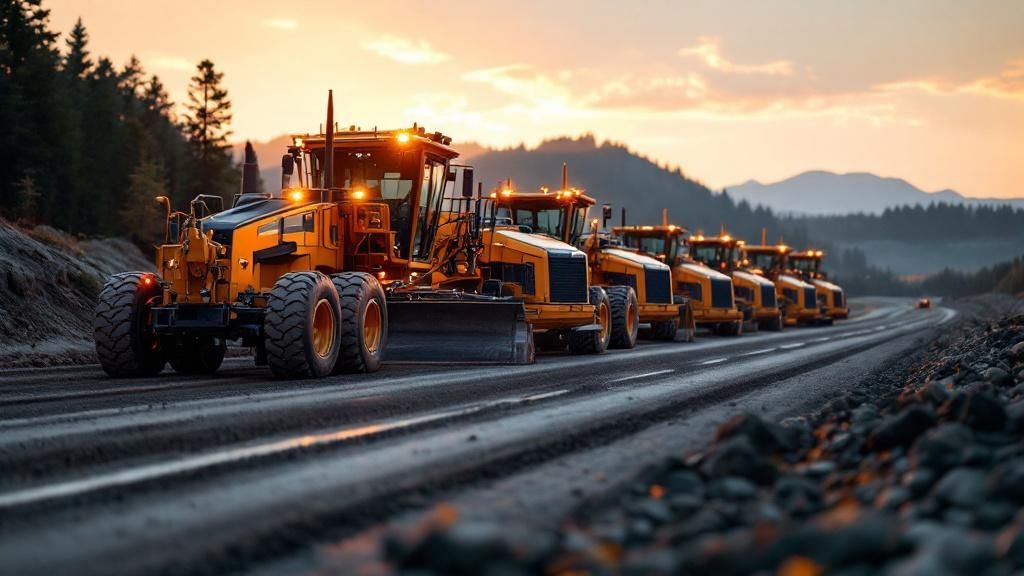
When you start searching for "road grading near me," you’re looking for a lot more than just a guy on a tractor scraping some dirt around. Real, professional road grading is a precise process. It’s the difference between a quick fix that washes away in the first big rain and a solid investment that protects your property for years.
Understanding what the pros actually do helps you see the value you’re getting. The work isn't just about smoothing out a few bumps. It’s about meticulously shaping the land to control water—the number one enemy of any road, especially an unpaved one.
The Foundation: A Stable Sub-Base
Every great road starts from the ground up. Before a single piece of new gravel is laid down, an experienced contractor will assess and prepare the sub-base. That’s the existing ground that will support the entire road. If this foundation is soft, unstable, or full of organic junk like roots and topsoil, your road is built to fail from day one.
A pro might need to dig out that poor soil and replace it with more stable material. They'll then compact this new sub-base, usually with heavy rollers, to create a rock-solid platform. Skipping this step is like building a house on sand. It might look fine for a little while, but it will quickly develop ruts, potholes, and soft spots.
A properly compacted sub-base is the single most critical factor in a road's longevity. It prevents the settling and shifting that lead to constant potholes and expensive repairs. Think of it as the unseen hero of your driveway or road.
The Science of Drainage: The Road Crown
Ever notice how well-built roads are just a little bit higher in the middle? That’s called a crown, and it’s there for a very important reason. This subtle arch is a grading expert’s best tool for getting water off the road.
A proper crown makes rainwater shed immediately to the sides instead of pooling on the surface. When water just sits there, it soaks in, weakens the structure, and turns your nice, smooth path into a muddy mess.
Here’s how it works:
- Precise Sloping: The grader operator creates a gentle, consistent slope from the centerline down to the edges, usually a 2-4% grade.
- Integrated Ditches: The runoff flows into ditches or swales along the roadside, which carry the water safely away from the roadbed.
Choosing the Right Materials
The final layer, the aggregate, is what you actually see and drive on. Picking the right material here is crucial and depends on your local conditions and what you need the road for. A professional will help you choose the best option, which might be:
- Crushed Gravel: Angular stones that lock together tightly, giving you excellent stability.
- Road Base: A specific mix of crushed rock and fine particles that compacts into a dense, hard-as-nails surface.
The global road and highway infrastructure market was valued at USD 1.5 trillion in 2025 and is projected to grow, showing just how massive these projects are and why using the right techniques matters. To see how we apply these advanced methods right here in our area, you can learn more about our grading services in Monterey & Santa Cruz County. This investment in the right materials and expert installation is what separates a temporary path from a permanent road.
How to Vet and Compare Grading Contractors
Once you have a list of companies from your "road grading near me" search, the real work begins. Honestly, choosing the right contractor isn't about finding the lowest price. It’s about hiring a reliable expert who will get the job done right the first time, saving you from headaches and expensive repairs down the road.
Your first stop should be online reviews, but you need to read between the lines. A simple star rating doesn't tell the whole story. Look for detailed reviews where past clients talk about their project, the communication with the crew, and how the finished road or driveway is holding up. Are they praised for professionalism and problem-solving, or do reviews mention missed deadlines and messy cleanup?
Verify Credentials and Past Work
Before you get too far into the process, always verify their license and insurance. This is non-negotiable. A valid contractor's license shows they meet state requirements, and proper insurance protects you from liability if an accident happens on your property. Ask for their certificate of insurance directly—it’s a standard request, and any legitimate pro will provide it without hesitation.
Next, it's time to dive into their portfolio. A reputable contractor will have a gallery of photos and details from past projects similar to yours. Don’t just look at the pretty “after” shots; ask them about the challenges of a specific job you see.
A contractor’s portfolio is their resume. If they can’t show you clear examples of successful road grading projects, especially jobs that involved tricky drainage or difficult terrain, consider it a major red flag.
When you're looking at their past work, pay close attention to the details. Do the roads have a visible crown for water runoff? Are the shoulders and ditches finished neatly? These small elements are the hallmarks of quality, professional work. You can even ask for addresses of a few local projects they’ve completed so you can drive by and see their craftsmanship for yourself.
Ask Insightful Questions
The best way to gauge a contractor's expertise is to ask specific, thoughtful questions during your initial chat. Think of it less as an interrogation and more as a conversation to see if their approach lines up with what you need. Vague, evasive answers are a clear warning sign. You want a partner who can clearly explain their plan from start to finish.
Here are a few essential questions I always recommend asking:
- "Can you walk me through your process for ensuring proper drainage on a property like mine?" This directly tests their understanding of the single most critical part of road grading.
- "What specific equipment do you plan to use for this job and why?" Their answer reveals if they’re using the right tools (like a motor grader for precision) or just trying to get by with a tractor.
- "How do you handle unexpected site conditions, like soft soil or hitting rock?" An experienced pro won't be rattled. They'll have a contingency plan and will be upfront about how it might affect costs.
- "Who will be my main point of contact on-site during the project?" Clear, consistent communication is absolutely key to a smooth process.
The answers you get will tell you everything you need to know about their experience and professionalism. Remember, for bigger projects that might involve serious earth moving, it helps to understand the full scope of what's involved. For more on this, you can learn about the differences in our guide to excavation and land clearing. This knowledge will empower you to hire a contractor based on true expertise, not just a lowball offer.
Decoding Quotes and Understanding Project Costs
Getting a few quotes for your road grading project can feel like you're creating more questions than answers. The trick is knowing what you're looking at. A professional, transparent quote is more than just a number at the bottom of the page—it's a detailed roadmap for the entire job.
A solid bid will always break down the costs into clear, easy-to-understand line items. You aren't just paying for a machine to show up for a few hours. You're investing in a complete service, and a good contractor wants you to see exactly what that includes.
Key Components of a Fair Quote
To really compare apples to apples, you need to make sure every bid you get itemizes the core parts of the job. Any contractor worth their salt will provide a breakdown that includes things like this:
- Labor Costs: This should outline the crew size and give a realistic estimate of the hours or days needed to get the job done right.
- Equipment Time: Look for specifics on the machinery being brought in (like a motor grader or a roller compactor) and its hourly or daily rate.
- Material Costs: This is a big one. The quote absolutely must list the type of aggregate (such as road base or crushed gravel), the total quantity needed, and the cost per ton or cubic yard.
- Site Preparation: Any initial work, like clearing out brush, breaking up old asphalt, or minor excavation, should be its own line item.
- Delivery and Hauling Fees: The cost to get materials to your property and haul away any debris needs to be crystal clear.
This level of detail is a great sign. It shows the contractor has actually thought through your specific project instead of just throwing a generic price at you. You’ll know exactly where every dollar is going.
A vague quote with just a single "total cost" is a huge red flag. It often means the contractor hasn't planned properly, which leaves you wide open to surprise charges and "unforeseen" issues down the road.
Understanding Cost Variables
The final price for "road grading near me" can swing pretty dramatically based on a few key factors. The materials themselves play a massive role. To give you some perspective, the global market for aggregate in road construction hit about USD 828.16 billion in 2024. That's a massive industry, and it shows just how much material costs can influence a project. You can dig into more data on the growth of the aggregate market to see the trends for yourself.
Beyond materials, a few other things will definitely move the needle on your final quote:
- Site Accessibility: Is your road a pain to get to? Tight turns, steep grades, or narrow paths can add a lot of time and effort for both labor and equipment.
- Soil Conditions: If you're dealing with soft, swampy soil, it might need to be dug out and replaced with a stronger sub-base. That means more materials and more labor.
- Current Road Condition: A simple re-grading on a road that's in decent shape is worlds away from a total rebuild of a washed-out, eroded mess. The worse the starting point, the higher the cost.
When you understand these pieces of the puzzle, you can analyze the quotes you get with confidence. You’ll be able to ask smart follow-up questions and choose a contractor who delivers real value, not just a cheap price tag.
The Road Grading Process: What to Expect on Site
Once you've chosen a contractor and the work day arrives, it helps to know the game plan. Seeing the pros in action can be fascinating, and understanding their process removes any stress or uncertainty. A proper road grading job is far more than just pushing dirt around; it's a precise, multi-stage operation that relies on heavy machinery and skilled operators.
From the moment the crew arrives, every action is deliberate. Their goal is to build a durable, well-drained road that will hold up against weather and traffic for years to come. Let's walk through what you should see happening on your property.
Initial Site Prep and Clearing
First things first, the crew has to prepare the work area. This isn't just about putting up some caution tape. They'll start by clearing away any obstacles—this could mean removing overgrown bushes, scraping off old, contaminated gravel, or even breaking up sections of failed asphalt.
This step is non-negotiable because your new road needs a clean, stable foundation to sit on. If any organic material like roots or old topsoil is left behind, it will eventually decompose, creating soft spots that quickly turn into potholes. The aim is to get down to a solid, reliable sub-base to build upon.
The infographic below gives a great visual overview of the typical workflow.
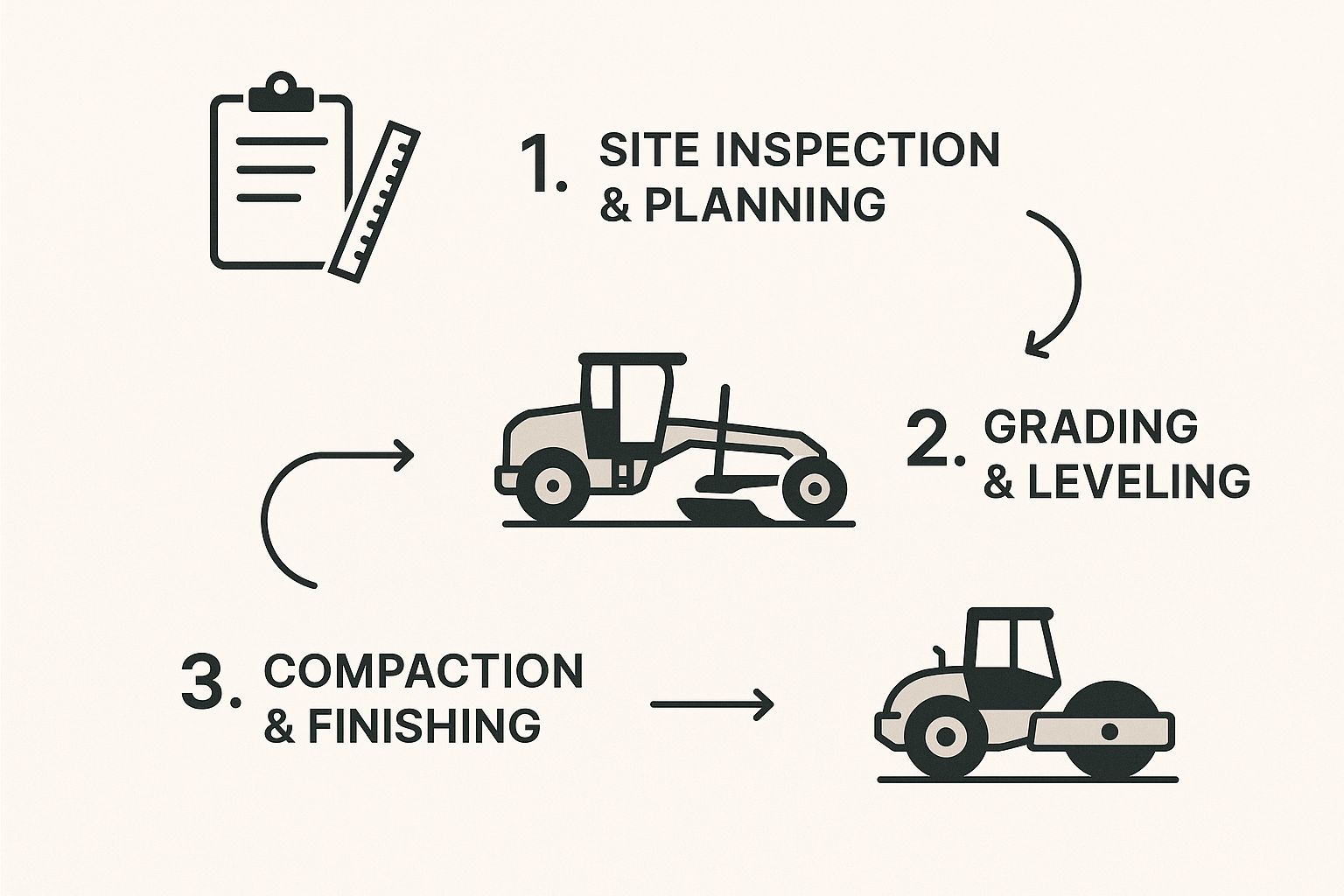
As you can see, a successful project flows from careful planning to precise execution and finishing touches, ensuring no step gets skipped.
Shaping the Roadbed and Laying Aggregate
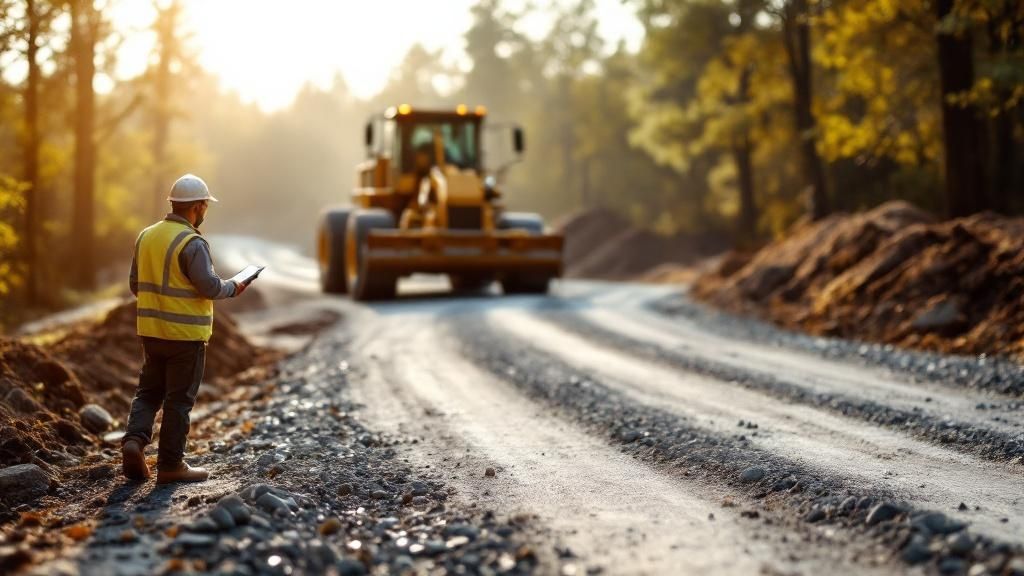
With a clean slate, the real artistry begins. This is where the motor grader becomes the star of the show. With its long, adjustable blade positioned between the front and back wheels, this specialized machine is the key to creating the perfect road profile. The operator will meticulously sculpt the roadbed to establish the all-important crown—that slight arch in the middle that forces rainwater to shed off to the sides.
A skilled motor grader operator is part sculptor, part engineer. Their ability to carve out a consistent, precise slope of 2-4% from the centerline to the shoulder is what separates a professional job from an amateur one. This is arguably the single most important factor for road longevity.
Once the bare earth is shaped, it's time to bring in the new material. Trucks will deliver your chosen aggregate—like crushed rock or road base—and dump it in piles along the path. The grader then goes back to work, spreading this material evenly across the surface and building it up in layers to the required thickness.
This machinery represents a massive investment. In fact, the global market for road graders was valued at roughly USD 8.5 billion in 2023 and is only expected to grow. You can dive into the complete road grader market analysis to see just how critical this equipment is to the industry.
Final Compaction and Finishing Touches
The final, and absolutely crucial, step is compaction. A heavy roller compactor is brought in to press the new aggregate together, forcing all the stones and fine particles to interlock into a dense, solid mass. This is what gives the road its strength and stops it from unraveling under the stress of tires.
Without proper compaction, the surface would stay loose and develop ruts almost immediately. The crew will make multiple passes with the roller until the road feels firm and unyielding underfoot. To finish, they'll dress the shoulders and make sure any ditches are clear, leaving you with a smooth, durable, and fully functional road.
To see examples of our finished work, feel free to explore our projects involving road grading and leveling in Monterey.
Common Questions About Local Road Grading
Even after you’ve got a handle on the basics, there are always a few questions that pop up when you're ready to hire a pro for road grading. Getting straight answers to these common queries will help you feel confident in your decision and ensure you’re doing what’s best for your property in the long run.
How Often Should a Gravel Road Be Graded?
There’s no magic number here. The right frequency really comes down to three things: traffic, climate, and the quality of the original road construction. A well-built road with only light to moderate use might just need a touch-up every 1-3 years.
But if your road is in an area with heavy winter rains or snowmelt, or it sees a lot of daily traffic, you'll likely need to grade it annually. The best thing to do is watch for the tell-tale signs.
Look for:
- Deep, jarring potholes that are holding water.
- Puddles that stick around long after a storm.
- A "washboard" texture or obvious ruts forming.
When you start noticing these issues, it's a clear signal that your road's crown has broken down and it's time to call in a professional.
What Is the Difference Between Grading and Excavating?
This is a fantastic question because the terms are often used together but they describe completely different jobs. The easiest way to think about it is that excavating is the heavy lifting, while grading is the final, finishing touch.
Excavating is all about moving large quantities of earth, rock, and other materials. It involves digging, trenching, and major earthmoving to prepare a site for something new, like a road or a building pad. This work sets the stage for everything that follows.
Grading, on the other hand, is the art of shaping and sculpting the land's surface. The whole point is to create a very specific slope or level plane that ensures proper drainage and stability. Excavation digs the hole; grading perfects the surface. You can learn more about the initial earthmoving part of the process in our guide to excavation services in Monterey.
In short: excavation removes and relocates earth, while grading sculpts the final surface to exact specifications. On new projects, excavation always comes before the final grading work.
Can I Do My Own Road Grading to Save Money?
Technically, yes, but it's rarely a good idea. For a very small touch-up on a short, flat driveway, a tractor with a box blade might do the trick. However, for any real road or a driveway that needs proper drainage, hiring a professional is always the smarter investment.
The pros use heavy, specialized equipment like motor graders for a reason. This machinery is what allows them to create the precise crown and achieve the compaction needed for a road that will last. A DIY job might look fine for a few weeks, but it almost always fails quickly, leading to much worse erosion problems and, ultimately, costing you more in repairs than you saved in the first place.