
That sinking feeling you get when you see a soggy patch in your yard that won't dry up, or when the shower pressure suddenly drops to a trickle? It’s a common homeowner headache. It immediately brings up the question: "Do I need to replace my old water main before it breaks?"
The short answer is yes. Many property owners wait for a break before replacing old mains—but doing so increases damage, cost, and downtime. Being proactive isn't just about avoiding a mess; it's a smart investment in your property's safety, value, and your own peace of mind.
The Hidden Risks of an Aging Water Main
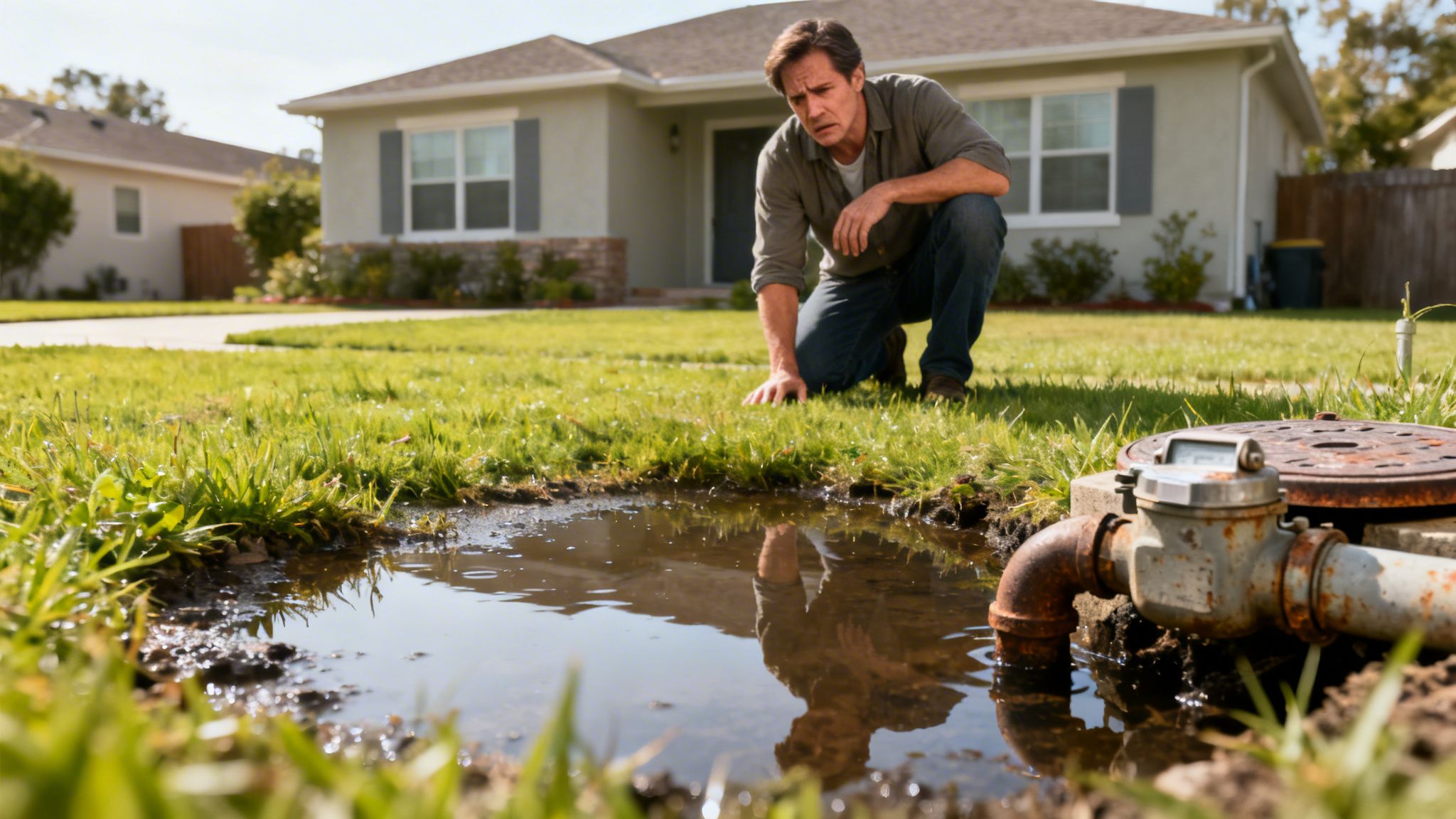
It’s easy to ignore what you can’t see. Most property owners adopt an "out of sight, out of mind" philosophy with their water main, but this hidden pipe is one of the most vital parts of your property's infrastructure. Thinking you can just wait until something goes wrong is a common—and costly—miscalculation. That path almost always ends with an emergency call, major property damage, and a much bigger bill.
Think of it like the tires on your car. You wouldn't wait for a blowout on the highway to decide it's time for a new set, would you? Of course not. You replace them based on age, mileage, and visible wear. The same exact logic applies to the pipes buried under your lawn and driveway.
A Nationwide Problem Hitting Close to Home
This isn't just a local issue. All across the United States, an astonishing 1 in 5 water mains is already past its expected lifespan. This crumbling infrastructure is responsible for U.S. utilities losing 6 billion gallons of treated water every single day from leaks and breaks.
This national trend has a very real, direct impact on us here. For property owners in Monterey or Santa Cruz counties, it means the pipes under our feet are aging and under constant stress. The question isn't if a break will happen, but when.
The most common misstep is delaying replacement or doing piecemeal repairs. This reactive approach almost always ends with a massive break, leading to emergency service calls, higher costs, and a whole lot of disruption.
Shifting from Reactive Repairs to a Proactive Plan
Instead of waiting for a geyser to erupt in your front yard, a much smarter approach is to use clear indicators to guide your decision. The two biggest factors are the age of your pipes and what they're made of. Older materials, like galvanized steel, are ticking time bombs, far more likely to corrode and fail than modern options.
The table below breaks down the key differences between waiting for a pipe to burst versus planning a replacement ahead of time.
Reactive Repair vs Proactive Replacement At a Glance
| Factor | Reactive Repair (After a Break) | Proactive Replacement (Before a Break) |
|---|---|---|
| Cost | Significantly higher. Emergency rates, overtime, and unexpected damage repair (landscaping, foundation) add up quickly. | More predictable and lower. You can get competitive bids, schedule during regular hours, and control the project scope. |
| Disruption | High and unpredictable. Water shut-offs, major excavation, and emergency crew access can disrupt your life for days. | Minimal and scheduled. Planned work, especially with trenchless methods, minimizes impact on your property and daily routine. |
| Timeline | Chaotic and rushed. Your property is the emergency scene until the problem is fixed. | Controlled and planned. The project happens on your schedule, ensuring a smooth and efficient process. |
| Outcome | Often just a patch. Fixes the immediate leak but leaves the rest of the old, vulnerable pipe in the ground. | A long-term solution. A complete new system with a lifespan of up to 100 years, providing security and peace of mind. |
As you can see, planning a replacement puts you in control of the timeline, the budget, and the final outcome. You get to explore modern, more durable solutions that weren't available when your home was built.
- Durable Materials: High-Density Polyethylene (HDPE) and ductile iron systems offer a service life of up to 100 years.
- Advanced Installation: Trenchless options can often be used to minimize the disruption to your landscaping, driveway, and daily life.
- Professional Assurance: A planned project always includes full utility tie-ins and rigorous pressure testing to ensure the new system is absolutely flawless from day one.
At Coastal Pipeline, we specialize in helping property owners on the Central Coast make this critical upgrade before it becomes a crisis. We manage complete water main installations, using the best modern materials and trenchless methods wherever possible to secure your property's water supply for the next century. This forward-thinking mindset is more critical than ever, as experts are seeing how aging sewer, water, and gas lines are driving a construction boom.
Why Waiting for a Break Is a Costly Mistake
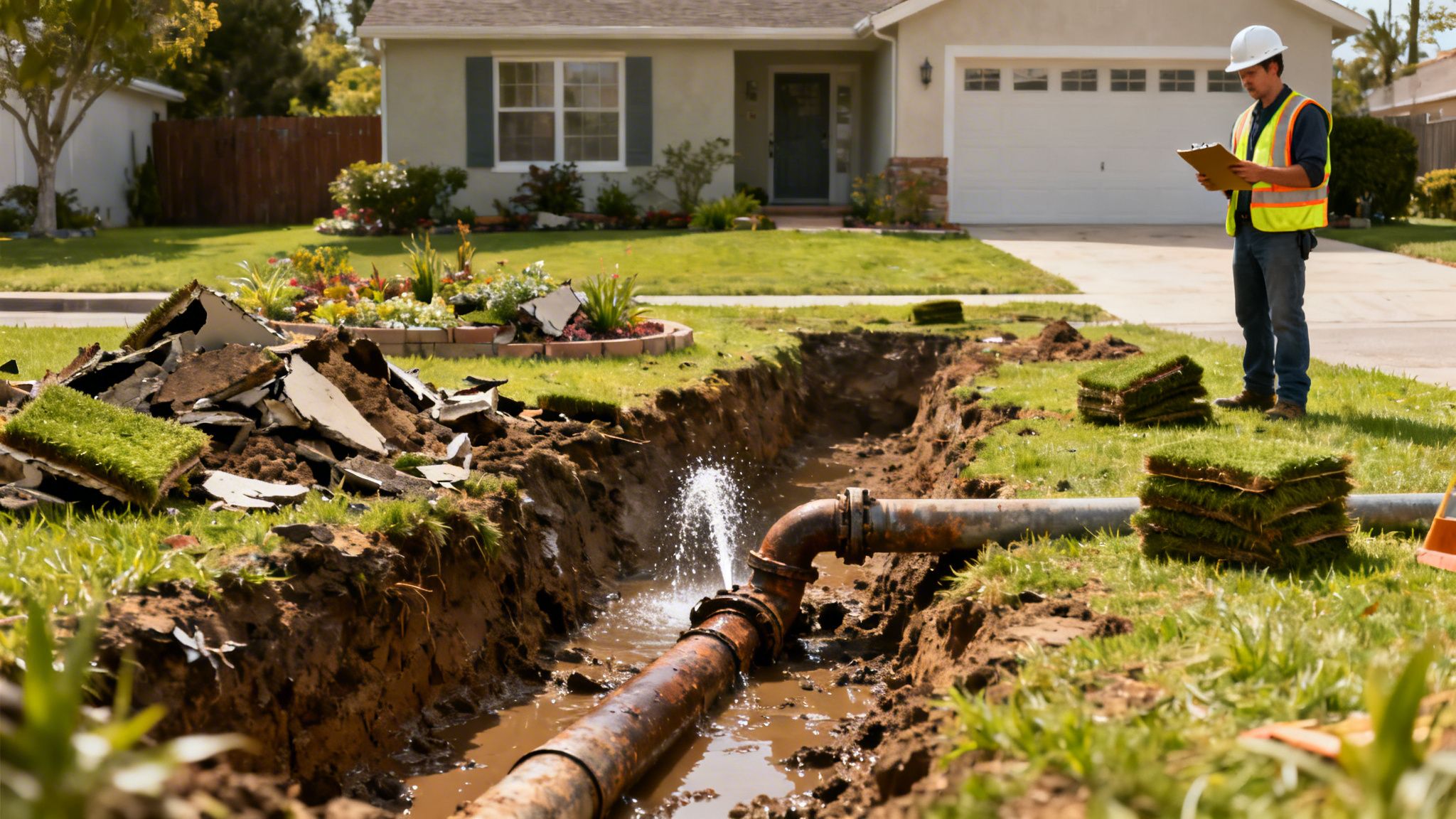
It’s completely understandable to adopt an "if it ain't broke, don't fix it" mindset for something buried underground. Out of sight, out of mind. But when it comes to your property’s main water line, this common approach is one of the most expensive gambles you can take.
Waiting for a geyser in the yard or a flooded basement means you’ve already lost the battle. At that point, you're not just paying to replace a pipe; you're dealing with emergency cleanup, restoring ruined landscaping, and potentially facing thousands in water damage repairs inside your building.
The True Cost of an Emergency Repair
When a water main lets go, the clock starts ticking, and every second costs you more money. An emergency call is a world away from a planned project. You lose all control over scheduling, the budget spirals, and your repair options shrink to whoever can get a crew to you the fastest.
The financial fallout is a painful chain reaction that goes way beyond a simple plumbing bill.
- Emergency Service Premiums: Expect to pay a hefty premium for after-hours, weekend, or immediate-dispatch services.
- Secondary Damage: Water from a high-pressure break can erode foundations, flood crawl spaces, wash away landscaping, and even undermine driveways.
- Sky-High Water Bills: A major break can dump thousands of gallons of water before it's shut off, leaving you with a shocking utility bill.
- Operational Downtime: For a business, a water main break means shutting down. Every hour of closure translates directly into lost revenue and productivity.
This reactive scenario forces you into making rushed, high-stress decisions. Proactively replacing the line, on the other hand, puts you in the driver's seat. You get to plan, budget, and schedule the work on your terms. You can see the top reasons to act fast on utility breaks in our detailed guide.
The Pitfall of Small Fixes
Another common misstep is chasing small, piecemeal repairs on an aging system. When an old pipe springs a pinhole leak, patching it seems like the most logical and affordable fix. But this is like putting a single band-aid on a failing artery—it might stop the bleeding in one spot, but it does nothing to address the systemic decay.
Here's the hard truth: an old, corroded pipe that has failed once is almost guaranteed to fail again somewhere else. These temporary fixes create a false sense of security, kicking the can down the road and setting the stage for an even bigger, more destructive failure in the future.
The national data tells a sobering story. With 1 in 5 water mains in the U.S. already past their intended lifespan and utilities losing an astonishing 6 billion gallons of treated water daily, the problem of aging infrastructure is very real. Your property’s water main is part of this ticking clock.
Take Control with a Proactive Approach
The only way to avoid the chaos and expense of an emergency break is to shift your mindset. Instead of asking if you can afford to replace your water main, the real question is, can you afford not to?
For property owners in Monterey or Santa Cruz counties, taking control of your aging infrastructure is critical. At Coastal Pipeline, we specialize in complete water main replacements that eliminate these costly emergencies before they happen. We install modern, durable ductile iron and HDPE systems designed to last up to 100 years.
We manage the entire process, from utility tie-ins to rigorous pressure testing, ensuring a permanent solution, not just another temporary patch. By using trenchless options whenever feasible, we minimize the disruption to your property and give you peace of mind for decades to come.
America's Aging Pipes and What It Means for You
The decision to replace your water main isn't just about your property—it's tied to a massive, nationwide challenge. Beneath our feet, a vast network of pipes that delivers clean water is getting dangerously old. Many of these systems were put in the ground generations ago with a lifespan that's long since passed.
This hidden crisis has very real consequences. The American Society of Civil Engineers consistently gives our drinking water systems a poor grade, pointing to widespread decay. This isn't just some abstract problem for utility companies; it directly impacts homeowners, developers, and businesses by making unexpected, costly failures far more likely.
The Staggering Scale of the Problem
The numbers behind this are truly eye-opening. Industry data shows that 1 in 5 water mains across the country is already past its useful life. These old, brittle pipes are the main reason U.S. utilities lose an astonishing 6 billion gallons of treated drinking water to leaks every single day.
Think about that for a second. That's enough clean water to fill over 9,000 swimming pools, wasted daily before it ever reaches a faucet. This puts a huge strain on our water resources and puts every property connected to these old networks at risk of a sudden, messy break.
Waiting for a main to break isn't a strategy; it's a gamble. The data is clear: countless pipes are already operating on borrowed time. Taking a proactive approach means you're no longer a potential victim of infrastructure failure—you're an owner securing your property's future.
How National Trends Hit Home
This national issue has a direct local impact, especially here on the Central Coast. For property owners in places like Monterey or Santa Cruz counties, where so much of the infrastructure was built decades ago, the statistical risk is very real. Simply put, the older the pipe serving your home or business, the higher the chance it's one of the ticking time bombs.
Kicking the can down the road with small, piecemeal repairs is almost always a more expensive mistake in the long run. Each patch on an old pipe is just a band-aid. It might stop today's leak, but it does nothing to prevent the next one. This cycle of break-fix, break-fix inevitably leads to a major failure, emergency call-out fees, and much higher costs. With public funding priorities changing, more of the financial burden for service lines falls on property owners. You can read more about the shift in public water main funding every contractor should know.
At Coastal Pipeline, we see the results of this aging infrastructure up close every day. Our goal is to help property owners get ahead of the problem. We install modern ductile iron and HDPE systems engineered for a 100-year service life, turning a recurring headache into a permanent solution. Our work is comprehensive, covering everything from utility tie-ins to meticulous pressure testing, ensuring your new water main is a solid, long-term investment.
How to Spot a Failing Water Main Before Disaster Strikes
Waiting for a flood to tell you there’s a problem with your water main is a costly and stressful way to manage things. A much smarter approach is to become a detective for your own infrastructure. Once you learn to spot the subtle—and not-so-subtle—clues of a failing pipe, you can act before a catastrophic break ruins your day.
The big question, "Do I need to replace my old water main before it breaks?" really starts with knowing what to look for. Thankfully, many signs of trouble appear long before a pipe gives way completely, giving you a critical window to plan a replacement instead of just reacting to an emergency.
Telltale Signs of an Imminent Failure
Most water mains don't just burst out of nowhere. They usually send out distress signals first. Paying attention can save you a world of headache and expense down the road.
Here are the most common red flags:
- Sudden Drops in Water Pressure: If your shower suddenly feels weak or the kitchen faucet just doesn't have its usual oomph, it could mean water is escaping from a crack somewhere along the line.
- Unexplained Puddles or Soggy Spots: Got a patch of lawn that’s always damp, mushy, or suspiciously greener than everything around it? That's a classic sign of a slow, underground leak.
- A Creeping Water Bill: If your water usage hasn't changed but your bill keeps climbing, it's a strong hint that water is being lost somewhere between the street and your property.
- Discolored or Murky Water: Brown or rusty-looking water is a serious warning. It often means an old metal pipe is corroding from the inside out, flaking off sediment into your water supply.
These symptoms often point to a system that’s on its last legs. For a more detailed look, check out our guide on the signs of a failing underground water line.
The Two Biggest Risk Factors: Age and Material
While keeping an eye out for those visible signs is crucial, the two biggest predictors of failure are far less obvious: age and material. An old pipe made from outdated materials is simply far more likely to fail than a modern one.
If your property was built more than 50 years ago and still has its original water line, you're living on borrowed time. Older homes often have galvanized steel or cast-iron pipes, both of which are highly susceptible to rust and corrosion. Over decades, this internal decay not only chokes off water flow but also weakens the pipe wall, making it vulnerable to bursting under normal pressure changes.
This decision tree breaks down the key questions to ask when figuring out if your water main is at risk.
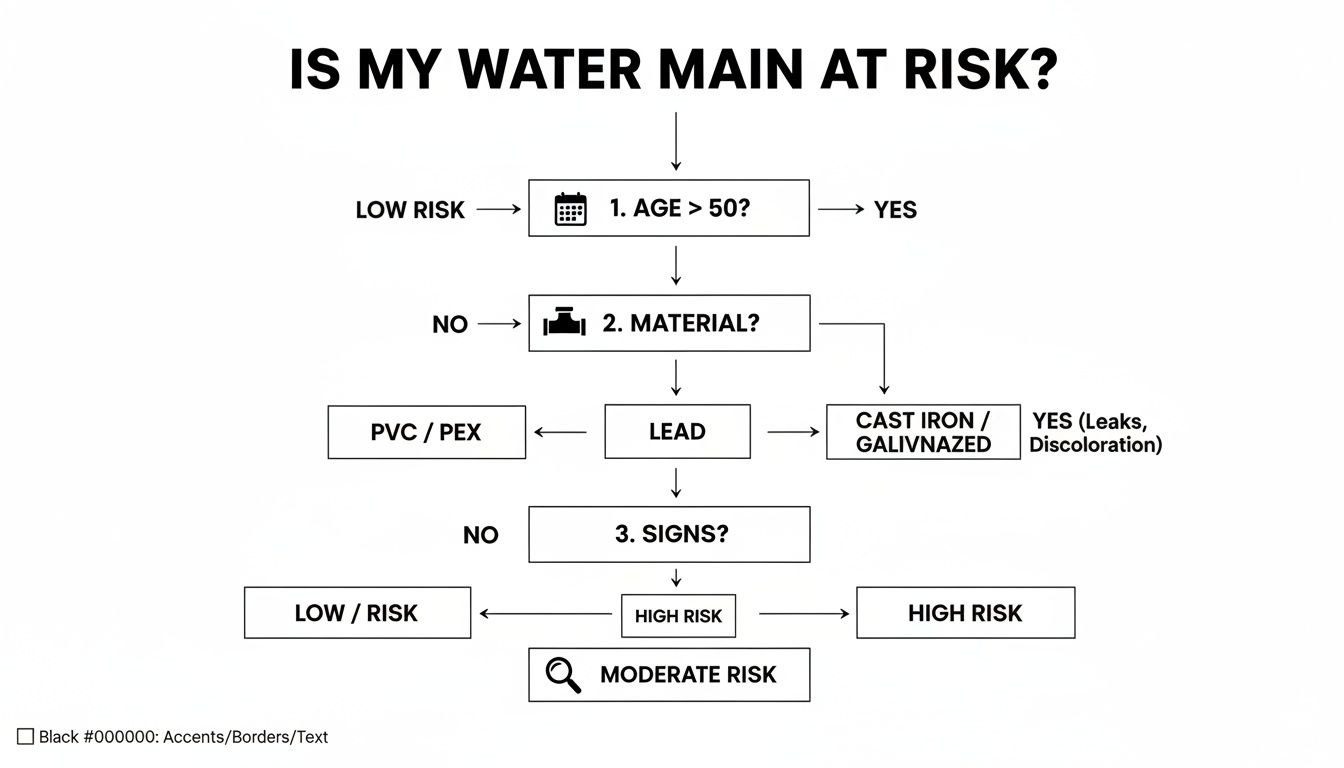
The takeaway here is simple: when you combine advanced age with problematic materials and any of those visible warning signs, your property moves into the high-risk category for an imminent failure.
Knowing what your pipes are made of and how long they're supposed to last is a huge piece of the puzzle. This table gives you a quick reference.
Water Main Material Lifespans and Failure Signs
| Pipe Material | Typical Lifespan | Common Signs of Failure |
|---|---|---|
| Cast Iron | 50-100 years | Corrosion, rust-colored water, frequent leaks, root intrusion. |
| Galvanized Steel | 40-60 years | Internal rusting, low water pressure, discolored water, pinhole leaks. |
| Lead | 100+ years | Health hazard – leaches into water. Often fails at connection points. |
| PVC | 70+ years | Cracks from UV exposure (if above ground) or ground shifting. |
| Copper | 50-70 years | Pinhole leaks from corrosion, blue-green staining on fixtures. |
As you can see, even the most durable materials have an expiration date. Combining this knowledge with on-the-ground observations gives you a clear picture of your risk level.
Modern Tools for a Proactive Approach
The good news is you don't have to guess about your pipe's condition. Modern technology allows us to get a clear look inside your water main without destructive digging. Professionals can send high-resolution video cameras down the line to inspect every inch of the interior, pinpointing cracks, corrosion, and blockages with complete certainty.
This kind of diagnostic work gives you concrete evidence, turning your decision from a guess into a data-driven plan. It puts you back in control, allowing you to schedule a replacement on your terms and choose the right materials for a solution that will last for decades.
Choosing Your Replacement: Modern Materials and Methods
Once you've made the call to replace your old water main, the next big decision is what to replace it with. This isn't just about swapping out a failing pipe; it’s a real opportunity to upgrade your property with modern technology built to last a lifetime. Think of it as a permanent solution, not just another repair.
If you’ve decided it’s time to replace your main before it fails, your focus has to be on long-term value. Materials like old galvanized steel are exactly why you’re in this situation in the first place. Today's best options are specifically engineered to stand up to corrosion, ground movement, and all the other things that bring old pipes to their knees.
The Best Materials for a 100-Year Lifespan
For a project this important, you don't want to cut corners. You need materials that offer serious strength and longevity. Around here on the Central Coast, two options have really become the gold standard for performance and reliability.
- Ductile Iron Pipe: This is the modern, much-improved descendant of cast iron. It’s engineered to be far stronger and more flexible, making it incredibly durable and resistant to high pressure. For larger municipal or commercial projects, it's often the go-to choice.
- High-Density Polyethylene (HDPE): Known for its incredible flexibility and total immunity to corrosion, HDPE is a fantastic choice. The sections are fused together to create a seamless, leak-proof system that can actually bend with ground shifts without breaking.
At Coastal Pipeline, our whole approach is about building systems that last. That’s why Coastal Pipeline installs ductile iron and HDPE systems with full utility tie-ins and pressure testing to ensure 100-year service life. We’re not here to put a band-aid on the problem—we deliver a permanent upgrade.
It's also worth looking into other modern pipe materials like PPR, PVC, and CPVC to see what fits your specific needs. Getting the material right is the bedrock of a successful project.
Smarter Installation Minimizes Disruption
Let's be honest: a huge worry for any property owner is the mess. The thought of a backhoe tearing up a beautiful landscape, driveway, or parking lot is enough to cause nightmares. Thankfully, installation techniques have come a long, long way from the destructive open-trench digging of the past.
One of the most effective modern approaches is trenchless pipe bursting. With this technique, a professional crew can pull a brand-new pipe right through the path of the old one. The old pipe is "burst" underground as the new, stronger one takes its place. This often requires just two small access points, saving your property from being torn apart.
This less disruptive method is a total game-changer. If you want to dig deeper into the details, check out our guide on trenchless vs open-cut methods and what contractors don't tell you.
What a Professional Installation Involves
Replacing a water main is a complex job that goes far beyond just digging a trench and dropping in a pipe. A true professional, turnkey installation is a carefully managed process handled by a licensed general engineering contractor.
Here’s what you should expect from a crew that knows what they're doing:
- Permitting and Planning: First things first. We handle all the necessary permits and coordinate with public utility providers to mark every existing underground line. No surprises.
- Safe Excavation: Whether we're using trenchless methods or a traditional approach, every bit of digging is done according to strict safety codes to protect everyone and everything on site.
- Proper Bedding and Installation: The new pipe isn’t just thrown in the ground. It’s laid on a carefully prepared base of material that cushions and protects it from rocks and soil settlement.
- Utility Tie-Ins: We make the critical connections—securely and leak-proof—to the municipal water supply at the street and to your building's internal plumbing.
- Rigorous Pressure Testing: This is non-negotiable. Before any dirt goes back in the ground, we fill the entire new line with water and pressurize it well beyond normal operating levels. This proves the system is absolutely free of leaks.
- Backfilling and Restoration: Finally, we carefully backfill the area, compact the soil properly, and restore the surface to its original condition, whether that’s landscaping, asphalt, or concrete.
Following this methodical process is how a major project is transformed into a lasting asset, giving you a reliable water supply for generations.
Finding Your Local Water Main Replacement Partner
Deciding to replace your water main is a big step, but finding the right contractor to do the work is just as critical. This isn't a simple repair job; it's a major infrastructure project. The success of the entire replacement hinges on having a team with the right skills, deep local knowledge, and an unwavering commitment to quality.
When you start looking for a pro, you'll quickly find plenty of local plumbing companies. While they're great for leaky faucets and clogged drains, a full water main replacement is a different beast altogether. This kind of work demands a specialized general engineering contractor who lives and breathes large-scale utility projects.
Why Local Expertise Matters on the Central Coast
Here in Monterey, Santa Cruz, and San Benito counties, our aging infrastructure comes with its own set of challenges. We have shifting soils that put constant stress on underground pipes and older municipal connections that require a very specific touch. A contractor who isn't familiar with these regional quirks could easily miss a critical detail, leading to major headaches down the road.
This is where a local specialist becomes so valuable. A team that works here every day already knows the ins and outs of the local permitting processes, has working relationships with the utility providers, and understands the ground conditions that can make or break a project.
For property owners and developers, the ideal partner is one who can manage the entire process seamlessly. This includes everything from the initial NASSCO-certified video inspection and safe trenching to the final paving and complete site restoration.
Finding a Turnkey Installation Specialist
A true replacement specialist offers a turnkey solution. What does that mean? It means they handle every single part of the job, giving you one point of contact and total accountability from day one. This approach completely removes the stress of trying to juggle separate contractors for excavation, plumbing, and paving.
At Coastal Pipeline, we are that go-to specialist. We provide modern, efficient solutions designed to minimize disruption and deliver results that last. For aging infrastructure in Monterey or Santa Cruz counties, we offer full water main installation, often using trenchless methods where possible. This technique frequently allows us to replace your entire line without having to tear up your driveway or destroy your landscaping.
The next step is to take control of your property’s water infrastructure. By partnering with an experienced local contractor, you can rest easy knowing the job will be done right, securing your water supply for decades to come. Contact Coastal Pipeline for a comprehensive assessment and take the first step toward a permanent solution.
Answering Your Questions About Water Main Replacement
Even when you know replacing your water main is the right call, it's natural to have questions about how it all works.You're probably wondering, "Do I really need to replace this pipe before it breaks?" Let's walk through some of the most common questions we hear from property owners facing this exact decision.
It's tempting to wait for a leak or a full-blown break before you act, but that reactive approach almost always ends up costing more in damage, money, and headaches. Going on the offensive is the smartest financial move you can make.
How Do I Figure Out My Pipe's Age and Material?
The first step is a bit of detective work. Your property's original building plans or public records are a great place to start, as they often note the type of pipe installed.
If those documents are long gone, don't worry. A professional plumber can figure it out. They can either perform a small, precise excavation to expose a section of the pipe or, even better, run a specialized camera inside the line. This gives them a direct look at the material and its condition without tearing up your whole yard.
Is a "No-Dig" Trenchless Replacement Always Possible?
Trenchless methods are fantastic—they can save your lawn, driveway, and landscaping from being completely dug up. But they aren't a silver bullet for every single situation.
Whether it’s the right fit for your property comes down to a few key factors:
- The State of the Old Pipe: If the existing line is totally collapsed, there's no clear path for the new pipe to follow.
- The Ground Itself: Extremely rocky soil can sometimes make it difficult for the trenchless equipment to work effectively.
- Other Buried Lines: A crowded underground with gas, electric, and sewer lines can make navigating a new pipe tricky.
The only way to know for sure is to have an expert take a look. They'll assess your specific property and map out the safest, most effective way to get the job done. For property owners in Monterey or Santa Cruz counties dealing with older infrastructure, Coastal Pipeline Inc. specializes in these evaluations and will always recommend a trenchless option if it's a viable choice.
How Much More Does an Emergency Repair Really Cost?
The final numbers will vary, but an emergency repair is always significantly more expensive than a planned replacement. You're not just paying for a new pipe; you're on the hook for emergency call-out fees, after-hours labor rates, and often, extensive water damage restoration inside and outside your home.
When you plan the project ahead of time, you control the process. You can get competitive quotes and schedule the work on your terms, often saving 30-50% compared to what you'd pay in a crisis.
How Long Does a Full Replacement Take?
For a standard residential home, a planned water main replacement is surprisingly quick. Most projects are wrapped up in just 1 to 3 days. That includes everything from the initial digging and pipe installation to connecting the new line and filling everything back in.
An emergency repair might feel faster in the moment, but the chaos and disruption it brings to your property and your life are anything but.
Don't wait for a burst pipe and a flooded lawn to make this decision for you. If you have any concerns about your aging water main, the team at Coastal Pipeline Inc. is here to help. We offer thorough assessments and professional installations using modern materials built to last for generations.
Secure your property's most critical utility. Visit us at https://coastalpipelineinc.com to schedule a consultation today.