When you have a sewer line problem, every second counts. An emergency sewer line repair is a critical fix for a broken or clogged pipe. A failure can cause flooding, spread germs, and even damage your property’s foundation. Acting fast is not just a good idea—it’s necessary to protect your home and everyone in it.
Why a Sewer Emergency Cannot Wait
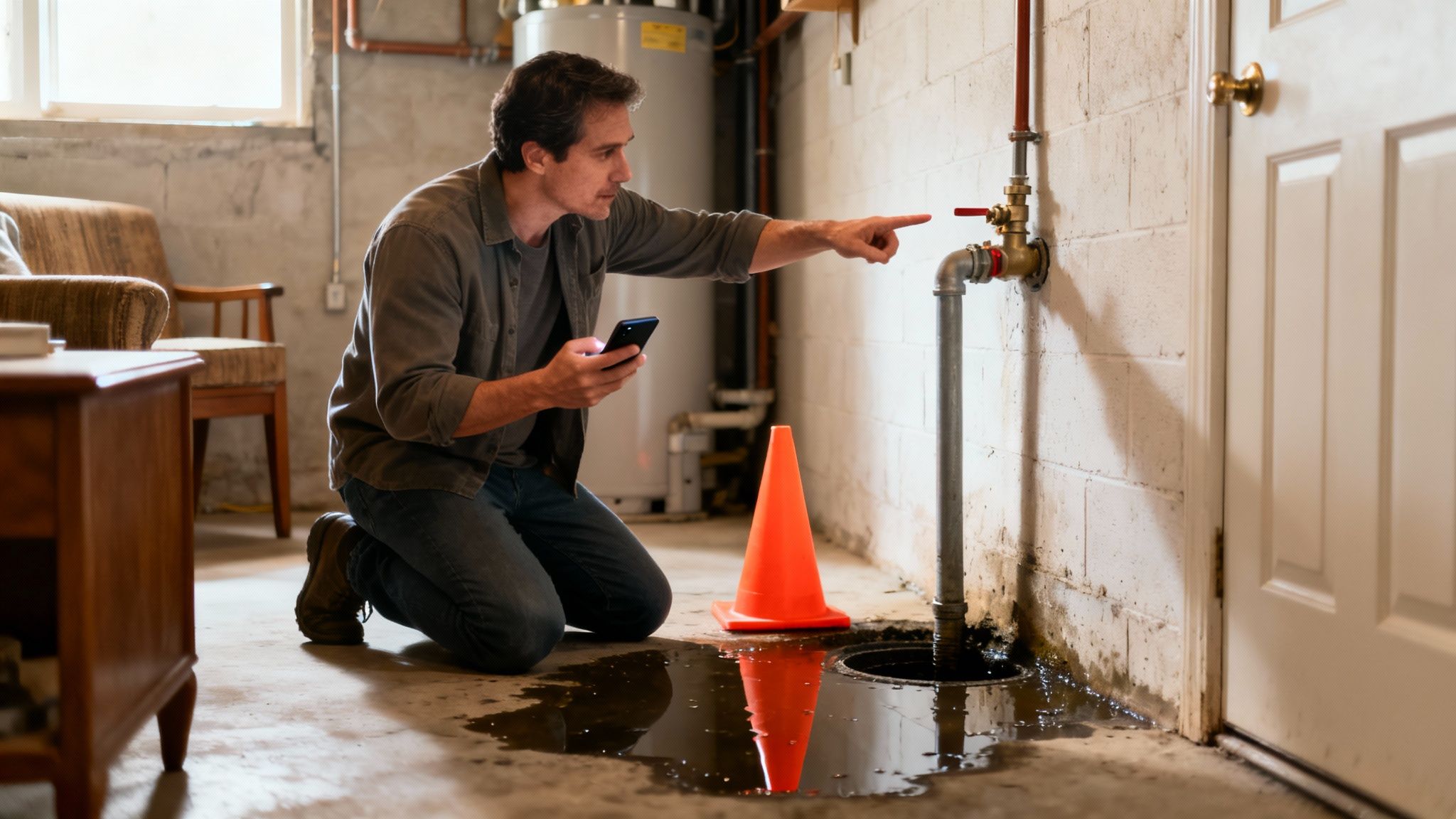
A broken sewer line is more than just a plumbing issue. It's a serious hazard that can quickly get out of control. When a sewer main fails, waiting to call for help can lead to major problems for your property, the environment, and public health.
When wastewater has nowhere to go, it backs up into your home. Raw sewage can come up through floor drains, toilets, and showers, bringing harmful bacteria with it. This creates an unsafe mess that puts everyone in the building at risk. Emergency repairs are needed to restore flow quickly and protect your property.
The Real-World Consequences of Delays
Besides the health risks and cleanup, the damage gets worse the longer you wait. Wastewater leaking into your home's foundation can weaken it over time. Outside, the sewage can pollute the soil and local groundwater. This could lead to expensive cleanup orders from the city.
A slow response to a sewer problem always costs more. A simple repair can turn into a huge project that includes fixing water damage, repairing your foundation, and tearing up your yard.
Understanding the Financial Impact
Ignoring strange gurgling sounds or bad smells won't save you money. It will only lead to a much bigger bill later. The costs of a delayed repair can be very high.
Here’s a look at what you might face:
- Property Damage: The cost to clean a flooded basement, replace ruined floors, and remove dangerous mold.
- Structural Repairs: The expense of fixing a foundation weakened by moisture.
- Landscaping Restoration: The bill for rebuilding lawns, driveways, or gardens destroyed by sewage or digging.
- Health-Related Costs: Medical bills if anyone gets sick from contact with raw sewage.
To help you understand the urgency, here is a quick overview of the possible outcomes.
Immediate Risks of a Sewer Line Failure
| Type of Hazard | Potential Impact on Your Property and Health |
|---|---|
| Health & Safety | Exposure to raw sewage containing E. coli, Salmonella, and other dangerous germs. |
| Property Damage | Water damage, mold growth, ruined flooring, and damaged drywall. |
| Structural Integrity | Foundation cracks, soil erosion, and sinkholes from leaks. |
| Environmental | Contamination of soil, groundwater, and nearby water sources. |
| Financial | High costs for cleanup, restoration, and possible city fines. |
Seeing these risks makes it clear that waiting is the worst thing you can do.
By understanding the risks, you can see why calling for help right away is the smartest and cheapest choice. You can discover more about how fast action can save you thousands in our detailed guide.
Who's Responsible for This Mess? Your Sewer Line, Explained
When sewage is backing up, the first question is always, "Who fixes this?" For most property owners, the answer is a surprise. This confusion can cause delays when every second matters.
Let's clear this up. The sewer line that runs from your building to the main city sewer under the street is your responsibility. This pipe is called the sewer lateral. Many property owners don't realize they are responsible for this part of the sewer line.
What Exactly Is the Sewer Lateral?
In most areas, including Monterey, Santa Cruz, and San Benito Counties, the property owner is responsible for the entire sewer lateral. This means you must pay for all maintenance, repairs, and, if needed, a full replacement.
Your responsibility often extends all the way to the "tap," where your pipe connects to the city's main sewer line. That connection could be under the sidewalk or even in the middle of the street.
Many people think that once the pipe leaves their property, it's the city's problem. The truth is, if the pipe only serves your property, you own it—even the part under public land.
This is why private property owners—including residential, commercial, or HOA-managed developments—are responsible for that entire section of pipe. Knowing this is key to fixing issues fast and avoiding bigger problems and costly penalties.
Why This Matters in an Emergency
Understanding that the sewer lateral is yours is helpful in a crisis. It means you can skip calling the city, who will just tell you to call a plumber. Wasting that time can have serious consequences.
Instead, you can immediately contact a qualified contractor to find and fix the problem. Acting fast helps you avoid bad outcomes:
- Hefty Fines: If your broken sewer line causes environmental or health risks, the city can fine you for not fixing it.
- Forced Business Closures: A backed-up sewer is a major issue for any business. The health department can shut you down until it's fixed.
- Serious Liability: If your leaking sewage damages a neighbor's property or the street, you could be held responsible for the costs.
Knowing about your sewer line is part of being a responsible property owner. For more information, read our guide on what property owners should know about aging utility lines. When an emergency happens, taking charge of the problem is the fastest and cheapest way to get things back to normal.
Spotting the Early Warning Signs of Sewer Failure
Most major sewer failures don't happen suddenly. They usually give warning signs that your system is in trouble. Learning to spot these signs early can help you avoid a disaster before it starts. Unfortunately, early signs often go unnoticed—until it’s too late.
The signs often start small. You might notice that several sinks are draining slowly, not just one. Or you might hear strange gurgling sounds from the toilet. These are signs that wastewater is having trouble leaving your property.
If you ignore these signs, the problem will only get worse. A gurgle can become a backup, and a slow drain can stop draining completely. Paying attention to your plumbing system is the first step in preventing an emergency.
Telltale Signs From Inside and Out
Warning signs aren't just inside your house. Your yard can also show clear signs that something is wrong with the underground sewer line. Look out for these red flags:
- Foul Odors: A constant sewage smell inside your home or in your yard is a clear sign of a problem.
- Lush, Green Patches: If one spot on your lawn is suddenly greener than the rest, it might be getting fertilized by a leaking sewer pipe below.
- Unexpected Wet Spots: Finding soggy ground or puddles in your yard when it hasn't rained is a strong sign of a broken line.
These signs often mean there is a break in the pipe. Tree roots may have cracked the line, or an old pipe may have collapsed.
The biggest mistake homeowners make is thinking these are separate issues. A gurgling toilet, a slow shower drain, and a bad smell are all symptoms of one failing sewer line.
From Guesswork to a Clear Diagnosis
While these symptoms are strong clues, they don't tell the whole story. You might know you have a problem, but you don't know why. A slow drain could be a simple clog, but it could also be a sign of tree roots, a collapsed pipe, or a shifted lateral.
This is where professional diagnosis is needed. Experts use special tools to see inside your pipes. For example, Coastal Pipeline uses NASSCO PACP-certified video inspection tools to find the exact location and cause of the problem. This helps create a fast and effective repair plan. You can learn more by exploring Coastal Pipeline's diagnostic methods on coastalpipe.com.
Knowing exactly what you're dealing with—a simple clog versus a collapsed pipe—is what separates a quick fix from a long, expensive repair.
The table below can help you connect common household problems to the more serious issues they might signal.
Decoding Your Plumbing Problems
| Warning Sign You Notice | What It Could Mean for Your Sewer Line |
|---|---|
| Gurgling Toilets and Drains | Air is trapped in the line due to a partial blockage. |
| Multiple Slow Drains | The main sewer lateral is blocked, preventing proper drainage. |
| Water Backing Up in Showers | The blockage is so bad that wastewater is coming back up at the lowest point. |
| Foul Odor in the Yard | The sewer pipe is cracked or has a hole, leaking sewage into the soil. |
Catching these signs early gives you a big advantage. It means you can call for professional help before a small problem becomes a major emergency.
Exploring Modern Trenchless Repair Solutions
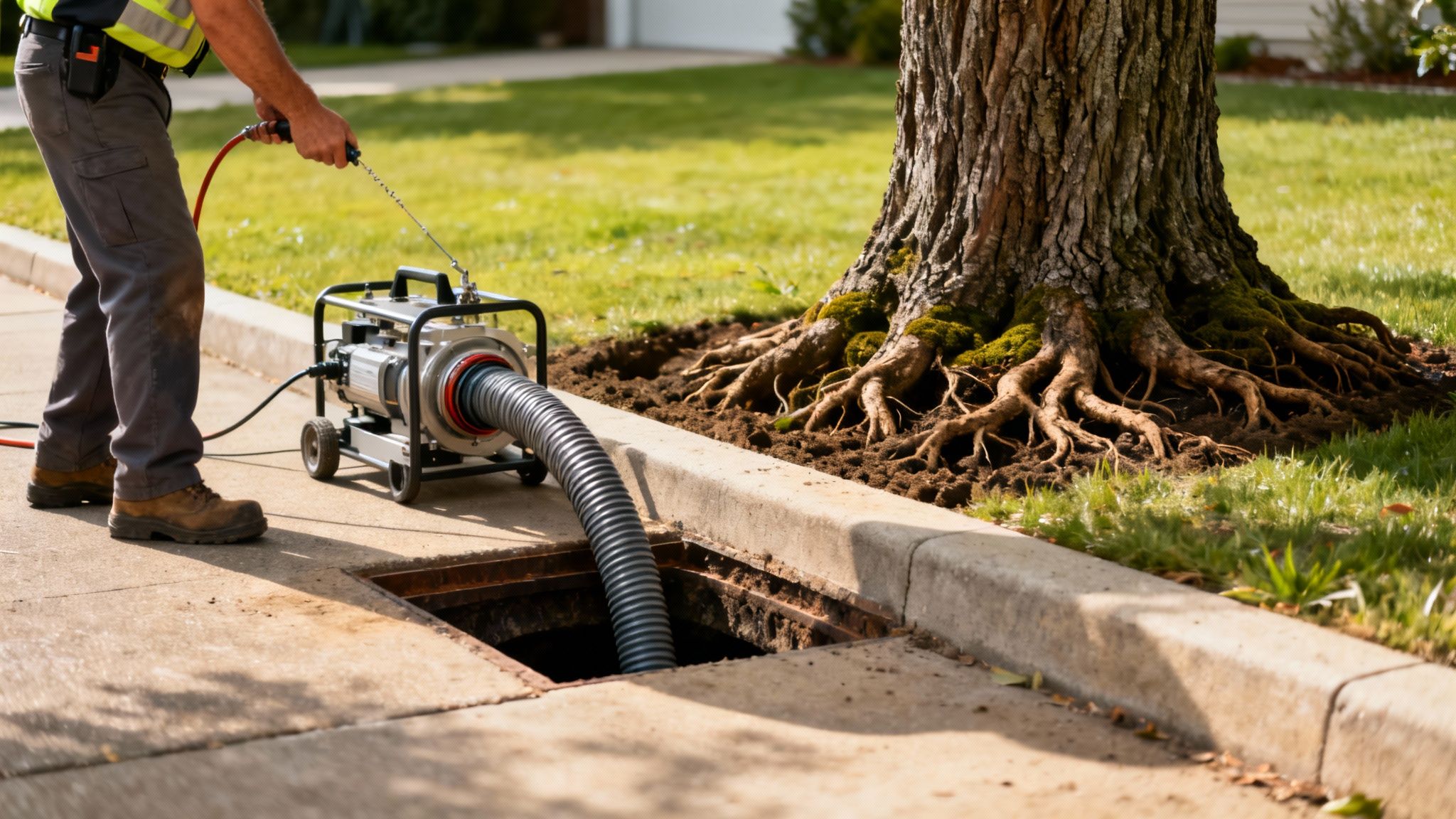
When you need an emergency sewer line repair, you might picture a large trench dug through your lawn or parking lot. For a long time, digging was the only way to fix a buried pipe.
Luckily, there's a better way now.
Trenchless repair methods fix underground pipes with little to no digging. Instead of turning your property into a construction zone, these techniques work through small access points. This means your landscape, driveway, and daily life are not disturbed. In emergency scenarios, Coastal’s trenchless repair technologies restore sewer function with minimal excavation.
The Power of Pipe Bursting
One common trenchless method for a failed pipe is pipe bursting. It's a great solution when the old pipe is too damaged to be saved.
A cone-shaped "bursting head" is pulled through the old pipe, breaking it apart into the soil. A brand-new, seamless pipe is pulled in right behind it. You get a new, strong pipe that is often better than the old one.
Cured-in-Place Pipe (CIPP) Lining
If your pipe is mostly intact but has cracks, leaks, or root problems, Cured-in-Place Pipe (CIPP) lining is a good option. This method creates a new, strong pipe inside the old one.
Here’s how it works:
- A flexible liner soaked in a special resin is put into the damaged pipe.
- The liner is inflated, pressing it against the walls of the old pipe.
- The resin is hardened with hot water, steam, or UV light, forming a tough, seamless new pipe.
The result is a sealed pipe that blocks cracks and stops roots, all without digging.
In an emergency, the goal is to fix the problem fast with the least amount of damage. Trenchless technology does both. It turns a long digging project into a repair that can often be done in less than a day.
In urgent situations, Coastal’s trenchless methods—such as pipe bursting or sectional replacements—are ideal for driveways, landscaped areas, or commercial properties with limited access. You can find out more by exploring Coastal Pipeline's emergency services on coastalpipe.com. These methods save your property and also reduce the time it takes to get back to normal.
While these repairs might seem expensive, it's important to look at the total cost. We explain this in our guide on trenchless sewer line repair cost. When you add up the money saved on rebuilding a driveway or lawn, trenchless repair is often the most cost-effective option.
Dealing with Permits and City Rules in an Emergency
When you have a sewer disaster, the last thing you want to deal with is paperwork. But fixing a broken sewer line often involves following local city rules, especially when the work affects public property.
Ignoring this step can lead to legal and money troubles.
Almost any emergency sewer line repair that requires digging near a street or connecting to the city main will need a permit. Permits ensure the work is done safely, protect other underground utilities like gas and water lines, and make sure the repair meets local codes. A bad connection can fail later and cause even bigger problems.
Let an Expert Handle the Red Tape
Trying to manage all this during a crisis is stressful. This is where an experienced contractor is essential. They know who to call and what forms to file to get the work approved quickly.
A good professional will handle all the details for you.
-
Fast-Tracking Permits: Experienced contractors have relationships with local officials, which helps get emergency permits approved much faster.
-
Utility Coordination: Before digging, they will contact other utility companies to mark their underground lines. This is a critical safety step to prevent accidents, like hitting a gas line.
-
Code-Compliant Connections: The final connection to the city's main sewer system must be done correctly and often needs to be inspected. A professional makes sure it's done right the first time.
A professional contractor doesn't just fix your pipe; they manage the whole project. This includes handling all permits and inspections, so you know the job is done legally and correctly.
Because emergency sewer work often involves public areas or connects to city infrastructure, you need a team that knows the local rules. Coastal handles fast-track permitting, utility coordination, and safe tie-ins throughout Monterey, Santa Cruz, and San Benito Counties to keep projects compliant and on schedule.
This expertise means your repair won't cause new problems with the city later on.
Following these rules protects you and your property. To learn more about how important this coordination is, read our guide on utility readiness for public works projects. It shows how a professional manages these complex details so you can focus on getting your life back to normal.
Your Action Plan for a Suspected Sewer Emergency
When you think you have a sewer line problem, it's easy to feel panicked. But staying calm and having a clear plan is the best way to prevent the situation from getting worse. The first few minutes are very important and can limit the damage, leading to a faster emergency sewer line repair.
Your first priority is to stop sending more water into a system that is already failing. Do not use harsh drain chemicals. If the pipe is broken, these chemicals will just leak into the soil. This is also not the time for a DIY project.
Immediate Damage Control Steps
First, find your home's main water shut-off valve and turn it off. This stops more water from backing up into your home through toilets, showers, and drains.
Next, make sure no one uses any water on the property. This means no flushing toilets, running the dishwasher, or taking showers. Every gallon of water you add will only make the backup worse.
With the water off, your next call should be to a professional. A sewer emergency is not a guessing game. A certified technician has camera inspection tools to see exactly what’s happening underground—whether it’s a clog, tree roots, or a collapsed pipe—and can recommend the right solution.
Stopping water use and calling an expert are the two most important things you can do to protect your property. This is about managing a dangerous situation safely and effectively.
Navigating the Repair Process
An emergency sewer repair often involves more than just the pipe. You may need to deal with local authorities, especially when the work is in a public area. This is where permits and utility coordination are key.
This flowchart shows what a professional contractor manages for a sewer project that needs city permits.
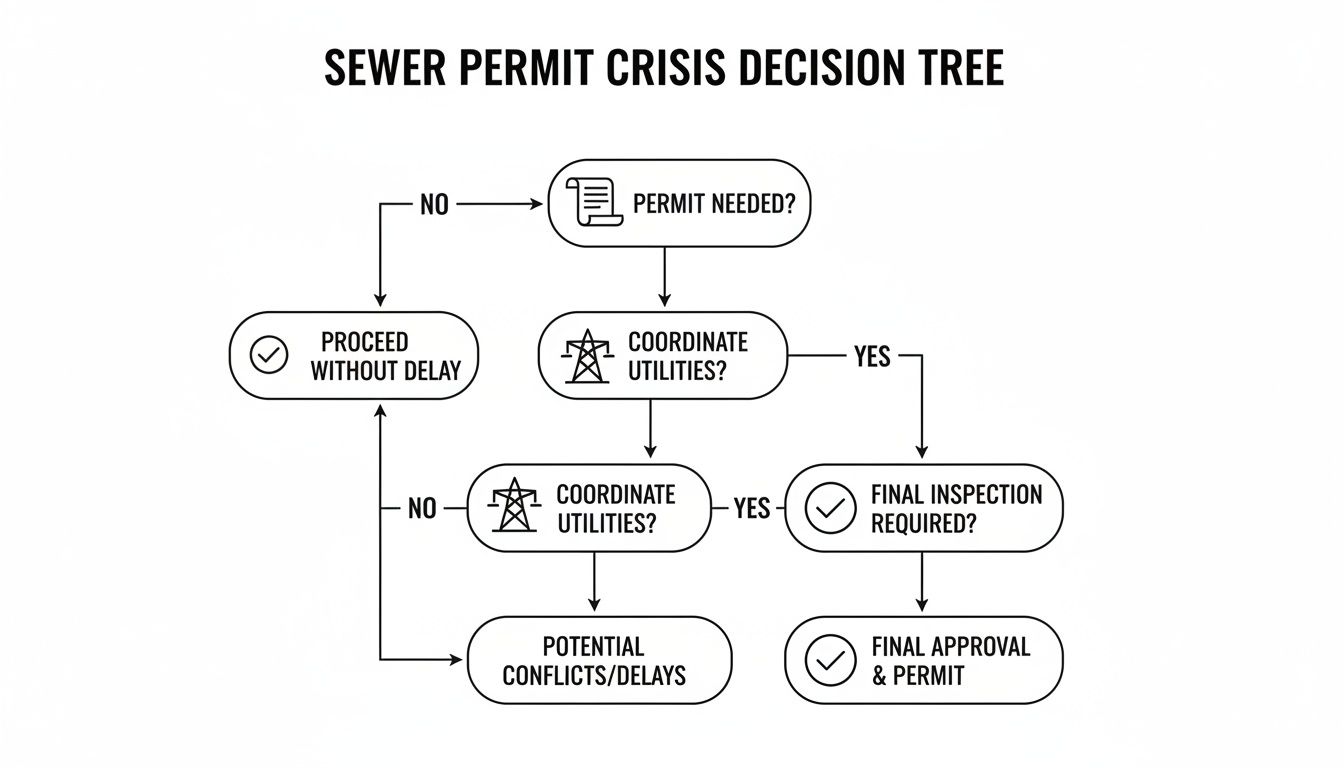
As you can see, getting the right permits and coordinating with other utilities is required. It ensures the repair is safe, legal, and up to code. A good contractor handles this entire process for you, preventing delays and fines.
A big part of that coordination is knowing where other underground lines are located before any digging begins. To understand why this is so important, read our guide on how to locate underground utilities.
If you're dealing with a sudden sewer backup, suspected line break, or recurring drainage issue, Coastal Pipeline offers rapid-response diagnostics and repair for residential, commercial, and municipal clients.
Common Questions in a Sewer Emergency
When you're dealing with a sewer emergency, you probably have a lot of questions. Getting clear answers is the first step to feeling in control. Here are a few of the most common concerns we hear from property owners during a crisis.
How Long Does an Emergency Trenchless Sewer Repair Take?
This is where trenchless technology is a big advantage. A traditional repair that involves digging up your yard can take days, or even a week. It causes a major disruption.
With trenchless methods, the repair is much faster. Techniques like pipe lining or pipe bursting are less disruptive, so many emergency sewer line repair jobs can be finished in a single day. This speed is a huge benefit when your home or business is on hold.
Will My Homeowners Insurance Cover This Repair?
This is a common question, and the answer is often complicated. A standard homeowners policy usually does not cover the sewer lateral—the pipe that runs from your house to the main city line.
Some homeowners have an extra coverage option, often called "service line coverage," which might help with the cost. The only way to know for sure is to read your policy or call your insurance agent right away.
The worst time to find out you're not covered is after the repair is done. Calling your agent is one of the first financial steps you should take in a sewer emergency.
Don't assume you are covered. Checking your policy early can save you from a big financial surprise later.
Can I Use Chemical Drain Cleaners for a Major Backup?
No, you should not. Chemical drain cleaners are not meant for this kind of problem. Those products are for small clogs in a sink or shower, not for a major blockage in your main sewer line.
Pouring chemicals down your drains during a major backup is not just useless; it's dangerous.
- If the pipe is broken, the chemicals will leak into the soil.
- They can damage older pipes, making the problem worse.
- They are a safety risk for the professional plumber who will work on the line.
When you are dealing with tree roots, a collapsed pipe, or a major blockage, you need a professional diagnosis and a mechanical solution, not a bottle of chemicals.
If you're dealing with a sudden sewer backup, suspected line break, or recurring drainage issue, Coastal Pipeline Inc. offers rapid-response diagnostics and repair for residential, commercial, and municipal clients. Contact us for certified emergency support backed by utility infrastructure expertise.