
So, what exactly is a PG&E certified electrical conduit installer? Think of them as a highly specialized expert who has the green light from PG&E to work on the critical power lines connecting your property to the main grid. This isn't just a basic license; it's PG&E's official stamp of approval, showing an installer has mastered their demanding standards for safety and technical skill.
The Authority Behind the Certification
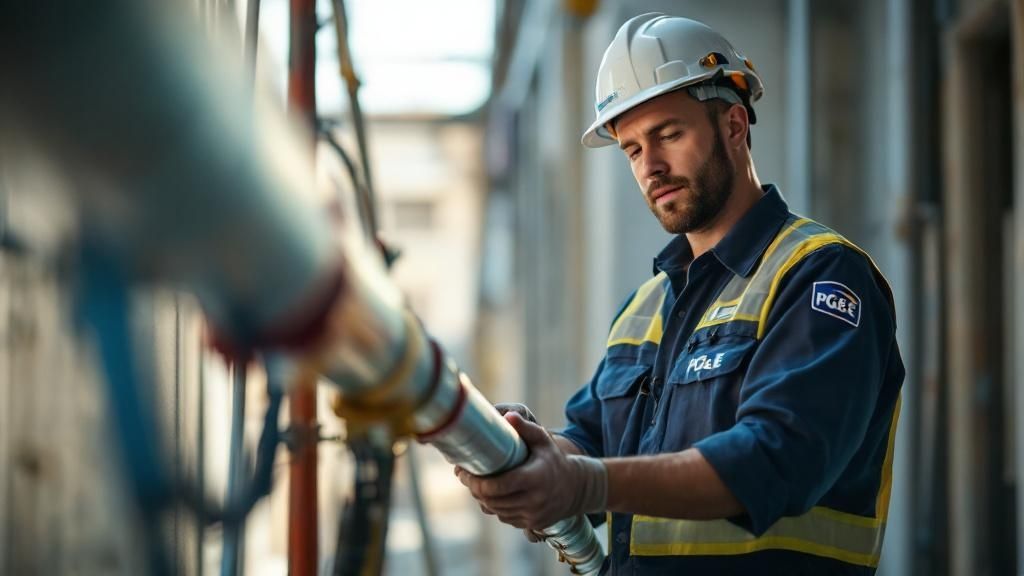
This certification is more than a piece of paper—it's a direct commission from the utility company itself. While a standard electrician is perfectly qualified to handle the wiring inside your home, a PG&E certified pro holds the key to the utility-side connection. It's a crucial distinction for any project that involves the power grid.
So, why the need for such a specific credential? It all comes down to the immense responsibility of managing public utility infrastructure. Pacific Gas and Electric Company (PG&E), established way back in 1905, is one of the nation's largest utility providers. Their work is overseen by the California Public Utilities Commission (CPUC), which enforces incredibly strict standards to keep the public safe. The certification ensures every installer follows these protocols to the letter, minimizing risks like electrical faults or fire hazards.
To get a better sense of how this all fits together, it's helpful to see a direct comparison.
Standard Electrician vs PG&E Certified Installer
| Attribute | Standard Licensed Electrician | PG&E Certified Electrical Conduit Installer |
|---|---|---|
| Primary Scope | Works "behind the meter" on wiring inside your property. | Authorized to work "in front of the meter" on utility-owned infrastructure. |
| Qualifications | C-10 license for general electrical work. | C-10 license PLUS PG&E-specific training and certification. |
| Oversight | Work is inspected by local building departments. | Work must pass rigorous PG&E inspections. |
| Key Tasks | Installs outlets, lighting, and circuit panels. | Installs main service lines and underground conduits connecting to the grid. |
The table makes it clear: while both are professionals, they operate in different domains with different levels of authority.
Key Roles of a Certified Installer
A certified pro is absolutely essential for certain high-stakes jobs that a general electrician simply isn't authorized to touch. Their expertise is required anytime you need to meet PG&E's strict rulebook for your project to get approved.
- Grid Connection: These are the experts who install the main electrical service lines that run from the utility pole or transformer right to your property's meter.
- Undergrounding Projects: They are the only professionals cleared to perform the precise trenching and conduit work for underground power lines. This is a vital service for new construction and critical for wildfire mitigation efforts. To dig deeper into this, check out our guide on what to look for in an underground electrical conduit installation contractor.
- Inspection Guarantee: Because they know the PG&E playbook inside and out, their work is done to the exact specifications needed to pass inspection the first time, saving you from expensive delays and rework.
The core difference is authority and specialization. A general electrician works on your side of the meter; a PG&E certified installer is trusted to work on the utility's side, ensuring the connection is safe, compliant, and reliable for everyone.
Ultimately, hiring a PG&E certified electrical conduit installer is about managing risk. It’s the smartest way to ensure your project meets the highest possible safety standards and gets the final sign-off from the utility company without any headaches.
Why This Certification Protects Your Home and Project
Hiring a PG&E certified electrical conduit installer is one of the smartest moves you can make for your project’s success and your family’s safety. Nobody wants to deal with the headache of finishing expensive trenching and conduit work, only to watch it fail a PG&E inspection. It’s a frustrating and surprisingly common scenario.
With an uncertified installer, a failed inspection means you’re digging everything back up, paying for the work all over again, and dealing with major delays. Even worse, shoddy installation creates very real fire and electrical fault risks that can put your home and community in danger. A certified pro makes sure that nightmare never happens.
Mitigating Risk Through Expertise
A PG&E certified electrical conduit installer isn’t just another contractor; they’re a specialist trained to follow the utility's strict standards to the letter. These rules aren't just red tape—they’re carefully designed to prevent specific dangers tied to high-voltage electrical infrastructure.
The real value of certification comes down to one thing: guaranteed compliance. It’s the assurance that every single part of the job, from the depth of the trench to the type of backfill used, is done right the first time to pass inspection and operate safely for years to come.
This level of expertise is non-negotiable for getting your project approved and ensuring its long-term security. The installer is your first line of defense, making sure the connection from the public grid to your property is absolutely flawless. Their work is a combination of precision and prevention, protecting against faults that could cause power outages or, in a worst-case scenario, ignition events. This commitment to safety is exactly why our team specializes in safe and efficient PG&E-approved trenching, which is the bedrock of any compliant installation.
A Critical Role in Community Safety
The importance of this certification goes far beyond your property line. Across California, certified installers are playing a key role in a massive public safety initiative. After catastrophic wildfires sparked by electrical equipment failures, PG&E launched an ambitious program to move thousands of miles of power lines underground.
This entire strategy depends on having certified professionals who know exactly how to transition the grid from overhead to underground systems correctly. Between 2023 and 2026 alone, PG&E aims to underground 1,230 miles of power lines in high fire-threat areas. It’s a huge undertaking expected to dramatically cut wildfire risks. You can read more about this large-scale safety effort and learn about PG&E's undergrounding case study.
When you choose a certified installer, you aren’t just protecting your own project. You're also doing your part to help build a safer, more resilient electrical grid for the entire community.
The Rigorous Path to PG&E Certification
Earning a PG&E certification isn’t a weekend course or a simple online test. It's a tough, demanding process designed to take an already licensed electrician and elevate them to a specialist level, one trusted to handle the high-stakes work of the public utility grid.
It all starts with a solid foundation. Before a contractor can even apply, they must be a licensed electrician with years of verifiable field experience. This ensures they have a deep, practical understanding of electrical principles long before they tackle PG&E’s specific protocols.
Mastering the PG&E Playbook
With that baseline experience confirmed, the real work begins. Candidates then have to enroll in and pass PG&E’s own specialized training programs. These aren't just refresher courses; they are intensive deep dives focused entirely on the utility's unique engineering standards, safety requirements, and construction specifications.
This goes far beyond a simple review of the National Electrical Code (NEC). In fact, PG&E’s standards are often more stringent than the NEC, built to address the unique environmental challenges and safety demands of its Northern and Central California service area. The training covers critical details that a general electrician would simply never encounter.
The heart of this certification process is mastering PG&E’s proprietary standards, often called the "Greenbook." This manual is the bible for this kind of work, dictating everything from the exact depth of a trench to the specific type of backfill material required to pass a PG&E inspection.
This infographic gives you a quick visual breakdown of the essential steps on the certification journey.
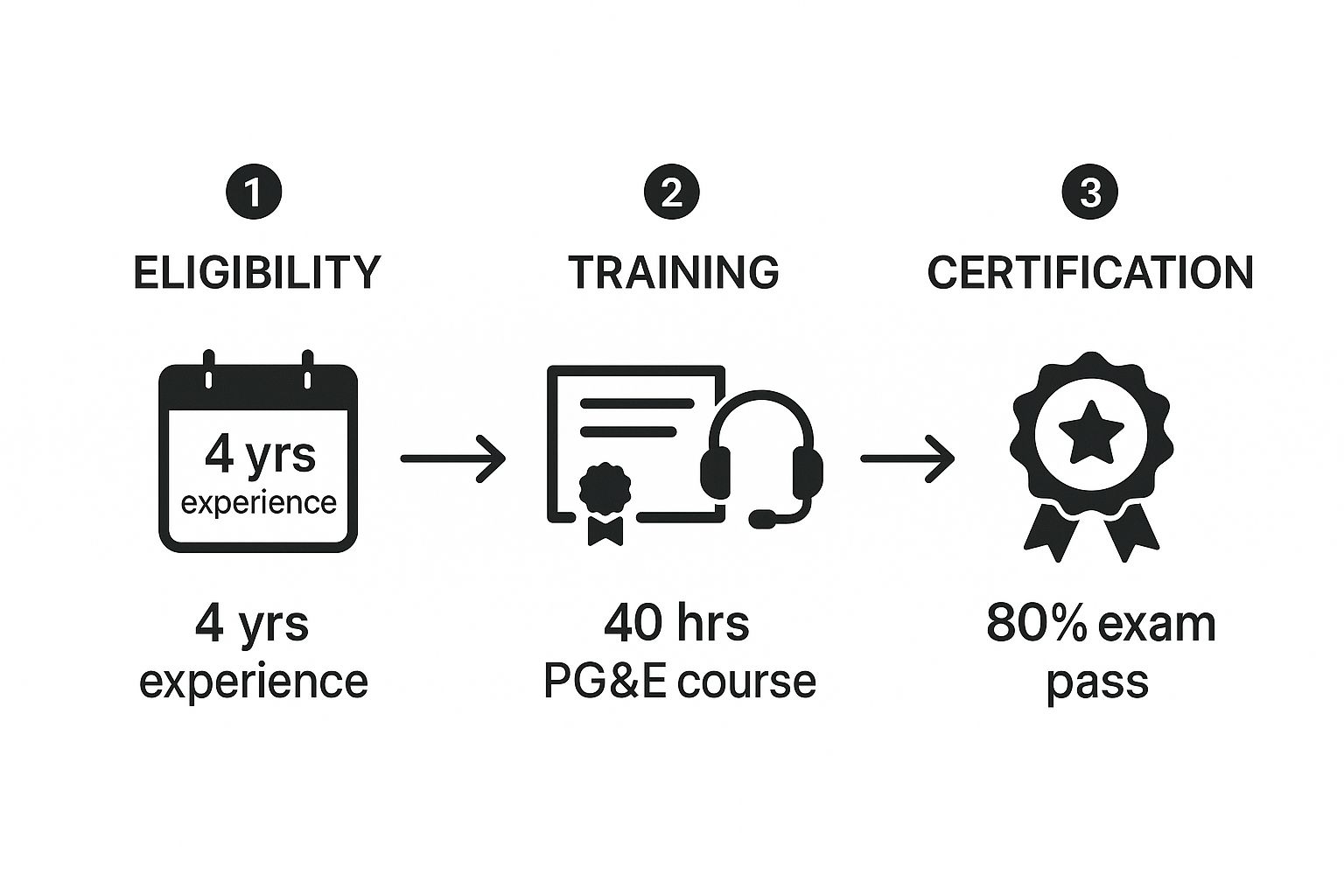
As you can see, becoming a PG&E certified electrical conduit installer is a structured, challenging path. It’s a deliberate process that blends years of hands-on experience with targeted, utility-specific education and rigorous testing.
Proving Proficiency Under Pressure
The final hurdle is a series of comprehensive exams. These tests are notoriously difficult, mixing written questions on complex engineering standards with practical, hands-on assessments. Under simulated real-world conditions, candidates have to prove they can execute critical tasks flawlessly. They might have to demonstrate the exact procedure for installing a service lateral or preparing a site for a new transformer pad, all while following every safety rule to the letter.
A passing score, which often requires 80% or higher, is an absolute must. There’s no room for error. This strict validation process ensures that anyone holding the certification hasn't just memorized the rulebook—they can apply it perfectly in the field, every single time.
This level of vetting is why it's so important for companies providing critical underground utility services in Monterey and Santa Cruz County to have certified teams. It’s the ultimate guarantee that they are qualified for the most demanding jobs. When you understand how intensive this process is, you can really appreciate the value a certified professional brings to your project. It's peace of mind that the job will be done right.
What a Certified Installer Actually Does
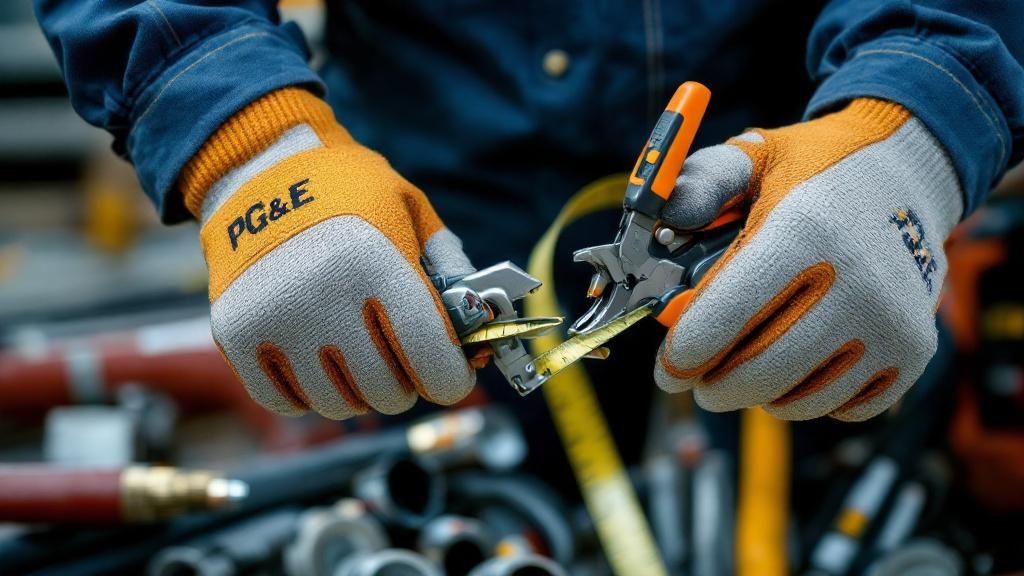
It’s one thing to know what the certification is, but seeing what a PG&E certified electrical conduit installer does on the ground really shows their value. Their work is a disciplined mix of precise engineering and strict safety management. This isn't just about general electrical knowledge; it's about the hands-on, practical work of building out the power grid.
These professionals are responsible for creating the critical link between your property and the public utility system. Their duties are incredibly specific and tied directly to PG&E’s operational rulebook.
Core On-the-Ground Responsibilities
The day-to-day work of a certified installer is much more specialized than a general electrician’s. They work in that crucial zone where private property meets public infrastructure—an area where there's zero room for error.
Here's a look at what they do:
- Precision Trenching: They dig trenches for underground service laterals to the exact depth, width, and slope PG&E requires. This isn’t just digging a ditch; it’s about creating a stable, secure home for your power supply.
- Conduit Installation: They carefully lay the main service conduits, which act as protective pipelines for the electrical wires. They must use PG&E-approved materials and ensure every single connection is perfectly sealed and aligned.
- Meticulous Backfilling: Once the conduit is in place, they backfill the trench with specific materials, compacting it in careful layers. This protects the conduit from shifting soil, moisture, and ground pressure.
- Transformer Pad Preparation: If a project needs a new transformer, they prepare the concrete pad site to meet precise dimensions and structural standards, making sure it can safely support the heavy equipment.
These tasks demand an expert's touch. For instance, a trench that's off by just a few inches in depth or that uses the wrong kind of sand for bedding will fail a PG&E inspection instantly. That means costly and frustrating delays while the work is redone.
The Linchpin of Grid Safety
Beyond the technical skills, a certified installer’s most important job is as a safety manager. Everything they do is designed to minimize risk to the public and ensure the new installation integrates safely and seamlessly with the existing power grid.
Their job is to act as PG&E’s trusted representative in the field, executing work with a level of care that prevents electrical faults, public hazards, and future system failures. They are the first and most critical line of defense in maintaining grid integrity at the local level.
This commitment to safety is a huge part of PG&E's effort to create a more resilient and secure power system. The utility's own safety metrics show a major focus on reducing risk, with programs that depend on correctly installed infrastructure. In fact, new approaches have helped PG&E cut equipment-caused ignitions by about 49% compared to previous years. The expertise of a certified installer is what makes sure these safety measures are implemented correctly from the start. You can read more about PG&E's safety performance metrics to see how this work directly contributes to protecting the entire community.
At the end of the day, the work of a PG&E certified electrical conduit installer is all about building a reliable connection. They turn complex engineering plans into a physical reality that safely powers homes and businesses, making sure every component meets the highest standards for a secure and dependable grid.
How to Find and Vet Your Certified Installer
Alright, you understand just how valuable a specialist is. Now for the practical part: how do you actually find and hire the right PG&E certified electrical conduit installer? This isn't just about grabbing the first name you find; it's about securing a genuine partner for your project.
Your first stop should always be the official sources. PG&E keeps an up-to-date list of qualified contractors who have met all their strict certification standards. Starting here is the smartest move because it immediately filters out anyone who isn't currently and validly certified. You can also ask local building departments or trusted general contractors who regularly handle projects that need utility coordination.
Verifying Certification and Credentials
Once you have a shortlist of names, it's time for the most important step: verification. Never, ever just take a contractor's word that they're certified. You have to confirm it yourself to protect your project from delays, compliance failures, and serious safety risks.
Ask every potential installer for their PG&E certification number and the exact name it's registered under. With that information, you can check directly with PG&E to make sure the certification is active and in good standing. This simple check is your ultimate safety net.
Any legitimate, certified installer will be more than happy to give you their credentials to verify. If you get any pushback or hesitation, consider it a massive red flag and move on to the next name on your list.
Key Questions to Ask Your Potential Installer
A price quote doesn't tell you the whole story. To really understand if an installer has the right experience for your job, you need to ask some direct questions. This is how you find out about their real-world experience, their process, and how well they know the local landscape.
Here are a few essential questions you should be asking:
-
Can you show me some projects you've done that are similar to mine? Ask for specific examples, like new service hookups or panel upgrades they’ve completed nearby. This proves they have relevant, hands-on experience.
-
What’s your process for working with PG&E? A real pro will have a clear, established system for submitting plans, getting inspections scheduled, and keeping the lines of communication open with the utility reps.
-
How familiar are you with the local permitting rules? Knowing the ins and outs of city or county permits is a huge deal. A top-tier installer will understand the specific submission process and inspection requirements for your area. This is an absolutely critical skill for any utility trenching contractor in Monterey County, where local regulations can be very different from one town to the next.
-
How do you deal with unexpected problems on-site? Things happen. You might hit rock-solid soil or find surprise underground lines. An experienced contractor will already have a plan for tackling these challenges without cutting corners on safety or compliance.
When you go beyond the price tag and dig into these crucial details, you can confidently choose a qualified and dependable PG&E certified electrical conduit installer who will get the job done right the first time.
Projects That Demand a Certified Installer
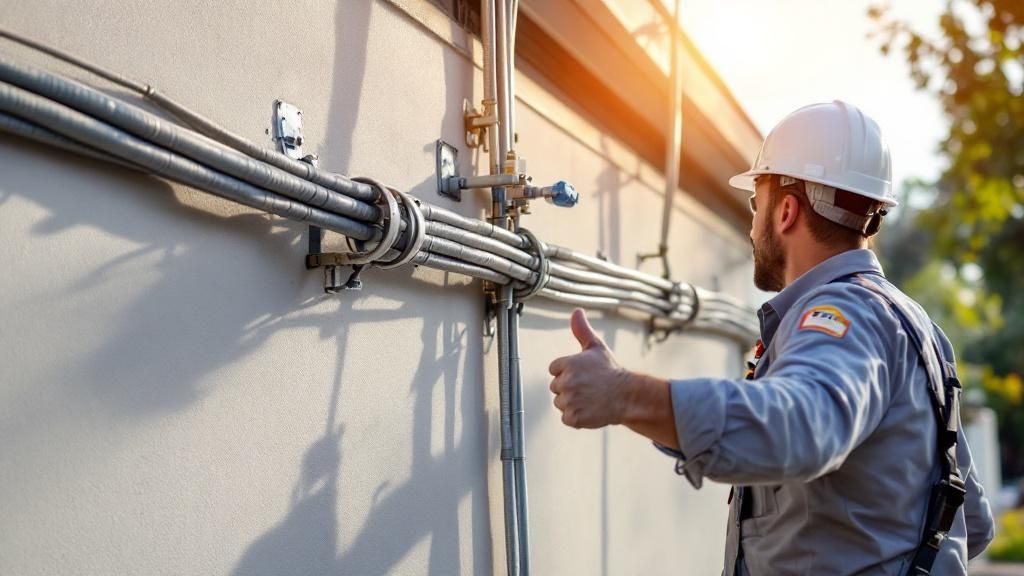
So, how do you know if your project really calls for this level of expertise? It's a great question. Certain jobs are simply non-negotiable—they require a PG&E certified electrical conduit installer for both safety and legal compliance.
Think of it like this: a general electrician is your go-to expert for everything after the electrical meter. But any work happening before the meter, where the power connects from the public grid to your property, falls exclusively into the hands of a certified installer.
This distinction is crucial. Trying to use a general electrician for that pre-meter work is a recipe for failed inspections, frustrating project delays, and expensive rework. It’s a headache you can easily avoid by hiring the right professional from the start.
When Certification is Mandatory
If your project involves any of the scenarios below, you absolutely must hire a PG&E certified professional. There’s no way around it if you want your project approved, connected, and most importantly, safe.
- New Home Construction: Running the initial service line from the utility pole or underground transformer to a new house.
- Main Service Panel Upgrades: Any upgrade that involves modifying the primary service conductors connecting to the meter itself.
- Grid-Tied Solar Systems: Making that final, critical connection between your new solar installation and the PG&E grid.
- Undergrounding Power Lines: Moving overhead service drops below ground, a task requiring precise trenching, conduit work, and adherence to strict utility codes.
The rule of thumb is simple: If PG&E has to physically inspect and sign off on the work before flipping the switch, you need a certified installer. Their specialized knowledge is the only way to guarantee your project meets PG&E's demanding "Greenbook" standards.
To help clarify, here’s a quick guide on which projects require a specialist versus a general electrician.
Project Type and Required Electrician
| Project Description | Requires PG&E Certified Installer? | Reason |
|---|---|---|
| Installing new outlets or light fixtures | No | This work is "downstream" from the meter and handled by a standard licensed electrician. |
| Upgrading your main service panel | Yes | This modifies the direct connection to the PG&E meter, requiring certified expertise. |
| Repairing a faulty circuit breaker | No | This is part of your home's internal electrical system, not the utility connection. |
| Connecting a new home to the grid | Yes | This is the primary connection to the utility service and is a core task for a certified installer. |
| Installing an EV charger | It depends | If it requires a main panel upgrade, then yes. If not, a general electrician can often handle it. |
| Moving power lines underground | Yes | This involves direct work on the service line from the grid and must meet PG&E standards. |
This specialization is what protects your project's connection to the utility grid. For anyone planning this type of job, getting familiar with professional underground electrical conduit services in Monterey and Santa Cruz County can give you a major head start. Hiring the right expert from day one is the best way to protect your budget, your timeline, and your property.
Your Questions Answered
When you're dealing with a project that involves a PG&E certified electrical conduit installer, you're bound to have questions. It’s a specialized field, after all. Getting straight answers is the best way to move your project forward with confidence and keep it on schedule and on budget.
Is a Certified Installer More Expensive?
It’s true that a certified pro might have a slightly higher hourly rate, but thinking about it that way misses the bigger picture. Hiring a certified installer is almost always the more cost-effective choice in the long run.
They get the job done right the first time, helping you avoid costly mistakes, failed inspections, and the kind of project-killing delays that non-certified contractors can cause on utility-side work. That expertise doesn't just save you money—it saves you from massive headaches.
How Long Does PG&E Approval Take?
The timeline can definitely vary, but this is where a certified installer's experience really shines. They know the PG&E playbook inside and out—what documentation is needed, who to talk to, and how to coordinate everything to streamline the inspection and approval process.
A seasoned pro can give you a realistic timeline based on what they’re seeing with current workloads and the relationships they've already built with local utility inspectors.
Can I do the trenching myself to save money?
Honestly, this is one of those areas where trying to DIY can backfire spectacularly. PG&E has incredibly specific requirements for everything from trench depth and conduit type to the exact materials used for backfill. Even a small misstep will get you a failed inspection, which means you'll be digging it all up and starting from scratch. A PG&E certified electrical conduit installer guarantees the work is done to code and will pass the first time.
For guaranteed compliance and a project that’s done right from the start, you need to bring in the experts. Coastal Pipeline Inc. specializes in the underground utility work that keeps your project moving forward and ensures a safe, reliable connection. Visit us at https://coastalpipelineinc.com to see how we can help.