
The best way to fix cracks in your Monterey-area asphalt driveway is with a professional repair using the right materials. This method is the only one that holds up to our coastal weather, like temperature swings and moisture. It creates a flexible, watertight bond that stops more damage. This lasts much longer than any DIY filler from a hardware store.
Investing in a professional repair designed for our local conditions is the smartest and most effective long-term choice for your property.
Why Asphalt Driveway Cracks Happen in Monterey
Those cracks in your asphalt driveway are not just ugly; they tell a story about what our unique coastal environment does to pavement. If you understand the cause, you can find a real, lasting repair that protects your home’s value and safety.
Monterey’s weather plays a big part. Cool, foggy mornings turn into warmer, sunny afternoons. This daily cycle makes your asphalt expand and shrink. This constant stress is the main reason small cracks start to appear. Over time, they get bigger and invite our next problem: moisture.
Moisture and Shifting Coastal Soils
Moisture is asphalt’s worst enemy, especially with our damp coastal air and winter rains. When water gets into cracks, it seeps down to the sub-base—the layer of soil and gravel your driveway is built on. The sandy and loamy soils along the Central Coast are known for shifting and becoming unstable when they get wet.
This leads to common problems for homeowners:
- A Weakened Foundation: Water can wash away parts of the sub-base, creating empty pockets. The asphalt on top, now without support, can sink and crack under the weight of a car.
- Spreading Damage: Once the foundation is weak, even daily traffic can turn a small crack into a web of “alligator” cracks or a pothole.
- Poor Drainage: If your property doesn’t have a good way to drain rainwater, the water will sit on the pavement and attack weak spots. Proper drainage is very important, which is why a pro might talk to you about a storm water drainage system design to protect your investment.
Key Takeaway: In Monterey, a crack is often a sign of a deeper issue caused by our mix of temperature changes, moisture, and shifting coastal soil.
This is why generic crack fillers from the store often fail within a year. They are a temporary patch but can’t handle the asphalt’s movement or fix the real problem underneath. A professional repair starts by figuring out what’s really happening with your specific driveway and our local conditions.
Quick Guide to Fixing Common Driveway Cracks
Not sure what you’re looking at? This table can help you identify the most common driveway problems we see around Monterey and what it really takes to fix them for good.
| Problem | What It Looks Like | The Best Way to Fix It |
|---|---|---|
| Hairline Cracks | Tiny, spiderweb-like cracks less than 1/8 inch wide. | Professional-grade sealcoating is often enough to fill these and protect the surface from water. |
| Linear Cracks | Straight or wavy cracks running the length or width of the driveway, 1/4 to 1 inch wide. | Hot-pour rubberized crack sealing is the ideal solution. It fills the void and flexes with the pavement. |
| Alligator Cracking | An interconnected pattern of cracks that looks like a reptile’s skin. A sign of base failure. | This requires a more serious repair. The damaged section needs to be cut out, the sub-base rebuilt, and a new asphalt patch installed. |
| Potholes | Bowl-shaped holes of varying sizes where the asphalt has completely broken away. | A “remove and replace” patch is the only permanent fix. The hole is cleaned, filled with hot-mix asphalt, and compacted. |
Spotting the issue early and getting the right professional fix is the key to avoiding a much bigger, more expensive problem down the road.
Types of Asphalt Cracks and What They Mean
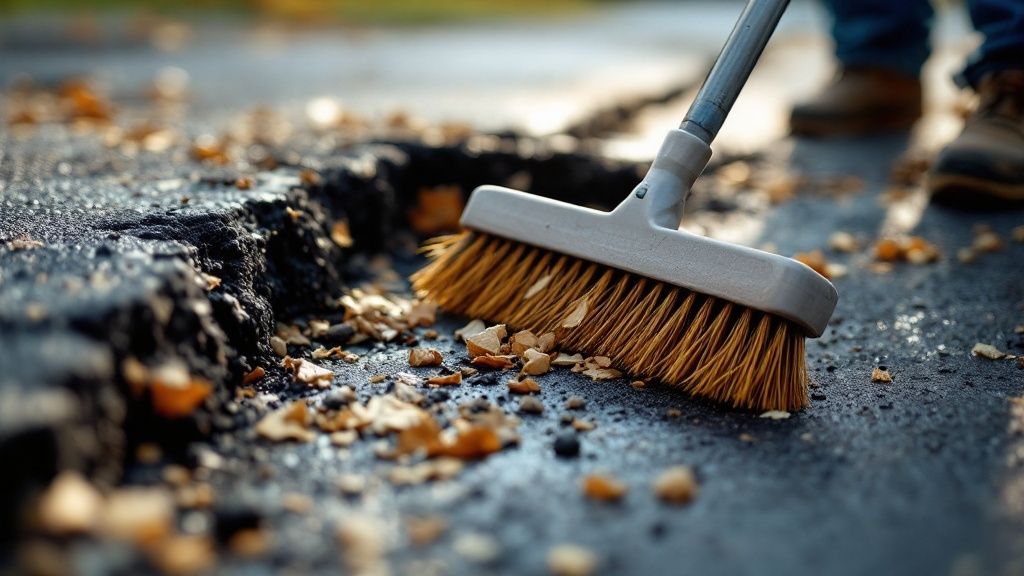
Before you can fix a crack, you have to know what kind it is. Different cracks point to different problems happening under the surface. Learning to read these clues is the key to a fix that lasts.
The easiest to spot are surface-level cracks, also known as hairline cracks. They are thin and not very deep. They are usually the first sign that the sun and weather are starting to wear down the asphalt. While not an emergency, they are an open door for moisture.
When Cracks Signal Deeper Problems
When the damage gets worse, you will see clear patterns. Each type of damage points to a different cause and needs a different solution.
Here are the main types of cracks you might see:
- Alligator Cracking: This is a serious problem. If your driveway has a pattern of cracks that looks like an alligator’s skin, it’s a sign that the foundation under your driveway has failed. The asphalt has no support.
- Edge Cracks: These are long cracks that run along the edge of your driveway, usually within a foot or two of the grass. They happen when the sides of the driveway lack support, often because poor drainage has made the soil soft.
- Linear Cracks: These are long, single cracks that run down the length of your driveway or across it. They are usually caused by the pavement expanding and shrinking with temperature changes.
When a professional team like Coastal Pipeline Inc. comes out, we’re not just looking at the crack itself. We’re finding out why it happened. Is it a sub-base issue? Poor drainage? That’s how we recommend a repair that solves the real problem.
Matching the Repair to the Crack
Once you know the type of crack, you can find the right solution. For example, a hot rubber crack filler is a great way to seal linear cracks and keep water out.
But using that same filler on alligator cracking is a waste of money. It is a temporary patch that will fail quickly. For that kind of damage, the only real fix is to cut out the failed section, rebuild the sub-base, and lay a new asphalt patch. It’s a bigger job, but it’s the only way to make the driveway strong again.
To get a better handle on this, you can learn more about the different https://coastalpipelineinc.com/cracks-in-asphalt-driveway/.
Knowing what you’re up against saves you from wasting time and money on a fix that doesn’t match the problem.
Professional Asphalt Crack Repair vs. Temporary Fixes
It is tempting to grab a bucket of crack filler from the hardware store for a quick weekend repair. The idea of a fast, cheap fix is strong. But those DIY products are not a good match for Monterey’s coastal climate.
These store-bought fillers are a temporary bandage. They are cold-patch fillers that harden and become brittle. When our local temperatures change, your asphalt expands and contracts. A rigid DIY patch can’t flex with it. Before you know it, the patch cracks and pulls away, letting moisture back in to do more damage.
Why Professional Materials Make All the Difference
The best way to fix asphalt driveway cracks in Monterey is to use professional-grade materials. A professional team like Coastal Pipeline Inc. uses a hot-pour rubberized sealant.
This material is the industry standard for a reason. We heat it to around 400°F and pour it into the crack. It forms a powerful bond with the asphalt. The best part is that it stays flexible after it cools.
- It Expands and Contracts: The rubber formula moves with your driveway during temperature changes, keeping the seal watertight all year.
- It Creates a Deeper Bond: The extreme heat helps the sealant get deep into the crack, creating a much stronger hold than a cold filler.
- It Lasts for Years: Unlike a DIY patch that might not last one winter, a professional hot-pour seal can protect your driveway for years.
Choosing a professional is a long-term strategy to protect your investment. You’re using infrastructure-grade repairs to stop small cracks from becoming expensive problems.
The Critical Role of Prep Work and Equipment
A lasting repair is about more than just the sealant. Proper preparation is essential. Before we apply sealant, we use powerful equipment to clean out every bit of dirt, dust, and weeds from the crack. For wider cracks, we may use a special tool to create clean edges for a better bond. You can’t get that level of clean with a garden hose.
Hiring pros means you get access to their commercial equipment. It’s worth knowing that they often rely on specialized construction equipment financing to get these machines. At Coastal Pipeline Inc., we bring that same commercial-grade approach to every Monterey driveway we work on.
How Coastal Pipeline Inc. Restores Driveway Integrity
Fixing a crack correctly is about more than just filling a hole. At Coastal Pipeline Inc., we treat every residential driveway with the same care as a major road. It’s the only way to get a repair that truly holds up. Our methodical approach starts with understanding the problem and creating a custom plan for your property.
From Diagnosis to Durable Repair
Our process begins with a careful assessment. We don’t just look at the crack; we figure out why it’s there. Is the soil shifting? Is water pooling? Answering these questions is key because a quick patch won’t fix a deeper problem. We create custom repair plans because every driveway is different.
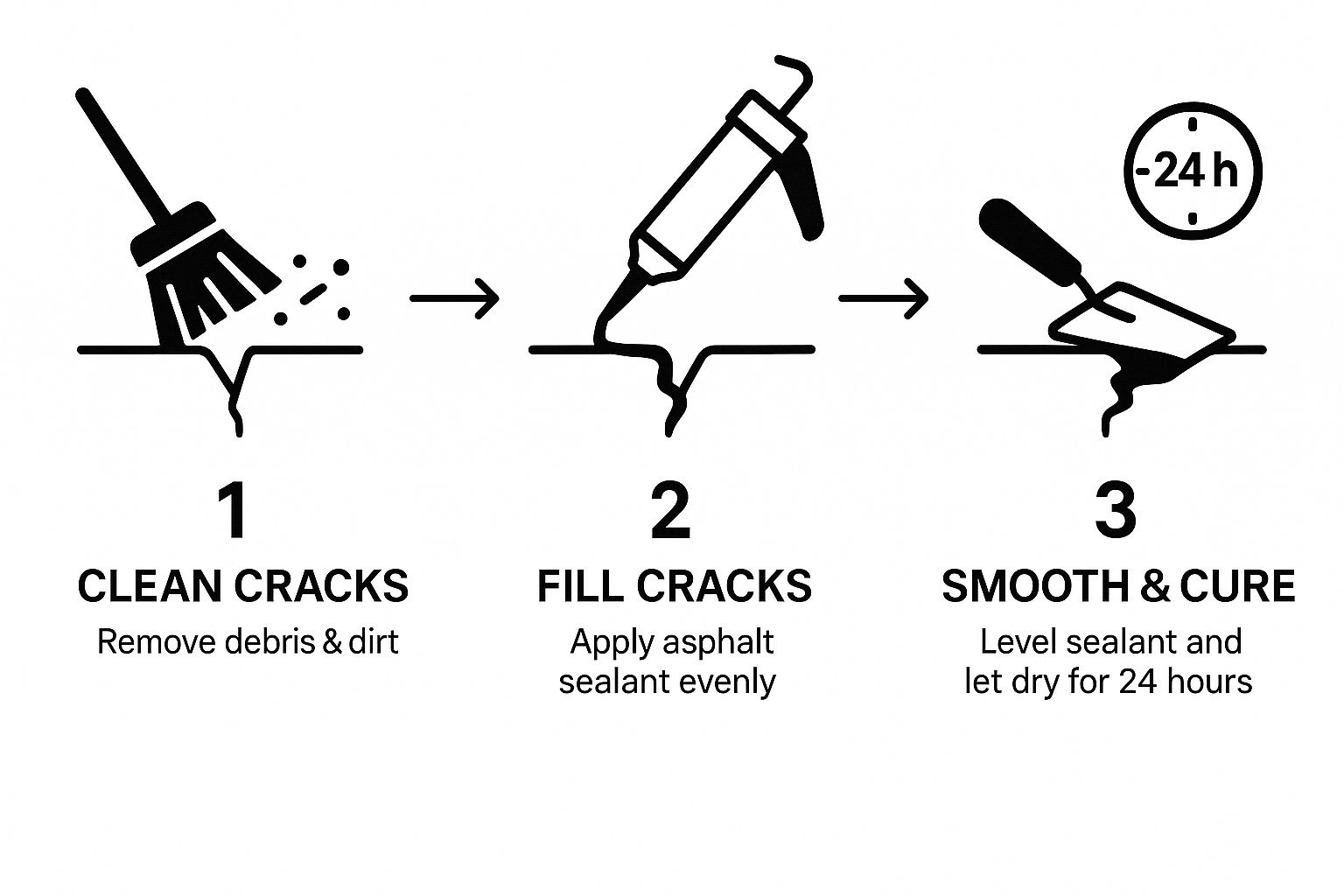
Once we have a plan, we follow a proven path to restore your driveway:
- Surface Preparation: First, we deep-clean the crack. Using high-powered tools, we blast out all dirt, debris, and weeds. The surface must be perfectly clean for the sealant to stick.
- Hot Rubber Crack Filling: We use a commercial-grade, hot-pour rubberized filler. We heat it to the right temperature and pour it deep into the crack. This creates a flexible seal that can handle Monterey’s temperature swings without failing.
- Future Recommendations: After the repair, we provide tips for long-term care. A little maintenance can prevent small issues from turning into big, expensive ones.
Why a Custom Plan Matters
No two driveways are the same, especially around Monterey Bay. Your property might have unique drainage issues or heavy traffic. A one-size-fits-all solution is a recipe for failure.
A Pro’s Perspective: A custom plan is what separates a temporary fix from a long-term solution. By looking at the sub-base, drainage, and wear patterns, we make sure we’re fixing the actual cause of the problem.
This approach is what makes a professional job worth it. Whether you’re dealing with a few hairline cracks or a bigger issue, knowing when to address small cracks and potholes versus when to repave is crucial. Our goal is to restore your driveway’s strength and give you peace of mind. As a trusted company serving Monterey & the Central Coast, we help homeowners, HOAs, and developers with professional-grade asphalt maintenance.
Extend Your Driveway’s Life with Smart Maintenance
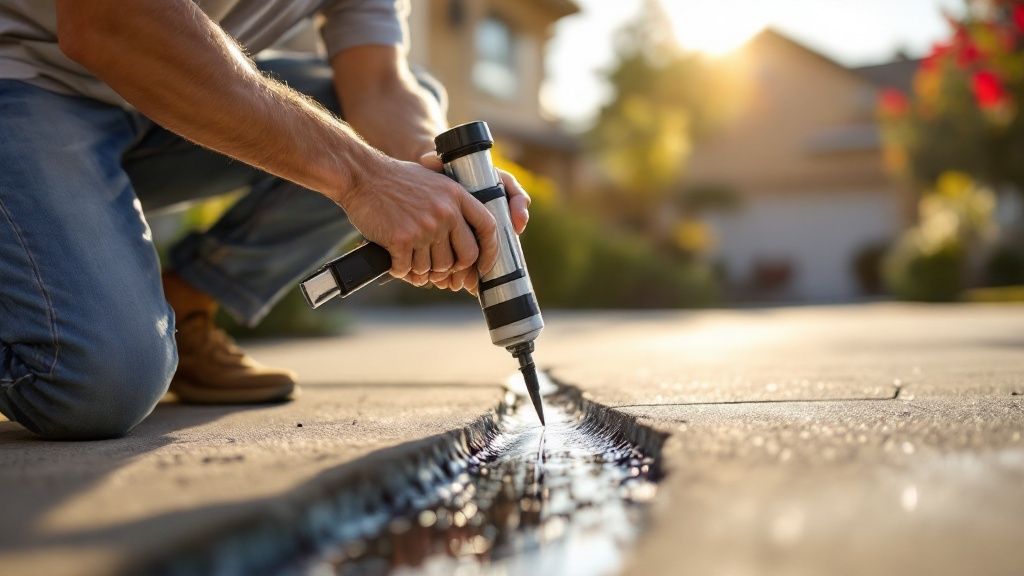
Fixing today’s cracks is a great start, but it’s only half the battle. To keep your driveway in good shape, you need to be proactive. Smart, preventive maintenance options help you stop dealing with the same cracks every few years. The best way to fix cracks is to stop them from forming in the first place.
The Power of a Protective Shield
Living on the coast means our driveways are always fighting the sun and moisture. This combination breaks down the binders in the asphalt, making it brittle and weak.
A professional sealcoat is the best defense. This thin, protective layer acts like sunscreen and a raincoat for your pavement.
- Blocks UV Damage: Sealcoating shields the asphalt from the sun, preventing it from drying out.
- Keeps Water Out: It seals tiny surface pores, stopping water from seeping into the sub-base and causing damage from below.
- Improves Appearance: A fresh sealcoat gives your driveway a clean, black, brand-new look, which boosts your home’s curb appeal.
A professional sealcoat every two to three years is one of the smartest, most cost-effective investments for your property. It locks in the strength of your repairs and keeps the entire surface strong.
Creating a Long-Term Maintenance Plan
A solid maintenance strategy is more than a one-time service. It’s a plan to protect your property’s value and safety. Just like regular property maintenance is key for any real estate investment, your driveway needs the same attention.
At Coastal Pipeline Inc., we don’t just fix cracks and leave. We help you build a strategy for long-term driveway health. After a repair, we can create a maintenance schedule that makes sense for your property. This usually includes regular check-ups and professional sealcoating to keep your investment protected.
Got Questions About Monterey Driveway Repair? We’ve Got Answers.
If you’re a homeowner in the Monterey area, you’ve probably wondered about the best way to deal with cracks in your asphalt. Here are some simple answers to the questions we hear most often.
How Often Should I Be Filling Cracks in My Driveway?
Here on the coast, it’s a good idea to check your driveway every year, especially after the rainy season. That’s when new problems often appear.
As a general rule, you should plan on having cracks professionally filled every 2-3 years. The key is to fix them as soon as you see them. Sealing them early stops moisture from getting into the foundation, which prevents bigger, more expensive repairs.
Is This a Job for Crack Filling, or Do I Need to Resurface the Whole Thing?
That’s a great question. The answer depends on the type of cracking you have.
- Crack filling is perfect for long, individual cracks running across your driveway. It’s a targeted fix for specific weak spots.
- Resurfacing (or an asphalt overlay) is the right choice when you see extensive “alligator cracking”—the web of connected cracks. This is a clear sign that the driveway’s foundation is weak.
A Pro’s Analogy: We think of crack filling like putting a stitch in a cut. It’s precise and solves a local problem. Resurfacing is more like a skin graft for a larger wound. It’s for when the whole area has failed and needs to be structurally restored.
Can’t I Just Grab Some Filler at the Hardware Store?
You can, but we don’t recommend it. Those DIY products are almost always cold-pour fillers, and they don’t hold up to Monterey’s temperature changes. They get brittle and often crack or pull away within a single season.
Once that happens, water gets back into the crack, and you’re back where you started. Professional hot-pour rubberized sealants are made to stay flexible, allowing them to expand and contract with the asphalt. That’s what creates a durable, watertight bond.
What’s So Different About the Professional-Grade Stuff?
The difference is huge. We use infrastructure-grade, hot-applied rubberized fillers. This is the same type of material used on highways and public roads.
Why does that matter? Because these materials are designed for maximum flexibility and sticking power. They create a strong bond that stands up to traffic and our coastal weather in a way that no store-bought cold patch can. For a long-term fix that protects your property value, commercial-grade materials are the only way to go.
Ready to get those cracks fixed the right way? The team at Coastal Pipeline Inc. uses the best materials and a proven process to restore your asphalt’s integrity and protect your investment. Let’s talk about a real solution for your driveway.