
Putting in a new water meter is more than just a plumbing job. It's a process with a specific set of rules to make sure everything is safe, correct, and follows the local code. These water meter installation requirements are set by local utility companies for a few good reasons. They make sure you're billed correctly, help prevent leaks, and, most importantly, protect the public water supply.
Think of it like getting a new electrical panel installed. You wouldn't just guess how to do it, right? You need the right parts, the proper space, and an expert who knows exactly how to connect it safely.
Why Are There So Many Rules for Installing a Water Meter?
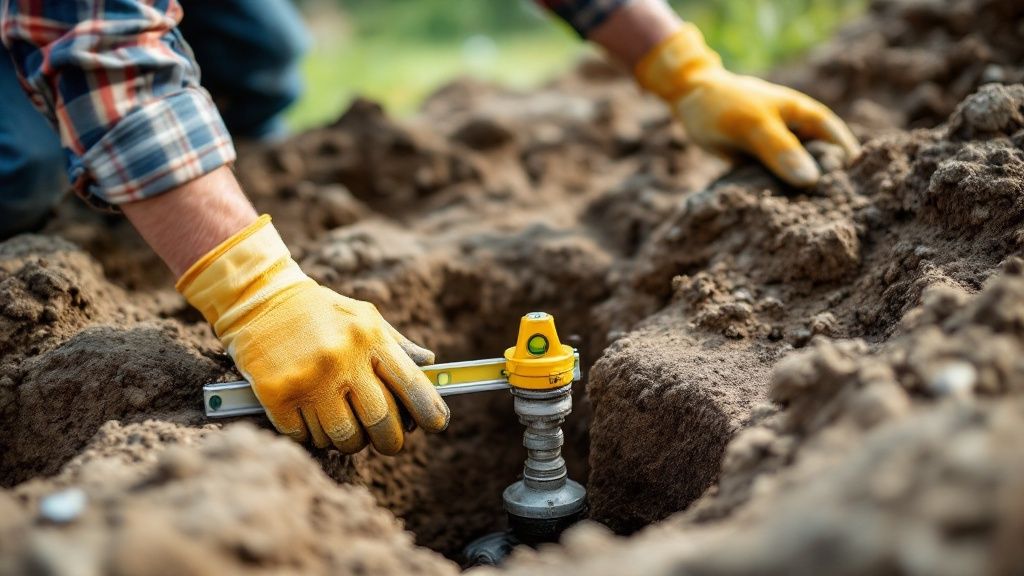
From the outside, installing a water meter might look simple. But that small device is the key link between your home or business and the city's water system. The rules aren't there to make things difficult. They're in place to make sure every installation is safe, accurate, and done the same way.
Imagine the public water supply as one giant, connected network. Every single connection point has to be perfect to keep the whole system clean and working well. When your installation follows the local codes, you’re helping protect that shared resource for yourself and your neighbors.
The Real Reason for Installation Rules
So, what’s the big deal with these requirements? Following the rules from your local water authority helps in a few important ways. Think of them as the building plan for a good water system, from the main pipe under the street all the way to your faucet.
Here’s a breakdown of why these rules matter so much:
- Fair and Correct Billing: A properly installed meter measures every gallon you use, no more and no less. This means you won't be overcharged, and the utility company gets paid the right amount for the water you use.
- Preventing Leaks: The requirements list the exact fittings and connections to use. This greatly lowers the risk of leaks that can cause water damage, waste water, and lead to huge bills.
- Making Sure It's Safe and Easy to Reach: Rules about where the meter goes and how much space is needed around it are all about access. They let workers read the meter, do repairs, or shut it off in an emergency without having to climb over things.
- Protecting Public Health: This is probably the most important reason. Proper installations often need backflow prevention devices. These are key for stopping dirty water from your property from flowing back into the clean public supply. You can learn more about this by reading about backflow prevention in Monterey and Santa Cruz County.
In the end, these rules create a standard, predictable process. When every installer follows the same instructions, there are fewer mistakes, faster inspections, and better water service for the whole neighborhood.
Getting Your Property Ready for the Meter
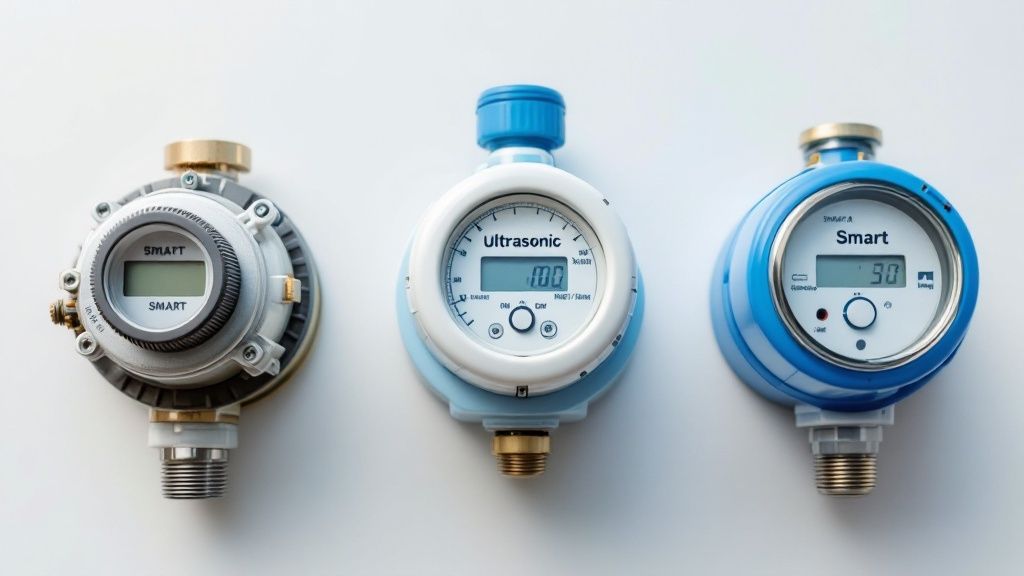
Before any work begins, your property needs to be set up for its new water meter. A little prep work ahead of time makes a big difference. It helps the installation go quickly and smoothly and avoids annoying delays later.
Think of it like making room for a new fridge. You wouldn't just push it into a corner. You'd measure the space, check for an outlet, and make sure there's enough room to open the doors. A water meter is the same—it needs a specific spot with enough access, all set by your local utility.
The first step is always to find the approved location. This spot is usually chosen based on where the main water line enters your property. You'll often find meters in basements, crawl spaces, or inside a special underground box near the street. Your local water department will tell you exactly where it needs to go.
Creating the Right Amount of Space
One of the most important water meter installation requirements is having enough clear space. This isn't just a suggestion; it's a strict rule. It makes sure that workers can easily read, service, or replace the meter for years to come. You wouldn't ask a mechanic to fix an engine with the hood only open a few inches, would you? It’s the same idea.
To prevent that problem, you need to have a clear, open area around the meter. The exact size can change depending on your city, but a good rule is to leave at least one foot of clear space on all sides of the meter and three feet of working room in front of it.
This means keeping the area free of common blockages:
- Storage boxes, junk, or shelves
- Drywall, paneling, or any other cover that hides the meter
- Large appliances like a water heater or furnace that block the way
Having enough space isn't just for the utility's benefit. In an emergency, like a big leak, getting to the shut-off valves near the meter quickly can save your home from a lot of water damage.
Protecting Your Meter from Damage
Once it's installed, the meter needs to be protected from two main things: physical damage and freezing cold. For indoor meters, this is as simple as keeping the area clear so it doesn’t get bumped by moving furniture or other items.
For meters in outdoor pits, make sure the lid is on tight and level with the ground. This will stop it from being damaged by lawnmowers or cars. If you live where it gets cold in the winter, you must insulate the pipes and the meter box. A frozen, burst pipe is an expensive problem that you can easily avoid with some simple pipe wrap or an insulated cover. In some areas, the only solution is to install the meter deeper in the ground. This is a job where professional residential excavation services in Monterey County are needed.
This push for better water systems is happening everywhere. The worldwide water meter market is now worth over $26 billion. This is because of stricter rules and a global move toward smart meters to save water. It shows why meeting local installation rules is so important—it connects you to a modern, efficient system. You can see more data about the global water meter market growth on cognitivemarketresearch.com.
How to Handle Permits and Local Codes
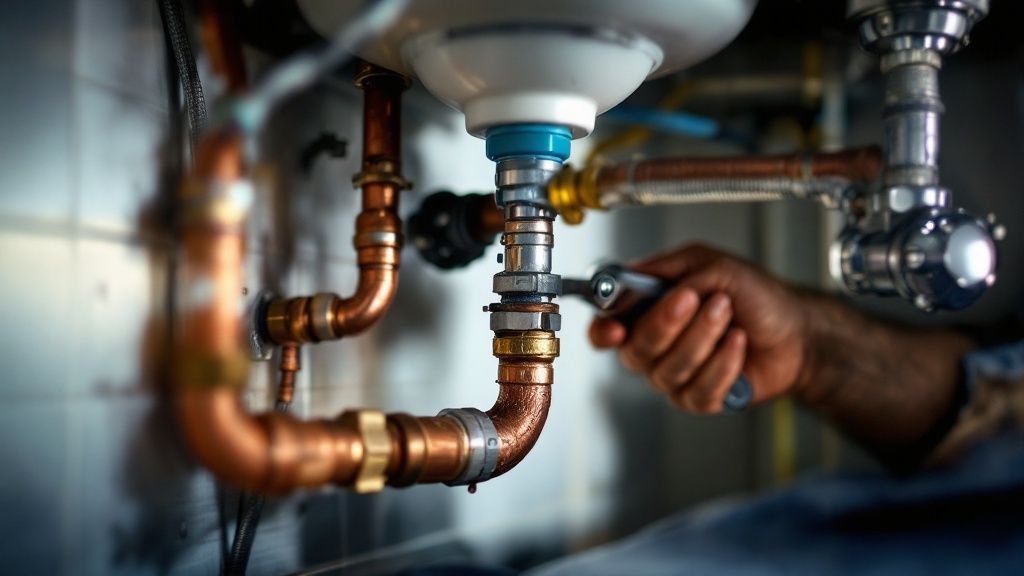
Let's be honest—dealing with permits and local codes can seem like the hardest part of installing a water meter. It's easy to get lost in the paperwork. But think of a permit as a quality check from your city or utility company. It’s their way of making sure the job is done right by a professional who knows all the rules.
This process ensures your new connection is safe, dependable, and won’t cause problems for you or the public water supply later. The first step is usually simple: just visit your local building department’s website or give them a call. They'll have all the forms and a clear list of what you need to get started.
Understanding Plumbing Codes and Why They Matter
Plumbing codes are like the instruction manual for your installation. They are a set of rules that cover everything from the type of pipes you can use to the exact way connections must be made. These codes aren't just suggestions; they are laws made to protect public health and keep the whole system working right.
For example, the code will list the exact materials allowed for water lines to prevent any chance of the water getting dirty. It also sets the rules for important safety devices like backflow preventers. Following these rules is a required part of meeting the water meter installation requirements in your city.
A building permit isn’t just a piece of paper. It’s a record that your project was built to code and meets all safety standards. This official approval is important for your home's value and for making sure everything is correct if you ever decide to sell.
Understanding local rules is very important. For example, a project in Dubai would require knowing the Dubai Building Codes well to avoid costly mistakes and delays. This just shows how much location matters.
Steps to Get Your Permit
While the exact steps can be a little different from town to town, the permit process is usually the same. A licensed plumber will almost always handle this for you, but knowing the process helps you understand what's happening and keep your project on track.
Here’s a general look at what to expect:
- Application Submission: Your plumber will fill out the permit application. It will include details about the job and a drawing of the planned plumbing work.
- Plan Review: The local building department then reviews the application. They make sure it follows all plumbing codes and local rules.
- Permit Is Issued: Once everything is approved, the permit is issued. This is your official green light to start the installation.
- Scheduled Inspections: After the work is done, an inspector will come to the site. Their job is to check that the installation matches the approved plans and meets every code rule.
Working with a contractor who is an expert in https://coastalpipelineinc.com/utility-systems-construction/ gives you a big advantage. They've been through this process many times, know the local codes by heart, and have good relationships with the inspectors. This helps everything go smoothly and avoids annoying delays.
Choosing The Right Meter And Parts
Picking the right water meter is not a one-size-fits-all choice. It’s a key step in meeting your property's water meter installation requirements. Your choice usually comes down to two options: the classic mechanical meter or a modern smart meter. Knowing the good and bad of each is important for making a smart decision.
Think of it this way: a mechanical meter is like an old car's odometer. It clicks forward to tell you the total amount of water you've used. A smart meter, on the other hand, is more like a modern car's dashboard computer. It gives you real-time information, trip details, and fuel reports. It can find leaks and show you exactly when and how you're using water.
Mechanical Vs. Smart Water Meters
The move toward smart technology is happening everywhere. The global market for smart water meters in homes is growing fast. It's expected to jump from $2.1 billion to over $20.3 billion by 2035. Why such a big jump? Homeowners and utility companies both see the great value in real-time data. This makes smart meters the top choice for many new projects.
No matter which type you choose, the location and amount of clear space are not optional. The image below shows the different space needs for home and business setups.
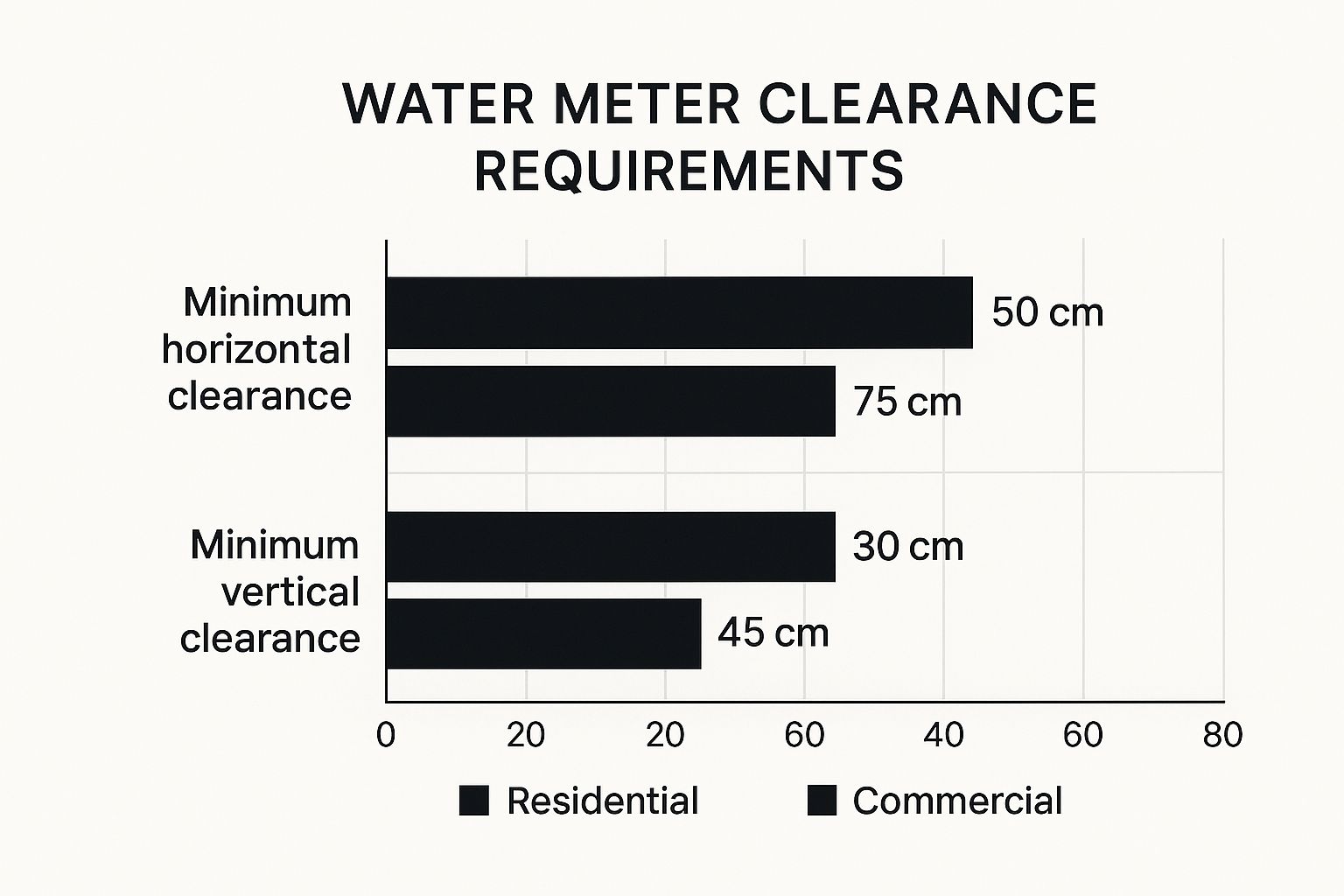
As you can see, business installations need much more room around the meter. This extra space is very important for getting to and working on the larger, more complex systems found in businesses.
To make the choice clearer, here’s a quick look at what makes these two meter types different.
Mechanical vs. Smart Water Meter Comparison
| Feature | Mechanical Water Meter | Smart Water Meter |
|---|---|---|
| Data Reading | Someone must read it on-site | Sends data automatically, from far away |
| Data Detail | Shows total use only | Shows real-time use, sends leak alerts |
| Accuracy | Can become less accurate over time | Very accurate, stays precise |
| Cost | Costs less to buy | Costs more to buy |
| Lifespan | 15-20 years | 15-20 years (battery may need to be replaced) |
| Leak Detection | No built-in detection | Instant alerts for strange water flow |
In the end, while mechanical meters have worked well for years, smart meters give you information and control that can lead to big savings and less water waste over time.
Essential Parts For Your Installation
A water meter doesn't work by itself. A safe and correct installation needs a few other key parts that work together to control and protect your water system.
The right supporting parts are just as important as the meter. These parts act as the safety and control system for your home's water supply. They protect both your property and the public water main.
Here are the must-have parts your plumber will need for the job:
- Shut-Off Valves: These are your main on/off switches. You must have one before the meter, and usually a second one right after. This lets you or a plumber completely stop the water flow for repairs without shutting off water for the whole street.
- Backflow Preventer: This is a very important safety device. It works like a one-way door. It stops any water from your property (which could have germs) from flowing backward into the city's clean water supply.
- Meter Yoke or Horn: This is a strong brass fitting that holds the meter in place. It makes sure the meter lines up perfectly with the pipes. It also makes changing the meter for service a quick and easy process. For a full look at how these parts fit into a bigger system, you can explore professional https://coastalpipelineinc.com/water-pipeline-services-monterey-santa-cruz-county/.
Of course, none of these parts will work if they're the wrong size. That's why knowing how to measure pipe diameter is one of the first and most important steps. Getting the size right from the start makes sure every connection is tight, leak-free, and follows the code.
Passing Your Final Installation Inspection
You’ve prepared the site and have all the right parts ready to go. Now comes the final step: the installation and the very important final inspection. This is where your careful planning pays off. Knowing what to expect can be the difference between turning on your water and facing annoying delays.
For a good plumber, the installation itself is pretty simple. They’ll start by shutting off the main water supply, cutting the pipe cleanly, and then fitting the meter yoke and valves. Once the meter is in place, the final connections are made. Every fitting is tightened down to be completely leak-proof. This is the hands-on part of all the water meter installation requirements we've talked about.
With the tools put away, the project moves to its most important phase: the inspection. A city or utility inspector will come out to give the work a final pass-or-fail grade.
What Inspectors Look For
Think of the inspector as the final quality check. Their job isn’t to make things hard for you. It’s to make sure the installation is safe, up to code, and will last a long time. They follow a specific checklist based on local plumbing codes, so there are no surprises if you've done your homework.
Here are the main things every inspector will check:
- Correct Meter Location: Is the meter exactly where it should be? Is there enough clear space all around it for someone to easily read it or do repairs?
- Proper Valve Installation: Are the required shut-off valves installed on both sides of the meter? Are they the right type that the utility requires?
- Secure Fittings and Connections: This one is a big deal. Are all the connections completely dry? Even a tiny drip will cause an automatic fail.
- Backflow Prevention: If your setup needed a backflow preventer, is it installed correctly? This is a public health issue, so they check it very carefully.
- Support and Stability: Is the whole thing—meter and piping—held up firmly? Any bending or sagging on the connections is a problem.
The inspection isn't a test you have to study for. It's a safety check for everyone. It's the official proof that a professional did the job right. This protects your property and the public water system from future problems. Passing on the first try saves you the money and trouble of another inspection.
Smart Meters and Modern Requirements
Things are changing a bit with the rise of smart meters. It’s a global trend, and North America is expected to have nearly 78 million smart water meters by 2030. These aren't your old meters. They have specific needs, like connecting to certain communication networks or having special ratings to handle weather. You can look at the numbers on this smart water metering trend at globenewswire.com.
Once the inspector gives you the okay, the last thing to do—especially for outdoor meter pits—is to fix the ground around the work area. A clean site is part of a professional job. For a guide on how to do this correctly, check out our article on backfilling in excavation. A passed inspection and a clean site mean your project is officially done and successful.
Got Questions About Water Meter Installation? We’ve Got Answers.
Even with the best plans, installing a water meter can feel a little confusing. It’s a project that involves plumbers, utility companies, and city inspectors. It’s normal to have questions. Getting clear answers can make the whole process feel less stressful and keep your project on track.
Let's go over some of the most common questions we hear from homeowners and builders. We'll explain who is responsible for what, talk about costs, and cover the common mistakes that can cause you to fail an inspection.
Who Is Responsible for Installing the Water Meter?
This is probably the most confusing part for most people. The short answer is: it’s a team effort. The job is usually split between your plumber and the local water utility. Each one handles a specific part of the process.
Your licensed plumber, the one you hire, is in charge of all the plumbing work inside. They’ll run the pipes to and from the meter location and install the mounting hardware, which is often called a yoke or meter horn. Basically, their job is to build the perfect spot for the meter to be plugged into.
Then, the utility company comes in. They are almost always the ones who provide the actual water meter and place it into the yoke your plumber installed. A utility worker usually handles this final connection after the plumber's work has been inspected and approved. This can be a little different from one town to the next. Your first step should always be to call your local water department and ask about their specific process.
What’s This Going to Cost Me?
Figuring out a budget for a new water meter can be hard because the costs can vary a lot. The final price really depends on whether you're plumbing a brand-new home or just replacing an old meter.
For a new house, you could be looking at a total cost anywhere from a few hundred to several thousand dollars. This number usually includes a few key things:
- Utility Connection Fees: This is what the water department charges to connect your property to the main water line.
- Permit Fees: Your local building department requires a plumbing permit, and this is the cost for it.
- Plumber’s Labor: This covers the professional plumber's time to run the pipes and install all the needed fittings.
If you’re just replacing an old meter, the cost is often much lower. In many cases, the utility company might even pay for the new meter itself. This is especially true if they're upgrading a whole neighborhood to newer technology. While smart meters might cost more at first, some utilities offer discounts to get homeowners to switch. The best way to get a real number is to ask your utility for their list of fees and get a detailed price from a licensed plumber.
A quick tip: the cheapest price isn't always the best deal. A failed inspection from bad work will end up costing you more in re-inspection fees and delays than hiring a good, trusted professional from the start.
Why Do Installations Fail Inspection?
There's nothing more annoying than getting to the end, only to be told your work failed inspection. The good news is that most failures happen for a few common reasons that can be avoided. Understanding what inspectors look for is your best defense.
Inspectors have a sharp eye for detail because their job is to make sure every installation is safe and meets all the specific water meter installation requirements. They follow a strict checklist, and even small mistakes can cause the job to be flagged.
Here are the top five reasons we see installations get rejected:
- Wrong Location or Poor Access: This is the most common problem. The meter is hidden in a spot that’s hard to reach or doesn't have the required clear space around it.
- Missing or Incorrect Parts: Key parts are either missing or aren't the exact type approved by the utility. This often happens with the wrong kind of shut-off valve or a forgotten backflow preventer.
- Improper Height or Support: The meter is set too high or too low from the floor, or the pipes aren't held up correctly. The whole setup needs to be stable and perfectly level.
- Leaks: This is an automatic failure. Any drip, no matter how small, or even just a little moisture on the fittings will get the installation rejected right away.
- No Freeze Protection: In places that have cold winters, not insulating the meter and the pipes around it is a big safety risk and a sure way to fail an inspection.
You can avoid all these problems by carefully reading your utility’s installation guide before any work starts and by hiring a plumber who knows the local codes well.
At Coastal Pipeline Inc., we specialize in the underground utility work that builds the foundation for successful installations. From digging to final connections, our team makes sure every part of your project meets strict city codes. For expert help with your water, sewer, or storm drain systems on the Central Coast, get in touch with our team.