
Burying electrical lines isn't just about digging a hole. It’s a sophisticated process of excavating, installing protective conduit, and safely burying power cables underground. This approach is a game-changer for public safety and grid reliability, all while decluttering our communities by getting rid of those overhead wires and poles.
Why Underground Electrical Trenching Is a Smart Move
Moving electrical infrastructure underground is a huge step up from the old pole-and-wire system. Sure, it costs more upfront, but the long-term payoff is massive. You're essentially future-proofing the power grid against everything from bad weather to traffic accidents.
This is far more than a simple digging job. It demands a meticulous, start-to-finish plan that covers safety, regulations, and expert execution. A successful project always hinges on a few key things:
- A Solid Site Plan: Before a single shovel hits the dirt, you need to know what’s going on underground. This means assessing the soil, mapping out existing utilities, and plotting a clear path for the new trench.
- The Right Conduit: This is the armor for your electrical lines. Using durable materials like PVC or HDPE is non-negotiable to protect cables from moisture, soil pressure, and any future digging.
- Proper Bedding and Backfill: We create a protective cushion of sand or fine aggregate around the conduit. Then, we carefully backfill the trench in layers to prevent the ground from settling later on.
- Making it Look Good as New: The final step is restoring the site completely. Whether that means repaving a driveway, laying new sod, or fixing landscaping, the goal is to leave it looking like we were never there.
The High Stakes of Digging
You absolutely cannot overstate how important it is to get this right. The ground beneath our feet is a tangled web of gas lines, water mains, and fiber optic cables. One wrong move with an excavator can lead to a utility strike—a dangerous, disruptive, and incredibly expensive mistake.
The numbers are pretty staggering. In the UK, for example, there are an estimated four million excavations happening every day. This leads to about 60,000 utility strikes a year, costing the economy a whopping £2.4 billion annually.
A utility strike is more than an inconvenience; it's a full-blown emergency. Hit a gas line, and you risk an explosion. Puncture a water main, and you’re looking at serious flooding and ground instability. And if you strike a live electrical cable? That’s a direct electrocution hazard for everyone on site.
Balancing Upfront Cost with Long-Term Value
Let's be honest: the main reason we still see so many overhead power lines is the cost. Burying them is a significant investment. In high-risk areas like parts of California, the price tag can climb as high as $3 to $4 million per mile—often ten times what it costs to string them on poles.
But that initial spend is an investment in resilience. Undergrounding is one of the most effective ways to prevent wildfires started by downed power lines. It also dramatically cuts down on power outages from storms, falling trees, and car accidents. When you bury the lines, you're building a tougher, more reliable grid that requires far less emergency maintenance down the road. It means the lights stay on for homes and businesses, period. You can learn more about how our expert teams handle these complex underground utility services.
To give you a clearer picture, here’s a high-level look at how a typical trenching project breaks down from start to finish.
Trenching Project Phase Breakdown
This table outlines the major stages involved in a standard underground electrical trenching project, from initial planning to final site restoration.
| Phase | Core Activities | Primary Objective |
|---|---|---|
| Planning & Permitting | Site survey, utility locating, permit applications, soil analysis. | To establish a safe, compliant, and efficient project plan. |
| Excavation | Digging the trench to specified depth and width, implementing shoring. | To create a stable and safe channel for conduit installation. |
| Installation | Laying bedding, placing conduit, installing warning tape. | To protect the electrical lines for decades of service. |
| Backfill & Compaction | Refilling the trench in layers (lifts), compacting soil. | To prevent future ground settlement and ensure surface stability. |
| Site Restoration | Grading the surface, repaving asphalt, replacing sod or landscaping. | To return the site to its original condition and finalize the project. |
Each phase requires specialized skills and attention to detail to ensure the entire project is a long-term success.
Mastering Pre-Excavation and Site Prep
The success of an underground electrical trenching project is decided long before the first scoop of dirt ever moves. In my experience, rushing the pre-excavation and site prep phase is a surefire way to run into dangerous utility strikes, expensive delays, and structural headaches later on. This foundational work is what separates a smooth, professional job from a costly mess.
It all starts with a detailed site assessment. I'm not talking about a quick walk-through. This is a hands-on investigation of the entire work area. You're looking for the obvious stuff—buildings, fences, landscaping—but also for the subtle clues. A slight dip in the ground could signal a previous trench, and certain vegetation can hint at underground water flow.
Navigating Permits and Locating Existing Utilities
First things first: you absolutely cannot start digging without securing the right permits from local city and county agencies. This isn't just red tape; it's a critical step that ensures your work complies with local building codes, zoning laws, and safety regulations. You'll typically need to submit detailed plans showing your proposed trench route, depth, and the specs for your electrical conduit.
At the same time, you have to get the existing utilities located. In the U.S., this means making a call to the "811 Call Before You Dig" service. It’s a free and legally required service that notifies all the local utility companies—gas, water, communications, you name it—to come out and mark their buried lines with paint and flags.
Critical Insight: Never, ever assume a site is clear, even on a brand-new development. I've seen it time and again where records are outdated or just plain wrong. A physical utility locate is the only way to be certain what’s in the ground and avoid hitting a high-pressure gas main or a major fiber-optic line.
Once those colorful flags and paint marks are on the ground, you need to meticulously transfer their locations onto your site plan. This becomes the definitive map for your excavation crew, making sure they maintain the legally required clearance from all existing infrastructure.
Understanding Soil and Ground Conditions
Soil isn't just dirt—it's an engineering material that dictates almost every aspect of the dig. The type of soil on your site determines the equipment you’ll need, the safety precautions you must take, and how you'll manage the trench itself. Even a basic soil analysis can prevent major setbacks.
For example, digging in soft, sandy soil is a completely different ballgame than excavating hard-packed clay or solid rock.
- Sandy or Loamy Soil: This stuff loves to collapse. For any trench deeper than five feet, you'll almost certainly need shoring (support walls) or sloping (angling the trench walls) to keep your crew safe.
- Dense Clay: While more stable, clay is heavy and tough to dig. It also expands and contracts with moisture, which can put immense pressure on your conduit over time if not handled correctly.
- Rocky Ground: This is the ultimate challenge. It demands specialized gear like hydraulic hammers or rock saws, driving up the project's time and cost. In extreme cases, blasting might be the only option, which brings its own world of permitting and safety protocols.
Knowing these conditions upfront is key to choosing the right tools for the job. A mini-excavator that works perfectly in clay will be stopped dead by a shelf of rock, bringing your entire project to a halt. This is where local knowledge is priceless. An experienced utility trenching contractor in Monterey County will already know the regional geology, from the sandy soils along the coast to the rockier ground further inland.
By mapping utilities and analyzing the ground, you build a solid pre-excavation plan. This is your blueprint for a safe, successful project. It turns the act of digging from a gamble into a calculated, professional operation.
Selecting the Right Trenching Method and Equipment
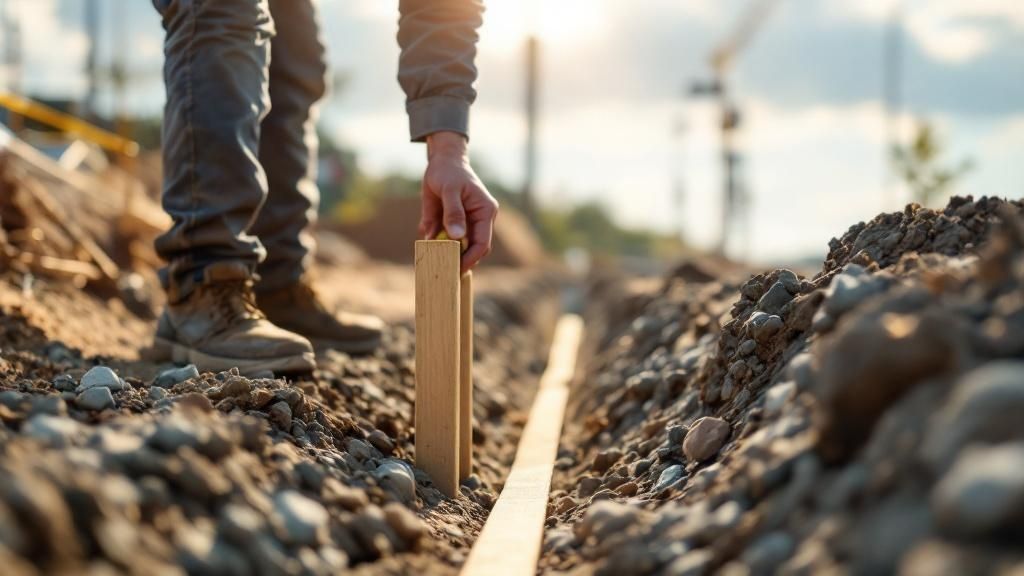
Choosing your excavation strategy is one of the most important calls you'll make on any underground utility trenching for electrical lines. This isn't a one-size-fits-all situation. The best method always comes down to the specifics of your site, the project's scale, and the obstacles you're up against. Your two main paths are the classic open-trenching approach and modern trenchless technologies.
Open-trenching is exactly what it sounds like: you dig a continuous channel, lay the conduit, and fill it back in. It's direct, effective, and usually the most budget-friendly option for open, accessible areas where some surface disturbance isn't a deal-breaker.
But what happens when you need to get under a busy road, a manicured lawn, or an environmentally protected wetland? Tearing up the surface is a non-starter. That's when trenchless methods like horizontal directional drilling (HDD) really shine. HDD lets you drill a precise path from an entry point to an exit point, pulling the conduit through without ever breaking ground in between.
Matching Equipment to the Job
Once you’ve picked your method, you have to match the right machinery to the job. This is where experience really pays off. The equipment you choose directly impacts your timeline, budget, and how well you can work within the site's limits.
For a smaller residential job, like running a new line to a backyard workshop, a walk-behind trencher or a mini-excavator is often your best bet. These machines are nimble enough to navigate tight spaces, creating a clean, narrow trench with minimal damage to the lawn.
On the other hand, a massive commercial or municipal project—think laying miles of conduit for a new housing development—requires serious horsepower. This is where you bring in a ride-on chain trencher or a large excavator. These machines are built to tear through long distances and tough soil, making them the workhorses of major infrastructure jobs.
Key Takeaway: It’s not just about power; it’s about precision. Using a huge excavator for a small residential job is overkill—it causes needless damage and drives up costs. But trying to use a mini-trencher on a major commercial site will slow you to a crawl and lead to expensive delays.
The Role of Specialized Machinery in Modern Trenching
The world of underground electric construction equipment is a specialized field, and it forms the backbone of these critical projects. The market for this machinery is huge, which tells you just how much work is going into modernizing our electrical grids.
This market covers everything from trenchers and backhoes to excavators and directional drills—all essential for installing cables and other utilities. Globally, the underground electric construction equipment market was valued at about USD 12.47 billion in 2025 and is expected to hit roughly USD 17.54 billion by 2034. This growth is fueled by new regulations and major infrastructure upgrades. You can dig deeper into the data by checking out the underground construction equipment market's growth trends.
Here’s a quick look at how these choices play out in the real world:
| Scenario | Best Method | Recommended Equipment | Why It's the Right Choice |
|---|---|---|---|
| New Home Construction | Open-Trenching | Mini-Excavator or Backhoe | The ground is already disturbed, so you can dig efficiently without worrying about finished landscaping. |
| Crossing a Major Highway | Trenchless (HDD) | Horizontal Directional Drill | This avoids shutting down traffic, expensive road repairs, and keeps the existing infrastructure intact. |
| Installing Lines in a City Park | Trenchless (HDD) or Micro-trenching | Directional Drill or Micro-trencher | It minimizes damage to grass, trees, and public pathways, keeping the park beautiful and open. |
| Long Utility Easement | Open-Trenching | Ride-On Chain Trencher | This machine has the speed and power to cover long distances quickly in an open, accessible corridor. |
In the end, successful underground utility trenching for electrical lines comes down to smart planning. By carefully assessing the site and picking the right method and equipment, you set your project up to be safe, compliant, and finished on time and on budget.
Executing a Safe and Compliant Excavation
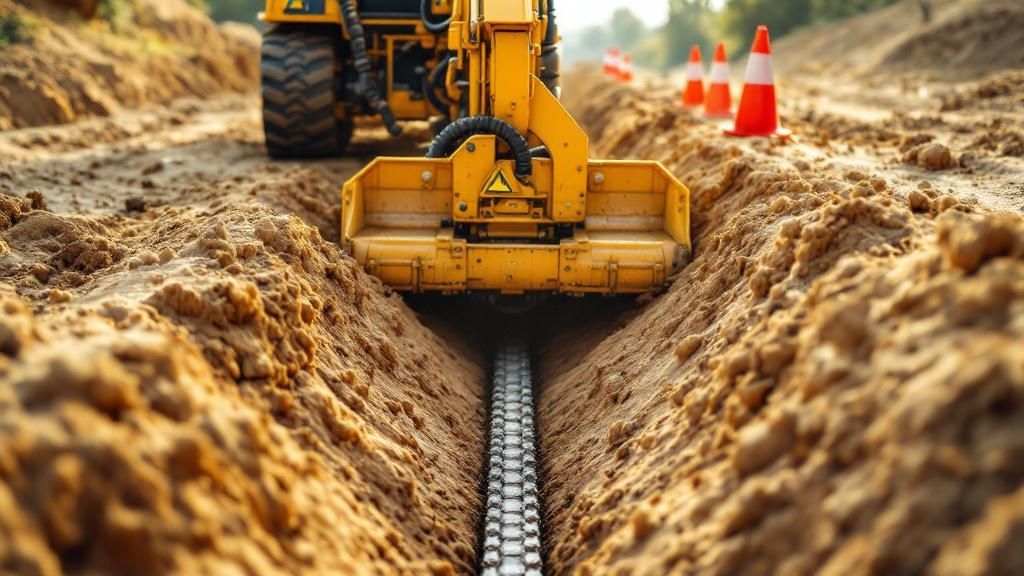
Once the plan is locked in, it’s time to break ground. This is where all the planning, precision, and safety protocols move from paper to the real world. Every single scoop of dirt has to be deliberate, guided by strict safety rules and an unwavering focus on compliance.
The moment that excavator bucket hits the dirt, your site becomes a live hazard zone. The biggest risk, by far, is a trench collapse. It can happen in a flash and is often fatal. That’s why safety isn't just a good idea; it's a legal and moral mandate enforced by the Occupational Safety and Health Administration (OSHA).
For any trench that goes deeper than five feet, you are required to have a protective system in place unless you're digging in solid rock. Just digging a deep, straight-walled hole in most soil types is asking for trouble.
Implementing Essential Protective Systems
The right safety method for your job depends on two things: your soil type and your trench depth. OSHA has three primary approved systems—sloping, shoring, and shielding. They all aim to prevent a cave-in, but they get there in different ways.
- Sloping: This means cutting the trench walls back at an angle. The "right" angle depends entirely on the soil. Stable rock can handle nearly vertical walls, but loose, sandy soil needs a much gentler, wider slope to be safe.
- Shoring: This is a proactive approach. You install supports like hydraulic braces or heavy timbers that physically hold the trench walls apart, preventing them from caving in.
- Shielding: You probably know this as a trench box. It’s more of a reactive system. The box doesn’t actually stop the walls from collapsing, but it creates a fortified, safe workspace inside the trench that protects your crew if the worst happens.
Choosing the correct system is a job for a "competent person" on-site. This is someone who's been trained to spot existing hazards, anticipate potential ones, and has the authority to stop work and make immediate corrections. They'll assess the soil, watch the weather, and make sure the protective systems are properly installed. To get a better handle on these requirements, you can read our guide on safe and efficient PGE-approved trenching.
Real-World Scenario: Picture this: you're digging a seven-foot-deep trench in sandy loam soil. A sudden downpour soaks the ground, adding a ton of weight and making the soil dangerously unstable. A competent person on site would immediately spot this hazard, halt all work, and re-evaluate the safety setup. They might decide sloping is no longer enough and upgrade to a more robust shoring system before anyone is allowed back in that trench.
The Rise of Joint Trenching
To work smarter and minimize how much we tear up the ground, many projects are now using a strategy called joint trenching. It's also called common trenching. The idea is to place multiple utilities—like electrical, communications, and cable—all within a single, wider trench. It saves a massive amount of time, cuts down on excavation costs, and limits the project's overall impact.
This isn't some niche technique; it's incredibly common. A survey of 33 utility companies showed that joint trenching was a standard practice, especially with telephone cables. In fact, six of those companies used it 100% of the time, and about a third used it for around 80% of their projects. While it happens less often, joint trenching with gas and water lines was also reported. You can learn more about the factors encouraging this cost-saving method.
But this efficiency comes with a strict set of rules. You can't just toss different utility lines into a hole next to each other.
Maintaining Safe Separation Distances
To prevent electrical interference and ensure everything is safe for the long haul, regulators and utility owners have non-negotiable rules about how far apart different lines must be inside a common trench.
Local codes can differ, but here are some typical separation distances you'll need to maintain in a joint trench:
| Utility Combination | Minimum Horizontal Separation | Minimum Vertical Separation |
|---|---|---|
| Electrical & Communications | 12 inches | 12 inches (if crossing) |
| Electrical & Gas Line | 12 to 24 inches | 12 inches (if crossing) |
| Electrical & Water/Sewer | 24 to 36 inches | 18 inches (if crossing) |
These distances are absolutely critical. High-voltage electrical lines can create electromagnetic interference (EMI) that messes with communication signals. More importantly, that buffer zone prevents a problem with one utility—like a water line break or an electrical fault—from damaging the others. It also makes future maintenance work safer and easier for everyone involved. A safe, compliant excavation is the bedrock of any successful underground utility project.
Installing Conduit and Backfilling Your Trench
Once your trench is open and ready, the job is only half done. The real focus now is on protecting the electrical lines for the long haul. This part of the process—installing the conduit and properly backfilling—is all about creating a stable, durable home for those wires to ensure they work reliably for decades.
It all starts from the bottom up with a crucial layer of bedding.
You can't just toss a conduit onto the rough floor of a fresh trench. Any sharp rock or stray piece of debris left behind could puncture or weaken the conduit over time. That’s why we first lay down a smooth, consistent base, usually 2 to 4 inches of sand or fine gravel. This bedding acts as a protective cushion, supporting the conduit evenly and preventing stress points that can cause big problems later.
This flow chart gives a great overview of the key stages, from the initial site prep right through to the final placement of the conduit and cable.
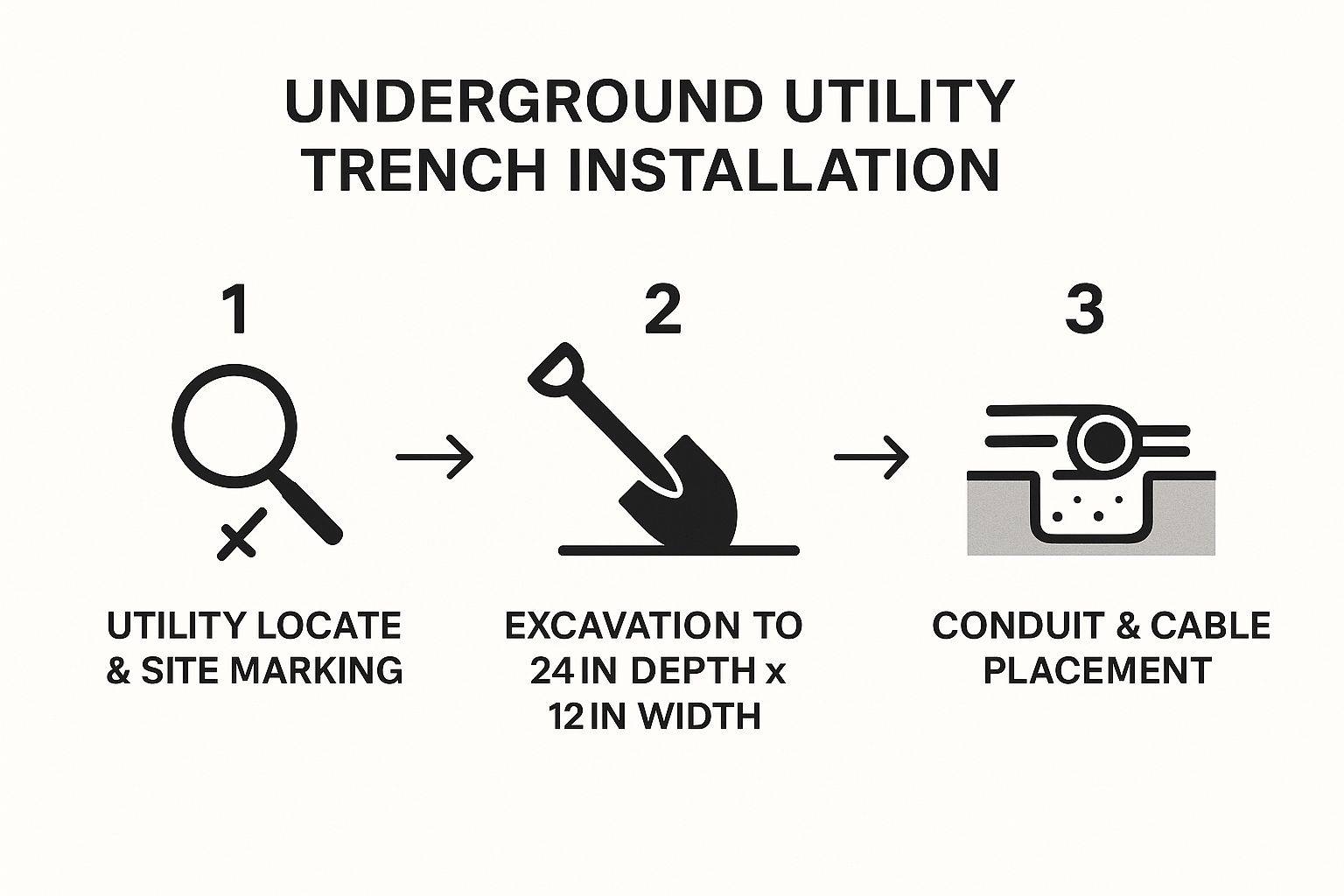
As you can see, a successful installation is a step-by-step process where everything builds on the last—from locating utilities to precise digging and careful conduit placement.
Choosing the Correct Conduit
With a solid bed in place, it’s time to pick out the conduit. Think of it as the armor for your electrical wiring. The right material depends on your project’s specific needs, the soil conditions on your site, and, of course, local electrical codes.
- PVC (Polyvinyl Chloride): This is the go-to for most residential and light commercial jobs. It's affordable, lightweight, and incredibly resistant to moisture and corrosion, making it easy to work with.
- HDPE (High-Density Polyethylene): Known for its impressive flexibility, HDPE is perfect for trenchless methods like directional drilling. It can bend around underground obstacles, which means fewer joints and potential failure points.
- RMC (Rigid Metal Conduit): This is the heavy-hitter. Made from galvanized steel, RMC offers the best physical protection out there. You’ll see it specified in areas where the conduit might be exposed or subject to damage, like near building foundations or in demanding industrial environments.
Ultimately, choosing the right conduit comes down to balancing cost, durability, and compliance. For most standard projects, a Schedule 40 or Schedule 80 PVC will give you all the protection you need.
The Art of Backfilling and Compaction
After the conduit is laid and securely connected, you can start the backfilling. This is much more than just shoveling dirt back into the hole. The real goal is to eliminate air pockets and build up a stable ground that won’t sink or settle later. It’s a methodical process that demands attention to detail. For a more technical look, you can explore professional backfilling services for pipelines in Monterey.
We start by carefully placing a layer of sand or fine aggregate around and just over the conduit. This initial cover, sometimes called "haunching" and "shading," needs to be free of rocks and clumps that could damage the pipe during compaction.
Expert Insight: Before you start the main backfill, don't forget the warning tape. This brightly colored ribbon must be laid 12 to 18 inches below the final surface grade. It’s a simple but critical safety measure that alerts future digging crews to the buried lines below, drastically reducing the risk of a dangerous utility strike.
With the first protective layer and warning tape in place, you can begin adding back the native soil you originally excavated. This has to be done in stages, what we call "lifts." Each lift, typically 6 to 12 inches thick, is spread evenly and then compacted with a mechanical tamper. Compacting in these thin layers is the only way to restore the soil’s density and prevent a sunken, trench-shaped hazard from forming on your property down the road. Rushing this step is a classic mistake that can undermine the entire project.
Finalizing the Project with Site Restoration
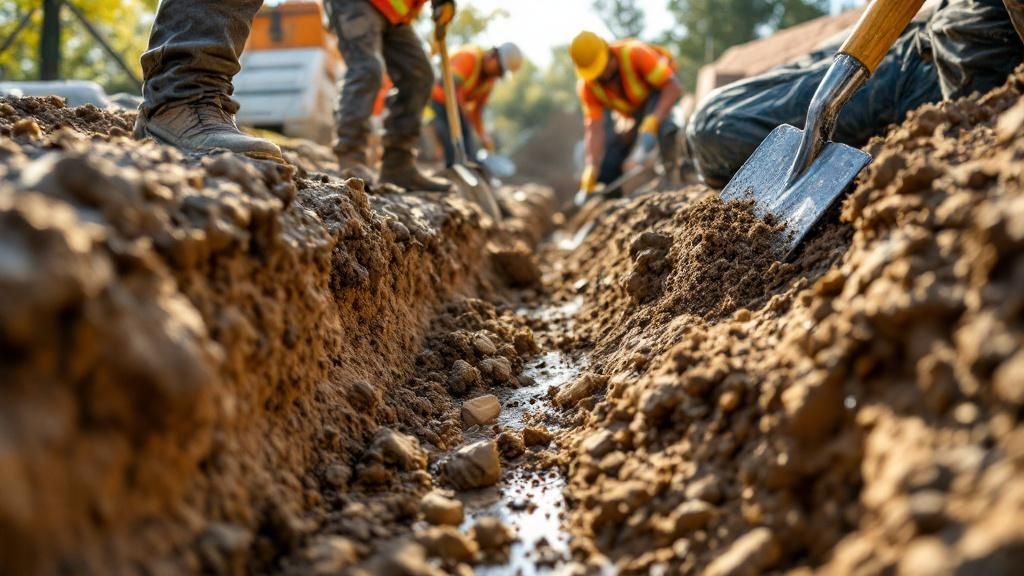
A professional underground utility trenching for electrical lines project isn’t over just because the conduit is in the ground. The job isn't truly done until the site is fully restored. We aim to erase any evidence of our work, leaving the property looking as good as, or even better than, when we started. This is the mark of true quality craftsmanship.
The first step in this final phase is finish grading. After all the backfill is properly compacted, we expertly grade the surface over the trench line to perfectly match the surrounding landscape. This isn't just about aesthetics; proper grading is crucial for ensuring positive water drainage and preventing soil erosion down the road. A poorly graded area can create low spots where water pools, leading to soggy ground and eventual settlement.
Restoring Surfaces to Original Condition
How we restore the surface depends entirely on what was there before we started digging. Every type of surface, from lush lawns to asphalt lots, requires a specific set of skills and materials to get a seamless, professional finish.
When we work in landscaped areas, restoration usually involves replacing topsoil and establishing new grass. The secret is using a high-quality topsoil blend that promotes healthy growth. From there, we can either lay new sod for an instant green lawn or use a seed and mulch mix for a more budget-conscious approach. We always make sure to match the new grass type to the existing lawn.
Hard surfaces like driveways and parking lots are a different ball game.
- Asphalt Repair: For asphalt, we start by saw-cutting a clean, sharp edge around the trench. Then we lay new hot mix asphalt, making sure it's compacted thoroughly and sealed to keep water out and blend in with the existing pavement.
- Concrete Repair: This involves pouring new concrete that matches the original thickness and finish. To make the repair last, we tie rebar or wire mesh into the existing slab, preventing any future shifting or cracking.
A job is only truly finished when the client is satisfied and the site is clean, stable, and safe. This final checklist ensures all municipal requirements are met and leaves behind a worksite that reflects the quality of the underground installation.
Got Questions About Electrical Trenching? We've Got Answers
When it comes to putting electrical lines underground, folks—whether they're homeowners or seasoned contractors—tend to ask the same kinds of questions. Getting a handle on the key factors from the get-go can make your entire project run smoother.
How Much Does It Really Cost?
Let's get straight to it: the first question is always about the budget. While burying your power lines is a fantastic long-term investment in safety and reliability, it does cost more upfront than stringing them overhead.
In certain high-risk areas, the price tag can climb to $3 to $4 million per mile. That number isn't just pulled out of thin air; it reflects the real costs of skilled labor, specialized trenching equipment, all the necessary materials, and navigating the often-complex world of permits.
How Deep Do We Need to Dig?
The next big question is always about trench depth. Your local building codes will have the final say, but a good rule of thumb for residential electrical lines is a minimum depth of 18 to 24 inches.
This isn't an arbitrary number. Digging to this depth gets the conduit safely below the frost line and out of harm’s way from everyday activities like gardening or minor landscaping.
Can I Just Do This Myself?
It’s tempting to think about turning this into a DIY weekend project, but it’s crucial to know when to call in the pros. While digging a shallow trench for some low-voltage landscape lighting is one thing, we're in a whole different league when talking about main service lines.
For any job involving your primary electrical service, you absolutely need a licensed professional.
The risk of hitting another utility line—or worse, not meeting the strict electrical codes—is just too high. A pro handles everything from getting the right permits to locating existing utilities and making sure the entire job is done safely and correctly the first time.
This is especially critical for more complex jobs. If you're planning a project like this, your best move is to talk with a team that lives and breathes this kind of work. You can get a better sense of what’s involved by learning about the role of a professional underground electrical conduit installation contractor and the expertise they bring to the table. Hiring an expert is the best way to protect your property and ensure the job lasts for decades.
Ready to start your next infrastructure project? The team at Coastal Pipeline Inc. has the expertise to handle your underground utility, excavation, and paving needs with professional precision. Get in touch with us today to discuss your project requirements.