At its heart, construction project management is the specialized skill of turning a set of blueprints into a standing, functional building. It’s all about directing and coordinating every moving part of a job—from the people and materials to the budget and schedule—to make sure the final structure gets built right. This requires a constant, careful balancing act to keep everything moving forward.
What Is Construction Project Management Anyway?
Think of a construction project manager as the conductor of a very complex orchestra. But instead of directing musicians, they’re coordinating architects, engineers, general contractors, and skilled tradespeople. Their job is to ensure everyone is working in harmony from the same sheet music: the project plan.
This role goes far beyond just checking tasks off a list. A construction PM is the central command post, responsible for steering the four most critical elements of any build:
- Cost Management: Keeping all expenses firmly within the approved budget.
- Schedule Adherence: Making sure every phase of the project finishes on time.
- Quality Assurance: Upholding the high standards and precise specifications of the design.
- Safety Compliance: Maintaining a secure and incident-free work environment for every person on-site.
This infographic breaks down the fundamental journey of a project, from a simple idea to a finished reality.
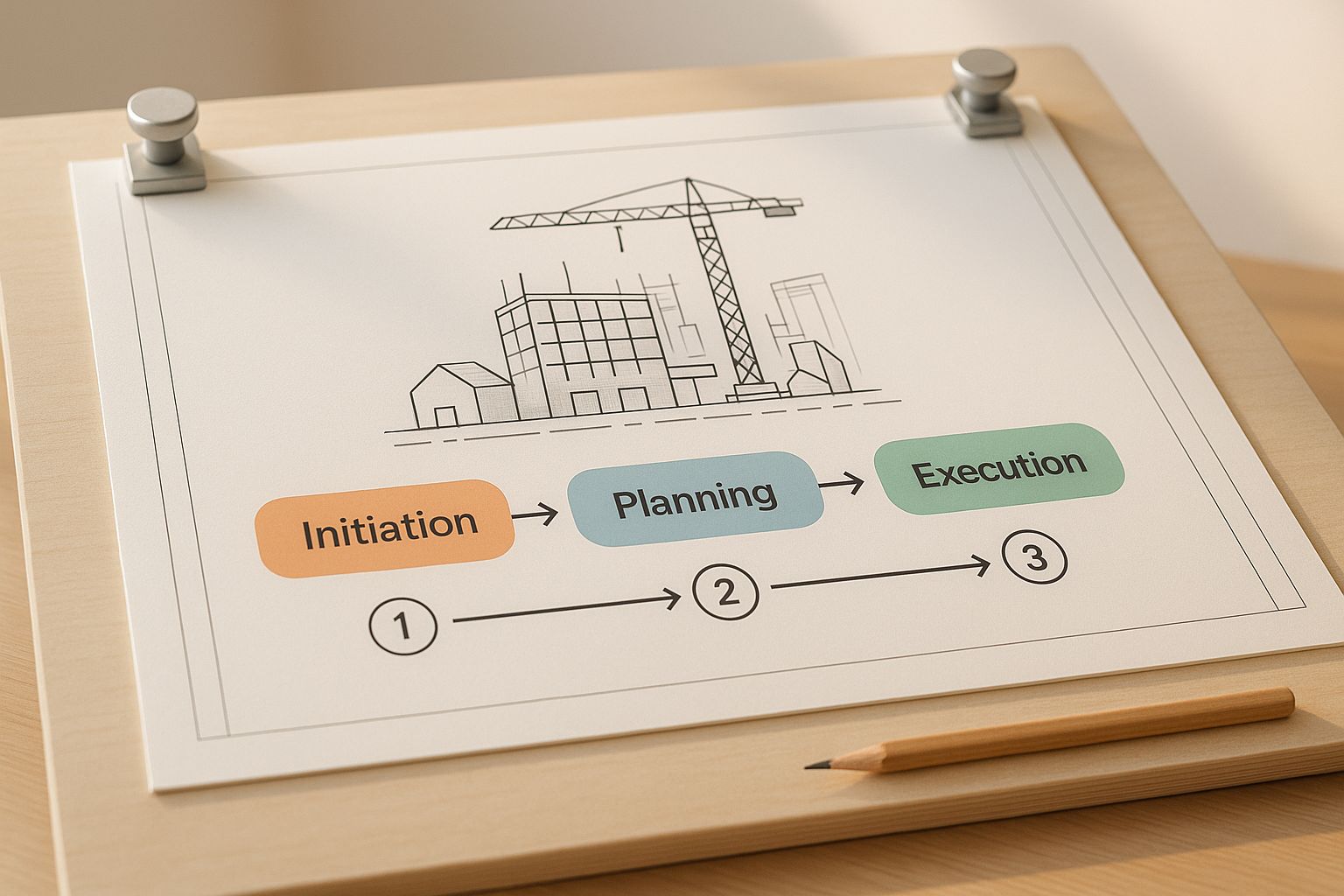
As the visual shows, a project isn't a chaotic scramble. It moves through distinct, organized phases, starting with the initial concept and progressing methodically through detailed planning and hands-on execution.
A Day in the Life: A Construction PM’s Core Responsibilities
A construction PM wears many hats, often all in the same day. The table below gives a snapshot of the core responsibilities they juggle to guide a project from the drawing board to the ribbon-cutting ceremony.
| Responsibility Area | Key Activities and Goals |
|---|---|
| Planning & Scheduling | Develop the master plan, set milestones, and create the construction schedule. |
| Budget & Cost Control | Estimate costs, track expenses, and manage the budget to prevent overruns. |
| Resource Management | Coordinate labor, order materials, and schedule equipment deliveries. |
| Team & Stakeholder Communication | Liaise with clients, architects, subcontractors, and the on-site crew. |
| Risk Management | Identify potential problems (weather, supply chain, etc.) and create backup plans. |
| Quality & Safety Oversight | Conduct site inspections, enforce safety protocols, and ensure work meets standards. |
Ultimately, a PM's day is a mix of office-based strategy and on-site problem-solving, all aimed at keeping the project healthy and on track.
The Balancing Act of Project Success
The real test in construction project management comes down to navigating the "triple constraint" of scope, time, and cost. These three pillars are welded together; a change in one inevitably affects the other two. For example, if a client decides to add a new feature mid-build (what we call scope creep), it will almost certainly demand more time and a bigger budget.
A great project manager doesn't just manage tasks; they manage expectations and trade-offs. Their primary job is to find the optimal balance between the project's scope, timeline, and budget without compromising quality or safety.
This constant negotiation is exactly why the role is so critical. Without a skilled manager steering the ship, a project can easily drift off course, leading to massive budget overruns, blown deadlines, and a final product that doesn't live up to the original vision. They are the essential link that connects a project’s ambitious goals with its real-world, successful completion.
Navigating the Five Phases of a Construction Project
Every construction project, whether it's a small home build or a massive commercial development, unfolds in a series of predictable stages. Knowing these construction project management basics is like having a roadmap before a long trip—it shows you the entire route, including all the essential stops along the way. This journey is consistently broken down into five distinct phases.
1. Initiation and Feasibility
This is the "big idea" stage. Long before any dirt is moved, the project’s fundamental purpose, goals, and overall viability are put under the microscope. A feasibility study is performed to see if the project is a smart investment, answering the most important question of all: "Should we actually do this?"
2. Planning and Design
Once the project gets the green light, the real planning kicks off. This is arguably the most critical stage of the entire process because it produces the master blueprint for the whole build. The project manager and their team dive deep to map out every detail, including:
- Scope: Nailing down exactly what work needs to be done and, just as importantly, what’s not included.
- Budget: Accurately estimating all costs and assigning funds.
- Schedule: Building a realistic timeline with key milestones and deadlines.
- Resources: Identifying the necessary labor, materials, and equipment.
- Risk: Spotting potential problems ahead of time and creating a plan to handle them.
A solid project plan is far more than just a document; it’s the strategic foundation for success. A well-crafted plan minimizes errors, keeps costs in check, and ensures everyone stays on the same page from beginning to end.
3. Execution
This is where blueprints and plans spring to life. The execution phase is all about the on-site action—foundations get poured, walls go up, and systems are installed. This is the point where specialized crews get to work. For instance, if you're looking for guidance on this crucial groundwork, you can find helpful tips on hiring commercial excavation contractors.
4. Monitoring and Control
Think of this phase as the project’s central nervous system, running right alongside the execution phase. The project manager is constantly checking progress against the plan, keeping a close eye on key performance indicators (KPIs) like budget spend and schedule adherence. If anything starts to drift off track, they step in with corrective actions to get the project back on course.
5. Project Closure
Finally, the project reaches the finish line. This last phase involves much more than just a simple handover. It includes final inspections, completing all the necessary paperwork, closing out contracts with vendors, and archiving all project documents for future reference. It’s also the perfect time for a post-project review to capture valuable lessons that can be applied to the next build.
Understanding the Key Players and Their Roles
A construction project isn’t a one-person show. It’s more like an orchestra, where every single player has a critical part to play. For a project to succeed, everyone needs to work in harmony, and knowing who does what is one of the most important construction project management basics. While the Project Manager often acts as the conductor, they’re leading a team of highly specialized professionals.
It all begins with the Project Owner. This is the person or company with the vision—and the checkbook. As the client, they kick off the project and have the final say on major decisions. Think of them as the one commissioning a work of art; they know what they want the final piece to look like but rely on experts to bring it to life.
The Design and Build Teams
Next up are the Architects and Engineers, the brains behind the design. The Architect is focused on how the building looks, feels, and functions, shaping the spaces we use every day. The Engineer's job is to make sure that beautiful design is also strong, safe, and up to code. They are the ones who turn a great idea into a detailed, buildable set of blueprints.
The General Contractor (GC) is the on-the-ground commander who takes those blueprints and makes them a reality. They manage everything happening on the job site day-to-day, from scheduling the work to solving problems as they pop up. The GC is the project manager’s go-to source for updates on construction progress.
Of course, the GC can't do it all alone. That's where Subcontractors come in. These are the specialists hired by the GC for their expertise in specific trades. They include:
- Plumbers: Responsible for all the water and sewer systems.
- Electricians: Who handle the complex web of wiring, outlets, and panels.
- HVAC Technicians: In charge of keeping the building comfortable with heating and air conditioning.
- Excavators: Who prepare the site by digging foundations and utility trenches.
These are the skilled pros doing the hands-on work that makes a structure truly functional. For instance, the complex task of laying sewer and water lines requires specialized expertise, which you can read more about in this guide to underground utility services. Together, all these players—from the owner to the subcontractors—form a dynamic team that drives the project forward.
The Skills That Define Modern Construction Leaders
In the fast-paced world of construction, being a great project manager isn't just about knowing the technical side of the job anymore. The best leaders today mix their practical expertise with a strong set of people skills, strategic foresight, and the ability to adapt on the fly. It's about shifting from just managing tasks to truly leading a team through complex challenges.
A big part of this modern approach is getting comfortable with hybrid project management. Project management styles are changing to keep up with the demands of construction, and today, about 60% of project managers use a hybrid delivery method. These approaches blend the structured, step-by-step planning of traditional methods with the flexibility of newer, more agile techniques. This lets teams react and adjust quickly when they hit those inevitable, unexpected site issues.
Fostering a Strategic and People-First Mindset
Beyond just the project plan, a leader's attitude is what really shapes the job site culture and the final outcome. This means focusing on two areas that are becoming more important every year: sustainability and keeping your team together.
- Sustainability and ESG Goals: Building responsibly is the new standard. Leaders now have to weave Environmental, Social, and Governance (ESG) goals into their plans, from choosing sustainable materials to making sure the project benefits the local community.
- High-Trust Environments: The construction industry struggles with high employee turnover, which costs projects time and money. Great leaders fight this by creating a high-trust workplace with clear communication, respect, and support. A stable, motivated crew is a project's biggest advantage.
A project manager who builds trust also builds a more resilient project. When teams feel valued and secure, they are more engaged, more productive, and more likely to solve problems proactively instead of just reporting them.
This focus on people and principles is what really separates a good manager from a great one. Think about the initial groundwork of a project—it sets the tone for everything that follows. Having a stable, expert crew for those critical early phases, like the ones discussed in guides on excavation and land clearing, is a direct result of strong, people-first leadership that knows how to keep top talent. Ultimately, the future of construction project management basics lies in this powerful mix of technical skill and human-centric leadership.
How Technology Is Changing the Job Site
Technology is no longer a nice-to-have in construction; it's the core of how efficient and competitive projects get done. The biggest player in this shift is project management software, which acts as the digital command center for any modern build. These powerful platforms pull every moving part of a project into one organized hub.
Think about trying to coordinate a dozen subcontractors using only phone calls, text messages, and scattered emails. It’s a guaranteed recipe for confusion, delays, and costly mistakes. Software cuts through that chaos by creating a single source of truth for everyone involved.
These tools make communication seamless, simplify document sharing, and give you real-time updates on schedules and budgets. Everyone from the project owner to the crew on the ground sees the same information, which keeps the team aligned and drastically reduces errors.
With so much complexity on a construction project, these digital tools are indispensable. They turn a flood of chaotic data into clear, actionable information, letting managers get ahead of problems before they blow up the timeline or budget.
Smarter Tools for a Smarter Build
It isn't just the giant corporations leaning on this tech. In fact, nimbler companies are often the first to adopt these tools to get a leg up. Today, roughly 82% of companies use some form of project management software. A report on project management statistics even shows that smaller businesses are 13% more likely than large enterprises to use them.
These platforms do a lot more than just check off tasks on a list. They are critical for:
- Optimizing Resources: Making sure your equipment and crew are exactly where they need to be, right when they're needed.
- Improving Safety: Digitizing safety checklists and compliance paperwork to keep the job site secure and up to code.
- Sharpening Bids: Using data from past jobs to create more accurate and competitive bids for future work.
Ultimately, these tools are essential for managing everything from the main build to critical site infrastructure. For example, getting a complex drainage system installed correctly is much easier with centralized coordination, a topic we cover in our guide to storm water management systems.
Common Questions About Construction Project Management
As you get into the world of construction project management, a few key questions always pop up. Answering them clearly will help you build a solid foundation of real-world knowledge. Let’s tackle some of the most common ones we hear from people just starting out.
What Is the Biggest Challenge?
Without a doubt, the biggest challenge is juggling the “triple constraint”: scope, time, and cost. It’s best to think of these three as interconnected gears. If you change one, the other two have to move. For instance, if a client suddenly decides to expand the project’s scope, you can bet it will require more time and a bigger budget.
A skilled Project Manager is in a constant state of balancing these three pressures. This act gets even trickier when you factor in things like surprise weather delays, supply chain disruptions, or new building codes that appear out of nowhere.
How Does Risk Management Actually Work?
On a construction site, effective risk management is all about being proactive, not reactive. You have to anticipate problems before they have a chance to derail your project. This process kicks off early in the planning phase, where the team sits down to identify potential issues, such as:
- On-site safety hazards
- Shortages of essential materials like concrete or steel
- Unexpected soil or rock conditions found during excavation
Once a risk is identified, it’s analyzed for how likely it is to happen and what kind of damage it could do. From there, the PM develops a clear plan to handle it. That might mean enforcing tougher safety rules, securing backup suppliers, or building a contingency fund into the budget. You can see how specialists prepare for these issues by learning from experienced excavation contractors in Monterey County.
What Does a Career Path Look Like?
Most people start their construction management career as a Project Coordinator or an Assistant Project Manager. This usually happens right after earning a degree in construction management, engineering, or a related field. Once you’ve got some solid hands-on experience under your belt, the natural next step is becoming a Project Manager, where you’re responsible for running entire projects.
From there, you can advance to senior positions like Senior Project Manager, Program Manager (handling several projects at once), or even a high-level role like Construction Executive.
Getting professional certifications like the Certified Construction Manager (CCM) or Project Management Professional (PMP) can also give your career a major boost and open doors to bigger opportunities.
At Coastal Pipeline Inc., we understand that expert project management is the backbone of any successful infrastructure project. Our team combines technical skill with disciplined oversight to ensure every underground utility, excavation, and paving project is completed on time, on budget, and to the highest standards. Learn more about our specialized services at https://coastalpipelineinc.com.