Sooner or later, every asphalt driveway owner sees it: a web of connected cracks that looks like an alligator’s skin. When you see this pattern, you’re looking at alligator cracking, and it’s a big warning sign.
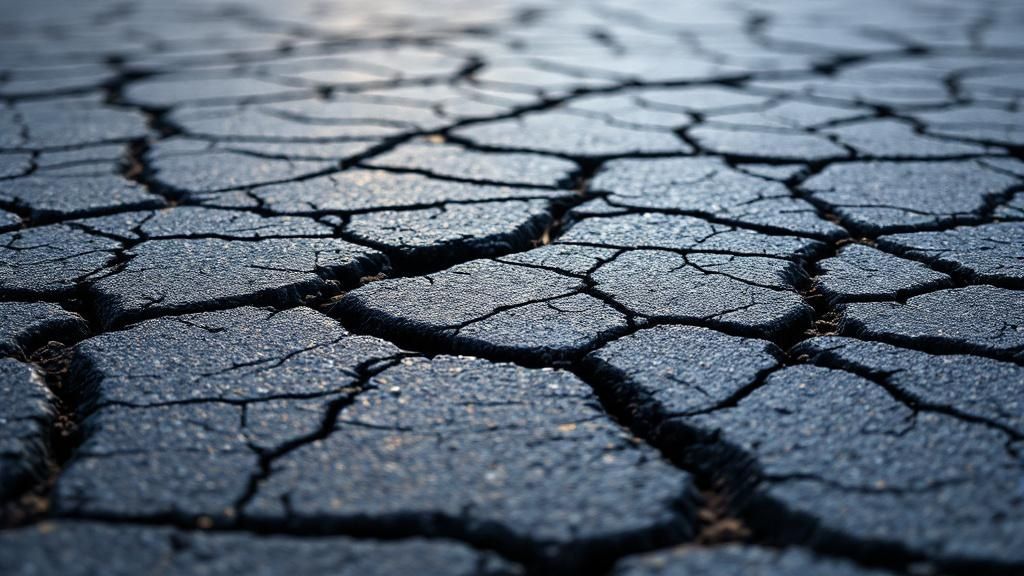
This isn’t just a small problem on the surface. Alligator cracking is a clear sign that the asphalt’s foundation is failing. Think of it as the pavement’s way of showing you it’s under a lot of stress.
This pattern is caused by heavy loads, usually from cars driving over it day after day. It’s one of the first and most obvious signs of major damage. If you don’t do something, your driveway won’t last as long as it should. You can learn more about what causes this damage on leeboy.com.
Why You Can’t Ignore These Cracks
Putting off repairs for alligator cracking is a costly mistake. That network of cracks lets water seep deep under the asphalt. Once water gets into the base layer, it starts to wash away the foundation. This weakens the whole structure from the ground up.
Before you know it, you’ll have much bigger problems that are harder to fix. We cover this in our guide on how to repair a driveway with asphalt.
Here’s what happens if you wait too long:
- Water Gets In: Rain and snow get into the cracks and wear away the base, creating empty spots under your pavement.
- Potholes Form: With no support from below, the weak asphalt falls into these empty spots, creating potholes.
- Damage Gets Worse: In colder areas, the trapped water freezes and expands. This forces the cracks to get wider and deeper every time it freezes and thaws.
Fixing these cracks as soon as you see them is the best way to protect your driveway. A small repair now can save you from having to replace the whole thing later.
By fixing the problem early, you stop the damage before it gets out of control. This guide will show you exactly how to do it.
Choosing the Right Tools and Materials
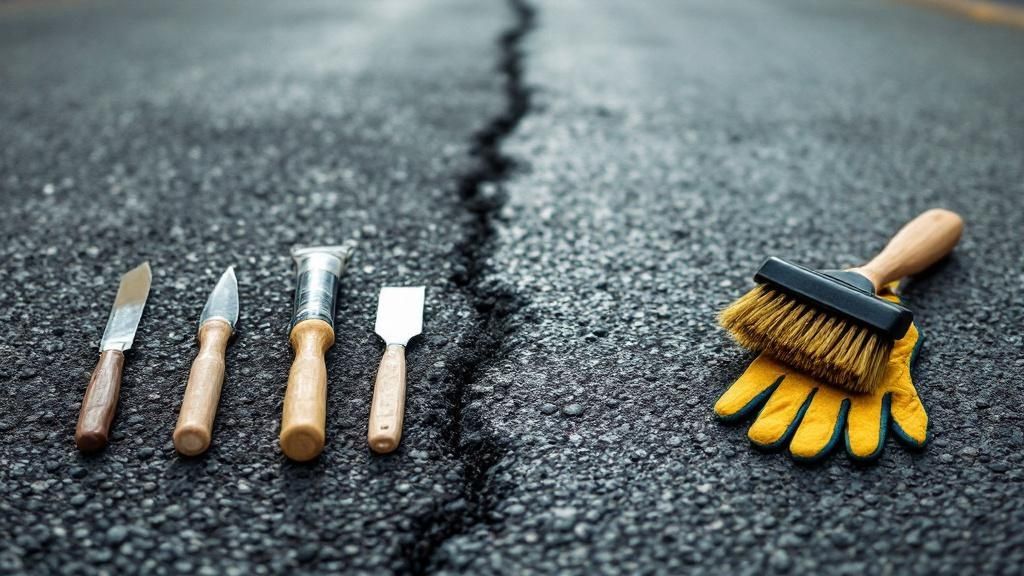
Any pro will tell you that the right tools make all the difference. To properly repair alligator cracks asphalt, you don’t need a lot of tools, but you do need a few key items. This will help you get a strong, long-lasting fix. Think of it like getting your ingredients ready before you start cooking—it makes everything go smoother.
A good repair starts with a clean surface. That means more than just sweeping it. To do the job right, you’ll need a stiff wire brush to get out all the weeds and loose bits. Then, use a shop vac or a leaf blower to get rid of any fine dust that could stop the patch from sticking.
Picking the Best Patching Compound
Once the area is clean, it’s time to choose a filler. Not all asphalt patches are the same. The right one for your job depends on how bad the damage is. Taking a moment to understand the different cracks in asphalt driveways can help you choose the best product.
You’ll usually find two main types of patches:
- Trowelable Patch Compounds: These are thick, heavy materials, almost like a paste. They are perfect for deeper, smaller areas of alligator cracks where you need to build up the surface.
- Liquid Pour-In Fillers: As the name says, these are thinner and flow easily into cracks that are not as deep but cover a wider area. They’re a great choice for covering a lot of ground quickly.
For most DIY alligator crack repairs, a trowelable compound gives you more control and a stronger result. You can press it into every crack by hand.
To make sure you’re ready, we’ve put together a quick checklist of what you’ll need. Having everything on hand before you start means you won’t have to make last-minute trips to the store.
Essential Toolkit for Asphalt Alligator Crack Repair
| Stage | Essential Tools | Recommended Materials |
|---|---|---|
| Preparation | Stiff Wire Brush, Shop Vac or Leaf Blower, Trowel | – |
| Filling | Trowel or Squeegee | Trowelable Alligator Patch Compound |
| Safety | Work Gloves, Safety Glasses | – |
Finally, don’t forget safety gear. A good pair of work gloves will protect your hands. Safety glasses are also a must-have to keep flying bits out of your eyes while you clean the cracks.
With these tools, you’ll be ready to do the job right.
How to Properly Prepare the Damaged Area
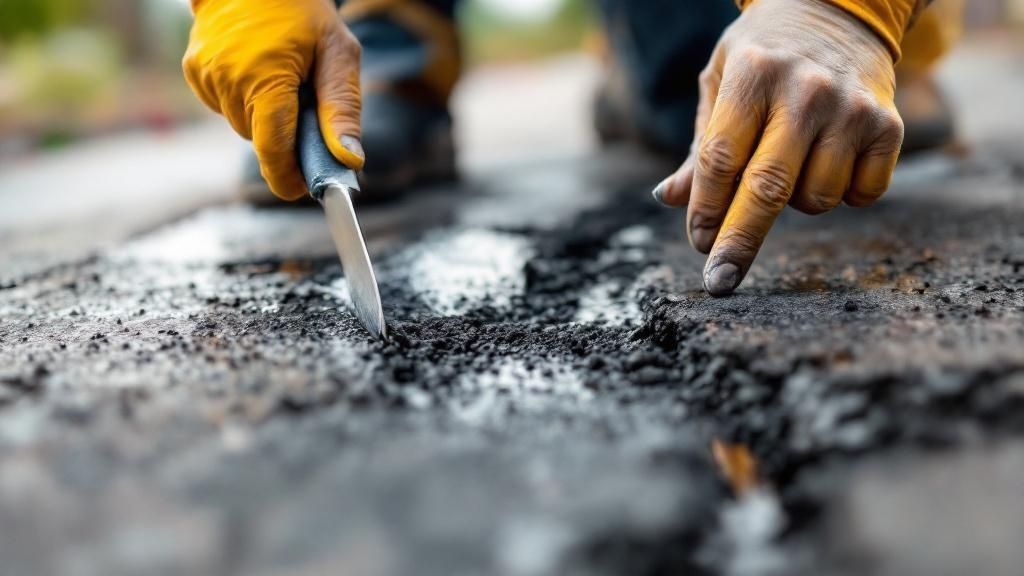
A good asphalt patch depends almost completely on your prep work. This is very important. Think of it like painting a wall—if you paint over dust, you know the paint will peel. The same is true when you repair alligator cracks asphalt. The patch needs a clean, solid surface to stick to.
Start with a stiff wire brush and a small pry bar or a strong screwdriver. Your first job is to clear out all the loose chunks of asphalt, weeds, and any other junk inside the cracks. Don’t be gentle. You need to remove anything that isn’t solid asphalt.
Getting a Debris-Free Surface
Once you’ve gotten the big stuff out, it’s time to get rid of the fine dust. This is a step you can’t skip if you want your repair to last.
A shop vac is perfect for sucking everything up. A leaf blower or an air compressor can also work well to blast the cracks clean.
Your goal is to get the surface very clean. When you apply the patching material, it needs to stick to the original asphalt, not a layer of dust. Any leftover dirt will create a weak spot, and you’ll be doing this job again next year.
The most common reason DIY asphalt repairs fail is because the surface wasn’t cleaned well. Taking an extra 15 minutes to clean the area can add years to the life of your patch.
This deep cleaning also lets you check the foundation. As you clean, you can make sure the base is stable before you start filling. This is important, because a weak foundation is often what caused the cracking in the first place.
The Importance of a Solid Base
A study from the NCDOT found that a weak base layer in asphalt leads to a much shorter lifespan. In simple terms, this means just filling the cracks isn’t enough. The repair material has to be packed tightly into a stable, clean area to stop the problem from coming back. You can read more about asphalt fatigue life here.
Before moving on, do one last check: is the area completely dry? Patching compounds and water don’t mix. The patch won’t stick to a damp surface. If it has rained recently, you have to wait for a sunny day to let all the moisture dry up.
A clean, dry, and stable surface is your key to a successful, long-lasting repair.
Applying Your Alligator Asphalt Patch
Now that the prep work is done, it’s time for the main event: applying the patch. This is where we actually repair alligator cracks asphalt, so take your time. This will help the repair last a long time. The goal is to work carefully and build a dense, solid patch that can handle weather and traffic.
First, scoop or pour your patching compound right into the cleaned-out area. Don’t be afraid to use a lot of material—it’s better to overfill the spot a little bit. You’ll be packing it down in a minute, and the extra material will keep you from ending up with a dip in your finished patch.
Spreading and Compacting for a Solid Fill
With the compound in place, grab your trowel or squeegee. Your goal is to spread the material evenly. Push it firmly into every crack. This is important for getting rid of any air pockets, which are just weak spots. You want a solid fill with no empty spaces.
This simple picture shows the main steps.
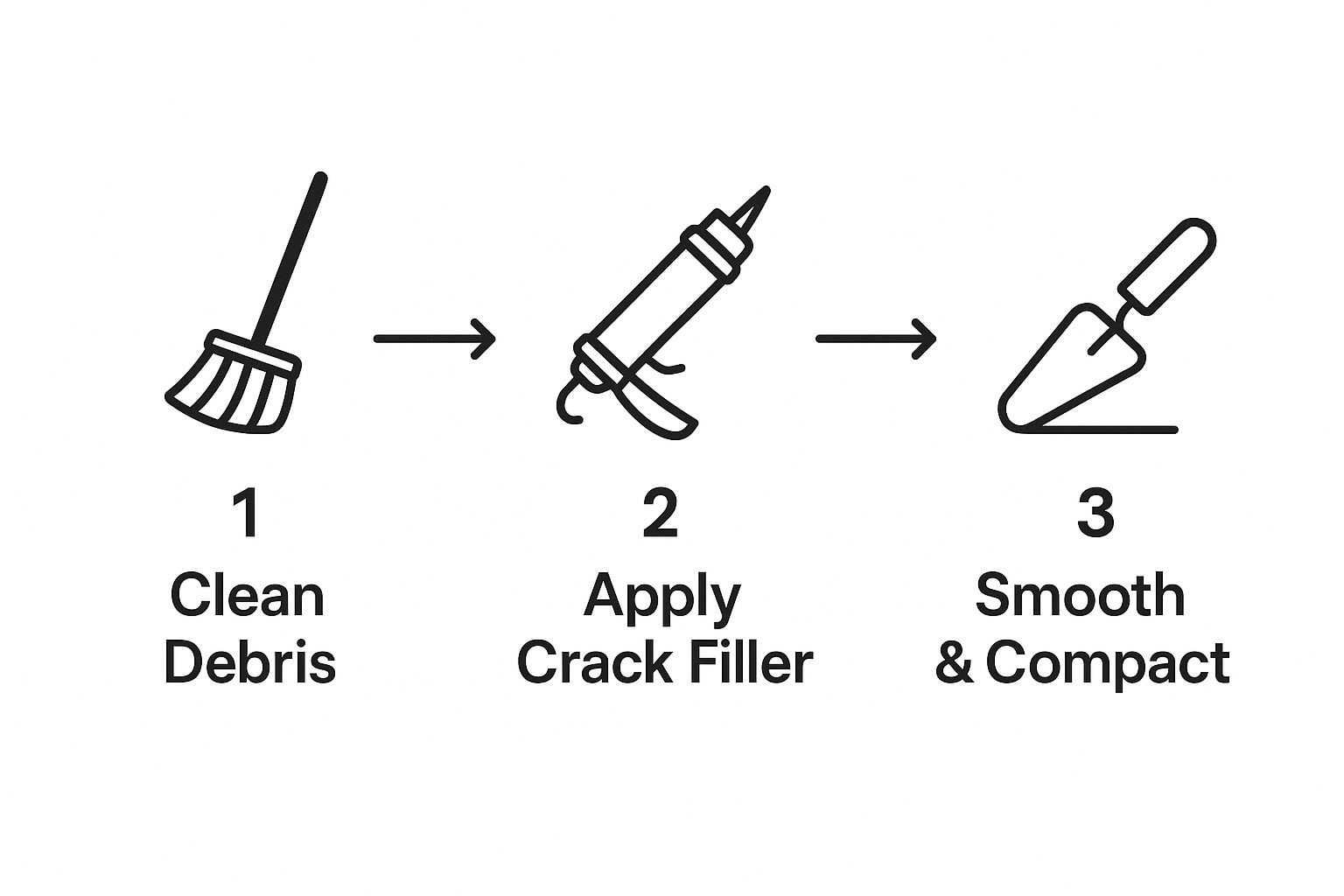
As you can see, a good repair moves from a clean base to a well-applied filler, and then to a smooth, packed surface.
Now for the most important part: packing it down. This is called compaction. Use a hand tamper or a block of wood and press down firmly across the entire patch, over and over again. You’re trying to make the repair material as dense as possible. Keep tamping until the patch is level with the rest of the asphalt. If you’re fixing a really big area, you might want to call a professional for asphalt patching and repair to get a perfect finish.
Pro Tip: If you’re working on a large area, do it in smaller sections. This way, the compound won’t start to dry before you can pack it down properly.
This step is what gives your repair its strength. A well-packed patch can handle the weight of cars and keep water out. This stops the problem from coming right back. People often rush this step, but that just leads to a weak repair that is sure to fail.
Curing and Sealing Your New Asphalt Repair
You’ve patched the cracks, and it looks great—but don’t put your tools away just yet. The final steps are what make your hard work last. Your new asphalt patch needs time to cure, which is what gives it the strength to handle traffic and weather.
Be patient. You’ll need to check the product’s instructions for how long it needs to cure. The time can change based on the temperature and humidity. It is very important that no one drives on the fresh patch until it is completely hard. A single tire rolling over soft asphalt can ruin all your hard work in seconds.
Protecting Your Entire Driveway
Once the patch is fully cured and solid, it’s time to think about the bigger picture. Protecting the whole surface with a quality asphalt sealer is the best way to protect your driveway. Think of sealer as a shield. It forms a protective barrier that keeps out the things that cause cracks in the first place: water, sunlight, and oil spills.
Applying a fresh coat of sealer over both the new patch and the old asphalt does two important things:
- It makes the repair blend in, giving your driveway a clean, even look.
- It provides a layer of protection everywhere, stopping new alligator cracks from starting nearby.
This extra step is what really makes your driveway last longer. Sealing doesn’t just protect the patch; it protects your whole driveway and keeps you from having to do more repairs next year.
This isn’t just a guess; research backs it up. A study from the University of California Pavement Research Center showed that sealing early can make pavement last 3 to 5 years longer. Taking the time to seal the surface can save you from more expensive repairs later on. You can read more about pavement preservation strategies here.
The timing of your sealing job matters, too. You’ll want good weather for it to cure properly. Understanding how weather can affect asphalt repairs is a smart final check to make sure your work pays off.
Got Questions About Asphalt Repair? We’ve Got Answers.
Even with a good plan to repair alligator cracks asphalt, you might still have questions. Getting things right from the start can make your patch last for years instead of just a few months. Let’s go over some of the most common questions people ask before they start a project.
When Is the Best Time to Fix Asphalt Cracks?
The time of year is a big part of a successful repair. You need good weather on your side.
The best time to patch asphalt is on a warm, dry day when the temperature is above 60°F (15°C). The repair compounds need that warmth to cure and stick to the old asphalt. If you try to patch on a cold day, the repair will be weak and break down quickly.
It’s also important that the surface is completely dry. Any water in the cracks will keep the filler from sticking. Check the weather forecast to make sure you have a few clear, rain-free days.
Is a Simple Filler Enough for Alligator Cracks?
This question comes up a lot. People see a web of cracks and hope a little filler will solve the problem.
For a single crack, a liquid filler can work. But alligator cracking—that spiderweb pattern of cracks—is a much bigger problem. It’s a sign of a deeper weakness. A full patch is the only way to fix it right. This treats the entire weak area, not just the lines on the surface.
If the damage is very bad, you might need a bigger fix. Looking at options for asphalt paving and resurfacing in Monterey can give you a fresh start and a solution that lasts much longer.
How Long Before I Can Use My Driveway Again?
Patience is important after you’ve finished the repair. You need to give the patch enough time to get completely hard.
Curing times can change depending on the product you use and the weather, but here are some good rules to follow:
- Wait at least 24 to 48 hours before you walk on the new patch.
- Give it 3 to 5 days before you drive on it.
Always read the instructions on the product you bought. They will give you the most accurate timeline to make sure your hard work pays off.
When the job feels too big or you want a perfect, professional result, it’s time to call in the experts. Coastal Pipeline Inc. offers top-quality paving and repair services to make sure your driveway is safe, strong, and looks great. Contact us today at https://coastalpipelineinc.com for a quote.