
Beneath every property, a hidden network of pipes—sewer lines, water mains, and gas lines—makes modern life possible. But there’s a problem: many of these systems are getting old. For property owners, it's important to know that pipes installed 50 to 70 years ago are now reaching their limits. Upgrading them now isn't just an expense; it's a smart investment to prevent a future disaster.
The Hidden Risks Lurking Beneath Your Property
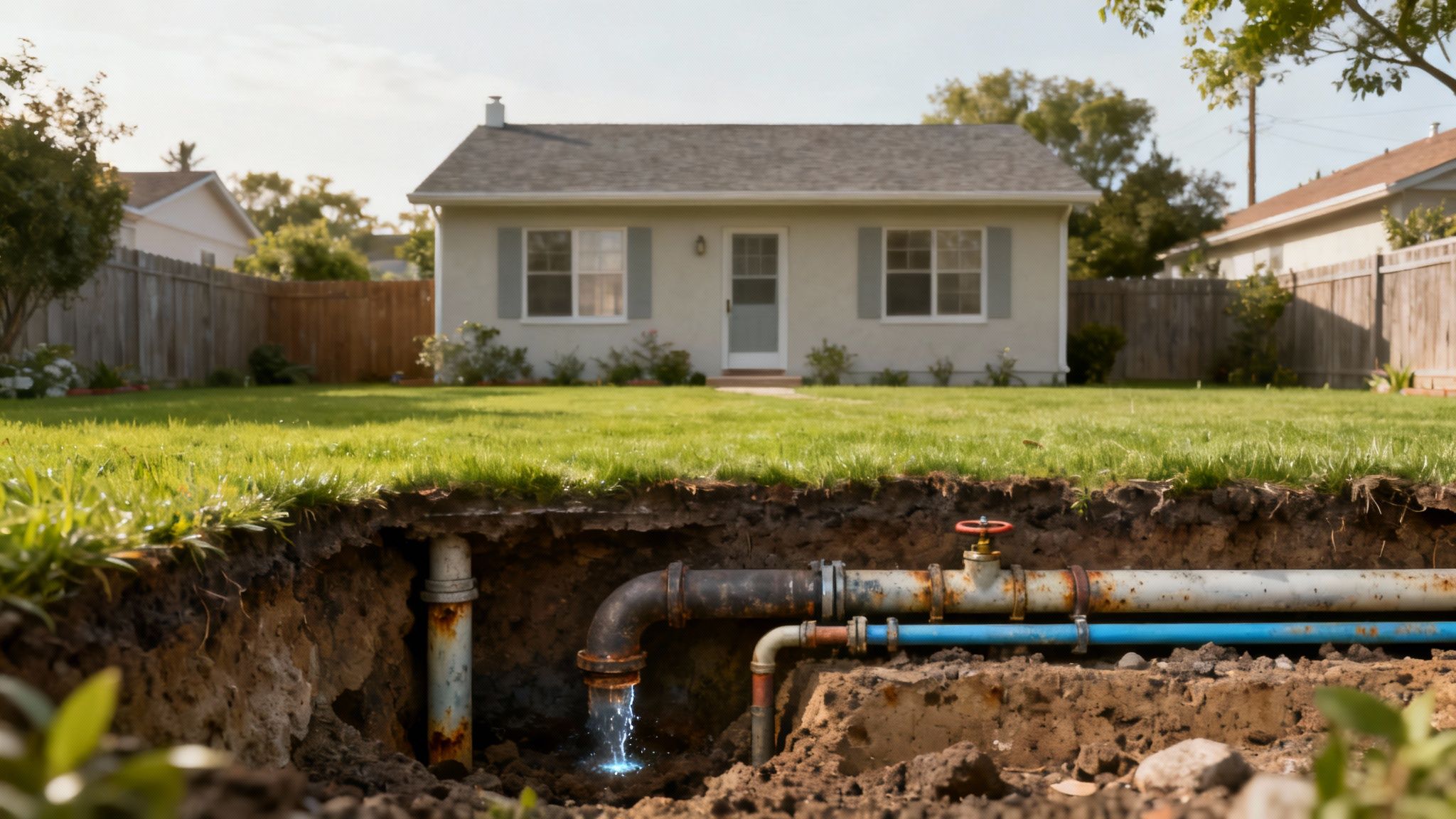
It’s easy to forget about the pipes running under your lawn, driveway, and foundation. Out of sight, out of mind, right? This underground system works quietly for decades, so we don't think about it until something goes wrong.
Think of it like old wiring in a house. It might work fine for years, but one day it can cause a costly and dangerous problem. A huge number of underground pipes across the U.S. are in the same situation. They are near or past their original lifespan. Many of these systems were installed during the building boom after World War II and are now starting to fail. This isn't a problem for the future; it's a direct threat to your property today.
Why This Matters for Central Coast Properties
Here on the Central Coast, communities like Monterey, Santa Cruz, and Hollister have older infrastructure. This includes both public pipes and the private "lateral" lines that connect directly to your property. A broken sewer lateral, a leaky water line, or an old storm drain can cause big problems if not fixed early.
Problems from aging pipes can show up quickly and cause a lot of damage:
- Costly Water Damage: A cracked water pipe can do more than make a mess. It can flood basements, damage your foundation, and ruin your landscaping.
- Sewer Backups: No one wants to deal with this. A collapsed or blocked sewer line can push raw sewage back into your home or business, creating a serious health hazard.
- Unexpected Bills: Emergency repairs always cost more than planned upgrades. Often, they cost thousands of dollars more than fixing the problem before it becomes a crisis.
That’s why it’s so important to check your property’s pipes before there's a problem. It's an investment in preventing a disaster and protecting your property's value. For a deeper look at how these systems work, check out this guide to underground utilities explained.
As material and labor costs rise, many municipalities and commercial property owners are investing in proactive replacement now—before failure occurs. This reduces liability, improves sustainability, and supports resilience goals tied to climate-readiness and regulatory compliance.
At Coastal Pipeline, we specialize in modern, code-compliant upgrades for the Central Coast. From trenchless sewer replacement to high-performance water mains, our goal is to help you avoid the stress and high cost of an emergency. This guide will show you the warning signs to look for, the modern solutions available, and why it makes financial sense to deal with aging pipes before they break.
Why Our National Infrastructure Is At a Breaking Point
The problem with aging pipes isn't just about one property; it's a nationwide issue. Much of the underground infrastructure in our communities was installed between the 1950s and 1970s. Millions of miles of pipes were laid using materials that we now know don't last forever.
Think of it like a classic car. It might run well for decades, but eventually, the original parts wear out. The same thing is happening under our feet. Materials like cast iron, galvanized steel, and clay were the best options at the time, but they are all reaching the end of their service lives.
For example, cast iron pipes were designed to last 50 to 75 years. Over time, they become brittle and rust from the inside out. This can cause slow leaks or sudden breaks. Clay sewer pipes can crack as the ground shifts and are easily blocked by tree roots looking for water. This widespread aging of materials is creating major problems for property owners today.
Your Property Is Part of a Larger System
It helps to think of public and private utility systems as a single chain. The large public pipes under the street are the main links, and the smaller "lateral" lines connecting to your property are the individual links. A chain is only as strong as its weakest link.
When a public pipe fails, it can affect your private lines. A blockage in the city sewer can cause sewage to back up into homes. A sudden pressure change from a water main break can put stress on older, weaker pipes leading to your building, causing them to burst.
This means that even if your pipes seem fine, they are part of a larger, aging network. This is the reality for communities along the Central Coast, including Monterey, Santa Cruz, and Hollister, where older infrastructure is common. Failing laterals, leaky water lines, and undersized storm drains can cause flooding, erosion, and very expensive emergency repair bills if they aren't addressed early. You can learn more about how modern utility systems construction solves these old problems.
The problem isn’t just a few pipes here and there. It's a system-wide issue affecting the entire country. When public systems fail, they put stress on the private laterals connected to your property, increasing the risk of a failure at your doorstep.
The National Push for Proactive Upgrades
With both material and labor costs going up, waiting for a pipe to fail is becoming a more expensive risk each year. That’s why many cities and commercial property owners are shifting to proactive replacement. They are investing in upgrades now, before a disaster happens. This approach reduces liability and makes the entire system more sustainable and resilient, especially with new climate and regulatory rules.
This trend is also driven by the numbers. Aging underground infrastructure is a huge challenge across the United States. According to the American Society of Civil Engineers (ASCE), a large part of our country's utility grid is past its useful life, which means it's time for an upgrade. To see the full scope of the issue, you can explore the 2025 ASCE infrastructure report card.
This industry-wide push for preventive work is also creating demand pressure. U.S. construction spending hit $2 trillion in 2023. Investment in sewage and water infrastructure is up 11% and 8% respectively in 2024. All this work is making contractors busier, which means longer waits and higher prices for those who wait too long. For property owners, this is a real-time issue affecting property values, insurance costs, and safety.
How to Spot the Warning Signs of Failing Pipes
Old pipes usually give warning signs before they fail completely. These signals tell you that trouble is brewing just under the surface. Think of it like a creaky floorboard or a flickering light; it's a warning you shouldn't ignore. Learning to spot these clues is your best defense against a messy, expensive emergency.
Remember, the utility lines on your property are your responsibility. Being a proactive owner means paying attention to what your home or business is telling you. The signs differ for sewer, water, and gas lines, but they all point to the same thing: it’s time to think about an upgrade.
Clues Your Sewer Line Is in Trouble
Every drain in your building connects to a single sewer lateral, the main pipe carrying wastewater to the city connection. When this pipe starts to fail, things can get messy fast.
Look out for these red flags:
- Persistent Slow Drains: If your shower, kitchen sink, and toilet are all draining slowly, it’s probably not a simple clog. It’s a sign that the main sewer line itself is blocked or damaged.
- Gurgling Sounds: If you hear a gurgling noise from your drains or toilet when water is running, it could be trapped air trying to get past a blockage.
- Foul Odors: You should never smell sewage inside your home or in your yard. A constant bad smell is a clear sign that a cracked sewer line is leaking.
- Unusually Green Patches: A broken sewer line leaks water and waste, which acts like fertilizer. If one spot on your lawn is suddenly greener than the rest, your sewer line may be leaking underneath it.
This infographic gives a great overview of the common issues property owners face with aging utility pipes.
As you can see, old materials and the owner's responsibility for the lateral line can create a serious risk to your property's value if you ignore the problem.
Symptoms of a Failing Water Line
A leaky water line can be harder to spot than a sewer problem, but the damage it causes is serious. Hidden leaks can damage your foundation, make your utility bills go up, and create a damp environment where mold can grow.
Here’s what to watch for:
- Sudden Spike in Water Bills: If your water usage hasn't changed but your bill suddenly jumped, you likely have a leak.
- Reduced Water Pressure: A noticeable drop in water pressure throughout your property often means there's a crack or block in the main water supply line.
- Damp Spots or Puddles: Unexplained wet spots on floors, walls, or the foundation are a sure sign of a leak. Outside, you might see soggy patches in the yard.
- The Sound of Running Water: When all faucets are off, your home should be quiet. If you can hear a faint hissing or running water sound, a pipe is probably leaking.
If you think you have a hidden leak, you need to act fast. Professional leak detection and repair services can use special tools to find the exact source of the problem without digging up your property.
The Unmistakable Dangers of a Gas Line Leak
Sewer and water line failures can hurt your budget, but a gas line leak is a direct threat to your safety. Natural gas is invisible and has no smell on its own. Utility companies add a substance called mercaptan to give it a "rotten egg" smell so you can detect it.
If you think you smell gas, your next actions are critical. Immediately get everyone out of the building. Do not use light switches, phones, or anything that could create a spark. Once you are a safe distance away, call 911 and your gas company.
The main signs of a gas leak are easy to spot once you know them:
- Rotten Egg Smell: This is the biggest warning sign. Don’t ignore it.
- Hissing Noises: A hissing or whistling sound near a gas pipe means gas is escaping under pressure.
- Dead Vegetation: A leaking underground gas line will kill the grass, plants, or shrubs directly above it by cutting off oxygen to the soil.
Knowing what to look for puts you in control. By catching these problems early, you can schedule a modern upgrade on your own time, instead of being forced into a stressful, expensive emergency repair.
Here is a quick table to help you remember the key warning signs.
Early Warning Signs of Failing Pipes
| Utility Type | Common Symptoms | Potential Risks of Ignoring |
|---|---|---|
| Sewer Line | Slow drains everywhere, gurgling noises, foul odors, overly green lawn patches. | Raw sewage backups, property damage, health hazards, costly emergency cleanups. |
| Water Line | Spikes in water bills, low water pressure, damp spots on walls/floors, sound of running water. | Foundation damage, water waste, high utility bills, risk of mold growth, structural issues. |
| Gas Line | Distinct "rotten egg" smell, hissing sounds near pipes, patches of dead vegetation. | IMMEDIATE DANGER: Fire, explosion, serious health risks including carbon monoxide poisoning. |
Keep this table handy. Recognizing these symptoms is the first and most important step in protecting your property and making sure your utility systems are safe and reliable.
Choosing Modern Solutions for Pipe Upgrades
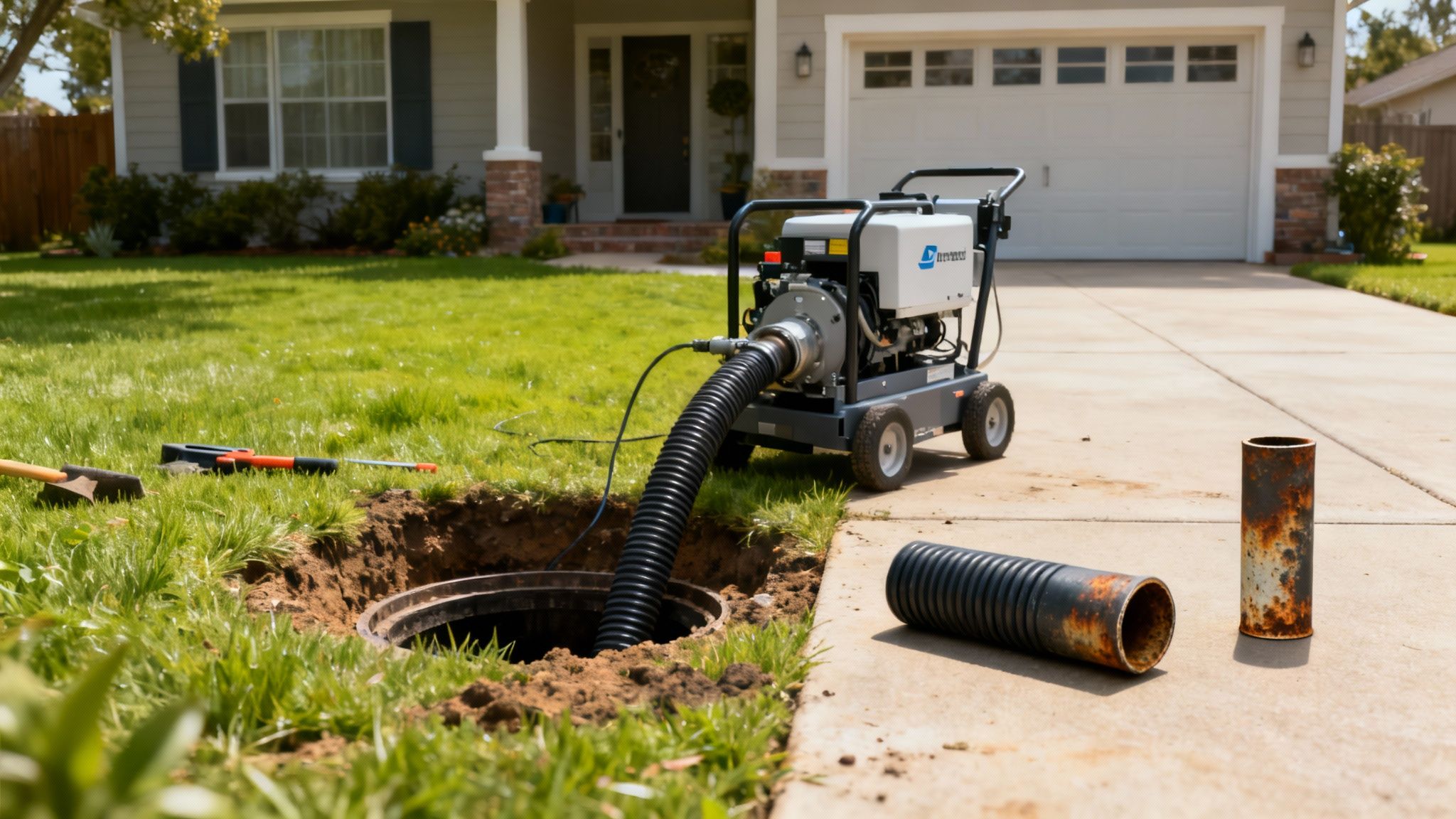
When an old pipe breaks, the traditional fix has always been messy. It usually involves digging a huge trench across your property, which can destroy lawns, driveways, and landscaping. This old method is not just disruptive; it's also slow and can get very expensive when you add up the costs of restoring your property.
Luckily, the industry has improved. Modern pipe replacement is about working smarter, not harder. There are now solutions that are less invasive and provide much better long-term results. Instead of waiting for a disaster, you can use advanced technologies that protect your property and give you peace of mind for decades.
The Power of Trenchless Technology
What if you could repair a major underground pipe without digging up your whole yard? That’s what trenchless technology offers. This minimally invasive method has become the best way to upgrade pipes, saving homeowners time, money, and stress.
Two of the most popular trenchless methods are pipe bursting and Cured-in-Place Pipe (CIPP) lining.
- Pipe Bursting: This method is very clever. A new, strong pipe is pulled through the old, damaged one. As it moves, a special "bursting head" breaks the old pipe apart, pushing the pieces into the soil. A brand-new, seamless pipe is left in its place, and only small entry and exit holes are needed.
- CIPP Lining: This technique creates a new pipe inside the old one. A flexible, resin-soaked liner is inserted into the damaged pipe and inflated. The resin then cures and hardens into a smooth, durable pipe that seals cracks and blocks roots for good.
Both of these trenchless methods greatly reduce the need for digging. This not only saves your landscaping but also cuts down on the extra costs of repairing your driveway or patio after the work is done.
Upgrading to Superior Materials
It's not just about the installation method; the materials used today are much better too. We no longer rely on brittle clay or rust-prone cast iron. Today’s pipes are made for better performance and a much longer lifespan.
One of the best materials is High-Density Polyethylene (HDPE) pipe. This durable plastic is resistant to corrosion, chemicals, and wear. Because it’s flexible, HDPE can handle shifting ground and earthquakes much better than rigid pipes, making it a great choice for California's Central Coast. When installed correctly, HDPE pipes can last 100 years or more.
This move toward better technology and materials is part of a bigger trend. Upgrading utility infrastructure is a massive project across the United States. It's estimated that utilities will spend $63 billion on transmission and distribution, with 67% of that aimed at replacing aging infrastructure to maintain reliability.
Of course, the cost of these upgrades is a major factor for any property owner. To get a better idea of what a modern replacement might cost, you can find a detailed breakdown in our guide on the cost of trenchless sewer line repair. Making a smart, proactive choice now ensures your utility system will be solid for decades, protecting your property from the high cost of a sudden failure.
Weighing the Cost of an Upgrade Against the Price of a Failure
Let's get straight to the point: the first question every property owner asks is, "How much will this cost?" It's a fair question. The final cost of a new pipe depends on things like the length of the pipe, its location, how easy it is to access, and the replacement method used.
But looking at this as just another expense is missing the bigger picture. A proactive pipe upgrade is one of the smartest investments you can make for your property's value and safety. Waiting for a pipe to break doesn't just mean paying for a repair. It means paying extra for an emergency call, plus the costs of cleaning up water damage, fixing your ruined landscaping, and maybe even finding another place to stay.
The Real Price of Procrastination
An emergency pipe failure is an unplanned expense. It happens at the worst possible time, and you have no control over the timing or the price. A planned upgrade, on the other hand, puts you in control.
When you plan ahead, you can:
- Budget with Confidence: You have time to get quotes, understand the work, and arrange financing without the stress of a disaster.
- Schedule on Your Calendar: You decide when the work gets done, causing less disruption to your family or business.
- Prevent Collateral Damage: A planned replacement avoids the massive water or sewage damage that comes with a major pipe break.
By planning your utility upgrade, you can get a clear picture of the factors that influence sewer line replacement costs and make a financial decision you feel good about.
An Investment in Your Property's Future and Your Peace of Mind
Beyond avoiding a costly emergency, a modern utility system is a real asset. It increases your property's value, makes it more attractive to buyers, and gives you peace of mind. Knowing your sewer, water, and gas lines are solid and up to code protects your wallet and the safety of everyone on your property.
A proactive upgrade is an investment in certainty. You're swapping the unknown, unpredictable cost of a future failure for a controlled, planned expense that safeguards your property for decades to come.
This forward-thinking approach is more important than ever. The problem of aging pipes is a global issue. The United Nations expects that by 2050, 70% of the world's population will live in cities, putting a huge strain on utilities. In response, major countries are preparing to spend over $1 trillion each in the next decade on their infrastructure. You can discover more insights about this global infrastructure moment on mckinsey.com.
Closer to home, all that spending is creating a high demand for qualified contractors. U.S. construction spending hit $2 trillion in 2023, and in 2024, investment in sewage and water systems is up 11% and 8%, respectively. For property owners on the Central Coast, this means waiting will likely lead to longer delays and higher prices. Acting now lets you lock in today's rates before demand gets even higher.
Your Proactive Plan to Protect Your Property
Waiting for a utility line to fail is a gamble you are sure to lose. The most important thing to remember is that you can't afford to wait for a disaster. A proactive plan is your best defense against the stress, damage, and high costs of an emergency pipe failure.
Taking control now is about more than just avoiding a mess. It's about protecting your investment and making sure your property’s most important systems stay reliable for years.
The first and most important step is to schedule a professional inspection. This is especially true if your property is over 40 years old. In communities like Monterey, Santa Cruz, and Hollister, where older homes are common, an assessment is a key part of responsible property management.
What a Professional Evaluation Actually Looks Like
Think of a modern inspection as an X-ray for your pipes. It’s a non-invasive way to get a clear picture of what’s happening underground. This can reveal hidden problems before they turn into major disasters.
A thorough evaluation usually includes:
- Sewer Camera Inspection: A special, high-resolution camera is sent into your sewer line. This gives a live view of the inside of your pipe, helping to spot cracks, clogs, tree roots, or sagging sections.
- Leak Detection: For water lines, technicians use special sound equipment to listen for hidden leaks, finding their exact location without digging.
- Full System Assessment: A qualified contractor will also check the age, material, and overall condition of your pipes to see which areas are at the highest risk.
This process gives you a clear plan for the future. It gives you the information you need to make smart decisions based on facts, not just hope.
An inspection is the difference between reacting to a crisis and managing an asset. It gives you the power to budget, plan, and schedule an upgrade on your own terms, completely avoiding the sticker shock of a sudden, catastrophic failure.
If you own or manage a property in Monterey, Santa Cruz, or San Benito County, there has never been a better time to assess your aging utility systems. With the demand for qualified contractors rising, waiting will only lead to longer delays and higher costs.
Contact Coastal Pipeline for a professional evaluation and a modern, code-compliant upgrade plan. Protect your property, your budget, and your peace of mind by scheduling an inspection before a problem forces your hand.
A Few Common Questions About Utility Line Upgrades
When you think about the pipes under your property, many questions can come up. It's easy to feel overwhelmed. Let's answer some of the most common questions property owners have when deciding if it's time to upgrade their old sewer, water, and gas lines.
How Can I Figure Out How Old My Pipes Are?
For most homes, especially those built before the 1980s, the pipes are original to the house. The easiest first step is to check your property records or building permits to find out when your home was built—that's likely the age of your pipes, too.
If you can't find the records, a professional plumber can do an inspection. They can identify the material, like old cast iron or clay. Seeing those materials is a clear sign that your system has been in the ground for a long time and is probably near the end of its life.
Is Trenchless Pipe Replacement Really Better Than Traditional Digging?
In many cases, yes. Traditional digging means a giant trench is torn through your yard, driveway, or garden. Trenchless methods, like pipe bursting, avoid all that by working from just two small access points.
While the upfront cost might seem similar to digging, you save a lot of money in the long run. You won't have to pay thousands to rebuild a retaining wall, re-pour a concrete patio, or restore your landscaping.
The real game-changer with trenchless replacement is the speed and lack of chaos. A digging job can turn your property into a construction zone for a week, but a trenchless project is often done in a single day.
Who's on the Hook for the Pipe Between My House and the Street?
You are. As the property owner, you're responsible for the sewer and water lines from your house all the way to where they connect to the city's main line. This section of pipe is called the "lateral."
That means if your lateral line clogs, leaks, or breaks, you have to pay to fix it. This is why it's so important to know the condition of your lateral. A proactive inspection can help you avoid a messy, expensive emergency later on.
Will My Homeowner's Insurance Cover a Broken Pipe?
It depends. Most standard policies will cover the damage from a sudden and accidental burst pipe inside your home. But they almost never cover problems that come from old age, wear and tear, or lack of maintenance. A standard sewer backup is also usually not covered.
You can often buy extra coverage, sometimes called a "service line" or "sewer backup" endorsement, but it's not automatic. Honestly, replacing an old, failing line before it breaks is almost always a smarter financial move than hoping your insurance will cover it later.
If you own or manage property in Monterey, Santa Cruz, or San Benito County, now is the time to assess aging utility systems. Contact Coastal Pipeline Inc. for a professional evaluation and a modern, code-compliant upgrade plan that protects your property and your budget.