When winter rains arrive on the Central Coast, potholes seem to come with them. But the cracks and craters you see on the road are often a sign of a bigger problem hidden underground.
Fixing a pothole the right way means looking deeper than the asphalt. It requires a “utility-smart” approach that finds the real cause, like a failing sewer line or unstable soil. Just patching the surface is a temporary fix; fixing the foundation is the real solution.
The Real Story Hiding Beneath Winter Potholes
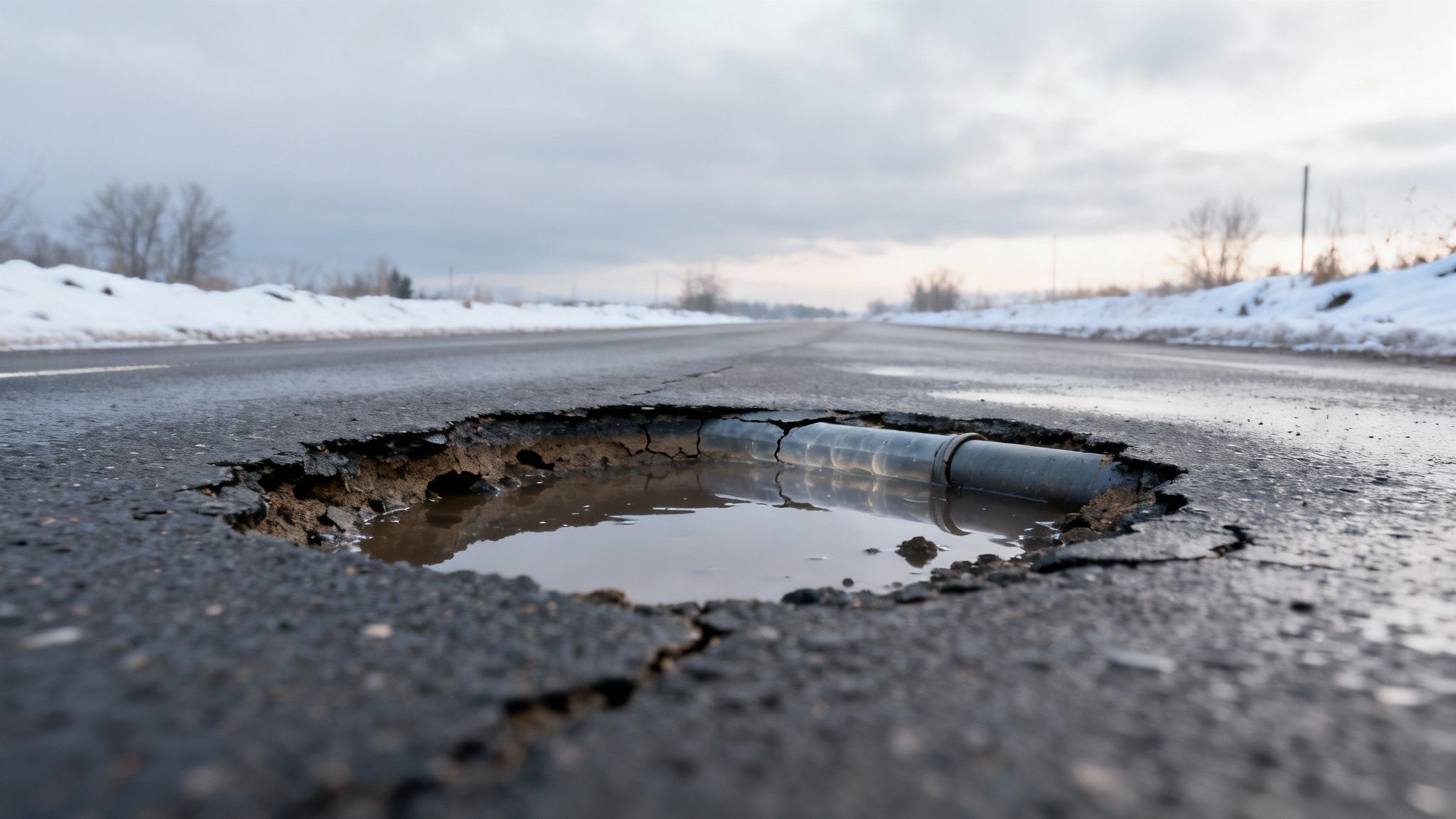
After a wet winter, potholes pop up everywhere. For property managers and city agencies in Monterey, Santa Cruz, or San Benito Counties, it’s a frustrating yearly problem. It’s easy to blame the rain, but the real issue is often buried just a few feet below the surface.
Think of a pothole as a symptom. It’s a clear sign that something is wrong, but the real problem is often an old, failing utility line under the road. Simply filling the hole is a band-aid. The problem will just come back if the cause isn’t fixed.
More Than Just a Surface Problem
Most paving companies focus on what they can see. They patch cracks and fill holes in the asphalt. But this approach misses the connection between the road on top and the network of pipes and utilities running underneath.
The real reasons for stubborn, returning potholes are almost always underground.
- Aging Water Lines: A small leak can soak the ground under the road, turning its solid foundation into a soft, unstable mush.
- Eroded Sewer Laterals: Cracks in old sewer pipes let water escape, washing away the soil that supports the asphalt.
- Unstable Trench Backfill: After a utility repair, if the soil isn’t packed down tightly, it can settle over time. This creates an empty space under the pavement that eventually collapses under traffic.
This is why a utility-smart strategy is so important. Paving alone won’t last if the ground it’s built on is being washed away from below. Even though spending on sewer and water infrastructure is up—11% and 8%, respectively—our aging systems are still causing major problems on the surface.
A strong road isn’t just about smooth asphalt; it’s about a solid foundation. That means fixing the problem from the ground up. To learn more about these systems, you can explore this guide on what underground utilities are and see how they affect the world above.
How Heavy Rains Turn Pavement Into Problems
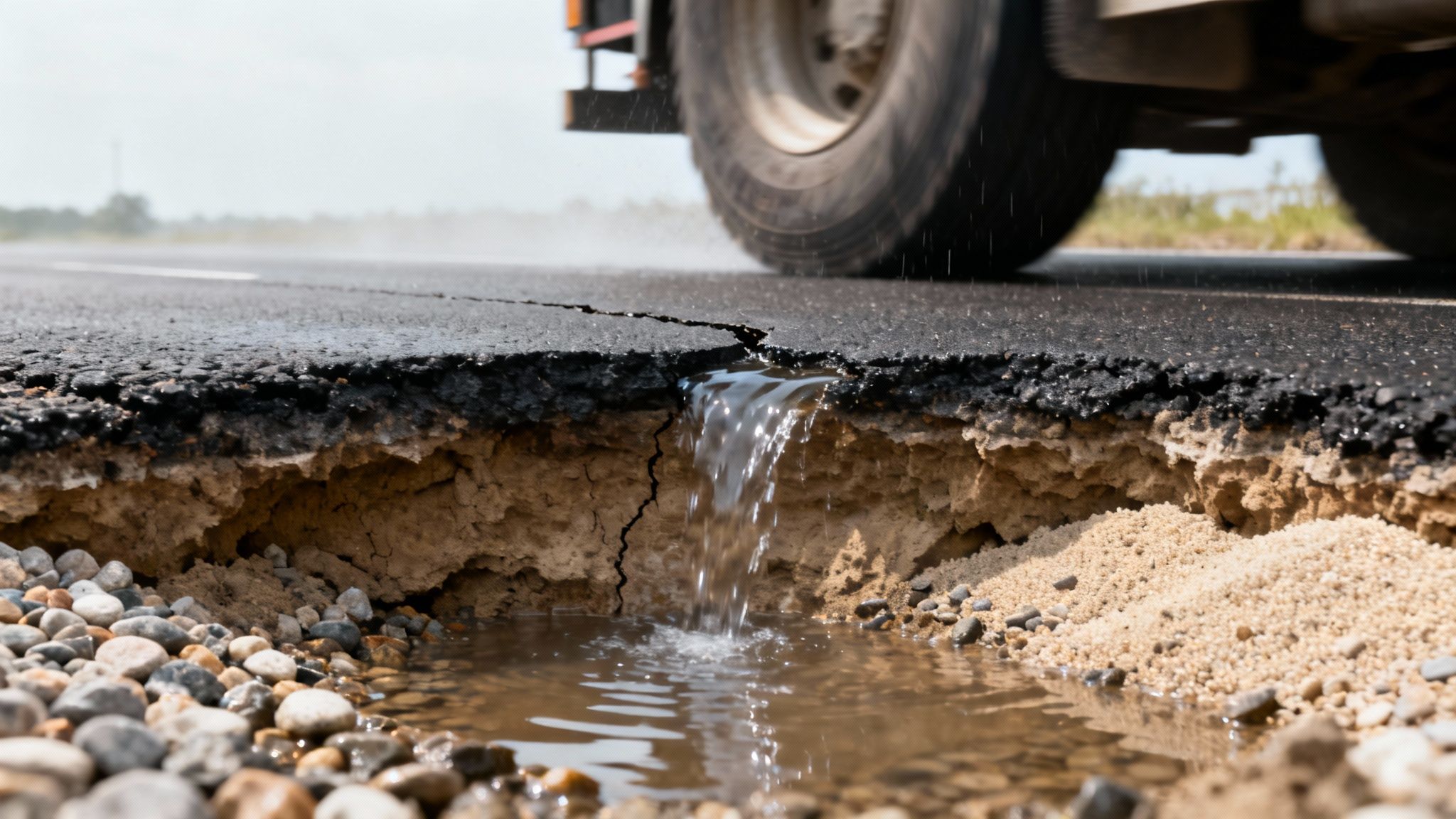
It can feel like it happens overnight. A good road suddenly falls apart after a few winter storms. But the problem actually starts small, with rainwater getting into tiny cracks in the pavement. Once water gets inside, the damage begins.
The water seeps into the soil and gravel layers under the asphalt, called the subgrade. The subgrade is the road’s foundation. When it gets soaked, it loses its strength and becomes soft and weak.
As more water flows through this weak base, it carries away sand and soil. This slow erosion creates hidden empty pockets under the asphalt. Now, the pavement is sitting on nothing but air, like a bridge with its supports washed away.
The Final Collapse
The last step is quick and harsh. A heavy car or truck drives over the weak spot, and the unsupported asphalt collapses into the empty space below. Just like that, a pothole is born.
Here on California’s Central Coast, our long winter rains make this problem worse. The constant moisture is especially hard on roads built over old utility trenches, which are often weak spots. These areas become a roadmap for future failures.
This seasonal damage has a huge impact. Across the U.S., about 50% of roads are already in poor shape, and the number of potholes can increase by 20% in the winter. This leads to costly car repairs and serious safety risks every year. You can find more data on how weather impacts road safety to understand the full scope of the problem.
Water’s Two-Pronged Attack
Pavement failure from winter rains is rarely just about water coming from the top. Often, it’s a combined attack where water from the surface and leaks from underground utilities meet.
- From Above: Rainwater gets into cracks, weakening the subgrade and creating voids.
- From Below: A leaking sewer pipe or broken storm drain constantly adds moisture to the soil from underneath, keeping the foundation unstable.
This combination is why patching a pothole is only a temporary solution. If the ground is constantly wet from a buried leak, any new asphalt is just being placed on a failing foundation. It’s only a matter of time before it collapses again.
Properly managing this water is the only way to build a repair that lasts. Understanding how professional storm water management systems are designed to direct water away from these weak spots is key to building roads that can survive our wet winters.
What Most Paving Contractors Get Wrong
When most paving contractors see a pothole, their first thought is to patch it with asphalt. It seems like the fastest, easiest fix. But this surface-level repair almost always ignores the real issue hidden just a few feet underground.
Think about it. If a hidden water pipe is leaking or an old sewer line is cracked, the ground under the pavement is getting soaked. All that water turns a solid road base into a soft, unstable mess. A patch won’t stick to that—it’s a temporary fix for a much bigger problem.
This is why so many pothole repairs fail within a year. It’s a frustrating cycle of patching and re-patching because the root cause was never fixed.
Surface-Level Fix vs. Utility-Smart Solution
Not all repair methods are the same. The difference between a quick patch and a lasting solution is whether you’re treating the symptom or fixing the actual problem. The table below shows the two different approaches.
| Aspect | Traditional Paving Contractor (Surface Fix) | Coastal Pipeline (Utility-Smart Solution) |
|---|---|---|
| Approach | Puts an asphalt patch over the hole | Inspects utilities and repairs the subgrade first |
| Longevity | Short-term (maybe 6-12 months) | Multi-year reliability |
| Cost Over Time | Repeated patching costs add up | One-time investment in a real solution |
| Root Cause | Ignored | Addressed using trenchless and full-depth methods |
As you can see, a little extra work at the beginning saves a lot of time and money later.
Why Surface Fixes Just Don’t Last
Imagine winter rain seeping into small cracks in the asphalt. At the same time, a leaky pipe below is washing away soil, creating a hidden empty space. The roadbed eventually sinks into that space, and the pavement cracks under the weight of traffic.
Putting asphalt over that collapsing foundation is like trying to build a house on quicksand. It might look good for a short time, but it’s guaranteed to fail.
Here are the most common problems we find under failed pavement:
- Cracked Sewer Lines: Slowly leak water, washing away soil and creating a weak, muddy base.
- Leaking Water Mains: Create constantly wet pockets of soil right under the asphalt.
- Failing Storm Drains: Can get clogged and back up, forcing water into utility trenches where it doesn’t belong.
- Unstable Trench Backfill: Old utility work might not have been packed down right, causing it to settle over time.
Even with more money being spent on infrastructure, these problems are getting worse. The Q4 2025 Content Insight Report showed that spending is up 11% on sewer and 8% on water systems. Still, California’s aging underground pipes continue to fail, taking our roads with them.
For a deeper look at this, you might be interested in our guide on how weather affects asphalt repairs.
Adopting a Utility-Smart Pothole Response
A real, lasting repair doesn’t start with asphalt—it starts underground.
At Coastal Pipeline, we have a different set of tools. We use trenchless technology, video inspections, and full-depth trench restoration before we even think about paving. This means we find and fix the leaks first.
By getting rid of the water source, we can rebuild a solid, packed foundation that is ready for paving. Only then do we lay down new asphalt designed to handle the Central Coast’s heavy winter storms and traffic.
Patching a road without fixing the broken utilities underneath is like painting over a crack in a dam. You can hide the problem for a while, but the pressure will always find a way to break through.
This is our core belief. A utility-smart response isn’t just a good idea; it’s the only way to ensure your paved surfaces last.
For property managers tired of endless repairs, we suggest scheduling NASSCO-certified sewer inspections and leak detection as part of your annual maintenance plan. This approach not only prevents repeat failures but also makes your budget more predictable, even during harsh winters.
Fixing the Problem From the Ground Up
You can’t build a strong house on a shaky foundation, and the same is true for roads. A pothole repair that actually lasts starts far below the surface. This is where the connection between winter rains, failing roads & buried utilities: why pothole season demands a utility-smart response becomes clear.
Instead of just putting a patch on top, we go deeper. We use high-definition cameras to look inside sewer and storm drain lines to find every crack and potential leak.
This utility-smart approach isn’t about covering up a symptom; it’s about fixing the problem. By solving the real cause of the soggy, failed ground, we stop the pothole from coming back.
Fixing the buried pipes first saves everyone time, money, and the headache of endless repairs.
Tools for Underground Inspection
Key Insight: A pothole is often just the visible part of a much bigger issue. Fixing the hidden underground problem is the only way to make it go away for good.
To find out what’s really going on, we use advanced tools. Trenchless video inspection allows our crews to send a camera through the pipes to find hidden breaks and leaks without having to dig up the entire street.
Special leak detection tools help us measure moisture in the soil. This tells us exactly where the ground under the pavement is wet and weak. With that information, our crews can make the right decision—whether it’s a simple pipe repair or a full trench restoration.
- Video Camera Surveys: These give us eyes inside the pipes to see cracks, rust, and blockages.
- Moisture Mapping: This technology shows us exactly where water is collecting and weakening the road’s foundation.
- Ground Penetrating Radar: In some cases, this helps us find empty spaces and potential sinkholes without digging.
This infographic shows why a patch-only fix is just a temporary band-aid.
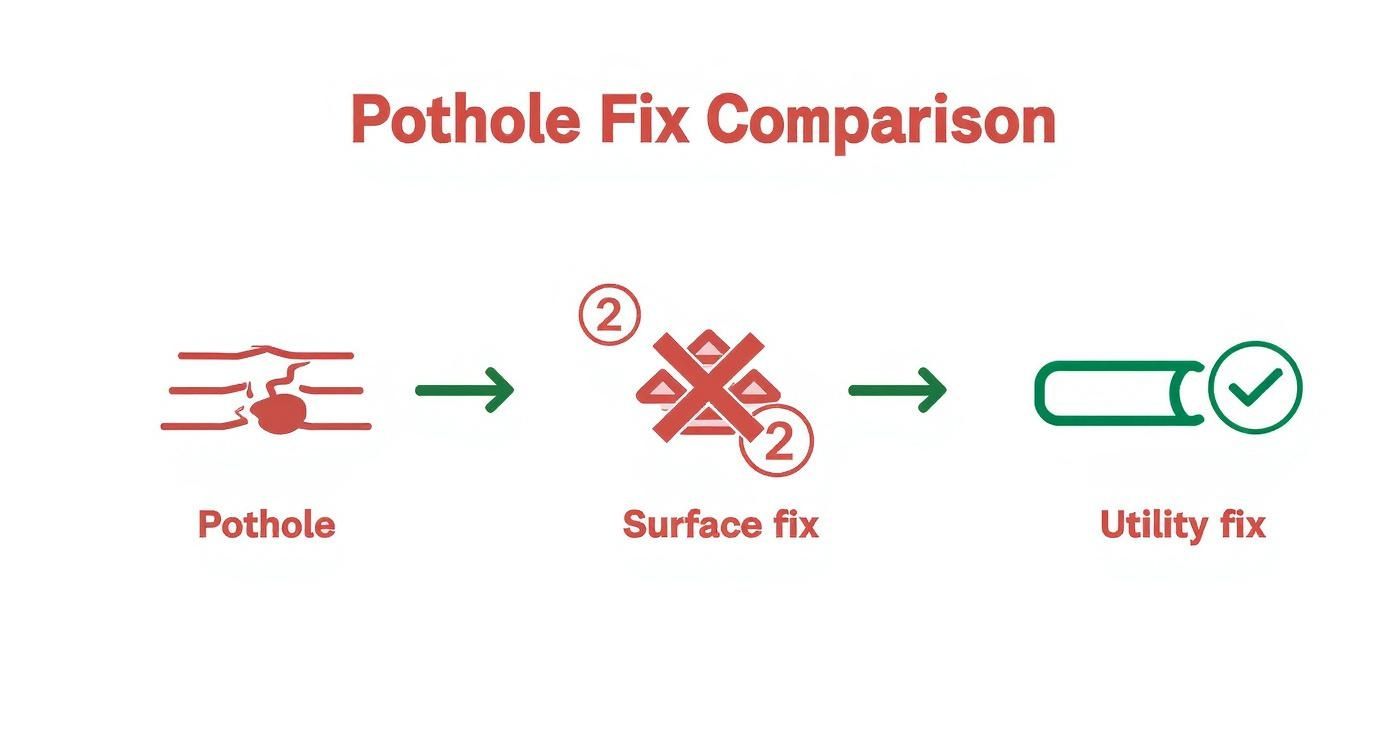
As you can see, ignoring the utility problem (the red X) means the pothole will be back soon. Taking the time to repair the pipe first (the green check) is what makes the fix last.
Building a Stable Foundation
Once the leaky pipe is fixed, the real rebuilding can start. We don’t just fill a hole; we build a solid, packed base that can support the road for years.
A proper full-depth trench restoration can make the pavement last 250% longer than a simple patch job.
Then, our paving crew lays down new asphalt that is designed to bond tightly with the restored subgrade. This gets rid of the gaps where water can sneak in and start the whole damaging cycle again.
Following this process can save property owners up to 40% on future repair costs by doing the job right the first time. You can learn more about this in our grading and paving guide.
Of course, doing this work safely is our top priority. That’s why having effective NZ traffic management solutions in place is so important to protect our crews and the public.
When you hire a contractor that handles the digging, the utility repair, and the paving, you avoid a lot of problems. We’ve seen this all-in-one approach reduce project delays by as much as 30%.
Coastal Pipeline’s method changes pothole repair from a reactive chore to a proactive, long-term strategy. This is especially important after our heavy winter rains, when the ground under our roads is weakest.
It’s time to stop the frustrating cycle of patch, repeat, patch, repeat. Let our experts fix what’s really going on, deep beneath the surface.
Building Utility Checks Into Your Pavement Plan
If you manage a property or work for a city, you know the cycle. The winter rains end, and potholes start appearing everywhere. Chasing these repairs year after year is expensive and ineffective. It’s time to stop reacting and start planning.
The smartest approach is to add utility checks to your annual pavement plan. This lets you find and fix hidden problems before they tear your roads apart. The idea is simple: look for trouble right after the winter rains, when your underground systems are most stressed, instead of waiting for a failure to happen.
From Reactive Repairs to Strategic Resilience
A proactive plan looks deeper than just the asphalt. To get the full picture, you need to understand both the surface and what’s underneath. Technologies like drones with LiDAR for precise 3D mapping are great for checking road conditions, but you need a closer look to see inside the pipes.
Here are the key inspections that should be on every pavement manager’s list:
- NASSCO-Certified Sewer Inspections: This involves sending advanced video cameras into your sewer and storm drain lines. Certified experts can spot cracks, tree roots, and bad joints long before they cause the pavement above to collapse.
- Systematic Leak Detection: Pressurized water pipes can develop tiny, hard-to-see leaks. Using sound sensors and other tools, crews can find these small issues before they turn your road base into a soggy mess.
- Trench Integrity Assessments: Whenever utility work is done, the trench must be filled and packed down correctly. If not, it can settle later. Checking old and new trenches is key to preventing future pavement failures along those lines.
This approach changes your job. You’re no longer just patching holes; you’re managing your property’s long-term health. You stop wasting money on temporary fixes and start making smart investments in your entire site—from the ground down.
Better Data Drives Better Budgets
One of the biggest benefits of this strategy is the data you collect. Regular inspections give you a clear report on the health of your infrastructure. This information is extremely valuable for long-term budget planning.
Instead of reacting to the next emergency, you can plan repairs based on real conditions. This helps you prevent major failures that drain your budget. You can explore a full range of underground utility services to see how these inspections fit into a smarter maintenance plan.
A reliable budget starts with knowing what you’re dealing with. A utility-smart pavement plan gives you that clarity.
The Hidden Costs of a Quick Pothole Patch
It’s tempting to use a cheap patch on a pothole and move on. It feels like a quick, budget-friendly solution. But this approach often costs more in the long run. When you ignore why that pothole formed—usually a utility problem underground—you’re just setting yourself up for a bigger, more expensive repair later.
The true cost of a quick fix is much more than that first bag of asphalt.
Let’s start with the most obvious cost: vehicle damage. We’ve all felt it—that sudden thump that leads to a trip to the mechanic. In the United States, drivers spend about $26.5 billion every year on flat tires, bent rims, and broken suspensions caused by potholes. You can read more about the global impact of pothole damage to see how big this problem is.
Beyond Bent Rims and Flat Tires
For property managers and public works departments, the real budget-killer is patching the same spot over and over. Every time a temporary fix fails (and it will), you’re paying for more materials, more labor, and more traffic delays. It’s a slow drain on your budget that never actually solves the problem.
But the costs don’t stop there. The other liabilities should also be a concern.
- Serious Safety Risks: A recurring pothole is more than an annoyance; it’s a real danger. Studies show that potholes can more than double the chances of a car crash involving injuries.
- Constant Disruption: Nobody likes seeing traffic cones and closed lanes. Repeated patching jobs create constant headaches for drivers, frustrate residents, and can keep customers away from local businesses.
- Sinking Property Value: A parking lot full of crumbling patches signals neglect. It can lower property values and tell potential buyers or renters that the property isn’t well-maintained.
The bottom line is this: investing in a proper, utility-smart repair from the start is the smartest financial choice. When you fix the underground problem causing the pavement to fail, you break the expensive cycle of patching and prevent these hidden costs from adding up.
Answering Your Pavement and Utility Repair Questions
When you’re looking at a stubborn pothole, it’s not always easy to connect it to a hidden pipe underground. Here are some common questions property managers have about paving and utility repairs.
How Can I Tell If a Pothole Is Caused By a Utility Issue?
It takes a professional to be sure, but you can look for clues. The biggest red flag is a “zombie pothole”—one that you patch, only to see it come back in the exact same spot a few months later.
Also, look at the area around the pothole. Do you see a sunken patch of asphalt? Or a pattern of cracks that looks like alligator skin? Those are common signs that the ground under the pavement is failing, likely due to a leaky pipe.
Another clue is constant dampness in or around the hole, especially when it hasn’t rained. If you see a patch of green grass next to a cracked parking lot during a dry spell, you might be looking at a slow leak from a water or sewer line.
Is a Utility-Smart Repair More Expensive Than a Simple Patch?
Let’s talk about cost versus value. The upfront price for a proper, utility-smart repair will be higher than just filling a hole with asphalt.
But a patch is just a temporary fix. It’s guaranteed to fail because it doesn’t solve the real problem: the wet, unstable ground underneath. You’ll end up paying to patch that same spot again and again.
By investing in fixing the root cause—the broken utility line—you actually save a lot of money in the long run. You get a stable foundation and a pavement repair that is built to last for years, not just until the next big storm. It’s about ending the cycle of endless, frustrating repairs.
What Areas Do You Serve for These Integrated Repairs?
We handle both the surface paving and the underground utility work from start to finish all across California’s Central Coast. Our teams are equipped to find the problem, fix the pipe, and properly repair the pavement, providing a true single-source solution.
Don’t just patch it—fix it for good. Serving Monterey, Santa Cruz, and San Benito Counties, Coastal Pipeline Inc. delivers paving and underground utility solutions that address both surface and subsurface issues. Contact us for a utility-smart approach to pavement repair and infrastructure resilience this winter at https://coastalpipelineinc.com.