
When a pipe bursts or you smell gas, the clock starts ticking. There's no time to waste. Getting immediate 24/7 emergency utility repairs is the most important thing you can do to stop a small problem from turning into a financial disaster. Acting fast can save you thousands of dollars by preventing more damage.
Underground Utility Failures Are on the Rise
If it feels like you’re hearing about more water main breaks and sewer backups, you’re right. Our country's underground pipes are getting old. Aging pipes, earthquakes, and extreme weather are causing more utility emergencies like water main breaks, gas line ruptures, and sewer collapses. These problems need a fast, expert response to avoid property damage, service outages, or safety risks.
At the heart of the problem is aging infrastructure. Many of the pipes carrying our water, gas, and wastewater were installed decades ago. Over the years, metal pipes rust and clay pipes become brittle, making them more likely to crack or collapse under daily stress.
The True Cost of a Delayed Utility Repair
A delayed response to a sewer backup or broken water line can lead to serious problems. It can cause soil erosion, damage to your home's foundation, and even environmental fines. Emergency repairs don't just fix the service—they also contain hazards like gas leaks or contaminated water.
The costs don't just add up; they multiply. A slow response starts a domino effect of expensive issues.
These hidden costs are often much higher than the price of the first repair. They include:
- Structural Damage: Water can weaken concrete foundations and harm the structure of your building.
- Widespread Mold Growth: It only takes 24-48 hours for moisture to cause toxic mold growth behind walls and under floors. This leads to a huge, expensive cleanup project.
- Ruined Landscaping and Hardscaping: A major water leak can wash away lawns, gardens, driveways, and patios.
- Environmental Fines: A leaking sewer line is a health hazard. If it contaminates local groundwater, you could face large fines from the city or county.
A delay of just a few hours can turn a thousand-dollar plumbing fix into a $10,000+ project that includes water removal, mold cleanup, and major structural work.
Extreme Weather Adds to the Strain
On top of old pipes, our infrastructure now faces extreme weather. Here on the Central Coast, we get everything from heavy rainstorms to long droughts. Each of these weather patterns creates problems for our underground utilities.
-
Heavy Rains and Flooding: When a big storm hits, the ground gets soaked with water. This increases the weight and pressure on buried pipes and can cause the soil to shift. That movement can lead to cracks or a complete system collapse.
-
Drought and Seismic Activity: In dry weather, the soil shrinks and becomes unstable, which can pull pipes apart or cause them to snap. This is made worse by California's earthquake risk, where even a small tremor can be the final straw for an old, weak pipe.
These pressures mean our utility systems are under more stress than ever. A quick, professional response is needed to prevent a small break from turning into a disaster that causes major property damage and public safety risks. For more details, you can read about how aging sewer, water, and gas lines are driving a construction boom on the Central Coast.
The Critical First Hours After a Utility Failure
When a utility line breaks, the first few hours are the most important. Quick thinking can save you a fortune, while waiting can turn a manageable problem into a financial nightmare. Let's look at two scenarios to see what's at stake.
Scenario A: Immediate Action
A homeowner sees a wet patch in their yard that wasn't there before. They realize it could be a leak and immediately call for 24/7 emergency utility repairs. A professional crew arrives quickly with special equipment to find the break. They stop the leak before the water can cause widespread damage. The repair is quick and targeted, with very little damage to the landscaping. The cost is manageable, and the problem is fixed in hours.
Scenario B: A Delayed Response
Now, let's imagine another homeowner sees the same wet patch but decides to wait until the weekend to check it. Under the surface, the broken pipe is gushing hundreds of gallons of water every hour.
This delay causes a chain reaction:
- Day 1: Water starts to wash away the soil next to the home's foundation, weakening its support.
- Day 3: The ground is soaked. Water seeps into the basement, ruining belongings and drywall.
- Day 5: A musty smell appears. Mold is growing behind the walls—a serious health hazard that now needs a costly cleanup.
What started as a simple plumbing problem has turned into a multi-thousand-dollar nightmare. Now they need to fix the pipe, repair the foundation, restore the water damage, and remove the mold.
By waiting just a few days, the property owner turned a simple repair into a complex, stressful, and very expensive recovery. This shows that when it comes to utility failures, time is everything.
Cost Escalation Timeline For a Broken Water Main
This table shows how quickly a single problem can grow from a manageable expense into a financial crisis.
| Time Elapsed | Potential Damage | Estimated Cost Impact |
|---|---|---|
| 0-12 Hours | Localized pipe damage, minor soil saturation, small water bill increase. | $500 – $2,500 (Standard Repair) |
| 1-2 Days | Significant soil erosion, damage to landscaping/driveway, foundation saturation begins. | $3,000 – $7,000 (+ Landscaping Costs) |
| 3-5 Days | Foundation compromise, basement flooding, initial mold growth, structural risks. | $8,000 – $20,000+ (+ Water Damage & Mold Remediation) |
| 1 Week+ | Severe structural damage, widespread mold infestation, potential condemnation. | $25,000 – $100,000+ (Full Restoration) |
As you can see, the difference between acting on day one versus day five is huge. The first repair cost is only a small part of the total bill once other damages like flooding and mold happen.
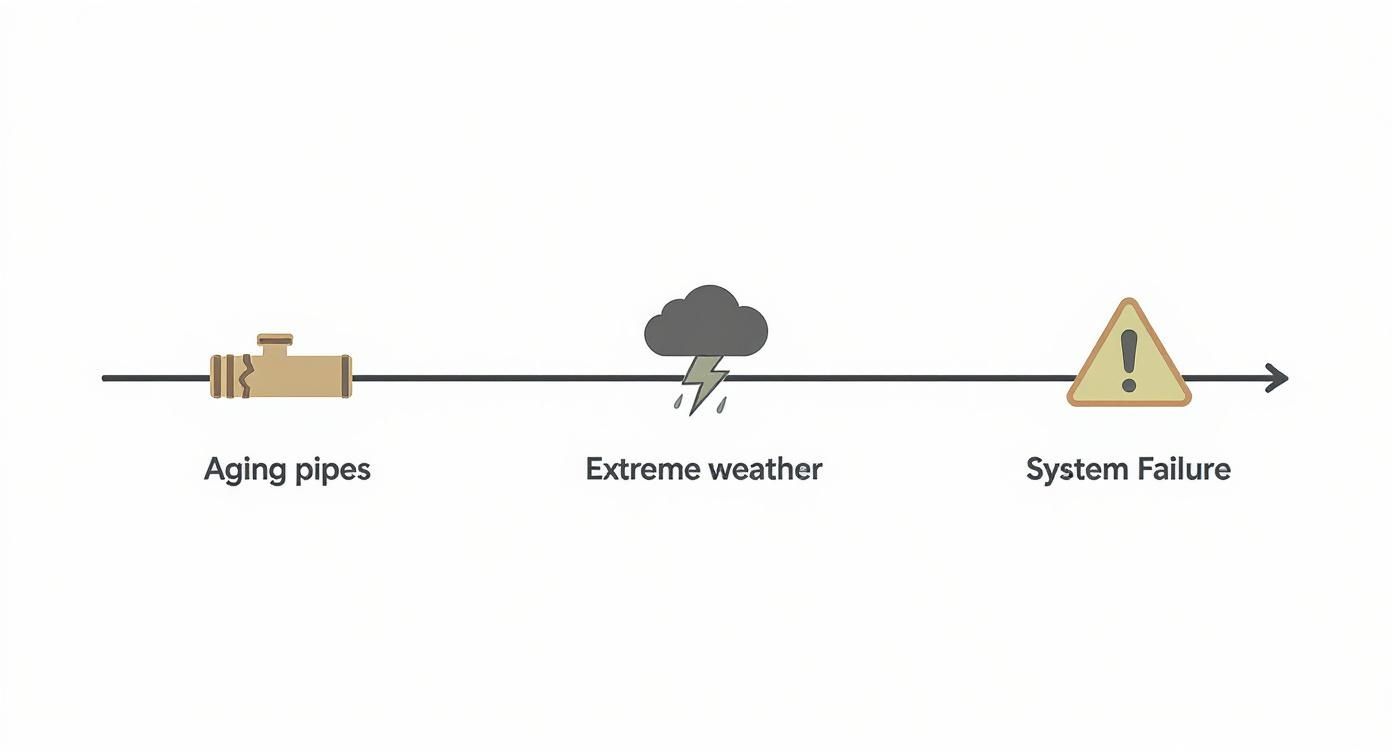
Whether a pipe fails slowly over time or breaks suddenly, the infographic above shows that your response time is the biggest factor in controlling the cost. Reliable leak detection and repair services are an essential part of protecting your property.
How Modern Repairs Minimize Disruption and Cost
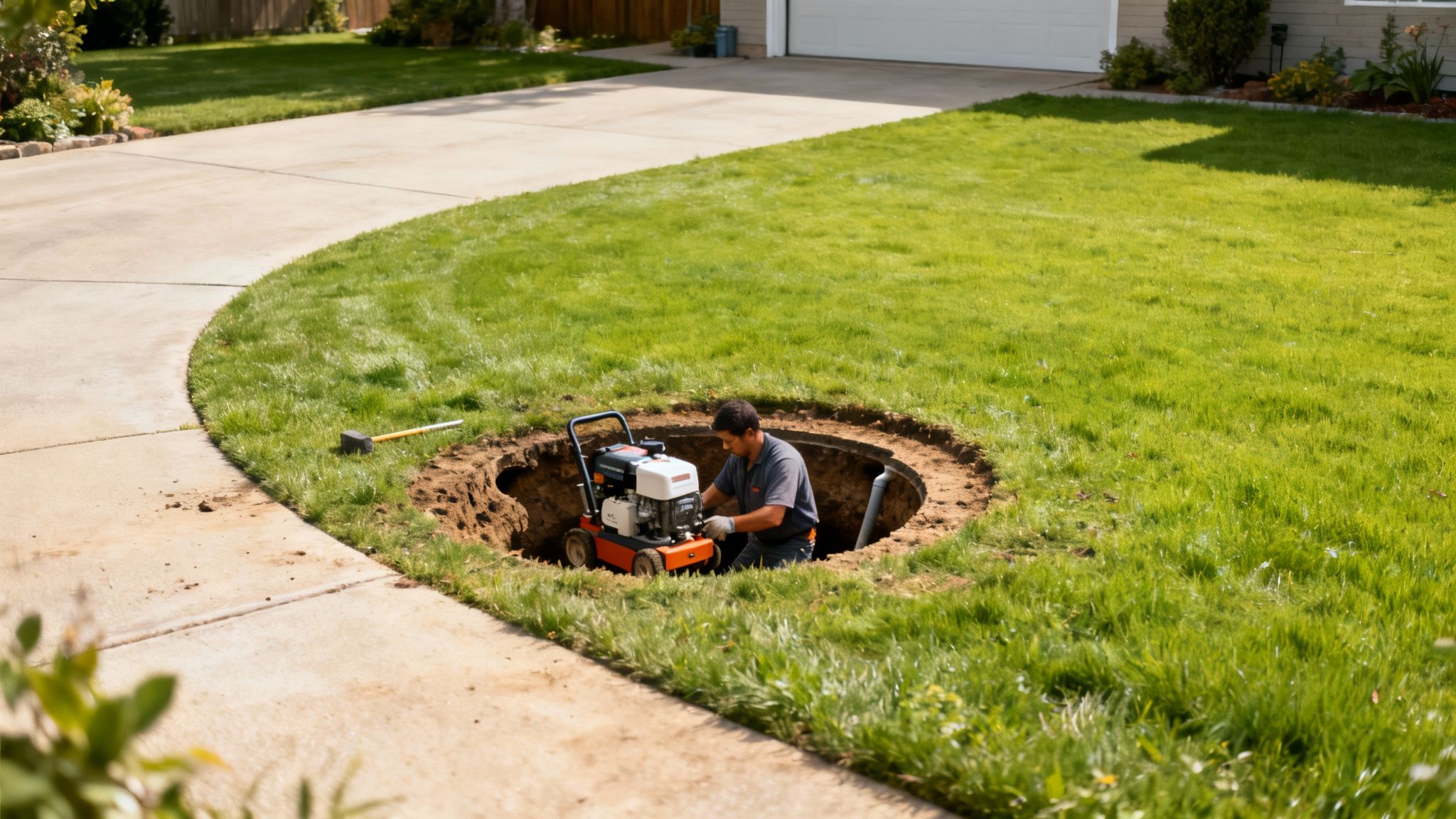
When you think of an emergency utility repair, you might picture a backhoe tearing up your yard. For a long time, that was the only way. Luckily, technology has given us much better options. In many emergency situations, modern techniques like trenchless methods can be used to limit surface damage.
Trenchless Technology: Keyhole Surgery for Pipes
One of the biggest improvements is trenchless technology. Think of it like keyhole surgery for your pipes. Instead of digging a huge trench to reach the damaged pipe, technicians can often fix it using just a couple of small access points. This allows for a faster fix while saving roads, landscapes, and active job sites.
This approach keeps your property in good shape and saves you from the cost of major restoration work. You won't have to worry about rebuilding walls, repaving driveways, or replanting your garden.
The best thing about trenchless methods in an emergency is the speed. Less digging means the crew can fix the problem and get your service back on much faster, stopping more damage from happening.
Common Trenchless Repair Methods
Here are two of the most popular trenchless methods:
- Pipe Bursting: This technique replaces a whole line. A new, strong pipe is pulled through the old, broken one. As it moves through, a "bursting head" breaks the old pipe apart, pushing the pieces into the soil. You get a new pipe without the big trench.
- Sectional Point Repair: If the damage is in just one spot, this is a great solution. A technician puts a special liner inside the pipe over the crack and expands it. Once it hardens, it creates a strong, seamless seal that makes the pipe as good as new.
These methods are vital for 24/7 emergency utility repairs. They solve the immediate problem with far less stress and cost for you. To learn more, check out this guide to trenchless sewer line repair costs to compare it with older methods.
Why Certified Local Experts Matter in an Emergency
When an underground utility line fails, you need a certified professional who knows the local area. In a crisis, having the right qualifications and local experience can mean the difference between a quick fix and a long, expensive disaster.
For emergencies with gas lines or electrical systems, some qualifications are a must. A PG&E Operator Qualification (OQ) certification is proof that a team has been trained to meet strict safety standards for working on gas systems. As a PG&E OQ-certified contractor, Coastal Pipeline meets the safety and compliance standards needed to handle critical repairs for water, sewer, gas, and electrical systems. You can learn more about being a PG&E OQ-certified gas line trenching company.
The Advantage of Local Experience
Having a local team is a huge advantage. An expert who knows Monterey, Santa Cruz, and San Benito Counties already understands the local rules and processes. When every minute counts, this local knowledge is key.
A contractor with local experience understands:
- Local Permitting Processes: They know which permits are needed for emergency work and how to get them approved quickly.
- Utility Coordination: They have relationships with local utility providers, which helps with connecting to city water, sewer, or gas lines.
- Inspection Requirements: They know what local inspectors look for, so the repair passes the first time without needing more work.
In an emergency, you can't afford to wait. A team that already has this knowledge can work faster, saving you critical time and preventing more damage.
Choosing a certified, local expert like Coastal Pipeline isn't just about getting the job done. It's about getting it done faster, safer, and with fewer problems. When your property is at risk, that expertise is your best defense.
Your Game Plan for a Utility Meltdown
When a utility line breaks, panic can make it hard to think clearly. Having a simple plan can help you make smart decisions that protect your family and your wallet.
If you even think there might be a utility failure, you need to act fast. These three steps are your immediate plan.
A 3-Step Plan for Utility Emergencies
-
Get Everyone to Safety. First. This is the number one priority. If you smell gas, get everyone out of the building right away. Don't touch light switches or anything electrical. If there's a major water leak, stay away from standing water, especially near electrical outlets.
-
Shut Off the Main Supply (If It's Safe). If you can reach it safely, turn off the main valve. For a gushing pipe, closing the main water valve can stop a flood and save you thousands. Know where your main valves are and how to turn them off.
-
Call a 24/7 Emergency Pro. Once you are safe, call a professional. A certified team that handles 24/7 emergency utility repairs has the right equipment and knowledge to fix the problem correctly and safely.
A good plan keeps a moment of panic from becoming a financial disaster. Knowing what to do ahead of time gives you a big advantage.
The Best Time to Prepare is Now
This idea of acting fast is not just for big emergencies. As Consumer Reports notes, fixing smaller issues early can prevent them from turning into a complete system failure. Quick action saves you money and trouble. You can read more about how proactive maintenance saves money on Consumer Reports.
Don't wait for a disaster. If you want a more structured way to plan, check out a guide to an emergency response plan template.
Take five minutes today to find your main water and gas shut-off valves. Then, save the number of a trusted emergency repair service in your phone. You’ll be glad you did.
Your Questions About Emergency Utility Repairs, Answered
When a utility line fails, you probably have a lot of questions. Let’s go over some of the most common concerns about 24/7 emergency utility repairs to give you clear answers.
What's the First Thing I Should Do if I Smell Gas?
Safety is the top priority. If you think there's a gas leak, do not touch anything that could create a spark—no light switches, phones, or appliances.
Get everyone out of the building immediately. Leave the door open to help air out the space. Once you are safely away, call your gas company's emergency line, then call a certified emergency repair service.
How Do I Know if an Underground Water Pipe Broke?
A broken water line isn't always obvious, but there are clues to look for:
- Is your water pressure suddenly low?
- Do you see wet patches or puddles in your yard?
- Can you hear a hissing or running water sound when everything is off?
- Was your last water bill much higher than usual?
If you notice any of these signs, it’s time to call a professional to check it out.
Does Homeowners Insurance Pay for Emergency Utility Repairs?
It depends. Most standard insurance policies will cover the damage caused by the failure, like replacing a floor ruined by a burst pipe. However, they often don't cover the cost of repairing the pipe itself.
Read your policy carefully. Many people add "service line coverage" to their plan, which gives better protection for these kinds of underground emergencies.
Can All Pipe Problems Be Fixed with Trenchless Repair?
Trenchless repair is a great technology that lets experts fix pipes without digging up your whole yard. While it’s a good solution for many repairs, it doesn’t work for every situation. It depends on the pipe's material, the type of damage, and the soil conditions. A good contractor will inspect the problem and tell you if it's the right choice for your job.
Need Emergency Utility Repairs on the Central Coast? Coastal Pipeline offers 24/7 emergency response for underground utility failures. Whether you’re a homeowner, facility manager, or public agency, our team is ready to restore service and safety fast—call now or request an urgent site assessment.