As a property manager, your winter prep checklist is probably second nature by now. You're sealing concrete, making sure the drains are clear, and getting the snow removal contract signed. But what if the most expensive winter disasters don't happen on the surface? They start silently, underground.
True winter readiness isn’t about what you can see. It's about understanding and fixing what's happening beneath your pavement.
Why Your Winter Checklist Misses The Biggest Risks
You’ve got surface maintenance down to a science. Your checklist probably covers sealing concrete, checking drainage grates, and lining up snow and ice removal. These are all good, necessary steps. The problem is, they only treat the symptoms of winter damage, not the root causes brewing just a few feet below.
This surface-level approach leaves you vulnerable. It completely misses the real action happening underground. Freeze-thaw cycles, heavy rain, and aging pipes are setting the stage for major failures—the kind that simple concrete care can't fix. When you only focus on the visible pavement, you're ignoring the very foundation it rests on.
The Problem with a Surface-Only Strategy
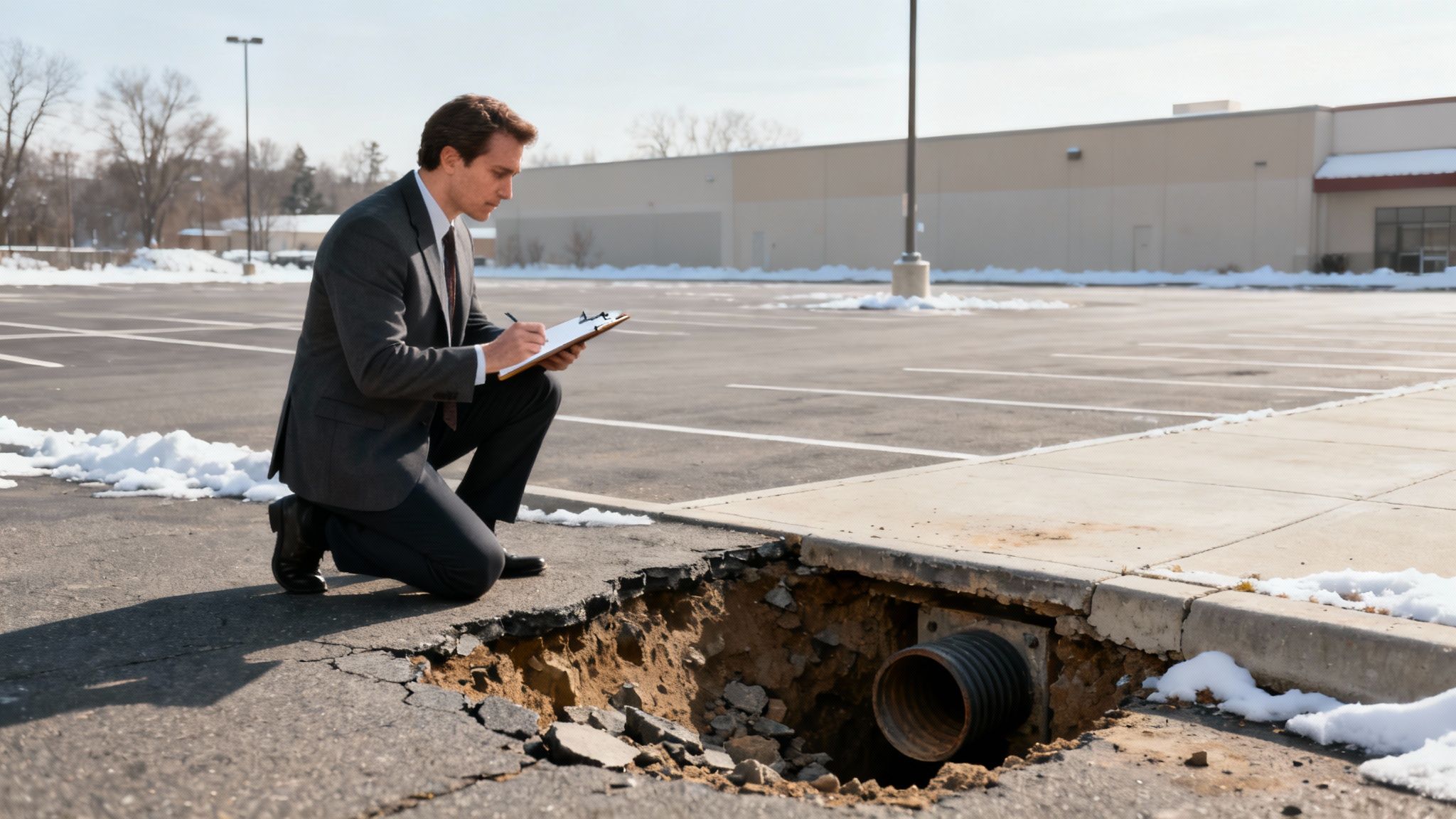
Most advice on winter maintenance focuses on visible problems like cracks or potholes. Frankly, that’s a costly way to operate. The real damage starts when water seeps into the ground, freezes, and expands. This process, called frost heave, puts a huge amount of pressure on everything buried underground.
This hidden force is what leads to the real headaches:
- Stressed Sewer Mains: The shifting, frozen ground can knock sewer lines out of alignment or even crack them, leading to nasty blockages and backups.
- Ruptured Water Lines: The intense pressure from freezing soil can easily burst water pipes. This can cause flooding, property damage, and expensive emergency calls.
- Compromised Trench Zones: If the soil around utility lines wasn't packed down perfectly during installation, it can settle and shift. This creates weak spots that can turn into sinkholes or pavement collapses.
When these underground risks are ignored, both your pavement and public safety are on the line. According to a Q4 2025 report, there's a direct link between the spike in surface failures we see and aging underground systems, especially during California’s rainy season. These hidden problems grow fast, turning a few minor cracks into a major structural failure. You can dive deeper into how winter rains and failing utilities cause widespread road damage in our related guide.
A proactive, infrastructure-first approach ensures concrete surfaces don’t just look good—they’re built on a stable foundation designed to last through harsh winter conditions.
The table below breaks down the difference between a typical surface-focused approach and a truly complete one that starts from the ground up.
Surface Maintenance vs Subsurface Maintenance Comparison
| Maintenance Focus | Typical Surface-Level Actions (Incomplete) | Comprehensive Subsurface Actions (Essential) |
|---|---|---|
| Pavement | Patching existing potholes, sealing visible cracks | Inspecting subgrade stability, addressing poor drainage that causes saturation and frost heave |
| Drainage | Clearing grates and catch basins of debris | Video inspection of storm drains and sewer lines for blockages, cracks, or misalignment |
| Utilities | No action taken; issues are discovered only after a failure | Pre-winter inspections of water and sewer lines, identifying stress points and potential weak spots |
| Overall Strategy | Reactive: Fixes problems after they appear on the surface | Proactive: Prevents surface failures by ensuring the underground foundation is sound |
As you can see, a complete strategy addresses the cause, not just the effect. This shift in mindset is what separates a well-maintained property from one that's always dealing with costly emergencies.
Moving Beyond Reactive Repairs
Instead of just chasing potholes every spring, a smarter strategy is to get ahead of the problem. This means getting pre-winter underground inspections. Being proactive can dramatically cut down on those frantic emergency calls. In fact, studies show that investing in proactive monitoring and care for underground assets can reduce emergency repairs by over 25% annually.
This shift from reaction to prevention is the key to protecting your property from the ground up. At Coastal Pipeline, our combined expertise in both paving and underground utilities allows us to offer a full-scope winter maintenance strategy. We find and fix the cause, ensuring your property is ready from the subgrade all the way to the surface.
The Unseen War Waged by Winter's Freeze-Thaw Cycles
Winter weather isn't just about snow and ice on the surface. Beneath the ground, a quiet but powerful battle is taking place against your property's essential infrastructure. The main force at play here is a phenomenon known as frost heave, and its effects can be devastating.
It all starts with moisture in the soil. When water freezes, it expands by about 9%. That might not seem like a big deal, but the pressure it creates is immense. This force pushes upwards and outwards on everything buried in its path—pipes, utility lines, and the very subgrade that supports your parking lots and driveways. Over time, this pressure can shift, bend, and even crack solid pipes and conduits.
I once worked on a property in Monterey County that was dealing with constant sewer backups every single winter. The owner assumed it was tenant misuse, but the real culprit was frost heave. Year after year, the shifting ground had slowly pushed sections of the sewer main out of alignment, creating a small "lip" at the joints. That lip was just enough to snag debris, leading to clogs and some very expensive hydrojetting bills.
How Tiny Cracks Become Catastrophic Failures
The damage from freeze-thaw cycles isn't limited to the direct pressure on your pipes. It’s also the number one reason your pavement breaks down, starting with cracks you can barely even see.
- Water Gets In: First, melting snow or rain finds its way into the smallest cracks in your asphalt or concrete.
- The Freeze Expansion: When the temperature drops, that trapped water freezes and expands. It acts like a tiny, powerful wedge that pries the crack open just a little wider.
- The Thaw and Weaken: The next day, the ice melts, leaving behind a slightly larger void. This new, bigger space invites even more water in during the next thaw.
This cycle repeats itself all winter long. It's a relentless process that breaks down your pavement from the inside, destroying its structure and weakening the soil base beneath. This is precisely how a hairline crack turns into a gaping pothole. If left unchecked, it can even lead to a sinkhole as the weak subgrade washes away.
This kind of hidden damage is a major driver of the global winter property maintenance market, which is valued at USD 81.6 billion. In fact, studies show that hidden freeze damage is directly responsible for 20% to 30% of all winter-related infrastructure failures that demand emergency repairs. You can find more details on this in these insights into the winter property maintenance market.
The Critical Link Between Your Pavement and Pipes
It's easy to think of your pipes and your pavement as separate systems. But what happens under the ground has a direct impact on the surface you walk and drive on every day. A broken pipe isn't just a plumbing problem—it's a direct threat to your pavement.
Think about it: a slow, seeping leak from a water line cracked by frost heave will completely saturate the soil around it. This turns the once-stable subgrade into a soft, muddy mess. That loss of support is a recipe for disaster. It often leads to pavement collapse, especially under the weight of vehicle traffic.
This is why a complete approach to winter preparation is so crucial. The same principles that apply to learning how to winterize house plumbing to prevent burst pipes are just as important for the larger utility lines serving your entire property. These older, aging systems are often the first to fail under the stress of winter, a topic we dive into deeper in our article about how aging sewer and water lines are creating a construction boom. By understanding the connection between what’s happening underground and what you see on the surface, you can shift from a reactive mindset of constant repairs to a proactive strategy of true protection.
Adding Subsurface Inspections To Your Winter Plan
Knowing the risks is one thing, but taking action is what truly separates a prepared property manager from one who's just waiting for a disaster. A genuinely solid winter plan looks deeper than just surface treatments—it gets to the health of the infrastructure supporting your pavement. Before the first freeze hits, it’s time to add subsurface inspections to your checklist.
Instead of reacting to a sudden backup or a sinkhole, a proactive approach means looking for trouble before it has a chance to start. This is where modern inspection technology becomes one of the most valuable tools you have.
This infographic breaks down exactly how a little bit of water infiltration can quickly spiral into major pavement damage as it freezes and thaws.
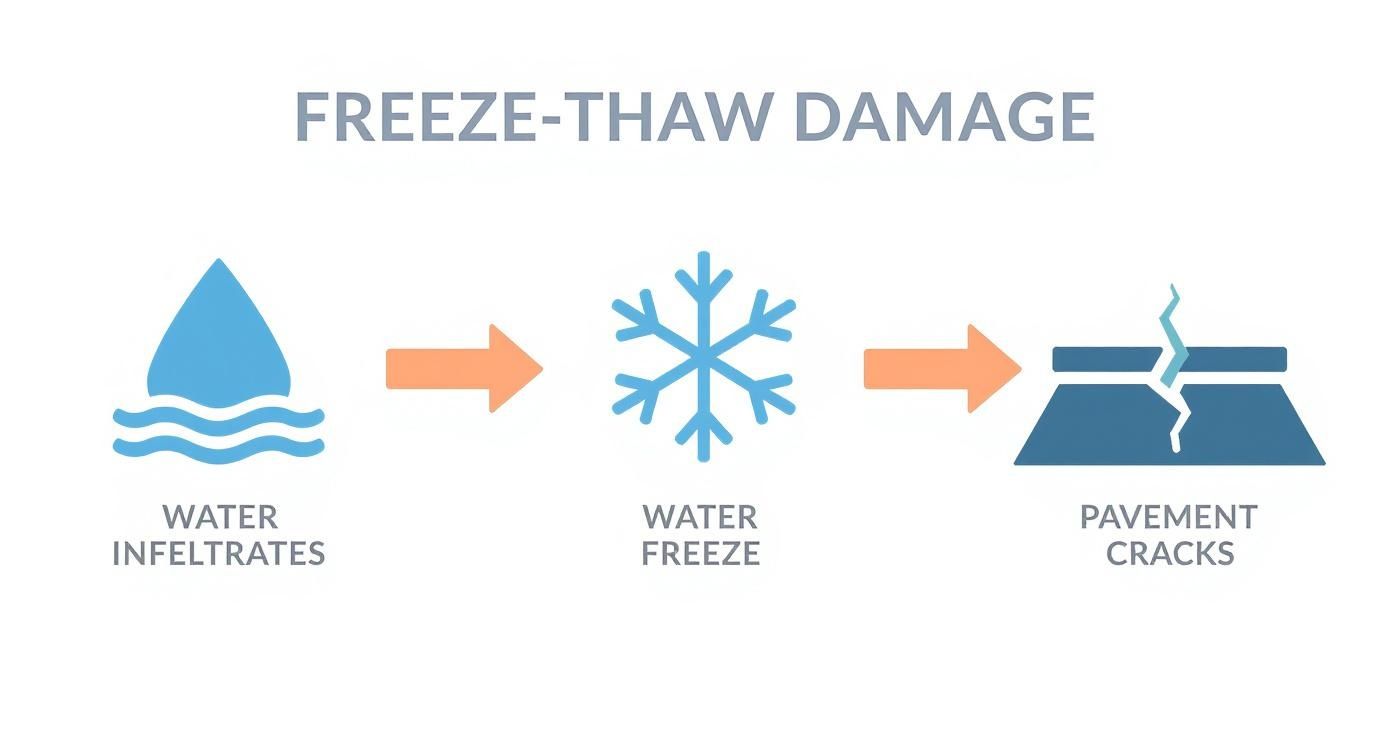
As you can see, stopping water from ever seeping into the subgrade is the most effective way to break this destructive cycle before it even begins.
Start with a Clear View Underground
Honestly, the most powerful tool we have for proactive maintenance is a video camera inspection of the sewer and storm drain lines. A NASSCO-certified sewer line video assessment gives you a live feed from inside your pipes. This lets technicians pinpoint problems that are completely invisible from the surface.
Think about what these inspections can uncover:
- Hairline cracks just waiting for freeze-thaw pressure to turn them into major breaks.
- Pipe misalignments or sags that create collection points for water and debris.
- Root intrusion that slowly weakens pipe integrity and leads to blockages.
- Early-stage corrosion that could be the start of a complete pipe collapse.
Catching these issues in the fall means you can schedule repairs on your own terms and budget. Discovering them during a mid-winter emergency is a totally different—and much more expensive—story. You can see how these inspections fit into a comprehensive strategy by exploring our full range of underground utility services.
Don't Overlook Storm Drains and Trench Zones
The storm drains on your property are the first line of defense against subgrade saturation. It’s simple: if they’re clogged or damaged, rainwater has no place to go but down into the soil beneath your pavement. A pre-winter check ensures they’re clear and ready to handle heavy winter runoff. This prevents the waterlogging that directly leads to pavement failure.
Another spot that often gets ignored is the trench backfill zone. This is the soil that was refilled around utility lines when they were first installed. If that soil wasn't packed down properly, it can settle over time. This creates a hidden void right under your pavement. Reinforcing these zones is a critical preventive step against the dips, cracks, and sinkholes that love to appear after a harsh winter.
A proactive subsurface inspection isn't an expense; it's an investment. It shifts your maintenance budget from reactive, emergency spending to a strategic plan that prevents costly property damage and tenant disruptions down the line.
The industry as a whole is moving this way, embracing technology to get ahead of problems. For example, remote asset monitoring has helped cut down on emergency roadwork incidents by more than 30% in recent winters by giving early warnings of subsurface stress. Globally, the investment in outsourced winter maintenance, including this kind of monitoring and repair work, hit USD 10.2 billion in 2024, which really highlights the shift toward proactive care. Read the full research about these winter maintenance strategies.
When it comes to property maintenance, especially with California's intense rainy seasons, water management is the unsung hero. While the freeze-thaw cycle gets a lot of blame for creating pressure on pavement, it's the presence of excess water that turns a small crack into a complete structural failure.
If your property's drainage system isn't pulling its weight, all that water has to go somewhere. Inevitably, it seeps into the soil right beneath your pavement, creating a soggy, unstable mess.
This waterlogged soil, which we in the industry call the subgrade, is the literal foundation for your asphalt and concrete. Once it gets oversaturated, it loses its ability to support any kind of weight. It’s like trying to build a house on a swamp—the whole thing is destined to sink.
The Connection Between Soggy Soil and Failing Pavement
With a weakened subgrade, your pavement is left incredibly exposed. The constant stress from vehicle traffic, combined with the immense expansion-and-contraction pressure from freezing water, is a recipe for disaster on an unstable base. This is where you start seeing the most common—and most expensive—pavement problems pop up.
You’ll start noticing issues like:
- Alligator Cracking: That spiderweb of interconnected cracks that looks like a reptile's back? That’s a dead giveaway of subgrade failure. It’s a visual announcement that the foundation can no longer support the pavement.
- Potholes: Water gets into tiny cracks, freezes, expands, and pushes chunks of asphalt out. This process happens much faster and more aggressively when the subgrade is saturated and weak.
- Rutting and Depressions: In high-traffic zones, the soft, waterlogged soil simply can't handle the load. The pavement begins to sink under the weight of vehicles, creating dangerous ruts and low spots.
These surface-level problems are almost always just symptoms of a much deeper issue. The real culprit isn't the asphalt itself; it's the failing drainage system that let water compromise the entire foundation from below.
Simply patching a pothole without addressing the drainage failure underneath is like putting a band-aid on a broken bone. You're ignoring the cause, so you can be sure the problem will be back, often worse than before.
Aging Pipes Are the Hidden Enemy
So what causes a drainage system to fail? More often than not, the blame falls on aging or clogged underground pipes. Over years of service, storm drains and sewer lines get choked with sediment, debris, and invasive tree roots. Sometimes, they just collapse from old age.
Once these pipelines can't move water away efficiently, the whole system backs up. That pressure forces water out of joints and cracks in the pipe, saturating the surrounding soil.
This isn't just a random occurrence; it's a growing problem. A recent Q4 2025 report showed a major spike in pavement failures directly linked to outdated underground systems and poor drainage, especially during California's rainy season. As infrastructure demands evolve, it’s not enough to just look at the surface. You can get ahead of these challenges by learning more about how stormwater systems must adapt to new codes.
That’s why any serious winter prep plan has to include a hard look at what’s happening below the surface.
To help property managers get a comprehensive view, we've put together a checklist covering the critical inspection points both above and below ground.
Winter Readiness Checklist Below and Above Ground
This checklist provides a practical framework for assessing your property’s preparedness for winter, focusing on the hidden risks that often lead to the most significant damage.
| Checklist Item | Action Required | Potential Risk if Ignored |
|---|---|---|
| Pavement Surface | Inspect for alligator cracking, potholes, or depressions. | Minor cracks become major potholes; subgrade failure. |
| Catch Basins & Drains | Clear all debris, leaves, and sediment from grates. | Localized flooding; water backup into pipes. |
| Downspouts | Ensure they direct water away from foundations and pavement. | Soil saturation near buildings; foundation damage. |
| Underground Pipes | Schedule a CCTV camera inspection for older systems. | Undetected blockages, root intrusion, or collapses. |
| Subgrade Stability | Look for signs of sinking or rutting in high-traffic areas. | Widespread pavement failure requiring full replacement. |
| Curbing & Gutters | Check for cracks or blockages that impede water flow. | Water pooling on pavement, accelerating deterioration. |
Using this checklist helps you shift from a reactive "fix-it-when-it-breaks" approach to a proactive strategy that saves money and prevents headaches down the road.
A Unified Approach Combining Paving and Underground Expertise
For years, property maintenance has been split into two separate worlds. One contractor handles the pavement you see, and a completely different one deals with the pipes and utilities you don't. This old-school, divided approach isn't just inefficient—it’s a surefire way to create expensive problems down the road. Think about it: you spend a small fortune on a beautiful new parking lot, only to have another crew come in and tear it all up a year later to fix a sewer line that was about to fail anyway.
This isn't a hypothetical situation; it happens all the time. Real winter preparation means getting rid of these separate teams. When you bring paving and underground expertise together under one roof, you can tackle what’s happening below the surface before you even think about laying new asphalt.
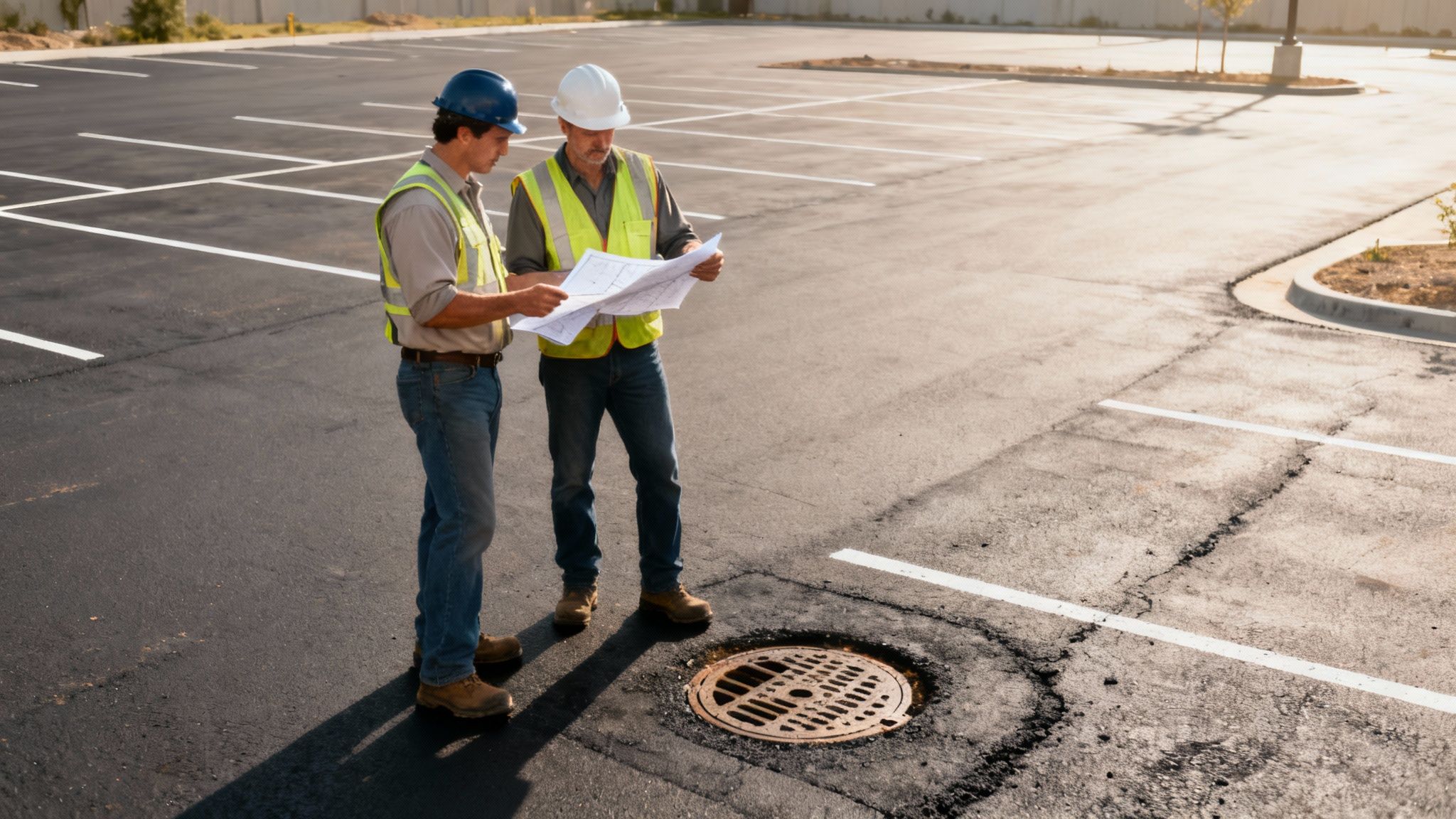
An integrated strategy protects your investment. It makes sure the surface and the systems beneath it are working together, not fighting each other. It’s the difference between slapping on a temporary fix and building a solution that lasts.
Building Resilience From the Ground Up
Taking an infrastructure-first mindset completely changes how you approach winter planning. Instead of just patching cracks, you start asking why they’re appearing in the first place. At Coastal Pipeline, we bring a full-scope strategy to the table with pre-winter underground inspections. These include NASSCO-certified sewer line assessments, reinforcing trench backfill, and cleaning out storm drains to head off flooding and subgrade failure. This way, your pavement doesn’t just look good—it rests on a foundation you can trust.
This is absolutely crucial for the long-term health of your property. To get winter prep right, you have to appreciate what's happening underneath, a topic covered well in this guide on understanding substructures and the role of substructure contractors. When your paving team also has deep knowledge of utility systems, they can spot risks before the first truckload of asphalt even arrives.
A unified strategy avoids the costly mistake of paving over a ticking time bomb. It connects surface health directly to subsurface stability, ensuring every dollar you spend contributes to the long-term value and safety of your property.
The Coastal Pipeline Advantage
We merge our expertise in both grading and paving and underground utilities to offer a single, seamless solution from start to finish. You no longer have to play referee between multiple contractors with different priorities and communication styles. Our teams are on the same page, coordinating to ensure drainage, utility health, and surface quality are all handled in one cohesive project.
https://coastalpipelineinc.com/grading-and-paving/
This unified model brings some serious benefits:
- Cost Efficiency: It’s far cheaper to address subsurface issues during a planned paving project than to pay for an emergency dig later.
- Longer Pavement Life: Asphalt laid over a stable, properly drained subgrade will always last longer. It’s that simple.
- Reduced Liability: Proactively managing underground hazards like failing pipes minimizes the risk of sinkholes, backups, and damaging floods.
Don't let your winter prep stop at the surface. True resilience comes from managing your property as one interconnected system, from the pipes below to the pavement above. This holistic approach is the key to protecting your investment and your budget.
Questions We Hear All the Time
When you're a property manager, winter prep goes way deeper than just the surface. You have to think about what's happening underneath your pavement. Here are some of the most common questions we get from clients across Monterey, Santa Cruz, and San Benito Counties.
How Often Do My Underground Pipes Really Need to Be Inspected?
It depends on the age of your property's infrastructure. If you're managing an older property—say, one that's been around for 20+ years—we strongly suggest getting a professional video inspection every 2-3 years. For newer builds, you can stretch that to every 3-5 years.
But here's the real tell: if you're seeing recurring problems like slow drains, standing water after a rainstorm, or new cracks spiderwebbing across the pavement, don't wait. Schedule an inspection right away. Think of it as a checkup; it helps you catch small issues like root intrusion before they cause a full-blown pipe collapse during a heavy winter storm.
Is It Really Worth Fixing a Few Small Cracks in the Pavement?
Absolutely. In fact, it's one of the smartest, most cost-effective moves you can make before winter hits. Those little cracks are basically open doors for water.
When the winter rains start, water seeps into those openings and saturates the base layer beneath your asphalt. If the temperature then drops, that trapped water freezes and expands, turning a tiny fissure into a gaping pothole. Sealing those cracks in the fall isn't just a cosmetic touch-up; you're actively shutting down the freeze-thaw cycle that wrecks your pavement's foundation. It's a small job now that prevents a massive repair bill later.
We Don't Get a Lot of Freezing Weather Here. Is This Still a Concern?
Yes, and that’s a common misconception. The real enemy here is water saturation, which is guaranteed during our wet winters. The phrase "freeze-thaw" is a bit misleading because the most significant damage often comes from a waterlogged subgrade that has lost its structural integrity.
Saturated soil becomes soft and spongy. It can't properly support the weight of pavement and the traffic on top of it. This is what leads to classic pavement failures like alligator cracking and potholes, even in our milder coastal climates. In fact, the Q4 2025 report directly linked a surge in surface failures to poor drainage during California’s rainy season.
Can't I Just Hire a Paving Guy and a Plumber Separately?
You could, but that’s often where things go wrong. When you hire contractors who don't talk to each other, you create information gaps. The paving crew might lay a perfect new layer of asphalt right over a sewer line that’s about to fail. That means you’ll be tearing up that brand-new pavement just a few months down the road.
A single, unified team looks at the whole picture. The experts evaluating your pavement also understand the state of the utilities running beneath it. This integrated approach delivers a complete, lasting solution that handles both the surface and what’s underneath. It will save you a ton of money and headaches in the long run.
This winter, protect your property from the ground up. Before a small issue becomes a costly emergency, schedule a complete utility inspection and drainage review with Coastal Pipeline Inc. We proudly serve Monterey, Santa Cruz, and San Benito Counties with solutions that go deeper than just the surface—because we know true resilience starts underground.
Find out more about our services and book your consultation today.