Slow drains and strange smells are the sewer problems everyone knows. But by the time you notice them, damage may already be happening underground. The real story of a failing sewer line is often told through quieter clues: red flags that appear in your foundation, yard, or even your water bills. Many property owners focus on fixing a clog, but they miss the chance to find and solve the bigger problem that caused it. This can lead to thousands of dollars in emergency repairs later.
This guide goes beyond slow drains to show you the hidden signs of trouble. We will look at issues that point to deep-seated problems, especially in the aging systems common across the Central Coast. A large part of the sewer pipes in areas like Monterey, Santa Cruz, and San Benito County is over 50 years old. These pipes are often too small for modern needs and were built before current standards. As people add ADUs or renovate their properties, these old lines are pushed past their limits.
For property managers, contractors, and homeowners with older properties, knowing these infrastructure red flags that signal it’s time for a sewer line inspection is the first step to preventing a major failure. A certified sewer inspection is the only way to truly understand your system's health. Instead of waiting for a backup, this article gives you the information you need to spot problems early and make a plan for code-compliant, future-ready repairs.
1. Red Flag #1: Widespread Slow Drains or Backups
When one sink or shower drains slowly, it's often a simple clog from hair or soap. But when toilets, showers, and sinks all start draining poorly at the same time, it’s a clear sign of a bigger problem. This is one of the most common warnings that your main sewer line is blocked or has a structural failure.
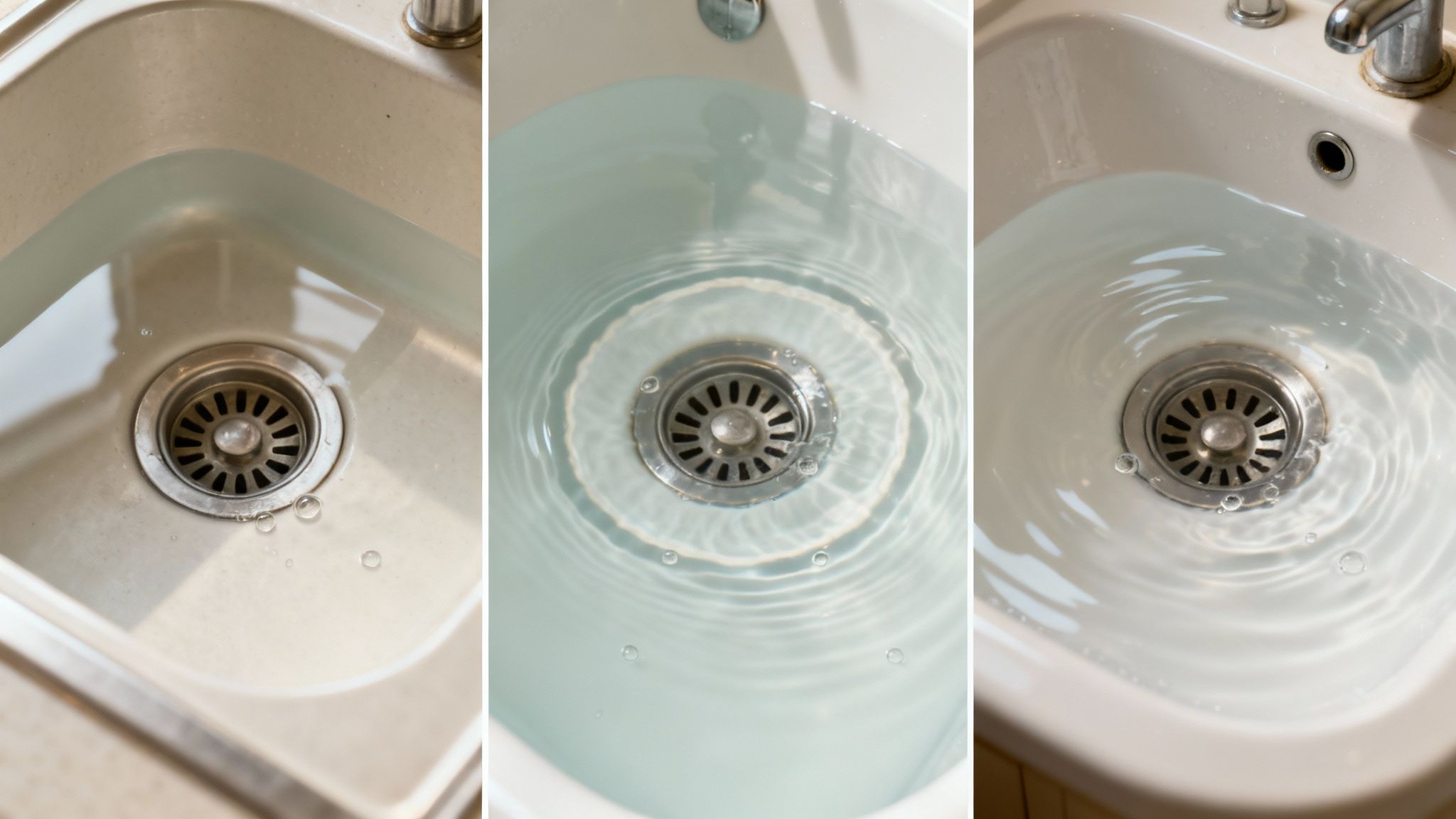
Think of your plumbing like a system of roads. Each drain is a small street, and the main sewer line is the highway. A slow drain in one sink is like a poorly parked car on a side street—easy to fix. But when all drains are slow, it’s like a major traffic jam on the highway, backing up every street and stopping everything.
Likely Causes and Verification
This system-wide issue points to a problem in the main sewer line that connects your building to the city system. Common causes include:
- Root Intrusion: Tree roots have grown into the pipe and are catching waste.
- Grease and Debris Buildup: Years of fats, oils, and grease have built up and made the pipe narrower.
- Pipe Collapse or Misalignment: Shifting soil or age has caused the pipe to break, sag (a "belly"), or shift out of line.
The best way to know for sure is a professional video sewer line inspection. A NASSCO-certified technician uses a camera to see inside the pipe, find the exact location of the problem, and recommend a targeted repair. Coastal Pipeline Inc. offers NASSCO-certified inspections to map these problems and help clients make smart repair plans.
Recommended Steps and Remediation
This red flag is highly urgent. A widespread slowdown can quickly turn into a full blockage and a sewage backup, causing major property damage and health risks.
Immediate Actions:
- Stop Using Water: Use as little water as possible to avoid adding more pressure to the failing line.
- Locate Your Sewer Cleanout: Find the access point to your main sewer line, usually outside your building.
- Schedule an Inspection Immediately: Contact a certified professional for an emergency video inspection.
Depending on the inspection, the fix might be hydrojetting to clear clogs or, for structural damage, trenchless replacement options. Investigating the trenchless sewer line repair cost can show you a less disruptive and often more affordable solution than digging.
2. Frequent Sewage Backups in Lower-Level Fixtures
A single overflowing toilet is a problem, but repeated sewage backups in the lowest drains of your property, like a basement shower, are a critical red flag. Because wastewater flows downward, these lower drains are the first to show trouble when the main sewer line can't carry waste away. This isn't just a clog; it's a system failure.
Imagine your sewer line is a funnel. If the bottom is blocked, any liquid you pour in will fill it from the bottom up. Your lower-level drains are at the bottom of that funnel. A backup here means the main pipe is so blocked that raw sewage is being pushed back into your property.
Likely Causes and Verification
This symptom nearly always means there is a severe blockage or a complete structural failure in the main sewer line. Common causes include:
- Complete Root Mass Blockage: Tree roots have grown so thick they have created a dam inside the pipe.
- Severe Pipe Collapse: A section of the pipe has caved in, causing a total blockage.
- Foreign Object Obstruction: Something that shouldn't be flushed is stuck in a damaged part of the pipe.
- Municipal Sewer Main Backup: Sometimes, the blockage is in the city's main line, causing backups in nearby properties.
A NASSCO-certified video camera inspection is the only way to know what’s wrong. A technician can find the blockage, see what caused it (like a collapsed pipe versus roots), and determine if the issue is on your property or the city's.
Recommended Steps and Remediation
This red flag is extremely urgent. A sewage backup is a serious health hazard and can cause expensive damage to your property.
Immediate Actions:
- Cease All Water Use Immediately: Do not flush toilets or run any water.
- Contact an Emergency Service Provider: Call a professional for immediate inspection and repair.
- Avoid Contact: Keep people and pets away from the area. Raw sewage has harmful bacteria.
- Document the Damage: Take pictures and videos for your insurance claim.
The fix depends on what the inspection finds. It could be hydrojetting for a bad clog or trenchless replacement for a collapsed pipe. Understanding potential sewer line replacement costs is an important step in planning for these major repairs.
3. Lush or Soggy Patches in Lawn and Landscaping
Changes in your yard can be a big red flag that is often missed. If you see a patch of grass that is suddenly greener than the rest of the lawn, or an area that stays wet even in dry weather, it could be a leaking sewer line. This is a critical warning that raw sewage is leaking into the soil.
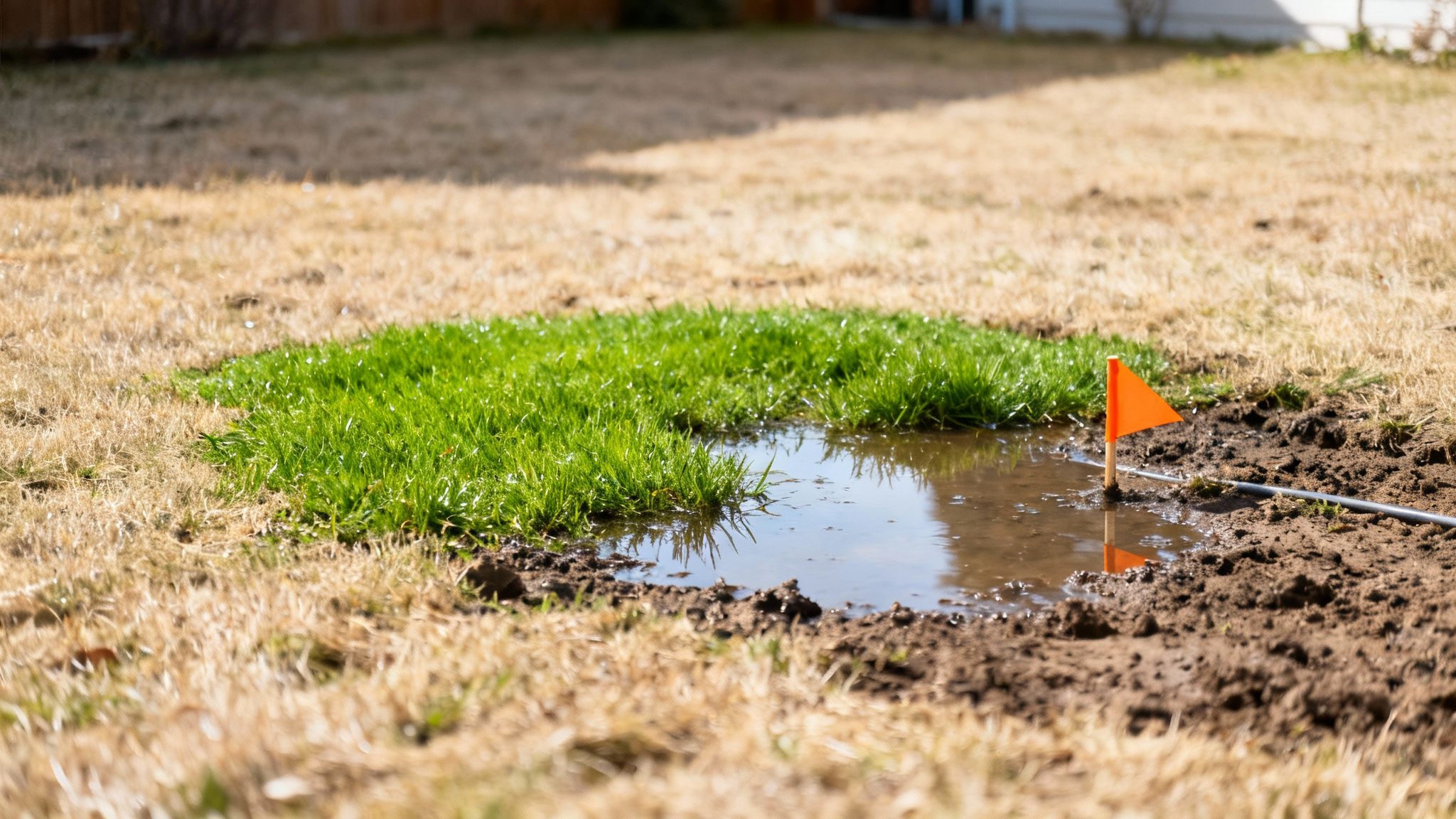
Think of the leak as a hazardous fertilizer system. The leaking sewage is full of nutrients, causing the grass above it to grow unusually well. While it might look healthy, this growth is fueled by a failing pipe that is bad for the environment and could make the ground unstable. Unexplained erosion or settling on the surface can also point to deeper sewer issues.
Likely Causes and Verification
This symptom points directly to a break in the sewer line. The pipe is no longer sealed, and sewage is leaking into the soil. Common causes include:
- Cracked or Punctured Pipes: Age, shifting ground, or past digging may have created holes in the pipe.
- Separated Pipe Joints: The connections between pipe sections can fail over time, creating gaps.
- Severe Corrosion: Older pipes made of cast iron or other materials can wear away and leak.
The only way to confirm the leak's location and how bad it is is with a professional video sewer inspection. A NASSCO-certified technician can use a camera to find the source of the leak and check the pipe's overall condition.
Recommended Steps and Remediation
This red flag is highly urgent. A sewage leak can contaminate groundwater, attract pests, and create unsafe conditions. The pipe failure will only get worse and could lead to a full collapse.
Immediate Actions:
- Mark the Affected Area: Keep people and pets away from the soggy or lush patch.
- Document the Changes: Take photos of the area to see if it grows or spreads.
- Schedule an Inspection Immediately: Contact a certified professional for a video inspection.
The repair will depend on the damage. A small crack might be fixed with trenchless pipe lining, which avoids digging. More severe damage might need a spot repair or full trenchless pipe replacement. Fixing the leak quickly also helps prevent soil erosion and ground instability.
4. Red Flag #4: Persistent Foul Odors in Home or Yard
A working plumbing system should be airtight, keeping all wastewater and gases inside the pipes. When you notice a constant sewer gas or "rotten egg" smell inside your home or in your yard, it is a direct warning that there is a breach. These smells are a sign of escaping sewer gases, which means there is a crack or break in your main sewer line.
Think of your sewer line as a sealed exhaust pipe for your home's wastewater. A constant bad smell is like seeing smoke inside a car; it means there is a leak in a system that should be sealed. Ignoring it allows potentially harmful gases into your home and points to a structural failure that will only get worse.
Likely Causes and Verification
Persistent bad smells are almost always caused by a break in the sewer line or a problem with the plumbing's vents. Common sources include:
- Cracked or Broken Pipes: Age, ground movement, or roots can create cracks that let gas escape into the soil.
- Dried-Out P-Traps: In drains that are not used often, the water in the U-shaped pipe (the P-trap) can dry up, breaking the water seal that blocks gas.
- Improper Venting: A blocked or poorly installed vent can create a vacuum and pull water from P-traps, letting gas in.
- Leaking Pipe Joints: Seals between pipe sections can wear out over time, creating small leaks for sewer gas.
A professional NASSCO-certified video inspection is the best way to find the source of the smell. The camera can find the exact location of cracks or separated joints. For hard-to-find leaks, a smoke test can be done, where safe smoke is pumped into the line to show where it is escaping.
Recommended Steps and Remediation
This red flag has a medium to high urgency level. While not as immediately damaging as a sewage backup, long-term exposure to sewer gas can be a health risk, and the pipe damage will get worse.
Immediate Actions:
- Ventilate the Area: Open windows and doors to let fresh air in.
- Check P-Traps: Run water in all drains, especially those you don't use often, to make sure the P-traps are full.
- Document the Odor: Note where the smell is strongest and when you notice it most.
- Schedule an Inspection: Contact a professional for a video inspection and possibly a smoke test.
The fix depends on the cause. If it's just a dry P-trap, that's an easy fix. But if the inspection finds a broken pipe, trenchless methods like pipe lining can seal the line without digging. For property managers in Monterey, Santa Cruz, or San Benito County, a specialized service for leak detection and repair can provide the diagnosis needed to fix the problem.
5. Unexplained Cracks in Foundation or Basement Walls
While foundations can settle over time, new or growing cracks in basement walls or concrete floors can be a serious red flag. A leaking sewer line can soak the soil around your foundation, washing it away and creating empty spaces. This loss of support causes the foundation to settle unevenly, putting stress on the building and creating cracks.
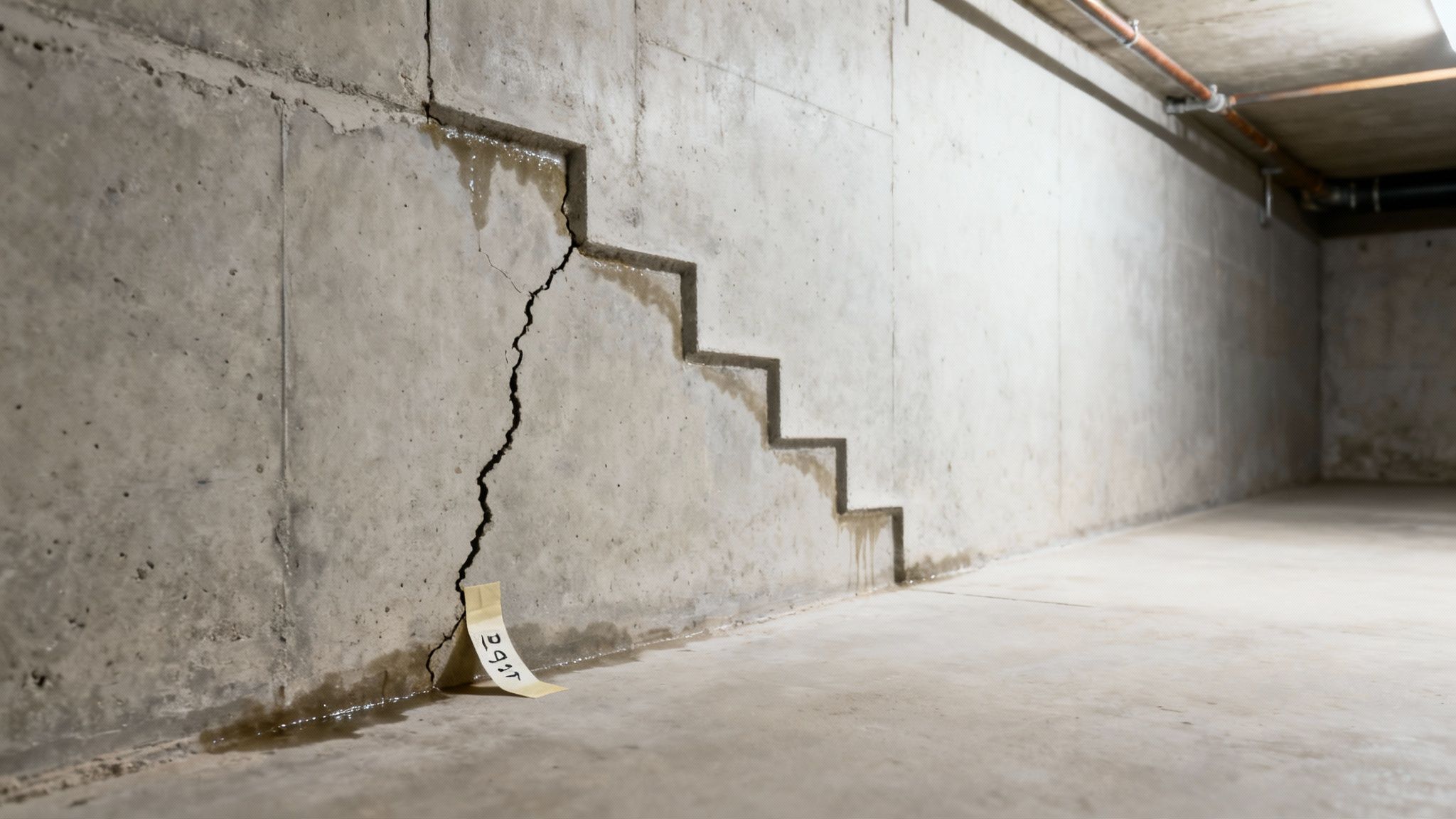
Imagine the soil under your foundation is the solid ground holding up a table. A sewer leak is like a hose washing away the ground under one of the table's legs. As the support disappears, that leg sinks, causing the whole table to tilt and strain. The cracks in your foundation are the signs of this dangerous underground problem.
Likely Causes and Verification
This issue points to a long-term leak from a damaged sewer line. The constant flow of water washes away soil, weakening the ground under your property. The most common causes are:
- Cracked or Broken Pipes: Age, roots, or shifting ground can create cracks that leak wastewater.
- Separated Pipe Joints: Old or poorly sealed pipe joints can come apart and leak.
- Collapsed Pipe Sections: A fully collapsed pipe will dump all wastewater directly into the ground, causing rapid erosion.
Figuring this out requires two steps. First, a foundation expert can look at the cracks. Second, a video sewer line inspection is needed to confirm if a pipe leak is the cause. A NASSCO-certified technician can find the exact location of the break, connecting the foundation damage to the sewer line failure.
Recommended Steps and Remediation
This red flag is very highly urgent. Foundation damage is one of the most expensive repairs a property owner can face. The sewer leak must be fixed before any foundation repairs will last.
Immediate Actions:
- Document the Damage: Take clear pictures of all new cracks. Mark the ends of the cracks with a pencil and date them to see if they grow.
- Contact a Professional: Schedule both a foundation assessment and an emergency sewer line inspection. Fixing the sewer problem first is key.
- Minimize Water Use: Use less water to reduce the amount of moisture going into the soil.
Repairs must start with the sewer line. Depending on the inspection, options like trenchless pipe lining or pipe bursting can fix the line without major digging. Once the sewer line is fixed and the soil is stable, you can proceed with professional foundation repairs.
6. Pest Infestations Near Foundation or in Crawl Spaces
A sudden increase in pests like rodents or cockroaches, especially in basements or crawl spaces, is a disturbing red flag. It's easy to blame a small gap in a window, but it could be a sign that a broken sewer line is giving pests a highway into your home. These creatures are drawn to the moisture in sewer pipes and will use any crack or break as an entry point.
Think of your sewer line as a sealed tunnel. When that tunnel cracks open, it becomes an open door. For pests like rats, which can fit through very small openings, a broken sewer pipe is a perfect, sheltered path into the warm, protected areas of your foundation or basement. The pests you see are often just a symptom of this hidden pipe failure.
Likely Causes and Verification
A pest problem that doesn't go away with normal treatments often points to a broken sewer line. The break both attracts pests and gives them a way in. Common causes include:
- Cracked or Broken Pipes: Age, ground movement, or roots can cause pipes to break, creating openings for pests.
- Collapsed Sections: A part of the sewer line has caved in, providing a large entry point.
- Faulty Connections: Poorly sealed joints between pipes can become gateways for rodents and insects.
The best way to confirm this is with a professional video sewer line inspection. A NASSCO-certified technician can use a camera to find the exact location of the break or crack that pests are using. This visual proof is important for coordinating between your pest control and plumbing professionals.
Recommended Steps and Remediation
This red flag is highly urgent. A pest problem linked to a sewer break is a major health risk from bacteria and disease, on top of the risk of a failing pipe.
Immediate Actions:
- Contact Pest Control: Have a professional look for entry points and ask if they think a utility line is the cause.
- Seal Obvious Gaps: Temporarily block any visible holes in your foundation, but know this won't solve the main problem.
- Schedule a Sewer Inspection: Immediately contact a certified professional for a video inspection to confirm if the sewer line is the source.
The solution requires two steps. First, the sewer line must be repaired. Trenchless methods like pipe lining can often seal the break from the inside without digging. Once the pipe is sealed, a final pest control treatment can get rid of the remaining pests, as their entry point is now closed.
7. Unusually High Water Bills Without Increased Usage
A sudden, unexplained jump in your water bill often points to a hidden leak. When you know you haven't used more water, but your bill goes way up, it's a critical red flag. This constant water flow could be from a leak in your main water service line or a break in your sewer line that is letting groundwater into the system.
Think of your water bill as a report card for your plumbing. If the charges are steady, the system is working well. A big increase is an alarm bell that water is being lost or gained somewhere. Ignoring it costs money and can lead to more severe damage from water-soaked soil.
Likely Causes and Verification
This problem can come from two main underground issues: a leak in the water supply line or a break in the sewer line. A cracked sewer pipe can cause higher water use in a less obvious way. In wet weather, groundwater can flood into the broken pipe (known as inflow and infiltration), overwhelming the system.
- Supply Line Leak: A crack in the main water line to your property is leaking treated water into the ground.
- Sewer Line Infiltration: A broken sewer line is letting groundwater in, increasing the flow to the city's treatment plant.
- Meter Malfunction: Less common, but a faulty water meter can give wrong readings.
To check, first turn off all water-using appliances and see if the dial on your water meter is still moving. If it is, you have a leak. A professional video sewer line inspection is the next step. A NASSCO-certified technician can check your sewer line's condition to see if the problem is there or in the water supply line.
Recommended Steps and Remediation
This red flag has a medium to high urgency level. An unchecked leak wastes a lot of water, costs you money, and can make the soil under your pipes and foundation unstable.
Immediate Actions:
- Review Usage History: Compare your current bill to the same time last year to confirm the spike is unusual.
- Perform a Meter Test: Turn off all fixtures and check your water meter for movement.
- Schedule Professional Leak Detection: Contact a professional to find the leak. If it's not in the visible supply lines, a sewer inspection is the next step.
If a sewer inspection finds cracks or breaks, trenchless pipe lining or bursting are effective repair methods that don't require much digging. These solutions create a new, seamless pipe inside the old one, permanently sealing it.
8. Red Flag #8: Age and Material of Sewer Line Infrastructure
Sometimes the biggest red flag isn't a symptom you can see, but the age and material of your pipes. Sewer lines don't last forever. If your property was built before 1980, its sewer line is likely made of materials like clay, cast iron, or Orangeburg pipe, all of which are nearing the end of their lifespan.
Think of your sewer line's material as its DNA for how long it will last. Modern PVC pipes are strong. Older materials are not. Clay pipes get brittle and crack, and their joints attract tree roots. Cast iron rusts from the inside out and can collapse. Orangeburg pipe, made of tar-covered wood pulp, gets soft and flattens over time. Knowing your system is made of these materials is a warning that failure is not a matter of if, but when.
Likely Causes and Verification
The main cause of failure is simply the material breaking down over decades. These older pipes are much more likely to have common issues:
- Clay Pipe: Becomes brittle, cracks from soil pressure, and its joints are easily broken by tree roots.
- Cast Iron: Rusts badly on the inside, which catches waste and slows flow.
- Orangeburg Pipe: Absorbs water, loses its shape, and flattens under the weight of the soil, causing blockages.
The best way to check the condition of an old pipe is with a proactive NASSCO-certified video sewer inspection. This lets a technician see the inside of the pipe, identify the material, and find any corrosion, cracks, or roots before a major failure happens.
Recommended Steps and Remediation
This red flag has a moderate to high urgency level. It is a call to check your system proactively instead of waiting for a problem.
Immediate Actions:
- Determine Your Property's Age: If your building was constructed before 1980, assume your pipes are old.
- Research Building Records: Check with your local city for records that might say what the sewer line is made of.
- Schedule a Preventive Inspection: Don't wait for symptoms. Contact a professional for a video inspection to check the condition of your pipes.
If the inspection shows serious decay, the best option is often a full upgrade. Trenchless pipe bursting or pipe lining are modern, less disruptive ways to replace old lines without a lot of digging. To learn more, you can find information about what property owners should know about aging sewer lines.
8-Point Sewer Line Red Flags Comparison
| Item | Implementation Complexity 🔄 | Resource Requirements ⚡ | Expected Outcomes 📊 | Ideal Use Cases 💡 | Key Advantages ⭐ |
|---|---|---|---|---|---|
| Multiple Slow or Backed-Up Drains Throughout the Home | 🔄 Low–Moderate — easy to observe; professional diagnosis may be needed | ⚡ Low–Moderate — homeowner checks; plumber camera if confirmed | 📊 Early detection of main-line blockage; reduces risk of severe backup | 💡 Simultaneous slow drains across multiple fixtures | ⭐ Clear systemic indicator; identifiable without special tools |
| Frequent Sewage Backups in Lower-Level Fixtures | 🔄 High — emergency situation requiring immediate action | ⚡ High — emergency plumber, cleanup, remediation, PPE | 📊 Immediate mitigation of health hazards; likely repair/replacement | 💡 Raw sewage in basements or ground-floor fixtures | ⭐ Unambiguous sign that justifies urgent inspection |
| Lush or Soggy Patches in Lawn and Landscaping | 🔄 Low — visible exterior sign but source confirmation may be needed | ⚡ Low–Moderate — visual survey, ground probe, camera locate | 📊 Localize leak and prevent environmental contamination | 💡 Unusually green or persistently soggy spots near sewer route | ⭐ Visible exterior indicator that helps pinpoint leak location |
| Persistent Foul Odors in Home or Yard | 🔄 Low–Moderate — easily noticed; tracing source can be tricky | ⚡ Low–Moderate — ventilation, inspection, possible smoke or camera test | 📊 Identify sewer gas escape or vent/trap issues; improve indoor air quality | 💡 Recurrent rotten-egg or sewage smells indoors or outdoors | ⭐ Detectable early and prompts timely investigation |
| Unexplained Cracks in Foundation or Basement Walls | 🔄 High — structural assessment required; multiple root causes | ⚡ High — foundation contractor, sewer inspection, possible major repairs | 📊 Reveal soil erosion from leaks; may require costly remediation | 💡 New or expanding foundation cracks near sewer alignment | ⭐ Signals serious structural risk; triggers comprehensive evaluation |
| Pest Infestations Near Foundation or in Crawl Spaces | 🔄 Moderate — often misattributed to pests alone | ⚡ Moderate — pest control plus sewer-line inspection to confirm source | 📊 Identify entry points and underlying sewer breaches | 💡 Sudden rodent/insect activity concentrated by foundation or cleanouts | ⭐ Observable cue that can lead to combined pest and sewer remediation |
| Unusually High Water Bills Without Increased Usage | 🔄 Moderate — requires meter checks and pattern analysis | ⚡ Moderate–High — utility audit, leak-detection equipment, plumber | 📊 Quantifiable evidence of inflow/exfiltration; cost savings after repair | 💡 Noticeable unexplained increases in monthly water charges | ⭐ Financial indicator that prompts formal investigation |
| Age and Material of Sewer Line Infrastructure | 🔄 Moderate — research and proactive inspection planning | ⚡ Moderate–High — records review, periodic CCTV inspections, possible replacement budgeting | 📊 Enables preventive maintenance and planned replacement to avoid emergencies | 💡 Older homes with clay, cast-iron, Orangeburg, or other aging pipes | ⭐ Proactive indicator for budgeting and long-term risk reduction |
Take Control of Your Infrastructure: Schedule a Proactive Inspection Today
The health of your property's pipes is too often an "out of sight, out of mind" issue. But as this guide shows, the signs of a failing sewer line go far beyond slow drains. Waiting for a sewage backup or a cracked foundation means you are already in a costly and stressful emergency. The key is to be proactive instead of reactive.
By learning to recognize these important red flags, you can act before a small issue becomes a disaster. These signs are your system’s way of asking for help.
Key Takeaways: From Warning Signs to Actionable Solutions
Let’s review the critical points that can help you protect your property:
- Environmental Clues Are Early Warnings: Green patches in your lawn or soggy spots are often the first visible signs of a leak from a cracked pipe underground.
- Structural Damage Is a Late-Stage Alarm: By the time you see foundation cracks or new pest problems, significant damage may have already happened. These signs mean a leaking sewer line could be making your property's foundation unstable.
- System Age Is a Non-Negotiable Risk Factor: If your sewer lines are over 50 years old, especially if they are made of cast iron or clay, their failure is a matter of when, not if. Checking on aging pipes is essential, especially in regions like the Central Coast where old systems are common.
- Modern Diagnostics Provide Certainty: Don't guess about your pipes. A professional sewer camera inspection is the only way to know the health of your pipeline. This technology provides a clear map of every crack, root, and blockage, allowing for precise solutions. To best assess your underground pipes, understanding what sewer scope inspections reveal and why you shouldn't skip one is key.
The Value of Proactive Infrastructure Management
Moving beyond reacting to slow drains is about smart property management. A proactive sewer line inspection gives you the information you need to budget for and plan repairs. It allows you to explore modern, less invasive solutions like trenchless pipe lining, which can restore your system without digging up your property.
This smart approach saves you money, minimizes disruption, and ensures your property’s pipes are safe and ready for the future. Whether you are a property manager, a contractor, or a city official, understanding these infrastructure red flags that signal it’s time for a sewer line inspection is key to being a responsible owner. Don’t wait for an emergency. Take control of your underground assets today.
If you manage or own property in Monterey, Santa Cruz, or San Benito County and suspect aging or overloaded sewer infrastructure, Coastal Pipeline Inc. can help. Schedule a certified inspection to get ahead of costly failures and restore system performance before storm season or expansion work begins. The experts at Coastal Pipeline Inc. provide NASSCO-certified inspections and a full suite of trenchless and traditional repair solutions to restore your system’s integrity. Schedule your professional assessment with Coastal Pipeline Inc. and get ahead of costly failures before they start.