Before you break ground on any project, the most important question isn't where you’re digging—it's who is responsible for what's buried there. Many contractors and service providers don't talk about this, but the line between public and private underground utilities is where costly mistakes happen.
The Hidden Boundary That Determines Who Pays
Most property owners in Monterey, Santa Cruz, and San Benito Counties don't know there's an invisible line where the city's responsibility for a utility ends and their own begins.
Think of it like the street in front of your house. The city fixes the main road, but you have to fix cracks in your own driveway. The same idea applies to the pipes and wires under your property.
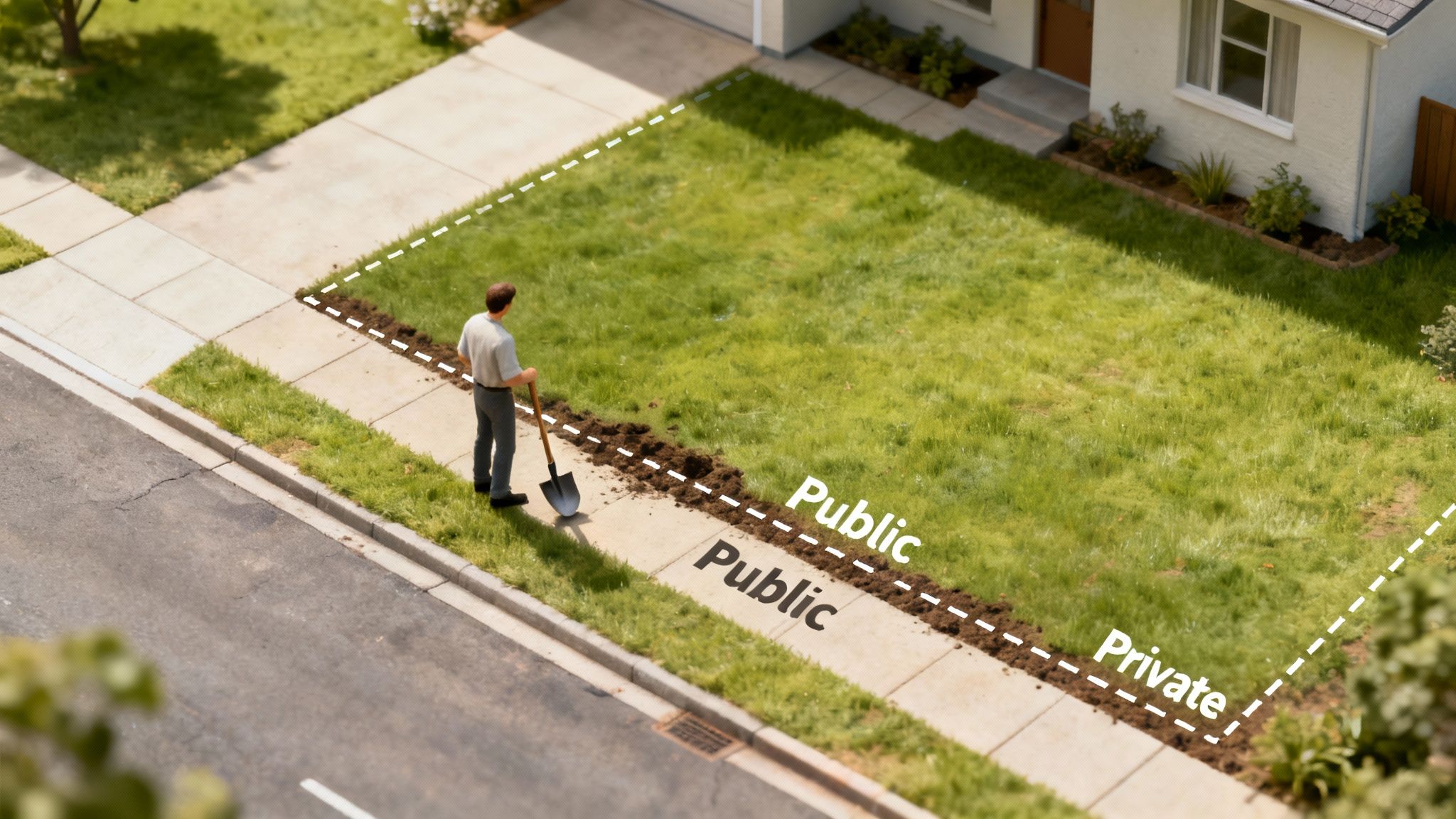
This "ownership divide" is the biggest source of confusion when an underground problem occurs. A clogged sewer or a leaking water pipe might seem like a city problem. But if the break is on your side of the line, the repair bill is yours.
Why This Knowledge Gap Matters
For homeowners, ADU developers, and property managers, not knowing this boundary can cause serious problems. It can lead to project delays, failed permit inspections, and unexpected costs that can run into thousands of dollars. Imagine finding out your sewer line has collapsed during a big home renovation. All work stops until you pay for the fix.
This is not just a money problem; it's also a huge safety issue. Hitting an unmarked line can cut off service for your whole neighborhood or create a real emergency. The cost is high, with challenges in locating underground utilities costing the U.S. economy about $50 billion a year in repairs and project delays. Read more about the national impact of utility location challenges.
The line between public and private utilities isn’t just a technical detail—it’s a financial boundary. Knowing where it lies helps you make smart decisions before you dig, preventing costly surprises and keeping your project on schedule.
The table below explains who is responsible for common utilities.
Public vs. Private Utility Responsibility At a Glance
| Utility Type | Public Responsibility (Main Lines) | Private Responsibility (Lateral Lines) | Typical Demarcation Point |
|---|---|---|---|
| Sewer | The main sewer line running under the street. | The "sewer lateral" from the house to the main line. | The property line or connection at the main. |
| Water | The main water line under the street. | The service line from the meter to the house. | The water meter, usually near the curb. |
| Gas | The main gas line network. | The service line from the meter into the building. | The gas meter itself. |
| Electric/Comm | Poles and main distribution lines. | The service line from the pole to the house. | The connection point on the building. |
Understanding this table is the first step, but you must confirm the exact point for your property.
At Coastal Pipeline Inc., we specialize in clearing up this confusion. With our experience in NASSCO-certified inspections, private utility locating, and trenching, we help property owners understand these boundaries. We know how to work with both city and private service lines to make sure your project is safe, follows the rules, and is planned in a cost-effective way. A great first step is understanding your property's current condition; you can learn more about what property owners should know about aging utility lines in our guide.
2. Where Does the City’s Responsibility End and Yours Begin?
Figuring out where a utility pipe stops being the city's problem and becomes your financial headache is the most confusing part of dealing with underground lines. This invisible boundary causes frustration for homeowners and developers who face unexpected repair bills and project delays.
Think of it like a tree. The city is responsible for the main trunk buried under the street that serves the whole neighborhood. But the smaller branch that runs from the main line directly to your property? That one's all yours.
This smaller pipe is called a service lateral. It's the key link between the public main and your private property. Getting this simple difference wrong is the top cause of utility arguments.
Public Main vs. Private Lateral: The Handoff Point
To avoid bad surprises, you need to know where the handoff from public to private happens for each utility. The rules can be a little different across Monterey, Santa Cruz, and San Benito Counties, but the general idea is the same everywhere.
-
Sewer Lines: The city owns the big sewer main under the street. You are responsible for the sewer lateral that connects your home’s plumbing to that main. This is a big deal. It means that even if a clog or break happens under the public sidewalk, it's likely your problem if it’s on your lateral.
-
Water Lines: The public water main is also under the street. The line for your responsibility is almost always the water meter. That little box near the curb is the official handoff point. Every pipe from the meter to your house is yours to maintain.
-
Gas Lines: This works just like the water line. The gas company takes care of the main line and the pipe leading to your gas meter. From the meter into your home, it’s all on you.
Key Takeaway: A sewer backup that happens under the sidewalk or street can still be your financial problem. The location of the pipe doesn't matter; what matters is whether it's the public main or your private lateral. The only way to prove where a blockage is located is with a NASSCO-certified camera inspection.
Why This Matters for Renovations and ADUs
This ownership line is very important when you're building or renovating. Adding an Accessory Dwelling Unit (ADU) or doing a big remodel often means connecting to existing laterals. That’s when hidden problems often show up.
For example, before a city inspector approves a new ADU, they will probably require a sewer camera inspection. If that inspection shows your old lateral is cracked, you'll have to pay to replace it before the project can continue. This unexpected cost can ruin a budget and schedule.
Knowing these boundaries is also important when upgrading your home's systems. If you're digging for any reason, understanding your responsibility helps you plan and budget. For example, if you need to upgrade your water service, you'll need to follow local rules for new connections. You can learn more by looking into typical water meter installation requirements.
Bridging the Gap Where the City Stops
This is where a specialized contractor is needed. The city’s utility crews will only work on the public mains they own. That leaves you responsible for any issues on your private laterals.
Our team at Coastal Pipeline Inc. has experience working with both homeowners and city coordinators to find and fix these problems. We handle everything from NASSCO-certified sewer inspections to locating private lines and managing the digging for repairs or new connections.
We help you bridge that critical gap. By educating you on where public jurisdiction ends and your responsibility begins, we empower you to make informed decisions before digging. For clarity on your property or to schedule an inspection, contact Coastal Pipeline Inc. — your Central Coast partner in making sure your project is compliant and planned well.
Why Calling 811 Is Only Half the Solution
You have probably heard the slogan: "Call 811 Before You Dig." It's important for a good reason. It’s the very first step for any project that involves digging, from planting a tree to pouring a foundation. This free service is the starting point for preventing dangerous and costly accidents.
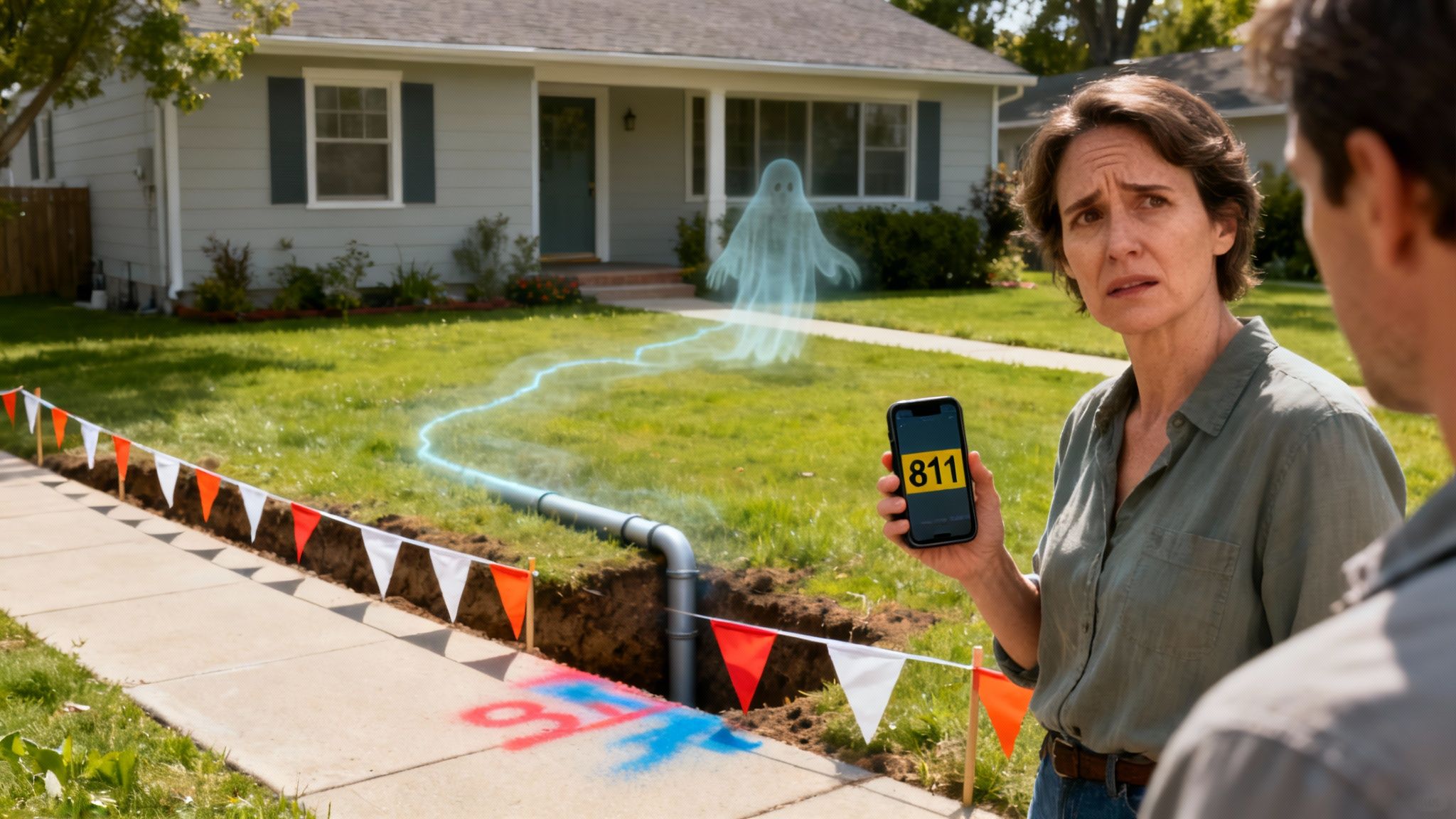
When you call 811, a notice is sent to all local public utility providers, like gas, power, water, and cable. In a few days, they will send someone to mark the approximate location of their lines with colored flags or paint. It’s a great system for basic safety, but it has a big blind spot that surprises many people.
The Critical Limitation of the 811 Service
Here's the problem: the 811 service will only mark publicly owned utilities. This means they will trace the main lines from the street up to their cutoff point, like your water meter at the curb.
They will not locate any private utility lines on your property. This is where it gets dangerous. After seeing flags in your yard, it's easy to feel safe and think every hazard has been found. This mistake leads to many accidental utility strikes, a worldwide problem with damages estimated over $100 billion a year. You can learn about the costs and causes of these accidents by reviewing research on safe digging practices.
This lack of information can cause expensive delays, property damage, and even injury. It’s not a failure of the 811 system, but it is a limit that every property owner and contractor needs to know about.
Common Private Utilities 811 Will Not Mark
Think about all the pipes and wires that run past the meter and across your property. The 811 service has no records for these private lines, so they do not mark them.
Here are a few examples of common private lines you could easily hit:
- The water line from the meter to your house.
- Electrical wires for a detached garage, workshop, or landscape lighting.
- Gas lines for a pool heater, barbecue, or outdoor fire pit.
- The sewer lateral connecting your home to the city main.
- Pipes for a sprinkler system.
- Underground lines for a private well or septic system.
- Low-voltage wires for security cameras or gates.
Hitting any of these can be just as bad as hitting a public main. The big difference is that you are responsible for finding and protecting these private lines.
Calling 811 is the law and the first step you must take. But it should be seen as the starting point, not the finish line. Getting a complete picture of what’s buried on your property requires a second, equally important step.
The Complete Solution: Private Utility Locating
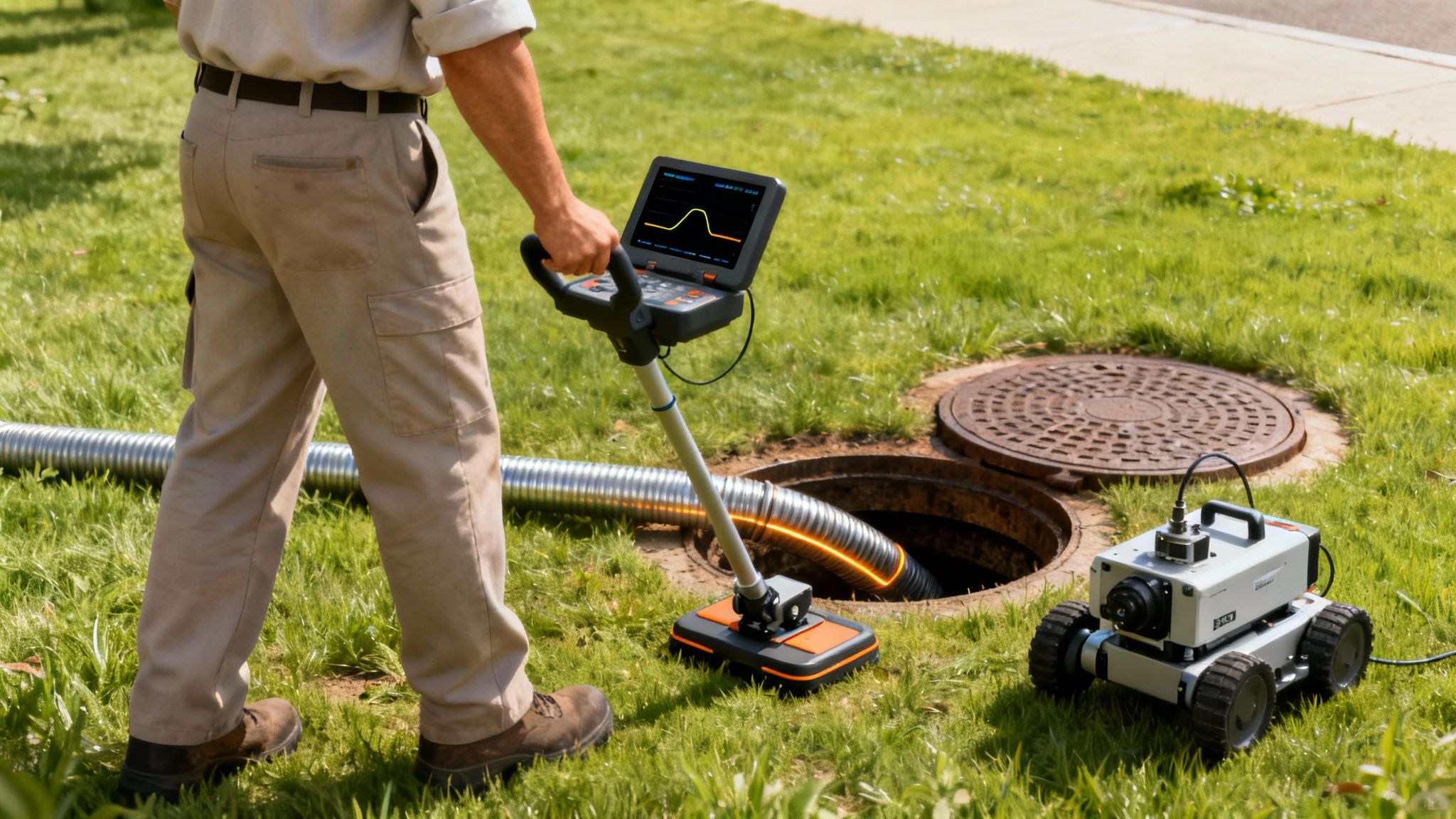
To truly know what’s buried, you need to hire a professional private utility locator. This is a paid service, unlike the free 811 call. These experts use advanced tools like Ground-Penetrating Radar (GPR) and electromagnetic (EM) locators to find everything the public service misses.
Hiring a private locator gives you a complete map of all underground lines, both public and private. It’s the only way to move forward with confidence. At Coastal Pipeline Inc., we can coordinate both public and private locates to make sure you have the full picture before any digging starts. For a closer look at the tools used, see our contractor's guide on how to locate underground utilities.
How Modern Technology Finds What's Hidden Underground
The colored flags and spray paint from an 811 call are a good start, but they don't show everything. To get an accurate picture of what’s buried on your property, professionals now use advanced tools that see underground without digging. This technology removes the guesswork from digging, which prevents costly accidents and project delays.
This focus on accuracy is a global trend. The underground utility mapping market is expected to reach $2.29 billion by 2030 because people see the need for safer digging. This growth shows how much we rely on technology to protect our important infrastructure. You can explore more projections on the utility mapping market to see where the industry is going.
Seeing Through the Soil with GPR
One of the best tools for a modern locator is Ground-Penetrating Radar (GPR). Think of it as an X-ray for the ground. A GPR machine sends harmless radio waves into the soil. When the waves hit something like a pipe or a concrete block, they bounce back to a receiver.
This is a game-changer because GPR can find non-metallic lines that other tools miss.
- PVC Water and Sewer Pipes: These common plastic pipes are invisible to many locators.
- Fiber Optic Cables: These are often buried in plastic tubes, making them hard to find.
- Abandoned Lines: GPR is great at finding old septic tanks or forgotten pipes that are not on any maps.
By creating a real-time picture of what’s down there, GPR helps prevent surprises during digging. It’s a key tool when planning a new ADU or replacing an old septic system.
Tracing the Current with EM Locators
While GPR is great for finding plastic pipes, Electromagnetic (EM) locators are used for tracing metal lines. This device works by finding the weak electromagnetic field around a metal pipe or wire. A transmitter sends a signal to the target line, and a handheld receiver follows that signal to trace the utility's exact path.
EM locators are very good at finding the exact location and depth of buried utilities like:
- Electrical power lines
- Natural gas pipes
- Copper communication cables
When used together, GPR and EM locators create a full map of nearly everything buried on your property. This detailed picture is what you need when looking for professional underground utility services that go beyond the basic 811 marks.
Sending a Camera Down the Drain
For sewer lines, nothing is better than a robotic sewer camera. A special, high-definition waterproof camera is pushed through the sewer lateral. It sends a live video to a technician’s screen.
This isn't just for finding clogs. A NASSCO-certified inspection gives you a detailed report on the pipe's condition. It can find cracks, roots, collapsed sections, or even illegal connections. This type of report is often required by cities in Monterey and Santa Cruz Counties before they will approve permits for renovations or ADUs.
By combining these advanced tools, professionals can create a complete map of what's underground. This modern approach gives you the peace of mind you need to dig safely, whether you're fixing a leak or planning a big construction project.
Navigating Local Permits and Regulations
Knowing what’s buried underground is only half the battle. The other half is dealing with the rules for any digging project. This is where many people have trouble.
For property owners in Monterey, Santa Cruz, or San Benito Counties, you must follow a specific set of local codes, easements, and permit rules. These aren’t just suggestions—they’re the law. Ignoring them can lead to fines, stop-work orders, and legal problems.
General advice found online often doesn't apply to the Central Coast. Each city and county has its own rules. That’s why working with a contractor who knows the local system is so important. Their experience helps keep your project on time, on budget, and legal.
Understanding Utility Easements and Right-Of-Ways
Before you start digging, you must know about any utility easements or right-of-ways on your property. An easement is a legal agreement that gives a utility company the right to access a specific part of your land to install, maintain, or repair their lines.
Even though you own the land, you can’t build permanent things—like a shed, deck, or ADU foundation—inside that easement area. If you dig there without permission, you could be responsible for any damage and face legal trouble. You can usually find easements on your property’s title report or survey.
Think of an easement like a shared driveway. Even though part of it is on your property, your neighbor has a right to use it. You can't build a fence across it because that would block their access. Utility companies need the same clear access to their lines.
Common Permits for Underground Work
For almost any project that involves digging a trench or connecting to public utilities, you will need a permit. This isn't just paperwork; it’s a safety check to make sure the work is done correctly and meets standards.
Here are a few permits you might need for underground projects:
- Encroachment Permit: You need this when your work goes into the public right-of-way, like digging up the sidewalk or street to connect a new sewer line.
- Trenching or Excavation Permit: Many cities require this permit for digging past a certain depth. It’s to make sure the hole is safe and won’t collapse.
- Plumbing Permit: This is needed when you’re installing or replacing private water or sewer laterals. It ensures your connection is done right to prevent leaks.
- Grading Permit: For big jobs that involve moving a lot of soil, a grading permit is needed to manage drainage and keep the site stable.
Getting these permits usually means submitting detailed plans, paying fees, and scheduling inspections. It’s a process, and a mistake can stop your project and mess up your schedule and budget.
This is where having a local contractor like Coastal Pipeline Inc. on your side makes a huge difference. We know how the permit offices in Monterey, Santa Cruz, and San Benito Counties work. We handle the paperwork, talk to the inspectors, and make sure your project follows all local codes. This helps you avoid common problems and keeps your project moving smoothly.
Your Essential Pre-Dig Safety Checklist
Knowing the information is one thing, but having a clear process is what keeps a job site safe and on schedule. Here is a simple pre-dig safety checklist to bring all this information together. Think of it as a final check before you start digging. It is designed to protect your workers, your property, and your budget from mistakes that can be avoided.
This guide is a quick reference for homeowners in Monterey, developers in Santa Cruz, and contractors in San Benito County. Follow these steps to handle underground utilities and property lines with confidence.
The Non-Negotiable Pre-Excavation Steps
Each item on this list is a key step that handles a specific risk. Skipping even one can lead to a dangerous utility strike, a costly delay, or legal trouble.
-
Review Your Property Survey and Title Report: First, get the official documents for your property. These records will show you any legal utility easements or right-of-ways that tell you where you can and cannot dig or build. Understanding these boundaries from the start saves a lot of trouble later.
-
Call 811 at Least Three Business Days in Advance: This is not just a good idea; it's the law. Calling 811 starts the process for public utility companies to come and mark their lines with paint or flags. But remember, this service only covers public utilities.
-
Hire a Private Utility Locator: Since 811 stops at the meter, you must hire a professional to find all the private utilities on your property. This includes everything from the water line running to your house to the electrical wires for your landscape lights. This is the only way to get a complete picture of what’s buried. For more on this, check out our essential construction site safety tips.
The permit process can seem hard, but it follows a clear path from understanding your property's legal limits to getting final approval.
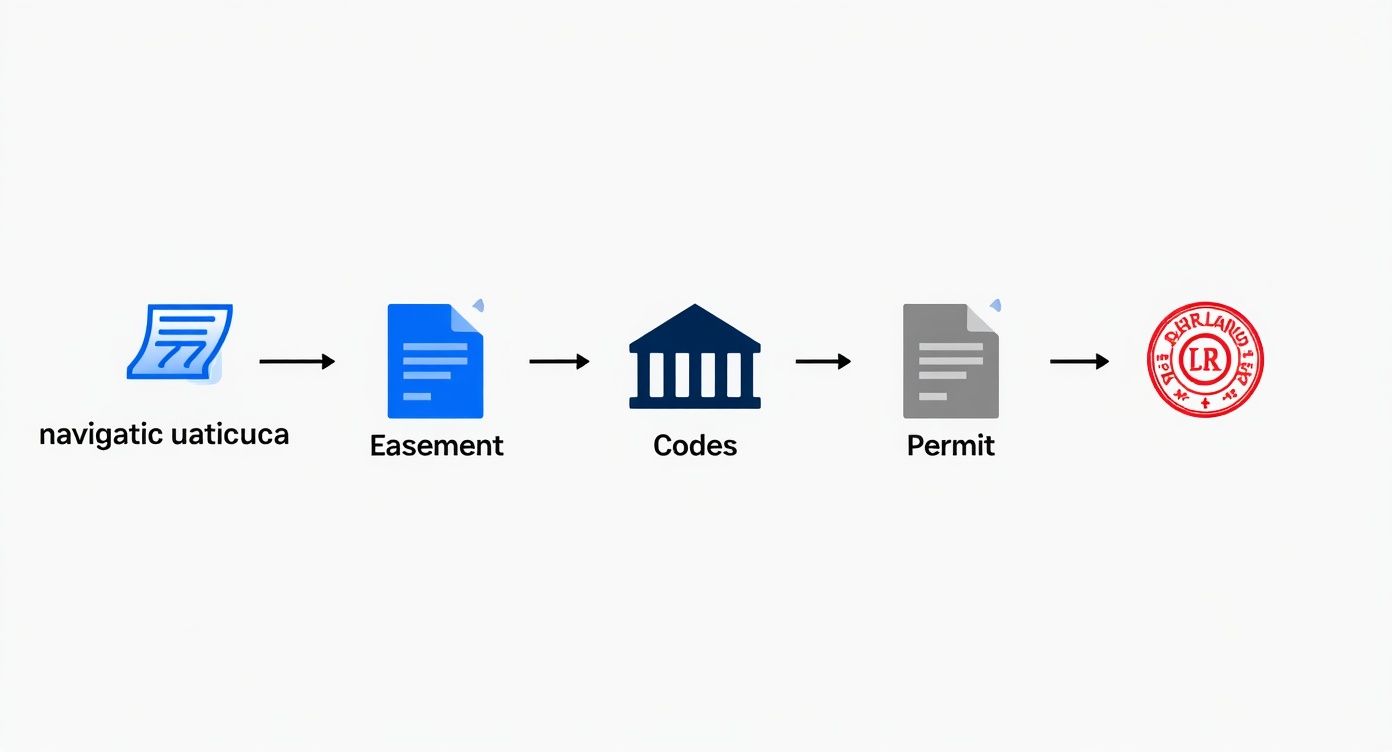
As you can see, knowing your property's legal rules is the first step to a project that meets all local codes and permit standards.
Final Verification and Professional Oversight
-
Schedule a Sewer Camera Inspection (Especially for Older Properties): If you're connecting to an old sewer lateral or working on a property over 20 years old, a NASSCO-certified camera inspection is a must. It will find cracks or blockages before they become a huge, expensive problem during construction.
-
Verify All Local Permit Requirements: Don't assume you know what you need. Contact your local city or county planning department to confirm which permits (like trenching or encroachment permits) are needed for your project. To make sure you're meeting all safety rules, it's a good idea to review guidelines on effective workplace safety procedures.
To make this even clearer, here is a step-by-step table that shows the whole process.
Essential Pre-Excavation Safety Checklist
Follow these steps in order to make sure your digging project is safe and follows the rules. This checklist covers both public and private utility location.
| Step | Action Item | Why It's Important | Recommended Timeline |
|---|---|---|---|
| 1. Document Review | Get and review the property survey, title report, and deed to find easements and property lines. | Prevents digging in utility right-of-ways or on a neighbor's property by accident. | 4-6 weeks before planned digging. |
| 2. Public Utility Locate | Call 811 or submit a request online. Wait for all public utility companies to mark their lines. | It's required by law. Prevents hitting major gas, electric, water, and communication lines. | At least 3-5 business days before digging. |
| 3. Private Utility Locate | Hire a private utility locator to scan the entire project area for non-public lines. | Finds important lines that 811 does not cover, like lines to septic tanks, pools, or other buildings. | Schedule for after public marks are done, at least 2-3 days before digging. |
| 4. Visual Verification | Walk the site and check the paint/flags against your plans. Look for clues like meters or manholes. | Catches differences between marked locations and what you can see on the ground. | The day before digging begins. |
| 5. Pre-Dig Meeting | Hold a safety meeting with all crew members on-site to review the marked locations and digging plan. | Makes sure everyone on the job site knows the hazards and safety rules. | Morning of digging, before any work starts. |
By following this checklist, you are actively managing risk like a professional. This careful approach is what separates a smooth project from a disaster.
Your Top Questions About Buried Utilities Answered
Starting a digging project can bring up many questions about what's underground. Here are simple answers to common problems homeowners face.
My Sewer Is Backed Up, but the City Says It's My Problem. How Is That Possible?
This is a very common and frustrating problem. The confusion is about who is responsible for what. The city owns the large sewer main that runs under the street. But you own the pipe that connects your home to that main.
This connecting pipe is called the sewer lateral. You are responsible for all of it, from where it leaves your house to where it connects to the city's main line. So, if the clog, crack, or tree roots are in your lateral—even the part under the sidewalk or street—the repair bill is yours. The only way to know for sure is to get a professional sewer camera inspection. This will show the exact location of the problem and prove who is responsible.
I Called 811 and They Marked My Yard. Am I Totally Safe to Dig Now?
Not quite. Calling 811 is a key first step and is required by law in most places. But here’s the problem: they only mark public utility lines. These are the big cables and pipes that serve the whole neighborhood.
They will not mark any privately owned lines on your property. This leaves a big blind spot. You might be surprised by what is often missed:
- The water line from the meter at the street to your house.
- Power lines to a detached garage, workshop, or landscape lights.
- The gas line for your pool heater or backyard grill.
- Your sprinkler system's pipes.
To get the full picture and dig safely, you need to take a second step: hiring a private utility locating service. They will find everything that the 811 survey misses.
A recent national survey showed a surprising fact: only 50% of homeowners called to have their lines marked before starting digging projects. That's a huge safety risk for the homeowner and the entire community.
What Exactly Is a Utility Easement and How Does It Affect Me?
A utility easement is a legal "right-of-way" that you give to a utility company. It gives them the right to use a specific part of your property to install, maintain, or repair their equipment, like power lines or water pipes.
Even though you own the land, the easement means you can't build any permanent structures—like a shed, a deck, or an ADU—on top of that area. Building or digging in an easement without permission can lead to serious legal trouble, and you will have to pay for any damage you cause. You can usually find easements on your property survey, title report, or deed. It is very important to know where these are before you plan any work.
Knowing the line between public and private responsibility is key to protecting your property and your money. If you need expert help on the Central Coast or want to schedule a professional utility inspection, the team at Coastal Pipeline Inc. is here to help.
Contact us today to ensure your project is compliant, safe, and built on a solid foundation.